
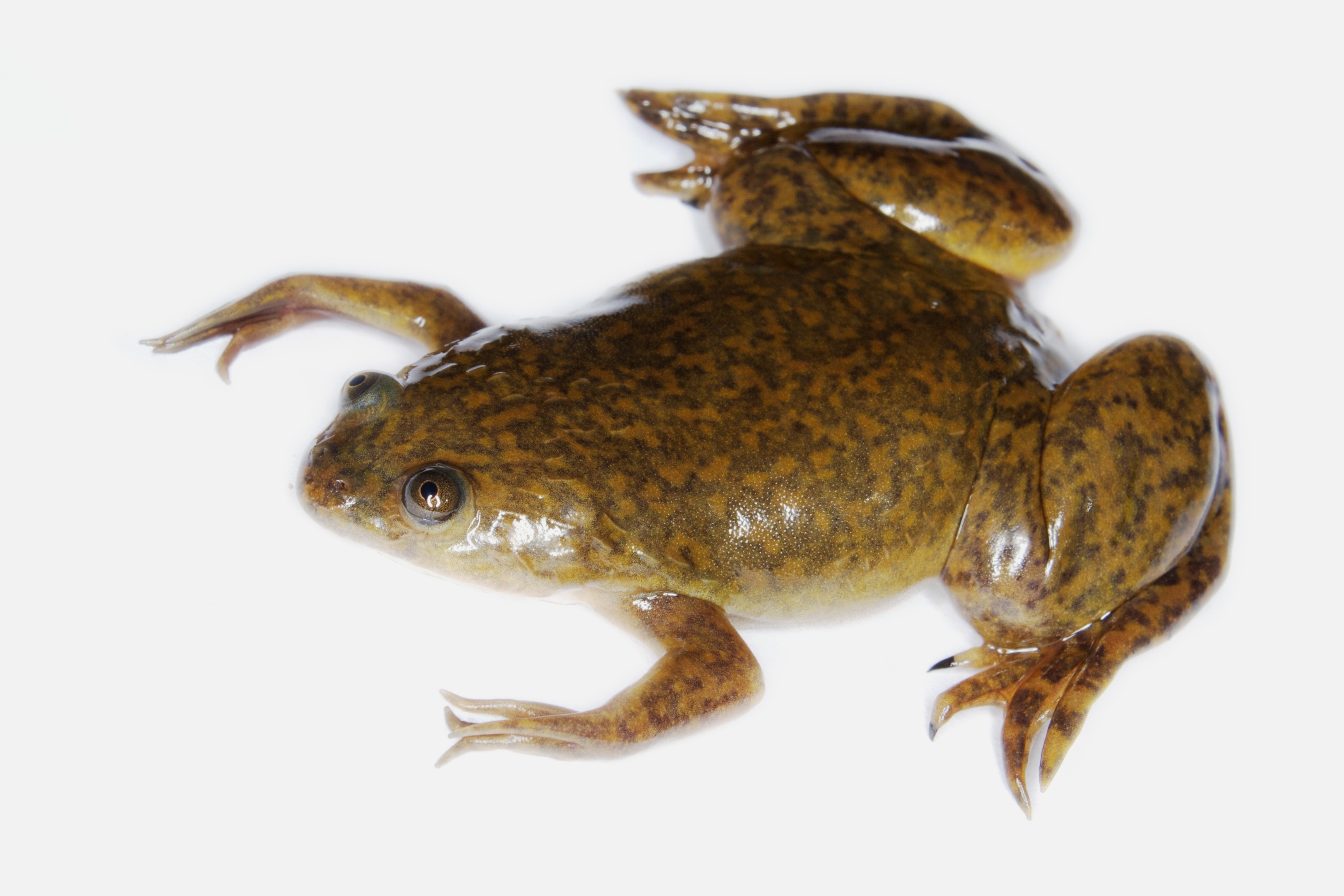
African Clawed Frog (Xenopus laevis)
Introduction
Beneath the surface of a shallow, sun-warmed pond in sub-Saharan Africa, a small amphibian hovers motionless in the water column. Its body is streamlined and flattened, its eyes fixed upward toward the shimmering light above, and its powerful hind legs trail behind like twin rudders. It makes no sound above the waterline — yet somewhere in the murk, it is broadcasting a complex series of clicks and pulses to potential mates lurking nearby. This is Xenopus laevis, the African clawed frog, and few animals in the natural world carry such an unlikely combination of evolutionary sophistication, scientific significance, and ecological consequence.
At first glance, the African clawed frog appears unremarkable. It lacks the vivid colours of poison dart frogs. It possesses no dramatic crest, no elongated limbs, no spectacular camouflage. What it has, instead, is a body architecture that has remained essentially unchanged for over 65 million years — a living blueprint of amphibian design so efficient that natural selection has found little reason to modify it. Fully aquatic throughout its entire life, it never ventures onto land except during extraordinary circumstances, making it one of the few frog species that has abandoned the terrestrial world almost entirely.
The ecological story of Xenopus laevis is layered with paradox. It is both a native treasure of African freshwater systems and one of the most damaging invasive species ever introduced to ecosystems outside its natural range. It has been used in laboratories across the world for over a century, contributing more to human biomedical knowledge than almost any other vertebrate. It carries on its skin a fungal pathogen — Batrachochytrium dendrobatidis — that has driven dozens of amphibian species toward extinction across the globe. And yet it persists, adapts, and thrives wherever it is found.
Understanding the African clawed frog requires a willingness to hold these contradictions simultaneously. It is a creature of genuine ecological importance, scientific irreplaceability, and global biological threat. The story of Xenopus laevis is ultimately a story about what happens when a highly adaptive organism is removed from the system that shaped it and placed into a world it was never meant to inhabit.
"The frog does not drink up the pond in which it lives."
— Native American Proverb
Scientific Classification
Kingdom: Animalia
Phylum: Chordata
Class: Amphibia
Order: Anura
Family: Pipidae
Genus: Xenopus
Species: Xenopus laevis (Daudin, 1802)
Common Names: African clawed frog, platanna (South Africa), common clawed frog
Subspecies: Multiple recognised subspecies, including X. l. laevis, X. l. victorianus, and X. l. bunyoniensis
The genus name Xenopus derives from the Greek words xenos (strange) and pous (foot), a reference to the distinctive clawed toes on the animal's hind feet. The species epithet laevis is Latin for "smooth," describing the frog's slick, scaleless skin. The family Pipidae is an ancient lineage of tongueless, fully aquatic frogs, and Xenopus laevis is among its most studied members. The species was formally described by François Marie Daudin in 1802, though specimens had been collected and observed by European naturalists for decades prior to that formal designation.
Physical Characteristics
The African clawed frog is a medium-sized, entirely aquatic frog with a body plan explicitly engineered for life in water. Adult females typically measure between 10 and 13 centimetres in length and can weigh up to 200 grams, making them noticeably larger than males, which generally reach 6 to 8 centimetres and weigh closer to 60 to 80 grams. This sexual size dimorphism is pronounced and has direct implications for reproductive behaviour, as larger females carry more eggs and are physically dominant in breeding contexts.
The body is dorsoventrally flattened — compressed from top to bottom rather than side to side — which reduces drag when swimming horizontally. The dorsal surface is typically olive-green to grey-brown, often mottled with irregular darker patches that provide some degree of disruptive coloration against a gravelly substrate. The ventral surface is pale cream or off-white, a countershading strategy that reduces visibility from below against the bright sky. The skin is smooth and slightly mucus-coated, with no parotoid glands or warty texture.
Perhaps the most recognisable feature is the rear foot anatomy. Three of the five inner toes on each hind foot bear short, dark, keratinised claws — an extraordinarily rare trait among frogs. These claws are used primarily for tearing food apart and, in some contexts, for grip during mating amplexus. The hind legs themselves are powerful and muscular, providing strong propulsion through water. The forelimbs, by contrast, are slender and largely non-functional for locomotion; they serve mainly to guide food into the mouth.
The eyes are small, positioned on top of the head, and fixed — Xenopus laevis cannot move its eyes independently. This upward orientation reflects the frog's predatory strategy, scanning upward for silhouettes of prey near the water surface. There is no visible external tympanum (eardrum), which is typical of pipid frogs. The mouth is wide and subterminal, equipped with small tentacle-like structures at the corners that may aid in detecting water movement and guiding food particles toward the opening.
Fun FactUnlike the vast majority of frog species, Xenopus laevis has no tongue at all. It uses its forelimbs to shove food directly into its mouth — a trait shared only with other members of the family Pipidae.
Trait | African Clawed Frog (Xenopus laevis) | Common European Frog (Rana temporaria) |
|---|---|---|
Adult body length (female) | 10–13 cm | 6–9 cm |
Lifestyle | Fully aquatic | Semi-terrestrial |
Tongue | Absent (tongueless) | Present (projectile) |
Hind toe claws | Present (3 clawed toes) | Absent |
Sound production | Internal laryngeal clicking | External vocal sac calling |
Lateral line system | Retained in adults | Lost during metamorphosis |
Habitat & Geographic Distribution
In its native range, Xenopus laevis occupies a broad swath of sub-Saharan Africa, with the highest population densities found throughout South Africa, Lesotho, Swaziland, Mozambique, Zimbabwe, Zambia, Malawi, and parts of East Africa extending into Kenya and Uganda. The species demonstrates exceptional habitat flexibility, colonising an impressive diversity of freshwater environments including permanent lakes, seasonal ponds, slow-moving rivers, irrigation ditches, cattle water troughs, and urban drainage channels.
The African clawed frog shows a strong preference for still or slow-moving water bodies with soft, muddy substrates and significant organic matter. Turbid, nutrient-rich conditions suit it well, as these environments both support the prey organisms it depends on and reduce its own visibility to aerial predators. It does not require particularly clean water and has been recorded thriving in heavily eutrophied ponds that would stress most other amphibian species.
Temperature tolerance is considerable, spanning from roughly 5°C to 35°C, though optimal activity occurs between 18°C and 25°C. At extreme temperatures, the frog can enter a state of torpor — burrowing into bottom sediment and dramatically reducing its metabolic rate. This thermal resilience partly explains the species' success as an invasive outside its native Africa.
Outside Africa, established invasive populations have been documented in France, Portugal, Chile, the United States (California, Florida, Arizona), the United Kingdom (historically), Mexico, and parts of South America. These populations trace their origin to laboratory escapes and deliberate releases following the decline of Xenopus laevis as a pregnancy testing tool from the mid-twentieth century. In these introduced ranges, the frog finds itself in ecosystems with no evolved predators capable of managing its population density, leading to explosive colonisation of wetlands and drainage systems.
Behaviour & Social Structure
Xenopus laevis is not a social animal in any complex hierarchical sense. It does not form persistent groups, defend long-term territories, or maintain lasting pair bonds. Yet its social interactions — particularly during the breeding season — involve a communication system of surprising sophistication for an amphibian, built entirely on sound produced and transmitted through water.
Males produce advertisement calls to attract females using an internal syrinx-like structure modified from the larynx, generating rapid series of clicks that travel efficiently through the water column. Unlike most frogs, which call from the surface using external vocal sacs, the African clawed frog calls entirely submerged, meaning its vocalisations propagate as pressure waves rather than airborne sound. Females, uniquely among frogs, also produce distinct calls — a slow "rapping" sound that signals sexual availability, and a distinct "ticking" call that communicates rejection of an undesired male's advances. This female calling behaviour is among the most well-documented acoustic rejection signals in amphibian biology.
Outside of the breeding season, interactions between individuals are largely governed by opportunism. Cannibalism is documented in both wild and captive populations — larger individuals will consume smaller ones, including juveniles and eggs, without hesitation. This is not aberrant behaviour but a functional ecological strategy that helps regulate local population density under resource-limited conditions.
The species lacks the elaborate territorial marking behaviours seen in many birds and mammals, but individuals in high-density populations exhibit spacing behaviour in the water column, likely mediated by chemical and mechanosensory cues rather than visible display. Aggression is generally limited to the act of feeding — frenzied consumption of anything that moves within reach — rather than formalised territorial contests.
One of the most remarkable behavioural capabilities of Xenopus laevis is its capacity for aestivation — a form of dormancy equivalent to summer hibernation. When a pond dries seasonally, the frog burrows deep into the mud, seals itself within a mucus-lined chamber, and can survive for months or even years without food or open water. Upon rehydration of the substrate, it emerges within hours, ready to feed and breed. This capacity gives the species an extraordinary resilience to seasonal drought that few other wetland vertebrates can match.
Daily Life & Activity Cycle
The African clawed frog is predominantly crepuscular to nocturnal, with peak activity occurring in the hours following sunset and before dawn. During daylight, individuals are often found resting on the bottom substrate or hovering motionless in midwater, conserving energy. Their upward-facing eyes remain vigilant even during rest, scanning for surface silhouettes that might indicate prey or predators.
Movement through the water column is achieved in two distinct modes: slow, deliberate swimming using alternating hind-leg kicks that resemble a breaststroke, and explosive burst swimming using simultaneous bilateral kicks that launch the animal rapidly forward or upward. This burst mode is used primarily during prey capture and predator evasion, while the slower mode governs routine patrol of a pond's volume.
Because the frog is fully aquatic and lacks functional lungs capable of sustained aerial respiration in the way terrestrial frogs use theirs, it must periodically surface to gulp air. These surfacing events occur at intervals ranging from a few minutes to over twenty minutes, depending on water temperature and the animal's activity level. In well-oxygenated water, a degree of cutaneous respiration — absorbing oxygen directly through the skin — supplements lung breathing and extends the time between surface visits.
Seasonal patterns are driven primarily by rainfall and temperature. In southern Africa, the onset of warm rains triggers mass breeding activity. During dry periods, populations retreat to deeper water, reduce movement dramatically, or enter aestivation as described above. In laboratory conditions where temperature and photoperiod are controlled artificially, the species can be induced to breed year-round — a property that made it commercially invaluable for decades of reproductive research.
In the shallow floodplain marshes of the Okavango Delta in late October, the first rains have just arrived after six months of dry season. Ponds that have been cracked mud since April begin to fill. Within hours, there is movement below the surface — not from animals that swam in from elsewhere, but from within the mud itself.
A female African clawed frog, sealed in an aestivation chamber since the pond last held water in April, detects the hydration signal. Her metabolic rate, suppressed to near-zero for months, begins to climb. Over the course of an afternoon, she absorbs water through her skin, her muscles re-inflate, and she tears through the mucus seal of her chamber and pushes upward through softening sediment.
She surfaces into a world already vibrating with clicks. Males, emerging from their own dormancy chambers nearby, have already begun calling — rapid, rhythmic pulses that travel through the water far more efficiently than the croaking of any surface-calling frog. The pond is perhaps thirty centimetres deep and twenty metres across, but within this small basin, dozens of frogs are announcing their presence simultaneously.
She moves toward the strongest signal, her lateral line organs reading the minute water movements that no eye could detect. Behind her, in the softening mud, other chambers are beginning to open. The marsh, silent since April, is alive again within a single afternoon — an orchestrated emergence triggered by rain, mediated by chemistry, and executed with mechanical precision by animals whose biology has changed little since the age of dinosaurs.
Diet & Survival Strategies
Xenopus laevis is an opportunistic, generalist predator with a feeding strategy that prioritises quantity and accessibility over selectivity. It is often described as consuming anything that moves and fits into its mouth — and this characterisation, while colloquial, is not far from the biological reality. The diet includes aquatic invertebrates (insect larvae, water fleas, amphipods, worms), small fish, tadpoles, other frog species, small crustaceans, and organic detritus. In laboratory conditions, individuals will consume dead prey and even non-food items if they produce appropriate chemical or mechanical stimuli.
The mechanics of feeding are unusual. Without a projectile tongue, the frog cannot strike at prey from a distance. Instead, it relies on ambush at close range, detecting prey through a combination of olfaction (chemical sensing), vision, and most importantly the lateral line system — a row of sensory neuromast organs running along the body that detects pressure changes and water displacement caused by moving prey. When prey is detected, the frog lunges and engulfs it with a rapid expansion of the buccal cavity, creating suction. The forelimbs then assist by pushing struggling prey deeper into the mouth.
For larger or more resistant prey, the hind-foot claws come into play. The frog grips prey with its forelimbs and uses the clawed hind feet to tear pieces free — a feeding behaviour that bears an almost mechanical resemblance to the way raptors use their talons to dismember prey. This tearing behaviour is particularly observed when consuming large earthworms, small fish, or juvenile frogs.
Survival under food scarcity is managed through multiple complementary strategies. The most extreme is aestivation, which can reduce metabolic demand to a fraction of normal levels. Additionally, Xenopus laevis has a high fat-storage capacity relative to its body size, accumulating lipid reserves during periods of food abundance that sustain it through lean periods. The frog's fully aquatic lifestyle also reduces the energetic cost of locomotion compared with terrestrial foragers, allowing a smaller absolute food intake to sustain basic physiological function.
Prey Category | Detection Method | Frequency in Diet |
|---|---|---|
Aquatic invertebrates | Lateral line, olfaction | Very high (primary diet) |
Small fish | Vision, lateral line | Moderate |
Tadpoles and froglets | Vision, lateral line | Moderate (including own species) |
Organic detritus | Olfaction, chemoreception | Low to moderate |
Small mammals / birds (rare) | Surface disturbance | Rare (recorded in captivity) |
Interaction with Other Animals
In its native African range, Xenopus laevis occupies an intermediate position in the aquatic food web — simultaneously functioning as a mid-level predator and as prey for larger animals. Its predators include herons, egrets, ibises, kingfishers, large wading birds, certain fish species, water monitors (Varanus niloticus), and various aquatic snakes. African clawed frogs are particularly vulnerable during any rare overland movements between water bodies, when the threat from terrestrial predators multiplies dramatically.
Its primary defensive strategy against these predators is concealment and rapid underwater escape. The cryptic dorsal coloration blends against muddy substrates, and when disturbed, the frog's burst-swimming ability allows it to accelerate into bottom cover or deeper water within milliseconds. Unlike many frogs, it does not rely on skin toxicity as a defence — the skin secretions of Xenopus laevis are relatively mild compared with toxic dendrobatid or bufonid frogs, and they function more as antimicrobial agents than deterrents to predation.
In its relationships with prey species, the African clawed frog can exert significant top-down pressure on invertebrate populations and small fish communities within enclosed water bodies. In small ponds, high densities of Xenopus laevis can substantially reduce the populations of aquatic insects, tadpoles of other species, and small native fish, restructuring the local food web around their predatory dominance.
The most consequential biological relationship involving this species, however, is neither predatory nor competitive — it is pathogenic. Xenopus laevis is widely recognised as a reservoir host and likely historical vector for Batrachochytrium dendrobatidis (Bd), the chytrid fungus responsible for chytridiomycosis, a skin disease that has caused catastrophic die-offs in amphibian populations across North America, Central America, Europe, and Australia. The African clawed frog appears largely resistant to the disease itself, while asymptomatically carrying the pathogen — a carrier-host relationship that allowed Bd to spread globally as live frogs were shipped around the world for biomedical use throughout the twentieth century.
Fun FactThe African clawed frog was historically used as a live pregnancy test. When injected with urine from a pregnant woman, the hormones present (specifically hCG) caused the frog to lay eggs within hours. This "Hogben test" was used in hospitals across the world from the 1930s through the 1960s — and live frogs were shipped globally, inadvertently spreading the devastating chytrid fungus along the way.
Interaction with Environment
As a fully aquatic species that spends its entire life within freshwater systems, Xenopus laevis both shapes and is shaped by the physical and chemical properties of its aquatic environment. Its relationship with the substrate is particularly close — the frog regularly disturbs bottom sediments during feeding and movement, resuspending organic particles into the water column and influencing the local nutrient cycling dynamics of small ponds.
The species' ecological impact on vegetation is indirect but real. By consuming high densities of aquatic invertebrates — particularly herbivorous larvae and zooplankton — a large population of African clawed frogs can reduce grazing pressure on aquatic algae and macrophytes, potentially leading to algal bloom conditions in nutrient-rich waters. Conversely, in systems where the frog is native and populations are regulated by predation and competition, this consumption keeps invertebrate populations in check without crossing into overgrazing of phytoplankton communities.
The frog's burrowing behaviour during aestivation can physically alter sediment structure in seasonally dry ponds, creating channels and pockets in the substrate that may influence water drainage and small-scale habitat heterogeneity during the following wet season. While this effect is minor in any individual case, it may be measurable at the population level in heavily populated ponds.
Climate adaptation deserves particular attention. Xenopus laevis demonstrates an exceptional physiological range that allows it to persist through conditions — drought, extreme temperature fluctuation, hypoxia, water pollution — that eliminate most competing amphibian species. This resilience is not passive but metabolically active: the frog regulates its internal osmotic environment, adjusts its cutaneous and pulmonary respiratory balance, and modulates liver glycogen reserves in response to environmental stress. This physiological sophistication is a major reason why Xenopus laevis has become such a dominant organism wherever it has been introduced.
Reproduction & Parenting
Reproduction in Xenopus laevis is triggered by a combination of rainfall, rising temperatures, and hormonal cues. In its native range, breeding activity peaks during the warm wet season, typically between September and February in southern Africa, though opportunistic breeding can occur at any time when conditions are favourable. The hormonal cascade underlying this response is so well-characterised that the species can be induced to breed experimentally at any time of year through gonadotropin injection — a property that drove its widespread laboratory use.
Male advertisement calls, described earlier, draw females into proximity. Once a receptive female approaches, the male mounts in a form of amplexus that is inguinal — positioned at the hips rather than at the armpits (axillary amplexus) as in most frog species. The male's forelimbs grip the female around the waist, and the pair may remain in amplexus for hours before spawning begins.
Egg-laying is a prolonged process, with a single female capable of producing between 500 and 2,000 eggs per clutch, depending on her size and nutritional condition. The eggs are small (1 to 1.5 mm in diameter), darkly pigmented on the animal pole and pale on the vegetal pole, and are released individually or in small groups, scattering across the pond substrate and bottom vegetation rather than being deposited in a single mass. Each egg is individually coated in a gelatinous capsule that provides protection and facilitates gas exchange.
There is no parental care whatsoever following egg deposition. Both adults disperse immediately after spawning, and neither parent shows any protection or provisioning behaviour toward the eggs or subsequent larvae. The eggs hatch within two to three days at optimal temperatures, releasing tiny, filter-feeding tadpoles with a distinctive transparent body and a long, coiling gut visible through the skin. These tadpoles use oral tentacles to filter suspended particles from the water and grow rapidly over a four- to six-week period before undergoing metamorphosis into froglets.
Juvenile African clawed frogs experience high mortality rates in their first weeks post-metamorphosis, primarily from cannibalism by larger conspecifics, predation by invertebrates and fish, and desiccation if pond levels drop. Those that survive grow rapidly and can reach sexual maturity in as little as ten to twelve months under warm conditions with abundant food. Captive individuals have lived for over twenty years, and wild longevity is estimated at eight to fifteen years in suitable conditions.
Evolutionary Adaptations
The evolutionary lineage of the family Pipidae extends back to the Early Cretaceous period, approximately 130 million years ago. Fossil pipids from South America and Africa demonstrate that this family survived the mass extinction event at the Cretaceous-Paleogene boundary (~66 million years ago) intact, making Pipidae one of the most evolutionarily conservative frog lineages on Earth. Xenopus laevis itself, as a species, has origins in the Miocene of Africa, though its precise lineage extends through forms recognisably similar across tens of millions of years of geological record.
The most conspicuous evolutionary adaptation is the complete secondarily aquatic lifestyle. While all frogs descended from terrestrial ancestors, the pipids reversed this trajectory and became fully aquatic, losing the tongue (which is mechanistically unnecessary for underwater suction feeding), retaining the lateral line system into adulthood (otherwise lost at metamorphosis in most frog lineages), and developing the powerful, clawed hind feet that serve both for locomotion and prey manipulation.
The retention of the lateral line system into adulthood is among the most significant evolutionary distinctions of Xenopus laevis. In virtually all other frog species, the lateral line — a sensory system inherited from fish ancestors and functional in tadpoles — is dismantled during metamorphosis as the animal transitions to terrestrial life. In Xenopus laevis, because no such terrestrial transition occurs, natural selection maintained this system, giving adults the ability to detect vibrations in the water that are imperceptible to any terrestrial sensory system. This makes the frog an extraordinarily effective nocturnal predator in turbid, visually challenging water.
The polyploid genome of Xenopus laevis represents another extraordinary evolutionary feature. The species is allotetraploid, carrying four copies of each chromosome (approximately 36 chromosome pairs, totalling 72 chromosomes) derived from an ancient hybridisation event between two ancestral diploid species approximately 17–18 million years ago. This genome duplication event has provided the species with functional redundancy — gene copies that can diverge in function over evolutionary time, potentially offering greater developmental flexibility and stress tolerance. The related model organism Xenopus tropicalis is diploid and is used comparatively in genomics research to understand how genome duplication shapes vertebrate evolution.
The skin physiology of Xenopus laevis deserves special mention. The skin is not merely a passive barrier but an active, multifunctional organ. It participates in respiration (cutaneous gas exchange), osmoregulation (water and ion exchange with the aquatic environment), immune function (the mucus layer has antimicrobial properties), and sensory function (housing chemoreceptors and mechanoreceptors alongside the lateral line neuromasts). The antimicrobial peptides secreted from skin glands — including magainins, discovered in Xenopus laevis skin in 1987 — represent a potent innate immune defence and have attracted substantial pharmaceutical interest as templates for antibiotic drug development.
Ecological Importance
Within its native African freshwater ecosystems, Xenopus laevis performs several ecologically meaningful functions. As a mid-level predator, it helps regulate populations of aquatic invertebrates, maintaining the balance of filter feeders and herbivorous invertebrates that would otherwise drive algal dynamics in small ponds and wetlands. Its consumption of tadpoles from competing frog species represents a form of interspecific competition that has shaped amphibian community structure across southern African wetlands over evolutionary timescales.
As prey, the African clawed frog contributes protein and energy to a range of wetland bird species and reptilian predators that depend on aquatic food sources. In the Okavango Delta, for instance, the biomass represented by populations of Xenopus laevis and related pipid frogs is substantial and forms a reliable protein base for wading birds and water monitors throughout the wet season. The frog's boom-bust population dynamics — driven by rainfall patterns — also create periodic pulses of prey availability that structurally influence the behaviour and breeding success of predator species.
The role of the African clawed frog in nutrient cycling is understated but real. The frog's feeding activity, defecation, and aestivation behaviour all contribute to the redistribution of nitrogen and phosphorus within wetland sediments. By consuming organisms from across the water column and depositing waste across the bottom substrate, the frog helps maintain the microbial community diversity and nutrient availability that underpins primary productivity in shallow ponds.
Beyond its native range, the ecological importance of the African clawed frog shifts dramatically toward ecological disruption rather than ecological function. As an invasive species, it provides no evolutionary context for the native food webs it enters. Its predatory efficiency, reproductive output, and pathogen-carrying capacity make it a net negative force on native amphibian biodiversity wherever it becomes established outside Africa.
Threats & Conservation
The paradoxical conservation story of Xenopus laevis unfolds on two distinct fronts. In its native African range, the species is not immediately endangered — its broad ecological tolerance and high reproductive rate provide a buffer against most localised threats. However, the pressures building across sub-Saharan Africa's freshwater systems present long-term risks that biologists are monitoring closely.
Habitat degradation through agricultural expansion, wetland drainage, and water pollution affects the quality of available breeding and foraging sites. In parts of South Africa, the intensification of agriculture has led to heavy pesticide and fertiliser loading in freshwater systems, which can disrupt the reproductive endocrinology of amphibians, impair larval development, and reduce the invertebrate prey base. While Xenopus laevis is more tolerant of degraded water quality than most native amphibians, even this species has limits to its chemical tolerance.
Overcollection for the international laboratory trade has historically represented a direct extraction pressure. During the peak decades of biomedical use (1940s–1970s), wild-caught African clawed frogs were exported from South Africa by the hundreds of thousands annually. Although captive breeding now supplies most laboratory demand, some wild collection continues, and in regions where habitat quality is declining, this additional pressure is a concern.
Climate change poses a more speculative but increasingly credible long-term threat. Altered rainfall patterns across southern Africa — projections suggest drier conditions and greater rainfall variability — would reduce the availability of the seasonal ponds and floodplain marshes that support breeding populations. More frequent and prolonged droughts would test even the aestivation capacity of Xenopus laevis and could fragment populations in ways that reduce genetic diversity.
The chytrid fungus story, in which Xenopus laevis is implicated as a historical vector, also reflects back on the species' own conservation context. As efforts to eradicate invasive populations in France, California, and Chile proceed, there is growing awareness that control measures must be carefully designed to avoid also suppressing native African populations, which have a legitimate ecological role in their home systems. The IUCN status of this species is discussed in full in the following section.
IUCN Red List Analysis
Current IUCN Status
Xenopus laevis is currently assessed on the IUCN Red List of Threatened Species as Least Concern (LC). This classification reflects the species' wide geographic distribution across sub-Saharan Africa, its large overall population size, its high ecological adaptability, and the absence of evidence for rapid population declines meeting the quantitative thresholds required for a more threatened category. The Least Concern designation does not imply that the species faces no threats, but rather that these threats are not currently operating at a rate or scale sufficient to classify the species as Vulnerable, Endangered, or Critically Endangered under IUCN criteria.
The scientific basis for the LC classification includes the species' demonstrated tolerance of habitat degradation, its ability to persist in highly modified environments (including irrigation systems and urban water bodies), and its reproductive capacity that allows rapid population recovery following localised disturbance. The species' polyploid genome may also confer some genomic resilience that enhances its capacity to adapt to changing environmental conditions over shorter ecological timescales.
Population Trend
The IUCN assessment characterises the population trend as stable across the native African range, though this broad characterisation masks considerable local and regional variation. In areas subjected to intensive agricultural water pollution, wetland drainage, and urbanisation, local population declines have been documented. Conversely, in regions where human water infrastructure (dams, reservoirs, irrigation channels) has created new permanent water bodies, Xenopus laevis populations have expanded into habitats that did not previously exist.
Historical data suggest that the species was significantly more abundant in some parts of its range before the mid-twentieth century, when large-scale collection for the laboratory trade began. The reduction in wild collection pressure since the 1970s, combined with legal protections in South Africa under the Nature Conservation Ordinance, has allowed recovery in many areas. A reliable global population estimate does not exist, but the species is considered abundant across much of its native range.
In its invasive ranges, populations are typically increasing where established and where eradication efforts are not active. In southern California, for example, introduced populations in the San Diego area have persisted for over fifty years despite periodic removal efforts, indicating the difficulty of suppressing a highly adaptable, reproductively prolific species once established.
Main Threats
Habitat loss and degradation remain the primary long-term threats within the native range. Agricultural expansion across southern Africa has led to the drainage and modification of seasonal wetlands, which represent critical breeding habitat. The conversion of floodplain areas to irrigated farmland eliminates both the structural habitat and the invertebrate prey communities that breeding populations depend on.
Water pollution from agricultural runoff introduces herbicides, insecticides, and heavy metals into freshwater systems at concentrations that, while not immediately lethal to adult frogs, disrupt hormonal signalling, reduce sperm motility, impair larval survival, and collapse the invertebrate communities that sustain adult foraging. Atrazine — a commonly used herbicide — has been extensively documented to cause gonadal abnormalities in Xenopus laevis at environmentally relevant concentrations, raising serious concern about sub-lethal population effects in agricultural landscapes.
Climate change is projected to increase drought frequency and intensity across much of southern Africa, potentially driving the contraction of seasonal wetland habitat in the most arid parts of the species' range. While the African clawed frog's aestivation ability provides a buffer, prolonged multi-year droughts can exceed the physiological limits of even this highly resistant species, as water loss through mucus membranes eventually surpasses replacement capacity in stored body fat.
Disease and invasive interactions present a complex threat dynamic. Although the species is a robust carrier of Batrachochytrium dendrobatidis, there is evidence that Bd infections in heavily stressed (chemically or thermally compromised) populations of Xenopus laevis can transition from sub-clinical to pathogenic, meaning that environmental stressors may compromise the very resistance that has historically protected the species from chytridiomycosis.
Ecological Consequences
A significant decline in Xenopus laevis populations across its native range would remove an important mid-level predator and prey species from southern African freshwater food webs. The loss of this regulatory pressure on aquatic invertebrate populations could trigger cascading effects: without frog predation, populations of mosquito larvae, chironomid midges, and other aquatic insects could expand dramatically, with knock-on consequences for the wading birds and bats that consume adult forms of these insects.
The frog's role as prey for numerous wetland bird species and reptiles means that a population collapse would represent a meaningful loss of protein availability for these predator groups, potentially reducing breeding success in bird species that time their reproduction to coincide with peak frog availability. Water monitors and aquatic snakes in southern Africa rely partly on amphibian prey, and reduced frog availability would force dietary shifts or range contractions in these secondary predators.
From a broader biodiversity perspective, the decline of Xenopus laevis in its native range would represent the loss of one of the most evolutionarily ancient and scientifically informative vertebrate lineages. The species' contributions to understanding vertebrate development, genetics, and pharmacology are irreplaceable in ways that extend far beyond its ecological function.
Conservation Efforts
In South Africa, Xenopus laevis is protected under provincial nature conservation legislation that restricts collection from the wild without permits. This legal framework, while not always rigorously enforced, provides a baseline of protection against commercial overcollection.
A number of wetland conservation programmes across southern Africa indirectly benefit Xenopus laevis by protecting the floodplain and seasonal wetland habitats that the species depends on for breeding. Organisations including the African Wildlife Foundation, WWF South Africa, and various national park systems manage wetland habitats across the species' range, maintaining water quality and reducing encroachment from agriculture and urban development.
In its invasive range, active eradication programmes represent a different kind of conservation effort — one focused not on protecting Xenopus laevis itself but on protecting the native amphibian species that it threatens. In France, where invasive populations have been established in the Île-de-France region since the 1980s, systematic trapping programmes have achieved local population control though not elimination. In Chile, where established populations threaten the endemic herpetofauna of Mediterranean-climate wetlands, coordinated government-NGO removal efforts have been underway since the early 2000s.
Research investment in Xenopus laevis biology remains high globally, driven by the species' importance as a laboratory model organism. This research indirectly supports conservation knowledge by generating detailed understanding of the species' physiology, reproductive biology, and susceptibility to environmental stressors — information that informs both in-range management and invasive control strategies.
Future Outlook
The future of Xenopus laevis in its native range is cautiously optimistic over the short to medium term. The species' resilience, reproductive rate, and broad habitat tolerance provide a substantial buffer against the threats currently identified. However, the convergence of increasing agricultural intensification, climate-driven drought, and deteriorating water quality across sub-Saharan Africa represents a trajectory that, if unaddressed, could erode this buffer over coming decades and lead to significant population fragmentation in the most vulnerable parts of the species' range.
In its invasive range, the future is one of continued conflict between the species' biological imperative to colonise available habitat and humanity's growing recognition that this colonisation carries serious consequences for global amphibian biodiversity. Complete eradication from established invasive sites is considered extremely unlikely using current methods — the French population, for example, has persisted despite decades of removal effort. More realistic goals involve population suppression to levels where predation on native amphibians and Bd transmission are minimised.
The long-term scientific and conservation value of this species ensures that it will remain under active study for the foreseeable future. The insights generated by that research — from pharmaceutical discovery to chytrid pathogen biology to climate change physiology — will continue to make Xenopus laevis one of the most consequential animals in both ecological and biomedical science.
Human Relationship
Few wild animals have been woven into the fabric of human scientific history as deeply as Xenopus laevis. The relationship began formally in the 1930s, when British endocrinologist Lancelot Hogben demonstrated that injecting urine from pregnant women into female African clawed frogs caused egg-laying within hours. The mechanism was the presence of human chorionic gonadotropin (hCG) in pregnancy urine, which mimics the frog's own reproductive hormones. This "Hogben test" became the first widely adopted biological pregnancy test, used in hospitals across the United Kingdom, Europe, and North America throughout the 1930s, 1940s, and 1950s. Millions of live frogs were exported from South Africa to supply this demand.
The pregnancy test application faded with the development of immunological chemical tests in the 1960s, but Xenopus laevis had by then become entrenched in laboratory biology for an entirely different set of reasons. The species produces very large eggs (1–1.5 mm diameter) that can be easily microinjected with synthetic mRNAs or proteins and that develop outside the mother's body, making them ideal for studying gene expression, protein function, developmental biology, and cell signalling. Nobel Prize-winning research on the mechanisms of cell cycle control by Tim Hunt and Paul Nurse, and on the genetic basis of early vertebrate development by John Gurdon — who used Xenopus eggs to perform the first successful nuclear transplantation in a vertebrate in 1962, work that ultimately led to the field of animal cloning — all depended critically on this species.
In South Africa, the species is known colloquially as the "platanna," a name derived from the Afrikaans word for flat-handed, referencing the frog's flattened forelimbs. In some rural communities, the frog occupies a minor role in traditional ecological knowledge — acknowledged as a harbinger of rain, given its mass emergence following the first seasonal rains. This cultural role reinforces a broadly neutral to positive local perception, at least within South Africa, that differs markedly from the species' more complex reputation in the countries where it has become an invasive pest.
Human-wildlife conflict in the context of Xenopus laevis is perhaps less dramatic than for large charismatic species, but the consequences are globally significant. The widespread introduction of this species into non-native environments through laboratory trade, and the subsequent spread of chytrid fungus associated with these introductions, represents one of the largest documented cases of human-mediated pathogen dispersal in wildlife history. The global amphibian biodiversity crisis — which has driven more than 200 species to extinction or functional extinction in the last half-century — is partly attributable to the decisions made in the mid-twentieth century to ship millions of live African clawed frogs around the world without understanding the pathogenic risks those frogs carried.
Fun FactThe discovery of magainins — potent antimicrobial peptides found in the skin of Xenopus laevis — by Michael Zasloff in 1987 opened an entirely new field of antibiotic research. These peptides, which the frog uses to protect its moist skin from bacterial and fungal infection, have inspired dozens of synthetic antibiotic drug candidates that are still under active pharmaceutical development.
Unique & Rare Facts
No tongue, ever: Xenopus laevis is genuinely tongueless — not only as an adult but throughout its entire life cycle. It never develops a tongue at any developmental stage, making it one of the few tetrapod vertebrates to entirely lack this structure.
A living pregnancy test: For approximately three decades, the African clawed frog was the global standard for pregnancy diagnosis in humans, used in hospitals across every inhabited continent before immunological tests replaced it.
Genome doubled long ago: The species carries a tetraploid genome — effectively a doubled genome from an ancient hybridisation event — that makes it one of the most genomically complex vertebrate model organisms in current use.
The chytrid connection: Wild-caught specimens exported from South Africa as early as the 1930s are now believed to be the historical origin point from which Batrachochytrium dendrobatidis spread globally, contributing to the extinction or near-extinction of hundreds of amphibian species worldwide.
Calls underwater: Male African clawed frogs produce advertisement calls entirely submerged, using a modified laryngeal mechanism not found in any other frog family. The calls propagate as pressure waves through water rather than as airborne sound.
Female calls back: Unlike the vast majority of frog species in which only males vocalise, female Xenopus laevis produce acoustic rejection signals — "ticking" calls that communicate disinterest to persistent males. This is among the most sophisticated female acoustic communication documented in amphibians.
Can survive years without water: By burrowing into mud and entering aestivation, the species can theoretically survive multi-year droughts, emerging intact when water returns. Documented field records suggest survival of at least one year in sealed mud chambers under natural conditions.
Magainin discovery: The antimicrobial peptides identified in Xenopus laevis skin in 1987 were named "magainins" after the Hebrew word for shield, and their discovery catalysed an entirely new domain of antibiotic pharmaceutical research.
First cloned vertebrate nucleus: John Gurdon's Nobel Prize-winning nuclear transplantation experiment, which first demonstrated that differentiated adult cells retain the full genetic programme of the organism, was performed using Xenopus laevis eggs in 1962 — a foundational experiment that led directly to the science of animal cloning and induced pluripotent stem cells.
Lateral line in adults: Virtually no other frog species retains a functional lateral line system in adulthood. Xenopus laevis maintains this fish-inherited organ throughout its life, granting it mechanosensory abilities that allow predation in complete darkness and turbid conditions where visual detection is impossible.
"The study of nature is a limitless field, the most fascinating adventure in the world."
— Sydney Harris
Conclusion
Xenopus laevis is an animal that demands a more complex kind of respect than most wildlife species receive. It is not visually spectacular. It does not inspire the immediate emotional response of a large predator, a migratory bird, or a cryptically patterned reptile. Yet within its smooth, unassuming body is compressed more scientific history, more evolutionary antiquity, and more ecological consequence than almost any other amphibian alive.
It is a biological time capsule — a creature whose body plan has persisted largely unchanged through the extinction of the non-avian dinosaurs, through the formation of the continents, through the rise and fall of entire biological epochs. It has survived not through brute force or specialised elegance but through functional perfection: a streamlined, versatile body operating a sensory toolkit of extraordinary precision in an environment — still freshwater — that has provided the conditions for life since the first organisms emerged from the primordial sea.
The fact that this same animal became a vector for a global amphibian pandemic, an invasive dominator of non-native wetlands, and an unwitting instrument of ecological disruption on multiple continents is not a contradiction — it is a lesson in the consequences of removing organisms from the evolutionary context that shaped them. Xenopus laevis is not malicious. It simply does what its 130-million-year-old biology instructs: eat, reproduce, persist, survive. The ecological devastation it carries in non-native systems is entirely a human-created condition, born of decisions made when the global significance of a small African frog was not yet understood.
Understanding this species fully — its evolutionary history, its physiological sophistication, its ecological dual role as native regulator and invasive disruptor — is not merely an exercise in academic zoology. It is a case study in the unintended consequences of treating wild organisms as biological tools, and in the extraordinary cost that a single species, moved from its home, can impose on the biodiversity of an entire planet. The African clawed frog deserves both scientific admiration and ecological caution — and the story of its global spread should remain one of the most sobering chapters in the history of conservation biology.
Sources & Attribution
Data and ongoing research referenced for this article come from the following authoritative sources — peer-reviewed publishers, official taxonomic registers, and global biodiversity programmes:
- IUCN Red List — African Clawed Frog — official IUCN Red List assessment including population trend, threats, and conservation actions.
- Wikipedia — African Clawed Frog — taxonomy, distribution, and an overview with onward citations to primary literature.
- GBIF — African Clawed Frog — global occurrence and distribution records from the Global Biodiversity Information Facility.
- iNaturalist — African Clawed Frog — observation records and field photographs contributed by naturalists worldwide.
- Encyclopedia of Life — African Clawed Frog — multilingual species pages aggregating taxonomic and natural-history data.
- WWF — World Wildlife Fund — global wildlife conservation programmes and research summaries.
- Nature — research on African Clawed Frog — peer-reviewed studies indexed by Nature on related ecology and behaviour.
- ITIS — Integrated Taxonomic Information System — federal-grade taxonomy and nomenclature.
Frequently Asked Questions
What does the African clawed frog eat?
Xenopus laevis is an opportunistic, generalist predator that consumes virtually any prey item it can detect and engulf. In its natural habitat, the diet centres on aquatic invertebrates including insect larvae, worms, crustaceans, and water fleas. The species also consumes tadpoles (including its own), small fish, and organic detritus. It detects prey primarily through its lateral line system, which senses water movement, rather than relying on vision alone.
Without a tongue, the frog uses suction feeding and forelimb assistance to bring food into its mouth, and uses the claws on its hind feet to tear apart larger prey items.
Is the African clawed frog dangerous to other wildlife?
Within its native African range, Xenopus laevis plays a balanced ecological role and is not considered destructive to native biodiversity. However, outside Africa, established invasive populations represent a serious threat to native amphibians through direct predation, competition, and — most critically — the transmission of the chytrid fungus Batrachochytrium dendrobatidis, which has caused catastrophic declines in frog species across multiple continents.
The species has been implicated as the primary historical vector for the global spread of chytridiomycosis, making it indirectly responsible for contributing to what biologists consider the worst infectious disease impact on vertebrate biodiversity in recorded history.
Why was the African clawed frog used in human pregnancy tests?
In the 1930s, British scientist Lancelot Hogben discovered that injecting urine from pregnant women into female African clawed frogs caused the frogs to lay eggs within hours. This response occurred because pregnancy urine contains human chorionic gonadotropin (hCG), a hormone that mimics the frog's own reproductive hormones and triggers ovulation. This "Hogben test" became the first reliable biological pregnancy test and was used in hospitals worldwide until immunological chemical tests replaced it in the 1960s.
How long does an African clawed frog live?
In captivity, African clawed frogs are notably long-lived for an amphibian, with documented lifespans of up to 25 years under good conditions. In the wild, lifespans are typically estimated at 8 to 15 years, depending on predation pressure, habitat quality, and disease exposure. The species reaches sexual maturity in approximately 10 to 12 months under warm conditions with sufficient food availability.
How does the African clawed frog survive droughts?
Xenopus laevis survives drought through aestivation — a form of dormancy in which the frog burrows into the bottom mud of a drying pond, seals itself within a mucus-lined chamber, and dramatically reduces its metabolic rate. In this state, the frog can survive for months or potentially years without access to open water, drawing on stored fat reserves and reducing water loss through its mucus coating.
When rain returns and the substrate absorbs water, the frog detects the hydration signal through its skin, re-activates within hours, and emerges ready to feed and breed. This capacity is one of the primary reasons the species is so ecologically resilient and so successful as an invasive organism.
What is the IUCN conservation status of the African clawed frog?
The African clawed frog is currently listed as Least Concern on the IUCN Red List of Threatened Species. This reflects its wide native distribution across sub-Saharan Africa, large overall population size, and high ecological flexibility. While localised threats from habitat degradation and water pollution exist, these are not currently operating at a scale that would qualify the species for a threatened category.
It is important to note that Least Concern does not mean the species is entirely safe — declining water quality, climate change, and continued habitat loss represent real long-term risks that warrant ongoing monitoring.
How does the African clawed frog communicate?
Unlike most frogs, which call above the water surface using inflatable vocal sacs, Xenopus laevis communicates entirely underwater using a modified laryngeal structure. Males produce rapid clicking calls that function as advertisement signals to attract females, while females produce their own distinct vocalisations — a rapping call that signals receptivity, and a ticking call that signals rejection of a male's advances. This bidirectional acoustic communication system is rare among amphibians.
Beyond acoustic communication, the species also uses chemical signals (pheromones detected through olfaction) and mechanosensory cues (detected through the lateral line system) in social and reproductive contexts.
Is the African clawed frog an invasive species?
Yes, in many parts of the world outside its native sub-Saharan African range, Xenopus laevis is an established invasive species. Populations have been documented in France, Portugal, Chile, parts of the United States (including California and Arizona), Mexico, and elsewhere. These populations typically originate from laboratory escapes or intentional releases of frogs previously used in biomedical research.
In these invasive ranges, the species outcompetes native amphibians, preys on native tadpoles and invertebrates, and carries the chytrid fungus that causes chytridiomycosis. Control and eradication programmes are active in several of these regions, though complete removal from well-established populations has proven extremely difficult.
Does the African clawed frog have a tongue?
No — Xenopus laevis is entirely tongueless, not only as an adult but at every stage of its life. This is a defining characteristic of the family Pipidae, to which the species belongs. Instead of using a tongue to capture prey, the frog uses suction feeding, drawing prey into its wide mouth by rapidly expanding the buccal cavity. It then uses its forelimbs to push food further in, and in the case of large prey items, uses the claws on its hind feet to tear pieces free before swallowing.
What role did Xenopus laevis play in scientific history?
Xenopus l
Image: Wikipedia/Wikimedia Commons — “African clawed frog”
Comments
Post a Comment