
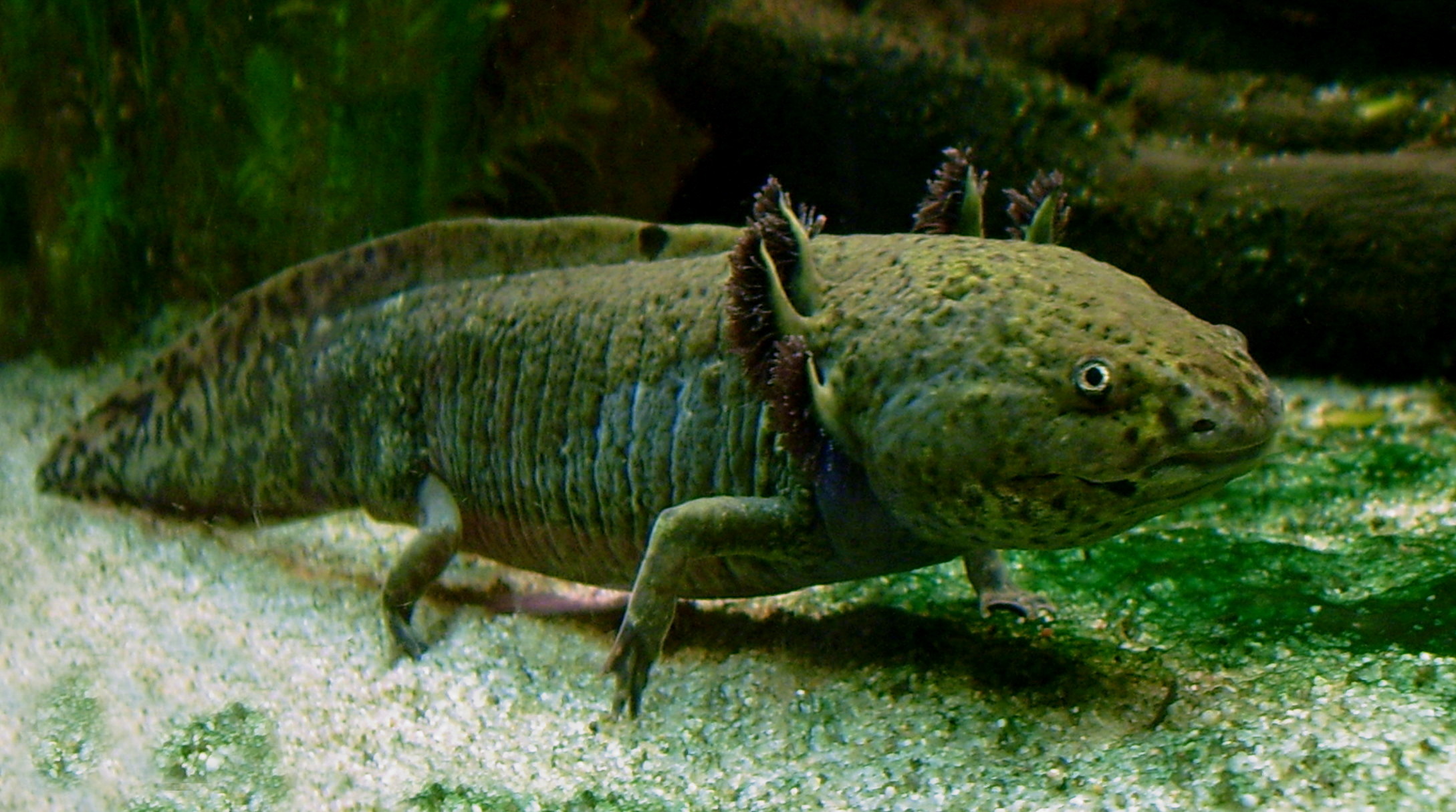
Axolotl (Ambystoma mexicanum)
Introduction
Beneath the surface of a high-altitude Mexican lake, something extraordinary drifts through the water with an almost supernatural calm. Feathery crimson plumes fan out from either side of its head like the petals of some aquatic flower, pulsing gently as oxygen filters through the water. Its wide, flat face carries an expression that has captivated scientists and observers for centuries — a perpetual, unassuming smile that belies the profound biological complexity concealed within this creature's body. This is the axolotl, Ambystoma mexicanum, and it is unlike almost anything else alive on Earth today.
The axolotl is a salamander, and yet it is not quite what anyone would expect a salamander to be. Most amphibians pass through a dramatic metamorphosis — gills dissolve, tails shorten, lungs expand, and an entirely new body plan takes shape as the animal moves from water to land. The axolotl refuses this transformation. It retains its larval form throughout its entire life, breeding, feeding, growing, and dying while still possessing the gills and aquatic adaptations of a juvenile. Scientists call this neoteny — the retention of juvenile characteristics into sexual maturity — and in the axolotl, this trait has been taken to an extreme that has made it one of the most scientifically studied animals in the history of biology.
Native exclusively to the ancient lake system of Xochimilco on the southern edge of Mexico City, the axolotl has survived for millennia in a habitat that has shrunk dramatically over the past century. Today, its wild population exists in a fraction of its historical range, pressed into a network of artificial canals threatened by pollution, invasive species, and urban encroachment. Yet even as its world contracts, the axolotl's biology expands what scientists believe is possible. It can regenerate severed limbs with perfect fidelity. It can regrow damaged heart tissue, portions of its brain, and even sections of its spinal cord. No scarring, no residual dysfunction — just restoration. For researchers studying wound healing, organ repair, and degenerative disease, the axolotl is not merely an interesting animal. It is a living key to questions that medicine has been asking for generations.
"The axolotl is a reminder that nature has already solved many of the problems we are only beginning to understand."
— Dr. Randal Voss, axolotl genome researcher, University of Kentucky
This article explores the axolotl in full — its biology, its behaviour, its ecological role, its extraordinary evolutionary story, and the urgent conservation crisis that now threatens its survival in the wild. It is a story about one small salamander in one shrinking lake, and about why that animal matters far beyond the waters of Xochimilco.
Scientific Classification
Kingdom: Animalia
Phylum: Chordata
Class: Amphibia
Order: Urodela
Family: Ambystomatidae
Genus: Ambystoma
Species: Ambystoma mexicanum (Shaw & Nodder, 1798)
The axolotl belongs to the family Ambystomatidae, a group of mole salamanders found exclusively in North America. While most members of this family undergo metamorphosis, the axolotl stands apart as an obligate neotene — an animal in which the metamorphic process has been genetically suppressed, not merely delayed. The genus Ambystoma contains approximately 32 recognised species, but none has achieved the scientific renown or the conservation urgency of mexicanum. Phylogenetic studies suggest the axolotl diverged from a metamorphosing ancestor relatively recently in evolutionary time, making its fixed larval state a derived characteristic rather than a primitive one. The species was formally described by George Shaw and Frederick Nodder in 1798, though it had been known to the Aztec people of central Mexico for far longer.
Physical Characteristics
At first glance, the axolotl appears to be a creature still in the process of becoming something else — and in a biological sense, that impression is accurate. An adult axolotl typically reaches between 23 and 30 centimetres in total length, though exceptional individuals have been recorded at close to 45 centimetres. Body weight in wild adults generally falls between 60 and 220 grams, with captive individuals sometimes growing considerably heavier due to consistent food availability.
The most visually striking feature is the set of three pairs of external gill stalks that project from behind the head. Each stalk is lined with feathery filaments called rami, which dramatically increase the surface area available for gas exchange. The coloration of these gills is determined by blood circulation — in healthy, well-oxygenated animals, the gills glow a rich red or pink. Under stress or low oxygen conditions, the rami may pale or droop, offering field researchers a useful visual indicator of the animal's physiological state.
The body is broad and somewhat flattened, with a wide, rounded head that accounts for a disproportionate fraction of total body length. The eyes are small and lack eyelids — axolotls cannot blink — and they are positioned laterally, providing a wide field of view that compensates for the limitations of their visual acuity. The limbs are slender but functional, each bearing four or five digits. The tail is long and laterally compressed, functioning as the primary propulsive organ during swimming.
Wild axolotls are predominantly a mottled brownish-black or olive-green coloration, a natural camouflage suited to the murky, vegetation-rich waters of Xochimilco. However, the captive trade has produced a wide array of colour morphs through selective breeding, including the famous leucistic morph — a pale, pinkish-white animal with pink gills and dark eyes — as well as albino, golden, melanoid, and piebald variants. These morphs are essentially absent from wild populations, where natural selection consistently favours cryptic coloration.
Fun FactThe axolotl's wide "smile" is not a facial expression — it is the natural shape of its jaw structure, which is adapted for a sudden suction-feeding technique that draws prey directly into its mouth with remarkable speed.
The skin is smooth, permeable, and moist — a characteristic shared across amphibians that facilitates cutaneous respiration, supplementing the oxygen obtained through the external gills. This skin permeability, while an important respiratory adaptation, also makes the axolotl extremely vulnerable to water quality changes, absorbing pollutants and pathogens directly through its integument.
Habitat & Geographic Distribution
The axolotl's natural range is one of the most restricted of any amphibian on Earth. Historically, the species inhabited the lake system of the Valley of Mexico, including Lakes Xochimilco, Chalco, and their interconnecting waterways. This ancient highland basin sits at an elevation of approximately 2,240 metres above sea level, producing a cool, stable aquatic environment that the axolotl evolved to exploit over countless generations.
Today, Lakes Chalco and Texcoco have been almost entirely drained for urban development. The axolotl's effective wild range is now confined to the remnant canal system of Lake Xochimilco, located in the southern boroughs of Mexico City. Even within Xochimilco, the animal is no longer uniformly distributed. It persists in a small number of canals where water quality remains relatively high and aquatic vegetation — primarily water hyacinth, Eichhornia crassipes, and various native macrophytes — provides shelter and hunting habitat.
The preferred microhabitat within these canals consists of shallow, slow-moving water with a muddy substrate and abundant submerged or emergent vegetation. Water temperatures in the natural range fluctuate seasonally but generally remain between 6°C and 20°C, with cooler temperatures promoting reproductive behaviour. The axolotl is adapted to the specific chemical profile of Xochimilco's waters — historically mineral-rich, alkaline, and well-oxygenated — though pollution has dramatically altered these conditions in many areas.
Habitat Feature | Historical Lake Xochimilco | Modern Canal Remnants |
|---|---|---|
Water area | Thousands of hectares | Tens of hectares (fragmented) |
Water quality | Clear, mineral-rich, alkaline | Polluted, eutrophic in many areas |
Native vegetation | Abundant, diverse macrophytes | Patchy; dominated by invasive species |
Native fish fauna | Endemic species only | Dominated by introduced carp and tilapia |
Human disturbance | Minimal (Aztec chinampas only) | Heavy: tourism, agriculture, urban runoff |
Outside its native Xochimilco system, the axolotl does not exist in any wild population. This extreme endemism — the state of being found nowhere else on Earth — places it among the most geographically vulnerable vertebrates alive today. No ecological corridor connects Xochimilco to any other suitable habitat, meaning that any catastrophic local event could eliminate the wild population entirely.
Behaviour & Social Structure
Axolotls are fundamentally solitary animals. In the wild, individuals maintain loose territories centred around suitable shelter sites — crevices in the canal substrate, dense root mats of aquatic plants, or accumulations of organic debris on the lakebed. These territories are not vigorously defended in the manner of highly social vertebrates, but axolotls will engage in behavioural responses to the presence of conspecifics, particularly when food resources are limited.
The species exhibits a largely peaceful temperament, but cannibalism is documented and ecologically significant. When prey is scarce or population density is high, larger axolotls will consume smaller conspecifics. Juveniles are particularly vulnerable. This behaviour is most commonly observed in captivity when individuals are not adequately separated by size, but it also occurs in the wild and represents a population regulation mechanism that operates independently of external predation pressure.
Communication in axolotls is primarily chemical. The animals possess olfactory sensory systems sensitive to dissolved chemical signals in the water, and these signals play a central role in recognising conspecifics, identifying reproductive status, and detecting potential threats. Unlike many amphibians, axolotls are not vocal — they produce no calls or sounds. The lateral line system, a mechanosensory organ retained from their larval physiology, detects vibrations and pressure changes in the water, allowing them to perceive the movement of nearby animals without visual contact.
Dominance hierarchies in axolotls are largely determined by body size. In shared environments, larger individuals monopolise the best shelter sites and feeding positions. Smaller individuals respond by becoming more cryptic in their behaviour — staying closer to cover, reducing movement, and shifting their activity periods to avoid direct encounters. This size-based dominance structure has been observed consistently in laboratory settings and is almost certainly replicated in natural canal environments where multiple individuals share limited space.
Intelligence, as measured by learning capacity in amphibians, is moderate in the axolotl. Studies have demonstrated that individuals can learn to associate specific environmental cues with food rewards, and that they exhibit behavioural plasticity in response to changing conditions. They do not form social bonds, do not recognise individual conspecifics beyond reproductive contexts, and do not engage in cooperative behaviour of any kind. Their social world is defined by proximity, chemistry, and size — functional, efficient, and stripped of social complexity.
Daily Life & Activity Cycle
The axolotl is predominantly crepuscular and nocturnal, with peak activity occurring during the hours around dawn and dusk, and extending through the night. During daylight hours, individuals typically rest in sheltered positions — beneath submerged vegetation, within root tangles, or pressed against the substrate — minimising both their energy expenditure and their visibility to potential threats.
Movement patterns are generally slow and deliberate. The axolotl is not a pursuit predator; it does not engage in extended chases. Instead, it patrols its territory at a measured pace, detecting chemical and vibrational signatures of prey organisms, then closing the distance with a controlled approach before deploying its suction-feeding mechanism. Between feeding bouts, it may remain stationary for extended periods, a strategy that conserves energy and reduces predation risk simultaneously.
Seasonal shifts in behaviour are driven primarily by water temperature. As temperatures drop in late autumn and winter, axolotl activity levels decline, and the animals spend more time in a resting state. Feeding frequency decreases accordingly. This is also the period when reproductive behaviour intensifies, as cooler temperatures appear to trigger the hormonal changes associated with courtship and egg laying. In spring and early summer, as water temperatures rise, feeding activity increases substantially as individuals recover condition after the breeding season.
Unlike many amphibians in temperate climates, axolotls do not hibernate in the traditional sense. They remain active at low levels throughout the year, their metabolic rate suppressed but not suspended. The relatively stable thermal environment of the deep canal system moderates temperature extremes and prevents the kind of hard freeze conditions that would force true dormancy in other amphibian species found at similar latitudes.
Fun FactAn axolotl's metabolic rate is so efficient that in cold conditions it can survive for weeks without feeding, sustaining itself on stored energy reserves while remaining physiologically stable.
Diet & Survival Strategies
The axolotl is an opportunistic carnivore with a diet that reflects the ecology of its immediate environment. In the wild, it feeds primarily on small invertebrates — aquatic worms, insect larvae (particularly chironomid midges), small crustaceans, molluscs, and occasionally small fish or amphibian larvae. The exact composition of its diet shifts with seasonal availability and local abundance, demonstrating a flexible feeding strategy that allows it to exploit whatever prey is most accessible.
The feeding mechanism is a rapid suction strike. When the axolotl identifies prey within striking range, it rapidly expands its buccal cavity — the space inside its mouth — creating a sudden pressure differential that draws water, and with it the prey item, inward. This happens in a fraction of a second and is executed with enough accuracy that prey has little time to escape. The teeth of the axolotl are small, pedicellate (meaning they sit on a short stalk), and suited for gripping rather than tearing — prey is generally swallowed whole or in large pieces.
Olfaction plays a critical role in prey detection. The axolotl's olfactory organs are highly sensitive to chemical signals released by invertebrate prey, and in low-visibility conditions — which characterise much of the turbid water of modern Xochimilco — smell is often the primary sense guiding a hunting approach. The lateral line system supplements this by detecting the hydrodynamic signatures of moving prey even in complete darkness.
Competition for food resources in the degraded Xochimilco canal system has intensified dramatically with the introduction of non-native fish species. Common carp (Cyprinus carpio) and Nile tilapia (Oreochromis niloticus) are voracious competitors that consume many of the same invertebrate prey items targeted by axolotls. These introduced species also physically disturb the substrate through their feeding behaviour, reducing the abundance of benthic invertebrates and degrading the structural complexity of the habitat that axolotls depend upon for shelter and hunting success.
In response to food scarcity, axolotls reduce their metabolic rate and activity level, effectively lowering their energetic requirements until conditions improve. This physiological flexibility is a characteristic advantage of ectothermic vertebrates, who are not obligated to maintain a constant internal temperature and can therefore dramatically reduce their caloric needs during lean periods. However, prolonged food deprivation affects reproductive output, immune function, and regenerative capacity — connecting dietary health directly to nearly every other aspect of axolotl biology.
Interaction with Other Animals
In its native habitat, the axolotl occupies a position in the food web that places it simultaneously as predator and prey. Understanding how it interacts with the full community of organisms in Xochimilco reveals much about its ecological role and the cascading consequences of its decline.
As a predator, the axolotl exerts control over populations of aquatic invertebrates — worms, crustaceans, insect larvae — and to a lesser extent over small fish and amphibian larvae. In a healthy ecosystem, this predation pressure prevents any single prey population from becoming dominant, maintaining invertebrate community diversity that in turn supports the broader food web. Historically, the axolotl shared this predator role with a suite of native fish and bird species that together regulated the trophic dynamics of the Xochimilco system.
As prey, juvenile axolotls face predation from large wading birds — herons, egrets, and kingfishers patrol the canal margins and are capable of taking young animals. Large native fish historically preyed upon juveniles as well, though native fish diversity in Xochimilco has collapsed significantly. In the modern canal system, introduced carp and tilapia likely prey on axolotl eggs and juveniles, adding a predation pressure that the species did not face in its evolutionary history and for which it has no developed defensive response.
In the grey light before dawn, a heron stands motionless at the edge of a Xochimilco canal. The water beneath it is dark and still, thick with the smell of organic sediment and floating water hyacinth. Somewhere in the root-tangled shallows, an adult axolotl has been hunting since midnight. Its crimson gill plumes barely stir as it drifts forward, drawn by the chemical signature of a cluster of midge larvae buried in the mud.
The axolotl strikes. The buccal suction is over in milliseconds. The larvae are gone. The axolotl settles back into the shadow of a root mass, its wide eyes registering the brightening sky above the water surface. Overhead, the heron shifts its weight — it has detected a disturbance in the shallows. But the axolotl is already still again, pressed flat against the muddy bottom, its mottled brown skin indistinguishable from the substrate.
The heron waits. The axolotl waits. The canal carries on its slow, complicated life around them both, neither knowing how few mornings remain for this ancient place.
The relationship between the axolotl and introduced carp is particularly damaging. Carp are bottom-feeding fish that uproot and consume aquatic vegetation, cloud the water with disturbed sediment, and consume virtually any organic matter available to them. Their presence in Xochimilco has fundamentally altered the benthic community that the axolotl depends upon, replacing structured, vegetated habitat with bare, turbid sediment that offers neither cover nor hunting opportunities. This represents a form of competitive displacement that operates not through direct aggression but through wholesale habitat modification.
Axolotls do not appear to engage in any form of mutualism or symbiosis with other species. Their ecological interactions are primarily antagonistic — predation and competition — which makes the health of their prey base and the absence of invasive competitors critical determinants of their survival.
Interaction with Environment
The axolotl's relationship with its physical environment is intimate and multidimensional. As an amphibian with permeable skin, it is essentially a living water quality sensor — its health directly reflects the chemical and biological condition of the water surrounding it. This sensitivity makes it an excellent indicator species for monitoring ecosystem health, but it also renders the animal extraordinarily vulnerable to environmental degradation.
In the intact Xochimilco system, axolotls played an important functional role in maintaining benthic community structure. Their predation on invertebrates regulated population cycles of chironomid midges and other invertebrates that, in turn, decompose organic matter and contribute to nutrient cycling in the sediment. By influencing invertebrate abundance, axolotls indirectly shaped the rate at which organic material was processed in the lakebed — a subtle but ecologically consequential function.
The traditional chinampa agricultural system, practised by Aztec farmers and continuing in modified form in Xochimilco today, historically created a mosaic of aquatic habitats — channels, shallow embayments, and flooded fields — that provided diverse microhabitats for the axolotl. The chinampas were maintained using organic sediment dredged from the canal floors, which incidentally removed accumulated toxins and enriched the soils. This agricultural system, though human-modified, was broadly compatible with axolotl ecology over many centuries.
Modern agricultural and urban runoff has disrupted this equilibrium catastrophically. Nitrogen and phosphorus inputs from fertilisers and sewage trigger algal blooms that deplete oxygen from the water, suffocating aquatic life and clogging the gills of axolotls. Pesticides absorbed through the permeable skin disrupt hormonal signalling, immune function, and nervous system activity. Heavy metals accumulate in sediments that axolotls rest on and forage through. Each of these pressures would be manageable in isolation; together, they have compressed the axolotl's survivable habitat into a shrinking fraction of what the Xochimilco system once was.
Reproduction & Parenting
Axolotl reproduction follows a pattern common to salamanders but executed entirely underwater — a reflection of the animal's fully aquatic life history. Breeding is seasonal, with peak activity occurring between December and June, corresponding to the cooler, drier months of the Mexican highland year. Water temperature is the primary environmental cue that initiates reproductive behaviour, with temperatures between 10°C and 18°C appearing optimal for courtship and fertilisation.
Courtship is initiated by the male, who engages in a behaviourally precise sequence that has been observed in both wild and laboratory conditions. The male nudges and nudges the female with his snout, then begins a characteristic "waltz" — a series of undulating body movements in which he positions himself alongside and ahead of the female, leading her across the substrate. If the female is receptive, she follows. The male deposits a spermatophore — a gelatinous packet containing sperm — on the substrate, and the female manoeuvres her cloacal opening over it, drawing the sperm internally. This internal fertilisation without copulation is characteristic of the entire salamander order.
Egg laying begins within hours to days following fertilisation. Females deposit between 100 and 1,000 eggs in a single breeding event, attaching them individually or in small clusters to submerged vegetation, root masses, or any available substrate. Each egg is enclosed in a transparent gelatinous capsule that protects it from physical damage and provides a medium through which gas exchange occurs. The eggs are not guarded by either parent — once deposited, they are abandoned entirely, and parental investment ends at fertilisation.
Incubation takes between 10 and 20 days depending on water temperature. Cooler temperatures slow development; warmer temperatures accelerate it, though temperatures above 24°C increase mortality rates significantly. Larvae emerge with front limbs already visible and proceed to develop their hind limbs over the following weeks. Juvenile axolotls are immediately independent, though their small size makes them highly vulnerable to predation and cannibalism. Growth rates depend heavily on food availability, and the transition from larva to sexually mature adult can occur in as little as six months under optimal conditions, or take over a year in food-limited environments.
The axolotl's reproductive strategy — high egg output, no parental care, rapid development — is a classic r-selected approach that prioritises numerical output over individual offspring investment. This strategy can sustain populations through environmental variability as long as suitable habitat and prey are available. In Xochimilco's degraded conditions, however, even high reproductive output cannot compensate for the scale of juvenile mortality imposed by pollution, introduced predators, and habitat loss.
Evolutionary Adaptations
The axolotl's most celebrated adaptation — neoteny — is simultaneously its most defining feature and the source of its extraordinary scientific value. The retention of larval characteristics throughout the entire lifespan is not, in the axolotl's case, a simple failure of metamorphosis. It is the result of specific changes in the hormonal and genetic systems that govern development. In most salamanders, a surge of thyroid hormone triggers the cascade of physical changes that constitute metamorphosis. In the axolotl, the tissues that should respond to this signal do not — not because the hormone is absent, but because the relevant receptor system is suppressed. Experimental administration of thyroid hormone can induce partial metamorphosis in laboratory axolotls, demonstrating that the developmental machinery is present but held in check by evolutionary modification.
The ecological advantage of neoteny in the Xochimilco environment is considerable. By remaining aquatic throughout its life, the axolotl avoids the energetically expensive and physiologically dangerous process of terrestrial transition. The cool, permanent waters of the high-altitude lake system provide stable conditions that reduce the survival risk of remaining aquatic, while the terrestrial environment surrounding the lake — historically a high-altitude plain with seasonal extremes — offered comparatively limited opportunity for a salamander that had evolved for aquatic life. Natural selection, over many generations, favoured individuals in whom the metamorphic trigger was suppressed, because those individuals survived longer and produced more offspring in the specific conditions of the Valley of Mexico.
Regenerative capacity is the axolotl's second extraordinary adaptation, and arguably the one with the greatest implications for human science. When a limb is amputated, the wound heals without scar tissue. Within days, a cluster of undifferentiated cells — a blastema — forms beneath the wound surface. These cells then proliferate and differentiate into all the tissue types required to reconstruct the missing structure: bone, muscle, nerve, blood vessel, and skin, all arranged in precise anatomical order. The regenerated limb is functionally indistinguishable from the original. This capacity extends beyond limbs to include heart muscle, retinal tissue, spinal cord segments, and portions of the brain.
The mechanisms underlying axolotl regeneration involve the reactivation of developmental gene networks that are silenced in most vertebrates after embryonic development. The immune response following injury in axolotls is qualitatively different from that in mammals — rather than triggering a fibrotic scarring cascade, it initiates a pro-regenerative inflammatory response that enables tissue reconstruction. Understanding how this switch is implemented at the molecular level is one of the central questions in modern regenerative medicine.
The lateral line system — retained from the larval stage — provides the axolotl with sensory capabilities beyond those of most adult vertebrates. This system of mechanosensory hair cells distributed across the skin surface detects subtle water movements and pressure changes, functioning as a six-dimensional spatial awareness system that complements vision and olfaction in a turbid aquatic environment. The retention of this system is another benefit of neoteny, as it would be lost during metamorphosis in most salamanders.
Adaptation | Axolotl | Typical Salamander (Post-metamorphosis) |
|---|---|---|
External gills | Retained for life | Resorbed at metamorphosis |
Lateral line | Retained for life | Lost at metamorphosis |
Habitat | Fully aquatic throughout life | Terrestrial or semi-aquatic as adult |
Lungs | Present but rudimentary | Primary respiratory organ |
Limb regeneration | Complete, scar-free | Absent or very limited |
Metamorphosis | Genetically suppressed | Hormonally triggered |
Ecological Importance
The axolotl functions as a mid-level predator and prey species within the Xochimilco ecosystem, but its ecological importance extends beyond its direct trophic interactions. As a species with very high sensitivity to environmental conditions, it serves as a biological indicator of ecosystem health — its presence, abundance, and physiological condition reflect the cumulative state of the water quality, habitat structure, and food web integrity of the canal system.
The predation that axolotls exert on benthic invertebrates helps regulate the composition of the detritivore community — the organisms responsible for breaking down organic matter on the lakebed. When this community is kept in balance by predation, organic matter decomposition proceeds at a rate that maintains oxygen levels in the sediment and prevents the buildup of anoxic conditions that would be lethal to a wide range of aquatic species. The axolotl, in this context, is a regulator of a process that underpins the productivity of the entire aquatic ecosystem.
The Xochimilco wetland system, of which the axolotl is the most iconic inhabitant, provides ecosystem services to the approximately 20 million residents of the Mexico City metropolitan area. These services include groundwater recharge, flood buffering, temperature moderation, air filtration through wetland vegetation, and the maintenance of biodiversity in one of the most urbanised landscapes in the Western Hemisphere. The axolotl is both a symbol of and a contributor to the ecological integrity that makes these services possible.
From a scientific standpoint, the axolotl's value to ecological research and biomedical science is incalculable. Insights derived from axolotl biology have advanced understanding of wound healing, cell differentiation, developmental genetics, and the evolutionary origins of tissue repair mechanisms. The axolotl genome — one of the largest known animal genomes, approximately ten times the size of the human genome — has been fully sequenced, opening an entirely new chapter of comparative genomic research. The extinction of the wild axolotl would not only represent the loss of a species; it would close a biological window that cannot be replicated by captive or laboratory populations alone.
Threats & Conservation
The wild axolotl faces a convergence of pressures that have reduced its population to critically low numbers. These threats are not isolated — they interact and amplify one another, creating a crisis that is qualitatively different from the challenges faced by most endangered species.
Urban expansion in Mexico City has eliminated the majority of the lake system that historically supported the axolotl. What remains of Xochimilco is a patchwork of canals subject to constant encroachment from residential and agricultural development. Water quality in these canals is compromised by untreated sewage, agricultural runoff, and industrial waste. The combination of nutrient loading and organic pollution creates eutrophic conditions — low oxygen, high turbidity, toxic chemical gradients — that are physiologically intolerable for a species as sensitive as the axolotl.
The introduction of non-native fish species, particularly common carp and Nile tilapia, has had devastating consequences. These species were introduced in the mid-20th century as a protein source and are now deeply established throughout the Xochimilco canal system. Their impact is threefold: direct predation on axolotl eggs and juveniles, competition for shared invertebrate prey, and habitat modification through bottom disturbance that degrades the structural complexity of aquatic vegetation beds.
The wild-capture trade, while less severe than habitat destruction, has historically removed individuals from the wild population for use in the pet trade and in scientific research. While captive populations now meet most research and pet market demands, historical collection pressure contributed to population decline during the critical mid-20th century period when the wild population was already under severe stress. IUCN assessors have noted that collection for the pet trade remains a minor ongoing concern in some areas.
Conservation responses have included the establishment of protected canal zones within Xochimilco, government-sponsored carp removal programmes, water quality monitoring, and the creation of axolotl refugia — enclosed sections of canal from which invasive fish have been eliminated and water quality is actively managed. Several Mexican and international research institutions maintain captive breeding programmes, and public awareness campaigns centred on the axolotl's cultural and scientific significance have grown substantially in recent years.
IUCN Red List Analysis
Current IUCN Status
The axolotl (Ambystoma mexicanum) is listed as Critically Endangered (CR) on the IUCN Red List of Threatened Species. This classification — the highest threat category before Extinct in the Wild — reflects the species' extremely small and declining population, its severely restricted range (confined to a single lake system), and the continuing deterioration of its habitat. The Critically Endangered designation is applied when a species meets one or more of a set of quantitative thresholds relating to population decline, geographic range size, and extinction probability modelling. The axolotl satisfies multiple criteria simultaneously: its effective range is less than 10 square kilometres of suitable habitat, its population trend is demonstrably downward, and the threats driving that decline show no sign of abating under current conditions.
Population Trend
The wild axolotl population is classified as decreasing, and the scale of that decrease has been dramatic. In the early 1990s, survey data suggested densities of approximately 6,000 individuals per square kilometre in suitable Xochimilco habitat. By the mid-2000s, a major scientific survey conducted by Mexican researchers found densities of approximately 100 individuals per square kilometre — a decline of over 98 percent in roughly a decade. More recent surveys have produced estimates in the range of 50–100 individuals per square kilometre in the few remaining suitable canal sections, with some researchers suggesting that the total wild population may be in the hundreds to low thousands of individuals.
These figures must be interpreted carefully. The axolotl's cryptic, nocturnal habits and preference for dense vegetation make accurate population assessment extremely challenging. Visual survey methods tend to undercount individuals. Nonetheless, even the most optimistic assessment of current wild population size is consistent with Critically Endangered status and represents a population that is functionally marginalised within its own ecosystem.
Main Threats
Habitat destruction and degradation remain the primary driver of axolotl decline. The drainage of Lakes Chalco and Texcoco eliminated the majority of the species' historical range. Continuing urban expansion in the Xochimilco area reduces available habitat through direct infilling and through the deterioration of water quality in adjacent canals. Eutrophication from sewage and agricultural runoff reduces dissolved oxygen levels, increases turbidity, and promotes toxic algal growth — all conditions that are lethal or sublethal to axolotls.
Invasive species constitute the second major threat. Common carp and Nile tilapia have restructured the benthic community of Xochimilco, eliminating many of the invertebrate prey species and juvenile shelter structures the axolotl requires. Their removal is logistically difficult and expensive, and recolonisation from adjacent canals occurs rapidly following any clearance effort.
Water pollution operates through multiple pathways simultaneously. Organophosphate pesticides from surrounding agricultural land disrupt axolotl endocrine function and immune competence. Heavy metals accumulate in the sediment and are absorbed through the permeable skin. Pharmaceutical residues — a consequence of the enormous volume of treated and partially treated wastewater entering the Xochimilco system — have been detected in canal sediments at concentrations sufficient to affect amphibian reproduction and development.
Climate change is an emerging but increasingly significant threat. Increasing temperatures in the Mexico City basin during summer months push canal water temperatures toward the upper threshold of axolotl thermal tolerance. More frequent drought conditions reduce water levels, concentrate pollutants, and reduce connectivity between canal sections. Altered precipitation patterns disrupt the seasonal temperature regime that triggers axolotl reproductive behaviour.
Ecological Consequences
The loss of the wild axolotl population would remove a mid-level predator from the Xochimilco food web, disrupting the population dynamics of the invertebrate communities the axolotl currently regulates. Without this predation pressure, certain invertebrate populations — particularly detritivores and filter feeders — could expand rapidly, altering the rate of organic matter decomposition and changing the nutrient cycling dynamics of the canal sediment. These shifts would likely accelerate eutrophication, creating a self-reinforcing cycle of habitat degradation.
The Xochimilco wetland is already a highly modified, ecologically impoverished system compared to its historical state. The axolotl's disappearance would not trigger a cascade of secondary extinctions in the way that a keystone predator's removal might in a more intact ecosystem. However, it would signal and accelerate a broader collapse of the system's remaining ecological functionality. The loss of this species from the wild would also represent the permanent loss of a genetically distinct evolutionary lineage — captive populations, however well-maintained, carry a subset of the genetic diversity that exists in wild individuals shaped by thousands of years of natural selection in a specific environment.
Conservation Efforts
Multiple conservation initiatives are currently active in Xochimilco. The National Autonomous University of Mexico (UNAM) operates the Laboratory of Axolotl Conservation Biology, which coordinates population monitoring, captive breeding, and habitat restoration research. The Ecological Rescue Programme for Axolotls in Xochimilco, funded in part by the Mexican federal government, has established axolotl sanctuaries — enclosed canal sections where invasive fish have been removed, native vegetation has been replanted, and water quality is monitored continuously.
International collaboration has become increasingly central to axolotl conservation. Partnerships between Mexican institutions and universities in Europe and North America have supported genetic studies of wild populations, development of environmental DNA (eDNA) survey techniques for monitoring axolotl presence non-invasively, and analysis of the captive population's genetic relationship to wild individuals. Zoos and aquaria worldwide maintain axolotl populations and contribute to public education efforts that have substantially raised global awareness of the species' plight.
Chinampa restoration programmes, supported by NGOs and the Mexico City government, aim to revitalise traditional agricultural practices in Xochimilco in ways that are compatible with axolotl habitat requirements. These programmes support local farmers in transitioning away from heavy pesticide use and in maintaining vegetated canal margins that provide axolotl shelter and foraging habitat.
Future Outlook
The future of the wild axolotl is uncertain and, on current trajectories, concerning. Conservation efforts have demonstrated that localised habitat restoration and invasive species removal can produce measurable improvements in axolotl density within refugia — but scaling these successes across the broader Xochimilco system faces formidable logistical, financial, and political obstacles. The fundamental drivers of habitat loss — urbanisation, agricultural intensification, inadequate wastewater treatment — are deeply embedded in the economic and social geography of Mexico City and will not be resolved by species-level conservation interventions alone.
If dedicated conservation investment continues and expands, and if habitat restoration efforts successfully increase the area of suitable habitat within Xochimilco, the wild axolotl population could stabilise and potentially begin to recover. However, climate projections for the Mexican highland plateau suggest that temperature increases over the coming decades will progressively reduce the extent of thermally suitable habitat, adding a new dimension of pressure that even optimal local conservation cannot fully counteract. The wild axolotl's long-term survival may ultimately depend on whether Mexico can implement landscape-scale water management reforms that restore ecological function to the broader Xochimilco basin.
Fun FactThe axolotl's genome is approximately 32 billion base pairs long — roughly ten times the size of the human genome — making it one of the largest animal genomes ever fully sequenced, a feat completed in 2018 by an international research consortium.
Human Relationship
Few animals carry the weight of human cultural history that the axolotl does. For the Aztec civilization, which built its empire on the islands and shores of the Valley of Mexico, the axolotl was not merely an animal but a deity in disguise. In Aztec cosmology, the axolotl was the manifestation of Xolotl, the dog-headed god of lightning, fire, and the dead — a guide for souls navigating the underworld. The name "axolotl" itself derives from the Nahuatl words for "water" (atl) and "monster" or "dog" (xolotl), linking the animal etymologically to its divine association. Xolotl, the myth held, had transformed into the axolotl to avoid sacrificial death at the hands of the other gods, choosing the water over oblivion. This association imbued the animal with a sacred ambiguity — a creature that refused its own transformation, that chose continuity over transcendence.
The axolotl was also a food source for the Aztec people. Historical accounts describe it being consumed roasted or as part of stews, valued both as a protein source and as a medicine. Its consumption was regulated to some degree by its sacred status, which likely prevented overexploitation during the pre-Columbian period. After the Spanish conquest, European naturalists encountered the axolotl and were immediately fascinated. Live specimens were sent to Paris in the 1860s, where they bred in captivity and established the laboratory populations that would eventually underpin a century of biological research.
The modern relationship between humans and axolotls is complex and somewhat paradoxical. The animal is enormously popular in the global pet trade, with millions of captive-bred individuals kept in tanks worldwide. Captive breeding for the pet market has produced the array of colour morphs that most people associate with the species — particularly the pale leucistic morph with its pink gills, which has become one of the most recognisable exotic pets in the world. The irony is sharp: while the wild population hovers at critically low numbers in a single degraded lake, the axolotl thrives in glass tanks in living rooms and research facilities across the globe, celebrated precisely for the biological traits that evolution shaped in a specific lake in the Mexican highlands.
Tourism in Xochimilco has historically posed both a threat and an opportunity for the axolotl. The colourful trajinera boats that ferry tourists through the canals bring economic resources to local communities but also contribute to water pollution and habitat disturbance. Some conservation initiatives have successfully reframed axolotl-related tourism as an asset — guiding visitors to understand the ecological significance of the wetland and generating funding for conservation work through guided axolotl-spotting tours, particularly in the managed refugia sections of the canal system.
Unique & Rare Facts
Complete limb regeneration: The axolotl can regrow a fully functional limb — including bone, muscle, nerves, and skin — multiple times throughout its life with no loss of function and no scar tissue formation. This capacity is unmatched among adult vertebrates.
Induced metamorphosis: Laboratory axolotls can be induced to undergo partial or full metamorphosis through the injection of thyroid hormone or iodine supplements. Metamorphosed axolotls are dramatically different in appearance — they lose their gills, develop eyelids, and adopt a more terrestrial body form — but they typically have shorter lifespans than non-metamorphosed individuals.
Largest animal genome ever sequenced: At approximately 32 billion base pairs, the axolotl genome is ten times larger than the human genome and contains vast stretches of repetitive sequence whose function remains only partially understood. The sheer scale of this genome has challenged the most advanced sequencing technologies available.
Heart regeneration: After deliberate damage to cardiac muscle in laboratory studies, axolotls regenerate heart tissue with full contractile function within weeks — a capability that, if understood and replicated, could transform the treatment of heart disease in humans.
Brain regeneration: The axolotl can regenerate portions of its forebrain and midbrain following experimental injury. This includes the re-establishment of correct neural connectivity — new neurons not only grow but form appropriate synaptic connections, restoring behaviour-relevant function.
Neotenic ancestor evidence: Phylogenetic analysis suggests the axolotl's neotenous ancestor diverged from metamorphosing Ambystoma relatives relatively recently — possibly within the last few million years — meaning that the dramatic transformation from a metamorphosing to a permanently larval lifestyle occurred within a relatively short evolutionary window.
Longevity: In captivity with good husbandry, axolotls regularly live between 10 and 15 years. Some individuals have reached or exceeded 20 years of age. Wild longevity is considerably shorter due to environmental pressures, but the species' regenerative capacity may contribute to its comparative resilience at the individual level.
Paedomorphic reproduction: The axolotl reproduces successfully while retaining all larval characteristics — external gills, lateral line, and aquatic lifestyle. This is true paedomorphosis (reproduction in the larval state), which has evolved independently in several amphibian lineages but is expressed in the axolotl with particular biological elaboration.
Environmental DNA detection: Researchers have developed eDNA techniques capable of detecting axolotl presence in Xochimilco canal water from trace DNA shed into the water column. This non-invasive monitoring method is now being used to map axolotl distribution across the canal system with greater precision than traditional visual surveys allow.
Colour perception: Despite their relatively simple visual system, axolotls appear capable of detecting and responding to differences in colour and light intensity, using colour cues in prey detection and in certain social interactions — a more sophisticated visual capacity than their anatomy might suggest.
Conclusion
There is something profoundly instructive about the axolotl's refusal to transform. In a world that celebrates change and progress, this small salamander has persisted for millions of years by staying exactly what it is — larval, aquatic, regenerative, unhurried. It did not adapt to the land. It did not evolve armour, venom, or speed. It evolved something more subtle and more extraordinary: the biological capacity to heal itself completely, the physiological economy to survive lean conditions, and the reproductive resilience to persist through environmental variability that would extinguish less adaptable animals. For most of its evolutionary history, these traits were enough.
What they are not enough for is the pace and scale of change that a growing human city can impose on a single lake in a single generation. Xochimilco has been hollowed out — its extent reduced, its water compromised, its native community replaced piecemeal by species introduced from other continents. The axolotl, for all its biological magnificence, cannot regenerate a lost habitat. It cannot purify its own water supply. It cannot outcompete an invasive carp through force of will or evolutionary ingenuity. What it can do — what it has always done — is survive in the conditions it evolved for. The question that conservation science is now racing to answer is whether those conditions can be restored before the last wild individuals are gone.
"We do not inherit the Earth from our ancestors; we borrow it from our children."
— Antoine de Saint-Exupéry (attributed)
The axolotl carries within its cells biological secrets that human science is only beginning to read. It carries within its evolutionary history a story of remarkable success in a specific place over a specific span of time. And it carries within its current predicament a warning about what happens when the specific places that specific animals evolved for are treated as expendable. Preserving the wild axolotl is not a sentimental exercise in protecting something charming. It is a decision about whether ecological knowledge, biological diversity, and the irreplaceable depth of evolutionary heritage have a place in the future we are building. The answer we give, here in the canals of Xochimilco, will be one of the defining choices of our era.
Sources & Attribution
Data and ongoing research referenced for this article come from the following authoritative sources — peer-reviewed publishers, official taxonomic registers, and global biodiversity programmes:
- IUCN Red List — Axolotl — official IUCN Red List assessment including population trend, threats, and conservation actions.
- Wikipedia — Axolotl — taxonomy, distribution, and an overview with onward citations to primary literature.
- GBIF — Axolotl — global occurrence and distribution records from the Global Biodiversity Information Facility.
- iNaturalist — Axolotl — observation records and field photographs contributed by naturalists worldwide.
- Encyclopedia of Life — Axolotl — multilingual species pages aggregating taxonomic and natural-history data.
- WWF — World Wildlife Fund — global wildlife conservation programmes and research summaries.
- Nature — research on Axolotl — peer-reviewed studies indexed by Nature on related ecology and behaviour.
- ITIS — Integrated Taxonomic Information System — federal-grade taxonomy and nomenclature.
Frequently Asked Questions
What is an axolotl and why is it considered unusual?
The axolotl (Ambystoma mexicanum) is a species of salamander native to the lake system of Xochimilco in Mexico City. It is considered highly unusual because, unlike virtually all other salamanders, it retains its larval characteristics — including external gill plumes and a fully aquatic lifestyle — throughout its entire life, never undergoing the metamorphosis that transforms most amphibians into their adult form. This phenomenon is called neoteny, and in the axolotl it is the result of a genetically suppressed hormonal metamorphic trigger. The axolotl breeds, grows, and lives its entire existence as what would be, in any other salamander, a juvenile stage.
Can axolotls really regenerate lost limbs?
Yes, and with a completeness unmatched by any other adult vertebrate. When an axolotl loses a limb, the wound heals without scar tissue formation. A mass of undifferentiated cells called a blastema forms and then differentiates into all the tissue types required — bone, muscle, nerve, blood vessel, skin — reconstructing the limb in precise anatomical order. The regenerated limb is functionally indistinguishable from the original. This capacity extends to heart tissue, portions of the spinal cord, retinal cells, and sections of brain tissue. The mechanisms involved are the subject of intensive ongoing research in regenerative medicine.
Where do axolotls live in the wild?
Wild axolotls are found exclusively in the canal system of Lake Xochimilco, located in the southern part of Mexico City, at an elevation of approximately 2,240 metres above sea level. They once inhabited a much larger lake system across the Valley of Mexico, including Lakes Chalco and Texcoco, but the draining of these lakes for urban development confined the species to the remnant Xochimilco waterways. Even within Xochimilco, they are now present at very low densities and restricted to areas where water quality remains tolerable and aquatic vegetation provides sufficient shelter.
Are axolotls endangered in the wild?
Yes. The axolotl is classified as Critically Endangered on the IUCN Red List — the most severe threat category before Extinct in the Wild. Wild population surveys have shown a decline of more than 98 percent in axolotl density over recent decades. The primary threats are urban habitat destruction, water pollution from sewage and agricultural runoff, and competition from introduced fish species — particularly common carp and Nile tilapia — which prey on axolotl eggs and juveniles and degrade the aquatic vegetation that axolotls depend on. Despite being abundant in captivity worldwide, the wild population is in a critical state.
What do axolotls eat in the wild?
Wild axolotls are carnivores that feed primarily on aquatic invertebrates, including worms, insect larvae, small crustaceans, and molluscs. They also consume small fish and amphibian larvae when these are available. Feeding is accomplished through a rapid suction-strike mechanism in which the axolotl rapidly expands its buccal cavity to draw prey directly into its mouth. Olfaction is the primary prey detection sense in the turbid waters of Xochimilco, where visibility is often limited.
How long do axolotls live?
In captivity with proper care, axolotls typically live between 10 and 15 years, and some individuals have been recorded at 20 years or more. Wild longevity is considerably shorter — likely averaging 5 to 10 years — due to environmental stressors, predation pressure, food availability limitations, and the deteriorating water quality of the Xochimilco canal system. Temperature, diet quality, and water quality are the most significant determinants of lifespan in both wild and captive individuals.
Why is the axolotl important to medical science?
The axolotl is one of the most scientifically studied vertebrates in the world because of its extraordinary regenerative capacity. It can regrow limbs, heart tissue, spinal cord segments, and portions of the brain without scarring — a biological ability that, if understood at the molecular level, could inform treatments for spinal cord injuries, heart disease, stroke, and degenerative neurological conditions. The axolotl's genome — fully sequenced in 2018 — contains genetic information about the developmental pathways that enable tissue regeneration, many of which have counterparts in mammalian biology that are normally silenced after embryonic development.
Can axolotls be kept as pets?
Yes, axolotls are legally kept as pets in many countries, and captive-bred individuals are widely available through breeders and specialist retailers. Captive axolotls are generally the descendants of laboratory populations established from wild-caught specimens in the 19th and 20th centuries. They require cool, well-oxygenated water (ideally between 14°C and 20°C), a tank of at least 60 litres for a single adult, a protein-rich diet, and careful water quality management. Prospective owners should verify the legality of keeping axolotls in their jurisdiction, as some regions restrict or prohibit their ownership. Wild axolotls should never be collected for the pet trade.
What is the difference between a leucistic axolotl and an albino axolotl?
Both are colour morphs produced by selective breeding in captivity and are essentially absent from wild populations. A leucistic axolotl has a pale pinkish-white body with dark eyes — the pigment cells responsible for body coloration are reduced in number but not entirely absent, and the eye retains its normal dark pigmentation. An albino axolotl lacks the ability to produce melanin entirely, resulting in a pale or golden body and pale, pinkish eyes. Both morphs would be significantly more vulnerable to predation in the wild, where the natural brownish-black camouflage of the wild type is essential for survival.
How do axolotls reproduce?
Axolotl reproduction is entirely aquatic. Males initiate courtship through a characteristic "waltz" behaviour, leading the female across the substrate before depositing a gelatinous spermatophore. The female manoeuvres over the spermatophore to take up the sperm internally, after which fertilised eggs are deposited individually on submerged vegetation or substrate. A single female may lay between 100 and 1,000 eggs per breeding event. Eggs hatch in 10–20 days depending on water temperature. Neither parent guards the eggs or juveniles — parental investment ends at egg deposition.
What conservation efforts are in place to protect wild axolotls?
Conservation efforts include the establishment of axolotl refugia — enclosed canal sections in Xochimilco from which invasive fish have been removed and where water quality is actively managed. The National Autonomous University of Mexico (UNAM) leads population monitoring, captive breeding, and habitat restoration research. Chinampa restoration programmes support traditional farming practices compatible with axolotl ecology. International research partnerships have developed eDNA monitoring techniques for non-invasive population surveys. Public awareness campaigns and eco-tourism initiatives linked to axolotl conservation also contribute to funding and community support for protection efforts.
What does "axolotl" mean and where does the name come from?
The name "axolotl" derives from the Nahuatl language of the Aztec people. It combines the words atl (water) and xolotl (a reference to Xolotl, the Aztec god of lightning, death, and the underworld, often depicted as a dog-headed deity). In Aztec mythology, Xolotl was believed to have transformed himself into an axolotl to escape sacrifice, and the animal was accordingly regarded as sacred. The name reflects both the animal's aquatic habitat and its profound cultural significance in pre-Columbian Mexican civilisation, a significance that has shaped the way the axolotl is regarded — scientifically, culturally, and conservationally — to this day.
Image: Wikipedia/Wikimedia Commons — “Axolotl”
Comments
Post a Comment