
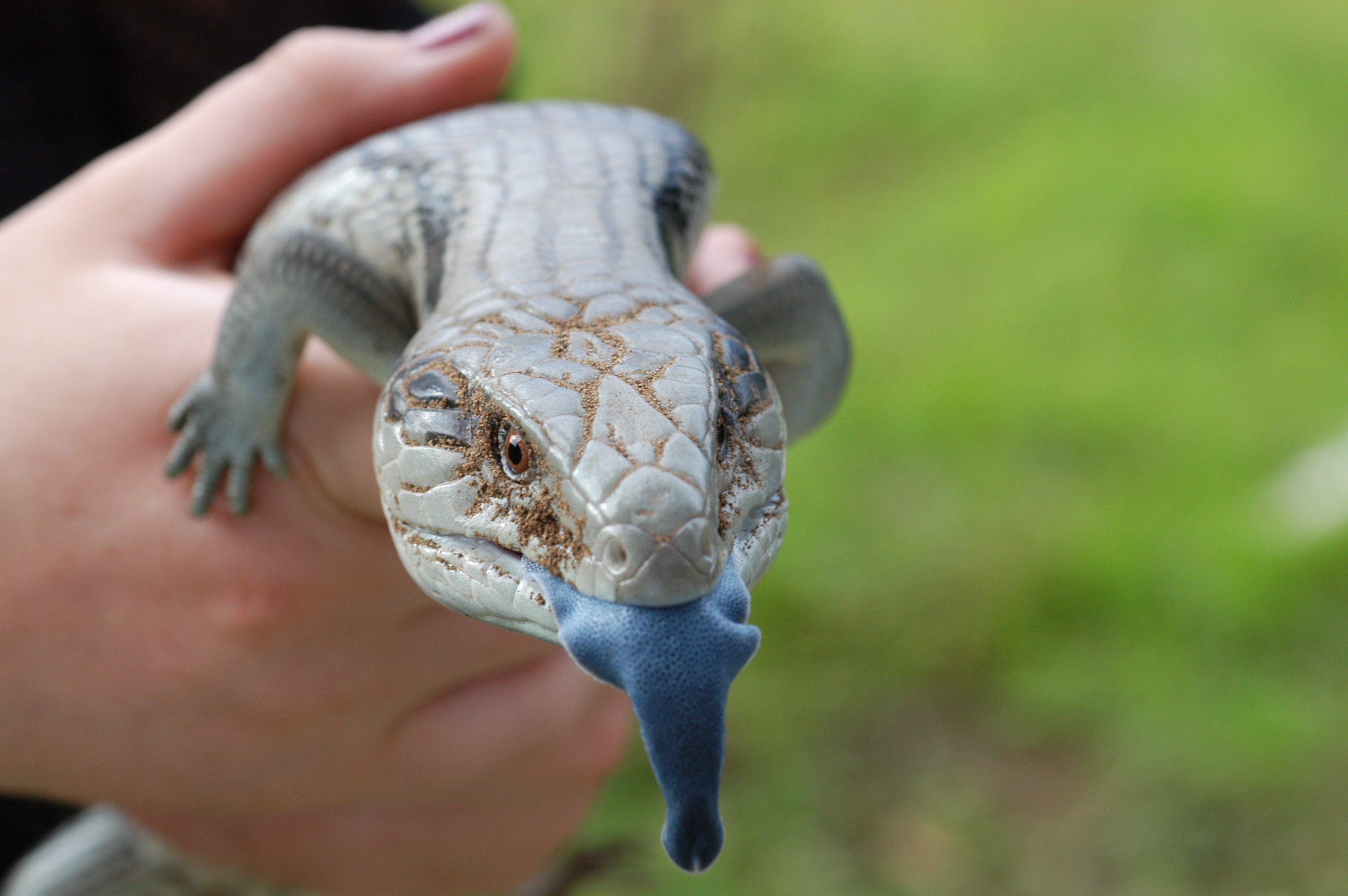
Blue-tongued Skink (Tiliqua scincoides)
Introduction
The Australian bush falls quiet in the mid-morning heat. Dry leaves crackle beneath the weight of something low and deliberate, moving through the understorey with the slow confidence of an animal that has little reason to rush. Then, without warning, a wide, flat head swings toward an approaching threat — and a startling flash of electric blue erupts from an open mouth. The display lasts only seconds, but the impression lingers. This is the blue-tongued skink, one of Australia's most recognisable reptiles, wearing its warning colours on the inside.
The eastern blue-tongued skink (Tiliqua scincoides) is the largest and most widespread member of the genus Tiliqua, a group of heavy-bodied lizards that have occupied Australia's landscapes for tens of millions of years. Found across an enormous range — from tropical northern savannas to cool southern grasslands — this species has adapted to an extraordinary diversity of ecosystems, surviving on a diet as flexible as its habitat tolerance. It is equally at home in dense bushland and suburban backyards, making it one of the few reptiles that has managed to persist alongside expanding human settlements without collapsing entirely.
Despite its familiarity in Australian culture, the blue-tongued skink remains an ecologically complex and behaviourally sophisticated animal. It is not merely a novelty lizard with a colourful tongue. It occupies a real and measurable role in its ecosystems — as a predator of invertebrates and small vertebrates, as a consumer of fruit and plant matter, and as prey for a wide range of native predators. Its ability to thrive in disturbed environments masks a deeper vulnerability tied to introduced predators, habitat fragmentation, and road mortality.
Understanding Tiliqua scincoides means going beyond the famous tongue. It means following the animal through an entire year of life — through the thermal strategies of a cold winter, the aggressive territorial disputes of spring, the long gestation of a viviparous pregnancy, and the quiet independence of juveniles scattered across a territory their mother will never actively defend. It is an animal that rewards careful observation, and one that tells us a great deal about the resilience — and the limits — of reptilian life in a rapidly changing continent.
"The lizard that lives on the rock will not know the condition of the lizard that lives in the sand. Study the animal where it lives, and you will begin to understand what life truly demands."
— Paraphrased from field ecology principle, widely cited in herpetological literature
Scientific Classification
Kingdom: Animalia
Phylum: Chordata
Class: Reptilia
Order: Squamata
Family: Scincidae
Genus: Tiliqua
Species: Tiliqua scincoides
Common Names: Eastern blue-tongued skink, common blue-tongued lizard, blue-tongue
Subspecies: Three recognised — T. s. scincoides (eastern), T. s. intermedia (northern), T. s. chimaerea (Tanimbar Islands)
First Described: White, 1790
The family Scincidae — the skinks — is one of the most species-rich lizard families on Earth, containing over 1,500 described species distributed across every continent except Antarctica. Within this family, the genus Tiliqua represents a lineage of large, omnivorous lizards unique to the Australasian region. The name scincoides derives from the Greek for "skink-like," an almost redundant descriptor that reflects the early taxonomic challenge of classifying a lizard so quintessentially skink-like in form that early naturalists simply named it for what it resembled most.
Molecular phylogenetic studies have confirmed that Tiliqua belongs to a broader clade of Australasian skinks that diverged from ancestral Asian lineages during the Cretaceous-Paleogene transition, subsequently diversifying as Australia became increasingly arid and biologically distinct. The three subspecies of T. scincoides reflect both geographic isolation and microhabitat specialisation, with the Tanimbar Islands subspecies representing a remarkable case of overwater dispersal to islands north of Australia.
Physical Characteristics
The blue-tongued skink is built for ground-dwelling life, and every aspect of its anatomy reflects that reality. Adults typically measure between 45 and 60 centimetres in total length, with some larger individuals approaching 65 centimetres, though the tail accounts for roughly 45 percent of that total. Body mass ranges from 280 to 510 grams in wild individuals, with captive animals occasionally exceeding this due to reduced activity and richer diets. The body is broad, cylindrical, and distinctly sausage-shaped — a consequence of the deep, well-muscled torso that houses the animal's viviparous reproductive system and its large digestive tract.
The limbs are short and relatively slender in proportion to the body, an adaptation that reflects the skink's evolutionary trajectory toward reduced limbedness — a trend seen across many skink lineages worldwide. Despite appearing almost vestigial, the limbs are fully functional and provide adequate propulsion across a variety of substrates. On loose sand or in leaf litter, the animal moves in a sinuous, snake-like undulation, with the limbs providing supplementary grip rather than primary locomotion. On firmer ground, it walks with a deliberate, slightly waddling gait that belies its capacity for short bursts of speed when genuinely threatened.
The head is large, triangular, and proportionally wider than the neck, giving Tiliqua scincoides a distinctly formidable facial appearance even before the tongue makes its entrance. The jaw musculature is powerful, capable of crushing the hard shells of beetles, snails, and even small bones. The eyes are moderate in size with a round pupil and a mobile lower eyelid, providing good diurnal vision with reasonable colour discrimination. Olfaction is supplemented by the Jacobson's organ — a chemosensory structure in the roof of the mouth — which the skink accesses by flicking its tongue, though with far less frequency and precision than a monitor lizard or a snake.
Colouration in the eastern subspecies (T. s. scincoides) follows a generally banded pattern: a grey, brown, or olive-grey dorsal base interrupted by darker brown or black transverse bands across the back and tail. The flanks often display a lighter colouration with irregular spotting, and the ventral surface ranges from cream to pale grey. This pattern provides effective disruptive camouflage in dappled understorey light, breaking up the animal's outline against leaf litter, bark, and dried grass. The northern subspecies (T. s. intermedia) is generally larger, with more orange-tinted colouration and banding that extends further down the flanks.
And then there is the tongue. Broad, flat, and covered in a dense concentration of photoreceptor-adjacent cells, the tongue of Tiliqua scincoides is a vivid, almost luminescent blue — a colour so specific and saturated that it appears almost artificial against the pale pink of the oral mucosa. The precise pigmentation mechanism involves structural colouration combined with blue-reflective chromatophores in the tongue's epithelium, and research suggests the colour may function as a high-contrast warning signal precisely because it contrasts so dramatically with the brownish tones of the surrounding habitat. The tongue is also used in chemosensory tongue-flicking, though this species does so less rapidly than many other squamates.
Fun FactThe blue-tongued skink's tongue reflects ultraviolet light — a property visible to many of its predators, including birds of prey, suggesting the warning display may be even more striking to a hawk's eye than to a human's.
Trait | T. s. scincoides (Eastern) | T. s. intermedia (Northern) | T. s. chimaerea (Tanimbar) |
|---|---|---|---|
Average length | 45–55 cm | 50–65 cm | 45–58 cm |
Colouration | Grey-brown with dark bands | Orange-tinted, bold banding | Pale grey, reduced banding |
Habitat | Woodland, grassland, suburbs | Tropical savanna, monsoon woodland | Island scrub, dry forest |
Climate tolerance | Temperate to subtropical | Tropical, seasonally wet-dry | Semi-arid island conditions |
Habitat & Geographic Distribution
Few Australian reptiles match the geographic breadth of Tiliqua scincoides. The eastern subspecies occupies the eastern seaboard from Cape York Peninsula in far north Queensland down through New South Wales, Victoria, and into South Australia, extending inland wherever suitable ground cover and thermoregulation opportunities exist. The northern subspecies claims the tropical Top End of the Northern Territory, the Kimberley region of Western Australia, and extends into parts of Queensland's Gulf Country. The Tanimbar Islands subspecies is geographically isolated in Indonesia's Maluku province, separated from the Australian mainland by hundreds of kilometres of open ocean.
Across this range, the species occupies an impressive array of ecosystems. In the north, it is found in tropical savannas dominated by Eucalyptus and Acacia woodland, in monsoon vine thickets, and along rocky escarpments where it exploits crevices for shelter. In the southeast, it inhabits dry sclerophyll forest, coastal heath, grassland, and agricultural margins. It is particularly associated with areas that offer three key ecological requirements: adequate thermal basking sites, dense ground cover or debris for shelter, and sufficient food abundance across the seasons.
The species shows a strong preference for ecotone habitats — transitional zones between vegetation types — where structural diversity is greatest and foraging opportunities are most varied. Woodland-grassland boundaries, forest margins adjacent to open areas, and creek-line vegetation bordering drier slopes all represent optimal microhabitats. This edge-preference has made suburban environments surprisingly accessible to the species: garden beds, compost heaps, wood piles, and ornamental rock arrangements mimic the structural features the skink evolved to exploit.
Altitude tolerance is moderate. The species is predominantly found below 1,200 metres above sea level, though isolated populations occur in highland grasslands in New South Wales and Victoria at slightly higher elevations, particularly in warmer north-facing aspects where thermal conditions remain favourable. Soil type influences distribution indirectly through its effect on prey availability and vegetation structure; sandy and loamy soils supporting dense invertebrate communities tend to sustain higher skink densities than compacted clay substrates with sparse ground cover.
Behaviour & Social Structure
Tiliqua scincoides is fundamentally a solitary animal. Adults do not form social groups, do not cooperate in foraging, and do not maintain pair bonds beyond the brief mating encounters of spring. Home ranges are maintained through a combination of scent marking, visual assessment, and direct aggressive encounters, with adult males showing the strongest territorial responses and females maintaining somewhat more stable but less actively defended ranges.
Home range sizes in wild populations vary considerably with habitat quality and prey density, but studies in southeastern Australia have documented ranges of roughly 0.5 to 5 hectares for individual adults, with considerable overlap between males and females and between non-competing females. Crucially, male home ranges overlap minimally with those of other males during the breeding season, suggesting active spacing maintained through agonistic encounters rather than exclusive defended territories in the classical sense. Outside the breeding season, male aggression decreases markedly and range boundaries become more relaxed.
Communication in this species relies primarily on visual and chemical signals. Visual displays centre on the iconic open-mouth threat posture — a flattening and widening of the body, an inflating of the lungs to increase apparent size, and the full extension of the blue tongue toward the perceived threat. Simultaneously, many individuals produce a loud hissing exhalation that adds an auditory dimension to the display. This composite threat signal is directed at both predators and rival conspecifics and is contextually adjusted: against large predators it is often sustained and held still; against rival males during breeding season encounters it may be accompanied by head-bobbing and lateral compression of the body.
Chemical communication operates through cloacal gland secretions and skin surface lipids, both of which carry individual-specific information. Tongue-flicking is used to sample these chemical signatures from substrates, allowing individuals to assess the recent presence of conspecifics without direct visual contact. Research on captive blue-tongued skinks has demonstrated that males can distinguish between the chemical signatures of females in different reproductive states, suggesting a level of chemosensory sophistication that underpins mating decisions in the field.
Despite their reputation as docile animals — a reputation largely constructed through decades of captive-keeping — wild blue-tongued skinks can be remarkably assertive and, at times, aggressive. Large adults will bite without hesitation if restrained, and the powerful jaw delivers a painful but non-venomous grip. In territorial encounters between adult males, escalating displays can culminate in biting, with rivals sometimes sustaining wounds to the tail or flanks. These encounters typically resolve quickly once dominance is established, and fatal outcomes between conspecifics are rare.
Daily Life & Activity Cycle
As a heliothermic reptile, Tiliqua scincoides structures its entire daily and seasonal schedule around temperature. Body temperature directly governs metabolic rate, digestive efficiency, immune function, and neural processing speed — making thermoregulation not merely a comfort strategy but a physiological necessity. The precision with which the blue-tongued skink manages its thermal budget is one of the most underappreciated aspects of its biology.
On a typical warm day during the active season, the animal emerges from its overnight shelter site — commonly a dense grass tussock, hollow log, rock crevice, or the underside of bark — in the mid-to-late morning, once ambient temperatures have risen sufficiently to warrant activity. It immediately seeks a basking site oriented to maximise solar exposure, often positioning the dorsal surface perpendicular to the sun's angle and flattening the body to increase the surface area absorbing radiation. Core body temperature climbs from overnight lows of 12 to 18°C toward a preferred active body temperature of approximately 30 to 34°C.
Once at preferred temperature, the animal becomes active in foraging, territory assessment, and social interactions. Peak activity typically occurs in the mid-morning and again in the late afternoon, with a midday retreat during the hottest summer hours when surface temperatures can exceed the animal's critical thermal maximum. This bimodal activity pattern is highly flexible and shifts seasonally: in spring and autumn, activity extends across a longer midday window, while in summer it contracts to avoid heat stress, and in winter in temperate parts of the range it may cease entirely for weeks at a time.
Winter dormancy in the southern subspecies is not true hibernation in the mammalian sense — the animal does not enter a state of suspended metabolism. Rather, it remains in a state of torpor within its shelter site, emerging only on unusually warm winter days to bask briefly before retreating again. This period of reduced activity is driven entirely by temperature and day length, and the animal does not feed meaningfully during this phase, relying on stored fat reserves accumulated during the autumn foraging period. In tropical northern populations, where temperatures remain elevated year-round, there is no meaningful dormancy period, though activity patterns still shift in response to the wet-season rainfall cycles.
Fun FactA blue-tongued skink can regulate its body temperature to within 1–2°C of its optimal range on most active days, achieving a precision of thermoregulation comparable to that of some endothermic animals.
Diet & Survival Strategies
Few aspects of Tiliqua scincoides biology are as ecologically significant as its dietary flexibility. The species is a true omnivore — not merely an animal that occasionally eats plant material alongside a primarily animal-based diet, but one that genuinely exploits both the plant and animal kingdoms with roughly equivalent opportunism. This breadth of diet is a major reason why the species has persisted so successfully across such a wide range of habitat types and through significant environmental disturbance.
On the animal side of its diet, the blue-tongued skink consumes beetles and their larvae, grasshoppers, crickets, ants, caterpillars, millipedes, snails, slugs, and occasionally small vertebrates including baby mice, skinks, and frogs. Carrion is also taken when encountered. The crushing power of the jaw is particularly well-suited to processing hard-shelled prey — snails in particular represent a dietary staple in many parts of the range, and the skink's ability to crack shells that would defeat many co-occurring insectivores gives it access to a protein-rich resource with relatively low pursuit cost.
On the plant side, the diet includes a wide range of fruits, berries, flowers, and softer vegetation. This includes native species such as Solanum berries, figs, Acacia flowers, and various grasses, as well as introduced species in disturbed habitats. Seasonal shifts in diet composition reflect availability: in autumn, when native fruit production peaks and invertebrate activity begins to decline in temperate regions, plant material may represent the majority of dietary intake. In spring and early summer, when invertebrate populations surge, animal prey dominates.
Foraging strategy is predominantly sit-and-wait combined with slow searching — the animal moves methodically through habitat, using tongue-flicking to detect chemical traces of prey, and responds quickly to movement. Prey is seized with a direct lunge and held with the powerful jaws until subdued. Unlike monitors or snakes, blue-tongued skinks do not constrict or manipulate prey extensively; once seized, items are repositioned in the mouth with lateral jaw movements and swallowed whole or in large pieces. Digestion is slow relative to endotherms, and a single large meal may require several days to fully process at optimal body temperature.
In times of food scarcity — during drought, cold winters, or habitat degradation — the species draws on subcutaneous fat reserves stored primarily around the base of the tail and in the body cavity. This fat-storage capacity is a critical survival adaptation, allowing individuals to fast for several months without catastrophic health consequences. Field studies have documented wild adults surviving winter dormancy periods of 60 to 90 days without feeding, emerging in spring leaner but reproductively viable.
Food Category | Examples | Seasonal Peak | Ecological Function |
|---|---|---|---|
Invertebrates | Beetles, snails, slugs, grasshoppers | Spring–summer | Invertebrate population regulation |
Fruit & berries | Solanum, figs, native berries | Autumn | Seed dispersal |
Vegetation | Flowers, soft shoots, grass | Spring | Minimal ecological impact |
Small vertebrates | Baby mice, skinks, frogs | Spring–summer | Small vertebrate population check |
Carrion | Dead invertebrates, road-killed animals | Year-round | Nutrient cycling |
It was a cool October morning in the woodland fringe of a Sydney suburban reserve when a researcher first noticed the large female. She had been radio-tracked for eleven weeks — through the remnants of winter, through two weeks of mid-September warmth that brought her out for the first time since May. Now she moved steadily through a tangle of native grasses and introduced cape weed, her body swaying with each methodical step.
She paused beside a rotting fence post and tongue-flicked twice at the soil. A large garden snail, half-concealed by leaf litter, became the focus of a precision lunge. The jaw closed with an audible crack, the shell fragmenting instantly under that crushing pressure. She worked the snail against the side of her jaw for thirty seconds, repositioning the soft body, and swallowed it in a single deliberate motion.
Twenty minutes later, she encountered a male — larger, darker, with a healed scar across his left flank from some autumn altercation. He flattened himself, widened his body, and opened his mouth in a wide blue-tongued display. She held her ground, inflated her own torso, and hissed — a sound like escaping steam. The male, reading the signals correctly, retreated into a grass tussock without escalating further.
She was already visibly gravid. The encounter mattered less now than finding the right basking site, the right thermal exposure, the right gradient of warmth to support the developing lives inside her. She moved on without looking back.
Interaction with Other Animals
Within its ecosystems, Tiliqua scincoides occupies a mid-trophic position — simultaneously a predator of invertebrates and small vertebrates, and a prey item for a range of larger animals. This dual role places it at a junction of ecological relationships that extends across multiple trophic levels, and its presence or absence has measurable consequences for the species around it.
Predators of the blue-tongued skink include a diverse array of native species. Large birds of prey — the wedge-tailed eagle (Aquila audax), the brown goshawk (Accipiter fasciatus), and the peregrine falcon (Falco peregrinus) — all take blue-tongued skinks when encountered. Aerial attack is the primary hunting method of these predators, exploiting the skink's relatively slow movement speed and terrestrial habits. The blue tongue display may have evolved partly in response to avian predation pressure, as birds generally have excellent colour vision and the UV-reflective properties of the tongue create a striking warning across the visual spectrum accessible to raptors.
Snakes represent another major predator guild. The eastern brown snake (Pseudonaja textulus), the red-bellied black snake (Pseudechis porphyriacus), and several python species all consume blue-tongued skinks. Against snake predators, the threat display takes on a different character — the skink often holds its ground rather than fleeing, maximising the visual impact of the blue tongue display while the hissing exhalation may further discourage a cautious predator from committing to an attack. The effectiveness of this strategy is imperfect: large or experienced snakes are not reliably deterred, and predation pressure from elapids is significant in some populations.
The introduction of the red fox (Vulpes vulpes) and the domestic cat (Felis catus) to Australia has added two generalist mammalian predators to the blue-tongued skink's threat landscape. Both species are highly effective at locating and killing blue-tongued skinks, and their abundance in suburban and peri-urban environments — precisely the habitats where blue-tongued skinks also persist — creates an elevated and year-round predation pressure that native predators, operating within natural boom-and-bust population cycles, do not replicate.
In terms of competitive interactions, the blue-tongued skink shares dietary overlap with several co-occurring species. Smaller skinks in the genera Ctenotus and Lampropholis occupy different microhabitat niches and prey primarily on smaller invertebrates, reducing direct competition. Goannas (Varanus spp.) are more direct competitors for larger prey and shelter sites, and adult goannas are also significant predators of juvenile blue-tongued skinks. The relationship between Tiliqua scincoides and goannas is therefore complex — both competitive and predatory depending on body size and life stage.
Symbiotic relationships exist at a more subtle scale. By consuming large quantities of snails — significant agricultural and garden pests — blue-tongued skinks provide a meaningful pest-control service in modified landscapes. By ingesting and dispersing seeds of native fruit-bearing plants, they contribute to plant recruitment in areas where small mammal seed dispersers have been reduced or lost. These services, while not always recognised, represent genuine ecological contributions beyond the animal's own survival.
Interaction with Environment
The blue-tongued skink's relationship with its physical environment is mediated almost entirely through its ectothermic physiology. Unlike endotherms, which generate internal heat and can operate across a wider thermal range with reduced dependence on environmental conditions, Tiliqua scincoides is exquisitely sensitive to the quality of its thermal landscape. The distribution and abundance of basking sites — open patches of sun-warmed ground, south-facing rock outcrops, cleared vegetation margins — directly determines where the animal can be active, how long it can forage, and ultimately whether a given habitat patch is viable for permanent occupation.
The species also depends on habitat structural complexity for shelter and predator avoidance. Dense ground cover — native tussock grasses, leaf litter accumulations, fallen timber, rock piles — provides the daytime refuge sites and overnight shelter locations that define safe habitat. The progressive removal of ground cover through overgrazing, inappropriate burning regimes, and land clearing degrades habitat quality not because food disappears immediately, but because the thermal and structural complexity that makes thermoregulation efficient and predator avoidance possible is eroded. A paddock with abundant invertebrates but no cover is effectively inhospitable to a ground-dwelling lizard with limited locomotor speed.
Soil compaction influences the skink indirectly. Heavily grazed or mechanically disturbed soils support impoverished invertebrate communities — particularly soil-dwelling beetle larvae, earthworms, and other moisture-dependent invertebrates that contribute significantly to the skink's diet. Healthy, structurally intact soils with leaf litter layers support dramatically higher invertebrate biomass, translating directly into greater food availability for foraging skinks.
The species exerts its own influence on the environment. Through seed dispersal from consumed fruits, it contributes to the germination patterns of native plants. Through invertebrate predation, it suppresses local populations of molluscs, beetles, and grasshoppers, influencing vegetation damage patterns and soil invertebrate community structure. In agricultural contexts, the elimination of blue-tongued skinks from farming land has been associated with increased snail populations, providing a measurable example of the ecological function the species performs.
Reproduction & Parenting
Reproduction in Tiliqua scincoides follows a seasonal pattern closely tied to temperature and photoperiod. In temperate southern populations, males emerge from winter torpor in late August or September in a state of high reproductive readiness, with elevated testosterone concentrations driving aggressive territorial behaviour and active mate-searching. Females emerge slightly later and spend the first weeks of the active season thermoregulating intensively to restore metabolic function and prepare for ovulation.
Courtship in this species is far less elaborate than in many lizards. Males locate females primarily through chemical detection — tongue-flicking the substrate for cloacal secretions and skin lipid profiles — and approach with a characteristic head-bobbing display. If the female is receptive, she remains still and allows the male to align alongside her. Copulation is achieved through standard squamate mechanics, with the male grasping the female's neck or flank with his jaws and inserting one of his paired hemipenes. The encounter is brief — typically a few minutes — and the pair separates without further interaction.
A critical feature of Tiliqua scincoides reproductive biology is viviparity. Unlike many skinks and most other Australian lizards that deposit eggs in soil or decomposing wood, blue-tongued skinks retain developing embryos inside the female's body throughout the entire gestation period, which lasts approximately four to five months. This strategy provides the developing young with a stable thermal environment — the mother's behavioural thermoregulation directly benefits her offspring — and eliminates the vulnerability of an unattended nest to predation, desiccation, or flooding.
Litter size ranges from 5 to 25 neonates, with average litter sizes of 8 to 15 in most populations. Larger, older females typically produce larger litters with heavier neonates, reflecting the advantage of accumulated body condition. Neonates are born fully formed — miniature versions of adults, typically 14 to 19 centimetres in total length — and are immediately independent. There is no maternal care after birth. The mother does not guard, provision, or interact with her offspring in any documented way, and the neonates disperse within hours or days of birth.
Despite this absence of parental investment post-birth, the viviparous reproductive strategy represents a profound form of maternal care during gestation. The costs to the female are substantial: carrying a large litter for five months significantly increases her energy demands, reduces her agility and therefore her predator-avoidance capacity, and requires intensive thermoregulatory effort throughout gestation. Females in poor body condition at the start of the season may reabsorb developing follicles rather than complete a costly pregnancy — a physiological triage strategy that prioritises the mother's survival over reproductive output in suboptimal years.
Juveniles face the highest mortality of any life stage. Small, slow, and lacking the social experience of adults, they must establish themselves in an environment filled with predators experienced at catching exactly their size class. Survival to adulthood is low — estimates from monitored populations suggest fewer than 30 percent of neonates survive their first year — but those that do survive grow rapidly through their first two to three years, reaching sexual maturity at approximately two to three years of age. Maximum longevity in the wild is estimated at 15 to 20 years, with captive individuals documented living beyond 30 years under optimal conditions.
Evolutionary Adaptations
The blue-tongued skink's most celebrated adaptation — the vivid blue tongue — is also its most mechanistically elegant. The colouration of the tongue involves a combination of biochromic pigmentation (primarily reflecting specific wavelengths of blue light) and structural properties of the tongue's epidermal cells that amplify that reflection. Critically, the tongue reflects ultraviolet light at intensities measurably higher than the surrounding oral mucosa and the ambient background, making the display particularly salient to UV-sensitive predators such as birds and some reptiles. This "push" toward UV signal intensity suggests the adaptation has been specifically shaped by predation pressure from avian predators rather than mammalian ones — a distinction that aligns with the evolutionary timeline of Australian bird diversity.
The broad, flattened body shape of Tiliqua scincoides is an adaptation serving multiple functions. For thermoregulation, the increased dorsal surface area relative to body volume accelerates heat absorption during basking, allowing the animal to reach preferred body temperature faster after cold nights — a significant advantage in temperate climates where morning temperatures can be critically low. The same body plan also makes the animal appear larger than its mass suggests when viewed from the front or above, enhancing the intimidation value of its threat displays.
Viviparity, discussed in the reproductive section, is itself a significant evolutionary adaptation that reflects the thermal constraints of the Australian southern environment. In regions with cold winters and unpredictable spring temperatures, egg-laying strategies face a critical vulnerability: eggs deposited in soil cannot thermoregulate and may fail to complete development if a late cold snap reduces soil temperatures below developmental thresholds. Viviparity transfers thermal management to the mother, who can behaviourally ensure adequate temperatures for development across a wide range of ambient conditions.
The limb reduction trajectory visible across skink evolution is echoed in Tiliqua scincoides, where the limbs, while fully functional, are proportionally reduced compared to more cursorial lizard families. This reflects the ancestral shift toward sinusoidal locomotion through dense ground cover, where longer limbs would increase the mechanical cost of movement through vegetation without providing proportional speed advantages. The limb proportions of the blue-tongued skink represent a functional compromise — adequate for precise positioning, clambering over obstacles, and digging, but optimised for a lifestyle where speed is less important than endurance and camouflage.
The crushing jaw musculature of Tiliqua scincoides is a dietary adaptation of considerable significance. The pterygoid and adductor muscle complexes are disproportionately enlarged relative to head size compared to most other Australian lizards, enabling bite forces that far exceed what would be necessary for soft-bodied invertebrates alone. This jaw investment makes sense only in the context of hard-shelled prey — snails, beetles, and occasionally vertebrate bones — a dietary specialisation that reduces competition with smaller, less jaw-robust insectivores sharing the same environment.
Ecological Importance
Within its ecosystems, Tiliqua scincoides performs several distinct ecological functions that collectively make it a meaningful contributor to ecosystem structure and function. These functions operate across trophic levels and in multiple ecological directions simultaneously, which is why the loss or severe decline of the species from a given area tends to produce ripple effects rather than simple absences.
As an invertebrate predator, the species provides measurable suppression of mollusc, beetle, and grasshopper populations across the habitats it occupies. In agricultural systems where grazing, pesticide use, and habitat clearing have eliminated or reduced populations of blue-tongued skinks, elevated snail and slug populations are a frequently reported consequence. The species therefore functions as a biological control agent of economic relevance, particularly in mixed farming systems where molluscicides would otherwise be required.
As a seed disperser, the blue-tongued skink contributes to the regeneration of native plant communities through the consumption and voiding of viable seeds from fleshy fruits. Studies on related Tiliqua species have confirmed that seeds passing through the digestive tract are germinable, and in some cases scarification by digestive acids improves germination rates relative to intact seeds. In habitats where small frugivorous mammals have been reduced by predation from foxes and cats, the skink may serve as a partial functional replacement for these lost dispersers.
As prey, the species transfers energy upward through the food web to a range of raptors, snakes, and medium-sized carnivores. The density of blue-tongued skinks in suburban and peri-urban environments makes them an important food subsidy for several native predator species that would otherwise struggle to persist in human-modified landscapes. Wedge-tailed eagles nesting near urban fringes, for example, incorporate blue-tongued skinks as a reliable prey item, and their presence in suburban habitat patches may help sustain raptor populations that perform additional regulatory functions.
Threats & Conservation
Despite its apparent adaptability and continued presence in suburban environments, Tiliqua scincoides faces a constellation of threats that are causing population declines across parts of its range. The deceptive visibility of individuals in garden settings creates a false impression of abundance; suburban populations represent a relatively small fraction of historical range-wide densities, and the ecological conditions sustaining these populations are themselves under pressure.
Habitat loss and fragmentation represent the primary long-term threat. The eastern subspecies has lost substantial portions of its native habitat to agricultural conversion, urban expansion, and infrastructure development. More insidious than outright habitat loss is fragmentation — the division of once-continuous habitat into patches too small or too isolated to sustain viable populations. Blue-tongued skinks are poor dispersers relative to many vertebrates, and populations in isolated patches face elevated extinction risk from local stochastic events without the prospect of recolonisation from adjacent areas.
Introduced predators — particularly the red fox and domestic cat — represent a severe and ongoing threat. Both species are efficient predators of medium-sized reptiles, and their abundance in exactly the habitats where blue-tongued skinks persist creates a predation pressure that native ecosystems never evolved to manage. Importantly, cats are predominantly nocturnal hunters, and blue-tongued skinks retreating to shelter sites overnight are potentially vulnerable during their period of lowest body temperature and therefore lowest responsiveness.
Road mortality is a significant and underappreciated cause of death, particularly during the mating season when males range widely in search of females and during autumn when juveniles are dispersing from birth sites. The flat-bodied, slow-moving profile of the blue-tongued skink makes it highly vulnerable to vehicle strike, and on roads passing through quality habitat, dozens of individuals may be killed per kilometre per season. The demographic impact is greatest on large, reproductively experienced adults — precisely the individuals whose loss most severely impacts population recruitment.
Illegal collection for the domestic and international reptile trade, while less publicised than collection pressure on some other species, remains a concern. Blue-tongued skinks are highly sought-after as captive animals due to their docility, manageable size, and striking appearance. Legal captive breeding operations supply much of the market demand, but wild individuals are still illegally taken from some areas, and the cumulative impact across a range as large as T. scincoides is difficult to quantify. The IUCN Red List status for this species is further explored in the following section.
IUCN Red List Analysis
Current IUCN Status
Tiliqua scincoides is currently listed as Least Concern (LC) on the IUCN Red List of Threatened Species. This classification reflects the species' broad geographic distribution, large overall population, and continued presence across a range of habitat types including substantially modified environments. The Least Concern designation does not indicate that the species faces no threats or that all populations are stable — rather, it indicates that, when assessed against the quantitative thresholds for threatened categories, the species does not yet meet the criteria for Vulnerable, Endangered, or Critically Endangered status at the global level.
The LC classification requires careful contextualisation. Several isolated populations and at least one subspecies (T. s. chimaerea of the Tanimbar Islands) face more restricted distributions and more acute local threats than the overall listing conveys. The Least Concern assessment reflects range-wide abundance rather than local or regional population health, meaning that significant local declines can occur without triggering a change in global listing until the overall population trajectory shifts dramatically.
Population Trend
Population trend for Tiliqua scincoides is assessed as decreasing in many parts of the range, though this decline is not uniform. In highly urbanised areas with effective predator management, some suburban populations appear stable or even recovering. In contrast, agricultural landscapes with high fox and cat densities, limited ground cover, and extensive road networks show measurable declines over monitoring periods spanning two to three decades.
No precise global population estimate exists for the species, a gap that reflects the logistical difficulty of surveying a cryptic, solitary reptile across a range spanning millions of square kilometres. Density estimates from well-studied field sites in southeastern Australia range from approximately 1 to 8 adults per hectare in optimal habitat, falling to near zero in degraded or heavily predator-impacted areas. The northern subspecies (T. s. intermedia) is generally considered more abundant and faces somewhat lower predator pressure in remote tropical habitats, but detailed population data for northern populations are sparse.
Main Threats
Habitat destruction and fragmentation remain the most geographically pervasive threats. The clearing of native vegetation for agriculture and urban development reduces available habitat and creates isolated patches where inbreeding depression and stochastic extinction become increasing risks over generational time. Road network expansion through native habitat directly increases road mortality and acts as a barrier to dispersal between patches.
Introduced predators — red foxes and feral cats in particular — exert predation pressure that significantly exceeds what the species evolved to manage. These predators are generalist hunters capable of learning the locations of shelter sites and increasing their efficiency at catching slow-moving prey. In areas where fox and cat control programs are absent, blue-tongued skink densities are measurably lower than in areas with active predator management, providing a direct experimental demonstration of this threat's magnitude.
Illegal collection for the pet trade removes adult individuals from wild populations, with cumulative effects that are difficult to assess but real in areas of persistent collection pressure. The removal of large, experienced breeding adults disproportionately affects population recruitment.
Road mortality kills individuals of all age classes but is most demographically damaging when it removes large, reproductively mature adults during the breeding season. Some studies have documented road-kill rates suggesting that mortality from vehicles may, in some fragmented landscapes, exceed natural mortality from predation.
Pesticide and herbicide use in agricultural and suburban settings reduces invertebrate prey availability, and secondary poisoning from the consumption of pesticide-affected prey is a documented cause of mortality, particularly from rodenticides used against mice and rats — a prey and carrion item that blue-tongued skinks readily consume.
Ecological Consequences
If population declines in Tiliqua scincoides were to accelerate significantly, the ecological consequences would extend across multiple trophic levels. The most immediately measurable impact would be an increase in mollusc and beetle populations in habitats where the skink functions as a primary invertebrate consumer. In agricultural systems, this translates to increased crop and pasture damage. In native habitats, it could alter the grazing pressure on understory vegetation and affect soil invertebrate community structure in ways that cascade upward through the food web.
The loss of a locally significant seed disperser would impair plant recruitment for species whose fruits are consumed by the skink. In areas where mammalian frugivore communities have already been simplified by predator-induced declines, the skink may represent a critical functional backup dispersal agent whose absence could further reduce the regeneration capacity of native plant communities.
Predator species that currently rely on blue-tongued skinks as dietary components — including several raptor species, large elapid snakes, and medium-sized carnivores — would experience reduced prey availability, potentially affecting their own population dynamics and territory sizes. The indirect effects on these predator populations could extend further to influence the prey communities they regulate through channels other than skink predation.
Conservation Efforts
Conservation efforts targeting Tiliqua scincoides are primarily implemented at the local and regional level rather than through comprehensive national programs specifically designed for the species. State wildlife agencies in New South Wales, Victoria, Queensland, and South Australia all include the species within broader reptile protection legislation, making it illegal to capture, hold, or harm wild individuals without appropriate permits.
Predator management programs — baiting for foxes with 1080 poison and trapping or culling of feral cats — in nature reserves and national parks provide indirect benefit to blue-tongued skink populations by reducing the two most significant introduced predators. Evidence from long-term monitoring programs in reserves where predator control is conducted consistently demonstrates higher skink densities and recruitment rates than in comparable unmanaged areas.
Habitat restoration programs that reinstall native ground cover — through revegetation planting, weed control, and the reconstruction of rock and log debris piles — improve habitat suitability for the species in degraded landscapes. Some local councils and conservation organisations in southeastern Australia actively promote these measures as part of urban biodiversity programs, and educational initiatives encouraging householders to maintain wildlife-friendly gardens have increased public engagement with the species' local conservation needs.
Captive breeding for the pet trade, while not a formal conservation program, reduces collection pressure on wild populations by supplying market demand with captive-bred individuals. The regulatory framework requiring captive-bred animals to be sourced from licensed breeders and sold with documentation has reduced (though not eliminated) the incentive for illegal wild collection.
Future Outlook
The future of Tiliqua scincoides as a species is not currently in acute crisis, but neither is it secure. The trajectory of key threats — habitat fragmentation, introduced predator pressure, road mortality, and climate change — all move in directions unfavourable to the species without active intervention. Climate change in particular represents an emerging risk whose full implications are not yet incorporated into population models: increasing frequency and intensity of heat events may push body temperatures beyond critical thermal maxima, reduce invertebrate prey abundance in arid and semi-arid parts of the range, and alter the phenology of the breeding season in ways that may misalign reproductive timing with optimal thermal and food conditions.
The species' broad dietary flexibility and tolerance for modified environments provide some resilience against gradual environmental change. However, resilience has limits, and the cumulative pressure of multiple simultaneous stressors can erode the adaptive capacity of even broadly distributed species more rapidly than single-threat scenarios suggest. Maintaining the species' Least Concern status over the long term will require sustained attention to predator control, habitat quality maintenance, and road infrastructure planning that accounts for reptile movement ecology — investments that are achievable but not guaranteed without continued conservation commitment.
Human Relationship
Few Australian reptiles have established themselves so firmly in the human cultural landscape as Tiliqua scincoides. The blue-tongued skink is a genuinely beloved component of Australian natural history, occupying a space in the national consciousness somewhere between garden familiar and wildlife ambassador. It appears in children's educational materials, wildlife documentaries, and backyard encounters with a frequency that no other Australian lizard approaches, and this visibility has generated significant public goodwill toward the species and toward reptile conservation more broadly.
The species has been kept as a captive animal in Australia for generations, long predating formal herpetological licensing systems. Its docility when handled, its manageable size, its lack of venom, and its omnivorous diet make it one of the most straightforward reptiles to maintain in captivity, and it has become one of the most commonly kept native reptile species in the country. State-by-state licensing frameworks in Australia now regulate the keeping of blue-tongued skinks through tiered permit systems, requiring keepers to demonstrate basic husbandry knowledge and source animals from licensed captive breeders rather than wild populations. The international pet trade in the Tanimbar Islands subspecies (T. s. chimaerea) is regulated through CITES Appendix II listing, requiring documentation of legal origin for any international trade.
Human-wildlife conflict involving blue-tongued skinks is largely benign but not absent. In suburban and agricultural settings, the species is occasionally killed by lawnmowers, garden tools, and domestic dogs — deaths that are generally accidental but collectively significant in areas of high human density. Dogs present a particularly consistent source of mortality: unlike cats, which tend to consume their prey, dogs often injure and abandon blue-tongued skinks after initial aggression, resulting in animals that present to wildlife carers with severe spinal and jaw injuries. Wildlife rehabilitation organisations in every Australian state receive significant numbers of blue-tongued skinks annually, with dog attacks and vehicle strikes representing the most common admission causes.
The species has generated a modest but genuine ecotourism profile in parts of its range. Wildlife watching in national parks and bushland reserves near major cities includes encounters with blue-tongued skinks as a reliable drawcard, and several wildlife education organisations use captive or habituated individuals as ambassador animals in school programs and public events. The combination of dramatic appearance, manageable size, and inherent charisma makes the blue-tongued skink an unusually effective tool for building public engagement with reptile conservation — a particularly valuable function given the persistent public wariness toward reptiles in many cultures.
Unique & Rare Facts
UV-reflective tongue: The blue of Tiliqua scincoides' tongue reflects ultraviolet light at measurably higher intensity than the surrounding tissues and the ambient environment, making the warning display more vivid to UV-sensitive predators — including birds and many reptiles — than to human observers perceiving only the visible spectrum.
Viviparous with a pseudoplacenta: Blue-tongued skinks do not simply retain eggs inside the body. The species has evolved a functional placenta-like structure — a chorioallantoic placentome — that allows limited but real nutrient transfer between mother and developing embryos, a sophistication not seen in egg-retaining reptiles without this structure.
Self-medication behaviour: Captive and wild individuals have been observed selectively consuming certain plant species with known antimicrobial properties during periods of apparent illness or after wounding, suggesting a rudimentary form of behaviour that parallels zoopharmacognosy documented in mammals.
Tongue in the dark: Even when basking with eyes closed during midday thermoregulation, blue-tongued skinks respond to the approach of shadows — likely a shadow-detector reflex triggering rapid threat response — opening the mouth and extending the tongue before fully awakening from apparent drowsiness.
Longevity outliers: Individual blue-tongued skinks in well-managed captivity have been documented living beyond 30 years, making this one of the longest-lived members of the skink family. The record stands at approximately 32 years for a captive-maintained individual, which is remarkable for an animal of this body size.
Overwater colonisation: The Tanimbar Islands subspecies represents a successful natural colonisation event of islands separated from the Australian mainland by open ocean — a crossing that would have required either rafting on floating debris or overwater swimming, demonstrating a dispersal capacity remarkable for a ground-dwelling lizard.
Seasonal colour shift: Several studies have documented minor but measurable shifts in dorsal colouration between seasons in wild blue-tongued skinks, with animals appearing slightly darker in early spring — a phenomenon linked to thermal absorption requirements rather than reproductive signalling, and paralleling similar mechanisms documented in other heliothermic reptiles.
Chemosensory mate assessment: Male blue-tongued skinks can distinguish the reproductive state of females from chemical signals alone — without visual contact — and adjust their courtship investment accordingly. Males presented with substrates bearing the chemical traces of gravid females show reduced courtship behaviour compared to those presented with traces of non-gravid females.
Parthenogenesis not documented but genetically possible: While true parthenogenesis has not been confirmed in Tiliqua scincoides, the genetic architecture of the species includes regions homologous with those that enable facultative parthenogenesis in related skink lineages, and researchers have suggested it may occur at very low frequency under specific isolated conditions — though documentation remains elusive.
Fun FactBlue-tongued skinks have been documented consuming toxic cane toads (Rhinella marina) in parts of northern Australia where the two species overlap — and surviving. The skink appears to have a degree of tolerance for bufadienolide toxins that kills most native predators, a physiological trait under active investigation by researchers studying chemical ecology in Australia's invasion biology context.
Conclusion
There is something genuinely instructive about spending time watching a blue-tongued skink navigate the world it was shaped to occupy. The animal moves through leaf litter and dry grass with a purposeful economy of motion — stopping, tongue-flicking, assessing — that reflects tens of millions of years of iterative refinement. Its famous tongue is not a trick or a curiosity. It is a sophisticated warning signal, calibrated to the visual systems of the predators that have defined its evolutionary history. Everything about Tiliqua scincoides is the product of deep ecological negotiation: between hunter and hunted, between the demands of thermoregulation and the risks of exposure, between the energy cost of pregnancy and the survival advantage of bringing live, independent young into the world.
The blue-tongued skink occupies a position that should command more conservation attention than it currently receives. Its Least Concern listing can create a complacency that obscures the real and ongoing pressures narrowing its ecological space — the fragment of bushland squeezed between a housing estate and a motorway, the family of foxes working through a suburban creek corridor at night, the gravid female flattened on asphalt during October. These deaths are individually invisible in any global assessment, but they accumulate into demographic trends that can reshape a species' future far faster than formal threat classifications tend to capture.
Australia has a complicated relationship with its reptile fauna — a mixture of genuine affection, residual fear, and profound ecological illiteracy. The blue-tongued skink, perhaps uniquely among Australian reptiles, has managed to bridge that gap. It is the reptile that a generation of Australian children has picked up in the garden, stared at in wonder, and carried to a parent who immediately said "don't worry, it's just a blue-tongue." That familiarity is a conservation asset of real value: people protect what they know, and what they feel some fondness for.
The challenge is to ensure that familiarity translates into the sustained, informed action that the species' long-term future requires — predator control, habitat protection, road-ecology consideration, and the patience to understand that a slow, heavy lizard with a colourful tongue is doing more for the world around it than most observers ever realise.
"It is not the most charismatic creature that holds the ecosystem together. It is the persistent one — the one that keeps turning over the leaf, checking under the rock, and carrying the seed to the next clearing."
— Field ecology observation, southeastern Australian herpetology survey notes
Sources & Attribution
Data and ongoing research referenced for this article come from the following authoritative sources — peer-reviewed publishers, official taxonomic registers, and global biodiversity programmes:
- IUCN Red List — Blue-tongued Skink — official IUCN Red List assessment including population trend, threats, and conservation actions.
- Wikipedia — Blue-tongued Skink — taxonomy, distribution, and an overview with onward citations to primary literature.
- GBIF — Blue-tongued Skink — global occurrence and distribution records from the Global Biodiversity Information Facility.
- iNaturalist — Blue-tongued Skink — observation records and field photographs contributed by naturalists worldwide.
- Encyclopedia of Life — Blue-tongued Skink — multilingual species pages aggregating taxonomic and natural-history data.
- WWF — World Wildlife Fund — global wildlife conservation programmes and research summaries.
- Nature — research on Blue-tongued Skink — peer-reviewed studies indexed by Nature on related ecology and behaviour.
- ITIS — Integrated Taxonomic Information System — federal-grade taxonomy and nomenclature.
Frequently Asked Questions
What do blue-tongued skinks eat in the wild?
In the wild, blue-tongued skinks are true omnivores with a broad and seasonally variable diet. They consume invertebrates — particularly beetles, snails, slugs, grasshoppers, and caterpillars — as well as fruits, berries, flowers, and soft vegetation. They will also take small vertebrates, including baby mice, small frogs, and other lizards when the opportunity arises, and they readily consume carrion. Snails are an especially important prey item, and the species' powerful jaw musculature is specifically adapted to crush hard shells that defeat most co-occurring insectivores.
Diet composition shifts with the seasons: in spring and early summer, animal prey dominates as invertebrate populations surge; in autumn, fruit and berries become proportionally more important as insect activity declines. This flexibility is central to the species' success across a wide range of habitats.
Are blue-tongued skinks venomous or dangerous to humans?
Blue-tongued skinks are not venomous. They produce no venom and have no venom glands. The species does bite when threatened or handled roughly, and the bite from a large adult can be painful due to the substantial jaw musculature, but it is non-toxic and rarely breaks skin unless significant pressure is applied. Bites should be cleaned normally as a precaution against bacteria, but they pose no specific medical risk beyond that of any minor animal bite.
The blue tongue display is entirely defensive — a bluff designed to startle potential predators — and the animal would far prefer to retreat than to engage. In suburban settings, blue-tongued skinks represent no meaningful danger to humans and are in fact beneficial garden inhabitants that suppress pest invertebrate populations.
Image: Wikipedia/Wikimedia Commons — “Tiliqua scincoides”
Comments
Post a Comment