

Chinese Alligator (Alligator sinensis)
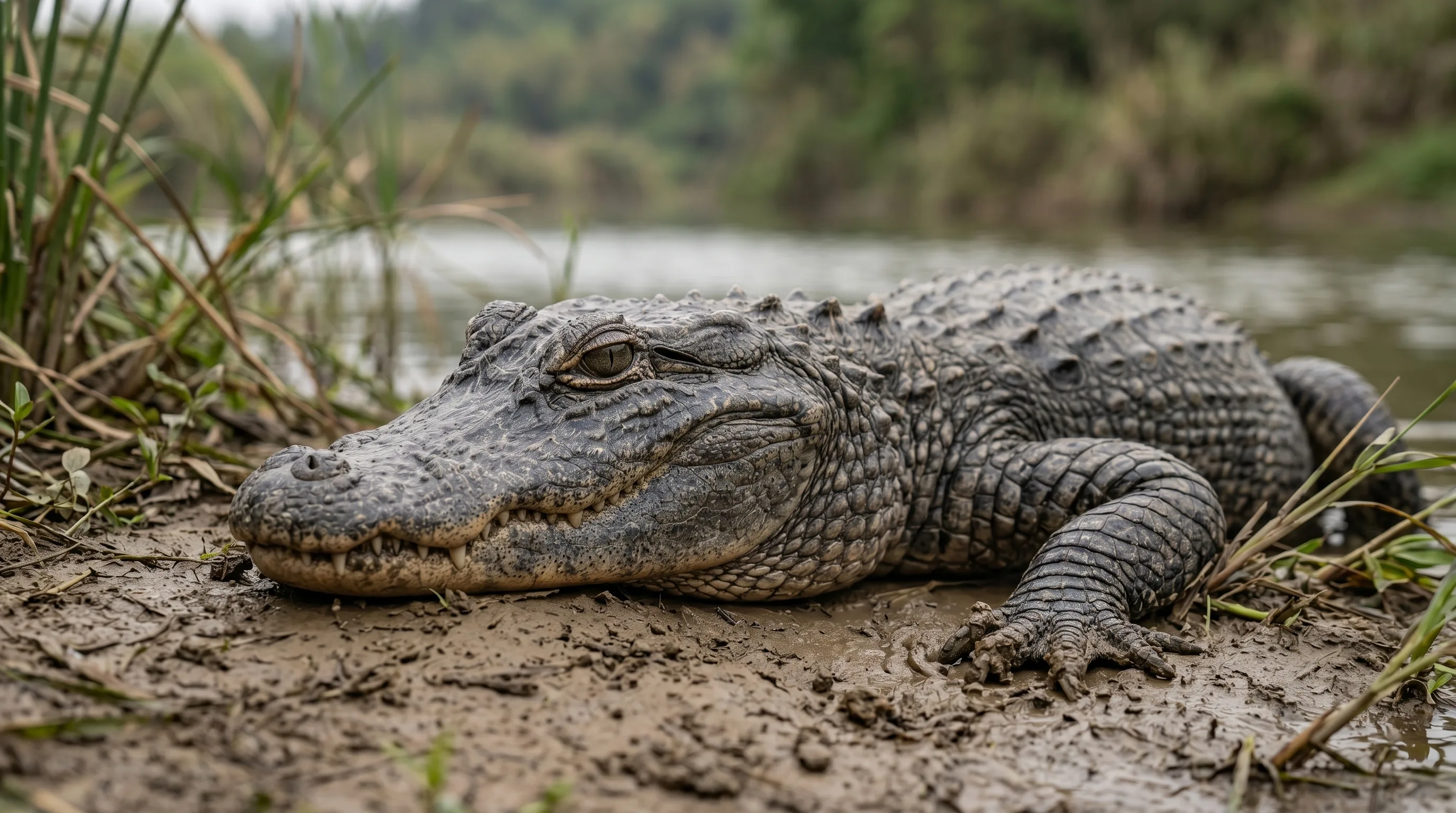
Chinese Alligator (Alligator sinensis)
Introduction
At the edge of a slow-moving pond in the reed marshes of Anhui Province, as late summer heat presses down on the water's surface, a low, resonant bellow rises just before dusk. It is not the roar of a lion or the trumpet of an elephant — it is something older, more primordial, and far more threatened. A Chinese alligator, no longer than a tall man, slides silently from its earthen burrow and into the dark water, barely disturbing the surface. The reeds close behind it. Within moments, it is invisible.
The Chinese alligator is one of the rarest reptiles on Earth, and one of the most overlooked. While conservation attention floods toward tigers, giant pandas, and snow leopards, this ancient crocodilian quietly edges toward extinction in the flooded plains and shrinking wetlands of eastern China. Fewer than 150 individuals are believed to survive in the wild today — a population so critically small that the species exists, in biological terms, on borrowed time. Yet in captivity, more than 20,000 individuals are alive, the product of one of the most ambitious reptile breeding programmes in history. The Chinese alligator is simultaneously a conservation triumph and a conservation tragedy.
To understand this animal is to step into a lineage of extraordinary antiquity. Crocodilians have persisted through mass extinctions, continental drift, and the rise and fall of dinosaurs. The Chinese alligator specifically has occupied eastern China's wetlands for millions of years, evolving unique adaptations for surviving cold winters — a rarity among living crocodilians — developing crushing dentition for hard-shelled prey, and constructing elaborate burrow systems that reshape the wetland landscape around them. This is a creature of ecological subtlety and evolutionary ingenuity, ground down by centuries of human pressure into a ghost of its former range.
This article examines the Chinese alligator in full — its biology, behaviour, ecological role, evolutionary history, and the urgent conservation crisis it now faces. In doing so, it becomes clear that saving this species is not simply about preserving a single reptile. It is about restoring the integrity of one of Asia's most battered wetland ecosystems.
"The question is whether any civilization can wage relentless war on life without destroying itself, and without losing the right to be called civilized."
— Rachel Carson, Silent Spring
Scientific Classification
The Chinese alligator belongs to one of the most ancient vertebrate lineages still walking the Earth. Its classification places it firmly within the order Crocodilia, alongside crocodiles, gharials, and its closest living relative, the American alligator (Alligator mississippiensis). The two alligator species are the only surviving members of the genus Alligator, separated by a vast geographic and temporal gulf — their lineages diverging somewhere between 30 and 50 million years ago during the Eocene epoch, when the continents occupied positions very different from today.
Kingdom: Animalia
Phylum: Chordata
Class: Reptilia
Order: Crocodilia
Family: Alligatoridae
Genus: Alligator
Species: Alligator sinensis (Fauvel, 1879)
The species epithet sinensis derives directly from Latin, meaning "of China" — a straightforward geographic reference. The species was formally described by A. A. Fauvel in 1879, though Chinese naturalists and scholars had documented the animal's existence for centuries prior. Within Alligatoridae, the Chinese alligator is distinguished from the caimans of Central and South America by several anatomical features, most notably the complete ossification of the ventral scales — a characteristic shared with no other living crocodilian. The family Alligatoridae itself diverged from the Crocodylidae lineage approximately 80 million years ago, making these animals contemporaries of the late Cretaceous dinosaurs.
Physical Characteristics
The Chinese alligator is a compact, heavily armoured reptile that presents immediately as something ancient and purposefully built. Adult males typically reach lengths of 1.5 to 2.1 metres, with occasional large individuals approaching 2.3 metres — though such sizes have become increasingly rare in wild populations. Females are noticeably smaller, generally ranging from 1.2 to 1.5 metres. Adult males weigh between 36 and 45 kilograms on average, with females considerably lighter. Compared to the American alligator, which regularly exceeds 3.5 metres and can weigh over 450 kilograms, the Chinese alligator is a diminutive species — but what it lacks in size, it more than compensates for in structural complexity.
The most diagnostically remarkable feature of Alligator sinensis is its complete ventral ossification. Unlike every other living crocodilian, the Chinese alligator has bony osteoderms — interlocking armoured plates — covering not only the dorsal (back) surface but also the entire ventral (belly) surface. The practical consequences of this adaptation are debated, but it almost certainly provides additional protection from predators and physical abrasion within its burrowing lifestyle. The dorsal scales are large and heavily keeled, forming a continuous armoured surface across the back, neck, and tail, while the flanks bear smaller, irregular scutes. The tail is laterally compressed, serving as the primary propulsive organ in water.
The skull is broad and heavily ossified, with a distinctly upturned snout tip that differentiates it from the American alligator's more flattened rostrum. This broadened, slightly upturned snout is an adaptation to its prey preferences — the crushing forces generated by the Chinese alligator's bite are directed with particular efficiency against hard-shelled mollusks. The teeth themselves are blunt and peg-like toward the rear of the jaw, designed for crushing rather than tearing. A total of 72 to 76 teeth line the upper and lower jaws, replaced continuously throughout life, as in all crocodilians.
Coloration in adults is predominantly dark grey to black across the dorsal surfaces, with lighter yellowish-white or cream tones on the ventral scales. Juveniles are more boldly patterned, displaying bright yellow crossbands against a dark background — a pattern that fades steadily through the first several years of life. The eyes are set high on the skull, with vertically elliptical pupils that allow excellent vision in low-light conditions, and uniquely among crocodilians, the Chinese alligator possesses bony eyelids — ossified upper eyelids that can close over the eye with rigid protection. This feature, shared with no other living crocodilian species, likely evolved as defence against debris and injury during burrowing activity.
Fun FactThe Chinese alligator is the only living crocodilian species with bony armour covering both its back AND its belly — a feature that makes it uniquely protected among all 27 species in the order Crocodilia.
Characteristic | Chinese Alligator | American Alligator |
|---|---|---|
Maximum length (male) | ~2.3 m | ~4.6 m |
Average adult weight | 36–45 kg | 180–360 kg |
Snout shape | Broad, upturned tip | Broad, flattened |
Ventral osteoderms | Present (complete) | Absent |
Ossified eyelids | Present | Absent |
Hibernation | Yes (Oct–Apr) | No true hibernation |
Primary diet | Mollusks, fish, frogs | Fish, turtles, mammals |
IUCN Status | Critically Endangered | Least Concern |
Wild population | ~120–150 individuals | >1 million individuals |
Habitat & Geographic Distribution
The historical range of the Chinese alligator once encompassed a substantial arc of eastern China, stretching across the lower Yangtze River basin from Jiangsu Province in the east through Anhui, Zhejiang, and possibly into Jiangxi and Shanghai. Subfossil and archaeological evidence suggests the species' range was even broader during the Holocene, when the climate was warmer and wetland habitats far more extensive. Chinese historical texts dating back more than 3,000 years reference the animal across a wide swath of central-eastern China. Today, that former grandeur has collapsed into a few isolated, fragmented wetland patches in southern Anhui Province — one of the most agriculturally transformed landscapes in Asia.
The habitat preferences of Alligator sinensis are specific and demanding. The species is entirely dependent on slow-moving or still freshwater systems — ponds, lakes, marshes, sluggish rivers, and irrigation channels — situated within the low-lying alluvial plains of the Yangtze drainage. It requires shorelines with sufficient soft soil for burrow excavation, dense emergent vegetation for concealment and nesting material, and adjacent terrestrial buffer zones where it can thermoregulate and move between water bodies. Elevations are almost exclusively below 100 metres, reflecting its dependence on flat, permanently waterlogged terrain.
The current wild population is confined almost entirely to the Anhui Chinese Alligator National Nature Reserve, a patchwork of protected wetland areas near Xuancheng City in southern Anhui. Within this reserve, wild alligators occupy a series of small ponds and channels surrounded by farmland, operating in a landscape dominated by rice cultivation, fish ponds, and human settlement. The reserve itself covers a total area of approximately 43,000 hectares, but suitable, occupied alligator habitat within it is a fraction of that figure. A small, reintroduced population also exists within the Changxing Chinese Alligator Nature Reserve in neighbouring Zhejiang Province.
Seasonal water levels play a critical role in habitat use. During the warm season, when alligators are active, they prefer shallow water no deeper than 2 to 3 metres, with abundant aquatic vegetation and accessible mud banks for basking. As temperatures fall in autumn, habitat use shifts entirely to burrow systems excavated into earthen banks above the waterline. These burrows serve as the thermal refuge during winter, and their location within the landscape — requiring stable, dry banks above flood levels — imposes an additional constraint on suitable habitat that further limits where populations can establish.
Behaviour & Social Structure
The Chinese alligator is primarily a solitary animal across most of its active season, with social interactions largely confined to the breeding period in late spring and early summer. Outside of this reproductive window, adult individuals maintain loose, overlapping home ranges centred on preferred burrow systems and feeding areas, with a degree of spatial avoidance between adults that reduces direct confrontation. The social structure is therefore best described as tolerant solitude — animals aware of each other's presence, communicating through acoustic and chemical signals, but not actively maintaining social bonds.
Vocalisation is surprisingly sophisticated for a reptile. During the breeding season — particularly from May through early July — males produce powerful, resonant bellowing calls, often in choruses involving several individuals from different parts of a waterbody. These bellows serve dual functions: advertising territorial occupation to rival males and attracting females. Females also vocalise during courtship and, critically, during the post-hatching period when they communicate with their young. Hatchlings produce high-pitched chirping calls immediately upon emerging from the nest, which triggers the female's protective and excavation behaviours. Infrasound — low-frequency vibrations below the range of human hearing — is also produced through a behaviour known as head-slapping, where the animal's snout strikes the water surface, generating pressure waves that propagate through the water and substrate. This infrasound communication is shared with other crocodilians and may serve in territory assertion and mate attraction over longer distances than audible calls can achieve.
Territorial behaviour in males intensifies sharply during the breeding season. Adult males will patrol sections of waterway, vocalise persistently, and engage in physical confrontations involving jaw-gaping, body arching, and biting if a rival male enters their space. These confrontations are rarely fatal but can result in injuries. Dominance among males appears to be established partly through size and partly through persistence and vocalisation intensity. Females are less overtly territorial but will defend nesting sites vigorously against intrusion.
The Chinese alligator's intelligence, as assessed through captive studies, aligns with what is known of crocodilian cognition more broadly — a level of environmental awareness and learned behaviour that far exceeds what the reptile's evolutionary antiquity might suggest. Individuals in captivity have demonstrated the ability to learn associations between caretaker identity and feeding routines, and wild animals develop detailed spatial knowledge of their home range, including the location of multiple burrow entrances, feeding sites, and basking spots. This cognitive mapping is essential for a species whose survival depends on navigating a complex, seasonally changing landscape.
Daily Life & Activity Cycle
The Chinese alligator's daily activity pattern is strongly governed by temperature, season, and available light. In the warmest months — June through August — individuals are predominantly crepuscular and nocturnal, becoming active at dusk when air and water temperatures begin to fall from daytime peaks. This timing coincides with peak activity in their primary prey: mollusks, frogs, and fish are most accessible along shallow margins after dark, and the cooler temperatures reduce the thermal stress of sustained activity. Dawn often finds animals floating near the water's surface or pulling out onto bank edges to warm in the early light before retreating to shade or water as temperatures climb.
Basking is an integral component of daily thermoregulation. As ectotherms, Chinese alligators depend entirely on external heat sources to elevate their body temperature to the operational range required for digestion, muscle function, and immune response. Basking bouts on mud banks or emergent vegetation platforms typically occur in the morning and again in the late afternoon, with the midday period spent in water or shade. The precision with which these animals regulate body temperature through positional adjustments — shifting orientation relative to the sun, partially submerging to cool, emerging to warm — reveals a sophisticated behavioural thermostat operating continuously throughout the active season.
Hibernation dominates nearly half the annual calendar. From approximately October or November, as water and air temperatures drop below 15 degrees Celsius, Chinese alligators progressively reduce activity, cease feeding, and ultimately retire to their burrow systems to enter a prolonged torpor state. This dormancy period typically extends through to late April or early May, depending on spring temperatures. During hibernation, the animal's metabolic rate drops dramatically, and it survives on energy reserves accumulated during the feeding season. Uniquely among crocodilians, the Chinese alligator tolerates water temperatures approaching 10 degrees Celsius and air temperatures that occasionally approach freezing — a thermal tolerance range far beyond that of any tropical crocodilian species.
The burrow systems used for hibernation are engineering feats relative to the animal's body size. A single adult may maintain multiple burrow systems within its home range, with individual tunnels extending up to 30 metres in length, incorporating multiple chambers, air pockets near the roof, and both above-water entrances and submerged underwater access points. During warm winter days, individuals may emerge briefly to bask before returning underground — a behaviour that has confused historical observers into underestimating the length of the hibernation period. These burrows are not simply shelters: they are permanent, maintained structures that may be used and extended over many years, representing a significant behavioural and energetic investment.
Fun FactChinese alligator burrows can reach over 30 metres in length, incorporating multiple chambers and underwater entrances — engineering structures maintained for years and shared with a range of other wetland species seeking shelter.
Diet & Survival Strategies
The dietary profile of the Chinese alligator is one of its most ecologically distinctive characteristics. While most large crocodilians are generalist predators with a primary focus on vertebrate prey — fish, mammals, birds — the Chinese alligator has evolved a pronounced dietary specialisation toward mollusks. Freshwater snails, clams, and mussels constitute the numerical majority of prey items taken by adults in the wild, a preference reflected in the anatomy of the posterior teeth, which are broad, blunt, and powerfully built for crushing hard shells. This is an unusual degree of dietary specialisation for a large reptile, and it aligns the Chinese alligator more closely with some turtle species than with its crocodilian relatives in terms of trophic niche.
The mechanism of mollusk predation is efficient and precisely timed. Foraging typically occurs in shallow water at night, with the alligator moving slowly through aquatic vegetation and soft substrate, locating mollusks by touch and chemoreception. Once a snail or mussel is located, it is seized in the posterior jaws and crushed with a single, powerful bite. The shell fragments are expelled, and the soft tissue is swallowed. This feeding method requires relatively little energy expenditure per item but must be repeated many times over a foraging session to accumulate sufficient caloric intake — a strategy favoured when mollusk densities are high and vertebrate prey is less accessible.
Beyond mollusks, the Chinese alligator takes a range of secondary prey depending on season and opportunity. Fish are taken regularly, particularly when concentrated in shallow water during drought periods or low tides. Frogs, including the rice-field frogs that are abundant in agricultural areas, constitute a seasonally important food source. Crustaceans, aquatic insects, and small rodents or waterfowl are taken opportunistically. Juveniles subsist almost exclusively on invertebrates — insects, small crustaceans, worms, and small frogs — with the dietary shift toward mollusks and vertebrates occurring as the jaw structure develops through the first several years of life.
Food scarcity is a genuine survival challenge in a landscape as degraded as the Chinese alligator's current range. In years of drought, water bodies shrink and prey concentrations can actually increase temporarily as fish and aquatic invertebrates are compressed into smaller volumes — a short-term advantage. Prolonged drought, however, eliminates accessible foraging habitat entirely. Flooding and heavy rainfall create different challenges, dispersing prey and forcing alligators to expend more energy locating food. The ability to withstand prolonged fasting — particularly during the hibernation period and during droughts — is a key physiological adaptation that has allowed the species to persist in increasingly unstable wetland environments.
It is a still August night along a narrow irrigation channel in southern Anhui, and the air carries the smell of mud and night-blooming aquatic plants. In the beam of a researcher's red-filtered torch, a single adult Chinese alligator is visible only as a low silhouette barely disturbing the water — four centimetres of snout, two luminous eyes reflecting amber, and the faint curve of a partially submerged back.
The animal is hunting. It moves with the lateral undulation of a creature accustomed to operating in darkness, threading between clumps of emergent vegetation with an ease that belies its armoured bulk. Then it pauses. The snout dips below the surface. There is a faint crunch — barely audible over the chorus of frogs — and the alligator's throat pulses once. A freshwater snail, shells and all, has vanished in a single bite that would bend a steel rod.
The researcher recording this encounter has been documenting this individual — a female, perhaps 12 years old, based on previous measurements — for three consecutive seasons. She uses the same 200-metre stretch of this channel every summer, the same burrow entrance 40 metres up the bank, and the same basking ledge near the inlet pipe. In a landscape that has lost 90 percent of its wetlands in a single human lifetime, she has learned, with patient precision, how to survive in what remains.
She moves on, unhurried. The frogs resume their calling. By dawn, she will have eaten perhaps thirty snails and two small fish, retreating before first light into the reed bed where her burrow entrance is hidden beneath three seasons of accumulated vegetation. Her territory is small. Her world is shrinking. But tonight, she feeds.
Interaction with Other Animals
In the impoverished wetlands that constitute the Chinese alligator's current range, interspecific interactions are both fewer and more critical than in a healthy, biodiverse ecosystem. The species occupies the apex predator role within its localised wetland patches, though this status is qualified by its small body size — unlike the Nile crocodile or saltwater crocodile, the Chinese alligator is not capable of taking large mammalian prey and functions ecologically more as a mesopredator than a true apex predator in the broader landscape context.
The alligator's primary prey species — freshwater mollusks, fish, and frogs — are themselves part of complex food webs within Anhui's wetlands. Rice-field frogs (Rana limnocharis and related species) are key prey items and simultaneously important insect controllers within adjacent agricultural fields, creating an ecological linkage between the alligator's predatory activity and the surrounding agricultural landscape. By regulating frog populations, the alligator indirectly influences insect abundance — a secondary effect that propagates through the food web in ways that are difficult to quantify but ecologically meaningful.
Historically, the Chinese alligator shared its wetland habitats with a range of species with which it had evolved complex relationships. Large wading birds — cranes, egrets, herons — coexist alongside alligators without predation risk for adults but may occasionally lose nests or chicks. Freshwater turtles, several species of which are also critically threatened in China, are presumed prey items for larger adults. River otters, historically present in the Yangtze drainage, would have been both competitors for fish and potential threats to juvenile alligators. The wild boar, historically abundant across eastern China, may have occasionally preyed upon alligator eggs or hatchlings.
The introduction of exotic species into Anhui's waterways has created new and disruptive interactions. Largemouth bass (Micropterus salmoides) and other introduced fish species prey on juvenile alligators. The invasive nutria (Myocastor coypus), now established in parts of eastern China following escapes from fur farms, competes for burrow sites and vegetative cover. Domestic ducks and geese, raised in vast numbers in proximity to alligator habitats, compete for foraging space and can transmit parasites. These novel ecological pressures compound the challenges facing a species already at critically low population levels.
Interaction with Environment
The Chinese alligator is far more than a passive inhabitant of its wetland environment. Through its burrow-building activity alone, it functions as an ecosystem engineer of considerable significance — an animal that actively reshapes the physical structure of the habitat in ways that create resources and opportunities for dozens of other species. This engineering role, while less celebrated than that of beavers or elephants, is genuine and measurable.
Burrow systems excavated by Chinese alligators create stable, sheltered spaces within the wetland bank that are colonised by a remarkable diversity of other organisms. Freshwater turtles, water snakes, lizards, invertebrates, and small mammals all utilise abandoned or temporarily unoccupied alligator burrow chambers. The underground chambers maintain stable temperatures and humidity even during extreme weather events — droughts, floods, and freezes — providing thermal refugia for ectothermic species that lack the capacity to construct such structures themselves. In a highly degraded landscape like southern Anhui, where natural bank structure has been simplified by agricultural modification, alligator burrows represent disproportionately important microhabitat features.
The alligator's foraging behaviour also shapes the benthic ecology of its home water bodies. Intensive predation on freshwater mollusks reduces shell density in heavily utilised foraging areas, which in turn affects calcium cycling and substrate texture. The physical disturbance of soft substrates during nocturnal foraging resuspends sediment and nutrients, influencing the growth patterns of aquatic vegetation and algae. While these effects are localised, they represent the kind of low-intensity, persistent ecosystem-level influence that would historically have been distributed across thousands of alligators operating across millions of hectares of wetland.
The species' dependence on stable water levels creates a feedback relationship with wetland hydrology. Burrows are excavated above the seasonal high-water mark, meaning that dramatic fluctuations in water level — particularly the engineering of flood-control infrastructure along the Yangtze and its tributaries — can render existing burrow systems unusable by flooding or undermining them. The alligator's ecological existence is thus directly tied to hydrological stability, and the profound modification of water flow across eastern China through dam construction and channelisation has eliminated suitable habitat at a scale that dwarfs any direct persecution of the species.
Reproduction & Parenting
The reproductive cycle of the Chinese alligator is tightly synchronised with seasonal temperature change, beginning as soil and water temperatures rise through late spring and early summer. Courtship activity intensifies from May onward, with males bellowing persistently to attract females and deter rival males. Physical courtship involves close-range interactions between pairs: the male and female swim in proximity, engaging in head-rubbing, body-arching, and repeated submergence sequences. Chemical signals — pheromones released from cloacal scent glands — play a key role in mate assessment that complements the acoustic and visual displays. Copulation occurs in the water, typically in June.
Nest construction by the female begins in late June to early July, reaching a peak through mid-July. The nest is a mound of vegetation — grasses, reeds, leaves, and decaying plant material — scraped and arranged into a compact pile typically measuring 40 to 70 centimetres in height and 70 to 100 centimetres in diameter. The female deposits her eggs in a central chamber within the mound, then covers them with additional vegetation. The decomposition of plant material within the mound generates heat, supplementing solar warming to maintain the incubation temperature. Clutch sizes in wild nests range from approximately 10 to 40 eggs, with an average of around 20 to 25 eggs per clutch. Egg dimensions average approximately 60 millimetres in length and 35 millimetres in diameter.
Sex determination in Chinese alligators, as in all crocodilians, is temperature-dependent rather than chromosomal. Eggs incubated at temperatures above approximately 33 degrees Celsius tend to produce predominantly male offspring, while eggs incubated below 30 degrees Celsius tend to produce females. The middle range of approximately 30 to 33 degrees Celsius produces mixed-sex clutches. This temperature-dependent sex determination (TSD) mechanism has profound implications for conservation: captive breeding programmes must carefully manage incubation temperatures to produce balanced sex ratios, and climate change — by raising average ambient temperatures — could skew sex ratios in wild populations toward males, further undermining reproductive success in an already tiny wild population.
Incubation lasts approximately 60 to 70 days, with hatching occurring in August or early September. As eggs begin to hatch, the hatchlings produce audible chirping calls from within the eggs, which stimulate the attending female to excavate the nest mound and expose the eggs. Hatchlings measure approximately 20 to 22 centimetres at emergence and are immediately independent in foraging, though they remain close to the female and to each other for several weeks. The female Chinese alligator demonstrates genuine maternal guarding behaviour, stationing herself near the nest and the hatchling group, defending against terrestrial predators — snakes, wading birds, small carnivores — and escorting young to water. This parental investment is comparable to that documented in the American alligator and represents a level of reptilian parenting sophisticated enough to have influenced early studies of crocodilian cognition.
Juvenile mortality is high. In the wild, a combination of predation, flooding events, and food competition reduces survival rates in the first year significantly. Hatchlings that survive their first summer must accumulate sufficient fat reserves before their first hibernation — a challenge that selects strongly for foraging efficiency in the earliest life stages. Sexual maturity is reached at approximately five to six years of age for females and four to five years for males, at body lengths of around 1.2 metres and 1.3 metres respectively. Once mature, females in healthy conditions produce a clutch annually, though reproductive skipping in poor-condition years is documented.
Evolutionary Adaptations
The Chinese alligator represents a lineage of evolutionary refinement stretching across tens of millions of years, shaped by the specific environmental pressures of temperate eastern Asia in ways that distinguish it clearly from every other living crocodilian. The result is an animal whose adaptations are not always the most dramatic — it cannot match the saltwater crocodile in size or the gharial in specialisation — but whose suite of physiological and behavioural modifications constitute a precisely tuned survival package for one of the world's most challenging temperate wetland environments.
The capacity for winter hibernation is the adaptation that defines the species above all others. No tropical crocodilian can tolerate the body temperatures that Chinese alligators routinely experience during Anhui winters, where water temperatures approach 10 degrees Celsius and air temperatures can drop near or below freezing. The physiological mechanisms underlying this cold tolerance involve suppression of metabolic rate, reduction of cardiac output to minimal maintenance levels, reliance on anaerobic metabolism during the coldest periods, and the pre-hibernation accumulation of substantial lipid reserves in the tail and body cavity. The onset and termination of hibernation appears to be regulated by photoperiod as well as temperature, providing a reliable internal cue that prevents premature emergence during temporary warm spells in winter.
The complete ventral ossification — the bony belly plates — is another adaptation that sets the species apart. The functional hypothesis most widely accepted is that the ventral osteoderms serve as protection during burrowing, when the animal's underside scrapes repeatedly against hard soil, roots, and gravel while excavating or traversing tunnel systems. The ossified eyelids, similarly unique among living crocodilians, protect the eyes during precisely this activity. Together, these features suggest that the burrowing lifestyle, now shared by no other crocodilian, drove a suite of coordinated structural innovations over evolutionary time.
The crushing dentition specialised for mollusk predation represents a dietary adaptation with clear ecological logic. In the Yangtze valley's productive wetlands, freshwater mollusks historically occurred at densities that represented a rich, predictable, calcium-dense food source. Specialising on this resource allowed Chinese alligators to exploit an energy reservoir that generalist predators, lacking the appropriate jaw mechanics, could not efficiently access. The trade-off is reduced dietary flexibility — a predator built for crushing shells is not optimally configured for capturing fast-moving fish — but in an environment where mollusks are abundant, this is an acceptable cost.
The species' relatively small body size, at least compared to its American cousin, may itself represent an evolutionary adaptation to a temperate environment with a shorter active season. Smaller bodies require less food to maintain, can accumulate sufficient winter fat reserves more rapidly during the active season, and warm to operational temperatures more quickly after cold periods. This energetic efficiency is critical in a climate where the productive season is compressed into roughly six months of the year.
Ecological Importance
The ecological value of the Chinese alligator within the wetland systems it inhabits extends well beyond its role as a predator. As a keystone species in miniature — a creature whose influence on ecosystem structure exceeds what its population numbers might suggest — the Chinese alligator performs functions that, were they fully appreciated, would transform its conservation status from a narrow taxonomic concern to a landscape-scale ecological priority.
As described in the environmental interaction section, the species' burrowing activity creates physical heterogeneity in wetland banks that would otherwise be structurally monotonous. This heterogeneity supports biodiversity directly by providing den sites, overwintering refugia, and access channels to water for species ranging from freshwater turtles to small mammals. In landscapes as homogenised as the rice-paddy-dominated plains of Anhui, these microhabitat features are ecologically disproportionate in their importance. The loss of alligator populations from a wetland patch results in the progressive simplification of bank structure as existing burrow systems collapse without maintenance, eliminating the shelter they provided for associated species.
The trophic role of the Chinese alligator in controlling mollusk populations has indirect consequences for aquatic ecology. Freshwater snails in the genus Oncomelania — historically consumed by alligators — serve as intermediate hosts for Schistosoma japonicum, the parasite causing schistosomiasis, one of the most debilitating parasitic diseases affecting millions of people in the Yangtze valley. The epidemiological significance of this relationship has been tentatively explored in the literature: heavy predation pressure by alligators on snail populations could theoretically suppress the density of schistosomiasis vectors in shared waterways. While this pathway remains to be rigorously quantified, it represents a compelling example of how the ecological services of a critically endangered predator may extend directly into human health.
The Chinese alligator also functions as a bioindicator species — an animal whose population status reliably reflects the overall ecological health of freshwater wetland systems. Its sensitivity to water quality, hydrological stability, vegetation structure, and prey availability means that its presence indicates a functional wetland, while its absence signals degradation. For conservation planning, the alligator serves as an umbrella species whose protection requires maintaining habitat conditions that simultaneously benefit dozens of other wetland-dependent species.
Threats & Conservation
The collapse of the Chinese alligator's wild population from what must have been tens of thousands of individuals across thousands of kilometres of range to fewer than 150 individuals in a handful of Anhui wetland fragments is the product of multiple reinforcing pressures applied over a compressed historical window. This is not a story of a single catastrophic event but of cumulative attrition driven by one of the most intensive agricultural transformations of landscape in human history.
Habitat destruction is the dominant driver. The conversion of the Yangtze River floodplain — historically one of Asia's most productive freshwater ecosystems — for rice cultivation, aquaculture, and urban development has eliminated an estimated 80 to 90 percent of the wetland area that once supported alligator populations. Drainage, dyking, channelisation, and land reclamation have proceeded continuously since at least the Tang Dynasty (618–907 CE), accelerating dramatically in the 20th century under population pressure and state-directed agricultural intensification. The construction of major dams — most dramatically the Three Gorges Dam, completed in 2006 — has fundamentally altered the hydrology of the entire Yangtze system, affecting sediment transport, seasonal flood pulses, and aquatic habitat quality across the basin.
Direct persecution has compounded habitat loss. Chinese alligators have been killed by farmers who perceived them as threats to fish ponds, irrigation infrastructure, and domestic poultry. This persecution intensified during the collective farming periods of the mid-20th century, when wetlands were drained and any remaining alligators were treated as agricultural pests. Medicinal use — various parts of the animal were ascribed therapeutic properties in traditional Chinese medicine — provided additional incentive for killing. The convergence of habitat loss and persecution reduced the wild population to critically low levels by the 1980s.
Water pollution from agricultural runoff — fertilisers, pesticides, and herbicides — degrades water quality in remaining wetland patches, suppressing prey availability and potentially causing direct physiological harm. The application of molluscicides along waterways to control schistosomiasis vectors historically eliminated the snail populations upon which Chinese alligators depended, removing food sources at a landscape scale. The IUCN has formally assessed this species and its conservation status is addressed fully in the following section.
IUCN Red List Analysis
Current IUCN Status
The Chinese alligator is classified as Critically Endangered (CR) on the IUCN Red List of Threatened Species — the highest level of threat short of Extinct in the Wild. This classification reflects the application of IUCN criteria, specifically criterion D, which designates a species as Critically Endangered when the population size is estimated to number fewer than 250 mature individuals. The wild population of Alligator sinensis falls dramatically below this threshold, with credible estimates of mature wild individuals consistently below 150 and potentially as low as 100 during years of poor survey coverage. The classification has been maintained across successive IUCN assessments since the species was first formally evaluated, with no evidence of improvement in wild population status sufficient to justify downlisting.
The Critically Endangered designation carries specific scientific meaning beyond a simple statement of rarity. It indicates that the species faces an extremely high probability of extinction in the wild if present circumstances continue. For the Chinese alligator, the combination of a tiny and fragmented wild population, severely restricted range, ongoing habitat degradation, and slow reproductive rate (mature females producing at most one clutch annually) creates a demographic vulnerability profile consistent with the most serious extinction risk category available within IUCN's classification framework.
Population Trend
The population trend for wild Chinese alligators is assessed as declining, although the extremely small number of remaining individuals and the challenges of surveying cryptic, nocturnal reptiles in fragmented wetland habitats make precise trend quantification difficult. Historical population estimates, while imprecise, suggest a decline from several thousand individuals in the early 20th century to fewer than 300 by the 1970s, and to the current estimate of approximately 120 to 150 wild mature individuals by the 2010s and 2020s. Some survey periods have produced estimates below 100, though methodological inconsistencies between surveys make direct comparison unreliable.
What is ecologically significant is not merely the absolute population size but the degree of fragmentation. The wild population is distributed across approximately 13 to 20 isolated subpopulations within the Anhui Nature Reserve network, the majority of which contain fewer than 10 individuals. Populations of this size are below the minimum viable population threshold for maintaining genetic diversity over multiple generations and are highly susceptible to local extinction from stochastic events — a single drought, flood, disease outbreak, or human disturbance event can eliminate an entire subpopulation. The effective breeding population — the number of individuals actually reproducing in a given year — is likely considerably smaller than the total wild count, compressing the genetic effective population size to levels where inbreeding depression becomes a medium-term concern.
Main Threats
Habitat loss and degradation remain the primary driver of population decline. Agricultural conversion of wetlands continues at a reduced but ongoing rate in southern Anhui, and water management practices for flood control and irrigation maintain conditions that are suboptimal for alligator reproduction and burrow construction. The connectivity between remaining wetland patches is insufficient to support natural dispersal of individuals between subpopulations, accelerating genetic drift.
Human-wildlife conflict, while reduced compared to the mid-20th century following legal protections, continues to result in occasional killing of alligators that intrude into fish ponds or are encountered near agricultural infrastructure. Local communities bordering the nature reserve maintain ambiguous relationships with the species, and incidents of deliberate persecution, though illegal, are recorded sporadically.
Water pollution from agricultural runoff suppresses prey availability and may cause endocrine disruption through pesticide exposure. Organochlorine compounds and heavy metals have been detected in tissue samples from wild and captive alligators, raising concerns about reproductive impairment. Eutrophication of small pond habitats within the reserve — driven by nutrient loading from adjacent fish farms — can cause hypoxic events that kill fish and invertebrate prey, reducing food availability during the critical pre-hibernation feeding period.
Climate change poses an emerging and complex threat. Altered precipitation patterns are projected to increase the frequency of both extreme drought and extreme flooding events in the Yangtze basin, both of which are destructive to alligator nests and burrow systems. Rising average temperatures could shift the seasonal timing of reproduction and hibernation, potentially creating mismatches between breeding activity and prey availability. Temperature-dependent sex determination means that warming incubation temperatures could progressively skew hatchling sex ratios toward males, reducing the number of reproductive females and compressing the already limited breeding population.
Ecological Consequences
The extinction of the Chinese alligator from the wild would represent more than the loss of a taxonomic unit. The disappearance of the species' burrowing activity would progressively homogenise wetland bank structure across southern Anhui, eliminating the microhabitat diversity that currently supports freshwater turtles, watersnakes, small mammals, and invertebrates that depend on alligator burrows for shelter, overwintering sites, and access to water. Several turtle species sharing habitat with the Chinese alligator are themselves Critically Endangered, and the removal of alligator-created burrow habitat could accelerate their decline.
The loss of mollusk predation by alligators could allow freshwater snail populations — including Oncomelania species that are intermediate hosts for schistosomiasis — to increase in remaining wetland patches, with potential consequences for disease burden in surrounding human communities. While this pathway requires further research to quantify, it represents an instance where the ecological consequences of species loss may intersect directly with public health outcomes.
The broader biodiversity consequences would be felt most acutely in an already severely impoverished wetland ecosystem. The Yangtze River basin has lost an extraordinary proportion of its freshwater biodiversity in recent decades, with the baiji dolphin (Lipotes vexillifer) declared functionally extinct in 2006 and the Yangtze finless porpoise critically threatened. The disappearance of the Chinese alligator would remove another of the few remaining flagship species from this ecosystem, diminishing the political and financial will to invest in wetland restoration — a cascading consequence that could hasten the decline of the entire freshwater system.
Conservation Efforts
Conservation action for the Chinese alligator has been more intensive, better funded, and more systematically organised than for most Critically Endangered reptile species, largely because the animal occupies a geopolitically significant position within Chinese conservation policy. The establishment of the Anhui Chinese Alligator National Nature Reserve in 1982, covering the core alligator habitats in the Xuancheng region, provided the first formal legal protection for wild populations. The reserve has been progressively expanded and its management strengthened, though effective habitat quality within the reserve boundaries remains limited by surrounding agricultural pressure.
Captive breeding has been the cornerstone of the conservation programme. The Anhui Research Center for Chinese Alligator Reproduction (ARCCAR), established within the nature reserve complex, holds the world's largest captive population and has produced tens of thousands of individuals since its founding. The captive population now far exceeds 20,000 individuals across multiple institutions in China, providing an insurance population against wild extinction and a source of individuals for reintroduction programmes. The Bronx Zoo, through the Wildlife Conservation Society (WCS), has maintained a long-standing partnership with Chinese institutions and holds a small captive population as part of the international conservation effort.
Reintroduction of captive-bred animals into the wild has been undertaken at several sites within the Anhui reserve network, with variable success. Early releases demonstrated that captive-bred individuals could survive and reproduce in wild conditions, validating the potential of reintroduction as a recovery tool. However, the limited availability of suitable habitat — not the availability of individuals — remains the binding constraint on reintroduction success. Releasing animals into already-occupied, degraded habitat fragments increases competition and stress without expanding the effective population range. The identification and restoration of additional release sites is therefore a critical conservation bottleneck.
The Chinese alligator benefits from the highest level of legal protection available under Chinese domestic law, listed as a Class I National Protected Animal. Internationally, the species is listed on CITES Appendix I, prohibiting all commercial international trade in wild-caught individuals. The IUCN SSC Crocodile Specialist Group maintains active engagement with the species' conservation planning.
Future Outlook
The long-term survival of the Chinese alligator as a wild species is genuinely uncertain, but the trajectory is more complex than a simple decline toward extinction. The existence of a large and genetically diverse captive population provides a biological safety net unprecedented among Critically Endangered reptiles. Continued investment in habitat restoration within Anhui Province — particularly the rehabilitation of degraded wetland patches and the creation of buffer zones around occupied sites — offers a plausible pathway toward a modest recovery of wild population numbers to biologically meaningful levels of several hundred individuals.
The risks that could derail this cautious optimism are real. Climate change impacts on the Yangtze basin are projected to intensify through the second half of the 21st century, increasing hydrological instability and threatening the agricultural economy that currently coexists uneasily with alligator conservation. Political will for wetland restoration must compete with the development priorities of an economically dynamic region. The genetic health of the captive population, while substantial in numbers, may be compromised by historical founder effects if only a small number of wild individuals contributed to the original breeding stock.
With sustained international cooperation, adequate funding for habitat restoration, and effective community engagement with the farming communities of southern Anhui, recovery to a self-sustaining wild population of several hundred individuals appears achievable within the next two to three decades. Without these investments, the species is likely to survive primarily in captivity — a living museum piece rather than a functioning component of a living ecosystem.
Human Relationship
The relationship between the Chinese alligator and the human civilisations that have occupied the Yangtze basin for millennia is one of extraordinary cultural depth, profound ecological disruption, and, in recent decades, earnest but challenging conservation partnership. Few species embody the tension between ancient reverence and modern elimination as completely as Alligator sinensis.
The most captivating dimension of the human-alligator relationship in China is the widely discussed — though not definitively proven — connection between the Chinese alligator and the traditional Chinese dragon, long. The dragon occupies a central position in Chinese cosmology, mythology, art, and imperial symbolism unlike almost any animal figure in any other culture. It is associated with water, fertility, auspiciousness, and imperial power. Several characteristics attributed to the Chinese dragon in classical texts align strikingly with the biology and behaviour of Alligator sinensis: its emergence from river and lake systems in spring (corresponding to the alligator's emergence from hibernation), its vocalisations interpreted as thunder, its scaled armour, and its association with rain and agricultural fertility. While the cultural dragon is a composite creature incorporating elements of many animals, there is a compelling case — advanced by multiple scholars of Chinese natural history — that the Chinese alligator was among the primary inspirational sources for this most iconic of mythological beings.
This cultural connection did not prevent the species' persecution. By the middle of the 20th century, as China's agricultural transformation accelerated, the alligator had been reframed from a mythological creature of power and good fortune to an agricultural pest — an animal that burrowed into irrigation levees, raided fish ponds, and competed with rural communities for food resources. Systematic killing during land reclamation campaigns in the 1950s and 1960s reduced populations catastrophically, with no legal protection in place and active encouragement of alligator removal in some regions. The speed of this transition from revered to persecuted — compressed into a generation — illustrates how quickly cultural attitudes can be overridden by economic pressure.
Ecotourism has emerged as a potential mechanism for rebuilding positive human-alligator relationships and generating economic value from the species' conservation. The breeding centres at Changxing in Zhejiang Province and within the Anhui reserve complex receive substantial numbers of domestic tourists, particularly school groups, drawn by the spectacle of thousands of captive alligators in a structured sanctuary environment. Revenue from these visits contributes to programme operating costs and creates employment in rural communities that might otherwise have limited economic stake in the species' survival. The challenge is translating positive visitor attitudes toward captive alligators into active support for the wild habitat restoration that the species ultimately requires.
Fun FactMany scholars of Chinese mythology believe the Chinese alligator was one of the real-world inspirations for the Chinese dragon — a culturally supreme symbol of water, power, and imperial authority — making it perhaps the only Critically Endangered reptile to have shaped the mythology of one of the world's oldest civilisations.
Unique & Rare Facts
The only temperate crocodilian: The Chinese alligator is the only crocodilian species capable of surviving in a true temperate climate, withstanding near-freezing winter temperatures through a hibernation strategy shared by no other member of the order Crocodilia.
Complete belly armour: Unlike every other living crocodilian, Alligator sinensis has bony osteoderms covering its ventral surface as well as its dorsal surface — a morphological feature that appears to be a direct adaptation for burrowing through hard substrate.
Bony eyelids: The Chinese alligator possesses ossified upper eyelids — hard, bony protective covers over the eyes — found in no other living crocodilian species. These provide physical protection during tunnelling activity.
The living dragon candidate: Compelling scholarly arguments link the Chinese alligator to the origin of the Chinese dragon myth, based on behavioural parallels between the alligator's spring emergence from hibernation and classical dragon mythology associated with rivers, rain, and spring.
Mollusk specialist: The Chinese alligator is the most mollusk-specialised large reptile alive, with posterior dentition morphologically adapted for crushing the shells of freshwater snails and bivalves — an unusual trophic niche among crocodilians dominated by fish and vertebrate predators.
Captive population vastly exceeds wild: The captive population of Chinese alligators, numbering more than 20,000 individuals, is believed to be at least 100 to 150 times larger than the entire wild population — one of the most extreme ratios of captive to wild numbers recorded for any large vertebrate.
Potential schistosomiasis control: Research has suggested that Chinese alligator predation on Oncomelania snails — intermediate hosts for the human parasite Schistosoma japonicum — may have historically contributed to natural control of schistosomiasis, one of the most debilitating waterborne diseases in the Yangtze valley.
Among the smallest crocodilians: With males averaging under two metres in length, the Chinese alligator is one of the smallest crocodilian species alive, comparable to the dwarf crocodile (Osteolaemus tetraspis) of West Africa and the smooth-fronted caiman of South America.
Two living species of Alligator: The genus Alligator contains precisely two living species — the Chinese alligator and the American alligator — despite the family Alligatoridae having once encompassed many more species distributed across Asia, Europe, and the Americas. These two survivors are separated by a divergence time of approximately 30 to 50 million years.
Longevity in captivity: Chinese alligators in managed care have survived beyond 50 years, and there are anecdotal reports of captive individuals approaching 70 years of age, suggesting that in the absence of the threats facing wild animals, this is a long-lived species with exceptional survivorship potential.
Conclusion
The Chinese alligator is a creature of paradoxes. It is simultaneously one of the most ancient vertebrate lineages on Earth and one of the most perilously close to vanishing from the wild. It is a species revered as the inspiration for a mythological symbol of supreme cultural power in one of the world's greatest civilisations — and yet has been reduced to a population smaller than the membership of most village councils. It survives in abundance in captivity while all but disappearing from the wetland landscape it shaped over millions of years.
What makes the Chinese alligator's story scientifically compelling beyond the conservation emergency is the depth of ecological function it embodies. This is not a species that simply occupies a trophic level — it is a wetland engineer, a biological architect, a regulator of mollusks and frogs, a creator of microhabitat for dozens of associated species, and a potential suppressor of waterborne disease. The loss of the Chinese alligator from its native wetlands would not be simply the disappearance of a reptile from a checklist. It would be the removal of an ecological process, a structural engineer, and a functional component of an already degraded ecosystem that can ill afford further impoverishment.
The fact that the tools for recovery exist — a large captive population, protected areas, international conservation partnerships, and a growing body of scientific knowledge about the species' biology — is cause for tempered optimism. But captive breeding without habitat restoration is a holding action, not a solution. The Chinese alligator's future lies not in the controlled enclosures of breeding centres but in the reed beds and mud banks of a restored Yangtze floodplain, where it can once again excavate its burrows, bellow at dusk into the heavy summer air, and perform the ecological work that millions of years of evolution have equipped it to do.
The question is not whether the knowledge and capacity exist to save it. The question is whether the will exists to restore the habitat and re-establish the ecological relationships that would make a recovered wild population viable. That question remains unanswered, pending the decisions of governments, farmers, conservationists, and communities across southern China in the decades immediately ahead. The Chinese alligator has survived ice ages, continental upheaval, and the rise of human civilisation. Whether it can survive the next fifty years of decisions about land use and water management in Anhui Province may be the defining test of its ancient resilience.
"We do not inherit the earth from our ancestors; we borrow it from our children."
— Antoine de Saint-Exupéry (attributed)
Sources & Attribution
Data and ongoing research referenced for this article come from the following authoritative sources — peer-reviewed publishers, official taxonomic registers, and global biodiversity programmes:
- IUCN Red List — Chinese Alligator — official IUCN Red List assessment including population trend, threats, and conservation actions.
- Wikipedia — Chinese Alligator — taxonomy, distribution, and an overview with onward citations to primary literature.
- GBIF — Chinese Alligator — global occurrence and distribution records from the Global Biodiversity Information Facility.
- iNaturalist — Chinese Alligator — observation records and field photographs contributed by naturalists worldwide.
- Encyclopedia of Life — Chinese Alligator — multilingual species pages aggregating taxonomic and natural-history data.
- WWF — World Wildlife Fund — global wildlife conservation programmes and research summaries.
- Nature — research on Chinese Alligator — peer-reviewed studies indexed by Nature on related ecology and behaviour.
- ITIS — Integrated Taxonomic Information System — federal-grade taxonomy and nomenclature.
Frequently Asked Questions
How many Chinese alligators are left in the wild?
Current estimates place the wild population of Chinese alligators at approximately 120 to 150 mature individuals, confined to a series of fragmented wetland patches within the Anhui Chinese Alligator National Nature Reserve in southern Anhui Province. Some surveys have produced estimates below 100, though methodological differences between survey efforts complicate direct comparisons. The species is classified as Critically Endangered on the IUCN Red List, meeting the criterion of fewer than 250 mature individuals in the wild.
It is important to distinguish the wild population from the captive population, which exceeds 20,000 individuals across breeding centres in China and international facilities. While this captive reserve is a vital conservation insurance policy, it does not substitute for a functional wild population occupying and maintaining natural wetland habitat.
What do Chinese alligators eat?
Chinese alligators are unusual among crocodilians in their dietary specialisation toward freshwater mollusks. Freshwater snails, clams, and mussels constitute the primary food source for adults, reflected in their broad, upturned snouts and blunt posterior teeth adapted for crushing hard shells. Fish, frogs, aquatic invertebrates, and small mammals are taken as secondary prey. Juveniles feed predominantly on insects, small crustaceans, and worms before transitioning to harder prey as their jaw structure matures.
Foraging occurs primarily at night or in twilight hours, with peak activity during the warm months between May and September. During the hibernation period from October through April, Chinese alligators do not feed at all, surviving on fat reserves accumulated during the active season.
How big does a Chinese alligator get?
The Chinese alligator is a relatively small crocodilian. Adult males typically reach lengths of 1.5 to 2.1 metres and weigh between 36 and 45 kilograms, with occasional individuals approaching 2.3 metres. Females are smaller, generally measuring 1.2 to 1.5 metres. Compared to the American alligator, which regularly reaches 3.5 metres and can exceed 400 kilograms, the Chinese alligator is a compact species — one of the smallest crocodilians alive.
Are Chinese alligators dangerous to humans?
Chinese alligators are generally considered non-aggressive toward humans and pose minimal threat compared to large crocodilian species such as the saltwater crocodile or the Nile crocodile. Their relatively small size limits the physical threat they can pose, and their natural inclination when encountered by humans is to retreat into water or burrow systems rather than confront a perceived threat. There are no documented fatalities attributable to Chinese alligator attacks.
That said, they are capable of inflicting painful bites if cornered, handled without care, or approached near a nest during the breeding season when females display heightened defensive behaviour. As with all wild animals, maintaining a respectful distance is advisable.
Why is the Chinese alligator endangered?
The Chinese alligator's Critically Endangered status results from decades of compounding pressures centred on the destruction and degradation of its freshwater wetland habitat. The conversion of the Yangtze River floodplain to rice paddies, fish ponds, and urban areas has eliminated an estimated 80 to 90 percent of historically occupied habitat. Dam construction and river channelisation have fundamentally altered hydrology across the basin. Direct persecution — killing by farmers who viewed alligators as pests damaging fish ponds and irrigation infrastructure — decimated populations during the mid-20th century agricultural expansion.
Additional pressures include water pollution from agricultural runoff, the historical application of molluscicides that eliminated the snail prey on which the species depends, and ongoing habitat fragmentation that prevents natural dispersal between the small isolated subpopulations that remain.
Where do Chinese alligators live?
Wild Chinese alligators are now almost entirely confined to a series of small, fragmented wetland ponds, lakes, and channels within the Anhui Chinese Alligator National Nature Reserve in Xuancheng City, southern Anhui Province, eastern China. A small reintroduced population exists in the Changxing Chinese Alligator Nature Reserve in neighbouring Zhejiang Province. Their historical range was far more extensive, encompassing the lower Yangtze River basin across Jiangsu, Zhejiang, Anhui, and possibly Jiangxi provinces.
The species requires slow-moving or still freshwater environments — ponds, marshes, sluggish rivers, and irrigation channels — with adjacent soft-soil banks suitable for burrow construction and emergent vegetation for concealment and nesting. It occupies exclusively low-elevation alluvial terrain within the temperate broadleaf forest biome of eastern China.
How do Chinese alligators survive winter?
The Chinese alligator is the only crocodilian species capable of true winter hibernation. As water and air temperatures drop below approximately 15 degrees Celsius in October or November, alligators reduce their activity and cease feeding, retreating progressively to elaborate burrow systems excavated into earthen banks near water bodies. Within these burrows, the animal's metabolic rate drops dramatically, and it enters a torpor state sustained by fat reserves accumulated during the active season.
Hibernation typically lasts from October or November through to late April or early May, representing nearly half the annual calendar. Burrow systems can extend up to 30 metres in length, incorporating multiple chambers and both above-water and submerged entrances. During unusually warm winter days, individuals may emerge briefly to bask before returning underground — a behaviour that confused early naturalists about the extent of the dormancy period.
Is the Chinese alligator related to the dragon in Chinese mythology?
This connection is the subject of serious scholarly discussion rather than simple folklore. Several historians and natural scientists have argued persuasively that the Chinese alligator was among the real-world animals that inspired the traditional Chinese dragon. The parallels are notable: the classical dragon in Chinese literature is associated with rivers, lakes, and water in general; it is described as armoured and scaled; its appearance in spring is linked with rain and agricultural fertility — timing that corresponds precisely with the Chinese alligator's emergence from winter hibernation.
The vocalisations of the alligator, particularly the resonant pre-dawn bellowing during the breeding season, may have been interpreted by ancient communities as the voice of a divine water creature. While the Chinese dragon is clearly a composite mythological being drawing on many sources, the case for the Chinese alligator as a primary inspirational element is more compelling than for any other single animal. If accepted, it makes Alligator sinensis perhaps the only Critically Endangered reptile whose extinction would also diminish understanding of one of the world's most enduring cultural symbols.
What is being done to save the Chinese alligator?
Conservation action for the Chinese alligator is more organised and better resourced than for most Critically Endangered reptile species. The Anhui Chinese Alligator National Nature Reserve, established in 1982, protects core wild habitat. The Anhui Research Center for Chinese Alligator Reproduction operates the world's largest captive breeding programme, maintaining a population exceeding 20,000 individuals. Captive-bred animals have been reintroduced into the wild at several sites within the Anhui reserve network, with documented survival and reproduction in released individuals.
International partnerships — including collaborations between Chinese institutions and the Wildlife Conservation Society's Bronx Zoo — contribute genetic management expertise and international funding. The species benefits from the highest level of legal protection under Chinese domestic law as a Class I National Protected Animal and is listed on CITES Appendix I, prohibiting international commercial trade. Current conservation priorities include identifying and restoring additional suitable release sites, reducing agricultural pollution in reserve waterways, and building community support among the farming communities of southern Anhui whose cooperation is essential for long-term coexistence with wild alligators.
How long does a Chinese alligator live?
The Chinese alligator is a long-lived species, as is typical of crocodilians broadly. In captive breeding programmes, individuals have survived for more than 50 years, with anecdotal records of animals approaching 70 years in managed care. Wild lifespans are more difficult to assess given the challenges of long-term individual monitoring in this small and cryptic species, but once animals survive the vulnerable juvenile period — during which predation and food competition impose high mortality rates — they likely live for several decades under natural conditions.
Sexual maturity is reached at approximately five to six years of age for females and four to five years for males. A female reaching maturity in a healthy population could potentially produce annual clutches for 30 or more years — a reproductive potential that underscores the importance of adult survival in recovery efforts and explains why the loss of even a single breeding female from the small wild population has a measurable impact on population viability.
Image: Wikipedia/Wikimedia Commons — “Chinese alligator”
Comments
Post a Comment