
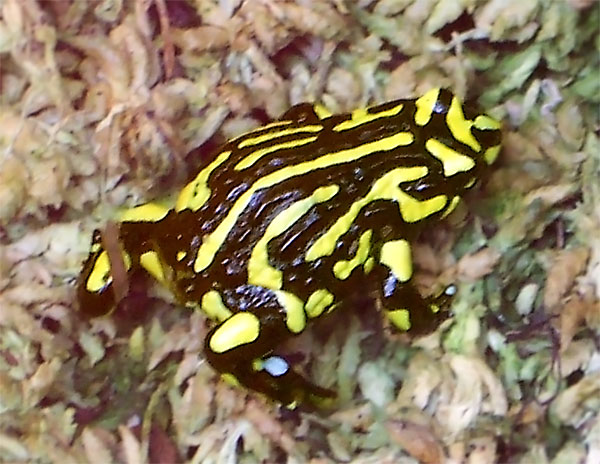
Corroboree Frog (Pseudophryne corroboree)
Introduction
High in the subalpine highlands of southeastern Australia, where snowmelt feeds a labyrinth of sphagnum bogs and the air carries the sharp clarity of altitude, a creature no larger than a human thumb moves through a world of moss and shadow. Its body is painted in stripes of jet black and vivid lemon-yellow — a palette so electric it reads less like camouflage and more like a declaration. In the brief warmth of the Australian summer, the Corroboree Frog emerges from the sodden earth of Kosciuszko National Park and announces itself to the world with every confident, unhurried step.
Pseudophryne corroboree — the Southern Corroboree Frog — is one of the most visually arresting amphibians on Earth, and also one of the most gravely imperilled. At a time when global amphibian populations are collapsing under the dual pressure of habitat loss and infectious disease, this tiny frog occupies a uniquely tragic position: it is a species watched over by scientists and conservationists with the same careful attention once reserved for the last individuals of the thylacine. With wild population estimates having plummeted to the tens of mature individuals, the Corroboree Frog is not simply endangered — it is living at the edge of biological extinction.
Yet within that precariousness lies one of the most remarkable survival stories in Australian natural history. The Corroboree Frog is physiologically extraordinary: it is among a tiny handful of vertebrates on Earth capable of synthesising its own alkaloid toxins, rather than acquiring them from dietary sources. Its breeding behaviour is an intricate, male-led ritual conducted in terrestrial nests hidden beneath moss and vegetation. Its colours evolved not to hide, but to warn — an aposematic signal so effective that predators learn to avoid it after a single encounter.
To study the Corroboree Frog is to engage with some of the deepest questions in ecology and evolutionary biology: How does a specialist creature adapt to the narrowest of ecological niches? What can a four-centimetre frog tell us about the health of an entire mountain ecosystem? And what does its potential disappearance mean, not just for the bogs of Kosciuszko, but for the broader story of life on this continent?
"The frog does not drink up the pond in which it lives."
— Native American Proverb, widely cited in ecological conservation literature
This article traces the complete biological and ecological portrait of the Southern Corroboree Frog — from its evolutionary origins and extraordinary chemistry to the social and environmental pressures that have brought it to the edge of oblivion, and the scientific effort racing to pull it back.
Scientific Classification
The Corroboree Frog belongs to a distinctly Australian lineage of ground-dwelling frogs. The family Myobatrachidae — sometimes called the Australian ground frogs or southern frogs — is a radiation that diversified in isolation on the Australian continent over tens of millions of years, producing species uniquely adapted to the continent's varied and often extreme environments. Within this family, the genus Pseudophryne contains some of Australia's most chemically fascinating amphibians.
- Kingdom: Animalia
- Phylum: Chordata
- Class: Amphibia
- Order: Anura
- Family: Myobatrachidae
- Genus: Pseudophryne
- Species: Pseudophryne corroboree Moore, 1953
The species was formally described by J.J. Moore in 1953, named after the Aboriginal Australian corroboree — a sacred ceremonial gathering often associated with vivid body paint and dance — a direct reference to the frog's striking black-and-yellow patterning. The genus name Pseudophryne derives from the Greek pseudo (false) and phryne (toad), reflecting the toad-like posture and compact body form that distinguishes these frogs from their more conventionally slender relatives.
It is important to distinguish Pseudophryne corroboree from its close relative, the Northern Corroboree Frog (Pseudophryne pengilleyi), which inhabits slightly different areas of the Australian Capital Territory and adjoining New South Wales ranges. While visually similar and ecologically parallel, the two species differ in their precise habitat preferences, call structure, and genetic lineage. They represent a fascinating example of allopatric speciation — the divergence of a shared ancestral population into two distinct species through geographic separation. This article focuses exclusively on the Southern Corroboree Frog, Pseudophryne corroboree.
Physical Characteristics
At full adult size, the Southern Corroboree Frog measures between 25 and 30 millimetres in snout-to-vent length — roughly the size of a large grape. Adults typically weigh between 1 and 2 grams. Despite this diminutive scale, the frog commands immediate visual attention. The dorsal surface is emblazoned with bold, longitudinal stripes alternating between deep, matte black and saturated yellow-green, running from snout to vent in a pattern that is unique to each individual, much like a fingerprint. The ventral surface maintains the same bold contrast — black and yellow splotches extending across the belly and the underside of the limbs.
The colouration is aposematic — a biological warning system. The vivid yellow-and-black pattern is universally recognised across the animal kingdom as a signal of chemical defence, communicating unpalatability or toxicity to potential predators. In the Corroboree Frog's case, the signal is honest: the skin secretes pumiliotoxin alkaloids that render the frog acutely unpleasant, if not lethally dangerous, to any predator that attempts to consume it.
The body form is compact and squat, characteristic of the Pseudophryne genus. The limbs are short and robust, adapted for terrestrial locomotion rather than long-distance jumping. Unlike tree frogs or pond-dwelling species, the Corroboree Frog navigates its sphagnum bog environment with a deliberate, almost toad-like walk. The toes lack significant webbing, reflecting the species' preference for moist terrestrial substrates over open water swimming. The eyes are relatively large, with a dark brown iris and a horizontal pupil — well adapted for detecting movement in low-contrast, vegetated environments.
The skin surface is granular and slightly rough, providing a degree of grip over the soft, uneven surface of living sphagnum moss. Parotoid glands — the enlarged skin structures behind the eyes in many amphibians — are present but not as pronounced as in true toads. The primary chemical secretion occurs across the dorsal skin surface as a whole, rather than being concentrated in specific glands. Males and females are difficult to distinguish externally except during the breeding season, when the male's nuptial pads — darkened roughened patches on the inner fingers — become visible, used to grip the female during amplexus.
Fun Fact Unlike poison dart frogs, which acquire their toxins from dietary sources such as mites and ants, the Corroboree Frog is one of the very few vertebrates on Earth known to synthesise its own alkaloid toxins entirely from scratch — a biochemical capability almost without parallel in the vertebrate world.
Female Corroboree Frogs are generally slightly larger than males, a pattern of modest sexual dimorphism that is common across the Pseudophryne genus. However, beyond size, the sexes are visually indistinguishable in the field without close examination. Both sexes display the same vivid warning colouration throughout their lives — unlike many amphibians where breeding colours appear seasonally, the aposematic patterning of the Corroboree Frog is permanent and consistent.
Habitat & Geographic Distribution
The Southern Corroboree Frog is one of the most geographically restricted vertebrates in Australia. Its entire known range is confined to a relatively small section of the Snowy Mountains in New South Wales, centred primarily within Kosciuszko National Park. Historically, populations occurred across a broader band of subalpine habitat from the Main Range and Fiery Range south toward the Victorian border, but contemporary wild populations are concentrated in a critically small number of known sites, primarily around the Fiery Range, Jagungal Wilderness, and associated wetland complexes.
The species is obligately tied to subalpine and montane habitats above approximately 1,300 metres in elevation. At these altitudes, the Australian alpine environment produces a narrow but ecologically rich band of vegetation — snow gum woodlands, subalpine grasslands, heathlands, and most critically, sphagnum moss bogs. It is within and around these sphagnum bogs that the Corroboree Frog exists.
Sphagnum bogs are ecological specialists — waterlogged, acidic, low-nutrient environments built over centuries by the accumulation of living and dead sphagnum moss. The moss itself is a remarkable organism: it can hold up to 20 times its dry weight in water, acting as a natural sponge that buffers the landscape against both drought and flood. For the Corroboree Frog, the sphagnum matrix provides thermal insulation, moisture regulation, nesting sites, and microhabitat complexity. The frog is almost entirely dependent on the presence of intact, healthy sphagnum for its survival.
The microclimate within a sphagnum bog is markedly different from the surrounding landscape. Even on warm summer days, the interior of a moss mat maintains cooler, more stable temperatures than the air above. In winter, snow cover and the insulating properties of sphagnum protect the frogs from lethal freezing. The frog spends a significant portion of the year buried within the moss matrix or in subsurface retreats, emerging only during the brief warmer months from late October through March.
| Feature | Southern Corroboree Frog | Northern Corroboree Frog |
|---|---|---|
| Scientific name | Pseudophryne corroboree | Pseudophryne pengilleyi |
| Primary range | Snowy Mountains, NSW | ACT ranges and adjacent NSW |
| Elevation range | Above 1,300 m | Above 1,000 m |
| Stripe colour | Bright yellow-green | Yellow or greenish-yellow |
| IUCN Status | Critically Endangered | Critically Endangered |
| Wild population est. | Fewer than 50 mature individuals | Fewer than 200 mature individuals |
| Key breeding habitat | Sphagnum bog margins | Wet heath and grassland seeps |
Adjacent to the bog proper, the frog utilises the surrounding wet heath and sedge meadows for foraging. These transition zones between bog and grassland support higher densities of the invertebrate prey upon which the species depends. The spatial relationship between nesting bog and foraging heath forms a critical component of the species' habitat requirements — sites that provide both elements in close proximity represent optimal habitat, and their fragmentation or degradation can render an otherwise suitable area unsuitable for long-term occupation.
Behaviour & Social Structure
The Southern Corroboree Frog is a largely solitary animal outside of the breeding season. Unlike many frog species that aggregate in large numbers around permanent water bodies, individual Corroboree Frogs live out their non-breeding lives in relative isolation, foraging independently through their subalpine terrain. Home ranges are small — individual frogs typically use an area of only a few hundred square metres over the course of a season — reflecting both the high quality of resources within the bog habitat and the species' low energy demands relative to its small body size.
Despite their apparent solitude, Corroboree Frogs are not entirely asocial. During the breeding season, males establish and defend small territories centred on nest sites — typically burrows excavated or selected beneath clumps of sphagnum moss, grass tussocks, or other surface vegetation at the margins of bogs. These territories are not vast, but the intensity of their defence is notable for such a small animal. Males will call persistently from nest burrows, using their vocalisation both to attract females and to advertise territory occupancy to rival males.
The male's call is a soft, repeated "squelch" — a slow, low-pitched note quite unlike the louder, more penetrating calls associated with larger frog species. The call carries over short distances and is highly effective within the dense, sound-absorbing substrate of a sphagnum bog, where it functions as a close-range communication signal. Call rate and intensity respond to the presence of rival males, increasing during competitive interactions. Two males encountering each other at a territorial boundary will engage in a calling duel — a vocal negotiation that usually resolves without physical contact, though direct confrontation and displacement can occur.
The communication repertoire of the Corroboree Frog extends beyond sound. Chemical signalling almost certainly plays a role in conspecific interactions, as is common among Pseudophryne species. The skin alkaloids may serve not only as predator deterrents but as chemical signals in mate choice and territorial marking — a dual function that would represent a sophisticated integration of chemical ecology and social behaviour. Research in this area is still developing, but the chemistry of the skin secretion varies between individuals and may encode information about health, genetic quality, or reproductive status.
There is no evidence of complex social hierarchy in the traditional dominance-hierarchy sense. The species does not form stable social groups with persistent rank structures. However, breeding season interactions reveal a form of competitive social ordering among males, where the quality and persistence of calling, the desirability of the nest site, and possibly the chemical signals emitted from the skin all contribute to a male's reproductive success. In this way, the social structure of the Corroboree Frog is best understood as a loose, seasonally active system of individual competition rather than a structured group dynamic.
Daily Life & Activity Cycle
The Corroboree Frog's annual cycle is tightly governed by the extreme seasonal rhythms of the subalpine environment. The Snowy Mountains receive substantial snowfall between April and October, and during these months the frogs are essentially dormant — buried in the sphagnum matrix or in subsurface burrows, waiting out conditions that would be physiologically lethal at the surface. This winter dormancy is not true hibernation in the mammalian sense, but a state of metabolic suppression, during which body temperature tracks ambient ground temperature, energy expenditure drops to a minimum, and all active behaviour ceases.
Emergence occurs in late October or November as snowmelt initiates and soil temperatures climb. The timing of emergence is variable between years, tracking the pace of seasonal warming. In warmer years, frogs emerge earlier and the active season is longer; in years of late or heavy snow, emergence is delayed, compressing the breeding and foraging window. This sensitivity to climatic timing makes the species particularly vulnerable to the disruptions of climate change, which is altering both the depth and duration of snow cover across the Australian Alps.
Within the active season, the Corroboree Frog is diurnal — active primarily during daylight hours. This is an unusual trait among frogs, most of which are crepuscular or nocturnal. The daytime activity pattern appears to be directly related to the species' chemical defence: a frog that is conspicuously patterned and toxically defended has little to fear from visual predators during the day, and can benefit from the higher ambient temperatures that accelerate digestion and movement. The bright yellow-and-black colouration that would make a nocturnal frog an easy target for a diurnal predator here becomes an advantage — both a warning to predators and a mechanism for efficient thermoregulation through solar basking.
On a typical active day, a Corroboree Frog may bask in patches of sunlight filtering through heath vegetation, regulate its body temperature by moving between exposed and sheltered microsites, and actively forage for small invertebrates in the surface litter and moss. In dry or very warm conditions, frogs will retreat beneath vegetation or burrow into the moss surface to avoid desiccation — despite their moist skin, these are high-altitude animals adapted to cool, humid conditions rather than drying heat. On rainy days or following rain events, activity rates increase sharply, as moisture stimulates movement and the availability of prey on the surface rises.
As autumn approaches and temperatures begin to fall in March and April, foraging activity decreases, and frogs increasingly spend time in shallow subsurface retreats. The transition into winter dormancy is gradual, with fully dormant frogs typically retreated to depth by May. The total active season spans approximately five to six months — a narrow window in which the frog must feed, breed, and accumulate sufficient energy reserves to survive the next winter.
Fun Fact Corroboree Frogs are among the very few frog species in the world that are genuinely diurnal — active by day. This unusually bold daytime lifestyle is made possible entirely by their toxic skin chemistry, which protects them from the visual predators that dominate daylight hours.
Diet & Survival Strategies
The Southern Corroboree Frog is a specialist predator of small invertebrates, operating at the lowest trophic levels of the bog food web. Its diet consists primarily of ants, mites, beetles, springtails (Collembola), and other small arthropods encountered in the surface litter and within the sphagnum matrix. The frog employs a sit-and-wait foraging strategy, remaining motionless for extended periods while scanning the immediate environment for movement, then striking with a rapid tongue extension to capture prey.
The dietary reliance on mites is of particular biochemical significance. Research into the alkaloid chemistry of Pseudophryne species has revealed that while the Corroboree Frog is capable of synthesising its pumiliotoxin alkaloids de novo — through its own metabolic pathways — certain mite species consumed in the diet may provide precursor compounds or complementary chemicals that modify or augment the toxin profile. This is an area of active scientific investigation, and the precise biochemical relationship between diet, precursor availability, and final toxin composition in the skin glands is still being elucidated. What is clear is that the frog's toxin production capacity is not entirely diet-independent: frogs raised in captivity on artificial diets without natural mite access show altered alkaloid profiles, suggesting dietary input influences the final chemical composition even if endogenous synthesis is the primary mechanism.
Prey is selected entirely on the basis of size and motility — the Corroboree Frog will attempt to take any moving invertebrate small enough to fit in its mouth. Prey items larger than approximately 5–6 millimetres are generally not captured successfully, which confines the dietary range to the micro-fauna of the bog surface. This dietary niche is extraordinarily rich in the subalpine bogs of Kosciuszko — sphagnum moss supports extremely high densities of mites, springtails, and small beetles, providing a reliable food source within the frog's small home range.
The survival strategy of the Corroboree Frog is built less on behavioural escape and more on chemical deterrence. It does not rely on cryptic colouration, burrowing speed, or flight from predators. Instead, the combination of aposematic warning signals and genuine chemical toxicity means that predation pressure on adults is remarkably low by amphibian standards. An adult Corroboree Frog moving slowly and conspicuously through open moss in daylight is not exhibiting recklessness — it is exhibiting confidence born from millions of years of chemical evolution. Predators that have encountered the species once rarely attempt a second attack.
Food scarcity is most acute in early spring immediately after emergence, when surface invertebrate activity is still low and the frogs have depleted most of their winter fat reserves. During this period, frogs may range more widely than at other times of year, searching for the first warm patches where insect and mite activity is concentrated. As the season progresses and invertebrate populations bloom through summer, foraging becomes easier and energy accumulation accelerates in preparation for both breeding and the following winter.
It is a Tuesday morning in mid-January, and the Fiery Range section of Kosciuszko National Park is caught between seasons. The previous night's rain has lifted, and weak sunlight falls across a mosaic of snow gum scrub and open sphagnum bog. A researcher kneels at the edge of a moss mat, barely breathing.
Three centimetres from her fingertip, a Corroboree Frog sits in full view on a platform of bright green sphagnum, utterly still. Its black and yellow stripes absorb and reflect the morning light in alternating bands — an animal that looks almost painted, too perfect in its geometry to be real. The researcher has been watching for eleven minutes. In that time, the frog has not moved. Then, with a speed disproportionate to its unhurried bearing, it strikes — a small mite vanishes, and the frog resets, returning immediately to its basilisk stillness.
Around it, the bog is alive with the submerged sounds of water moving through peat, the wind threading through snow gum leaves twenty metres away, and the faint, low-pitched squelch of a second male calling from somewhere beneath a tussock thirty metres to the east. The researcher notes the grid reference, the temperature, and the frog's behaviour in a waterproof field notebook. She does not touch the animal. In the wild population, every individual counts.
When she stands and walks away ten minutes later, the frog is still there — a tiny, brilliant piece of a vanishing world, waiting with the patience of deep time in a landscape that humans have only just learned to value.
Interaction with Other Animals
The ecological relationships of the Southern Corroboree Frog are shaped profoundly by its chemical defence system. In most ecosystems, small frogs occupy a central position in the food web — abundant prey for snakes, birds, large invertebrates, and mammals. The Corroboree Frog, however, has essentially opted out of that conventional prey role. Its pumiliotoxin skin secretions make it unpalatable to a wide range of potential predators, effectively removing it from the prey column of most of the species with which it co-occurs.
Native snakes, including the highland copperhead (Austrelaps ramsayi), are among the few predators that might encounter Corroboree Frogs in the wild. While snakes have a somewhat higher tolerance for amphibian alkaloids than birds or mammals, even they appear to avoid consuming the species after initial encounters. Invertebrate predators — large spiders, predatory beetles, centipedes — pose a theoretical threat to juveniles and very small individuals, but again, chemical defence provides a significant barrier. The result is an animal that, despite its extreme smallness, experiences adult predation rates that are genuinely low by any comparative standard.
The most significant and devastating ecological interaction that the Corroboree Frog now faces is not a traditional predator-prey relationship at all, but a pathogenic one. Batrachochytrium dendrobatidis (Bd), the chytrid fungus responsible for the amphibian disease chytridiomycosis, does not prey on the frog in any behavioural sense — it is a microscopic aquatic fungus that infects the skin of amphibians. But its effect on the Corroboree Frog has been catastrophic and continues to be the primary driver of population collapse (explored in detail in the conservation sections below).
In more conventional ecological interactions, the frog competes with other small insectivorous species for the invertebrate prey base of the bog. Other small frogs — including the alpine tree frog (Litoria verreauxii alpina), which shares much of the same subalpine habitat — occupy similar dietary niches. However, dietary partitioning likely reduces direct competition: the Corroboree Frog's dietary emphasis on mites and ants differs somewhat from the more generalist diet of the alpine tree frog, and the two species utilise different microhabitats within the broader alpine wetland complex.
Corroboree Frogs also interact with the broader vertebrate community of the alpine zone. Eastern pygmy possums, antechinus species, and various birds use the same sphagnum bog habitats and contribute to invertebrate population dynamics that ultimately affect the frog's food supply. Feral horses (Equus ferus caballus), cattle, and pigs introduced to the alpine zone have historically caused significant physical damage to sphagnum bogs through trampling and wallowing — a form of indirect ecological interaction with devastating consequences for the frog's habitat that will be addressed further in the threats section.
Interaction with Environment
The relationship between the Southern Corroboree Frog and its sphagnum bog habitat is one of the most tightly coupled species-environment relationships in the Australian fauna. The frog does not merely inhabit the bog — it is ecologically integrated into its structure at every level of its life history. Nesting, thermal regulation, moisture regulation, winter dormancy, and foraging are all conducted within or at the immediate margin of the sphagnum matrix. Remove the bog, and the frog effectively has nowhere to exist.
Sphagnum bogs are themselves extraordinary environmental systems. In the Australian Alps, they form in waterlogged depressions where poor drainage, cool temperatures, and low pH inhibit the decomposition of plant material. Living sphagnum moss forms the primary structural component, growing upward in successive layers while the lower layers slowly compress into peat. These peat deposits can reach depths of several metres in older systems and represent centuries of accumulated organic carbon — a significant carbon store whose degradation through drainage, fire, or drying releases substantial greenhouse gases.
The Corroboree Frog's dependence on sphagnum extends beyond mere shelter. The specific thermal environment of the bog interior — cooler and more stable than the surface air — is critical for egg development and larval survival. The chemistry of the sphagnum — acidic, low-nutrient, high in tannins — creates conditions that may suppress some microbial pathogens while being compatible with the frog's own biochemistry. There is some evidence that the acidic bog water may reduce the viability of Bd zoospores, though this protection is clearly insufficient to prevent the catastrophic infection rates observed in wild populations.
Hydrology is the central environmental variable structuring Corroboree Frog ecology. The frog's reproductive cycle is timed to the filling of bog pools and channels by spring snowmelt and summer rain. Eggs are laid terrestrially in autumn, and larval development is triggered by the flooding events of winter and spring — the larvae must be washed into water at the right developmental stage to complete their metamorphosis. Any disruption to the hydrological cycle — whether through drought, altered snowmelt timing, or drainage modification — can sever this developmental link and cause complete recruitment failure in a given season.
The frog's role in nutrient cycling within the bog, while modest, is not negligible. By consuming large quantities of mites and ants, it channels energy and nutrients from the decomposer and herbivore layers of the food web upward into vertebrate tissue. Excretion by frogs adds dissolved organic matter and inorganic nutrients to the bog water — a small but measurable contribution to the nutrient economy of the system. In ecosystems as nutrient-limited as sphagnum bogs, even small inputs can have disproportionate effects on community composition.
Reproduction & Parenting
The reproductive strategy of the Corroboree Frog is one of the most distinctive and biologically fascinating aspects of its natural history. Unlike the majority of Australian frogs, which breed in water and leave their eggs to develop without parental investment, the Corroboree Frog employs a terrestrial breeding system with substantial male parental care — a combination of traits rare among anurans globally and virtually unique in the Australian fauna.
Breeding activity begins in late summer, typically from January through March. Males emerge from their foraging ranges and begin excavating or selecting nest burrows at the edges of sphagnum bogs, beneath moss clumps, grass tussocks, or woody debris. The quality of the nest site — its moisture level, thermal stability, proximity to water, and degree of concealment — is critical to reproductive success, and males invest significant time and energy in its preparation. A male may spend days constructing and refining a burrow before beginning to call.
Once established in a nest burrow, males call persistently during daylight hours to attract females. The call — a soft, pulsed squelch — is repeated at intervals of a few seconds and is audible to a human observer at close range but rapidly attenuates in the dense moss. Females wander between potential nest sites, assessing male calls and presumably also the physical quality of the burrow. Female choice is active and selective — a female that enters a burrow and accepts the male engages in axillary amplexus (the male grasps the female from behind and above) within the nest cavity. Females will leave and assess other males if unsatisfied with a nest site, and multiple visits to different burrows before oviposition are common.
Egg clutches are typically small — between 16 and 38 eggs per clutch, though variation occurs. The eggs are relatively large for the size of the adult, cream-white, and deposited in a compact jelly mass within the nest burrow. After oviposition, the female departs. The male remains. This paternal attendance is not simply residency — the male actively remains with the eggs throughout their development, which proceeds slowly over the summer months. While the male does not brood the eggs in the physical sense of maintaining contact or turning them, his presence may deter small invertebrate egg predators and likely plays a role in maintaining the nest microclimate through his own metabolic moisture release.
The larvae do not hatch and enter water immediately. Instead, embryonic development within the egg is prolonged — the embryos develop to an advanced stage within the egg capsule, essentially completing much of the early tadpole development before hatching. When autumn rains and snowmelt flooding arrive — typically between May and September — the nest burrow floods, and the larvae are released into the water as well-developed, free-swimming tadpoles. This strategy, known as delayed hatching with flood-triggered larval release, is a sophisticated adaptation to the highly seasonal and unpredictable hydrology of the subalpine environment. If floods fail to arrive, the larvae can persist within the egg capsule for extended periods — sometimes months — effectively waiting for hydrological conditions to become suitable.
Tadpoles are aquatic, inhabiting the shallow, boggy pools and channels formed by snowmelt. They are bottom feeders, consuming algae, detritus, and microorganisms from the substrate. Larval development through metamorphosis typically takes three to five months, with metamorphic juveniles emerging from the water in late spring or early summer. These tiny froglets, measuring just 7–10 millimetres at metamorphosis, are immediately aposematically coloured — the warning pattern is present from the moment of transformation, indicating that chemical defence capacity is established before or at metamorphosis. Juveniles do not reach sexual maturity until their third or fourth year of life, meaning that the loss of any breeding cohort has multi-year consequences for population recovery.
Evolutionary Adaptations
The evolutionary history of the Southern Corroboree Frog is written in its chemistry, its colouration, and its behavioural ecology. The lineage that gave rise to Pseudophryne corroboree diverged from other myobatrachid frogs deep in the Cenozoic, during the progressive cooling and drying of the Australian continent that began approximately 35 million years ago. As the climate fragmented Australia's ancestral rainforest into isolated pockets and cooler highland systems, amphibian populations were forced to adapt to increasingly specialised environments or face extinction. The alpine specialists of the Pseudophryne genus represent one of the successful outcomes of this environmental pressure.
The most extraordinary evolutionary adaptation of the species is unquestionably its capacity for de novo alkaloid biosynthesis. Almost all chemically defended frogs — including the famous poison dart frogs of Central and South America — acquire their skin toxins from dietary sources, particularly from mites and ants that themselves sequester plant-derived alkaloids. The frog's role is essentially passive: eat the right prey, and the toxins accumulate in the skin. The Corroboree Frog, and its relatives in the Pseudophryne genus, has taken a biochemically bolder approach, evolving the metabolic machinery to synthesise pumiliotoxin alkaloids endogenously — building these complex molecules from scratch through multi-step enzymatic pathways. This is a profound evolutionary innovation, representing the independent evolution of chemical defence from within rather than from without.
The pumiliotoxins produced by Pseudophryne species are structurally distinct from those produced by poison dart frogs but belong to the same broad alkaloid class. They act as positive modulators of the calcium ATPase and ryanodine receptor systems — effectively disrupting calcium regulation in muscle cells, causing hypercontraction and potentially cardiac failure in predators that consume a sufficient dose. The frog itself is immune to its own toxins through specific modifications to its target proteins — a co-evolutionary refinement that ensures the defence system does not become self-destructive.
The evolution of aposematic colouration in parallel with toxin production represents a textbook example of correlated trait evolution. Warning colouration is only selectively advantageous if the animal is genuinely defended — a brightly coloured but palatable frog would be at a disadvantage, standing out to predators without the compensating protection of toxicity. Conversely, a toxic but cryptically coloured frog loses the selective advantage of predator education. The tight coupling of yellow-black stripes with genuine chemical defence in the Corroboree Frog represents an evolutionary equilibrium where both traits reinforce each other's selective advantage.
The species' diurnal activity pattern is another evolutionary derivative of chemical defence. Day-active frogs of this size would be easy prey for diurnal birds and lizards if undefended. The Corroboree Frog's chemical protection removes most of the selective pressure for nocturnality and allows the species to exploit the thermal benefits of daytime solar radiation — warmer body temperatures mean faster digestion, quicker reflexes, and greater reproductive activity during the brief alpine summer.
Cold tolerance is a further critical adaptation. The Corroboree Frog has evolved physiological mechanisms that allow it to withstand near-freezing temperatures during its winter dormancy — modifications to membrane lipid composition that maintain cellular fluidity at low temperatures, and tolerances to the hypoxic conditions that develop within compacted sphagnum. These adaptations are not unique to this species but represent a suite of cold-climate specialisations shared across the high-altitude members of the genus.
Ecological Importance
The ecological importance of the Southern Corroboree Frog operates at several distinct scales, from the intimate chemistry of the bog microhabitat to the broader dynamics of the subalpine ecosystem and even the global significance of the species as a bellwether for amphibian decline.
At the level of the food web, the Corroboree Frog occupies a bridge position between the micro-invertebrate community of the sphagnum bog and higher trophic levels. By consuming large quantities of mites, ants, and springtails, it regulates invertebrate populations within its home range and channels energy upward through the vertebrate food chain. The degree to which predator pressure from the frog shapes invertebrate community structure is difficult to quantify given the species' current scarcity, but analogous studies on other small insectivorous amphibians suggest that even at low densities, frogs can have measurable top-down effects on prey community composition.
The species' role as an indicator of sphagnum bog health is perhaps its greatest ecological importance. Amphibians, with their highly permeable skins, direct developmental dependence on water quality, and sensitivity to chemical changes in the environment, function as biological sensors of ecosystem condition. The Corroboree Frog's extremely restricted habitat requirements — intact sphagnum bogs above 1,300 metres, with specific hydrological conditions — mean that its presence indicates a high standard of ecological integrity. Its decline or absence signals not just the loss of a single species, but degradation of the entire subalpine bog ecosystem.
Sphagnum bogs themselves are ecosystem service providers of enormous value. They store water, regulate downstream hydrology, sequester carbon, and support unique biodiversity found nowhere else in the landscape. The Corroboree Frog's dependence on and contribution to these systems means that conservation actions taken on its behalf generate positive outcomes across the entire bog ecosystem — a textbook case of umbrella species conservation, where protecting one highly demanding species protects an entire community.
At the global scale, the Corroboree Frog has become a symbol of amphibian vulnerability and the catastrophic impact of the chytrid fungal pandemic. The patterns of decline observed in this species — rapid, pathogen-driven, occurring within protected areas and apparently irreversible without active intervention — have been repeated in hundreds of amphibian species worldwide. The scientific literature generated by efforts to understand and halt the frog's decline has contributed fundamentally to global knowledge of amphibian disease ecology, captive breeding techniques, and reintroduction science.
Threats & Conservation
The Southern Corroboree Frog faces an extraordinary convergence of threats — a situation where multiple independent stressors have simultaneously targeted every phase of its life cycle and every component of its habitat. Understanding these threats requires looking beyond individual causes to the systemic vulnerabilities that define the species' precarious position.
The primary and most devastating threat is chytridiomycosis, caused by the chytrid fungus Batrachochytrium dendrobatidis (Bd). This pathogen arrived in Australia in the late 20th century — almost certainly through the international pet trade and via research laboratories using the African clawed frog (Xenopus laevis) as a model organism. Bd infects the keratinised layers of amphibian skin, disrupting the electrolyte transport functions that skin performs in frogs. Severe infection causes osmotic imbalance, electrolyte depletion, and eventually cardiac failure. For the Corroboree Frog, whose thin, highly permeable alpine skin is exquisitely sensitive to disruption, even moderate infection loads can be lethal. The cool temperatures of the subalpine environment that the frog requires also happen to be optimal growth conditions for Bd — the fungus thrives between 17°C and 25°C, which corresponds to the active season temperatures of the Snowy Mountains.
Climate change presents a second existential threat, operating through multiple pathways simultaneously. Rising temperatures and altered precipitation patterns are reducing the depth and duration of snow cover in the Australian Alps — the very snow that insulates overwintering frogs and generates the spring snowmelt floods that trigger larval release. Increased frequency of drought reduces the summer rainfall events that maintain bog hydrology and trigger breeding. Warmer temperatures may alter the phenology of the invertebrate prey community in ways that misalign with the frog's foraging season. And paradoxically, warming may expand the range of Bd by increasing the proportion of the year during which temperatures fall within the pathogen's optimal growth range.
Habitat degradation from introduced grazing animals has historically been severe in the Australian Alps. Feral horses, cattle, and pigs trample and root through sphagnum bogs, breaking down the delicate moss structure, increasing turbidity of bog water, compacting peat, and altering bog hydrology. Despite the existence of Kosciuszko National Park as protected land, feral horse populations within the park have been the subject of intense political and conservation conflict, with populations persisting at levels that continue to cause measurable bog damage.
The species' extremely limited range and low population numbers create a compound vulnerability — demographic stochasticity and genetic isolation. A population measured in tens of individuals has virtually no buffer against random environmental variation. A single bad breeding season, an outbreak of secondary infection, or a localised fire event can eliminate an entire population cluster. The species has already been extirpated from a number of historical sites, contracting its range to a critically small number of core localities.
IUCN Red List Analysis
Current IUCN Status
The Southern Corroboree Frog (Pseudophryne corroboree) is listed as Critically Endangered (CR) on the IUCN Red List of Threatened Species. This classification — the highest threat category applied to extant species before Extinct in the Wild — is justified under IUCN criteria on the basis of an extremely small and continuing to decline estimated population of mature individuals, an extremely restricted range area, and an ongoing decline in the quality and extent of suitable habitat. The Critically Endangered designation under Criterion C2a(i) reflects a population estimated at fewer than 250 mature individuals with no subpopulation containing more than 250 individuals — and with strong evidence of continued decline.
The classification was most recently assessed and confirmed following continuing field surveys that have documented the near-total collapse of wild populations at most historical sites. The scientific basis for the classification is robust, grounded in multiple independent survey methodologies including systematic call monitoring, visual encounter surveys, and population mark-recapture studies over several decades.
Population Trend
The population trend for Pseudophryne corroboree is decreasing, and the rate of decline observed over the past three decades has been among the steepest documented for any Australian vertebrate. Surveys conducted through the 1980s and early 1990s detected the species at numerous sites across its historical range and estimated total wild population sizes in the hundreds to low thousands of individuals. By the early 2000s, following the confirmed arrival and spread of Bd across the Snowy Mountains, population counts had declined by an estimated 80–90% at most monitored sites. By the 2010s, several previously known populations had become functionally undetectable.
Current estimates from the most recently active field survey programmes suggest that the total wild population of sexually mature adults may be fewer than 50 individuals, concentrated at a small number of sites within the Fiery Range and Jagungal Wilderness areas of Kosciuszko National Park. Some assessments place the number even lower. This represents one of the smallest wild populations of any vertebrate species currently monitored in Australia — a number that, without ongoing conservation intervention, is considered insufficient to ensure long-term viability under natural conditions.
Main Threats
Chytridiomycosis is unambiguously the primary driver of population collapse in Pseudophryne corroboree. The arrival of Bd in the Snowy Mountains coincided precisely with the onset of dramatic population declines in the 1980s and 1990s. Laboratory trials confirm the species' extreme susceptibility — experimental infection results in high mortality rates within weeks. In the wild, Bd persists in the bog water and on the surface of vegetation, making complete avoidance impossible for frogs that must have skin contact with their aquatic and semi-aquatic environment. There is currently no known natural resistance to Bd in wild Corroboree Frog populations, and no effective treatment applicable at the landscape scale.
Climate change threatens the species through reduced and altered snowpack, increased drought frequency, vegetation community shifts in the subalpine zone, and the potential northward or upward expansion of Bd's optimal thermal range. Modelling studies project significant losses of suitable habitat within the species' current range under medium to high emissions scenarios by 2070, with the combination of thermal stress and hydrological change potentially eliminating functional breeding habitat at many current sites.
Habitat degradation from feral horses and other introduced large mammals continues to damage sphagnum bogs within Kosciuszko National Park. Although culling and management programmes have been implemented, feral horse numbers remain ecologically significant, and the physical damage caused by repeated bog trampling is slow to recover — peat systems that take centuries to develop can be damaged within a single season of heavy use.
Wildfire represents an increasingly significant threat as climate change extends the fire season and increases fire intensity in the Australian Alps. The catastrophic 2019–2020 Australian bushfires burned through portions of Kosciuszko National Park, including areas of known Corroboree Frog habitat. While the bogs themselves resist burning due to their saturated conditions, peripheral habitat and movement corridors were damaged, and post-fire flooding and ash-laden runoff can temporarily alter bog chemistry in ways potentially harmful to larvae and tadpoles.
Ecological Consequences
The extinction of the Southern Corroboree Frog from the wild would remove a biochemically unique lineage — the only known vertebrate in Australasia capable of de novo alkaloid synthesis — from the global biological record. Beyond the inherent loss of genetic and chemical novelty, the ecological consequences would cascade through the sphagnum bog system in ways that are difficult to model with precision but are certainly not trivial.
Predator communities currently deterred by Corroboree Frog toxicity would face no meaningful loss in food web structure — adults are currently so rare that their ecological contribution to predator diets is already negligible. However, the loss of the frog as an invertebrate predator would, over time, allow mite and ant populations in bog microhabitats to increase in the absence of predation pressure, potentially altering decomposition rates and nutrient cycling within the sphagnum. The magnitude of this effect is unknown but probably small given current frog densities.
The more consequential ecological impact of the species' extinction would be symbolic and indirect — the loss of one of Australia's most iconic flagship species for subalpine conservation would reduce public and political support for the ongoing management of Kosciuszko's bog systems, potentially weakening the case for continued feral horse management, Bd biocontrol research, and climate change mitigation policy that benefits the broader alpine biome. In ecology as in politics, the loss of charismatic species erodes the institutional will to protect the systems they represent.
Furthermore, the disappearance of the Northern Corroboree Frog (P. pengilleyi), which faces nearly identical threats, would simultaneously remove the sister lineage, leaving the entire biochemical and evolutionary heritage of this remarkable amphibian group represented only in museum collections and captive animals.
Conservation Efforts
Conservation efforts for the Southern Corroboree Frog have been substantial, scientifically sophisticated, and increasingly urgent. The Australian Government has listed the species under the Environment Protection and Biodiversity Conservation Act 1999 (EPBC Act) as Critically Endangered, providing a legal framework for protection and recovery planning. A formal Recovery Plan has been developed and implemented, coordinating actions across government agencies, research institutions, and zoos.
Taronga Zoo in Sydney and the Australian Capital Territory's Tidbinbilla Nature Reserve have established captive insurance populations of both P. corroboree and P. pengilleyi, maintaining genetically diverse groups under controlled conditions away from Bd exposure. These programmes have successfully bred thousands of individuals, providing both a genetic reservoir and a source of animals for experimental reintroduction trials. Captive management has also enabled critical research into the species' reproductive biology, dietary requirements, and disease susceptibility that would be impossible with wild animals alone.
Reintroduction trials have been conducted at several sites within Kosciuszko National Park, with varying success. A key challenge is that the Bd pathogen persists in the environment even in the absence of amphibian hosts, meaning that reintroduced frogs are rapidly exposed after release. Current research is investigating whether captive-bred frogs can be treated or conditioned to develop immune responses to Bd before release — a form of probiotic or vaccine preparation that has shown promise in laboratory settings. The application of antifungal probiotics to reintroduced frogs represents one of the most innovative approaches currently being trialled.
Habitat management within Kosciuszko National Park includes active monitoring and targeted exclusion of feral horses from critical bog sites using fencing. Bog restoration work — removing debris from degraded sites, restoring natural hydrology through small-scale earthworks, and encouraging sphagnum regeneration — has been conducted at selected locations. Climate change adaptation planning for the alpine zone increasingly incorporates Corroboree Frog requirements as a focal species, recognising that the conditions necessary for this frog's survival represent a high standard of ecological integrity that benefits the entire system.
Future Outlook
The future of the Southern Corroboree Frog in the wild is genuinely uncertain, and any honest assessment must acknowledge that the default trajectory — in the absence of sustained and intensifying conservation intervention — is extinction from wild populations within the next one to three decades. The Bd pathogen shows no sign of natural attenuation in the Australian alpine environment, wild populations remain at critically low levels with no evidence of natural recovery, and climate projections consistently indicate deteriorating conditions for subalpine sphagnum bogs through the 21st century.
However, the captive breeding insurance population provides a foundation for recovery that does not exist for many species of comparable conservation concern. If a field-applicable treatment for Bd can be developed and deployed — whether through probiotic bacteria, genetic manipulation of the pathogen, or immune enhancement of captive-bred frogs — reintroduction at scale becomes scientifically plausible. The genomic resources now available for the species also open the possibility of assisted evolution approaches, selectively breeding for individuals with enhanced immune capacity before release.
The long-term outlook will ultimately be determined not just by the success of direct conservation interventions, but by the trajectory of global climate change, the management of feral animals in the Australian Alps, and the willingness of Australian society to invest in the long-term management of this species and its habitat. The Corroboree Frog will not save itself — but it will respond to rescue if that rescue is offered with sufficient scientific rigour and political commitment.
Human Relationship
The Corroboree Frog holds a distinctive place in Australian cultural consciousness that is disproportionate to its size and geographic range. Its name — derived from the Aboriginal Australian corroboree ceremony — acknowledges an Indigenous cultural landscape in which the vivid, patterned world of the natural environment and the ceremonial life of human communities were not separate domains. Although the direct cultural significance of the species to specific Aboriginal groups of the Snowy Mountains region is complex and not uniformly documented in the scientific literature, the naming of the frog reflects a broader recognition of the aesthetic and spiritual resonance of its extraordinary colouration.
In contemporary Australian society, the Corroboree Frog has become one of the most recognisable symbols of amphibian conservation and, more broadly, of the ecological crisis facing Australia's unique biodiversity. Its image appears in conservation campaigns, educational materials, and government documents at state and federal levels. Taronga Zoo has made the species a centrepiece of its conservation communication programmes, using the frog's visual impact — that unmistakable black-and-yellow pattern — to engage public audiences with the realities of amphibian decline and the chytrid fungal pandemic.
Ecotourism to Kosciuszko National Park has a complex and evolving relationship with the species. The subalpine environment that the frog inhabits is also a popular destination for walkers, skiers, and nature tourists, and the presence of such an iconic and rare species adds biodiversity value to the park's profile. However, recreational visitation also brings risks — Bd can be transported on boots and equipment between sites, and visitor access to sensitive bog areas can cause physical habitat damage. Park managers have implemented boot-washing protocols and directional signage to reduce pathogen transport, and some of the most critical habitat areas have restricted or managed access.
The political dimension of the frog's conservation is substantial and contentious. The management of feral horses in Kosciuszko National Park has been one of the most acrimonious conservation debates in New South Wales politics for decades, with the heritage and recreational value attributed to brumbies (feral horses) by some stakeholders directly conflicting with the scientific evidence of their damage to sphagnum bogs and the species that depend on them. The Corroboree Frog has been invoked repeatedly in this debate — both as evidence of the urgency of horse removal and as a symbol of the broader tension between European cultural attachments to the Australian landscape and the ecological needs of endemic species that evolved in the complete absence of large hoofed mammals.
Fun Fact The Corroboree Frog takes its common name from the Aboriginal Australian corroboree ceremony, recognising the striking resemblance between the frog's bold black-and-yellow stripes and the vivid body paint used by Aboriginal Australians in these sacred ceremonial gatherings.
Human-wildlife conflict in the traditional sense — the kind involving crop raiding, livestock predation, or direct physical danger — does not apply to a four-centimetre frog in a remote national park. The human-Corroboree Frog relationship is instead one of aesthetic appreciation, scientific fascination, and a profound moral reckoning with human responsibility for the species' decline. The chytrid fungal pandemic that is killing this frog was caused, at least in part, by the global trade in amphibians enabled by human commerce. The habitat degradation that has compounded its decline was caused by the introduction of European land-use practices to a landscape that evolved without them. The climate change altering its alpine home is the consequence of global industrial activity. In this sense, the Corroboree Frog's relationship with humanity is one of unintended but consequential harm — and the conservation effort now deployed on its behalf represents an attempt at restitution.
Unique & Rare Facts
- Endogenous toxin synthesis: The Southern Corroboree Frog is one of only a handful of vertebrates on Earth known to synthesise its own alkaloid toxins (pumiliotoxins) from scratch, rather than acquiring them from dietary sources. This makes its biochemistry fundamentally different from poison dart frogs and most other chemically defended amphibians, which passively sequester toxins from the animals they eat.
- Smallest frog with the boldest warning: At just 25–30 mm in length, this species presents one of the most effective aposematic warning patterns of any vertebrate in Australia — a bold black-and-yellow design that predators learn to associate with severe unpalatability after a single encounter.
- Flood-triggered hatching: Corroboree Frog embryos can remain viable within their egg capsules for several months, essentially waiting in suspended development until flooding events arrive to carry them into water. If flooding is delayed or does not occur, larvae can remain in the egg — alive but unhatched — for extraordinary periods.
- Diurnal in a world of nocturnal frogs: Unlike the vast majority of frog species, which are active at night to avoid diurnal predators, the Corroboree Frog is genuinely day-active. This daytime boldness is possible only because of its chemical protection — a living demonstration of how toxicity can liberate an animal from conventional anti-predator behaviour.
- Male nest-building and egg guarding: The male Corroboree Frog constructs a terrestrial nest burrow, attracts a mate through calling, and then remains with the eggs throughout their development — a degree of paternal investment rarely seen in anurans and virtually unique among Australian frogs.
- One of the world's rarest wild vertebrates: With an estimated wild population that may be fewer than 50 sexually mature individuals, Pseudophryne corroboree ranks among the rarest wild vertebrates currently surviving outside captivity. Fewer wild individuals of this species exist than almost any other amphibian in the world.
- Alkaloid immune to its own producer: The frog has evolved specific modifications to the target proteins of its own pumiliotoxins — the calcium transport systems and ryanodine receptors that the toxin disrupts in other animals — rendering it effectively immune to its own chemical defence. This autoresistance required parallel molecular evolution alongside the development of the toxin synthesis pathway itself.
- A species discovered in the era of its decline: The Southern Corroboree Frog was not formally described by science until 1953. By the 1980s — barely three decades after its scientific description — its populations were already in catastrophic decline due to Bd. It is a species that science barely knew before it began to lose it.
- Peat-carbon sentinel: The sphagnum bogs this frog depends on store enormous quantities of carbon — some Australian alpine bog peat deposits are thousands of years old and represent significant terrestrial carbon stores. The frog's fate and the fate of this carbon store are ecologically linked: degraded bogs release carbon; intact bogs retain it.
Conclusion
In a landscape measured in thousands of kilometres and millions of years, the Southern Corroboree Frog occupies a space of extraordinary smallness — four centimetres of black-and-yellow precision, embedded in a square metre of dripping sphagnum moss, on a mountain that itself represents only a tiny fragment of a continent. And yet the story of this frog carries a weight far beyond its dimensions. It is a story about biochemical innovation and the deep evolutionary history of a continent isolated by geological time. It is a story about the catastrophic consequences of globalised human commerce — a fungus carried on the boots of researchers and in the skin of traded frogs, released into ecosystems that had no evolutionary memory of it. It is a story about the limits of protection — how even a national park, even the strongest legal designation, even the best-intentioned conservation programme cannot fully shield a species from the compounding pressures of a world reshaped by human activity.
But it is also a story about what science can accomplish when it commits fully to a single, urgent cause. The captive breeding programmes at Taronga Zoo and other institutions have preserved genetic diversity that wild populations can no longer sustain. The research generated by the species' decline has advanced global understanding of amphibian immunology, disease ecology, and reintroduction biology in ways that benefit hundreds of other threatened species. The ongoing effort to develop probiotic and vaccine-based treatments for Bd, and to test them in the field on Corroboree Frog reintroductions, represents one of the most innovative frontiers in applied conservation biology anywhere in the world.
"We abuse land because we regard it as a commodity belonging to us. When we see land as a community to which we belong, we may begin to use it with love and respect."
— Aldo Leopold, A Sand County Almanac, 1949
The Corroboree Frog does not know it is endangered. It does not understand the abstractions of IUCN categories, climate projections, or captive breeding protocols. On a warm January day in Kosciuszko, the last wild individuals move through their moss world with the same unhurried confidence as their ancestors — vivid, toxic, and entirely themselves. They call from burrows with the quiet persistence of animals that have been calling from these bogs for thousands of generations. Whether they will be calling from wild bogs a hundred years from now depends entirely on decisions being made by the one species on Earth with both the responsibility for their decline and the capacity to reverse it.
The Southern Corroboree Frog is not merely a conservation case study. It is a mirror — tiny, yellow-striped, and unflinching — held up to the face of human ecological impact. What we choose to see in that reflection, and what we choose to do about it, will determine whether this species' extraordinary evolutionary story continues, or is closed as a chapter in the longer, sadder story of what the modern world has lost.
Sources & Attribution
Data and ongoing research referenced for this article come from the following authoritative sources — peer-reviewed publishers, official taxonomic registers, and global biodiversity programmes:
- IUCN Red List — Corroboree Frog — official IUCN Red List assessment including population trend, threats, and conservation actions.
- Wikipedia — Corroboree Frog — taxonomy, distribution, and an overview with onward citations to primary literature.
- GBIF — Corroboree Frog — global occurrence and distribution records from the Global Biodiversity Information Facility.
- iNaturalist — Corroboree Frog — observation records and field photographs contributed by naturalists worldwide.
- Encyclopedia of Life — Corroboree Frog — multilingual species pages aggregating taxonomic and natural-history data.
- WWF — World Wildlife Fund — global wildlife conservation programmes and research summaries.
- Nature — research on Corroboree Frog — peer-reviewed studies indexed by Nature on related ecology and behaviour.
- ITIS — Integrated Taxonomic Information System — federal-grade taxonomy and nomenclature.
Frequently Asked Questions
What is the Corroboree Frog and where does it live?
The Corroboree Frog (Pseudophryne corroboree) is a small, critically endangered species of ground-dwelling frog native to the Snowy Mountains of New South Wales, Australia. It is found primarily within Kosciuszko National Park, at elevations above 1,300 metres, in sphagnum moss bogs and adjacent wet heath and subalpine grasslands.
There are two species commonly called Corroboree Frogs: the Southern Corroboree Frog (P. corroboree) and the Northern Corroboree Frog (P. pengilleyi), which occupies slightly different habitat in the ACT ranges and adjoining areas. Both are Critically Endangered.
Why is the Corroboree Frog so brightly coloured?
The Corroboree Frog's vivid black-and-yellow striped colouration is aposematic — a biological warning signal that communicates chemical toxicity to potential predators. The frog produces pumiliotoxin alkaloids in its skin, which make it intensely unpalatable and potentially dangerous to predators that attempt to consume it.
This warning colouration is one of the most effective anti-predator strategies in the animal kingdom. Predators that encounter and survive an attempt to eat a Corroboree Frog quickly learn to associate the pattern with an unpleasant experience and avoid the species thereafter. The bright colours are thus not camouflage but a declaration of defence.
Is the Corroboree Frog poisonous or venomous?
The Corroboree Frog is poisonous but not venomous. The distinction is important: a venomous animal actively injects toxins through a bite or sting, while a poisonous animal is toxic when contacted or consumed. The frog's pumiliotoxin alkaloids are secreted passively through the skin and cause harm to any predator that mouths or swallows the frog.
What makes the Corroboree Frog exceptional is that it synthesises these toxins through its own metabolic pathways — de novo biosynthesis — rather than acquiring them from dietary sources as most chemically defended frogs do. This biochemical self-sufficiency is extremely rare among vertebrates globally.
How many Corroboree Frogs are left in the wild?
Current estimates suggest that fewer than 50 sexually mature individuals of Pseudophryne corroboree may survive in the wild, concentrated in a small number of sites within Kosciuszko National Park. Some assessments place the figure even lower. This makes the Southern Corroboree Frog one of the rarest wild vertebrates currently surviving in Australia.
Captive populations maintained at Taronga Zoo, the ACT's Tidbinbilla Nature Reserve, and other institutions number in the thousands, providing an important insurance population. However, the captive population cannot substitute for wild recovery, which requires successful reintroduction and the resolution of the primary threat — the chytrid fungal pathogen Bd.
What is killing the Corroboree Frog?
The primary cause of the Corroboree Frog's population collapse is chytridiomycosis, a disease caused by the fungus Batrachochytrium dendrobatidis (Bd). This pathogen infects amphibian skin, disrupting its ability to regulate electrolytes and water, ultimately causing heart failure. The cool temperatures of the subalpine environment that the frog requires are also optimal for Bd growth, making the species particularly vulnerable.
Secondary threats include habitat degradation from feral horses trampling sphagnum bogs, climate change reducing snow cover and altering hydrology, and wildfire. The combination of these stressors, acting simultaneously on a species with an extremely small and restricted population, has created a conservation emergency with no simple solution.
What conservation efforts are being made to save the Corroboree Frog?
Conservation efforts include captive breeding programmes at Taronga Zoo and Tidbinbilla Nature Reserve, which maintain thousands of individuals of both corroboree frog species as genetic insurance populations. Active research is underway into probiotic bacteria treatments that could protect reintroduced frogs against Bd infection, and experimental reintroductions have been conducted at multiple sites within Kosciuszko National Park.
Habitat management includes fencing of critical sphagnum bog sites to exclude feral horses, bog restoration work, and visitor boot-washing protocols to prevent Bd transport between sites. The species is listed as Critically Endangered under Australia's federal EPBC Act, providing legal protection, and a formal Recovery Plan coordinates actions across government, research, and zoo sectors.
How does the Corroboree Frog breed?
The Corroboree Frog has a highly unusual terrestrial breeding system. Males construct burrows in sphagnum moss and other vegetation and call from within them during late summer (January to March) to attract females. After mating, the female deposits a small clutch of 16–38 relatively large eggs in the burrow, then departs, leaving the male to attend the eggs.
The embryos develop slowly within the egg capsules and do not hatch until they are washed into water by autumn rains and snowmelt flooding — sometimes months after laying. Tadpoles then develop in bog pools over winter and spring, metamorphosing in early summer. Juveniles do not reach sexual maturity until their third or fourth year, meaning the population recovers extremely slowly from any disruption to breeding.
What does the Corroboree Frog eat?
The Southern Corroboree Frog feeds primarily on small invertebrates found in and on the surface of sphagnum moss and surrounding litter. Its diet includes mites, ants, small beetles, springtails (Collembola), and other micro-arthropods. It uses a sit-and-wait predatory strategy, remaining stationary until prey comes within strike range, then capturing it with a rapid tongue extension.
The dietary reliance on mites is of particular interest because certain mite species contain precursor alkaloids that may influence the composition of the frog's skin toxins, even though the frog can synthesise its pumiliotoxins endogenously. The precise relationship between diet and final toxin chemistry remains an active area of research.
Why is the Corroboree Frog active during the day?
The Corroboree Frog is genuinely diurnal — active primarily during daylight hours — which is unusual for frogs, most of which are nocturnal or crepuscular. This daytime activity pattern is made possible by the species' chemical defence: a frog that carries potent skin toxins and displays a vivid warning pattern has little to fear from the visual, day-active predators that would threaten an undefended small frog.
Daytime activity also allows the frog to benefit from solar radiation for thermoregulation — warmer body temperatures in the cool subalpine environment accelerate digestion, movement, and reproductive activity. The diurnal lifestyle is thus both a consequence and an enabler of the species' chemical ecology.
What is the lifespan of a Corroboree Frog?
The Corroboree Frog is relatively long-lived for a small amphibian. In the wild, individuals that survive through the critical juvenile phase can live for 9–12 years or more. Sexual maturity is reached at approximately 3–4 years of age. In captivity, under managed conditions without Bd exposure or harsh winter conditions, individuals have survived for over a decade.
The relatively long lifespan, combined with the small annual clutch size and delayed sexual maturity, means that wild population recovery is inherently slow even under favourable conditions. Each adult individual in the wild represents a significant biological investment and an irreplaceable component of the population's genetic diversity.
Can the Corroboree Frog be kept as a pet?
The Southern Corroboree Frog cannot legally be kept as a private pet in Australia. As a Critically Endangered species listed under the federal EPBC Act, it is fully protected from collection, possession, and trade. Wild capture is prohibited, and private keeping without an appropriate institutional licence is illegal.
The captive populations that do exist are maintained exclusively by licensed zoos, wildlife parks, and research institutions operating under formal species recovery programmes. These animals are managed as part of coordinated conservation breeding programmes, not as exhibits or companion animals, and are intended ultimately for reintroduction into the wild.
Image: Wikipedia/Wikimedia Commons — “Southern corroboree frog”
Comments
Post a Comment