
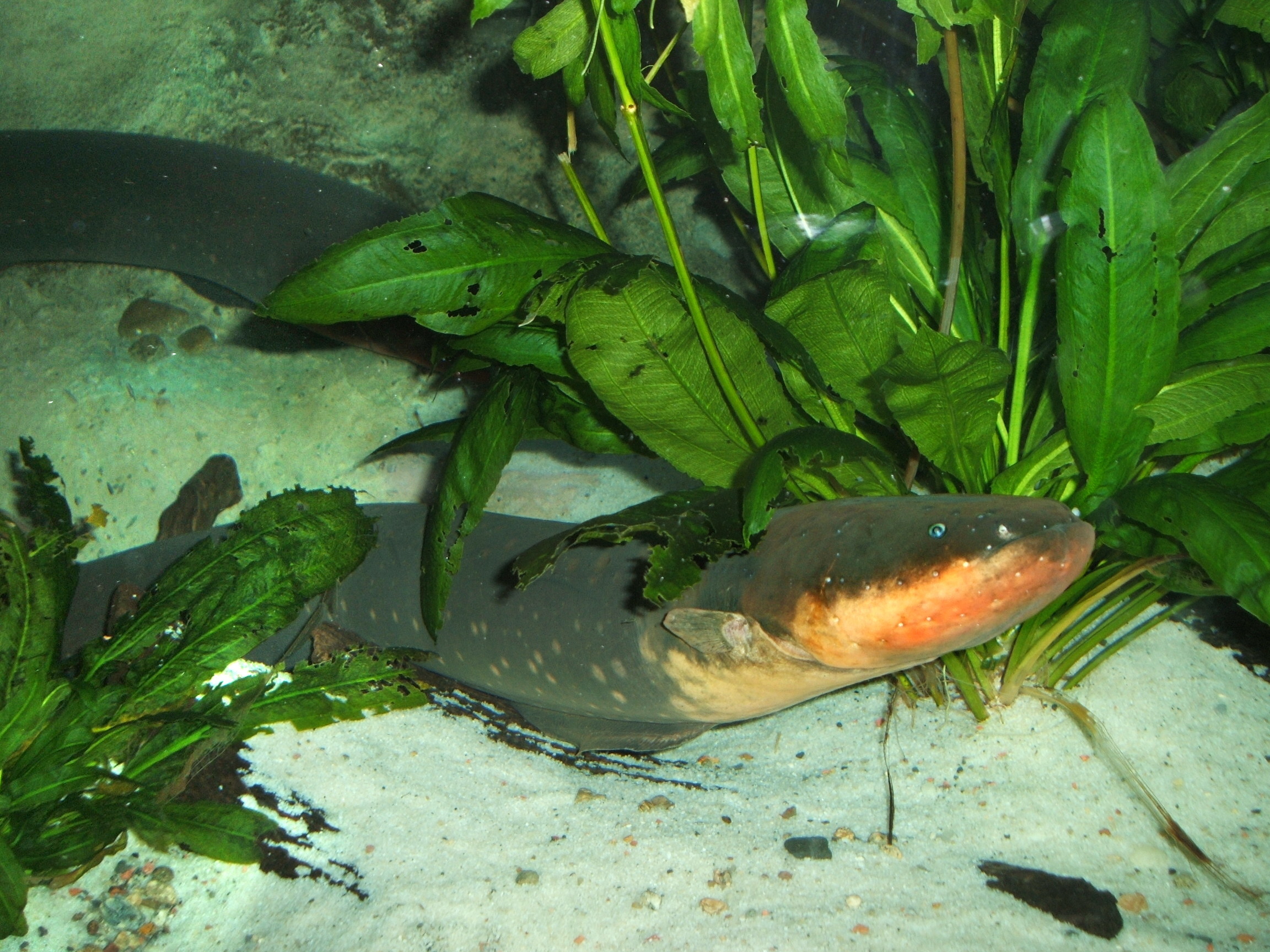
Electric Eel (Electrophorus electricus)
Introduction
The flooded forest floor is black. Barely a photon penetrates the tannin-stained water pooling between the roots of the Amazon basin. A catfish holds motionless against the sediment, its lateral line reading minute pressure waves in the column above it. Then something changes. A faint, rhythmic pulse — almost imperceptible, barely a whisper of electrical energy — moves through the water like a signal from another world. The catfish has no time to process the warning. A volley of high-voltage discharges, each spike exceeding 600 volts, fires through the darkness. The fish convulses, muscles locked in involuntary tetanic contraction, and drifts helplessly as a massive, serpentine form closes in from below.
The electric eel is one of the most extraordinary animals on Earth. Not because of how it looks — its grey-brown, cylindrical body is almost deliberately unimpressive — but because of what it can do. No other vertebrate on the planet has evolved the capacity to generate, control, and weaponise electricity with such precision. It does not merely produce a static charge. It hunts with electricity. It communicates with electricity. It navigates entirely lightless, sediment-choked waters using electricity as a spatial sense more accurate than vision. And in moments of perceived threat, it discharges enough voltage to stun a horse.
For centuries, Electrophorus electricus occupied an almost mythological space in the natural history of South America. Indigenous communities along the Orinoco and Amazon rivers had long understood its power and treated it with corresponding respect. European naturalists were both astonished and confounded. Alexander von Humboldt, who witnessed local people drive horses into eel-inhabited waters to exhaust the eels before capturing them, recorded scenes of chaos — thrashing animals, discharges crackling through shallow pools — that sounded more like legend than natural history. But the electric eel is entirely real, and recent science has revealed it to be even stranger than anyone imagined.
In 2019, a landmark taxonomic revision split what had long been considered a single species into three distinct species, each occupying different Amazonian habitats and carrying different electrical capacities. One of those newly described species, Electrophorus voltai, holds the record for the most powerful electric discharge of any known living animal — a staggering 860 volts. Electrophorus electricus, the original and nominative species, remains the most studied and the most widely distributed, forming the cornerstone of our understanding of this remarkable lineage.
This article examines Electrophorus electricus across every dimension of its biology: its anatomy, its behaviour, its extraordinary sensory and predatory toolkit, its ecological role in the river systems it inhabits, and the pressures it faces in a rapidly changing Amazon. It is a portrait of an animal that rewrote what we believed possible in vertebrate evolution.
"The electric eel is not a curiosity. It is a window into what evolution is capable of when it has enough time, enough pressure, and enough darkness to work in."
— Kenneth Catania, Vanderbilt University neuroscientist and electric eel researcher
Scientific Classification
Despite its common name, the electric eel is not a true eel. It belongs to the order Gymnotiformes — the South American knifefish — and is more closely related to catfish and carp than to the marine eels of the family Anguillidae. Its eel-like appearance is the result of convergent evolution, a body plan independently adopted by multiple lineages for life in tight, vegetated, and structurally complex aquatic environments.
- Kingdom: Animalia
- Phylum: Chordata
- Class: Actinopterygii (ray-finned fishes)
- Order: Gymnotiformes
- Family: Gymnotidae
- Genus: Electrophorus
- Species: Electrophorus electricus (Linnaeus, 1766)
The genus Electrophorus was long considered monotypic — containing only one species. A 2019 study by de Santana and colleagues, published in Nature Communications, used morphological and genetic analysis to formally describe two additional species: Electrophorus varii, associated with slow-moving floodplain waters, and Electrophorus voltai, which inhabits faster-flowing upland streams and produces the strongest recorded bioelectric discharge of any animal. Electrophorus electricus itself is primarily associated with the lower Amazon and the Guiana Shield river systems.
Within Gymnotiformes, Electrophorus sits at the apex of electric organ complexity. While all gymnotiform fishes produce some form of electric organ discharge for electrolocation, no other member of the order has scaled that capacity to the extraordinary voltages produced by electric eels. This makes Electrophorus electricus not just a biological curiosity but a uniquely positioned model organism for understanding the evolution of bioelectricity.
Physical Characteristics
The body of Electrophorus electricus is long, cylindrical, and laterally compressed toward the tail — a form that appears almost featureless at first glance, but is in fact extraordinarily specialised. Adults typically reach 1.5 to 2.5 metres in length and can weigh between 10 and 20 kilograms, though exceptional individuals have been recorded beyond that range. Males tend to be slightly smaller than females. The body is uniform in coloration: dark grey or olive-brown along the back, fading to a yellowish-orange or ochre on the undersides, with occasional faint spotting around the head and throat.
The head is broad, flattened dorsoventrally, and distinctly squared at the jaw — a structural adaptation for gulping air at the surface. Unlike most fish, the electric eel is an obligate air-breather. Its vascularised oral mucosa functions similarly to a primitive lung, allowing the eel to extract oxygen directly from the air. This capability is essential in the hypoxic, oxygen-depleted swamp and floodplain waters it typically inhabits, where dissolved oxygen levels are often too low to sustain life through gill respiration alone. Electric eels must surface to breathe every 10 to 15 minutes, and if prevented from doing so, they will drown.
The dorsal, caudal, and pelvic fins are absent or vestigial. Locomotion is accomplished almost entirely by the elongated anal fin — a ribbon-like structure running nearly the full length of the ventral surface — which undulates in coordinated waves to propel the eel forward or backward with equal facility. This form of locomotion, known as gymnotiform swimming, generates minimal water disturbance and keeps the animal's body rigid and straight, which is critical for maintaining the directional accuracy of its electric field.
Approximately 80 percent of the electric eel's body is dedicated to its electric organs — a proportion that defines nearly everything about the animal's anatomy. The internal organs, including the digestive tract, heart, and gonads, are compressed into the anterior 20 percent of the body, just behind the head. What remains is essentially a living battery: four distinct electric organs arranged in parallel columns of specialised cells running the length of the tail.
These organs — the Main organ, Hunter's organ, the accessory electric organ, and Sachs' organ — are composed of thousands of modified muscle cells called electrocytes or electroplaques. Each electrocyte generates a small voltage differential across its membrane, but when stacked in series like cells in a battery, the cumulative effect is formidable. In Electrophorus electricus, the Main organ and Hunter's organ generate the high-voltage pulses used in predation and defence, while Sachs' organ produces the low-amplitude, high-frequency pulses used for electrolocation and communication.
The skin itself is thick and heavily mucous-coated, providing some insulation from the eel's own discharges — though the head, where the electric field is most concentrated, remains relatively unprotected compared to the tail. Vision is poor; the eyes are small and positioned high on the head, functional primarily for detecting light and shadow rather than detailed imagery. The eel relies almost entirely on its electric sense to build a three-dimensional map of its surroundings.
Fun FactThe electric organs of Electrophorus electricus occupy approximately 80% of the body and contain up to 6,000 stacked electrocyte cells in the main organ alone — each one contributing to a discharge capable of exceeding 600 volts in a single pulse.
Habitat & Geographic Distribution
Electrophorus electricus is endemic to South America, occupying the freshwater river systems of the Amazon and Orinoco basins and the river networks draining the Guiana Shield. Its range encompasses parts of Brazil, Venezuela, Guyana, Suriname, French Guiana, Colombia, Ecuador, Peru, and Bolivia. Within this broad geographic footprint, the species demonstrates a strong preference for specific habitat conditions that most fish actively avoid.
It is an animal of the marginal, the murky, and the stagnant. Electric eels are overwhelmingly associated with slow-moving or still waters: flooded forests, seasonally inundated savannas, shallow swamps, oxbow lakes, and the low-gradient, heavily vegetated creeks and backwaters that branch off the major river channels. These habitats share several characteristics — warm temperatures typically between 23 and 28 degrees Celsius, heavy organic sediment load, dense aquatic vegetation, low dissolved oxygen, and near-complete light attenuation below the surface layer.
These conditions are inhospitable to most fish species, and that is precisely why electric eels can thrive in them. Their obligate air-breathing capability sidesteps the oxygen limitation. Their electrosensory system renders vision largely irrelevant. And the complex, structurally dense environment of roots, submerged debris, and vegetation provides both shelter from the few predators capable of threatening them and a concentration of prey species that shelter in the same spaces.
Seasonal flooding drives significant shifts in habitat use. During the Amazonian wet season, when rivers overflow their banks and vast areas of forest floor become inundated, electric eels move into flooded terra firme forest and várzea — seasonally flooded riverine forest — where the temporary availability of prey and the cover of submerged vegetation create ideal foraging conditions. As water recedes in the dry season, individuals concentrate into shrinking pools and creek remnants, sometimes in relatively high densities, before dispersing again with the return of the rains.
| Habitat Feature | Electric Eel Preference | Ecological Reason |
|---|---|---|
| Water movement | Slow or still | Minimises interference with electrosensory detection |
| Dissolved oxygen | Low (hypoxic) | Obligate air-breather — oxygen level in water irrelevant |
| Water clarity | Turbid, tannin-stained | Vision not primary sense; darkness reduces predation risk |
| Depth | Shallow to moderate | Must surface regularly to breathe air |
| Vegetation density | High | Cover for ambush hunting and shelter |
| Temperature | 23–28°C | Metabolic optimum for tropical ectotherm |
Behaviour & Social Structure
Electrophorus electricus is predominantly a solitary animal. Encounters between adults outside of the breeding season tend to be brief and mutually avoidant, mediated largely by the constant broadcast of low-voltage electrical pulses that each individual emits. These pulses serve as a form of passive spatial advertisement — a signal of presence that other eels detect and respond to by maintaining distance. In effect, electric eels inhabit a world defined as much by the geometry of electric fields as by physical territory.
Aggression between individuals is documented but not well characterised in wild populations. In confined conditions or areas of prey concentration during the dry season, multiple eels may occupy overlapping territories with little overt conflict, suggesting a degree of tolerance under certain conditions. However, larger individuals routinely displace smaller ones from preferred resting sites and foraging areas, and competitive interactions appear to scale directly with body size.
Communication through electricity is rich and multidimensional. Sachs' organ produces a continuous stream of low-amplitude electric organ discharges (EODs) — typically in the range of 10 volts — that function as a spatial sense, painting a real-time electroreceptive image of the surrounding environment. Nearby objects, whether prey, predators, or other eels, distort this self-generated field in ways the eel's electroreceptors detect with extraordinary precision. Different individuals have subtly different EOD signatures, and electric eels can likely identify conspecifics by the characteristics of their low-voltage pulses.
During social encounters — including agonistic interactions and probable mate assessment — the pattern and intensity of EOD emissions change. Electric eels modulate their discharge frequency and pulse characteristics in ways that appear contextually specific, suggesting a communicative repertoire more sophisticated than simple on/off signalling. This electrical "language" remains an active area of research, and its full vocabulary is not yet mapped.
Intelligence, in the sense of behavioural flexibility and adaptive response to novel situations, appears considerable. Laboratory research by Kenneth Catania at Vanderbilt University documented electric eels learning to associate specific stimuli with prey availability, modifying their hunting strategies based on prior experience, and deploying context-specific electric discharge strategies depending on whether prey was within striking range or attempting to escape. These findings suggest a cognitive capacity beyond what is typically attributed to fish, though the neural mechanisms underlying that flexibility are not yet fully understood.
Daily Life & Activity Cycle
Electric eels are primarily nocturnal, though in the perpetual gloom of their preferred habitats — where sunlight barely penetrates the water surface even at midday — the distinction between day and night is less absolute than in open-water species. Foraging activity peaks in the hours after dusk and again before dawn, corresponding to the movement patterns of the small fish and crustaceans that constitute the bulk of their diet.
During daylight hours, eels typically rest in sheltered positions: wedged beneath undercut banks, tucked among root masses, or lying partially buried in soft sediment in areas dense with aquatic vegetation. Resting postures are typically motionless, with the anal fin stilled and the body held rigidly straight. Even at rest, Sachs' organ continues its low-voltage broadcast — the electroreceptive world never fully goes dark for this animal.
The obligation to breathe air structures the activity cycle in a way unique among the fish in its ecosystem. Every 10 to 15 minutes, regardless of activity or time of day, the eel must ascend to the surface and gulp air into its vascularised oral cavity. This surface visit typically lasts only one to three seconds — a rapid, practiced motion that minimises exposure at the air-water interface — before the animal descends again. Over a 24-hour period, an adult electric eel makes hundreds of such surfacing events, each one a brief but inescapable interruption of whatever it was doing.
Movement through the home range is methodical rather than rapid. Electric eels are not fast swimmers over distance, and they do not need to be. The gymnotiform locomotion of the anal fin allows precise, low-energy manoeuvring through complex structure, and the combination of electrical prey detection and high-voltage discharge eliminates the need for the chase-based predatory strategies used by open-water hunters. An eel that detects prey within a metre or two can close that gap in a fraction of a second — speed over short distances is more than adequate.
Seasonal behaviour shifts substantially with the Amazonian flood pulse. During the dry season, when waters recede and prey concentrates into smaller bodies of water, feeding intensity increases. During the wet season, when floodwaters spread across vast forest areas and prey disperses, eels range more widely, following the water into the flooded understory. These seasonal movements are not migrations in the strict sense but rather opportunistic range expansions and contractions tied to prey availability and habitat connectivity.
Diet & Survival Strategies
Electrophorus electricus is an apex predator within its immediate habitat. Its diet is broadly carnivorous, but the composition shifts substantially across life stages. Juveniles, which are small and do not yet produce full-strength discharges, feed primarily on invertebrates — aquatic insect larvae, small crustaceans, and worms. As body size and electric organ development advance, the diet shifts decisively toward fish: primarily small and medium-bodied species, including characids (tetras and piranhas), cichlids, and various catfishes. Adults have also been documented consuming small amphibians, aquatic reptiles, birds, and small mammals that enter the water — prey that the electric discharge dispatches as effectively as any fish.
The predatory strategy of Electrophorus electricus is unlike that of any other fish. Rather than relying on speed, camouflage, or mechanical force to subdue prey, the electric eel uses its electric organs as a remote-controlled weapon system. When a prey fish is detected within range, the eel fires a rapid volley of high-voltage pulses — typically two to three pulses per volley at rates of up to 400 Hz — that induces immediate, involuntary tetanic contraction of the prey's skeletal muscles. The fish freezes in place, rendered completely immobile, while the eel closes in and engulfs it whole.
Catania's research has demonstrated that this is not a simple stunning mechanism. The high-voltage volleys actually hijack the prey's own nervous system, causing every muscle to fire simultaneously — a neurological lockdown that leaves the prey physically incapacitated within milliseconds of the first pulse. More remarkably, Catania documented a "remote control" strategy in which eels fire doublet pulses that cause the prey fish to twitch involuntarily, betraying its exact location even when hidden beneath leaves or buried in sediment. The eel essentially uses its discharge to make invisible prey reveal themselves.
The creek is no more than three metres wide and the colour of strong tea. An adult electric eel — perhaps 1.8 metres from blunt snout to tapered tail — moves along the far bank just below the surface, its anal fin undulating in slow, measured waves. The low-voltage broadcast of Sachs' organ is already painting the environment in electrical relief: the root tangle ahead, a submerged log, the compressed pressure of a school of small tetras sheltering in the leaf litter.
The eel slows. The tetras, sensing nothing — no vibration, no pressure wave, no shadow — continue their nervous lateral movement through the debris. Then the discharge fires: two rapid, high-voltage doublets in the space of 30 milliseconds. Every fish in a half-metre radius locks rigid, muscles seized in unison. The eel is already moving, its wide mouth open, closing on the nearest paralysed tetra before the fish's nervous system can begin to recover.
The meal takes less than two seconds from detection to capture. The eel settles back onto the creek bottom, the dead tetra already passing down its throat, and the low-voltage hum of Sachs' organ resumes its patient, rhythmic broadcast. Somewhere upstream, another school of tetras moves through the shallows, completely unaware.
Food intake relative to body size is relatively modest in adults, reflecting the metabolic efficiency of a largely ectothermic animal in warm tropical water. Large eels may feed only several times per week under normal conditions, but feeding frequency increases during the dry season when prey concentration rises. Electric eels are capable of surviving extended periods without food — weeks to months — by reducing activity and metabolic rate, a survival buffer critical in the unpredictable wet-dry cycle of Amazonian floodplains.
Competition for food is managed primarily through electrical signalling. When two eels enter overlapping foraging territories, the exchange of low-voltage EODs may be enough to trigger avoidance before any physical confrontation occurs. Where food is scarce and competition unavoidable, larger body size — and the proportionally greater electric discharge it can generate — translates directly into competitive advantage.
Fun FactKenneth Catania's experiments revealed that electric eels curl their body into a C-shape around prey to create a circuit that nearly doubles the electric field intensity experienced by the target — a physically elegant amplification strategy that requires no additional energy expenditure.
Interaction with Other Animals
The electric eel occupies an unusual ecological position: it is simultaneously a powerful apex predator within its immediate habitat and a species with very few natural predators of its own. The combination of large body size, formidable defensive discharge, and the ability to detect approaching threats through electroreception creates an animal that sits near the top of the food chain in the Amazonian blackwater and floodplain ecosystems it inhabits.
Potential predators of adult electric eels are limited to the largest and most powerful species in the ecosystem. Large caimans — particularly the black caiman (Melanosuchus niger) — are capable of subduing adults, though even these animals are not immune to electric discharge and likely target smaller or weakened individuals. Large-bodied catfish of the genus Brachyplatystoma may prey on juveniles and subadults. Humans are, historically and currently, the most significant predator of adult electric eels where subsistence fishing occurs.
Juveniles are considerably more vulnerable. At hatching, young electric eels are a few centimetres long and produce only weak discharges insufficient to deter most predators. Predation pressure during early life is high, and survivorship from egg to adulthood is low — a pattern compensated by the remarkable fecundity of breeding adults, which can produce thousands of offspring per clutch. Juvenile eels are preyed upon by larger fish, wading birds, and likely by adult eels themselves, though cannibalism in wild populations has not been extensively documented.
The relationship between Electrophorus electricus and the fish species it hunts is more nuanced than simple predator-prey. The constant broadcast of the eel's low-voltage EOD creates a field of electroreceptive noise in the surrounding water that some prey species, particularly those with their own electroreceptive systems, may be capable of detecting at short range. Small gymnotiform fish that share the eel's habitat may have evolved heightened sensitivity to the characteristic EOD signatures of electric eels as an early-warning system. This creates a coevolutionary dynamic — predator refinement versus prey vigilance — played out entirely in the electrical domain.
Interactions with other top predators in the system are primarily competitive rather than directly antagonistic. Piranhas, large catfish, and caimans share the electric eel's preferred habitats and prey base, and resource partitioning likely occurs through a combination of spatial separation, dietary specialisation, and temporal activity differences. The electric eel's nocturnal-to-crepuscular activity bias reduces overlap with diurnal predators such as the giant otter (Pteronura brasiliensis), though giant otters have been observed in the same water bodies as electric eels without apparent conflict.
Interaction with Environment
The relationship between Electrophorus electricus and the aquatic ecosystems it inhabits is defined as much by the unique physics of electricity as by conventional ecological mechanics. Every electric eel is, in a sense, a moving source of electromagnetic information — a node in a web of bioelectric signals that influences the behaviour of everything around it.
The low-voltage discharges broadcast continuously by Sachs' organ penetrate the water column in all directions, creating a weak but detectable electric field that extends roughly one body-length from the eel. This field interacts with every conductive or resistive object within range — fish, plants, roots, sediment, even the boundaries between water masses of different ionic concentration — providing a continuous spatial map of the environment. For a fish living in near-total darkness, this electroreceptive sense is not a supplement to vision; it is the primary modality through which the world is perceived.
The impact of electric eel predation on local fish communities is substantial but poorly quantified at the population level. In the confined pools and creek remnants of the dry season, a single large adult electric eel can exert significant predation pressure on small and medium fish populations. This predation is selective in ways shaped by the eel's sensory modality: fish with strong endogenous electric organ activity may be disproportionately detectable and therefore disproportionately targeted, creating selective pressure that may influence the evolution of electroreception and electrical communication across entire fish communities.
The electric eel also functions as a prey item for the largest predators in the system, and its position in the food web creates trophic linkages that channel energy from invertebrate and small fish populations upward toward large-bodied predators. The removal of electric eels from a system — by heavy fishing pressure, for example — would likely produce cascading effects on prey fish populations, potentially increasing small fish abundance in the short term before secondary effects on their own prey propagated through the community.
As an obligate air-breather, the electric eel also has an unusual relationship with the atmospheric oxygen pool above the water surface. Its survival in hypoxic aquatic environments is entirely contingent on access to air — a dependence that makes it vulnerable to physical changes in surface habitat (floating vegetation mats, pollution films, or habitat modifications that restrict surface access) that most fish would be entirely indifferent to.
Reproduction & Parenting
Reproductive biology in Electrophorus electricus is less thoroughly documented than its electrical physiology, largely because the preferred breeding habitats — remote, murky floodplain pools — are logistically difficult to study during the dry season when breeding activity is most intense. What is known combines field observations, indigenous ecological knowledge, and limited laboratory studies into a picture that is fascinating but still incomplete.
Breeding in Electrophorus electricus appears to be seasonal, with peak activity occurring during the dry season — broadly between August and February across most of the range. The dry season concentrates both eels and prey in shrinking water bodies, potentially facilitating mate encounters that would be rare in the dispersed, flooded conditions of the wet season. Reduced water volume also increases the electrical detectability of conspecifics, as smaller water bodies confine and concentrate EOD signals.
Male electric eels construct nests from saliva — a behaviour unusual among fish and remarkable in its deliberateness. The male excavates a shallow depression or finds a sheltered site at the water's edge, then produces quantities of frothy, mucus-rich saliva that form a foamy nest structure. Females deposit eggs into this structure, which provides some physical protection and may have antimicrobial properties that reduce fungal infection of the clutch. A single nest can contain up to 3,000 eggs, though reports of up to 17,000 eggs per season — likely from multiple clutches — suggest that reproductive output can be very high under favourable conditions.
After spawning, the male assumes primary guardianship of the nest. He remains in the nest vicinity, defending it from potential predators — including other fish — and monitoring the developing eggs. The electric discharge capacity of a guarding male provides formidable defence; most fish-sized predators will not approach a nest defended by an animal capable of delivering a 600-volt shock. Whether females remain associated with the nest is unclear from available data.
The eggs hatch after approximately two weeks, depending on temperature. Larvae are small, transparent, and largely helpless, feeding initially on the remaining yolk sac before transitioning to small invertebrate prey. Male parental care may extend into the early larval period, with some reports suggesting that young larvae consume smaller, undeveloped eggs within the nest — a form of provisioned nutrition. Electric organ development begins almost immediately after hatching, with functional weak-field electrolocation present within days, though full high-voltage discharge capacity develops gradually over the first several months of life.
Sexual maturity is reached at approximately one to two years of age in well-fed captive individuals, and likely somewhat later in the wild where energy intake is less predictable. Lifespan in the wild is not precisely determined, but captive individuals have lived 10 to 22 years, suggesting a natural lifespan likely in the range of 10 to 15 years in favourable wild conditions.
Evolutionary Adaptations
The electric eel's most extraordinary adaptations centre on the evolution and refinement of bioelectrogenesis — the biological generation of electricity. This capacity is not unique to Electrophorus; electrosensory systems appear in multiple vertebrate lineages, and weak electric organ discharges are widespread among Amazonian knifefish. But nowhere else has the trajectory of electric organ evolution produced the high-voltage, high-current discharge system of the electric eel. Understanding why requires considering the specific ecological pressures operating in the Amazonian floodplain over tens of millions of years.
The ancestral gymnotiform fish likely used weak electric fields for electrolocation — a sensory modality particularly valuable in the turbid, structurally complex, low-light environments that characterise Amazonian backwaters. As electric organ complexity evolved, some lineages appear to have developed the capacity to generate higher-amplitude discharges, which carried dual advantages: stronger electrolocation signals with greater range and resolution, and an offensive/defensive capability against other organisms. In Electrophorus, this trajectory extended further than in any other lineage, producing an animal that weaponised bioelectricity at a scale that fundamentally reorganised its predatory and defensive strategies.
The four-organ system in Electrophorus electricus represents sophisticated functional differentiation. The separation of low-voltage sensory function (Sachs' organ) from high-voltage offensive function (Main organ and Hunter's organ) allows the eel to maintain continuous electrolocation without depleting the charge capacity of its primary discharge organs. This is analogous, in engineering terms, to having separate power systems for instrument operation and weapons deployment.
Obligate aerial respiration is another key adaptation, almost certainly evolved as a direct response to the low-oxygen environments that make the eel's preferred habitats so productive for a specialised predator. The vascularised oral mucosa that functions as a gas exchange surface is a convergent solution also found in other tropical freshwater fish — particularly in the Amazon basin, where seasonal hypoxia is a recurring challenge — but in Electrophorus it is obligate rather than facultative: the eel cannot survive on gill respiration alone even in well-oxygenated water.
The gymnotiform swimming mode — propulsion by anal fin undulation with the body held straight — serves the electric sense directly. Bending the body distorts the self-generated electric field, reducing the precision of electroreceptive spatial mapping. By maintaining a rigid, straight body during normal locomotion, the eel preserves the geometric regularity of its field and maximises the accuracy of its three-dimensional electroreceptive image. When it does curl its body — as in the C-shape predatory strike described by Catania — this is a deliberate modification of the field geometry for a specific tactical purpose.
| Adaptation | Function | Evolutionary Driver |
|---|---|---|
| High-voltage electric organs | Prey immobilisation and predator deterrence | Pressure for effective hunting in complex, dark habitats |
| Low-voltage Sachs' organ | Electrolocation and conspecific communication | Navigation and social signalling in zero-visibility water |
| Obligate air breathing | Oxygen acquisition in hypoxic water | Colonisation of hypoxic floodplain and swamp habitats |
| Gymnotiform locomotion | Precise movement without field distortion | Maintenance of electrosensory accuracy during movement |
| 80% body as electric organ | Maximum discharge capacity | Arms-race escalation of electrogenic power |
| Squared head / upturned mouth | Efficient air gulping at surface | Reduced time at air-water interface (predation risk) |
Ecological Importance
Electrophorus electricus occupies a functionally important position in the food webs of the blackwater and floodplain ecosystems it inhabits. As an apex predator in the smaller-stream and pool habitats that make up the bulk of its range, it regulates the abundance and behaviour of prey fish populations, exerts top-down pressure that structures community composition, and serves as a food resource for the relatively small number of predators capable of exploiting it.
The predation pressure exerted by electric eels on small and medium-bodied fish is ecologically significant in concentrated dry-season pools, where a single large adult can consume multiple prey fish per day and contribute measurably to population-level prey reduction. This predation is not random; the electroreceptive nature of detection means that fish with detectable bioelectric signatures — including other gymnotiform species and electroreceptive catfish — may face disproportionate predation pressure, potentially shaping the electroreceptive evolution of entire community assemblages.
The electric eel's role as a nutrient vector deserves consideration. As a large-bodied predator that concentrates biomass from many small prey items, it transfers energy and nutrients across trophic levels in ways that have downstream effects on productivity. When eels die — from natural causes, predation, or stranding during extreme dry-season events — their bodies represent substantial nutrient subsidies to the benthic ecosystem, fuelling decomposer communities and, through them, the invertebrate prey base that supports the fish communities the eel itself depends on.
There is also an indirect ecological role mediated entirely through the electric field. The continuous broadcast of EOD signals from electric eels creates a landscape of electrical information in the water column that other electroreceptive animals respond to. The presence or absence of electric eels in a water body likely influences the spatial distribution, activity timing, and habitat use of electroreceptive prey species across that body of water — an indirect ecological effect with no analogue in non-electrogenic predator-prey systems.
Threats & Conservation
Relative to many Amazonian species, Electrophorus electricus is considered relatively secure in terms of population status. Its wide geographic range, habitat flexibility within the Amazon and Orinoco basins, and resistance to most conventional predation — including human fishing effort, given the obvious deterrent of its discharge — have protected it from the severe declines affecting more commercially valuable or ecologically specialised species.
Nevertheless, the electric eel is not immune to the broader threats affecting Amazonian biodiversity. Deforestation and land conversion are the primary drivers of habitat degradation throughout its range. The conversion of Amazonian forest to agriculture — particularly cattle ranching and soy cultivation — directly affects the hydrological systems that sustain electric eel habitat. Deforestation alters the seasonal flood pulse, reduces riparian vegetation (which provides both shelter and prey diversity), increases sedimentation in watercourses, and raises water temperatures in ways that shift community composition.
Pollution from agricultural runoff, mercury from artisanal gold mining (garimpagem), and urban effluent represents a growing threat in portions of the range. Mercury contamination is particularly concerning in the Amazon basin, where illegal gold mining has expanded substantially over the past two decades. Electric eels, as top predators, bioaccumulate mercury through the food chain at concentrations well above those in their prey — a pattern documented in many large Amazonian predators and likely applicable to electric eels, though species-specific contamination data remain limited.
The aquarium trade has historically created demand for juvenile electric eels, which are captured from the wild and exported internationally. While individual capture events are unlikely to have population-level effects given the eel's fecundity, the cumulative impact of long-term commercial collection without adequate monitoring represents an unstudied pressure. The 2019 taxonomic revision that split Electrophorus into three species also has conservation implications: each species now warrants independent assessment, and the distributions and population sizes of the two newly described species are incompletely known.
The IUCN conservation status and a detailed analysis of threats, population trends, and conservation efforts are addressed in the following section.
IUCN Red List Analysis
Current IUCN Status
Electrophorus electricus is currently assessed as Least Concern (LC) on the IUCN Red List of Threatened Species. This classification indicates that the species does not currently meet the quantitative thresholds for any threatened category — Vulnerable, Endangered, or Critically Endangered — based on available data on population size, distribution, and rate of decline. The Least Concern designation reflects the species' wide geographic range across the Amazon and Orinoco basins, its apparent ecological tolerance within those systems, and the absence of evidence for a rapid or sustained population decline at the range-wide scale.
It is important to note that Least Concern does not mean "no concern." It is a relative classification, positioned at the lower end of the risk spectrum, and it is conditional on the quality and currency of the data underpinning it. For a species inhabiting remote, difficult-to-survey habitats across a vast tropical river system, the confidence interval around any population estimate is wide. The 2019 taxonomic revision further complicates the assessment: the newly recognised Electrophorus varii and Electrophorus voltai have not yet received separate formal IUCN assessments, meaning that threats specific to those species cannot be captured within the current framework.
Population Trend
The population trend for Electrophorus electricus is assessed as stable, though this assessment is grounded in relatively limited systematic survey data rather than comprehensive population monitoring. No range-wide population census exists for the species, and population density estimates are largely inferential, derived from habitat surveys, catch data from subsistence fisheries, and incidental observations by researchers working in Amazonian floodplain systems.
Regional population trends likely vary considerably across the range. In areas of intact Amazonian forest with minimal human disturbance — large portions of the western and central Amazon, and remote Guiana Shield drainages — populations appear stable and may be near carrying capacity in preferred habitats. In areas experiencing rapid deforestation, such as the southeastern Amazon arc and areas along major infrastructure corridors, localised population declines are plausible but not yet quantitatively documented for this species specifically.
The species' relatively long lifespan (estimated 10 to 15 years in the wild), moderate reproductive rate, and wide habitat tolerance provide some demographic buffer against localised disturbance. However, top predators with lower reproductive rates than their prey are inherently slower to recover from population reductions, and the assumption of stability deserves ongoing scrutiny as Amazon deforestation accelerates.
Main Threats
Habitat loss and degradation represent the primary long-term threat. Brazil's Amazon has lost over 20 percent of its original forest cover, with deforestation rates increasing sharply since 2019. Loss of riparian forest directly degrades water quality, reduces the structural complexity of stream and floodplain habitats, and disrupts the seasonal flood pulse that drives both prey availability and eel movement. In the deforested arc of the southeastern Amazon, stream systems that historically supported electric eels may no longer provide suitable habitat.
Mercury contamination from illegal gold mining (garimpo) is a pervasive and underappreciated threat throughout the Amazon basin. Mercury used in gold amalgamation enters river systems and methylates in anaerobic sediments, entering the food chain through bacterial uptake and bioaccumulating through each trophic level. Electric eels, as large-bodied top predators, are likely to carry significant tissue mercury loads in mining-affected river systems, with potential effects on neurological function, reproductive success, and immune competence.
Subsistence and commercial fishing pressure, while not targeting electric eels directly at significant scale, may interact with eel populations through depletion of prey fish. In heavily fished river systems where small fish populations are reduced by overharvesting, the prey base available to electric eels may be compromised, reducing body condition and reproductive success. Additionally, eels are occasionally killed as bycatch or deliberately to protect fishing equipment, nets, and fishers from electric shock.
Climate change presents an emerging threat through multiple pathways. Increased frequency and severity of droughts intensifies the seasonal dry-season concentration of eels and prey in shrinking pools, potentially increasing intraspecific competition and prey depletion. Longer or more severe dry seasons may cause mass mortality events in isolated pools that fail to rehydrate before their resident eel populations are exhausted. Increased water temperatures and altered flood timing may affect breeding success and juvenile recruitment in ways not yet characterised.
Ecological Consequences
A significant decline in Electrophorus electricus populations would propagate through Amazonian floodplain food webs in ways that go beyond the simple loss of a predator. As the primary apex electroreceptive predator in many small-stream and pool systems, electric eels exert top-down control on small and medium fish communities. Their removal would likely trigger mesopredator release — an increase in smaller predatory fish that are themselves held in check partly by eel predation pressure — and a cascade of effects through prey fish populations that ultimately reaches invertebrate and algal communities.
The loss of the electric eel's electroreceptive predation pressure might also relax the selection pressure currently shaping the electroreceptive sensory systems and EOD characteristics of prey fish species. Over evolutionary timescales, this could produce measurable shifts in the sensory ecology of entire gymnotiform fish communities — a consequence with no direct parallel in the removal of non-electrogenic predators.
More immediately, the disappearance of electric eels from disturbed habitats would be a strong indicator signal for broader ecosystem health. As a large, relatively long-lived top predator sensitive to both prey availability and habitat quality, electric eel presence or absence functions as a biological index of ecosystem integrity — a reality that gives its conservation value beyond its direct ecological function.
Conservation Efforts
Protection for Electrophorus electricus is primarily delivered through the network of protected areas covering portions of the Amazon and Orinoco basins rather than through species-specific conservation programmes. In Brazil, the Amazon encompasses over 140 million hectares of protected areas — including National Parks, Biological Reserves, and Indigenous Territories — within which electric eel populations are nominally protected from direct exploitation. Similar protection exists through national park systems in Colombia, Venezuela, Peru, and other range states.
Indigenous territory protections are particularly relevant in remote areas of the western and central Amazon, where traditional land management by indigenous communities maintains forest cover and aquatic habitat quality at levels that formal government conservation often fails to achieve. Many indigenous communities regard electric eels with a combination of respect, practical knowledge, and cultural significance that translates into de facto management practices that benefit the species.
At the international level, the Convention on International Trade in Endangered Species (CITES) does not currently list Electrophorus electricus, meaning international trade in wild-caught specimens is not regulated under that framework. Given the existence of an aquarium trade in juvenile eels, establishing monitoring and regulation of that trade would represent a low-cost conservation measure with potential population-level benefit, particularly if the 2019 taxonomic revision reveals that any of the three Electrophorus species has a restricted range or lower population density than currently assumed.
Scientific research — particularly the work of Kenneth Catania on electric eel predatory strategies, and the 2019 taxonomic revision by de Santana and colleagues — has substantially raised the profile of this species and generated the kind of public and scientific attention that underpins conservation advocacy. Continued investment in taxonomy, ecology, and population monitoring for all three Electrophorus species would strengthen the evidence base for any future conservation interventions.
Future Outlook
The near-term outlook for Electrophorus electricus is cautiously optimistic at the range-wide level, contingent on the maintenance of sufficient Amazonian forest cover to sustain the floodplain and blackwater stream habitats on which it depends. Its wide range, ecological flexibility, formidable defences, and relatively low direct exploitation pressure distinguish it from many Amazonian species facing more immediate crisis.
The medium-to-long-term outlook is less certain. The trajectory of Amazon deforestation — driven by agricultural expansion, infrastructure development, and weakened environmental governance — poses a structural threat to floodplain ecosystem integrity that no individual species can fully escape. Climate projections for the Amazon basin consistently indicate increased drought frequency and intensity, longer dry seasons in the eastern and central Amazon, and reduced precipitation in the southern arc — changes that would progressively degrade the water connectivity and habitat quality that electric eels require.
The taxonomic complexity introduced by the 2019 revision also means that the conservation status of the broader Electrophorus lineage needs re-evaluation at the species level. If Electrophorus voltai — which inhabits upland clear-water streams, a habitat type particularly vulnerable to both deforestation and mining — turns out to have a more restricted distribution than the original aggregate species concept suggested, its conservation needs may be considerably more urgent than the current Least Concern assessment implies for the aggregate.
Fun FactIn 2019, the newly described species Electrophorus voltai — named for Alessandro Volta, inventor of the battery — was found to produce electric discharges of up to 860 volts, surpassing all previous records and making it the most powerful bioelectric animal on Earth.
Human Relationship
The relationship between humans and Electrophorus electricus has been shaped since antiquity by a mixture of fear, fascination, practical encounter, and scientific inquiry. Along the Amazon and Orinoco rivers, indigenous communities developed intimate experiential knowledge of electric eels long before European naturalists arrived. The Tupi people of coastal Brazil used a word for the electric eel that translates approximately as "the one that makes you jump" — an entirely experiential etymology that requires no explanation for anyone who has accidentally encountered one in shallow water.
Indigenous fishing methods incorporated the electric eel's biology in ways that demonstrate sophisticated ecological understanding. The technique described by Alexander von Humboldt in 1800 — driving horses and mules into an eel-inhabited pool to exhaust the eels' charge before entering the water to collect them — reflects an understanding of the electric organ's refractory period: that eels require time between volleys to recharge their electrocytes to full capacity. Humboldt's account, which described horses collapsing in the water under the combined discharge of multiple eels, created one of the most vivid early images of electric eel predatory power in Western natural history literature.
In scientific history, the electric eel has occupied an outsized role. Eighteenth and nineteenth-century natural philosophers were fascinated by bioelectricity as a phenomenon that seemed to violate the boundary between the living and the physical. The electric eel contributed to foundational debates about the nature of electricity, animal vitalism, and the relationship between biological and physical forces. The Italian physicist Alessandro Volta was directly inspired by the electric organ structure of electric fish — specifically the observation that electrocytes stacked in series produced greater voltage, just as electrochemical cells stacked in series did — in his development of the voltaic pile in 1800, the first electrochemical battery. Without the electric eel, the history of electrical technology might have followed a different path.
In contemporary human relationships, electric eels appear most prominently in the aquarium trade, scientific research, and ecotourism contexts. Live juvenile electric eels command significant prices in the international ornamental fish trade, where they are valued for their dramatic combination of unusual appearance and bioelectric capability. Captive care is complex — adult eels in aquarium settings regularly shock their keepers, and the stress of captivity appears to affect longevity and behaviour — but public aquarium exhibits featuring electric eels consistently rank among the most popular in their facilities.
Human-wildlife conflict involving electric eels is real but typically low-level. Encounters between fishers and eels — typically when wading in shallow water or handling fish caught in nets — result in painful shocks and occasional injuries, including falls, drowning events secondary to incapacitation, and, in rare cases, fatal outcomes when a large eel discharges in close contact with a person already in a medically vulnerable state. The risk to healthy adults from a single discharge is typically non-lethal, though painful and temporarily debilitating. Fatal outcomes are more closely associated with secondary effects — shock-induced falls, drowning in shallow water — than from the discharge itself.
Unique & Rare Facts
- Alessandro Volta's inspiration: The voltaic pile — the world's first electrochemical battery, invented in 1800 — was directly inspired by the stacked electrocyte structure of electric fish, including the electric eel. The electric eel effectively birthed the age of electrical technology.
- Leaping attack behaviour: In 2016, Kenneth Catania documented and filmed electric eels leaping partially out of the water to press their chins against a threatening stimulus, delivering an intensified shock by pressing their high-voltage chin tissue directly against the threat. This behaviour, described in the literature as "Humboldt's electric eel attack," was the first formal documentation of this strategy in centuries after von Humboldt's original 1800 observation.
- Three-species revision: For over 250 years, Electrophorus was considered a single species. In 2019, genetic and morphological analysis revealed it contains three species — E. electricus, E. varii, and E. voltai — all of which had been lumped together without distinction in scientific literature and popular accounts.
- Record bioelectric voltage: Electrophorus voltai, described in the 2019 revision, produces electric discharges of up to 860 volts — the highest recorded bioelectric discharge of any living animal, surpassing all prior records.
- Saliva nests: Male electric eels construct nests from their own saliva — a behaviour with no close parallel among bony fish and one that suggests a degree of parental investment unusual for a fish of this type.
- Prey remote control: Catania's research showed that electric eels can cause hidden prey fish to involuntarily twitch by firing specific doublet pulses — essentially using their discharge to make concealed prey reveal their location before the hunting strike.
- Body composition: Approximately 80% of the electric eel's body mass is dedicated to electric organs. The entire digestive, reproductive, and cardiovascular system is compressed into the anterior fifth of the body.
- Obligate air-breather in a fish: Despite being a fully aquatic species, the electric eel will drown if prevented from accessing the air surface — a biological paradox that reflects the extreme hypoxia of its preferred habitats.
- Electroreceptive predation selectivity: The electric eel's electroreceptive hunting system may make it disproportionately effective at detecting and capturing other electroreceptive fish — creating a predation pressure unique to the Amazonian electroreceptive community and potentially driving the evolution of electroreceptive evasion strategies in prey species.
- Historical cavalry encounter: Alexander von Humboldt's 1800 account of Llanos horsemen driving cattle into eel-infested pools — with horses collapsing under the combined discharge — remains one of the most dramatic wildlife observations in the history of natural science and was not confirmed experimentally until Catania's work over 200 years later.
Conclusion
There is an argument to be made that Electrophorus electricus represents the most radical departure from conventional vertebrate body plan in the entire history of fish evolution. Every aspect of its biology — its anatomy, its senses, its predatory strategy, its locomotion, its breathing — has been reorganised around a single, extraordinary evolutionary invention: the capacity to generate and control electricity at biologically unprecedented levels. It is not merely an animal that happens to produce electricity. It is an animal that has become, in the deepest biological sense, an electrical being.
In the blackwater creeks and floodplain pools of the Amazon basin, it operates in a world invisible to most other animals — a world mapped entirely in electrical gradients, broadcast in coded pulses, and commanded with voltages that would stop a horse in its tracks. It is a world without light, without landmarks, without the visual texture that most predators rely on to hunt. And in that world, Electrophorus electricus is sovereign.
What science has revealed about this animal over the last decade alone — the prey-remote-control mechanism, the leaping attack, the three-species revision, the 860-volt record from E. voltai — suggests that we are still in the early chapters of understanding what electric eels do and why. For a species first described scientifically by Linnaeus in 1766, that is a remarkable statement about how much the natural world still holds in reserve, waiting for the right question and the right researcher to find it.
The Amazon that sustains Electrophorus electricus is under pressure from every direction — deforestation, mining, climate disruption, and the accumulated weight of a global economy that has not yet learned to price the ecological services of intact tropical river systems at anything approaching their true value. The electric eel's current Least Concern status is a measure of resilience, not immunity. It will persist as long as the Amazon persists in some functional form. And the fate of the Amazon is, in the end, not an ecological question at all. It is a question of human choices.
"We are living on this planet as if we had another one to go to."
— Terri Swearingen, adapted for ecological context
Sources & Attribution
Data and ongoing research referenced for this article come from the following authoritative sources — peer-reviewed publishers, official taxonomic registers, and global biodiversity programmes:
- IUCN Red List — Electric Eel — official IUCN Red List assessment including population trend, threats, and conservation actions.
- Wikipedia — Electric Eel — taxonomy, distribution, and an overview with onward citations to primary literature.
- GBIF — Electric Eel — global occurrence and distribution records from the Global Biodiversity Information Facility.
- iNaturalist — Electric Eel — observation records and field photographs contributed by naturalists worldwide.
- Encyclopedia of Life — Electric Eel — multilingual species pages aggregating taxonomic and natural-history data.
- WWF — World Wildlife Fund — global wildlife conservation programmes and research summaries.
- Nature — research on Electric Eel — peer-reviewed studies indexed by Nature on related ecology and behaviour.
- ITIS — Integrated Taxonomic Information System — federal-grade taxonomy and nomenclature.
Frequently Asked Questions
Is the electric eel actually an eel?
No. Despite its common name and elongated, eel-like body, the electric eel (Electrophorus electricus) is not a true eel. It belongs to the order Gymnotiformes — the South American knifefish — and is more closely related to catfish and characins than to marine eels of the family Anguillidae. Its eel-like shape is the result of convergent evolution, where different lineages independently arrive at similar body forms in response to similar environmental pressures, in this case life in complex, vegetated freshwater environments.
How many volts can an electric eel produce?
Electrophorus electricus, the original described species, can produce electric discharges exceeding 600 volts. The closely related Electrophorus voltai, formally described in 2019, has been measured producing discharges of up to 860 volts — the highest bioelectric discharge recorded from any living animal. These high-voltage pulses are generated by the Main organ and Hunter's organ, which contain thousands of stacked electrocyte cells that function like biological batteries wired in series.
Can an electric eel kill a human?
A direct discharge from a large electric eel is extremely painful and temporarily debilitating, but fatalities from the electric shock itself are rare in healthy adults. The current generated — while high in voltage — is typically insufficient to cause direct cardiac arrest in a healthy person. However, fatal outcomes have been documented, most commonly as secondary effects: shock-induced muscle incapacitation causing drowning in shallow water, or falls triggered by involuntary muscle contraction. People with pre-existing cardiac conditions face elevated risk. The cumulative effect of multiple shocks from a large eel in close proximity is significantly more dangerous than a single discharge.
What do electric eels eat?
Electric eels are carnivorous predators whose diet shifts with age and body size. Juveniles feed primarily on invertebrates — aquatic insect larvae, small crustaceans, and worms. Adults feed predominantly on fish, including characids, cichlids, and catfishes, and will also consume small amphibians, aquatic reptiles, birds, and small mammals that enter the water. Prey is subdued using high-voltage electric discharges that cause involuntary muscle tetany, rendering the target immobile before it is swallowed whole.
How does an electric eel use electricity to hunt?
The electric eel employs a multi-stage electrical hunting strategy. First, the low-voltage continuous discharge from Sachs' organ creates an electroreceptive spatial map of the surrounding water, allowing the eel to detect the bioelectric signatures of nearby prey even in complete darkness. When prey is within range, the eel fires high-voltage volleys — typically at rates up to 400 Hz — from its Main organ and Hunter's organ, inducing immediate tetanic paralysis in the target through involuntary muscle contraction.
Research by Kenneth Catania has additionally shown that electric eels use "doublet" pulse patterns to cause hidden prey to twitch involuntarily, betraying their location before the final strike. In another documented strategy, eels curl their bodies into a C-shape around prey to create a closed electrical circuit, nearly doubling the field intensity experienced by the target without requiring additional energy output.
Where do electric eels live?
Electric eels are native to South America, distributed across the Amazon and Orinoco river basins and the drainages of the Guiana Shield. Their range includes parts of Brazil, Venezuela, Guyana, Suriname, French Guiana, Colombia, Ecuador, Peru, and Bolivia. Within this broad range, they strongly prefer slow-moving or still waters: swamps, oxbow lakes, flooded forests, seasonal pools, and the low-gradient, heavily vegetated backwaters of major river systems. They favour warm (23–28°C), turbid, oxygen-poor water — habitats largely avoided by competitor species.
How does an electric eel breathe?
Unlike most fish, the electric eel is an obligate air-breather. It extracts oxygen directly from atmospheric air by surfacing and gulping air into a highly vascularised oral cavity that acts similarly to a primitive lung. This adaptation is essential for survival in the hypoxic, oxygen-depleted swamp and floodplain waters the species inhabits, where dissolved oxygen levels are often insufficient to sustain life through gill breathing alone. An electric eel must surface every 10 to 15 minutes to breathe, and will drown if access to the surface is blocked.
How many species of electric eel exist?
Until 2019, Electrophorus was considered a monotypic genus containing only one species, Electrophorus electricus. A landmark study by de Santana and colleagues, published in Nature Communications, used genetic and morphological analysis to formally describe two additional species: Electrophorus varii, associated with floodplain and slow-water habitats, and Electrophorus voltai, found in faster-flowing upland clear-water streams. E. voltai is notable for producing the highest-voltage discharge of any known animal — up to 860 volts. All three species occur in the Amazon basin, with partially overlapping distributions.
What is the IUCN conservation status of the electric eel?
Electrophorus electricus is classified as Least Concern on the IUCN Red List, reflecting its wide geographic range, absence of evidence for major population decline, and ecological resilience within the Amazon and Orinoco basin systems. Its powerful electric discharge deters most predators, and the species is not commercially fished at significant scale. However, habitat loss from Amazon deforestation, mercury contamination from illegal gold mining, and the long-term impacts of climate change on Amazonian hydrology represent ongoing pressures that warrant monitoring.
How do electric eels reproduce?
Electric eel reproduction occurs primarily during the dry season, when receding water concentrates individuals and prey. Male eels construct nests from their own saliva near the water's edge. Females deposit thousands of eggs into these nests — clutches of up to 3,000 eggs per nest have been documented, with estimates of up to 17,000 eggs per breeding season across multiple clutches. The male guards the nest and developing larvae, providing protection using his electric discharge as a deterrent against nest predators. Young eels develop functional weak-field electrolocation within days of hatching, though full high-voltage discharge capacity develops gradually over the first months of life.
How did the electric eel contribute to the invention of the battery?
Alessandro Volta, the Italian physicist who invented the voltaic pile — the world's first electrochemical battery — in 1800 was directly inspired by the structure of electric fish organs, including those of the electric eel. The observation that electrocytes stacked in series produced greater voltage than individual cells mirrored the principle Volta applied to his battery: individual electrochemical cells wired in series to produce cumulative voltage. In this sense, Electrophorus electricus provided the conceptual template for a technology that underpins the entire modern electrical world. The species Electrophorus voltai, described in 2019, was named in direct honour of this connection.
Image: Wikipedia/Wikimedia Commons — “Electrophorus electricus”
Comments
Post a Comment