
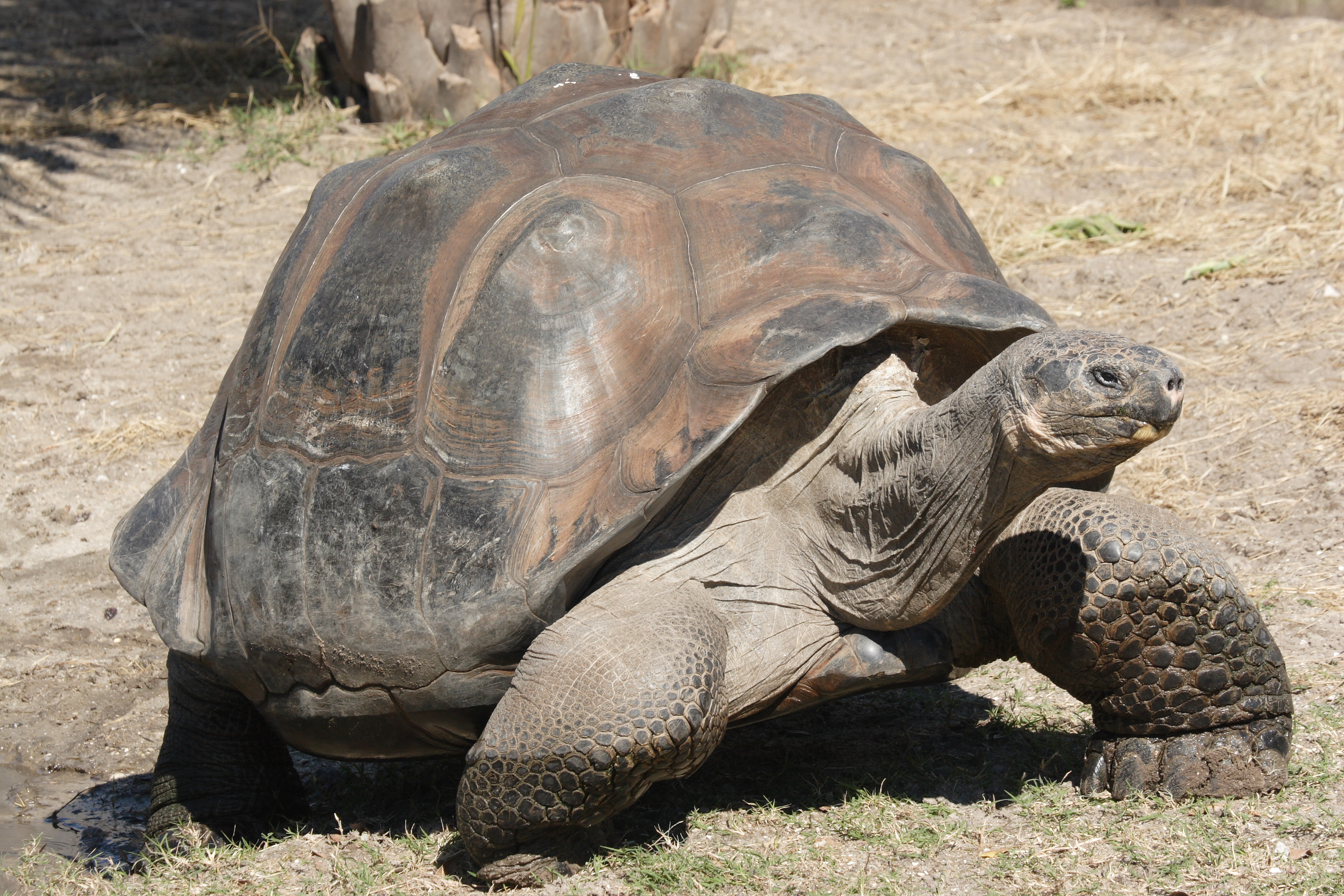
Galápagos Giant Tortoise (Chelonoidis niger)

Introduction
Introduction
The volcanic islands of the Galápagos archipelago rise from the equatorial Pacific like ancient sentinels, their black lava fields and cloud-draped highlands shaped by forces that have little regard for human timescales. On these islands, time itself seems to slow. And nowhere is that sensation more profound than when you stand face to face with a Galápagos giant tortoise — an animal so old, so vast, and so unhurried that the world around it seems to blur into background noise.
A fully grown male lumbers through the humid grasslands of Santa Cruz Island, his domed shell catching the early light like a worn bronze shield. He pauses, lifts his long neck with deliberate gravity, and pulls a strand of grass into his mouth. He is perhaps 140 years old. He was alive when Darwin's notebooks were still fresh. He has outlasted empires, world wars, and generations of the very scientists who have studied him. He is not a relic — he is a living archive.
The Galápagos giant tortoise, Chelonoidis niger, is the largest living tortoise on Earth and one of the longest-lived vertebrates ever documented. Distributed across multiple islands of the Galápagos — each population subtly shaped by the specific ecology of its home island — this species is both a flagship conservation symbol and a profound scientific subject. Charles Darwin himself drew some of his earliest intuitions about natural selection while observing how different island populations varied in shell shape, neck length, and feeding behaviour.
Yet the story of this extraordinary reptile is not simply one of ancient endurance. It is a story of near-catastrophe and incomplete recovery, of ecological unravelling and determined human intervention, of a creature so deeply woven into its island ecosystem that its decline reshapes the very landscape it inhabits. To understand the Galápagos giant tortoise is to understand islands, evolution, extinction pressure, and the fragile complexity of life on a volcanic archipelago that sits at the edge of the world.
"The love for all living creatures is the most noble attribute of man."
— Charles Darwin

Scientific Classification
Scientific Classification
Kingdom: Animalia
Phylum: Chordata
Class: Reptilia
Order: Testudines
Family: Testudinidae
Genus: Chelonoidis
Species: Chelonoidis niger
Common Name: Galápagos Giant Tortoise
Subspecies / Lineages: Up to 15 historically recognised, of which several are now extinct; surviving populations include C. n. porteri (Santa Cruz), C. n. vandenburghi (Alcedo Volcano), C. n. microphyes (Darwin Volcano), and others
Taxonomic understanding of the Galápagos giant tortoise has evolved considerably over the past two decades. What was once treated as a single polytypic species is now increasingly recognised as a complex of distinct lineages — some researchers elevate individual island populations to full species status. Genetic analyses published in the early 21st century identified at least 14 to 15 genetically distinct lineages across the archipelago, with divergence times suggesting that colonisation from mainland South America occurred several million years ago, followed by island-hopping and in situ diversification.
The genus Chelonoidis contains all South American and Caribbean tortoises, and the giant Galápagos lineages share their deepest ancestry with smaller South American tortoises, suggesting that a small ancestral tortoise — likely no larger than a domestic cat — arrived on the volcanic islands via oceanic dispersal, then grew over evolutionary time through a process known as island gigantism.

Physical Characteristics
Physical Characteristics
The Galápagos giant tortoise is a creature of superlatives. Adult males can weigh up to 400 kilograms and measure over 1.5 metres in shell length, making them the heaviest tortoises on Earth. Females are considerably smaller, typically reaching 150 to 200 kilograms. Despite their immense size, these animals carry their weight with a calm, measured efficiency that speaks to millions of years of evolutionary refinement.
The shell — technically called the carapace on the upper surface and the plastron below — is the most structurally defining feature of the species. Two broad shell morphologies exist across the different island populations, and these differences are among the most famous examples of adaptive radiation in the animal kingdom. Dome-shaped shells are found on tortoises from humid highland environments; these animals feed on low-growing vegetation and grasses and have relatively short necks. Saddleback shells, with a distinctive upward flare at the front that creates a saddle-like opening, are found on tortoises from arid lowland islands where food grows at greater heights; the saddleback shape allows the animal to extend its neck upward to reach cacti and shrubs.
Trait | Dome-Shelled Populations | Saddleback Populations |
|---|---|---|
Habitat | Humid highlands | Arid lowlands |
Shell profile | High, rounded dome | Anterior flare, saddle opening |
Neck length | Shorter | Longer |
Limb length | Shorter, robust | Longer, more elevated gait |
Diet emphasis | Grasses, low plants | Cacti, elevated shrubs |
Body size | Generally larger | Generally smaller |
The skin of the Galápagos giant tortoise is thick, leathery, and grey-brown, heavily scaled on the legs and neck. The limbs are columnar and elephant-like, designed to bear enormous weight rather than generate speed. The neck is extraordinarily long relative to body size — capable of extending up to 45 centimetres in saddleback individuals — and is covered in loose, wrinkled skin that allows it to retract partially into the shell.
The head is relatively small and blunt, with a firm, keratinised beak rather than teeth. The eyes are dark and surprisingly expressive, capable of independent movement, and appear alert and aware in a way that surprises first-time observers. The tail is short and thick in males, who also possess a concave plastron — an adaptation that allows them to mount females during mating.
Sensory capabilities in this species are better than their ancient, ponderous appearance might suggest. Their eyesight is functional at moderate distances, and they are particularly sensitive to contrast and movement. Chemosensory abilities — using the Jacobson's organ to detect chemical signals in the environment — are well developed. Hearing is limited but functional, with sensitivity concentrated in the lower frequency ranges.

Habitat & Geographic Distribution
Habitat & Geographic Distribution
The Galápagos archipelago consists of 18 main islands and dozens of smaller islets and rocks, located approximately 1,000 kilometres west of the Ecuadorian coast. The islands span several climatic and vegetation zones, ranging from barren lava deserts at sea level through transitional scrubland and humid forests to misty cloud forests and grasslands in the highlands. Different tortoise populations have colonised and adapted to the specific conditions of their respective islands over millions of years.
Giant tortoises are currently found on seven of the larger Galápagos islands: Santa Cruz, Española, San Cristóbal, Isabela (which hosts five distinct populations on its five major volcanoes), Pinzón, Santiago (repopulated through conservation), and Fernandina (where a single individual was rediscovered in 2019). Historically, tortoises were also present on Floreana, Rábida, and several other islands from which they are now locally extinct due to human exploitation and introduced species.
Within each island, tortoises exploit a vertical gradient of habitats. On larger islands like Santa Cruz and Isabela, populations undertake seasonal migrations between lowland dry zones and highland humid zones — a behaviour dictated by rainfall patterns and the availability of water and food. The highlands of Santa Cruz, known as the scalesia zone, are permanently damp and support rich vegetation year-round. The lowlands, by contrast, are seasonally parched, and during the dry season the tortoises either ascend to higher elevations or rely on stored fat reserves accumulated during the wet season.
The Galápagos climate is itself unusual — influenced by the cold Humboldt Current from the south and the warmer El Niño system from the north — and creates dramatic interannual variability. During strong El Niño events, rainfall increases substantially across the lowlands, producing temporary explosions of vegetation. La Niña years can bring prolonged drought. Tortoises have evolved metabolic and behavioural flexibility to survive these oscillations, a capacity that has served them across geological timescales but that is being tested by the accelerating pace of modern climate change.

Behaviour & Social Structure
Behaviour & Social Structure
Galápagos giant tortoises are largely solitary animals. Unlike many of the world's large herbivores, they do not form permanent social groups, and interactions between individuals are generally limited to encounters at feeding sites, water sources, and during the breeding season. What looks like aggregation — dozens of tortoises gathered in a highland mudhole or feeding on a patch of grass — is better understood as independently motivated individuals converging on a shared resource rather than a coherent social unit.
That said, their solitary nature does not mean they are socially blank. Dominance interactions occur, particularly among males. When two mature males encounter one another during the breeding season, they engage in ritualised neck-stretching contests — each animal extends its neck to full height, and the individual who stretches higher typically wins the encounter. This display is a form of resource competition conducted without physical contact, and it can determine access to females. In some cases, actual physical combat occurs, with males ramming shells together, but serious injury is rare.
Communication in this species is largely chemical and postural. Tortoises deposit scent traces through skin secretions and faecal matter, and males will investigate the scent trails left by females, particularly during reproductive periods. Vocalisations are limited but do exist: males produce a resonant, bellowing groan during mating, and individuals of both sexes can produce hissing sounds when threatened by retracting rapidly into their shells.
There is emerging evidence that these animals possess a degree of individual recognition — studies on captive and semi-wild populations suggest that tortoises can distinguish familiar from unfamiliar individuals based on olfactory cues, and that they may modify their behaviour accordingly. Whether this reflects anything approaching what we would call a social memory is debated, but it challenges the older assumption that these animals are cognitively simple.
Fun FactGalápagos giant tortoises can survive for up to one year without food or fresh water, drawing on stored fat and metabolising internal water — a capacity that made them devastatingly valuable as living provisions for 18th and 19th century sailors.
Home range use in tortoises varies considerably between individuals and between island populations. On larger islands with clear altitudinal gradients, radio-tracking studies have documented seasonal movements of up to 10 kilometres between dry-season lowland areas and wet-season highland feeding grounds. These movements follow well-worn paths that may have been established over generations, etched into the vegetation by centuries of repeated use.

Daily Life & Activity Cycle
Daily Life & Activity Cycle
A typical day in the life of a Galápagos giant tortoise is defined by a rhythm of thermal regulation and slow, deliberate foraging. As ectotherms — animals whose body temperature is regulated by external heat sources rather than internal metabolism — tortoises are deeply sensitive to ambient conditions. Their daily activity pattern reflects this dependency.
At dawn, a tortoise that has spent the night partially buried in a mudhole or sheltered beneath a shrub will begin to stir as sunlight hits its shell. The dark carapace absorbs solar radiation efficiently, warming the animal's core temperature from the cooler overnight levels. For the first two hours of daylight, the tortoise may remain relatively stationary, basking at a low angle to maximise heat absorption before beginning to move.
Once body temperature reaches an optimal range — typically between 25 and 30 degrees Celsius — the tortoise becomes active. The morning hours are devoted primarily to feeding, as the cool, dewy vegetation is at its most accessible and the tortoise's digestive system operates most efficiently at moderate temperatures. Foraging continues through the late morning, with the tortoise moving at its unhurried but surprisingly efficient pace of around 0.3 kilometres per hour through grassland and shrubland.
During the hottest midday hours, activity decreases. Tortoises seek shade under trees, enter shallow water or mud to cool down, or simply remain stationary in spots where vegetation provides some shelter from direct sun. The afternoon may see a second, shorter foraging bout, followed by a gradual return to a resting site as temperatures cool in the late afternoon.
Tortoises sleep for extended periods — sometimes 16 hours per day — and this low-energy lifestyle is central to their extraordinary longevity. Their metabolic rate is among the lowest recorded for any reptile of comparable size, allowing them to sustain themselves on surprisingly small amounts of food and to survive extended periods of scarcity without acute physiological stress.
Seasonal patterns overlay this daily rhythm. During the wet season — roughly January to June in the Galápagos — food is abundant, water is readily available, and tortoises spend more time active and feeding, building fat reserves. During the dry season — July to December — activity decreases, and some populations undertake their characteristic upslope migrations to the cooler, moister highlands where food remains available.

Diet & Survival Strategies
Diet & Survival Strategies
Galápagos giant tortoises are herbivores with a broad dietary range adapted to the specific vegetation available on each island. In total, researchers have documented over 50 plant species in their diet, ranging from grasses and sedges to cacti, fruits, leaves, and flowers. The breadth of this dietary repertoire reflects the ecological variability of the islands and the different selective pressures faced by different populations.
In the humid highlands, tortoises feed primarily on grasses, leaves of herbaceous plants, and the fruits of trees such as the Galápagos tomato (Solanum cheesmaniae). They are surprisingly efficient seed dispersers — seeds pass intact through their slow digestive systems and are deposited in different locations, contributing significantly to plant dispersal dynamics across the island landscape.
In the arid lowlands, Opuntia cacti are a critical dietary component, providing both calories and water during dry periods. Tortoises consume the pads, fruits, and flowers of Opuntia, and some populations have developed specific feeding behaviours that allow them to access cactus pads despite the spines — using the heavy beak to bite through the pad at angles that minimise contact with spines, or pushing against the cactus until pads fall to the ground.
Fun FactGalápagos giant tortoises and Opuntia cacti have co-evolved over millions of years. On islands with tortoises, Opuntia grows tall and tree-like with thick, spiny trunks — a direct evolutionary response to browsing pressure from the tortoises themselves.
The survival strategies of giant tortoises centre on energy economy rather than energy maximisation. Unlike fast-metabolising mammals, they do not need to feed constantly. They can extract nutrients from plant matter with remarkable efficiency using a hindgut fermentation system — similar in principle to that of ungulates — where microbial communities in the large intestine break down cellulose and other complex carbohydrates over extended digestion periods lasting several days.
During scarcity, the tortoise draws on subcutaneous fat reserves accumulated during periods of plenty. This metabolic banking system allows individuals to survive droughts, volcanic eruptions, and other food-shortage events that would be fatal to most comparably sized herbivores. Combined with their ability to extract and metabolise metabolic water from fat oxidation, this renders giant tortoises uniquely resilient to the periodic environmental extremes that characterise island ecosystems.
Water acquisition is another survival priority. Tortoises drink deeply and frequently when fresh water is available, and they are known to travel significant distances to reach water sources after rainy periods. They also obtain moisture from succulent plants and from the dew that condenses on vegetation during cool nights. Their kidneys are highly efficient at conserving water, producing concentrated urine and retaining fluid in a large bladder that can store water equivalent to roughly 20 percent of body weight — an internal reservoir available during drought.
On the eastern slopes of Volcán Alcedo, the largest known wild tortoise population in the Galápagos moves with the certainty of animals that have been walking the same routes for centuries. In the grey hours before dawn, a massive male — his shell deeply domed, his skin the colour of volcanic stone — pulls himself from a mudhole and begins the slow ascent toward the highland grasslands. He moves without urgency but without pause, his footfalls leaving deep impressions in the damp soil.
Above him, the volcano's caldera rim catches the first orange light. Below, the dry coast is still in shadow. He has made this journey perhaps a hundred times. He does not hurry. At this altitude, the grasses are long and green, nourished by the persistent mist that rolls in from the Pacific. He lowers his head and begins to feed, tearing slowly at the grass with his keratinised beak, the sound barely audible above the wind.
A small Darwin's finch lands on his shell, then another. They probe the thick skin of his neck, extracting ticks with practiced efficiency. The tortoise tolerates this — perhaps welcomes it. He tilts his head slightly to one side and extends his neck to give the finches better access, a gesture so subtle it might be dismissed as posture adjustment. But it happens every time. An ancient agreement, wordless and unwritten, maintained across thousands of years.
By midday he will have moved less than a kilometre. By nightfall he will have consumed several kilograms of vegetation, processed at the slow pace of a digestive system designed for endurance rather than speed. He will outlive most of the birds that passed overhead this morning. He may still be here when the next generation of scientists comes to study him. He is in no hurry. He has all the time in the world.

Interaction with Other Animals
Interaction with Other Animals
The Galápagos giant tortoise occupies a central position in the ecological web of its island home, interacting with a surprisingly diverse range of other species — from the smallest insects to introduced mammals that have come to threaten its existence.
The most visually striking of these interactions is the relationship between tortoises and certain species of Darwin's finches, particularly the woodpecker finch and the medium ground finch. These small birds have learned to use the tortoise as a mobile foraging platform, landing on the animal's shell and neck to remove ectoparasites including ticks. The behaviour is consistent enough across populations to suggest it is well established rather than opportunistic, and the tortoise appears to facilitate it — extending its neck and lifting its legs when finches approach, postures that expose areas of skin not otherwise accessible. This is a textbook example of mutualistic interaction: the finch gains a concentrated food source, and the tortoise gains parasite relief.
Galápagos hawks (Buteo galapagoensis) — the islands' apex avian predator — historically posed a threat to juvenile tortoises, which are small enough during their first years of life to be taken by raptors. This predation pressure is one reason juvenile tortoises remain highly cryptic and largely terrestrial, hiding in dense vegetation near the nest site for the first months of life. Adult tortoises have no natural predators in the Galápagos — their size, shell, and toughened skin render them effectively invulnerable to native fauna.
The arrival of introduced species has fundamentally altered the interaction landscape. Feral pigs, rats, and cats prey on tortoise eggs and hatchlings with devastating efficiency. Feral goats compete directly with tortoises for vegetation, consuming grasses and shrubs faster than the ecosystem can regenerate them and dramatically reducing the food base available to tortoises. Feral donkeys degrade waterholes. These introductions have created a set of ecological pressures entirely without evolutionary precedent for the tortoise, which evolved in an island environment essentially free of mammalian competitors and predators.
Plants also mediate tortoise interactions in complex ways. The giant tortoises are among the most important seed dispersers on the islands, consuming large quantities of fruit and depositing seeds across wide areas through their slow movements. Studies have shown that certain plant species have reduced germination success when deprived of gut passage through a tortoise — the digestive process scarifies hard seed coats, improving germination rates. The presence or absence of tortoises therefore shapes plant community composition in ways that cascade through entire food webs.

Interaction with Environment
Interaction with Environment
Few animals interact with their environment as profoundly as the Galápagos giant tortoise. These animals are not passive occupants of their habitat — they are active engineers of it, and the physical landscape of the islands bears the marks of centuries of tortoise activity.
The most visible environmental impact is vegetation management. Tortoises graze grasslands with sufficient intensity to maintain open sward structures — essentially acting as large, slow lawnmowers that prevent the encroachment of woody shrubs into grassy areas. This grazing-mediated landscape engineering creates habitat heterogeneity that benefits a range of other species. In areas where tortoise populations have collapsed, grasslands have shown rapid succession toward shrubland, with the associated loss of species that depend on open grass habitat.
Tortoise trails — paths worn through vegetation by generations of animals following the same routes between feeding areas and water sources — create linear corridors through otherwise dense scrub. These trails are used by many other species as movement pathways, and they channel water flow during heavy rainfall, influencing soil moisture distribution across the landscape. Some researchers have noted that the ancient trail networks of Galápagos tortoises represent a form of landscape-scale ecosystem engineering comparable in impact, if not in drama, to the dam-building of beavers.
Seed dispersal by tortoises shapes plant community composition across entire islands. Because tortoises move slowly but cover large distances over their lifetimes, and because seeds can pass through their digestive tract over a period of several days, seeds may be deposited far from parent plants — distances that exceed the dispersal range of most wind- and bird-dispersed seeds. On islands where tortoises have been absent for decades following population collapse, certain plant species have shown reduced distribution and lower genetic diversity, suggesting that tortoise-mediated dispersal was historically essential to their range maintenance.
The relationship between tortoises and their island environment is also relevant in the context of nutrient cycling. Tortoises consume vegetation in one area, digest it slowly, and deposit waste — rich in organic nutrients and viable seeds — in another area. This translocation of nutrients across habitat boundaries, from productive highland areas toward less fertile lowland zones, contributes to soil enrichment at a landscape scale that would otherwise require entirely different processes.

Reproduction & Parenting
Reproduction & Parenting
Reproduction in Galápagos giant tortoises is a slow and seasonally structured process, dictated by climate, male competition, and the extreme vulnerability of eggs and hatchlings on a landscape shared with predatory introduced species.
Breeding season generally aligns with the wet season — roughly January to June — when food is abundant, body condition is at its peak, and males are most mobile. Males invest considerable energy in locating females, following chemical trails and ranging more widely than at other times of year. When a male encounters a receptive female, he courts her through a combination of physical persistence and vocalisation. Courtship involves the male repeatedly ramming the female's shell, often from the front or sides, and climbing onto the female repeatedly until copulation is achieved. The process is noisy, prolonged, and visually striking — a grunting, heaving encounter between two animals that each weigh hundreds of kilograms.
Copulation itself is brief relative to courtship duration. Males produce a deep, resonant bellowing sound during mating that can be heard from considerable distances and appears to serve both a stimulatory and a competitive signalling function — advertising the male's presence and reproductive status to other males in the vicinity.
Females do not nest immediately after mating. They store sperm internally for extended periods — potentially months — and may mate with multiple males before nesting, with sperm competition determining paternity. When ready to nest, females undertake significant migrations to traditional nesting areas — typically in the dry lowlands where sandy or gravelly soils at appropriate temperatures are available. Females on islands like Santa Cruz have been tracked walking distances of up to 10 kilometres between highland feeding areas and lowland nesting sites.
Nest construction occurs from June to December. The female excavates a flask-shaped hole up to 30 centimetres deep using her hind legs, deposits a clutch of 2 to 16 hard-shelled eggs — similar in size to billiard balls — and refills the nest with soil, which she compacts with her plastron. A single female may construct multiple nests in a season, and she provides no further parental care after nest completion. The eggs incubate in the soil for 4 to 8 months, with incubation duration and hatchling sex both influenced by temperature.
Temperature-dependent sex determination operates in this species: warmer temperatures produce more females, cooler temperatures more males. This has significant implications for conservation in the context of climate change — as soil temperatures rise, skewed sex ratios in emerging cohorts could compromise breeding population viability in the long term.
Hatchlings emerge weighing around 80 grams — roughly 1/5,000th the weight of a large adult male. They are immediately vulnerable to predation by hawks, snakes, rats, and cats, and mortality in the first few years of life is extraordinarily high in unmanaged populations. Survivors grow slowly, reaching sexual maturity at approximately 20 to 25 years of age and continuing to grow for decades beyond that. The combination of low fecundity, high juvenile mortality, and late sexual maturity makes giant tortoise populations extraordinarily slow to recover from significant demographic losses.

Evolutionary Adaptations
Evolutionary Adaptations
The Galápagos giant tortoise is a showcase of evolutionary adaptation — an animal whose every major feature, from the shape of its shell to the chemistry of its blood, reflects the pressures of island life across millions of years.
Island gigantism — the tendency of island-dwelling animals to evolve larger body size than their mainland relatives — is perhaps the most dramatic adaptation in this species. The ancestral tortoise that colonised the Galápagos was likely a modest-sized animal. On islands with no large mammalian predators and abundant vegetation, natural selection favoured larger body size across multiple generations. Large size offers several advantages: it increases gut capacity and the efficiency of fermentative digestion, provides superior thermal mass for body temperature regulation, and reduces vulnerability to environmental stress. It may also have enhanced competitive success between males during the evolutionary history of the species.
Shell morphology differences between island populations represent one of the clearest examples of adaptive radiation ever documented. The saddleback shell shape, which evolved independently on multiple different islands in response to similar arid, low-resource environments, is a striking example of convergent evolution within a single species complex. The mechanical properties of the shell have also been refined over time — the internal bone structure is optimised to provide structural rigidity while minimising weight, allowing enormous shells to be carried without compromising locomotor ability.
Metabolic adaptations are equally impressive. The tortoise's ability to lower its metabolic rate during periods of food scarcity — sometimes by up to 75 percent below baseline — is a physiological feat that has no parallel among comparably sized animals. This metabolic depression is reversible and does not appear to cause lasting tissue damage, suggesting that the mechanisms controlling it are under tight genetic regulation rather than being a stress response.
The immune system of the Galápagos giant tortoise shows adaptations consistent with longevity — reduced rates of cellular senescence, efficient DNA repair mechanisms, and an apparent resistance to certain classes of oxidative stress that would damage the tissues of shorter-lived animals. Research into these mechanisms is ongoing, and several longevity-related genes identified in giant tortoises have attracted considerable interest from biogerontologists studying the biology of ageing.
The sensory systems of the tortoise are adapted to a slow-paced but information-rich environment. The chemosensory system is highly developed, allowing the animal to detect the presence of water, ripe fruit, and conspecifics at considerable distances. The visual system, while not specialised for high-speed pursuit or detection, is well adapted to distinguishing vegetation quality and detecting movement in the peripheral field. Low-frequency hearing allows detection of distant vocalising males and approaching threats.

Ecological Importance
Ecological Importance
The Galápagos giant tortoise is a keystone species — one whose presence or absence has cascading effects on the entire ecosystem that exceed what its population size alone would predict. Removing the tortoise from the ecological equation does not simply leave a gap; it triggers a structural reorganisation of the landscape.
As the dominant large herbivore on most of the islands where it occurs, the tortoise regulates vegetation structure to a degree unmatched by any other native species. Their grazing patterns maintain open grassland habitat, their wallowing creates soil disturbances that favour certain plant species, and their trail networks shape water flow and sediment distribution across the landscape. The islands' plant communities evolved in the presence of these animals, and their continued ecological functioning depends on tortoise activity in ways that only become apparent when the tortoises are absent.
Seed dispersal is perhaps the most ecologically critical service provided by giant tortoises. As the largest frugivores on most islands, they are the only native species capable of dispersing the seeds of larger-fruited plant species across significant distances. Some researchers have argued that several Galápagos plant species are effectively stranded in the absence of their primary dispersal agent — capable of surviving in existing populations but unable to colonise new areas or maintain the genetic connectivity between populations that healthy metapopulations require.
The nutrient translocation function of tortoises — moving organic matter and nutrients across habitat boundaries through their feeding and defecation behaviour — contributes to soil fertility gradients that support broader plant community diversity. In areas where tortoise populations have been restored, researchers have documented measurable improvements in soil nutrient profiles and plant species richness over multi-decade timescales.
Tortoises also serve as a regulatory influence on Opuntia cactus populations. Their browsing on cactus pads and fruits controls cactus density, preventing monoculture dominance in arid lowland areas and maintaining habitat heterogeneity that benefits a range of invertebrates, lizards, and birds. This interaction is so well established that the defensive morphological evolution of Opuntia on tortoise-populated islands — growing taller with tougher, spinier trunks — is considered direct evolutionary evidence of the intensity of this relationship.

Threats & Conservation
Threats & Conservation
The history of the Galápagos giant tortoise is a history of survival against overwhelming odds. At their population nadir in the mid-20th century, total numbers across all surviving populations had collapsed to an estimated 3,000 individuals — down from what historical accounts suggest may have been 250,000 or more before European contact. The causes of this collapse were multiple, interacting, and largely anthropogenic.
From the 17th century onward, whalers, pirates, and trading ships exploited the tortoises as a source of fresh meat on long ocean voyages. Tortoises were loaded alive onto ships by the hundreds — their ability to survive for months without food or water made them uniquely suited as living provisions. Entire island populations were effectively exterminated through this direct hunting pressure within decades of regular maritime contact.
Introduced species compounded the damage inflicted by direct hunting. Feral pigs and rats — introduced during the colonial period — devastated tortoise nesting success by consuming eggs with near-total efficiency on some islands. Studies on Pinzón Island found that not a single hatchling tortoise had survived to adulthood for over a century due to rat predation, even as adult tortoises continued to live and nest. Feral goats stripped island vegetation so completely that the food base supporting tortoises was eliminated. On several islands, the combined effect of human hunting, egg predation, and habitat destruction drove populations to extinction.
The IUCN currently classifies Chelonoidis niger as Vulnerable on the Red List, though several individual island lineages are classified as Critically Endangered or are listed as Extinct. Conservation efforts centred on the Charles Darwin Research Station and the Galápagos National Park have achieved significant progress since the 1960s, including captive breeding and head-starting programmes, invasive species eradication, and habitat restoration. However, climate change, the continued risk of new species introductions, and human population growth within the archipelago represent ongoing and intensifying threats.

IUCN Red List Analysis
IUCN Red List Analysis
Current IUCN Status
The Galápagos giant tortoise (Chelonoidis niger in its broadest taxonomic treatment) is currently listed as Vulnerable (VU) on the IUCN Red List. This classification reflects the fact that while some populations have shown recovery through intensive conservation intervention, the species as a whole continues to face significant threats that could cause population declines if management efforts were to lapse.
It is important to note that the conservation status varies dramatically across the different island lineages. Some populations — such as those on Española Island (C. hoodensis), which reached as few as 14 known individuals in the 1960s — are listed as Critically Endangered. At least three historical lineages are now Extinct: the Floreana tortoise, the Rábida tortoise, and most recently, Lonesome George — the last known individual of the Pinta Island lineage (C. abingdonii) — died in June 2012. The aggregate species-level Vulnerable classification therefore masks enormous variation in the actual conservation status of individual lineages.
Population Trend
The overall population trend for surviving Galápagos giant tortoise populations is currently assessed as increasing, driven primarily by the success of captive breeding and head-starting programmes combined with invasive species removal on key islands. Total population estimates for all surviving lineages combined currently stand at approximately 10,000 to 15,000 individuals — a significant recovery from the nadir of around 3,000 in the mid-20th century, but still far below the historical baseline of 250,000 or more.
Recovery rates differ substantially across populations. The Española tortoise has increased from 14 individuals to over 2,000 through decades of captive breeding and repatriation — one of the most celebrated achievements in tortoise conservation. The large dome-shelled population on Volcán Alcedo (Isabela Island) remains the largest single wild population, numbering several thousand individuals. The Santa Cruz population faces ongoing pressure from habitat fragmentation due to agricultural and residential development within the island.
Historically, the species experienced catastrophic declines over a period of approximately three centuries — from the first regular European contact in the late 16th century through the first systematic conservation efforts in the 1960s. Recovery has been real but uneven, and several populations remain too small and demographically narrow to be considered secure without continued management intervention.
Main Threats
Introduced invasive species remain the most significant ongoing threat. Black rats (Rattus rattus) continue to predate eggs and hatchlings on islands where eradication programmes have not yet been completed or have been only partially successful. Feral pigs remain problematic on some islands, destroying nests through rooting behaviour. Although large-scale goat eradication programmes have been highly successful on several islands — most notably Project Isabela, which removed over 140,000 goats from Isabela Island between 1997 and 2006 — the risk of reintroduction through human activity is constant.
Habitat loss and fragmentation affect populations on Santa Cruz and San Cristóbal, the two most populated human-inhabited islands. Agricultural expansion, road construction, and residential development have divided tortoise migration corridors, stranded populations in isolated habitat patches, and created dangerous road crossings where tortoises are periodically struck by vehicles. The transformation of highland tortoise habitat into farmland has reduced the area available for feeding and resting during the wet season.
Climate change presents a suite of emerging threats. Rising temperatures affect nest incubation conditions, potentially skewing sex ratios toward female-heavy cohorts over time. More intense and unpredictable El Niño events can cause extreme rainfall or drought conditions that challenge even the metabolically resilient giant tortoise. Changes in the timing and intensity of the wet season affect the synchrony of breeding behaviour and vegetation availability. Ocean warming and acidification, while not directly affecting terrestrial tortoises, affects the marine productivity that underpins the island ecosystem's overall biological integrity.
Disease and genetic factors represent subtler threats to small, isolated populations. Populations reduced to very low numbers — as with the Española tortoise in the 1960s — carry reduced genetic diversity that can compromise immune function and reproductive success. The introduction of novel pathogens through tourism or the importation of domestic animals poses a risk that is difficult to quantify but potentially serious for animals with no historical exposure to many common mammalian diseases.
Ecological Consequences
The continued decline or loss of Galápagos giant tortoise populations would trigger a cascade of ecological changes with consequences extending far beyond the tortoise itself. Loss of the primary large herbivore would allow rapid vegetation succession in currently maintained grasslands, transforming open sward habitats into closed scrubland and ultimately dense shrubby thicket. Species adapted to open habitats — including several endemic birds and reptiles — would lose critical foraging and nesting habitat.
The collapse of seed dispersal services provided by tortoises would strand numerous plant species in their current distributions, preventing colonisation of suitable habitat and reducing gene flow between isolated plant populations. Over the multi-century timescales across which Galápagos ecosystems have evolved, the loss of this dispersal vector could lead to the local extinction of plant species whose recruitment is dependent on gut passage. The cascading effects on pollinators, herbivorous invertebrates, and the birds that depend on these plants would ripple through the entire trophic structure of the island ecosystems.
The loss of nutrient translocation across habitat boundaries would alter soil fertility gradients, potentially reducing plant diversity in lowland zones that currently benefit from organic enrichment through tortoise defecation. Trail networks, maintained by decades of tortoise movement, would gradually be reclaimed by vegetation, eliminating movement corridors used by many other species and altering water drainage patterns across the landscape.
Conservation Efforts
Conservation efforts for the Galápagos giant tortoise are among the most intensive, longest-running, and most scrutinised reptile conservation programmes in the world. The Charles Darwin Research Station (CDRS), established in 1964, has been the scientific backbone of tortoise conservation for six decades. In collaboration with the Galápagos National Park Directorate, the CDRS operates captive breeding and head-starting facilities on Santa Cruz, Isabela, and San Cristóbal, where eggs collected from vulnerable nests are incubated in controlled conditions and hatchlings raised in protective facilities until they are large enough — typically around five years and 5 kilograms — to resist predation by introduced mammals.
Invasive species eradication has been the other major pillar of tortoise conservation. Project Isabela, completed in 2006, stands as one of the largest island goat eradication projects ever undertaken, removing all feral goats from the largest island in the archipelago through a combination of ground hunting and aerial shooting. Similar goat eradication programmes have been completed on Santiago, Española, Pinta, and several smaller islands. Rat eradication campaigns using aerial bait distribution have been completed on Pinzón Island — where hatchlings now survive to adulthood in the wild for the first time in over a century — and are planned or underway on additional islands.
Genetic rescue programmes represent a newer frontier in tortoise conservation. Genetic analysis of existing populations has identified living individuals with significant ancestry from extinct lineages — tortoises descended in part from Floreana or Pinta Island animals whose genes survived through historical mixing with other populations on Isabela. Selective breeding programmes aim to reconstitute the functional genetics of these extinct lineages through careful cross-breeding of individuals carrying relevant alleles, with the goal of eventually restoring a population with the ecological and morphological characteristics of the extinct island types.
International frameworks including CITES (Convention on International Trade in Endangered Species) strictly regulate any commercial trade in Galápagos tortoises. Ecuador's national legislation provides strong legal protection to the tortoises within the Galápagos National Park, which covers 97 percent of the archipelago's land area. The Marine Reserve surrounding the islands provides additional protection against fishing activities that could compromise the broader ecological integrity of the archipelago.
Future Outlook
The future of the Galápagos giant tortoise is cautiously optimistic but contingent. The combination of intensive conservation management and effective invasive species control has demonstrably reversed the trajectory of several populations, and the overall species-level population is increasing for the first time in centuries. Some populations — particularly on Española and Alcedo — have achieved a degree of demographic stability that would allow them to persist without constant intervention if invasive species pressure could be permanently controlled.
However, the long-term outlook is complicated by several factors. Climate change represents an increasingly serious threat that conservation managers cannot fully address through direct intervention — the impacts of shifting temperature regimes on nest incubation and sex ratios, and the effects of more severe drought and El Niño events on food availability, are structural challenges that will require adaptive management strategies as conditions evolve. The growing human population within the Galápagos — which has increased from around 3,000 in the 1960s to over 30,000 today — creates mounting pressure on tortoise habitat and increases the risk of new species introductions through the movement of goods and people.
The genetic reconstruction of functionally extinct lineages through selective breeding represents a genuinely hopeful development — the possibility that the ecological role of populations lost in the 17th and 18th centuries might eventually be restored is remarkable given the scale of the historical loss. But these programmes operate on century-scale timescales, and their success depends on sustained institutional commitment, continued funding, and the political will to maintain the Galápagos as a conservation priority amid competing economic pressures from tourism and agriculture.
Fun FactLonesome George — the last known Pinta Island tortoise — died on 24 June 2012 at an estimated age of over 100 years. His death was mourned worldwide and became a defining symbol of extinction in the 21st century. His preserved body is now displayed at the American Museum of Natural History in New York.

Human Relationship
Human Relationship
Few animals have had a relationship with humanity as consequential — and as tragic — as the Galápagos giant tortoise. The very name "Galápagos" derives from an old Spanish word for tortoise (or saddle), given to the islands by early 16th century Spanish sailors who encountered the enormous reptiles there. From the moment of their discovery by Europeans, these animals were defined primarily by their utility as food, and this exploitation shaped their populations for the next three centuries.
The role of the tortoise in maritime history is dark and well documented. Whalers operating in the Pacific from the 17th to the 19th centuries made the Galápagos a regular resupply stop, loading tortoises onto ships in quantities that seem almost incomprehensible today. Logbook records from whaling ships document the loading of hundreds of tortoises at a time, and aggregate estimates suggest that as many as 200,000 tortoises were removed from the islands during this period — a figure that may exceed the total current population by more than a factor of ten. Some island populations were completely stripped within decades of first contact.
Charles Darwin's visit to the Galápagos in 1835, during the voyage of HMS Beagle, is perhaps the most scientifically consequential human-tortoise encounter in history. Darwin noted the differences between tortoise populations on different islands, and a local official remarked to him that he could identify which island a tortoise came from by looking at its shell. This observation — combined with Darwin's broader observations of Galápagos finches and mockingbirds — contributed to the development of the theory of natural selection as articulated in On the Origin of Species, published in 1859. The Galápagos tortoise is therefore not merely an ecological icon; it is woven into the history of biological science itself.
Today, the tortoise is a centrepiece of Galápagos tourism — the most economically significant industry for the islands and Ecuador's most iconic wildlife destination. Visitors can observe tortoises in the wild in the highlands of Santa Cruz, at the tortoise reserve at El Chato, and at the breeding centres operated by the Galápagos National Park. This tourism generates revenues that fund conservation operations, create economic incentives for local communities to support protection programmes, and maintain international attention on the status of the species.
Human-wildlife conflict remains a genuine management challenge on inhabited islands, particularly as agricultural land and residential areas encroach on tortoise migration routes. Farmers have historically viewed migrating tortoises as nuisances, and road-vehicle collisions are a documented cause of adult tortoise mortality on Santa Cruz. Efforts to manage these conflicts through fencing, tortoise-friendly road crossings, and community education programmes have had partial success but remain ongoing challenges.
"What we do to wilderness, we do to ourselves."
— Jane Goodall

Unique & Rare Facts
Unique & Rare Facts
Extraordinary longevity: Galápagos giant tortoises are among the longest-lived vertebrates on Earth. The oldest verified individual — Harriet, who was reportedly collected by Darwin himself during his 1835 visit and later kept at Australia Zoo — died in 2006 at an estimated age of 175 years. Other documented captive individuals have exceeded 150 years. Wild individuals are estimated to regularly survive beyond 100 years.
Living Darwin's finch alliance: The neck-stretching behaviour that giant tortoises display when finches approach to remove ticks is one of the best-documented examples of an inter-species signal facilitating mutualistic service — the tortoise actively communicates its willingness to be groomed through a specific postural cue.
Genetic ghosts: DNA analysis of living tortoises on Volcán Wolf on Isabela Island has detected genetic signatures of the Floreana tortoise — a population declared extinct in the 1800s. Living tortoises with up to 85 percent Floreana ancestry have been identified, suggesting that whalers transported Floreana tortoises to Isabela as provisions, some of which escaped or were released. Conservation managers are now selectively breeding these individuals to functionally resurrect the extinct Floreana lineage.
Gut passage seed enhancement: Seeds of the Galápagos tomato (Solanum cheesmaniae) show significantly higher germination rates after passing through a tortoise digestive system than seeds left ungerminated or processed by other animals — a specificity that suggests co-evolutionary adaptation between plant and tortoise over geological timescales.
The world's most expensive conservation success: Project Isabela — the goat eradication programme — cost over $6 million USD and required 6 years of sustained aerial and ground effort to remove all feral goats from Isabela, Santiago, and several smaller islands. It remains one of the most expensive island vertebrate eradications ever attempted, and it worked.
Temperature-determined sex: Like many reptiles, tortoise sex is determined by nest incubation temperature rather than genetics. Nests that incubate above approximately 29.5°C produce predominantly females; cooler nests produce more males. Climate warming is already shifting the sex ratios of emerging cohorts on some islands.
Shell as acoustic resonator: The domed carapace of giant tortoises functions as a resonating chamber that amplifies the bellowing vocalisations of mating males, projecting the sound over considerable distances across open landscape. This acoustic amplification may be one of the adaptive advantages of the domed shell shape beyond simple thermal and mechanical functions.
The lonely return of Fernandina: In February 2019, researchers on Fernandina Island — believed to have had no surviving tortoises for over a century — discovered a single adult female tortoise. Fernandina's volcanic activity makes it the most geologically active island in the archipelago, and how this individual survived decades of eruptions remains unexplained. She was transported to a breeding facility, where subsequent searches on the island suggest that additional individuals may exist in the wild.
Evolutionary speed: Recent genetic studies have found that the immune-related genes of Galápagos giant tortoises evolve significantly faster than those of mainland tortoise species — a pattern interpreted as an adaptive response to the particular pathogen pressures of island environments, where episodic exposure to novel diseases can be rapidly lethal without pre-existing immunity.

Conclusion
Conclusion
The Galápagos giant tortoise is more than a species — it is a living theorem about the nature of time, adaptation, and ecological interdependence. In an era dominated by speed — of communication, of consumption, of environmental change — this ancient reptile represents an alternative logic: that endurance, metabolic patience, and slow accumulation of experience can be viable strategies for surviving a volatile world.
Yet the tortoise's history is also a stark lesson in fragility. An animal that survived millions of years of volcanic eruption, ocean crossing, and climatic oscillation came within a generation of extinction when exposed to the extractive appetites of human seafarers and the ecological disruptions of introduced species. The loss of Lonesome George in 2012 — the quiet death of the last representative of an entire island lineage — reminds us that extinction is not always dramatic. It can be quiet, incremental, and final.
The recovery of several tortoise populations over the past six decades is one of conservation biology's genuine achievements, a testament to what sustained, scientifically rigorous, and adequately funded effort can accomplish. The fact that this recovery is incomplete — that many lineages are still critically small, that climate change looms as an uncontrollable variable, that the human population of the Galápagos continues to grow — means that the work is far from over.
What the Galápagos giant tortoise ultimately asks of us is attention. These animals reshape landscapes, disperse seeds, maintain grasslands, and register the passage of centuries in the growth rings of their bones. They have been walking these volcanic islands since before our civilisations existed. They carry in their genetics the record of millions of years of island evolution, and in their living behaviour the ecological instructions for maintaining the biological integrity of a landscape that belongs to the world.
If we give them the space, the protection, and the management they require, they will endure. They are, after all, very good at enduring. That may be the most important thing they have to teach us.

Frequently Asked Questions
Sources & Attribution
Data and ongoing research referenced for this article come from the following authoritative sources — peer-reviewed publishers, official taxonomic registers, and global biodiversity programmes:
- IUCN Red List — Galápagos Giant Tortoise — official IUCN Red List assessment including population trend, threats, and conservation actions.
- Wikipedia — Galápagos Giant Tortoise — taxonomy, distribution, and an overview with onward citations to primary literature.
- GBIF — Galápagos Giant Tortoise — global occurrence and distribution records from the Global Biodiversity Information Facility.
- iNaturalist — Galápagos Giant Tortoise — observation records and field photographs contributed by naturalists worldwide.
- Encyclopedia of Life — Galápagos Giant Tortoise — multilingual species pages aggregating taxonomic and natural-history data.
- WWF — World Wildlife Fund — global wildlife conservation programmes and research summaries.
- Nature — research on Galápagos Giant Tortoise — peer-reviewed studies indexed by Nature on related ecology and behaviour.
- ITIS — Integrated Taxonomic Information System — federal-grade taxonomy and nomenclature.
Frequently Asked Questions
How long do Galápagos giant tortoises live?
Galápagos giant tortoises are among the longest-lived animals on Earth, with documented individuals surviving well beyond 150 years in captivity. The oldest reliably documented individual — Harriet, housed at Australia Zoo — died in 2006 at an estimated age of 175 years. Wild individuals are estimated to regularly exceed 100 years of age, though the absence of annual growth rings in their bones makes precise ageing difficult. Their extraordinary longevity is underpinned by an exceptionally low metabolic rate, efficient DNA repair mechanisms, and reduced rates of cellular ageing.
How many Galápagos giant tortoises are left in the wild?
Current estimates put the total surviving wild population of all Galápagos giant tortoise lineages combined at approximately 10,000 to 15,000 individuals. This represents a significant recovery from the estimated low of around 3,000 in the mid-20th century, largely achieved through captive breeding, head-starting programmes, and invasive species eradication. However, some individual island populations remain critically small — the Española population had only 14 known individuals in the 1960s before conservation intervention, and now numbers over 2,000.
What do Galápagos giant tortoises eat?
Galápagos giant tortoises are herbivores with a varied diet that includes grasses, leaves, herbs, fruits, and cacti. Researchers have documented over 50 plant species in their diet across different island populations. In humid highland areas, they feed primarily on grasses, sedges, and fruits. In arid lowland zones, Opuntia cacti — both pads and fruits — are a critical food and water source. Tortoises can survive for up to a year without food or fresh water, metabolising stored fat reserves during periods of scarcity.
What is the difference between dome-shelled and saddleback Galápagos tortoises?
The two major shell morphologies reflect adaptation to different island environments. Dome-shelled tortoises are found on humid, highland islands where food grows low to the ground; their rounded shells and shorter necks are well suited to grazing grasses and low plants. Saddleback tortoises are found on arid islands where vegetation is sparse and grows at greater heights; their shells flare upward at the front, allowing the animal to extend its significantly longer neck upward to reach cacti and elevated shrubs. These morphological differences evolved independently on multiple islands and represent a classic case of adaptive radiation.
Who was Lonesome George, and why is he significant?
Lonesome George was the last known surviving individual of the Pinta Island tortoise lineage (Chelonoidis abingdonii). Discovered on Pinta Island in 1971, he was brought to the Charles Darwin Research Station on Santa Cruz, where efforts to breed him with females from related lineages failed to produce viable offspring over several decades. He died on 24 June 2012, making the Pinta Island lineage the first confirmed Galápagos tortoise extinction since scientific monitoring began. His death became an internationally recognised symbol of extinction and the consequences of historical exploitation.
George is significant beyond his individual story: his case prompted major advances in the genetic analysis of Galápagos tortoise populations and led to the discovery that surviving tortoises on Volcán Wolf carry significant genetic ancestry from the Floreana Island lineage — another population previously considered extinct — opening the possibility of functional genetic resurrection through selective breeding.
Are Galápagos giant tortoises dangerous to humans?
Galápagos giant tortoises are not aggressive toward humans and pose essentially no direct danger. Despite their enormous size and the strength of their jaws and limbs, they are placid, slow-moving animals that show little defensive response to human presence beyond retreating into their shells when alarmed. They do not bite unprovoked, and there are no documented cases of serious injury inflicted on humans by giant tortoises in the wild. Visitors to the Galápagos National Park are required to maintain a minimum distance from tortoises to avoid disturbing them and to prevent disease transmission.
How do Galápagos giant tortoises reproduce?
Breeding occurs primarily during the wet season, from January to June. Males compete for females through ritualised neck-stretching displays, and copulation is preceded by persistent courtship behaviour including shell ramming. Females store sperm internally for months and may mate with multiple males before nesting. Nests are excavated in sandy or gravelly lowland soils; clutches contain 2 to 16 hard-shelled eggs, which incubate for 4 to 8
Image: Wikipedia/Wikimedia Commons — “Galápagos tortoise”
Comments
Post a Comment