

Gharial (Gavialis gangeticus)
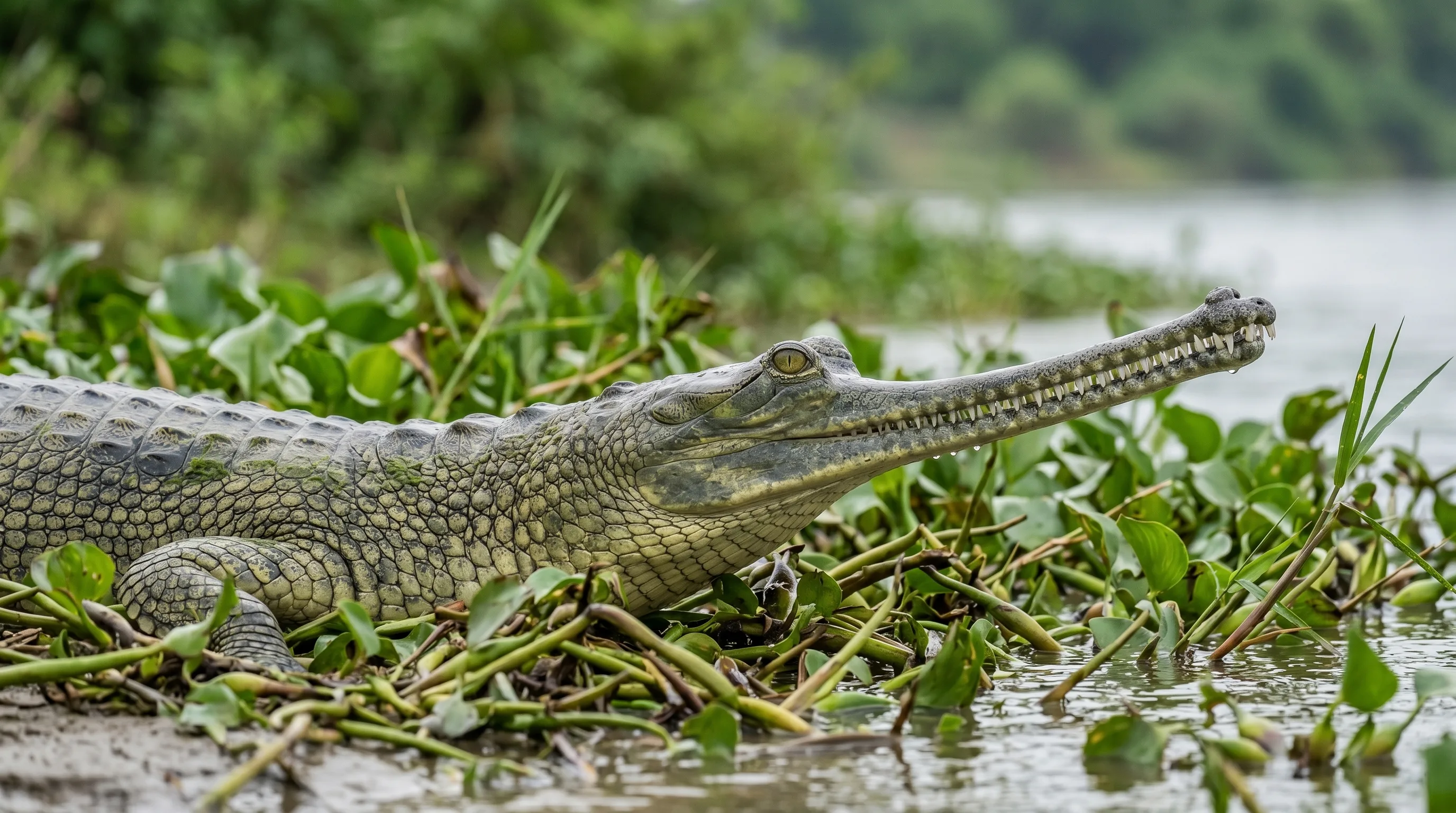
Gharial (Gavialis gangeticus)
Introduction
The river is still before dawn. Along the pale sandbar of the Chambal in northern India, a massive shape lies motionless at the waterline — enormous, grey-green, ancient. Its body stretches nearly six metres from tail tip to snout, yet it is the snout itself that commands attention: absurdly long, impossibly slender, bristling with over a hundred interlocking teeth that catch the first copper light of morning. At the very tip, where a male's rostrum terminates, sits a strange, bulbous knob of cartilage — rounded like a clay pot, resonant as a chamber instrument. This is the gharial.
Few animals alive today carry the weight of deep time the way Gavialis gangeticus does. It is the last surviving member of an ancient lineage that split from the other crocodilians somewhere between 40 and 70 million years ago, a living fossil from an era when the rivers of the Indian subcontinent were broader, wilder, and teeming with the silver-scaled prey this animal was built to catch. The gharial is the most specialised of all living crocodilians — an extreme fish-hunter refined over tens of millions of years, adapted so completely to the deep, fast-flowing rivers of the Gangetic plain that it is almost defenceless on land.
That extreme specialisation, so perfectly suited to the ancient Holocene rivers, is now its greatest vulnerability. The gharial today teeters at one of the most precarious edges in conservation history. Classified as Critically Endangered by the IUCN, with an estimated wild population that may be fewer than 300 mature individuals, it ranks among the rarest large vertebrates on Earth. Its story is one of ecological brilliance, evolutionary patience, and catastrophic modern decline — a creature shaped across geological ages now struggling to survive a few decades of human disruption.
To understand the gharial is to understand an entire river ecosystem. Its presence signals clean, fast-flowing water, intact sandy banks, abundant fish populations, and an undisturbed hydrological cycle. Its absence signals the opposite. In the rivers of India and Nepal, the gharial is not merely a species — it is a barometer of ecological health.
"The river is the most fundamental artery of the land, and the creatures within it are the truest measure of whether the land still breathes."
— M.C. Dash, Indian ecologist
Scientific Classification
Kingdom: Animalia
Phylum: Chordata
Class: Reptilia
Order: Crocodilia
Family: Gavialidae
Genus: Gavialis
Species: Gavialis gangeticus (Gmelin, 1789)
The gharial belongs to the family Gavialidae, which is monotypic — meaning the gharial is the sole living representative of its entire family. This taxonomic isolation reflects its extraordinary evolutionary divergence from other crocodilians. The false gharial or Malayan gharial (Tomistoma schlegelii) was historically placed in Gavialidae based on physical resemblance, but modern molecular analyses have consistently repositioned it within the family Crocodylidae, revealing that the similar snout shapes of these two species evolved independently through convergent evolution rather than shared ancestry.
Within the order Crocodilia, three families exist: Alligatoridae (alligators and caimans), Crocodylidae (true crocodiles), and Gavialidae. The gharial's divergence from the crocodylid line likely occurred in the Late Cretaceous or early Paleogene. Fossil evidence reveals that Gavialidae was once a diverse and globally distributed family, with relatives inhabiting Europe, Africa, and the Americas. Gavialis gangeticus is the last ghost of that once-rich lineage.
Physical Characteristics
The gharial is the longest of the three living crocodilian families. Adult males routinely reach 4.5 to 6 metres in total length, with exceptional individuals reported at close to 6.5 metres, placing them among the largest reptiles on Earth. Adult females are markedly smaller, typically ranging from 2.6 to 4.5 metres. Despite their length, gharials have a more slender body mass than saltwater or Nile crocodiles — a large male weighs approximately 160 to 250 kilograms, occasionally exceeding this range.
The defining physical feature of the gharial is its rostrum. The snout is the most elongated and laterally compressed of any living crocodilian — in adult males, it can comprise nearly a quarter of the animal's total body length. This extraordinary structure is not merely morphological eccentricity; it represents one of the most elegant solutions in vertebrate evolution to the problem of catching fast-moving fish in flowing water. The rostrum contains 106 to 110 sharp, conical, laterally compressed teeth that interdigitate precisely when the jaws close, forming a near-perfect fish trap.
Adult males possess the ghara — a bulbous, fleshy protrusion at the distal tip of the snout. This structure is absent in females and juvenile males and develops progressively from sexual maturity onward, enlarging with age. The word ghara derives from the Hindi word for an earthen pot, which the structure resembles. The ghara is hollow, communicating with the nasal passages, and serves multiple functions: it amplifies vocalisations, producing a distinctive buzzing or hissing sound during displays; it generates visual signals during courtship; and it may produce bubbles at the water surface during competitive or reproductive interactions.
The gharial's body is heavily armoured with dorsal osteoderms — bony skin plates — arranged in regular rows along the back and tail. The colouration is grey-green to olive-brown dorsally, fading to a paler cream or yellowish-white on the ventral surface. Juveniles tend to display more distinct darker banding and spots that fade as the animal matures. The limbs are short relative to body size, and the hind feet are fully webbed, adapted for powerful propulsion through water. Unlike most crocodilians, the gharial's limbs are poorly suited for terrestrial locomotion — the animal moves on land primarily by belly-sliding rather than the typical high-walking gait of other crocodile species.
Feature | Gharial | Saltwater Crocodile | Mugger Crocodile |
|---|---|---|---|
Max recorded length | ~6.5 m | ~7 m | ~4 m |
Snout shape | Extremely elongated, narrow | Broad, triangular | Broad, rounded |
Primary diet | Fish | Broad prey (mammals, fish, reptiles) | Fish, mammals, birds |
Terrestrial mobility | Very poor (belly-slides) | Good (high-walk) | Good (high-walk) |
Habitat type | Fast-flowing rivers | Coastal & freshwater | Slow rivers, lakes |
IUCN Status | Critically Endangered | Least Concern | Vulnerable |
The sensory apparatus of the gharial is adapted to an aquatic life. Integumentary sense organs (ISOs) — small, pigmented nodules distributed across the jaw skin — detect pressure waves and vibrations in water, allowing the animal to detect the movement of fish in turbid conditions with remarkable precision. The eyes are positioned high on the head, enabling the gharial to lie almost fully submerged while maintaining visual observation of the surface environment. The nostrils are also positioned dorsally, facilitating breathing while the body remains below the waterline.
Habitat & Geographic Distribution
The gharial's ecological address is highly specific: deep, fast-flowing rivers with clear water, sandy or gravelly substrates, and high, stable sandbanks for basking and nesting. This animal is not a generalist. It is built for one particular type of river, and its survival is tied entirely to the integrity of that habitat.
Historically, the gharial ranged across virtually the entire river system of the northern Indian subcontinent. Its distribution once extended through the Indus River in Pakistan, the Ganges and its major tributaries across the Indo-Gangetic Plain of India, the Brahmaputra River system in Assam and Bangladesh, and the Mahanadi, Godavari, and Kalindi rivers of peninsular India. Archaeological and fossil records suggest populations in rivers of Nepal, Bhutan, and Myanmar as well.
Today, the wild gharial population is functionally limited to three fragmented areas: the Chambal River system (shared between Madhya Pradesh, Rajasthan, and Uttar Pradesh in India), the Girwa River within Katerniaghat Wildlife Sanctuary in Uttar Pradesh, and the Rapti-Narayani river system in southern Nepal's Chitwan National Park. There are occasional sightings in the Gandak, Son, and Ghaghra rivers, but these likely represent dispersing individuals rather than established breeding populations.
The Chambal River — one of the cleanest and least-polluted rivers in India, largely because its ravine-cut landscape historically made both agriculture and settlements difficult along its banks — remains the stronghold. The National Chambal Sanctuary, extending approximately 435 kilometres through three states, protects the most critical stretch of gharial habitat remaining on the planet.
The gharial favours river stretches with deep pools where it can thermoregulate underwater during extreme temperatures, lateral sandbanks exposed for basking and nesting, riffle sections and current-exposed areas rich in fish, and minimal human disturbance to bank habitats. Depth is critical — gharials are poor walkers and depend on being able to slide directly from land into water. Steep or degraded banks reduce the animal's ability to safely transition between land and river.
Fun Fact The Chambal River — the gharial's primary stronghold — is one of the few rivers in India not mentioned as sacred in ancient texts, possibly because its ravine landscape was associated with dacoit territories. This cultural neglect inadvertently helped preserve it as one of the country's cleanest river systems, benefiting species like the gharial and the Ganges river dolphin.
Behaviour & Social Structure
The gharial is more socially tolerant than most crocodilians. On warm basking banks, groups of gharials — sometimes numbering dozens of individuals including adults of both sexes and sub-adults — congregate with a degree of proximity rarely seen among other crocodile species. This communal basking is not mere coincidence of resource use; it reflects a relatively benign social structure in which direct aggression between individuals is uncommon outside the breeding season.
Social hierarchy in gharials is most apparent among adult males. A single dominant male typically controls access to a group of females within a given stretch of river, and this territorial dominance is enforced through a suite of visual and acoustic signals rather than frequent physical combat. The ghara plays a central role in these interactions — a large, well-developed ghara is a reliable signal of age, size, and dominance status, functioning as a biological advertisement of competitive quality.
Dominant males engage in a complex visual display repertoire that includes ghara inflation, head-slapping against the water surface to generate pressure waves, jaw-gaping exposing the full tooth array, and body posturing that maximises apparent size. Vocalisations produced through the ghara — a resonant buzzing sound, sometimes accompanied by air-bubble production at the water surface — carry through water with considerable efficiency and may serve as long-distance communication tools between territorial males.
Female gharials do not form strong pair bonds with males, and the social structure during the breeding season more closely resembles a lek-like polygynous arrangement, where one dominant male mates with multiple females while subordinate males are excluded. Females are not passive in this system, however — they show active preference for males with well-developed gharas and engaged display behaviour, suggesting that mate choice is selective rather than simply determined by male dominance.
Outside the breeding season, gharials display surprisingly little aggression toward each other or toward other species sharing the same sandbanks, including mugger crocodiles (Crocodylus palustris), Indian soft-shell turtles (Nilssonia gangetica), and Ganges river dolphins (Platanista gangetica). Their dietary specialism as exclusive fish-eaters removes the competition pressure that drives interspecific aggression in more generalist crocodilians.
Gharials demonstrate clear individual site fidelity — adults return to the same river stretches, basking sites, and nesting banks year after year. This site fidelity means that local disturbances — a sandbar washed away, a stretch of river fished out, a quarry operation on a favoured bank — have disproportionate impact, as displaced individuals may struggle to successfully locate and establish in equivalent habitat elsewhere.
Daily Life & Activity Cycle
The gharial's daily rhythm is governed primarily by temperature. As an ectotherm, it depends on external heat sources to maintain its core body temperature within the operational range required for digestion, immune function, and muscular activity. In the cool months of the Indian winter — December through February — gharials spend considerably more time basking, emerging from the river in the morning to warm on sandbars and returning to the water as temperatures climb toward the afternoon maximum.
On a typical warm-season day, a gharial may enter the water before full dawn, spending the early morning hours in shallow, current-exposed stretches where fish are active. Foraging activity is concentrated in the morning and late afternoon. The midday hours, when river temperatures peak and fish become less active or move to deeper, cooler water, are often spent in slow drifting or resting on the riverbed, using the animal's density and relatively low metabolic rate to conserve energy.
Foraging is largely passive-opportunistic: the gharial drifts or positions itself in current channels, sensing the approach of fish through its integumentary sense organs, then executes a rapid lateral sweep of its slender snout to intercept prey. The speed and mechanics of this strike — a sideways whip of the narrow rostrum rather than the forward lunge used by broad-snouted crocodilians — is highly specialised and remarkably efficient in water, where the hydrodynamic resistance of the slender snout is minimal.
Movement along the river is primarily accomplished by sinusoidal whole-body swimming, using the laterally compressed tail as the primary propulsive organ, with the limbs held against the body to reduce drag. On land, movement is limited to the characteristic belly-slide — the animal pushes forward using the limbs while allowing the ventral surface to slide on wet sand. This mode of locomotion, while adequate for short distances between river's edge and basking position, means gharials rarely venture more than a few metres from the waterline.
Seasonally, gharial activity patterns shift dramatically. The breeding season — running from November through January — involves increased male display activity, movement between stretches of river as males establish territorial positions, and elevated female-male interaction. The nesting period, from March to May, ties females to specific sandbar locations. The monsoon season (June to September) floods riverbanks and submerges sandbars, forcing gharials into deeper river channels and reducing access to basking sites, which in turn reduces basking time and may affect thermoregulatory efficiency.
Diet & Survival Strategies
The gharial is among the most specialised feeders of any living reptile. Its diet is almost exclusively piscivorous — fish constitute the overwhelming majority of its food intake across all life stages. This is not merely a preference but a biological constraint dictated by its anatomy: the long, narrow snout is poorly suited for seizing and dismembering large mammalian prey, and the dentition, while extraordinarily effective for catching slippery fish, lacks the crushing or shearing capability needed to process hard-shelled or large-bodied prey.
Juveniles begin feeding on insects, small crustaceans, frogs, and small fish immediately after hatching. As they grow, the diet shifts progressively toward fish, with adults consuming medium to large-bodied species depending on local availability. In the Chambal River, common prey species include mahseer (Tor tor and related species), catfish, carp, and various cyprinid species. The gharial does not appear to be highly selective between available fish species — size and availability appear to be the primary determining factors.
The feeding strike itself is one of the fastest movements in the crocodilian repertoire. The narrow snout, with minimal water resistance, can execute a lateral snap in milliseconds — studies on related species suggest that the jaw closing force in gavialids is relatively low compared to broad-snouted crocodilians, but the speed and precision of the strike more than compensates, as fish rarely survive contact with the interlocking teeth.
Large fish are typically oriented headfirst before swallowing — the gharial uses a toss-and-catch technique, releasing a fish and repositioning it using a rapid flick of the snout. Gastric stones (gastroliths) have been found in gharial stomachs and may assist in breaking down hard-scaled or bony fish, as well as potentially aiding in buoyancy regulation.
It is late October on the Chambal, and the river has fallen from its monsoon height. A stretch of clear, coffee-brown water runs between two exposed sandbars, and just below the surface, barely visible against the gravel bottom, lies a gharial — five metres of muscle and scale, utterly still. Its eyes are open, tracking the surface light.
A shoal of mahseer — each fish twenty to thirty centimetres long — moves upstream through the current, tight-schooled in the way prey fish do when they sense open water on all sides. The gharial does not charge. It waits, allowing the shoal to pass within two body-lengths. Then a single fish veers slightly out of formation, breaks rhythm, and in that fraction of a second the snout fires sideways — a whip-crack motion too fast to follow with the eye.
When the water settles, the fish is gone. The gharial drifts back to its position on the gravel, the slender jaws resetting to their resting gape. A grey heron on the opposite bank watches with professional interest. Downstream, the shoal has already reformed, pressing on upstream as if nothing happened. The crocodilian beneath the surface settles again into its patient, perfect stillness.
This is not predation the way lions or wolves conduct it — no pursuit, no social coordination, no visible exertion. It is more like a river current catching a leaf: inevitable, quiet, almost incidental. The gharial does not waste energy. Energy, in a world of shrinking rivers, is everything.
The gharial's metabolic efficiency is a critical survival strategy. Like all crocodilians, it has an extraordinarily low standard metabolic rate relative to its body mass, enabling it to survive extended periods without feeding — documented fasting periods in captivity suggest large adults can go weeks to months without food without significant physiological deterioration. This adaptation was likely selected for in ancestral populations that experienced seasonal fluctuations in prey availability associated with monsoon flooding cycles.
Life Stage | Primary Diet | Prey Size | Feeding Method |
|---|---|---|---|
Hatchling (0–1 yr) | Insects, tadpoles, small crustaceans | < 3 cm | Surface snap, opportunistic |
Juvenile (1–5 yr) | Small fish, frogs, invertebrates | 3–15 cm | Lateral snap in shallow water |
Sub-adult (5–10 yr) | Primarily fish | 15–35 cm | Lateral ambush strike |
Adult (10+ yr) | Fish exclusively (or near-exclusively) | 20–60+ cm | Current-drift ambush, lateral sweep |
Interaction with Other Animals
The gharial shares its river habitat with a suite of species across multiple ecological guilds, and its interactions with these species illuminate its role in the broader aquatic community. It is not a top generalist predator in the way that saltwater or Nile crocodiles are — its diet specialisation means it functions as a highly efficient fish predator without the cross-taxon dominance effects of more generalist crocodilians.
The mugger crocodile (Crocodylus palustris) is the gharial's most frequent large-bodied neighbour in Indian rivers. The two species co-occur along sections of the Chambal and other river systems, and their relationship is complex. Despite occupying overlapping physical space — particularly on basking sandbars — the two species show significant ecological partitioning through diet and microhabitat use. Muggers preferentially use slower, shallower water and consume a broader prey base including birds, mammals, and turtles. Gharials occupy deeper, faster sections and focus on fish. Direct interspecific aggression is uncommon, though dominant muggers occasionally displace smaller gharials from prime basking positions.
With Ganges river dolphins (Platanista gangetica), another Critically Endangered species sharing the same river system, the gharial appears to have a broadly neutral relationship. Both species are fish predators, and competition for prey may exist at a population level, but direct interaction between individuals is rarely observed. Their coexistence in the same deeply threatened river system means that conservation measures benefiting one species tend to benefit the other — a hopeful alignment of conservation interest.
Indian soft-shell turtles, red-crowned roofed turtles, and other Gangetic chelonians frequently share gharial sandbars, and the gharial shows no predatory interest in these species despite their physical proximity. Hatchling gharials, however, represent prey for a variety of species — monitor lizards (Varanus bengalensis), corvids, herons, large catfish, and even adult mugger crocodiles are documented or suspected predators of gharial eggs and hatchlings, making the hatchling stage the most vulnerable window in the gharial's life cycle.
Fish-eating birds — particularly skimmers, terns, herons, and kingfishers — compete with gharials for smaller fish, but at a scale that presents negligible impact on adult gharial food availability. These birds sometimes nest on the same sandbars used by gharials for basking and nesting, creating a broadly tolerant multi-species community centred on intact riverine sandbars — a community that fragments rapidly when sandbars are disturbed or removed.
Fun Fact Adult gharials have been observed allowing birds — particularly Indian skimmers and river terns — to nest and feed within metres of their basking positions without any sign of predatory interest. This unusual tolerance likely reflects the gharial's extreme dietary specialisation: having evolved entirely around fish, it appears to lack the predatory motivation toward warm-blooded animals that other crocodilians routinely demonstrate.
Interaction with Environment
The gharial's relationship with its river environment is one of deep mutual dependence. The animal does not merely inhabit rivers — it is shaped by them, constrained by them, and, in turn, shapes them in ways that are only beginning to be understood by ecologists.
River geomorphology directly governs gharial ecology. The sandbar habitats that gharials depend on for basking and nesting are dynamic features, created and maintained by natural cycles of seasonal flooding, sediment deposition, and erosive current action. The monsoon floods that inundate river channels from June through September transport enormous sediment loads that deposit on the inside bends and slower sections of rivers, building the sandbars that gharials will use in the subsequent dry season. Disruptions to this sediment cycle — particularly through dam construction, which traps sediment in reservoirs and releases sediment-depleted water downstream — directly reduce the quality and quantity of available sandbar habitat.
Water temperature is a primary environmental driver. Gharials are more sensitive to temperature extremes than their broad-snouted relatives, preferring river stretches where water temperature remains within a moderate range year-round. Deep pools adjacent to fast-flowing riffles provide thermal refugia — the animal can move between sun-exposed surface water and cooler deep zones to thermoregulate with precision.
The gharial's body itself has environmental impacts. Through defecation in river water, gharials redistribute nutrients — primarily phosphorus and nitrogen from digested fish — back into the aquatic system, potentially contributing to primary productivity in nutrient-limited river sections. Through nest construction on sandbars, females disturb and aerate sediment, creating microhabitat variation that may benefit other sandbar-nesting species. Carcasses of large individuals, though rarely observed in wild populations, would represent significant nutrient pulses to the river food web.
Climate-driven changes to monsoon intensity and timing pose emerging environmental threats. The gharial's breeding calendar is tightly synchronised with the hydrological cycle — nesting begins as water levels drop after the monsoon, and hatching must be timed to coincide with the period when sandbars are accessible but not yet flooded by the next monsoon season. Disruptions to monsoon predictability — increasingly documented in the region — risk desynchronising this calendar, potentially causing nest flooding or exposing hatchlings to extreme temperatures before they can safely enter the river.
Reproduction & Parenting
The gharial's reproductive cycle is one of the most well-studied aspects of its biology, in large part because of intensive monitoring efforts at protected sites like the National Chambal Sanctuary. Breeding behaviour begins in November and December, when dominant males intensify territorial displays and begin actively courting females that share their stretch of river.
Courtship involves sustained interaction between male and female, including parallel swimming, nose-to-nose contact in which the male aligns his ghara with the female's snout tip, rubbing, and coordinated submergence. Mating occurs in the water and may be repeated multiple times over the breeding season. A single dominant male may mate with two to five females within his territory, although individual variation is substantial.
Nesting occurs from late March through early May, driven by rising daytime temperatures and stable, exposed sandbars. Females are highly selective in nest site choice — they prefer south-facing banks (maximising solar heating in the northern hemisphere spring), sites at a specific distance from the waterline, and substrates with appropriate grain size and drainage properties that allow the correct thermal and humidity conditions for egg development. Females excavate a nest chamber using their hind limbs, digging a hole 30 to 50 centimetres deep and depositing between 25 and 60 eggs (average clutch size is approximately 35 to 40 eggs). After covering the nest, the female remains in the vicinity for the entire incubation period of 60 to 80 days, guarding it against nest predators.
Incubation temperature critically determines hatchling sex, as in all crocodilians. Research indicates that temperatures below 31.5°C produce mostly female hatchlings, temperatures above 34.5°C produce mostly males, and intermediate temperatures produce mixed clutches. This temperature sex determination makes nest site selection a genetically consequential decision — a female's choice of nest microhabitat influences the sex ratio of her offspring.
Hatching occurs in June, typically just before or shortly after the onset of monsoon rains. Hatchlings produce soft grunting vocalisations from inside the eggs that alert the attending female, who excavates the nest and assists hatchlings to the water — a behaviour shared with other crocodilians. Gharial maternal care, while genuine, is less intensive than in some other crocodilian species: the female escorts hatchlings to the water and may remain near the juvenile group for a period of weeks, but she does not carry hatchlings in her mouth (as American alligators and some crocodile species do) and the hatchlings do not aggregate in a tight crèche guarded by the mother over an extended period. At captive breeding facilities, post-hatch survival is dramatically higher than in the wild, indicating that predation during the hatchling stage is the primary mortality source in natural populations.
Sexual maturity in the gharial is reached later than in most reptiles. Females typically become reproductively active at 8 to 12 years of age and at a length of approximately 2.6 metres. Males mature later — full social and reproductive maturity, including ghara development sufficient for competitive success, may not be achieved until 15 to 18 years of age. This extended juvenile period means that populations recovering from decline are slow to rebuild reproductively active adult cohorts, even when hatchling survival improves.
Evolutionary Adaptations
The gharial is a masterclass in evolutionary specialisation. Every major anatomical feature of the animal can be traced to selection pressures imposed by its ecological niche as a large, fast-river fish predator in a seasonally variable subtropical river system.
The elongated rostrum is the most visible adaptation, but its significance runs deeper than its appearance suggests. Finite element analysis modelling of the gharial skull demonstrates that its narrow, laterally compressed shape is mechanically optimised for resisting the bending forces generated during a rapid lateral strike — the rostrum flexes far less under load than an equivalent structure without its specific internal bone architecture. This allows the snout to execute high-speed strikes without structural failure, even against large, powerful fish.
The dentition reinforces this design. The teeth of the gharial are homodont — uniform in shape — and sharply pointed, ideal for piercing and holding slippery, scaled prey. Unlike the heterodont dentition of mugger crocodiles (which includes larger, crushing posterior teeth for processing hard-shelled prey), the gharial's uniform, needle-like teeth reflect total commitment to a fish-catching function.
The integumentary sense organs (ISOs) distributed across the jaw skin represent a sensory adaptation of remarkable sophistication. These mechanoreceptors detect pressure waves and subtle vibrations in the water column, allowing the gharial to locate and track prey in low-visibility conditions — murky monsoon water, night-time foraging, and turbid pool environments where vision is unreliable. The density of ISOs on the gharial's jaw is higher than in most other crocodilians, reflecting its dependence on this sensory modality for prey detection.
The aquatic locomotion system of the gharial represents a different evolutionary trade-off from broad-snouted crocodilians. While reduced terrestrial mobility is a vulnerability, the elongated, powerful tail and streamlined body of the gharial make it among the most hydrodynamically efficient crocodilians in the water — capable of sustained swimming against strong river currents that would exhaust a mugger crocodile. This efficiency allows gharials to occupy and exploit fast-flowing river channels that other crocodilians tend to avoid.
The ghara itself is a multi-functional adaptation whose evolutionary origins are debated. Current consensus favours a multi-modal signalling hypothesis: the ghara simultaneously functions as a visual signal of competitive quality, an acoustic resonator amplifying and modifying vocalisations, and a device for producing surface bubbles during aquatic display. Its progressive development with age creates an honest advertisement of male age, health, and longevity — traits that translate directly into genetic quality in a long-lived species.
Physiologically, the gharial shows remarkable low-temperature tolerance for a tropical reptile. It remains active at water temperatures down to approximately 15°C, considerably below the thermal tolerance lower limits of many tropical crocodilians. This adaptation allowed ancestral gharial populations to colonise the seasonal rivers of the Himalayan foothills, where winter water temperatures regularly fall below 20°C.
Fun Fact The gharial's narrow snout experiences approximately 40 times less hydrodynamic drag during a lateral strike than an equivalent broad-snouted crocodilian jaw would. This mechanical advantage is the reason gharials can successfully catch small, fast-moving fish that would escape most other crocodile species — it is not strength but geometry that makes the gharial a supreme fish catcher.
Ecological Importance
The gharial functions as both a consumer and an indicator in river ecosystems. As a large-bodied fish predator at or near the top of the aquatic food web, it exerts top-down regulatory pressure on fish community structure. By preferentially consuming abundant, medium-sized fish species, the gharial may prevent any single prey species from achieving biomass dominance, thereby maintaining the diversity and structural complexity of the fish community beneath it.
This regulatory role is not trivial. River systems that have lost their large predators — through fishing pressure, habitat destruction, or pollution — frequently show altered fish community structure, with cascading effects on invertebrate populations, aquatic vegetation, and nutrient cycling. The gharial, as one of the largest native fish predators in the rivers it inhabits, represents a keystone functional element whose removal or reduction has consequences that extend well beyond its immediate prey species.
The gharial's dependence on clean, fast-flowing water with intact sandbars makes it an umbrella species for river conservation. Habitat measures that ensure viable gharial populations — regulation of sand mining, flow maintenance, limitation of upstream damming, reduction of river pollution — simultaneously protect dozens of other species dependent on the same habitat conditions, including Ganges river dolphins, freshwater turtles, Indian skimmers, river terns, and a vast community of fish species important to riverine fisheries.
Gharials contribute to nutrient cycling through their feeding activity, redistributing nutrients from fish biomass into the water column and bank soils via excretion. Female nest construction on sandbars aerates sediment and creates localised habitat variation. The species also functions as a disease regulator — by removing weak, diseased, or parasitised fish that are easier to catch, the gharial may help maintain the overall health of fish populations in ways that are difficult to quantify but ecologically meaningful.
Perhaps most significantly, the gharial serves as a cultural and scientific indicator of river ecosystem health. Where gharials persist, the river is functioning at a level that supports large-bodied predators, diverse fish communities, intact sediment dynamics, and clean water. Its absence is a reliable signal of ecological degradation. In this sense, the gharial's value to science is not merely taxonomic or biological but diagnostic — it tells us where rivers still work.
Threats & Conservation
The collapse of the gharial population over the twentieth century stands as one of the most dramatic and rapid wildlife population crashes ever documented for a large vertebrate. From an estimated 5,000 to 10,000 individuals across the Indian subcontinent in the early 1900s, the population fell to fewer than 200 individuals by the mid-1970s — a decline of over 95% in less than eight decades. Today, despite decades of conservation intervention, the wild population remains critically small.
Habitat destruction is the primary and most pervasive driver of gharial decline. The large rivers of the Indo-Gangetic Plain — historically among the most productive river systems on Earth — have been fundamentally altered by dam construction, irrigation withdrawal, embankment engineering, and agricultural encroachment onto riparian habitats. Over 30 major dams have been built on rivers within the historical gharial range since independence in 1947, fragmenting river connectivity, trapping sediment, altering flow regimes, and reducing or eliminating the deep, fast-flowing river stretches the gharial requires.
Sand and gravel mining from riverbeds and banks — often conducted at industrial scale and frequently illegal — directly destroys the sandbar habitats used for nesting. A single bulldozer operation on a nesting sandbar can eliminate an entire season's reproductive output for multiple females. Mining also destabilises banks, increases turbidity, and removes the gravel substrate that fish and gharials depend on, creating degraded river channels that support neither prey species nor the reptile itself.
Fishing pressure affects gharials both directly and indirectly. Gill nets set in current channels entangle and drown gharials — drowning in fishing nets is a significant documented source of adult mortality in the Chambal and Girwa rivers. The depletion of fish stocks through overfishing reduces prey availability for gharials, affecting adult body condition and reproductive output. Accidental entanglement in fishing gear represents one of the most tractable current threats, but addressing it requires sustained engagement with fishing communities who depend on the same rivers for their livelihoods.
Historical direct persecution contributed significantly to early population collapse. Gharials were hunted for their skin, their fat (believed to have medicinal properties), and the ghara of adult males, which was sold as a trophy or used in traditional medicine. They were also killed opportunistically by fishermen who believed — largely incorrectly, given the animal's fish-only diet — that gharials competed with or damaged their nets. Legal protection has substantially reduced deliberate killing, but isolated incidents continue.
A mysterious mass mortality event in 2007-2008, when over 100 gharials died suddenly in the Chambal River, drew international scientific attention. Extensive investigation identified the likely cause as visceral gout, caused by elevated uric acid from an unknown trigger — possibly a chemical contaminant, an algal toxin, or a combination of stressors. The incident highlighted the vulnerability of such a small population to acute events and raised concerns about chemical pollution in even relatively clean rivers like the Chambal.
IUCN Red List Analysis
Current IUCN Status
The gharial is classified as Critically Endangered (CR) on the IUCN Red List of Threatened Species, a status it has held since 1996 and which was most recently reconfirmed in the 2007 assessment that reflected the post-2007 mortality event data. The Critically Endangered designation — the highest threat category before Extinct in the Wild — is applied under IUCN criterion C2a(i), which pertains to a continuing decline in the number of mature individuals combined with a total population estimated at fewer than 250 mature individuals.
The classification is scientifically justified and broadly agreed upon by the global herpetological research community. The combination of small total population, extreme range fragmentation, ongoing threats to habitat and individuals, slow reproductive rate, and low juvenile survival creates a risk profile that meets Critically Endangered criteria across multiple IUCN assessment dimensions.
Population Trend
The gharial population trend is currently assessed as decreasing, though the rate of decline has moderated from the catastrophic pace of the 1950s through 1970s. Captive breeding and headstarting programs implemented in the 1970s and 1980s released thousands of juvenile gharials into protected river sections, contributing to temporary apparent recovery in some areas. However, long-term monitoring of adult populations — the most reliable measure of true population health — has not shown sustained recovery corresponding to these releases, suggesting that juvenile survival in the wild remained insufficient to translate headstarted animals into reproductively active adults at the scale required.
Current best estimates place the total wild population of mature gharials at between 200 and 650 individuals, with most credible assessments clustering around 300 to 400 mature individuals. The Chambal River supports the largest subpopulation, with aerial and ground surveys suggesting 150 to 300 adults. The Girwa River in Katerniaghat supports a smaller population of approximately 40 to 70 adults. The Nepal population in Chitwan National Park is estimated at 30 to 50 adults. All other localities hold fewer than 10 individuals each, representing ecologically non-viable isolates.
Main Threats
Habitat fragmentation and dam construction remain the most structurally damaging threats. Each dam on a gharial river creates an impassable barrier to movement, disrupts sediment transport, and converts dynamic riverine habitat into slow, deep reservoir habitat unsuitable for gharials. The Chambal River — relatively undammed compared to other Gangetic tributaries — represents the exception, and its relative ecological integrity is the primary reason it supports the largest remaining gharial population.
Sand and gravel mining is intensifying across the gharial's range. Demand for construction material has driven an industrial-scale mining industry on Indian rivers, often operating without adequate environmental oversight. Mining on nesting sandbars directly destroys clutches and disturbs nesting females. Repeated mining activity on regularly used nesting sites effectively eliminates those sites from the gharial's reproductive calendar. Several historically productive nesting sites on the Chambal have been lost or degraded due to illegal mining within or adjacent to the sanctuary.
Fishing net entanglement is a significant source of direct mortality for adult gharials. Gill nets set across current channels — a common fishing practice in Indian rivers — pose a drowning risk to submerged gharials that become entangled while foraging or travelling. Data from carcass recovery programs in the Chambal sanctuary suggest that fishing-related drowning may account for a substantial proportion of adult mortality. Resolving this threat requires practical engagement with fishing communities, including gear modification, spatial zoning of fishing effort, and economic alternatives.
River pollution affects gharials through multiple pathways: direct toxicological effects on adults, reproductive disruption through endocrine-active chemicals, bioaccumulation of heavy metals and persistent organic pollutants through the fish food chain, and reduction of prey fish populations through hypoxia and habitat degradation caused by effluent inputs. Industrial discharge, agricultural runoff, and sewage from riverside cities all contribute to chemical contamination even in rivers within protected sanctuaries.
Climate change introduces emerging and not fully quantified risks. Altered monsoon timing affects the hydrological cycle that governs sandbar formation, nesting habitat availability, and the phenological cues that trigger breeding behaviour. Increased frequency of extreme flood events threatens to wash out nest sites mid-incubation. Rising air and water temperatures may shift the thermal conditions within nests, potentially skewing sex ratios in reproductively significant ways. These climate-mediated effects compound existing pressures on an already fragile population.
Ecological Consequences
The loss of the gharial from Indian river systems would not merely represent the extinction of a species — it would represent the removal of a functional ecological role that has been embedded in Gangetic river ecosystems for tens of millions of years. As the primary large-bodied fish predator specialised for deep, fast-flowing water channels, the gharial occupies an ecological position that no other species fills. Its removal creates a trophic vacuum in the predator-prey structure of these rivers.
Fish communities in rivers that have lost large predators typically show increased abundance of certain prey species, reduced diversity, and altered size structure — effects that cascade downward through the food web, affecting invertebrate populations, algal dynamics, and sediment conditions. The specific impacts of gharial loss on Gangetic fish communities are incompletely modelled, but analogies from other river systems that have lost apex fish predators suggest these effects would be ecologically meaningful and economically significant, given the importance of river fisheries to human communities along the Ganges and Chambal.
The loss of the gharial would also signal and accelerate the broader degradation of the river habitats it depends on. Because viable gharial habitat is essentially a proxy for high-quality river habitat, declining gharial populations serve as an early warning system for river degradation that threatens the entire aquatic biodiversity of the system. The ecological consequences of gharial extinction would therefore extend far beyond the animal itself.
Conservation Efforts
India established the National Chambal Sanctuary in 1979, encompassing 435 kilometres of the Chambal River across Madhya Pradesh, Rajasthan, and Uttar Pradesh. This remains the most important protected area for gharial conservation globally. The sanctuary provides legal protection for the river corridor, restricting sand mining, fishing, and riverside development within its boundaries — though enforcement remains uneven and illegal activities persist.
A captive breeding and headstarting program was initiated in the 1970s under the Indian government's Crocodile Conservation Project, in collaboration with the Food and Agriculture Organisation of the United Nations. Breeding centres at Deori (Madhya Pradesh), Kukrail (Uttar Pradesh), and several other locations produced tens of thousands of juvenile gharials that were released into protected river sections. These programs demonstrated that gharials can breed successfully in captivity and that hatchling production is not the limiting factor in recovery — wild juvenile survival is.
Nepal's Chitwan National Park provides protection for the Rapti-Narayani gharial population, supported by the government of Nepal and international conservation organisations including the World Wildlife Fund. The Gharial Conservation Alliance, a coalition of international zoos and conservation organisations, coordinates ex-situ breeding and conservation funding globally. Zoos in Europe and North America maintain managed breeding populations under the European Endangered Species Programme (EEP) and the AZA Species Survival Plan (SSP), providing genetic insurance against wild population collapse.
Community-based conservation programs in villages adjacent to the Chambal sanctuary have worked to reduce fishing-related gharial mortality by introducing modified gear (smaller-mesh nets less likely to entangle large reptiles), educating fishermen about gharial ecology, and creating economic incentives — including ecotourism revenue sharing — for communities that actively protect gharial nesting sites.
Future Outlook
The future of the gharial is genuinely uncertain. The biological potential for recovery exists — the species is long-lived, adults can produce large clutches annually, and captive breeding has demonstrated that population augmentation is feasible. The Chambal River remains a viable habitat base if adequately protected. A small but expanding body of scientific research is improving understanding of wild juvenile survival, population genetics, and habitat requirements in ways that could inform more effective conservation strategies.
However, the structural drivers of decline — dam construction, sand mining, river pollution, and fishing pressure — are not diminishing. India's infrastructure development agenda continues to prioritise dam construction and river engineering for irrigation and hydropower. Sand demand driven by construction growth continues to place commercial pressure on riverbeds. Without substantive policy change at the national and state level in India, the ecological conditions required for self-sustaining gharial populations outside the Chambal will not be restored within the timeframe relevant to this generation of animals.
The most realistic recovery scenario involves sustained protection of the Chambal stronghold population, meaningful improvement in wild juvenile survival rates through reduction of fishing net entanglement, and eventual reintroduction into ecologically restored sections of the Girwa, Gandak, and Ramganga rivers. If these conditions are met, models suggest the population could recover to 2,000 to 3,000 individuals over a 50 to 75 year horizon — a meaningful recovery, though far below historical abundance. Without them, the wild gharial population may continue to decline toward functional extinction within the next two to three decades.
Human Relationship
The gharial occupies a complex and ambivalent position in the cultural geography of the Indian subcontinent. In ancient Hindu tradition, the makara — a mythological aquatic creature depicted in temple iconography — is widely interpreted as being based, at least partly, on the gharial. The makara appears in artwork dating back two thousand years, depicted as a crocodilian with an elongated snout, and serves as the vehicle (vahana) of the river goddess Ganga and the sea god Varuna. The gharial, as the most distinctive crocodilian of the Gangetic rivers, was almost certainly the real-world template for this mythological figure. This suggests that for millennia, the gharial was a significant enough presence in Indian rivers to leave a permanent mark on religious and artistic tradition.
This cultural reverence did not translate into consistent protection, however. During the colonial period and through the mid-twentieth century, gharials were killed as vermin — competition for fish and perceived threats to fisheries prompted widespread persecution. Colonial-era records document the killing of gharials in large numbers through shooting, dynamiting, and netting, with some districts reporting the elimination of local populations within a few decades.
The gharial's reputation as a threat to humans is largely undeserved. Despite its considerable size, the gharial's narrow, fish-adapted jaws are poorly suited to seizing human-sized prey, and there are no credible authenticated cases of a wild gharial killing a human. Incidents of gharials being disturbed and behaving defensively when cornered on land have occurred, but the animal's primary response to human approach is retreat into the water. This non-threatening character is well known to riverside communities that have coexisted with gharials for generations, though it was long obscured in official wildlife narratives that treated all crocodilians as uniformly dangerous.
Ecotourism in the National Chambal Sanctuary has created a modest but growing economic relationship between local communities and gharial conservation. Boat-based wildlife tourism targeting gharials, river dolphins, turtles, and birds provides income for boat operators, guides, and hospitality services in villages adjacent to the sanctuary. Where this tourism revenue is distributed fairly and is substantial enough to create genuine economic incentives, it has been associated with improved community attitudes toward gharial protection and reduced poaching and nest disturbance. The development of this relationship — aligning local economic interest with gharial survival — is widely regarded by conservationists as one of the most promising pathways to long-term protection.
Unique & Rare Facts
The word "gharial" derives from the Hindi word ghariyal, which in turn comes from ghara, the Hindi word for a clay water pot — referring to the distinctive bulbous tip of the adult male's snout.
Gharials are among the few crocodilian species in which adult males carry a permanent, visually obvious secondary sexual characteristic — the ghara — making males and females easy to distinguish at a distance, which is unusual among reptiles.
The gharial's integumentary sense organs (ISOs) on the jaws function like an underwater lateral line, detecting the pressure waves of approaching fish before the animal can see them — a sensory system that works in complete darkness.
Fossil relatives of the modern gharial have been found on six continents, including in the Eocene and Oligocene deposits of Europe, Africa, and the Americas — the modern Indian gharial is the last survivor of what was once a globally distributed and speciose lineage.
Gharials are one of the few crocodilian species that do not carry hatchlings in their mouths. Instead, females guide hatchlings to water vocally, demonstrating that parental care strategies in crocodilians are more varied than once believed.
The male gharial's ghara grows continuously throughout adulthood. The oldest, largest males have gharas that are roughly proportional to the length of the snout, meaning that ghara size is a reasonably reliable field indicator of individual age.
A 2007 genetic study found that gharial populations in the Chambal and Nepal show very low genetic diversity, consistent with a severe historical bottleneck — evidence that the population collapse of the twentieth century has left a permanent genetic signature on surviving animals.
Gharials have one of the lowest terrestrial mobility ratings of any living crocodilian. A large adult on land can only move by belly-sliding at a few kilometres per hour and cannot sustain even this speed for more than a few metres before overheating or exhausting itself.
Despite their enormous size, adult gharials have been documented sharing basking sandbars at densities of more than one individual per metre in some historical records — a degree of intraspecific tolerance virtually unprecedented among large crocodilians.
The 2007-2008 mass mortality event, in which more than 100 gharials died in the Chambal River within a few weeks, represented a loss of perhaps 30 to 50 percent of the total wild population at the time — one of the most severe acute mortality events ever recorded for a large vertebrate species.
"We do not inherit the earth from our ancestors; we borrow it from our children. But what we owe to the rivers — and to every creature that depends on them — is something older and more binding than any inheritance."
— Adapted from a conservation address, National Chambal Sanctuary, 2015
Conclusion
The gharial stands at the intersection of deep evolutionary time and urgent contemporary crisis. It is a creature that has outlasted continental configurations, survived mass extinctions, and endured the disappearance of entire lineages of competitors and prey — only to find itself, in the geological blink of an eye, reduced to a few hundred individuals clinging to survival in the diminishing fast-water reaches of the Chambal and a handful of other protected rivers. There is something almost incomprehensible in this arithmetic: 70 million years of evolutionary continuity, brought to the edge of termination in less than a century.
What the gharial teaches is not merely about crocodilians. It is about the nature of ecological systems and the pace at which they can be undone. A species so perfectly adapted to its environment — a supreme, specialised product of geological time — offers no flexibility when that environment is fundamentally transformed. The narrow snout that makes the gharial a flawless fish-catcher in a clean, fast river is not a tool for adaptation to polluted, slow, fragmented waterways. Its strengths are its constraints, and the world that shaped those strengths is being rapidly dismantled.
Yet the gharial is not gone. In the grey-green morning light of the Chambal, on sandbars that the river has built from monsoon sediment over centuries, large adults still bask in numbers that would have been unthinkable in the darkest years of the 1970s. Hatchlings still emerge from nest chambers and find their way to the river. Male gharas still resonate with the ancient signalling language of reproductive fitness. The species persists, improbably, at the edge of existence — and in that persistence lies both the magnitude of what has been lost and the possibility of what might yet be restored.
The survival of the gharial is not a question of what the animal can do. It has already demonstrated, across millions of years, an extraordinary capacity to persist. The question is whether the rivers it depends on — and the human societies that control those rivers — can be managed with enough ecological wisdom to give this ancient animal the space, the water, and the fish it needs to continue. That is not a biological question. It is a question of values, governance, and political will. The gharial has done its part across deep time. Whether it survives the next century depends entirely on what we choose to do now.
Sources & Attribution
Data and ongoing research referenced for this article come from the following authoritative sources — peer-reviewed publishers, official taxonomic registers, and global biodiversity programmes:
- IUCN Red List — Gharial — official IUCN Red List assessment including population trend, threats, and conservation actions.
- Wikipedia — Gharial — taxonomy, distribution, and an overview with onward citations to primary literature.
- GBIF — Gharial — global occurrence and distribution records from the Global Biodiversity Information Facility.
- iNaturalist — Gharial — observation records and field photographs contributed by naturalists worldwide.
- Encyclopedia of Life — Gharial — multilingual species pages aggregating taxonomic and natural-history data.
- WWF — World Wildlife Fund — global wildlife conservation programmes and research summaries.
- Nature — research on Gharial — peer-reviewed studies indexed by Nature on related ecology and behaviour.
- ITIS — Integrated Taxonomic Information System — federal-grade taxonomy and nomenclature.
Frequently Asked Questions
What does the gharial eat?
The gharial is almost exclusively piscivorous, meaning its diet consists almost entirely of fish. Its elongated, narrow snout and interlocking, needle-like teeth are specifically adapted for catching fast-moving fish in flowing water. Adult gharials consume medium to large fish species — including mahseer, catfish, and carp in the rivers they inhabit — while juveniles eat small fish, insects, tadpoles, and crustaceans. Unlike most other crocodilians, the gharial does not prey on mammals, birds, or large reptiles; its anatomy makes it essentially incapable of catching and processing such prey.
How dangerous is the gharial to humans?
The gharial poses virtually no danger to humans under normal circumstances. Despite its impressive size — adults can exceed five metres in length — its narrow, fish-adapted jaws are poorly suited to seizing human-sized prey, and there are no credible documented cases of a wild gharial attacking or killing a human. The gharial's instinct on encountering humans is to retreat into the water, not to stand its ground or approach. Among the world's large crocodilians, the gharial is considered the least dangerous to people.
Defensive reactions are possible if a gharial is cornered on land or if a human approaches a nest being guarded by a female, but even these situations rarely escalate to a physical attack. This non-aggressive character is well known among fishing communities that have coexisted with gharials for generations along Indian and Nepalese rivers.
Why is the gharial critically endangered?
The gharial is Critically Endangered primarily due to the destruction and fragmentation of its river habitat. Dam construction has disrupted river flow and sediment dynamics; sand mining has destroyed nesting sandbars; and irrigation withdrawals have reduced river depths and flow volumes in ways that make many formerly suitable stretches inhospitable. Additionally, accidental entanglement and drowning in fishing gill nets is a significant ongoing source of adult mortality, and historical persecution through hunting reduced populations before protective legislation was enacted.
The species' extreme ecological specialisation compounds these threats. Because it depends on deep, fast-flowing, clean rivers with specific sandbar characteristics, it cannot adapt to degraded habitat the way more generalist crocodilians can. A wild population now estimated at between 200 and 650 mature individuals, fragmented across a handful of protected river sections, places the gharial at genuine risk of extinction.
What is the ghara on a male gharial?
The ghara is a distinctive, bulbous protrusion of cartilage and soft tissue that develops at the tip of the adult male gharial's snout. It is absent in females and immature males, developing progressively from sexual maturity and increasing in size throughout the male's life. The word derives from the Hindi term for a clay water pot, which the structure resembles.
The ghara serves multiple functions in male social and reproductive behaviour. It amplifies and modifies vocalisations — particularly the buzzing or humming sounds males produce during courtship and territorial displays — and it generates visual and auditory signals that communicate competitive status to other males and reproductive quality to females. Larger, better-developed gharas are associated with older, larger, socially dominant males, making the ghara an honest signal of individual quality in mate competition.
How does the gharial compare to other crocodilians?
The gharial is the most specialised of all living crocodilians and represents a unique evolutionary lineage — the sole surviving member of the family Gavialidae. Its most distinctive differences from other crocodilians are its extremely elongated, narrow snout (the longest relative to body size of any crocodilian), its almost exclusively fish-based diet, its very poor terrestrial locomotion (it belly-slides rather than high-walks), and its comparatively tolerant intraspecific social behaviour.
In terms of size, the gharial is competitive with the largest crocodilians on Earth — adult males can reach six metres or more, comparable to the saltwater crocodile. However, its body mass is lower relative to its length, reflecting a more slender, hydrodynamically streamlined build. Unlike the saltwater crocodile or the Nile crocodile, which are powerful generalist predators capable of taking large mammals, the gharial is ecologically narrow — extraordinarily effective within its specialised niche but far less ecologically versatile.
Where is the gharial found today?
The gharial's current wild range is drastically reduced from its historical distribution. Today, viable breeding populations exist only in the National Chambal Sanctuary in northern India (the primary stronghold), the Girwa River within Katerniaghat Wildlife Sanctuary in Uttar Pradesh, and the Rapti-Narayani river system in Chitwan National Park in southern Nepal. Occasional individuals are reported in the Gandak, Ghaghra, Son, and Mahanadi rivers, but these appear to be dispersing animals rather than established breeding groups.
Historically, the gharial ranged across the major river systems of the entire Indian subcontinent, including the Indus in Pakistan, the Ganges and all its major tributaries across northern India, and the Brahmaputra in Assam and Bangladesh. The collapse of this range to the current three fragmented populations represents one of the most severe range contractions of any large vertebrate documented in the twentieth century.
How long does the gharial live?
The gharial is a long-lived species. In captivity, individuals have survived to over 60 years of age. Wild longevity is more difficult to determine but is estimated to be comparable — large, reproductively active adults in the Chambal sanctuary have been tracked as known individuals for 20 to 30 years, and based on growth rates, the largest wild males may be 40 to 60 years old.
This longevity has significant conservation implications. Because adults live for decades and continue reproducing throughout their lives, protecting existing adults is a high-priority conservation strategy — each surviving adult represents substantial future reproductive potential. Conversely, the slow maturation rate (females reach reproductive age at 8 to 12 years; fully dominant males at 15 to 18 years) means that population recovery from a low base is inherently slow, as it takes well over a decade for released or surviving juvenile gharials to contribute to breeding.
How many gharials are left in the wild?
The most credible current estimates place the wild gharial population at approximately 200 to 650 mature individuals, with most researchers and conservation organisations adopting figures closer to 300 to 400 adults as their working estimate. The Chambal River supports the majority — perhaps 150 to 300 adults — with the Katerniaghat and Chitwan populations each contributing several dozen additional individuals. All other localities hold very small numbers that are unlikely to represent self-sustaining breeding groups.
This population size places the gharial among the rarest large reptiles on Earth, comparable in overall numbers to species like the Yangtze giant softshell turtle or the California condor at their lowest points. Annual monitoring surveys in the Chambal, conducted by the Wildlife Institute of India and partner organisations, provide updated population estimates that are the primary basis for tracking whether conservation efforts are having a measurable effect.
What conservation programs exist for the gharial?
India's primary conservation mechanism for the gharial is the National Chambal Sanctuary, established in 1979, which provides legal protection for 435 kilometres of the Chambal River. India also operates captive breeding and headstarting centres at several locations, including Deori and Kukrail, which produce juvenile gharials for release into protected river sections. The Crocodile Conservation Project, launched in collaboration with the United Nations FAO in the 1970s, was the original framework for these efforts.
International conservation support comes through the Gharial Conservation Alliance, which coordinates zoos in Europe, North America, and elsewhere that maintain managed breeding populations under species survival plans. Chitwan National Park in Nepal provides cross-border habitat protection for the Nepal population. Community engagement programs in villages adjacent to protected river sections work to reduce fishing-related gharial mortality and create local economic incentives for protection through ecotourism. Scientific support comes from international academic institutions and organisations including the IUCN Crocodile Specialist Group.
Image: Wikipedia/Wikimedia Commons — “Gharial”
Comments
Post a Comment