
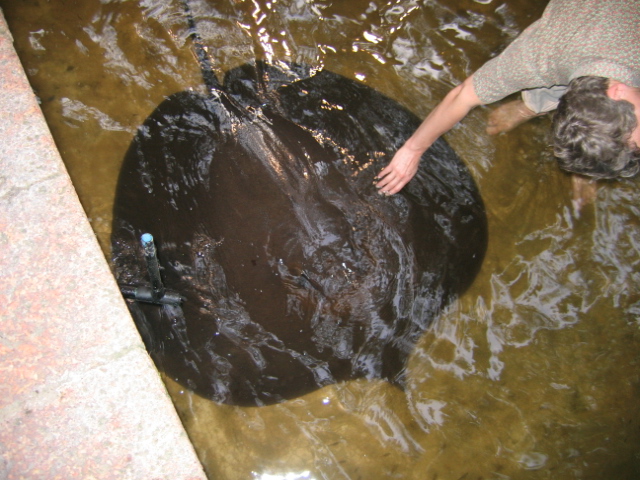
Giant Freshwater Stingray (Urogymnus polylepis)
Introduction
The river breathes in the grey pre-dawn stillness. Along the banks of the Mekong in northern Cambodia, the water is the colour of milky jade — clouded with suspended silt, alive with the chemical signatures of ten thousand organisms. Beneath the surface, pressed flat against a sandy depression perhaps four metres below the hull of a passing longtail boat, something ancient and enormous lies motionless. Its disc spans nearly two and a half metres from wingtip to wingtip. Its tail, an elegant and lethal filament, extends another two metres behind it into the current. It breathes without gills breaking the surface. It perceives the world through electrical fields invisible to any human instrument on that boat above. It is not a shark, not a crocodile, not a river dolphin. It is a Giant Freshwater Stingray — and it is one of the most extraordinary animals alive on Earth today.
Urogymnus polylepis occupies a biological category that seems almost paradoxical: a cartilaginous fish, a creature whose lineage stretches back to the Jurassic seas, now perfectly adapted to the turbulent freshwater rivers of tropical Southeast Asia. It is, by verified scientific measurement, one of the largest freshwater fish on the planet — rivalled only by the Mekong giant catfish and the Beluga sturgeon for the title of the world's heaviest freshwater animal. In June 2022, a single female captured and released by a research team in the Mekong River near Stung Treng, Cambodia, weighed an extraordinary 300 kilograms and measured nearly four metres from snout to tail-tip, earning international recognition as the largest freshwater fish ever scientifically confirmed.
Yet despite its immense size, despite the rivers it inhabits being among the most ecologically important waterways in the world, Urogymnus polylepis remains one of the least understood large vertebrates on the planet. Science knows far more about deep-ocean sharks than it does about this creature living beneath river surfaces that millions of people depend upon for food, water, and livelihood. Its population has declined severely across its range. Its strongholds — the Mekong, the Chao Phraya, the Maeklong, the Mahakam — face relentless pressure from sand mining, dam construction, pollution, and targeted fishing. The Giant Freshwater Stingray is a species in crisis, and understanding it fully is an act of both scientific necessity and ecological urgency.
"The rivers are the arteries of the earth, and every creature within them is part of its pulse. When we lose the giants, we lose the rhythm."
— Zeb Hogan, Megafishes Project, National Geographic Explorer
This article explores the full biological depth of Urogymnus polylepis — its physical architecture, ecological function, behavioural complexity, evolutionary history, and the conservation crisis unfolding in the rivers it has inhabited for millions of years. It is a portrait of an animal that deserves to be known.
Scientific Classification
- Kingdom: Animalia
- Phylum: Chordata
- Class: Chondrichthyes (cartilaginous fishes)
- Order: Myliobatiformes (stingrays and eagle rays)
- Family: Dasyatidae (whiptail stingrays)
- Genus: Urogymnus Müller & Henle, 1837
- Species: Urogymnus polylepis (Bleeker, 1852)
- Common synonyms: Trygon polylepis Bleeker, 1852; Himantura polylepis; Himantura chaophraya Monkolprasit & Roberts, 1990
- Common names: Giant Freshwater Stingray, Mekong Freshwater Stingray, Whipray (Thailand)
- First described by: Pieter Bleeker, 1852, from Borneo specimens
The taxonomic history of Urogymnus polylepis reflects how incompletely science has characterised this species. For most of the twentieth century, the giant stingrays encountered in Thai river systems were identified under Himantura chaophraya, a name assigned by Monkolprasit and Roberts in 1990 to specimens from the Chao Phraya River. Molecular and morphological analyses eventually reconciled these populations with Bleeker's earlier description of Trygon polylepis from Borneo, resulting in the current accepted binomial. The genus reassignment to Urogymnus reflects broader phylogenetic revisions within the Dasyatidae, separating certain large, smooth-bodied freshwater rays from the sprawling Himantura assemblage. This taxonomic refinement matters enormously for conservation: a species known by multiple names across multiple countries risks fragmented monitoring, legal loopholes, and management gaps that accelerate decline.
Physical Characteristics
To encounter a Giant Freshwater Stingray — even in a photograph — is to immediately recalibrate one's sense of what a fish can be. The body is not streamlined in the conventional fish-like sense. Instead, it is radically flattened into a broad rhomboid disc formed by the expanded pectoral fins, which have fused to the head and trunk over millions of years of evolution. This disc, the animal's most defining feature, can reach 2.4 metres across its widest span in large individuals. The disc length — measured from snout to the base of the tail — can approach 1.9 metres. Combined with a tail that may extend two to two and a half metres beyond the disc, a large individual presents a total length approaching four to four and a half metres. The 2022 Cambodian record specimen measured 3.98 metres total length with a disc width of 2.2 metres.
The dorsal surface of the disc is smooth to the touch despite the species' name — polylepis means "many scales" in Greek, referring to the numerous small dermal denticles (tooth-like scale structures) embedded in the skin, which are denser than in closely related species but not prominently rough. Colouration above is a uniform grey-brown to olive-grey, providing near-perfect camouflage against river sediment. The ventral surface is uniformly white or pale cream, a classic countershading arrangement. The skin itself is tough, leathery, and slightly mucus-coated.
The eyes are positioned dorsally — on top of the disc — and are relatively small for an animal of this size, consistent with a species that relies on senses other than vision in turbid river water. Immediately behind each eye is a spiracle: an enlarged respiratory opening that draws oxygenated water into the gill chambers independently of the mouth. This adaptation is critical for a benthic animal resting on a riverbed, where the mouth is pressed against sediment and would be useless for respiration.
The tail is the animal's most iconic feature after its sheer size. Slender and whip-like, it tapers to a fine point and carries one or more serrated venomous spines positioned at the base, approximately one-quarter of the way along the tail's length. These spines can reach 38 centimetres or more in large adults. They are not simply pointed — the spine's surface carries retrograde serrations, and the tissue surrounding it contains venom-producing cells. A strike from this tail is not merely a puncture wound; the barbs lock into tissue on withdrawal, the serrations tear on exit, and venom is delivered simultaneously. It is one of nature's more efficient defensive weapons.
| Physical Trait | Giant Freshwater Stingray | Southern Stingray (Atlantic) | Short-tail Stingray (Marine) |
|---|---|---|---|
| Maximum disc width | ~2.4 m | ~1.5 m | ~2.1 m |
| Maximum weight | ~600 kg (unverified); 300 kg (confirmed) | ~97 kg | ~350 kg |
| Environment | Freshwater / estuarine | Marine | Marine / estuarine |
| Tail type | Very long whip, venomous spine | Long whip, venomous spine | Short-ish, venomous spine |
| Skin texture | Fine denticles (dense) | Smooth with tubercles | Rough tubercles |
| Reproduction | Aplacental viviparous | Aplacental viviparous | Aplacental viviparous |
Body mass in this species is extreme. Confirmed scientific records exceed 300 kilograms, and local fishing communities in Thailand and Cambodia have long reported individuals estimated well above that threshold — with some traditional accounts describing animals of 500 to 600 kilograms, though these remain unverified by scientific instrumentation. Even at conservatively confirmed weights, this animal qualifies as one of the heaviest known freshwater fish in history.
Habitat & Geographic Distribution
The Giant Freshwater Stingray is fundamentally a river animal, though its relationship with salinity is more fluid than the name suggests. It inhabits large river systems across much of Southeast Asia and into the Indonesian archipelago, with its stronghold populations concentrated in the Mekong River basin — spanning Cambodia, Laos, and Thailand — and in several major Thai river systems including the Chao Phraya, Maeklong, and Bangpakong rivers. On the island of Borneo, populations are documented in the Mahakam River of Indonesian Kalimantan, and historical records exist from Sarawak in Malaysian Borneo, though those populations may now be functionally extinct.
Within these river systems, the species shows strong preferences for specific habitat conditions. It gravitates toward deep, slow-moving channels with sandy or mixed sand-mud substrates — environments where it can partially bury itself for concealment and where benthic invertebrate prey is abundant. It tends to avoid shallow rapids and extremely rocky substrates, though individuals have been recorded moving through transitional zones during seasonal migrations driven by water level changes. The deep pools downstream of seasonal rapids are particularly favoured resting and foraging zones.
The species is euryhaline to a significant degree. While classified as a freshwater species, individuals are regularly encountered in estuarine environments and even coastal waters near river mouths. There is evidence suggesting that some individuals make seasonal movements toward lower salinity estuary zones, particularly during the dry season when river flows diminish and upstream habitat quality deteriorates. Whether these movements represent consistent migratory behaviour or opportunistic foraging excursions remains an open research question.
Fun Fact The Giant Freshwater Stingray has been recorded at elevations and distances from the sea that no other stingray species reaches — including river sections in Laos and northern Thailand over 1,000 kilometres from the coast, demonstrating a remarkable evolutionary commitment to truly inland freshwater systems.
The Mekong River basin represents the most critical habitat for the species' survival. The Mekong is the world's twelfth longest river and carries one of the planet's most extraordinary biodiversity profiles — home to over 1,000 fish species. Within this system, the Giant Freshwater Stingray has been documented most consistently in the lower Mekong between Kratie in Cambodia and the Thai border region near Chiang Rai, with particular concentration in the Stung Treng province of Cambodia, where the river widens into deep, navigable channels ideal for large benthic fish.
Seasonal water-level fluctuations profoundly shape the species' use of habitat. During the monsoon flood season — roughly June through October — river levels can rise by ten metres or more, inundating floodplains and creating vast shallow foraging areas. Stingrays may spread across these flooded zones to exploit newly available prey. As dry season returns and waters recede, individuals concentrate in deep channel refugia where dissolved oxygen levels remain adequate. This seasonal rhythm mirrors the lives of most large Mekong fish species, creating a shared vulnerability: the flood pulse is the ecological engine of the entire river system, and anything that disrupts it — particularly dams — threatens every large species simultaneously.
Behaviour & Social Structure
Urogymnus polylepis is fundamentally a solitary species. Unlike the social schooling behaviour seen in some smaller ray species, Giant Freshwater Stingrays do not form permanent groups, maintain hierarchical social units, or demonstrate cooperative hunting behaviour. Their social interactions are episodic, brief, and largely defined by reproduction and territorial proximity rather than sustained association. This solitary tendency is consistent with their enormous energetic demands — a 200-kilogram benthic predator covering a territory with sufficient prey density to sustain itself cannot afford to share space with many conspecifics.
Territory and home range data for this species are limited but illuminating. Acoustic telemetry studies conducted on the Maeklong River in Thailand — one of the most productive ongoing research efforts — have demonstrated that individual stingrays maintain relatively consistent core areas within specific river sections. Tagged individuals show site fidelity over weeks and months, returning to preferred deep pools and substrate patches. Some individuals make longer-range movements along the river, but these appear structured rather than random — following the river channel, responding to seasonal cues, rather than dispersing arbitrarily.
Communication in cartilaginous fish is poorly understood compared to mammals or even many teleost fish species. In Urogymnus polylepis, the primary communication modality is almost certainly electroreception — the detection of bioelectric fields generated by the muscle activity of other organisms. Every fish, invertebrate, and even plant generates weak electrical signals that are detectable to electrosensory organs. The stingray's ampullae of Lorenzini — thousands of gel-filled pores distributed across the disc surface — create an extraordinarily sensitive electroreceptive map of the immediate environment. Whether this system allows for any form of conspecific communication (detection of the subtle electrical signatures of other stingrays, for example) is a genuinely open question.
Olfaction is also significant. Water carries dissolved chemical cues — amino acids, hormones, metabolic byproducts — that stingrays can detect through nasal rosettes located on the ventral surface near the mouth. During reproductive season, chemical signalling almost certainly plays a role in mate location across the murky distances of a large river. A male detecting the hormonal signature of a reproductively active female in the water column upstream would have both motivation and sensory capacity to locate her, even without visual contact.
Defensive behaviour in this species is reactive rather than aggressive. A Giant Freshwater Stingray resting on a riverbed does not attack approaching animals proactively. Its primary defence is its cryptic resting posture — often partially buried beneath a layer of sand — combined with its disc's colour match to substrate. When threatened, the first response is typically rapid swimming, leveraging the powerful undulation of the pectoral disc to accelerate away with surprising speed. Only when cornered or physically grasped does the tail come into play as an active weapon, sweeping upward and forward in a reflexive strike. The venom delivered is not neurotoxic like many marine venoms, but produces severe localised pain, tissue necrosis, and, in cases of deep penetration, potential life-threatening injury.
Daily Life & Activity Cycle
The daily rhythm of a Giant Freshwater Stingray is governed by the interplay of tide and current, water temperature, light levels, and prey activity patterns. Telemetry data from river systems in Thailand indicates that the species is predominantly crepuscular and nocturnal in its foraging activity — most active in the hours after dusk and before dawn, and again at twilight. During daylight hours, individuals tend to remain stationary on the riverbed, conserving energy in a metabolic economy appropriate to an ectotherm of enormous mass.
This nocturnal foraging pattern aligns with the activity cycles of their primary prey items. Freshwater clams, mollusks, crustaceans, and worms all show increased surface activity or reduced anti-predator vigilance in darkness, and the turbid water of major river systems further reduces any residual advantage that visual detection might give prey animals. For a predator operating almost entirely through electroreception and olfaction, darkness is irrelevant — the playing field levels entirely in its favour after sunset.
Movement through the water column is a choreography of slow precision. Locomotion in batoid fishes (rays and skates) is achieved through undulation of the enlarged pectoral fins — a mode called rajiform swimming — rather than the tail propulsion used by most sharks and teleosts. In the Giant Freshwater Stingray, these pectoral undulations create a smooth, rippling motion along the disc margin that propels the animal with an elegant efficiency. At rest on the riverbed, these undulations subside entirely, and only the gentle flicker of gill slits betrays the animal's presence.
Seasonal behaviour changes dramatically with the monsoon cycle. In the high-water months, when the Mekong or Chao Phraya rises and floods lateral channels and floodplain wetlands, stingrays exploit this temporary habitat expansion. They penetrate shallow inundated areas — sometimes barely deep enough to cover the disc — in pursuit of concentrated prey. When the flood recedes and these lateral areas drain, individuals move back to the main channel and aggregate, to some degree, in the remaining deep pools. This seasonal compression of habitat likely increases intraspecific encounters and may concentrate mating interactions around specific timing in the annual cycle.
It was a November evening on the Maeklong River, forty kilometres upstream from the Gulf of Thailand. A research team from Mahidol University sat quietly in a flat-bottomed boat, watching data stream across a laptop connected to an acoustic receiver suspended in the current. Tag signal 047 — a 180-kilogram female they had named "Mae Klong" — had been stationary in a deep bend of the river since early afternoon.
As the light failed and the river surface turned the colour of old pewter, the signal shifted. Mae Klong began to move — steadily upstream, following the deepest channel. The researchers tracked her for three hours as she covered nearly six kilometres of river, pausing periodically in areas where substrate changed from hard clay to sandy gravel. At each pause, she was likely foraging — her electroreceptive system sweeping the benthos for the faint electrical tremors of buried bivalves and crustaceans.
At one point, she stalled completely for nearly forty minutes at a river bend where a tributary entered the main channel, bringing with it a pulse of warmer, prey-rich water from the surrounding floodplain. Then she was moving again — slow, purposeful, immense — navigating a river that was simultaneously her entire world and a world that barely knew she existed.
By dawn she had returned to the deep pool where the afternoon session had begun. She settled into the sand. She became, once again, invisible.
Diet & Survival Strategies
The Giant Freshwater Stingray is a specialised benthic predator, and its entire morphological architecture is an expression of that specialisation. Everything about the animal — the flat disc, the ventral mouth, the pavement-like tooth plates, the electroreceptive system — is engineered for finding and consuming organisms that live in or on the riverbed substrate. The diet centres on hard-shelled invertebrates: freshwater clams (particularly species in the families Unionidae and Corbiculidae), freshwater mussels, crustaceans including freshwater crabs and prawns, polychaete and oligochaete worms, and small benthic fish.
The feeding mechanism is a marvel of evolutionary engineering. The mouth on the ventral surface is equipped not with sharp cutting teeth but with broad, flat, interlocking tooth plates arranged in multiple rows — a pavement dentition that functions as a biological millstone. A clam detected beneath the sand is excavated through a combination of water jets (expelled forcefully through the mouth) and fin undulations that disturb the substrate. Once exposed, the clam is engulfed, positioned between the tooth plates, and systematically crushed. The shell fragments are expelled through the gills while the soft tissue is retained and swallowed. This process leaves characteristic feeding excavations in the riverbed — circular depressions ten to forty centimetres across — that experienced fishermen and researchers can identify as evidence of stingray foraging activity.
Prey detection relies overwhelmingly on the ampullae of Lorenzini rather than vision. A buried clam generates a weak bioelectric field through the ionic gradients across its tissues, and the stingray can detect this field at distances of up to half a metre in optimal conditions. In the turbid water of the Mekong or Chao Phraya, where visibility may be measured in centimetres rather than metres, this electroreceptive system gives the stingray complete independence from light conditions and water clarity — a significant competitive advantage over visually-oriented predators.
During periods of food scarcity — typically at the height of the dry season when prey communities contract — the Giant Freshwater Stingray employs a classic ectotherm strategy: metabolic downregulation. By reducing activity levels, spending more time motionless on the riverbed, and relying on fat reserves accumulated during the productive monsoon period, it can survive extended periods of reduced prey availability without catastrophic energy deficit. This metabolic flexibility is part of why large cartilaginous fish have survived through multiple mass extinction events that eliminated countless other lineages.
Fun Fact The feeding pits left by Giant Freshwater Stingrays in river sediment function as micro-habitats — the disturbed substrate is quickly colonised by smaller invertebrates seeking exposed food particles, making the stingray an inadvertent creator of habitat for other species.
Interaction with Other Animals
In the river ecosystems it inhabits, Urogymnus polylepis occupies an apex predator niche within the benthic community, though the precise definition of "apex" requires qualification in a system as complex as the Mekong. Adult Giant Freshwater Stingrays have no confirmed natural predators — their size, venomous spine, and armoured skin render them effectively immune to predation once fully grown. Juvenile and subadult individuals, however, are vulnerable, and predation pressure during early life stages is likely one of the factors limiting population recovery in this species.
The species shares its deep-channel habitat with other large predatory fish. In the Mekong basin, these include the Mekong Giant Catfish (Pangasianodon gigas), Giant Barb (Catlocarpio siamensis), and various large catfish species in the family Pangasiidae. Competition for food resources between the stingray and these species is limited by niche partitioning — the stingray is a specialised benthic invertebrate predator, while the large catfish tend toward different prey types and feeding strategies. However, competition for deep-pool refuge habitat during dry season concentration events may create indirect competitive pressure.
Smaller fish species benefit from foraging in the wake of stingray feeding activity. When a stingray excavates a feeding pit and disturbs sediment, it exposes and displaces invertebrates and organic matter that smaller opportunistic fish exploit. Species of small cyprinids and loaches that inhabit the river benthos have been observed following foraging stingrays at safe distances, darting in to consume disturbed prey items. This relationship is a loose commensal association — the smaller fish benefit while the stingray is largely indifferent to their presence.
Parasite loads in Urogymnus polylepis have not been systematically studied, but cartilaginous fish in general carry complex ectoparasite communities including monogeneans (flatworm parasites of the skin and gills), copepods, and various trematode endoparasites. Freshwater environments typically support different parasite assemblages than marine systems, and the stingray's habit of resting on the substrate exposes it to sediment-dwelling parasite larvae at continuous low levels throughout its life.
The stingray's relationship with human fishing communities represents perhaps its most consequential interspecific interaction in the contemporary world. It is caught both incidentally as bycatch in large-mesh gill nets and set lines targeting other large fish, and deliberately by specialised fishermen who target it for its meat and for the trophy fishing market. This relationship — explored in depth in subsequent sections — has shifted from one of occasional incidental capture to systematic pressure that is measurably impacting population viability.
Interaction with Environment
The Giant Freshwater Stingray is not a passive inhabitant of its river environment — it actively shapes substrate, influences benthic invertebrate communities, and participates in nutrient cycling in ways that extend well beyond its individual feeding activity. Understanding these ecosystem-level interactions is essential to grasping why the loss of this species would represent far more than the disappearance of a single large fish.
Through its feeding excavations alone, the species bioturbates riverbed substrate at scales that become significant when aggregated across a population. Bioturbation — the physical disturbance of sediment by organisms — is one of the most important processes in aquatic ecosystem function. It oxygenates deeper sediment layers, releases bound nutrients, exposes buried organic matter to microbial decomposition, and disrupts the accumulation of anaerobic conditions in river bottom sediments. A river section regularly foraged by multiple large stingrays maintains a fundamentally different benthic community structure than one without them — more diverse, more oxygenated, more productive.
The species also serves as an important link in nutrient transfer between different zones of the river system. By foraging on benthic invertebrates that are themselves processing organic matter deposited from the water column, and then defecating while moving through different river sections, stingrays redistribute nutrients laterally across the landscape in ways that support broader productivity. In flood-pulse systems like the Mekong, where lateral nutrient transfer between main channel and floodplain habitats is ecologically critical, large mobile vertebrates play a disproportionate role in nutrient transport.
The relationship between this species and freshwater bivalve populations deserves particular attention. Freshwater mussels and clams are themselves ecosystem engineers — their filter-feeding activity removes suspended particles and improves water clarity, and their shells provide hard substrate for other invertebrates in a river system otherwise dominated by soft sediment. A stingray population consuming significant quantities of bivalves must be balanced, over evolutionary time, against bivalve reproductive rates. Where stingray populations have been severely reduced, anecdotal evidence from some river systems suggests possible increases in bivalve density — though whether this represents a meaningful ecological shift or simply reflects broader environmental changes is difficult to determine without long-term monitoring data.
Climate sensitivity is an emerging concern for this species. The Giant Freshwater Stingray is an ectotherm dependent on river temperature for metabolic regulation. Southeast Asian river systems are predicted to warm by 1.5 to 2.5 degrees Celsius by 2100 under moderate climate scenarios, with associated changes in monsoon rainfall patterns, flood pulse timing, and dry-season river flow. Warmer waters increase metabolic demands while potentially reducing dissolved oxygen levels — a combination that creates physiological stress for large benthic fish. Changes in flood pulse timing could desynchronise the stingray's reproductive cycle from peak prey availability, with cascading demographic consequences.
Reproduction & Parenting
Reproduction in Urogymnus polylepis follows the mode universal among myliobatiform rays: aplacental viviparity, sometimes called histotrophy. This is a sophisticated reproductive strategy in which fertilisation is internal (the male transfers sperm via claspers — modified pelvic fin structures — directly into the female's cloaca), and embryos develop internally within the uterus, but without a placental connection to the mother. Instead, developing embryos are nourished initially by yolk reserves within the egg, and subsequently by a lipid-rich uterine secretion — called histotroph or "uterine milk" — that the mother produces and the embryo absorbs through specialised structures. This is energetically costly for the mother and results in slow reproductive rates that make population recovery from depletion extremely difficult.
Courtship behaviour in this species has not been directly observed in the wild under controlled scientific conditions, but inference from closely related species and occasional field observations suggests that males detect receptive females through olfactory chemical cues and pursue them persistently. Mating in rays involves the male aligning alongside or beneath the female — a physical coordination challenge given the species' immense size — and maintaining clasper contact for sufficient sperm transfer. There are anecdotal accounts from Thai and Cambodian fishermen of large pairs observed in close association during what appear to be courtship or mating behaviours in the dry season months, suggesting a possible seasonal reproductive peak.
Gestation period in this species is estimated but not precisely known. In closely related large ray species, gestation spans six to twelve months. Given the extreme size of the Giant Freshwater Stingray and the energetic demands of producing large pups, a gestation period at the longer end of this range — or potentially beyond it — seems likely. Litter size appears to be very small: possibly one to two pups per reproductive event, though this has not been confirmed through systematic study. The pups, however, are not tiny — neonatal Giant Freshwater Stingrays are themselves substantial animals, likely measuring 30 to 50 centimetres in disc width at birth, fully capable of independent foraging and survival.
There is no extended parental care after birth. Once born, pups are immediately independent, relying on instinctive behaviours — electroreception, olfaction, substrate camouflage — to locate food and avoid the few predators capable of threatening juvenile stingrays. Growth rate data for wild individuals is almost entirely absent from the literature, representing a critical gap in understanding the species' population dynamics. Age at sexual maturity is unknown but likely falls in the range of eight to twelve years for a species of this size and reproductive mode, meaning that removal of reproductive adults from a population takes a decade or more to even partially replace.
The combination of small litter sizes, probable long gestation, likely slow growth, and delayed sexual maturity places the Giant Freshwater Stingray in the category of K-selected species — organisms that invest heavily in a small number of offspring rather than producing large numbers of less-developed young. This reproductive strategy is evolutionarily stable under natural conditions but catastrophically vulnerable to elevated adult mortality caused by fishing pressure or habitat degradation.
Evolutionary Adaptations
The Chondrichthyes — the cartilaginous fishes comprising sharks, rays, and chimaeras — represent one of the most ancient lineages of jawed vertebrates, with fossil evidence extending back approximately 450 million years. Rays specifically, as a morphological and functional group, diverged from shark-like ancestors during the Jurassic period, roughly 150 to 200 million years ago, with the flattening of the body plan representing an evolutionary solution to the challenges of benthic life. Urogymnus polylepis carries this evolutionary legacy in every anatomical feature and every behavioural tendency — it is the product of hundreds of millions of years of refinement for a specific ecological role.
The transition from marine to freshwater environments, which the ancestors of Urogymnus polylepis accomplished over evolutionary time, represents one of the most physiologically challenging transitions in vertebrate biology. Sharks and marine rays maintain internal osmotic concentrations close to seawater — partly through the retention of urea and trimethylamine oxide in their blood — which minimises water and ion exchange with the surrounding environment. In freshwater, this strategy is untenable: freshwater is hypotonic relative to body fluids, causing constant osmotic influx of water across gill surfaces. Freshwater elasmobranch lineages have evolved modified kidney function, altered ion transport mechanisms across gill epithelia, and reduced blood urea concentrations to manage this challenge. The fact that Urogymnus polylepis appears comfortable across a salinity range from fully fresh to estuarine suggests an intermediate physiological strategy — a flexible osmoregulatory system that tolerates a range of salinities rather than being committed to either extreme.
The dorso-ventral flattening of the body plan, beyond facilitating benthic substrate resting, creates advantages in prey detection geometry. The dorsal placement of eyes and spiracles keeps sensory and respiratory organs away from the substrate, while the ventral surface carries electroreceptive ampullae in maximum contact proximity with the riverbed where electrical prey signals are strongest. The wide disc maximises the surface area covered by the electroreceptive field, effectively making the stingray a living sensor array that sweeps the riverbed as it glides across the bottom.
The venomous tail spine is an adaptation whose evolutionary origins are debated. The most parsimonious explanation is predator defence — a mechanism against large predatory fish or, historically, against large marine predators like sharks when the ancestors of freshwater rays still inhabited coastal environments. The venom itself is a complex mixture of enzymes and proteins that cause intense pain, inflammation, and tissue necrosis. Interestingly, the spine is shed and regrown periodically — individuals may carry more than one spine during transitional periods — suggesting ongoing evolutionary investment in maintaining this defensive capacity.
The extreme body size achieved by this species represents another adaptation: large body mass in benthic fish confers resistance to displacement by river currents, allows exploitation of large, hard-shelled prey requiring strong crushing forces, and — in an ectotherm — provides thermal inertia that buffers against short-term water temperature fluctuations. Being the largest freshwater fish is not an accidental feature of this species' biology; it is a carefully calibrated evolutionary solution to the specific challenges of being a large benthic predator in a major tropical river.
Ecological Importance
The Giant Freshwater Stingray functions as a keystone predator within the benthic community of Southeast Asian rivers, a position that carries ecological weight disproportionate to the species' relatively low population numbers. Keystone species — a concept developed by ecologist Robert Paine from his marine intertidal work — are defined not by their biomass or abundance but by the disproportionate impact their presence or absence has on ecosystem structure and function. The Giant Freshwater Stingray meets this criterion through multiple pathways.
By preying heavily on freshwater bivalves and crustaceans, the species exerts top-down population control on organisms that are themselves major ecological drivers. Freshwater clam and mussel populations, left unchecked, can reach densities that alter sediment chemistry, reduce available nutrients for other benthic organisms, and change the physical texture of riverbed substrate. The stingray maintains these populations at levels consistent with balanced ecosystem function — a regulatory role that, once lost, would require decades to re-establish through other mechanisms.
The species' bioturbation activity contributes meaningfully to riverbed ecosystem health. In large river systems, the river bottom is not a static environment but a dynamic zone of nutrient cycling, microbial activity, and invertebrate production that ultimately supports the entire fish community above it. Bioturbation by large benthic animals is one of the primary mechanisms by which oxygen penetrates sediment layers and by which trapped nutrients are returned to the water column for productivity. Removing large bioturbators from a river system shifts the benthic community toward anaerobic conditions and reduced productivity — effects that propagate upward through the food web.
As a large, long-lived apex predator, the Giant Freshwater Stingray also plays an important role in ecosystem-level nutrient retention. Its body mass — accumulated over many years of feeding from multiple trophic levels — represents a significant store of nutrients that are only released back to the ecosystem at death, typically in deep-water zones where decomposition processes are most biologically productive. The long-term nutrient storage function of large vertebrates is increasingly recognised as ecologically significant, particularly in nutrient-limited river systems.
Threats & Conservation
The Giant Freshwater Stingray faces a convergence of threats that is, in aggregate, proving more than the species' biology can absorb. Each threat individually would be significant; in combination, they are driving population decline across the species' entire range with a momentum that current conservation efforts struggle to match.
Overfishing is the most immediately quantifiable threat. The species is taken both as targeted catch — for meat consumed locally and traded regionally, and for the live exotic fish trade — and as bycatch in large-mesh gill nets and long-lines set for other large river fish. In rivers where large freshwater fish have become economically valuable as aquatic resources decline, fishing pressure on every large species including the stingray has intensified. The species' slow reproductive rate means that even moderate sustained harvest pressure — far below levels that would be commercially sustainable for faster-reproducing species — can drive populations toward functional extinction within decades.
Habitat destruction through dam construction is arguably the most severe structural threat. The Mekong River basin has seen explosive dam development, particularly in China (where eleven major dams on the upper Mekong/Lancang River have fundamentally altered the river's hydrology) and in Laos, which is constructing a cascade of mainstream Mekong dams. These structures disrupt sediment transport, alter temperature regimes, eliminate migration corridors, and destroy the flood-pulse dynamics that underpin the entire Mekong fisheries system. The Giant Freshwater Stingray, dependent on unobstructed river reach and the seasonal flood pulse for habitat use and possibly reproduction, is directly impacted by each of these changes.
Sand and gravel mining has devastated riverbed habitats across the species' range with a speed and thoroughness that has outpaced regulatory response. Industrial-scale sand extraction from major river channels removes the sandy benthic substrate on which the stingray depends for resting and foraging, creates deep unstable sediment disruption zones, and alters channel morphology in ways that fundamentally change flow patterns and habitat structure. In some sections of the Chao Phraya and Maeklong rivers, once-productive stingray habitat has been so severely degraded by sand mining that the species is now essentially absent.
Water quality degradation through agricultural runoff, industrial effluent, and urban waste contributes additional pressure. Freshwater invertebrate communities — the stingray's prey base — are acutely sensitive to water chemistry changes. Pesticide contamination and heavy metals accumulate in benthic invertebrates and bioaccumulate in predators like the stingray that consume large quantities over long lifetimes. The Chao Phraya River system in particular has experienced severe water quality degradation that has likely contributed to both reduced prey availability and direct physiological stress on the stingrays remaining in that system.
The species' IUCN status, population trends, specific threats, and conservation responses are examined in detail in the following section.
IUCN Red List Analysis
Current IUCN Status
Urogymnus polylepis is listed as Endangered (EN) on the IUCN Red List of Threatened Species, under criteria consistent with observed and inferred population reduction exceeding 50 percent over three generations, in combination with ongoing threats that show no sign of abating. The Endangered classification places the species two categories below Least Concern on the IUCN's five-tier threat spectrum, with only Critically Endangered and Extinct designations representing greater levels of peril. For a species of this size and ecological role, an Endangered classification is not merely a bureaucratic category — it is a scientific statement that the population has already declined catastrophically and that extinction risk in the medium term is genuine and measurable.
The classification reflects the convergent application of IUCN criteria A (population reduction), B (restricted geographic range relative to observed declines), and C (small population size with continuing decline). Because generation length in this species is estimated at ten to fifteen years or more, the three-generation window referenced in criterion A extends back thirty to forty-five years — a period during which evidence from fishing records, community surveys, and expert assessments consistently indicates severe decline.
Population Trend
The population trend for Urogymnus polylepis is assessed as decreasing. No reliable global population estimate exists — a reflection of both the species' cryptic nature and the inadequacy of monitoring infrastructure across its range countries. What is known comes from a combination of sources: catch-per-unit-effort data from fishing communities, structured interview surveys with riverside communities in Thailand, Cambodia, and Indonesia, telemetry studies on limited individual samples, and the documented contraction of the species' range.
Historical records from the Chao Phraya River in central Thailand — once one of the species' most important habitats — indicate that captures of Giant Freshwater Stingrays were relatively routine through the mid-twentieth century, with multiple large individuals taken each month during productive seasons. By the 1990s, catches had declined dramatically, and by the 2010s the species had become functionally rare in that system, with only occasional captures reported. A similar trajectory appears to have occurred in the lower Mekong, where community surveys indicate that older fishermen remember regular encounters with large stingrays that younger fishermen have never seen. This generational knowledge shift — known in conservation biology as shifting baseline syndrome — is one of the most revealing indicators of long-term population decline.
Main Threats
Overfishing operates at multiple levels: targeted fishing for meat and the live fish trade; bycatch in commercial gill nets; and capture for the trophy recreational fishing market that has developed around this species in Thailand, where specialised fishing operations offer the opportunity to catch and release large stingrays. While catch-and-release trophy fishing, when properly managed, inflicts less mortality than commercial harvest, the stress of capture, handling, and the potential for spine injuries to both fish and handlers creates non-trivial sub-lethal costs that, repeated across a small population, may have demographic consequences.
Dam construction represents perhaps the most irreversible threat. Each dam on the Mekong or its tributaries eliminates not just the habitat immediately behind and downstream of the structure but disrupts the hydrological connectivity across hundreds of kilometres of river system. Reduced sediment transport downstream of dams — a universal phenomenon — transforms sandy benthic habitats into hard substrate unsuitable for the stingray's foraging and resting behaviour. The cumulative impact of the Lancang cascade in China, the Xayaburi, Don Sahong, and other mainstream Mekong dams in Laos, and dozens of tributary dams throughout the basin represents an ongoing and accelerating transformation of the river environment at landscape scale.
Sand mining at industrial scale directly destroys benthic habitat. Southeast Asia's construction boom has created insatiable demand for river sand, and the Mekong and its tributaries have become major extraction sites. Sand removal at rates exceeding natural replenishment is documented across the lower Mekong, and the consequences for benthic habitat quality — and for the entire sediment budget of the river system — are severe and largely irreversible on human timescales.
Pollution from agriculture, industry, and urban areas degrades water quality and prey availability throughout the species' range. Organophosphate pesticides, heavy metals from mining operations, and organic effluent from aquaculture and urban centres all affect benthic invertebrate communities that the stingray depends upon, and accumulate in the stingray's tissues through bioaccumulation.
Ecological Consequences
The functional extinction of the Giant Freshwater Stingray from major river systems would trigger cascading consequences that extend far beyond the loss of a single impressive species. The removal of a major benthic predator from a prey community that has evolved in its presence produces predictable trophic release effects: prey populations expand beyond their previously maintained levels, resource competition among prey species intensifies, and the equilibrium state of the benthic community shifts to a new configuration that typically has lower overall biodiversity.
Specifically, the loss of stingray predation pressure on freshwater bivalve populations could allow mussel and clam densities to increase to levels that alter sediment chemistry and reduce habitat quality for other benthic invertebrates. The loss of bioturbation activity would reduce sediment oxygenation and nutrient cycling efficiency. The loss of nutrient redistribution by large mobile animals would reduce lateral nutrient transport between river sections.
Perhaps more broadly, the loss of the Giant Freshwater Stingray from the Mekong system would represent a significant reduction in the ecological integrity of one of the world's most biodiverse river systems at precisely the moment when that system is under its greatest historical pressure. The symbolic and functional loss of a megafauna species from the Mekong would signal a tipping point in the river's ecological decline that would have repercussions for the approximately sixty million people who depend on Mekong fisheries for food security and livelihood.
Conservation Efforts
Conservation activity around Urogymnus polylepis has expanded significantly in the past decade, though it remains underfunded and geographically patchy relative to the scale of the challenge. The most scientifically productive ongoing effort is the Wonders of the Mekong project, a collaboration between the Cambodian Fisheries Administration and researchers from the University of Nevada, Reno, funded in part by the United States Agency for International Development. This project has conducted systematic community-based monitoring in the Cambodian Mekong, deployed acoustic telemetry tags on multiple Giant Freshwater Stingray individuals, established a citizen science network for recording incidental encounters, and produced the internationally publicised 2022 record-breaking capture that brought global attention to the species.
In Thailand, the Department of Fisheries has conducted research on stingray populations in the Maeklong River, and the Maeklong River has become a focal site for both scientific tagging studies and regulated trophy catch-and-release fisheries. The trophy fishery, when operated under strict protocols requiring rapid release and minimised handling, provides economic incentives for local communities to value live stingrays over consumptive harvest.
Legal protections vary across the range. In Thailand, the Giant Freshwater Stingray has formal protection status under the Wild Animal Preservation and Protection Act. Cambodia has established protected areas along critical Mekong sections, and fishing regulations in core habitat zones have been strengthened, though enforcement remains challenging. International protection is provided through CITES — the Convention on International Trade in Endangered Species — which restricts commercial trade in specimens, though implementation across the multiple range countries is uneven.
Community engagement programs in both Thailand and Cambodia are working to shift the perception of the species from a target species or nuisance bycatch to a conservation icon with economic value through ecotourism and research participation. These programs recognise that conservation of large freshwater species in densely populated river basins cannot succeed without the active participation of fishing communities who share the river with these animals.
Future Outlook
The future of Urogymnus polylepis is genuinely uncertain, and candour requires acknowledging that the trajectory of threats is currently more powerful than the trajectory of conservation responses. The continued construction of mainstream Mekong dams — particularly those in Laos — will further fragment habitat and disrupt hydrological dynamics in ways that cannot be fully mitigated by any site-level conservation measure. Climate change will add additional pressure through altered flood pulse timing and increased water temperatures. Sand mining will continue unless regulatory frameworks are dramatically strengthened and enforced.
Against this bleak structural reality, there are genuine grounds for cautious optimism at the population level. The Cambodian Mekong section — particularly the Stung Treng area — appears to retain a viable population of Giant Freshwater Stingrays, and the research and community engagement infrastructure being built around that population is creating both scientific knowledge and conservation capacity that did not exist a decade ago. If the Cambodian government maintains its commitment to regulating fishing pressure and protecting critical habitat in this section of the Mekong, and if the dam development trajectory on the lower Mekong can be constrained, there is biological capacity for population stabilisation and eventual recovery. The species is extraordinarily robust in biological terms — it has survived for hundreds of millions of years through conditions far more challenging than those created by human activity. Whether it will survive the next century depends entirely on the decisions made in the next decade.
| Conservation Indicator | Mekong (Cambodia) | Chao Phraya (Thailand) | Mahakam (Indonesia) |
|---|---|---|---|
| Population status | Declining but present | Severely depleted | Unknown / possibly very low |
| Active research programme | Yes (Wonders of the Mekong) | Limited | Minimal |
| Legal protection | Partial | Yes (national law) | Limited |
| Dam pressure | Severe (upstream dams) | Moderate | Growing |
| Fishing pressure | High | High historically, declining with population | Unknown |
| Ecotourism potential | Developing | Established (Maeklong) | Undeveloped |
Human Relationship
The Giant Freshwater Stingray has woven itself into the cultural fabric of the river communities that share its habitat across millennia — though the nature of that relationship has shifted dramatically in the modern era from one of cautious coexistence and occasional incidental encounter to one of intensifying exploitation and, more recently, conservation-motivated reverence.
In traditional Thai and Cambodian fishing communities, the stingray was known and feared rather than hunted as a primary target. River fishermen working gill nets and set lines along the major rivers were aware of the species' presence and were cautious around large individuals, having direct experience or inherited knowledge of the injuries that the venomous spine could inflict. The meat, when a large individual was accidentally captured, was consumed or sold locally — it is reportedly mild-flavoured and palatable — but the animal was not systematically pursued given the danger and difficulty of handling a 200-kilogram stingray in a small river boat.
This relationship changed significantly as Southeast Asian freshwater fish populations declined through the late twentieth century. As commercial fish species became scarcer and economic pressure on fishing communities intensified, the calculation around targeting large and formerly avoided species shifted. At the same time, the development of the exotic fish trade — both for the aquarium industry (juvenile stingrays) and for live fish restaurants, particularly in China — created commercial demand that made targeting the species economically worthwhile despite the risks and difficulty. Juvenile Giant Freshwater Stingrays began appearing in Southeast Asian aquarium markets and in restaurant holding tanks, driving a capture pressure specifically targeting young animals that are reproductively critical to population recovery.
The trophy fishing industry represents a more recent and more complicated human relationship with the species. In Thailand, particularly on the Maeklong River where a viable stingray population persists near the town of Amphawa, specialised fishing guides offer the experience of catching and releasing giant stingrays as a premium adventure tourism product. Clients travel from across Asia, Europe, and North America to participate, paying substantial fees. When operated with strict catch-and-release protocols, this industry converts the stingray from a target for consumptive exploitation into a renewable economic resource — a model that has proven effective in marine shark ecotourism. The challenge is ensuring that "catch and release" is genuinely low-impact in a species this size, and that the economic incentives remain aligned with genuine conservation rather than simply creating a new form of pressure framed as ecotourism.
In Cambodian communities along the Mekong, community engagement programs have worked to reframe the Giant Freshwater Stingray as a national ecological treasure — a symbol of the Mekong's extraordinary natural heritage rather than a food resource. This reframing is not merely symbolic. When communities gain economic benefit from the species' presence through research assistance fees, ecotourism income, and conservation program employment, the economic logic of overfishing weakens. The 2022 record-breaking capture — which generated international media coverage and was accompanied by extensive celebration and ceremony before the fish was carefully returned to the river — represented a watershed moment in the Cambodian public relationship with the species.
Fun Fact The 300-kilogram Giant Freshwater Stingray confirmed in Cambodia's Mekong River in June 2022 was named "Boramy" — meaning "full moon" in Khmer — by local fisherman Moul Thun, who caught and reported her to researchers. Boramy was tagged, measured, and released within hours, becoming the most scientifically documented individual of her species in history.
Unique & Rare Facts
- World record freshwater fish: The 300-kilogram female captured and released in Cambodia's Mekong River in June 2022 was confirmed by Guinness World Records as the largest freshwater fish ever scientifically documented, surpassing a 293-kilogram Mekong Giant Catfish caught in Thailand in 2005.
- Electroreception precision: The ampullae of Lorenzini in Urogymnus polylepis can theoretically detect the bioelectric field of a buried clam at distances approaching half a metre, a sensitivity comparable to detecting the electrical output of a standard AA battery at 1,000 kilometres distance.
- Replaceable venom spines: Individual stingrays regularly shed and regrow their venomous tail spines throughout their lives. During transitional periods, an individual may carry two spines simultaneously — one old and one newly emerging — effectively doubling its defensive armament.
- Osmoregulatory flexibility: Unlike most rays, which are committed to either marine or freshwater environments, Urogymnus polylepis can osmoregulate effectively across a wide salinity range, from pure freshwater to brackish estuarine conditions approaching 15 parts per thousand — a physiological feat that remains poorly understood at the molecular level.
- Ghost fish of science: Despite being one of the largest fish on Earth, no complete life history data exists for this species. Age at maturity, maximum lifespan, precise gestation length, and detailed growth rates have never been established from wild populations — extraordinary gaps for an animal of this significance.
- Ancient cartilage architecture: The Giant Freshwater Stingray's skeleton is composed entirely of cartilage — lighter and more flexible than bone — yet the pavement tooth plates used for crushing shellfish are among the hardest biological structures produced by any fish, mineralised to a degree that approaches bone density specifically in the grinding surfaces.
- Breathing while buried: By drawing water through dorsal spiracles rather than through the mouth, this species can breathe while its mouth is completely buried in river sediment during rest or prey excavation — a respiratory adaptation so efficient that individuals have been observed remaining motionless and partially buried for hours without any visible respiratory movement.
- Silent navigation: Unlike marine elasmobranchs that often need to swim constantly to maintain oxygenation through ram ventilation, Urogymnus polylepis is a buccal pumper — it actively pumps water over its gills — allowing it to remain completely stationary on the riverbed indefinitely, making it one of the most energy-efficient large predators in any freshwater system.
Conclusion
There is something profound in the existence of the Giant Freshwater Stingray — something that forces a reconsideration of what we mean when we speak of "knowing" the natural world. Here is an animal that weighs as much as a large horse, that has glided through the same river channels for longer than human civilisation has existed along those banks, that shapes the ecology of some of the world's most important rivers through its body and its behaviour — and yet remains, in 2025, almost entirely unknown to science. No confirmed maximum lifespan. No measured growth rate. No documented mating behaviour. No counted population. A ghost species, immense and ancient, inhabiting rivers we have named and dammed and polluted and fished — without ever truly knowing what was there beneath the surface.
That ignorance is not permanent or inevitable. The work being done in Cambodia's Mekong, in Thailand's Maeklong, by researchers and communities who have chosen to know this animal rather than simply exploit it, is generating real knowledge at a pace that was not possible even a decade ago. Acoustic telemetry is revealing movement patterns. Community monitoring networks are documenting distribution. The 2022 record capture demonstrated that viable large individuals still exist and can be encountered, measured, and returned to the water in good condition. These are not small achievements in the context of an Endangered species inhabiting politically complex, multi-country river systems under severe environmental pressure.
"What we do not know about the natural world is not a measure of its poverty but of our inattention. The rivers were always full of wonders. We simply forgot to look."
— Adapted from the Megafishes Project conservation literature
The Giant Freshwater Stingray is not merely a species worth saving because it is impressive — though it is certainly that. It is worth saving because it is functionally necessary. Because the rivers it inhabits are food systems for sixty million people. Because the ecological roles it fills — bioturbation, prey population control, nutrient redistribution — are services that no other species can replicate at the same scale. Because the loss of a species that has persisted through ice ages, through mass extinctions, through the formation of the river systems it now inhabits, would be an impoverishment of the living world that no technology can undo.
Beneath the turbid surface of the Mekong, in the deep sandy pools of the Maeklong, in river channels that still flow free enough to sustain the possibility of recovery, Urogymnus polylepis endures. It is vast, ancient, and endangered. It is also, if we choose to make it so, recoverable. That choice belongs entirely to us.
Sources & Attribution
Data and ongoing research referenced for this article come from the following authoritative sources — peer-reviewed publishers, official taxonomic registers, and global biodiversity programmes:
- IUCN Red List — Giant Freshwater Stingray — official IUCN Red List assessment including population trend, threats, and conservation actions.
- Wikipedia — Giant Freshwater Stingray — taxonomy, distribution, and an overview with onward citations to primary literature.
- GBIF — Giant Freshwater Stingray — global occurrence and distribution records from the Global Biodiversity Information Facility.
- iNaturalist — Giant Freshwater Stingray — observation records and field photographs contributed by naturalists worldwide.
- Encyclopedia of Life — Giant Freshwater Stingray — multilingual species pages aggregating taxonomic and natural-history data.
- WWF — World Wildlife Fund — global wildlife conservation programmes and research summaries.
- Nature — research on Giant Freshwater Stingray — peer-reviewed studies indexed by Nature on related ecology and behaviour.
- ITIS — Integrated Taxonomic Information System — federal-grade taxonomy and nomenclature.
Frequently Asked Questions
What is the Giant Freshwater Stingray and where does it live?
The Giant Freshwater Stingray (Urogymnus polylepis) is one of the world's largest freshwater fish, a member of the family Dasyatidae (whiptail stingrays) that inhabits major river systems in Southeast Asia and the Indonesian archipelago. It is found primarily in the Mekong River basin across Cambodia, Laos, and Thailand, as well as in the Chao Phraya, Maeklong, and Mahakam rivers. Despite its name, it can also be found in estuarine and brackish environments near river mouths.
How large does the Giant Freshwater Stingray get?
The species can reach extraordinary sizes. The disc width — the measurement across the widest part of the pectoral fin disc — can approach 2.4 metres in large individuals. When the tail is included, total length can exceed four metres. The confirmed scientific weight record is 300 kilograms, set by a female caught and released in Cambodia's Mekong River in June 2022, which was certified by Guinness World Records as the heaviest freshwater fish ever documented. Traditional accounts from fishing communities suggest individuals of 500 kilograms or more may occur, though these remain unverified by scientific measurement.
Is the Giant Freshwater Stingray dangerous to humans?
The Giant Freshwater Stingray is not aggressive toward humans and will not pursue or attack a person unprovoked. The primary danger comes from accidental contact — particularly stepping on a resting individual or attempting to handle a captured one — which can trigger a reflexive tail strike delivering a serrated venomous spine capable of causing severe puncture wounds, intense pain, tissue necrosis, and, in cases of penetration near vital structures, potentially life-threatening injury. Fishermen who work rivers where this species is present are aware of its presence and exercise appropriate caution. Treating a stingray injury requires prompt medical attention to manage venom effects and prevent infection.
What does the Giant Freshwater Stingray eat?
The species is a specialised benthic predator that feeds primarily on hard-shelled invertebrates living in or on the riverbed. Its diet includes freshwater clams, mussels, crustaceans such as freshwater crabs and prawns, polychaete and oligochaete worms, and small benthic fish. Prey is detected using highly sensitive electroreceptive organs called ampullae of Lorenzini, which can detect the bioelectric fields generated by organisms buried under river sediment. Once prey is located, it is excavated using water jets expelled from the mouth, then crushed by broad, flat pavement tooth plates designed for processing hard-shelled prey.
What is the IUCN conservation status of the Giant Freshwater Stingray?
Urogymnus polylepis is listed as Endangered (EN) on the IUCN Red List of Threatened Species. The population trend is assessed as decreasing. The species faces severe threats including overfishing, habitat destruction from dam construction and sand mining, and water quality degradation across its Southeast Asian range. In some river systems, particularly the Chao Phraya in Thailand, the species has experienced such dramatic population decline that it is now functionally rare. Active conservation programs in Cambodia and Thailand are working to monitor remaining populations and reduce pressure on the species.
How does the Giant Freshwater Stingray reproduce?
The species reproduces through aplacental viviparity — embryos develop inside the mother's uterus, nourished first by yolk reserves and then by a lipid-rich uterine secretion called histotroph. Fertilisation is internal, with the male transferring sperm using clasper organs. Litter sizes are believed to be very small — possibly one to two pups per reproductive event — and neonatal pups are already substantial animals capable of independent survival from birth. Gestation length and age at sexual maturity have not been precisely determined for this species, but estimates based on related species suggest maturity is reached no earlier than eight to ten years of age, making population recovery from depletion a slow process measured in decades.
Why is the Giant Freshwater Stingray important to river ecosystems?
The species plays multiple critical ecological roles in the river systems it inhabits. As a major benthic predator, it regulates populations of freshwater bivalves and crustaceans through predation, maintaining the equilibrium of the benthic community. Its feeding activity bioturbates riverbed sediments, oxygenating deeper layers and releasing nutrients that support broader river productivity. It also redistributes nutrients laterally through river systems through its movement patterns. The loss of this species from a river system would trigger cascading changes in the benthic community that would ultimately affect the productivity and biodiversity of the entire river ecosystem, including the fish species that millions of people depend on for food.
What are the biggest threats facing the Giant Freshwater Stingray today?
The species faces a convergence of threats across its range. Overfishing — both targeted capture for meat and the live fish trade, and bycatch in commercial gill nets — is the most immediately measurable pressure. Dam construction across the Mekong basin and other river systems disrupts habitat, eliminates migration corridors, and fundamentally alters the flood-pulse dynamics the species depends on. Industrial-scale sand and gravel mining destroys benthic habitat directly. Agricultural and industrial pollution degrades water quality and reduces prey availability. Climate change adds additional pressure through altered rainfall patterns and rising water temperatures. The cumulative impact of these threats exceeds what the species' slow reproductive rate can absorb without significant population decline.
Has the Giant Freshwater Stingray ever been kept in captivity?
Juvenile Giant Freshwater Stingrays have been maintained in large aquarium facilities in Thailand and occasionally in other countries, and the species has appeared in the exotic freshwater fish trade. However, the challenges of housing an animal that may ultimately reach 2.4 metres in disc width and weigh 300 kilograms make long-term captive maintenance extraordinarily difficult and expensive. No significant captive breeding programme for conservation purposes has been established for this species, in contrast to the structured captive breeding programs that exist for some other endangered large fish. Most conservation effort is focused on wild population protection rather than ex-situ breeding.
What does the 2022 world record capture mean for conservation of this species?
The confirmation of the 300-kilogram "Boramy" in Cambodia's Mekong River in June 2022 was scientifically significant beyond the world record designation. It demonstrated that genuinely large, healthy adults of this species still exist in the Cambodian Mekong — evidence that a viable population persists despite severe range-wide decline. The event generated enormous global media coverage, raising public awareness of the species' existence and conservation status in ways that years of scientific publications had not achieved. Locally, it strengthened the relationship between researchers and the fishing community whose cooperation is essential for effective monitoring, and it reinforced the economic and cultural value of a living stingray relative to a dead one.
Can the Giant Freshwater Stingray population recover?
Recovery is biologically possible but depends entirely on whether the primary threat drivers — particularly overfishing and habitat degradation — can be meaningfully reduced and sustained at lower levels. The species' slow reproductive rate means that even a well-protected population would take decades to rebuild to healthy numbers. The Cambodian Mekong section appears to retain the most viable remaining population and represents the most critical site for conservation action. If fishing pressure is maintained at low levels, dam development on the lower Mekong is constrained, and habitat quality is preserved, population stabilisation followed by gradual recovery is achievable within two to three decades. Without meaningful progress on these fronts, the species faces continued decline toward critically endangered status and eventual functional extinction across much of its range.
Image: Wikipedia/Wikimedia Commons — “Giant freshwater stingray”
Comments
Post a Comment