
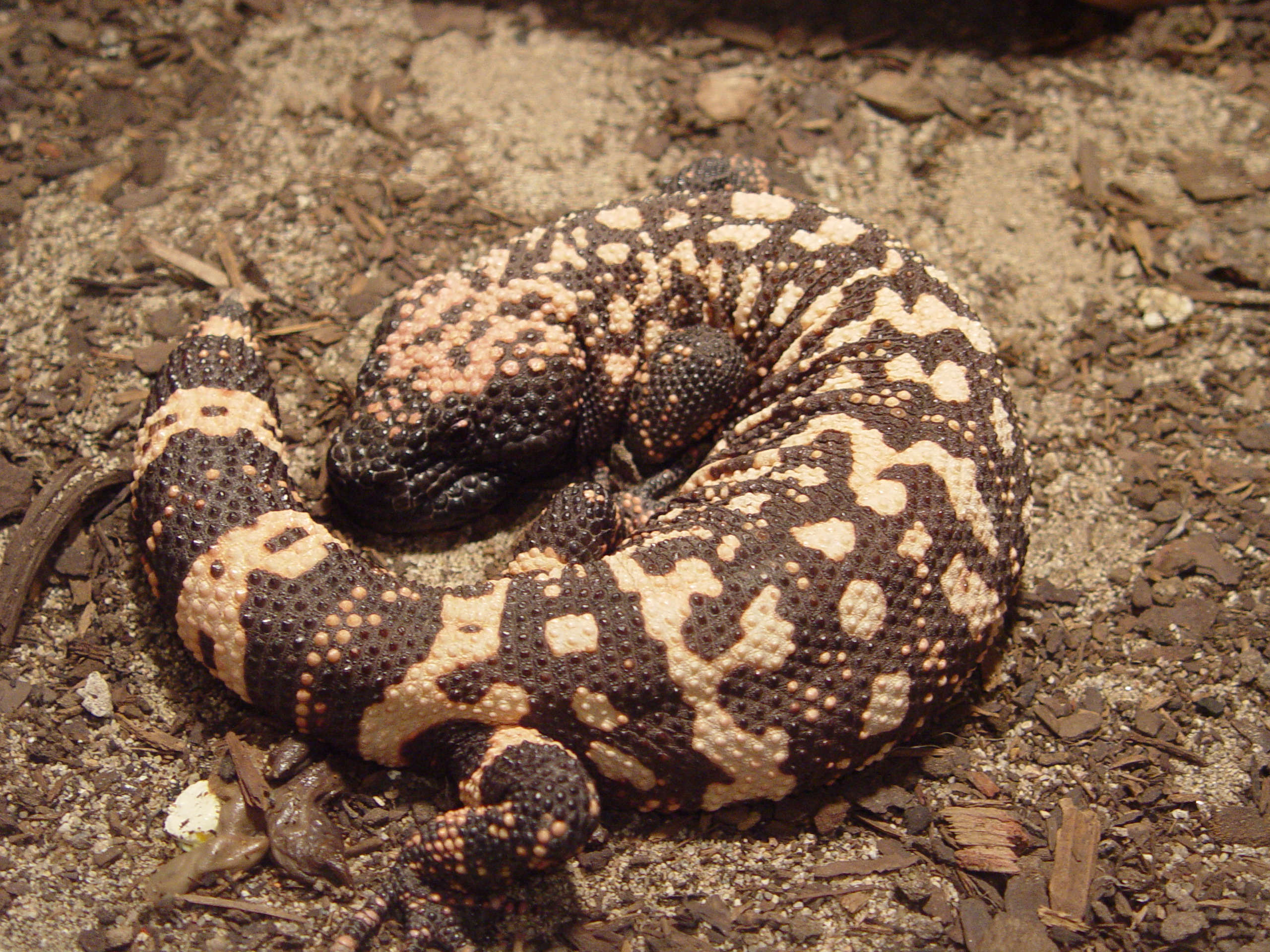
Gila Monster (Heloderma suspectum)

Introduction
Introduction
The Sonoran Desert at first light is a study in stillness. Pale gold washes across the rocky hillsides, the saguaro cactus cast long shadows across the gravel, and the air carries the faint mineral scent of cooling stone. Then, almost imperceptibly, something moves beneath a creosote bush. A thick, blunt-headed lizard emerges with deliberate, unhurried purpose — its beaded skin a mosaic of burnt orange and matte black, its tongue flickering in and out as it reads the invisible chemical landscape of the desert around it. This is the Gila monster, one of the most iconic and most misunderstood animals in North America.
The Gila monster (Heloderma suspectum) holds a singular place in the natural world. It is one of only a handful of venomous lizards on Earth, and the only venomous lizard native to the United States. That distinction alone has shaped centuries of human myth-making, fear, and fascination. For much of recorded history, people believed this creature to be almost supernaturally dangerous — capable of spitting venom, poisoning the air with its breath, and killing a man with a single bite. The reality, as science has revealed, is far more compelling than the legend.
This is an animal that has spent over 100 million years, through the lineage of its family Helodermatidae, refining a survival strategy built on patience, efficiency, and biochemical sophistication. It moves slowly not out of weakness but because it has evolved a metabolism so economical that it needs to eat only a handful of times each year. Its venom, once dismissed as a crude defensive weapon, has turned out to be one of the most pharmacologically remarkable substances produced by any living reptile — and it has already saved thousands of human lives through its contribution to diabetes medicine.
To understand the Gila monster is to understand a particular philosophy of survival: one built not on speed or aggression but on fat reserves, chemical weaponry, seasonal withdrawal, and an extraordinary attunement to the desert environment it calls home. This article explores every dimension of this animal's existence — its biology, behaviour, ecological role, and precarious conservation status — to reveal why Heloderma suspectum is one of the most ecologically and scientifically significant reptiles alive today.
"The wilderness holds answers to questions man has not yet learned to ask."
— Nancy Wynne Newhall

Scientific Classification
Scientific Classification
Kingdom: Animalia
Phylum: Chordata
Class: Reptilia
Order: Squamata
Family: Helodermatidae
Genus: Heloderma
Species: Heloderma suspectum
Common subspecies: H. s. suspectum (reticulate Gila monster); H. s. cinctum (banded Gila monster)
First described by: Edward Drinker Cope, 1869
The family Helodermatidae is an ancient lineage with roots stretching back to the Cretaceous period. The genus Heloderma — whose name derives from the Greek helos (nail or stud) and derma (skin), a reference to the distinctive bead-like scales — contains only five recognised species, all venomous, all found in the Americas. The Gila monster and its closest relative, the Mexican beaded lizard (Heloderma horridum), are the most studied members of this group and together represent an evolutionary lineage that has remained remarkably stable across geological time.
Two subspecies of the Gila monster are currently recognised. The reticulate Gila monster (H. s. suspectum) is found across the Sonoran Desert of Arizona and Mexico, displaying a mottled, net-like patterning of orange and black. The banded Gila monster (H. s. cinctum) occurs in the Great Basin and Mojave Desert regions of Utah, Nevada, and Colorado, where it typically displays more pronounced crossband patterning, particularly in juveniles. The degree of separation between these two subspecies remains a topic of active scientific discussion.

Physical Characteristics
Physical Characteristics
The Gila monster is a heavy-bodied lizard, unmistakable in form. Adult specimens typically reach total lengths of 45 to 60 centimetres, though large individuals can exceed 60 centimetres. Body mass ranges from 350 grams in lean individuals to over 700 grams in well-fed animals that have accumulated substantial fat reserves. The tail, which accounts for roughly one-fifth of total body length, functions as a specialised fat storage organ — one of the lizard's most critical physiological adaptations.
The skin of Heloderma suspectum is among the most distinctive of any reptile. Rather than overlapping scales, the body is covered in small, rounded, bead-like osteoderms — bony nodules embedded beneath the skin surface. These osteoderms are non-overlapping and arranged in a regular pattern, giving the animal its characteristic lumpy, jewelled texture. The colouration varies by subspecies but generally consists of high-contrast patches or bands of black and orange, pink, or yellowish tones. This colouration is not camouflage — it is aposematic, a warning to predators that this animal carries a chemical defence.
The head is broad and somewhat flattened, the jaw powerful and lined with grooved teeth on the lower jaw through which venom is delivered. Unlike snakes, which inject venom through hollow fangs, the Gila monster chews venom into a wound — a slower but deeply effective delivery mechanism. The tongue is long, deeply forked, and bright pink, used constantly to collect airborne chemical particles and deliver them to the Jacobson's organ in the roof of the mouth for analysis.
The limbs are short but robust, each foot bearing five strong claws adapted for digging through soil and gravel. The animal moves with a characteristic side-to-side swaying gait, pressing its body close to the ground, which reflects its sprawling, ectothermic physiology. The eyes are relatively small with round pupils — vision plays a secondary role to chemoreception in this species. Hearing, too, is limited, as is the case in most squamates; the Gila monster is largely a creature of chemical senses.
Feature | Reticulate Gila Monster (H. s. suspectum) | Banded Gila Monster (H. s. cinctum) |
|---|---|---|
Patterning | Mottled, net-like reticulations | Distinct crossbands, especially in juveniles |
Primary range | Sonoran Desert, Arizona & Mexico | Great Basin, Utah, Nevada, Colorado |
Colouration tones | Orange-pink and black | Yellow-orange and black |
Habitat preference | Rocky desert scrub, saguaro cactus zone | Semi-arid shrubland, juniper woodland edges |
Activity elevation | Lower elevation desert floors | Higher elevation desert slopes |

Habitat & Geographic Distribution
Habitat & Geographic Distribution
The Gila monster's range encompasses a broad arc of arid and semi-arid landscapes across the southwestern United States and northwestern Mexico. In the United States, it is found in Arizona, New Mexico, Utah, Nevada, California, and Colorado. In Mexico, the species occupies portions of Sonora, Chihuahua, and Sinaloa. The geographic heart of its range is the Sonoran Desert, a biologically rich hot desert characterised by the iconic saguaro cactus (Carnegiea gigantea), palo verde trees, chollas, and a diverse assemblage of reptile, mammal, and bird species.
Within this broad range, Gila monsters are not uniformly distributed. They show a pronounced preference for specific microhabitat features. Rocky terrain with plentiful cover — boulders, rocky outcrops, talus slopes, canyon walls — is strongly favoured. These features provide both thermal refugia and potential den sites. Desert scrub with an understory of prickly pear cactus, creosote, and bursage is typical habitat in Arizona, while populations further north, particularly in Utah, may occupy juniper-pinyon woodland edges where the desert transitions into higher, cooler terrain.
Elevation plays a meaningful role in shaping Gila monster distribution. The species is most commonly encountered at elevations between 300 and 1,500 metres, though records exist from close to sea level in some coastal Sonoran habitats and from above 1,500 metres in mountainous Arizona terrain. The availability of stable underground retreats — burrows excavated by other animals such as kangaroo rats, badgers, or ground squirrels, or natural rock crevices — is perhaps the single most important microhabitat variable. These shelters are critical for thermoregulation, aestivation during extreme heat, and winter dormancy.
The species is absent from true sandy desert and from areas lacking substantial rocky cover. It is also scarce at very high elevations where winter temperatures become prohibitively cold for extended periods. Proximity to water, though not a strict requirement, appears to correlate with higher Gila monster densities — the arroyos and canyon floors of the Sonoran Desert, which channel seasonal rainfall and support denser vegetation, often harbour the highest local population concentrations.
Fun Fact The Gila monster is named after the Gila River Basin in Arizona, one of the first areas where the species was systematically studied by European-American naturalists in the mid-19th century.

Behaviour & Social Structure
Behaviour & Social Structure
The Gila monster is primarily a solitary animal. Outside of the brief mating season in late spring and early summer, individuals rarely interact and actively maintain spatial separation through chemical communication. Home ranges vary considerably depending on habitat quality, food availability, and season, but studies using radiotelemetry in Arizona have documented home ranges of between 0.1 and 10 hectares, with males typically occupying larger territories than females.
Social structure, to the extent that it exists in this species, is mediated almost entirely through chemical signals rather than visual displays or vocalisation. Gila monsters are essentially mute — they are capable of producing a low hiss when threatened but do not use sound for communication in any meaningful social context. Instead, they deposit chemical traces through skin secretions and cloacal scent as they move through their environment. Other individuals encountering these trails can extract detailed information about the sex, reproductive status, and possibly the individual identity of the animal that passed before them.
Males exhibit territorial aggression during the mating season, engaging in combat rituals that are surprisingly intense for an animal so often characterised as sluggish. Combat between rival males involves wrestling and body-slamming, with each animal attempting to pin the other's head to the ground. These bouts can last for extended periods and follow remarkably structured patterns — the combatants rear up and intertwine their bodies, each attempting to gain a positional advantage. The outcome determines mating access to females in the area. Notably, venom is not deployed during these intraspecific contests; the combat is a test of strength rather than chemical warfare.
The intelligence of the Gila monster is difficult to assess using conventional metrics, but behavioural ecology studies suggest a capacity for spatial learning that is quite sophisticated for a reptile. Individual animals demonstrate remarkably consistent fidelity to specific den sites, returning to the same burrows or rock crevices year after year across a lifetime that may exceed 20 years in the wild. They appear to build detailed cognitive maps of their home ranges, reliably locating seasonal food sources such as ground-nesting bird colonies or rodent burrow complexes, and adjusting their activity timing in response to subtle environmental cues including temperature, photoperiod, and rainfall.
One of the most intriguing behavioural traits of Heloderma suspectum is its apparent ability to modulate its own defensive behaviour with extraordinary precision. When confronted by a potential threat, the animal's response is graduated rather than reflexive. Initial encounters typically produce stillness — the lizard freezes, relying on its broken colouration to reduce visual salience. If pressed further, it opens the mouth in a slow gape display, revealing the dark oral lining and the grooved venom-delivering teeth in a silent warning. Only if physical contact occurs does it bite, and even then, it does not always inject venom. This restraint suggests a level of threat assessment that is more sophisticated than simple stimulus-response reactivity.

Daily Life & Activity Cycle
Daily Life & Activity Cycle
The Gila monster spends the overwhelming majority of its life underground or in sheltered rocky retreats. Studies of radiotagged individuals in Arizona have revealed that this species may spend up to 98 percent of its total time concealed in burrows, under boulders, or in rock crevices. This extraordinary withdrawal from surface activity is not laziness — it is a metabolic strategy of profound efficiency, allowing the animal to conserve energy, avoid dehydration, and escape both the lethal midday heat of the desert and the freezing temperatures of desert winters.
Surface activity peaks in spring, particularly from March through May, when temperatures are moderate and prey such as newborn rodents and bird eggs are at their most abundant. A secondary peak of activity occurs after the summer monsoon rains arrive in July and August, when the desert briefly transforms into a more productive landscape. During these active periods, Gila monsters are most often encountered in the early morning or late afternoon, avoiding the extreme midday heat by retreating underground during peak solar radiation.
During the hottest months — June and early July, before the monsoon arrives — Gila monsters enter a state of summer dormancy (aestivation) that mirrors winter dormancy in many respects. They remain in their burrows, metabolic processes slow dramatically, and they subsist on fat reserves stored in the tail and abdomen. Winter dormancy begins in November and typically extends through February, depending on latitude and elevation. The animal does not truly hibernate in the mammalian sense — it may occasionally emerge on warm winter days to bask — but its metabolic rate drops substantially and it neither feeds nor reproduces during this period.
Foraging expeditions, when they occur, can cover distances of several hundred metres in a single night or day, with the animal moving in a sinuous path, tongue-flicking continuously as it traces chemical gradients to potential food sources. Gila monsters are not ambush predators; they are active searchers, following scent trails to burrows containing rodent nests or ground-bird nesting sites. Once a promising location is identified, the animal may remain in the vicinity for hours, thoroughly investigating every crevice.
On a warm April morning in the Rincon Mountains east of Tucson, a field biologist crouched motionless behind a granitic outcrop, watching a large male Gila monster work his way methodically along the base of a rocky slope. The lizard moved with the unhurried certainty of an animal that has done this ten thousand times — tongue flickering every few seconds, head swinging slowly from side to side, one broad foot placed deliberately before the other.
The animal stopped at what appeared to be a featureless patch of gravel. But the tongue told a different story. For nearly three minutes the lizard investigated the spot, pressing its snout close to the ground, reading a chemical narrative invisible to human senses. Then it began to dig — powerful, scooping strokes that displaced gravel and dry soil with surprising speed. Thirty centimetres down, it found what it sought: a pocket mouse nest, freshly constructed, containing a warm litter of hairless pinkish pups.
The meal was consumed with the same unhurried deliberateness that characterised every other aspect of the lizard's morning. Within twenty minutes the nest was empty, the lizard's belly visibly distended, its tail — the gauge of its body condition — already appearing slightly firmer with the caloric investment it had just made. By nine in the morning, as the rocks began radiating serious heat, the animal had retreated back into a talus crevice barely wide enough to admit its broad body, and the desert returned to stillness.
That single meal, observed in less than half an hour of surface activity, might represent a significant fraction of the animal's entire annual caloric intake — a reminder that efficiency, not effort, is the governing principle of Gila monster survival.

Diet & Survival Strategies
Diet & Survival Strategies
The Gila monster is a specialist predator of vulnerable prey. Its diet consists primarily of the eggs and young of birds and small mammals — targets that cannot flee, fight back effectively, or present significant metabolic costs to subdue. Eggs of ground-nesting birds, including quail, mourning doves, and various desert-breeding passerines, are eagerly consumed. Small mammal nests containing newborn rodents — kangaroo rats, deer mice, pocket mice — represent another critical food category. Lizard eggs are also taken opportunistically, and adult small lizards may occasionally be consumed, though this appears to be a minor dietary component.
The efficiency of this dietary strategy is remarkable. Gila monsters can consume prey items equivalent to a substantial portion of their own body weight in a single feeding event. The entire caloric content is then processed over days or weeks, with excess energy deposited as fat in the tail — a structural feature so intimately linked to body condition that field biologists routinely use tail girth as a proxy for individual nutritional status. A fat, rounded tail indicates an animal in good condition; a flattened, narrow tail signals nutritional stress or recent emergence from dormancy.
Because its prey are seasonal and localised, the Gila monster must possess both an exceptional spatial memory and a sophisticated chemical tracking ability to exploit them reliably. The timing of its spring activity peak is almost certainly calibrated to coincide with the nesting seasons of its primary prey. Research in Arizona has demonstrated that Gila monsters move directionally toward known bird nesting aggregations in spring — behaviour that implies memory of specific locations from the previous year, a capacity that demands genuine cognitive spatial mapping.
Water acquisition is managed through a combination of drinking from rain pools and seasonal streams, licking moisture from rocks and vegetation, and extracting water from prey. During periods of drought or extreme heat, the animal's deeply buried burrow provides a microenvironment of substantially higher relative humidity than the surface, reducing respiratory water loss. The kidneys are adapted to produce highly concentrated uric acid rather than liquid urine, a water-conserving adaptation shared with other desert reptiles.
Prey Type | Seasonal Availability | Hunting Strategy | Importance to Diet |
|---|---|---|---|
Bird eggs (ground-nesting species) | Spring & early summer | Active scent-tracking to nest sites | Primary, high caloric density |
Newborn rodents | Spring & post-monsoon | Scent-trailing to underground nests | Primary, critical for fat storage |
Lizard eggs | Late spring & summer | Excavation of buried clutches | Secondary, opportunistic |
Small adult lizards | Spring & summer | Active pursuit, short distance | Minor, incidental |
Carrion | Year-round (opportunistic) | Scent detection of carcasses | Rare, supplemental |
The venom of the Gila monster plays a limited role in prey capture — most prey are too small or immobile to require chemical immobilisation. However, venom delivery during feeding may assist with larger, more mobile prey items and almost certainly has a digestive function, with venom components beginning the breakdown of prey tissue even as chewing continues. The chewing action itself is functionally important: the grooved lower teeth lacerate tissue, creating channels through which venom flows via capillary action from venom glands situated in the lower jaw — a delivery system more ancient and in some ways more basic than the hypodermic fang apparatus of advanced snakes.

Interaction with Other Animals
Interaction with Other Animals
As both predator and prey, the Gila monster occupies a specific and meaningful position in the desert food web. Its predators include several species capable of overcoming or outmanoeuvring its chemical defences. Coyotes (Canis latrans) are documented predators, particularly of juveniles. Large birds of prey — including red-tailed hawks (Buteo jamaicensis), great horned owls (Bubo virginianus), and occasionally golden eagles (Aquila chrysaetos) — are capable of seizing and killing Gila monsters, though the venomous bite represents a genuine risk during the attack. Roadrunners (Geococcyx californianus) occasionally prey on juveniles. The common kingsnake (Lampropeltis californiae) is immune to Gila monster venom and represents one of the most efficient predators of young individuals.
Competitive interactions with other reptile species shape the Gila monster's use of microhabitat and temporal activity windows. The western diamondback rattlesnake (Crotalus atrox), which shares much of the Gila monster's range, occupies a broadly similar ecological niche as a large venomous predator, though its diet skews more heavily toward adult rodents rather than neonates and eggs. Spatial partitioning between these species appears to exist, with Gila monsters preferring rockier terrain and rattlesnakes more common in open desert flats, but the mechanisms and extent of competition remain incompletely understood.
The Gila monster's relationship with rodents is a complex predator-prey dynamic with population-level implications. By preferentially raiding rodent nests during spring, Gila monsters can significantly affect the reproductive success of local rodent populations. This predation pressure is not random — the most productive nesting sites are targeted repeatedly across years, which may function as a partial regulatory mechanism on local rodent density.
Symbiotic and facilitative interactions are less well documented but likely exist. The Gila monster is an obligate user of pre-existing burrows, and its dependence on the burrowing activity of kangaroo rats, badgers, tortoises, and other species represents a form of indirect mutualism — the engineers of the desert substrate create the shelter infrastructure upon which Heloderma suspectum depends. In rocky terrain, natural crevices fulfil this role, but across desert flats, the presence of active burrowing mammals is a prerequisite for Gila monster occupation.
Fun Fact The common kingsnake is one of the Gila monster's most effective natural predators — immune to helodermatid venom, it can overpower and consume juvenile Gila monsters that have no chemical defence to deploy against it.

Interaction with Environment
Interaction with Environment
The Gila monster's relationship with its desert environment is one of exquisitely calibrated mutual dependence. As an ectotherm, the animal is entirely reliant on external thermal conditions to regulate its body temperature, and the physical structure of its habitat — the arrangement of rocks, the orientation of slopes, the depth of available burrows — determines the thermal landscape it can access. Optimal body temperature for active Gila monsters is approximately 28 to 32 degrees Celsius, a range that the desert environment provides for relatively limited daily windows during much of the year.
Thermoregulatory behaviour in Heloderma suspectum is sophisticated. Emerging animals may bask in morning sunlight on rock surfaces to raise body temperature rapidly, then retreat to shade as temperatures climb, then re-emerge as afternoon cooling allows. The orientation of the body during basking — full lateral exposure maximises heat gain; head-only emergence from a burrow reduces it — demonstrates real-time behavioural thermoregulation. These choices have measurable consequences for foraging success, digestion rate, and immune function.
The species' role in its environment extends beyond simple predation. As a consumer of ground-nesting bird eggs and rodent young, the Gila monster functions as a predation pressure that influences the nesting behaviour and site selection of prey species over evolutionary time. Ground-nesting birds in Gila monster habitat may show preferences for nest sites with elevated detection difficulty — under thick brush, in deeper vegetation — as a consequence of Gila monster predation pressure, though direct evidence of this is challenging to establish.
The animal's burrowing behaviour, though less extensive than that of dedicated excavators, does contribute to soil turnover and aeration. More significantly, the Gila monster's role as a seasonal consumer creates pulses of nutrient transfer — consuming prey in one area and later depositing waste in its den site — that redistribute nutrients across the desert landscape in small but ecologically meaningful ways.
Climate is the dominant shaping force in Gila monster ecology. The timing of monsoon rainfall determines the timing and magnitude of the animal's secondary activity peak in late summer. Multi-year drought conditions, which are becoming more frequent across the Sonoran Desert under anthropogenic climate change, suppress prey availability, compress activity windows, and increase the energetic costs of movement across a desiccated landscape. Long-term ecological monitoring studies suggest that drought years correlate with reduced body condition in Gila monster populations, as measured by tail volume and mass.

Reproduction & Parenting
Reproduction & Parenting
The reproductive biology of the Gila monster is as economical and unhurried as every other aspect of its life history. Mating occurs in late spring, typically from May through June, when males emerge in search of females and engage in the combat rituals that determine reproductive access. Females are receptive for a brief window, during which they are located by males via chemical tracking — a male will follow the scent trail of a reproductive female with focused persistence.
Courtship, once contact is made, involves the male tongue-flicking over the female's body and neck, assessing her chemical signals, followed by positioning and copulation, which may last for extended periods. If multiple males locate a female simultaneously, combat ensues, with the winner achieving mating rights. There is evidence that females may mate with more than one male, and genetic analyses of clutches have confirmed multiple paternity in some populations, suggesting that sperm competition may play a role in the reproductive biology of this species.
Eggs are laid in late summer, typically July through August, following an extended gestation period during which developing embryos are carried internally. The female excavates a nest in sandy or loamy soil, generally at depths of 12 to 30 centimetres, often in a sun-exposed slope that will provide the thermal conditions necessary for egg incubation. Clutch size ranges from 2 to 12 eggs, with an average of around 5 to 6. The eggs are leathery-shelled, oblong, and relatively large — each representing a substantial caloric investment by the female.
There is no parental care beyond nest construction. Once the eggs are deposited and buried, the female does not return. Incubation under natural conditions takes approximately 9 to 10 months — an extraordinarily long period for a reptile, particularly one inhabiting a desert environment where temperature fluctuations are severe. Eggs survive Arizona winters in a state of developmental arrest, with embryonic development proceeding primarily during the warmer months following oviposition and resuming the following spring. Hatchlings typically emerge from April through June of the year following laying.
Hatchlings are miniature adults, approximately 15 to 16 centimetres in total length, patterned with the bold banding characteristic of juveniles. They are immediately independent, receiving no provisioning or protection from parents. Juvenile Gila monsters face a period of high vulnerability — smaller body size limits their ability to store fat reserves, and their venom glands, while functional, are less developed than those of adults. Mortality in the first two years of life is thought to be substantial, though direct data on juvenile survival rates are limited by the difficulty of tracking small, cryptic animals in dense desert terrain.
Sexual maturity is reached at approximately 3 to 5 years of age. Females do not reproduce every year — the energetic demands of producing a large egg clutch following a prolonged period of reduced feeding make annual reproduction physiologically impractical for most individuals. Biennial or triennial reproduction is likely common in the wild, particularly in females living in food-limited habitats. Maximum recorded lifespan in captivity exceeds 30 years; wild lifespans are probably somewhat shorter, with 20 years representing a likely upper range for most individuals.

Evolutionary Adaptations
Evolutionary Adaptations
The Gila monster's evolutionary history is written across every aspect of its physiology. The family Helodermatidae first appears in the fossil record in the Cretaceous, and members closely resembling modern forms are known from Eocene and Oligocene deposits across North America. This ancient lineage has persisted, with remarkable morphological conservatism, across the extinctions of dinosaurs, the transformation of tropical North America into arid desert, and the arrival of human civilisation — a testament to the fundamental soundness of the helodermatid body plan.
The venom system of Heloderma suspectum is among its most celebrated and most scientifically studied adaptations. Unlike snake venom glands, which are modified salivary glands in the upper jaw, Gila monster venom glands are located in the lower jaw, and venom flows along grooved teeth rather than through hollow fangs. The venom itself is a complex cocktail of proteins, peptides, and enzymes. Key components include gilatoxin, helodermin, and helospectin — peptides that affect blood pressure, heart rate, and pain response — alongside phospholipase A2 enzymes, serotonin, and hyaluronidase. The discovery that Gila monster venom contains a peptide called exendin-4, which mimics the action of the human hormone GLP-1 in regulating insulin secretion, led directly to the development of the diabetes drug exenatide (Byetta), now used by millions of patients worldwide.
The osteoderm skin — those characteristic bony beads embedded in the dermis — serves multiple functions. It provides structural reinforcement against puncture wounds from predator bites or encounters with thorny desert vegetation. It also functions as a solar heat absorber during basking, the dark pigmentation in the ostoderms enhancing thermal uptake. Because osteoderms are not shed with the skin (Gila monsters do shed periodically), they accumulate and can be preserved in the fossil record, providing palaeontologists with an excellent record of helodermatid distribution across geological time.
The fat-storage tail is a direct evolutionary response to the unpredictable feast-or-famine conditions of desert life. Unlike most lizards, which store fat primarily in the coelomic cavity or at the base of the limbs, Heloderma suspectum has evolved an enlarged caudal fat body that can constitute a significant proportion of total body mass in a well-nourished individual. This reservoir enables the animal to survive extended periods of dormancy or food scarcity without accessing internal organ reserves, providing a buffer against the metabolic costs of starvation.
The low metabolic rate of the Gila monster — among the lowest recorded for any active lizard of comparable size — is another critical adaptation. It means that a single large meal can sustain the animal for weeks or months, reducing the frequency of the surface activity that exposes it to predators, desiccation, and temperature extremes. This metabolic economy, combined with the fat-storage tail and the chemical defence provided by venom, creates a suite of interlocking adaptations that together define the helodermatid survival strategy: eat rarely, move little, stay hidden, and defend chemically when necessary.

Ecological Importance
Ecological Importance
The Gila monster functions as a mesopredator within its desert ecosystem — occupying a middle position in the food web as both predator and prey, and exerting regulatory pressure on prey populations while itself contributing to the energy budgets of larger predators. Its specific dietary focus on vulnerable prey stages — eggs and neonates — gives it an ecological role distinct from those of other desert predators, which more commonly target adult prey.
By concentrating predation on the most reproductive phase of prey species' life cycles, Gila monsters function as a check on small mammal and ground-nesting bird population growth. This type of early-life-stage predation can have disproportionately large effects on prey population dynamics — removing individuals before they contribute to the breeding pool has greater proportional impact than removing adults from an already-established breeding population. In this sense, the Gila monster may exert more ecological leverage on local prey demographics than its relatively small body size would suggest.
The species also serves as an energy conduit, converting the caloric content of rodent and avian prey into a form accessible to larger predators such as coyotes and raptors. In ecosystem terms, this transfer is a component of the broader energy flow that sustains the desert food web. The removal of Gila monsters from a local system would therefore affect not only prey populations but also the resource availability for its own predators.
Perhaps the most unexpected dimension of the Gila monster's ecological importance is its contribution to human medicine. The discovery of exendin-4 in Gila monster venom and its subsequent development into exenatide — a GLP-1 receptor agonist used to treat type 2 diabetes — represents one of the most direct translations of wild animal biochemistry into human therapeutic benefit in modern pharmacology. This contribution alone argues compellingly for the conservation value of maintaining healthy, genetically diverse Gila monster populations: we cannot predict what other biochemical insights the venom of this ancient lizard may yet yield.
Fun Fact A compound derived from Gila monster venom — exendin-4 — formed the basis of exenatide (Byetta), one of the most widely used drugs for treating type 2 diabetes. The discovery was made by endocrinologist John Eng in the early 1990s.

Threats & Conservation
Threats & Conservation
The Gila monster faces a constellation of threats that have reduced its numbers and fragmented its populations across much of its historical range. Unlike the dramatic, acute crises that drive some species to the edge of extinction in years rather than decades, the pressures on Heloderma suspectum are largely chronic and structural — the slow accumulation of habitat loss, human persecution, and climate disruption that erodes populations quietly and persistently.
Urbanisation is perhaps the most pervasive threat. The Sonoran Desert's major population centres — Phoenix, Tucson, Las Vegas — have expanded dramatically over the past half-century, converting desert habitat into roads, subdivisions, and commercial developments at a rate that has eliminated Gila monsters from large areas of formerly suitable range. Habitat fragmentation, which isolates population patches and reduces genetic exchange between them, compounds the direct loss of habitat. A Gila monster encountering a busy highway cannot navigate it safely; road mortality is documented and represents a genuine population-level concern in areas of high vehicle traffic adjacent to desert habitat.
Human persecution, while declining as public understanding has improved, remains a factor. The Gila monster's fearsome reputation has historically prompted direct killing on sight by people who encountered them near homes or on ranches. This persecution is now illegal — the Gila monster was one of the first North American reptiles to receive legal protection, being protected in Arizona since 1952 — but illegal killing still occurs. The illegal pet trade also removes individuals from wild populations, and captive animals sourced from the wild rarely survive the stress of captivity for long.
Climate change overlays all other threats with a layer of uncertainty and risk that is difficult to quantify but increasingly impossible to ignore. Rising temperatures, shifting monsoon patterns, and more frequent and severe droughts affect Gila monster populations both directly — through physiological stress from heat exposure — and indirectly, by reducing prey availability and altering the phenological synchrony between the lizard's activity season and the seasonal availability of its prey. The IUCN currently classifies the Gila monster as Near Threatened, reflecting the reality that while populations remain extant across much of the species' range, ongoing and projected pressures place it at meaningful risk of future decline.

IUCN Red List Analysis
IUCN Red List Analysis
Current IUCN Status
The Gila monster (Heloderma suspectum) is currently classified as Near Threatened (NT) on the IUCN Red List of Threatened Species. This classification reflects the assessment that while the species does not currently meet the quantitative thresholds for Vulnerable status under criteria A through E, it is close to qualifying and would likely be uplisted if current trends continue. The Near Threatened designation is a scientific statement that the species faces genuine pressures that, without mitigation, could result in significant population decline sufficient to meet Vulnerable criteria within the coming decades.
The Near Threatened category is specifically appropriate for Heloderma suspectum because the species remains widespread and locally common in core areas of suitable habitat, yet shows clear evidence of range contraction in peripheral areas and declining population density in regions affected by urban expansion and intensive land use. The classification is not a declaration of stability; it is a warning that the trajectory is unfavourable.
Population Trend
The overall population trend for the Gila monster is assessed as decreasing. Precise global population estimates do not exist — the cryptic nature of the species, its low surface activity rate, and the vastness of its desert range make systematic population counting practically impossible. However, local studies across Arizona and other parts of the range have documented declining encounter rates in areas that were historically productive, and museum specimen records suggest range contraction at the northern and western margins of the species' distribution over the past century.
Within core Sonoran Desert habitats of southern Arizona and northern Sonora, populations appear more stable, supported by protected areas such as Saguaro National Park, Organ Pipe Cactus National Monument, and the Sonoran Desert National Monument. In contrast, populations in Nevada, California, and the more urbanised parts of Arizona have experienced substantial declines. The reproductive biology of the species — low annual reproductive output, delayed sexual maturity, and biennial or triennial breeding in females — means that recovery from local population depressions is inherently slow, making population stability particularly important to maintain.
Main Threats
Habitat destruction and fragmentation represent the most significant threat. The expansion of urban and suburban developments in the Sonoran Desert directly eliminates habitat and creates barriers to movement and gene flow. Roads fragment populations and cause direct mortality. Agricultural development in the lowland desert of northern Sonora and southern Arizona has converted significant areas of Gila monster habitat into irrigated cropland.
Human persecution, though declining, continues to suppress populations locally. The deeply entrenched cultural mythology of the Gila monster as a dangerous, malevolent creature persists in rural communities, and encounters near homes or livestock facilities occasionally result in animals being killed. Accidental killing during construction and agricultural operations also occurs.
The illegal pet trade removes animals from wild populations and has been implicated in the introduction of disease into captive populations. Although legal protection exists across the species' United States range, enforcement is imperfect and black-market demand persists in some collector communities.
Climate change poses a systemic and growing threat. Rising baseline temperatures are compressing the thermal window during which Gila monsters can safely forage, increase the metabolic costs of surface activity, and are projected to drive shifts in vegetation communities across the Sonoran Desert that will alter prey availability and habitat structure. More frequent severe droughts reduce prey reproduction and concentrate Gila monster activity in shrinking productive patches, increasing both competitive pressure and exposure to predators.
Invasive species present a less-studied but potentially meaningful threat. The spread of invasive buffelgrass (Cenchrus ciliaris) across the Sonoran Desert is altering fire regimes and suppressing native plant communities that support the prey base of Gila monsters. Increased fire frequency in buffelgrass-dominated areas destroys the surface cover and microhabitat structure upon which Gila monsters depend.
Ecological Consequences
A continued decline in Gila monster populations would produce measurable shifts in the ecological functioning of desert communities. The loss of Gila monster predation pressure on ground-nesting bird eggs and small mammal neonates would likely produce a release effect in prey populations, at least temporarily — an increase in reproductive success that could cascade through the food web. Over time, however, these prey populations would likely be regulated by other density-dependent mechanisms, but the transition period could produce unpredictable oscillations in community composition.
The removal of Gila monsters as a prey item for large raptors and coyotes would reduce the diversity of prey available to these predators, potentially increasing their dependence on alternative prey species and intensifying predation pressure on those alternatives. At the level of individual predator territories, the loss of even a small, predictable prey resource can affect predator body condition and reproductive success in measurable ways.
From the perspective of biodiversity, the loss of a species from an ancient lineage with no close ecological analogues represents an irreplaceable diminishment of evolutionary heritage. There are no functional equivalents to the Gila monster in North American desert ecosystems — no other large, venomous, lizard-form mesopredator specialising in vulnerable prey stages. Its disappearance would leave an ecological vacancy that no existing species is positioned to fill.
The pharmacological consequences of declining Gila monster populations, while less immediate, are equally real. A species whose venom has already yielded one major therapeutic compound almost certainly contains additional bioactive molecules of medical interest. The loss of genetic diversity within Heloderma suspectum populations narrows the biochemical landscape available for future discovery.
Conservation Efforts
The Gila monster is protected by law across its entire United States range. In Arizona, it has been a protected species since 1952, making it one of the first reptiles in the country to receive such protection. Similar protections exist in New Mexico, Utah, Nevada, and California. In Mexico, the species is listed under the national wildlife protection regulations (NOM-059-SEMARNAT) as subject to special protection.
A network of federal and state protected areas provides meaningful habitat security for core populations. Saguaro National Park (both the Tucson Mountain and Rincon Mountain units), Organ Pipe Cactus National Monument, Chiricahua National Monument, and the Sonoran Desert National Monument together protect significant areas of high-quality Gila monster habitat in Arizona. These protected areas function as population source zones from which individuals can disperse into adjacent unprotected lands.
Research programmes at several Arizona universities and at institutions such as the Arizona Game and Fish Department's Heritage Data Management System have generated population data and habitat suitability models that inform management decisions. Long-term radiotelemetry studies — particularly the work conducted in the Santa Catalina Mountains and the Maricopa County desert — have established baseline data on home range size, seasonal movement, and habitat use that are essential for evidence-based conservation planning.
Captive breeding programmes exist at a number of zoological institutions, both for educational display and as insurance populations. The Gila monster breeds reasonably well in captivity when husbandry protocols replicate the seasonal temperature and photoperiod cycles of its natural environment. Several zoos maintain active breeding programmes and contribute to educational outreach aimed at reducing public fear and increasing tolerance of the species in human-modified landscapes.
International collaboration between United States and Mexican conservation agencies remains underdeveloped relative to the scale of the cross-border population. The Mexican portion of the Gila monster's range — particularly in Sonora — is less well-studied and less formally protected than the United States portion, representing a gap in the conservation framework that scientists have identified as a priority for future investment.
Future Outlook
The long-term survival of the Gila monster is uncertain but not hopeless. In core protected areas with intact desert habitat and minimal direct human persecution, populations appear stable and self-sustaining. The species' ancient lineage and conservative body plan suggest a fundamental robustness — this is an animal that has survived geological epochs of climate transformation far more severe than current projections suggest is likely within human timescales.
However, the pace of urban expansion in the American Southwest, combined with the accelerating influence of climate change on desert ecosystems, creates a trajectory that demands serious and sustained conservation attention. The greatest risks are not to core populations in protected areas but to the peripheral and fragmented populations that maintain genetic connectivity across the species' range. The loss of these populations would not be immediately catastrophic, but would reduce the adaptive capacity of the species as a whole and increase the long-term extinction risk.
If climate projections for the American Southwest are realised — a hotter, drier, more fire-prone Sonoran Desert by mid-century — the species' northern and western range margins are likely to contract further, while suitable habitat in higher-elevation areas may expand somewhat. The net effect on total population size is difficult to predict. The species' ability to respond to shifting conditions will depend critically on landscape connectivity — on whether individual animals can move between habitat patches as local conditions change. Maintaining and restoring habitat corridors in the desert landscape surrounding protected areas is likely the single most impactful conservation investment that could be made for Heloderma suspectum in the coming decades.

Human Relationship
Human Relationship
Few North American animals carry a more complicated cultural baggage than the Gila monster. Indigenous peoples of the Sonoran Desert region had nuanced and varied relationships with the species. The Tohono O'odham people of southern Arizona viewed the Gila monster with a combination of respect and caution — it featured in oral traditions as an animal of power, and the beaded skin pattern was incorporated into basketry and decorative arts. Some traditions held that the Gila monster's medicine had healing properties, a belief that, in light of exenatide's development, carries an unexpectedly literal truth.
European-American settlers arriving in the Southwest in the 19th century brought none of this cultural nuance. The Gila monster became one of the most feared animals on the frontier, surrounded by mythology that bore little relationship to its actual biology. Folk beliefs held that it had no anus and therefore concentrated lethal toxins; that it could spit venom; that its breath was poisonous; that it was indestructible; that a bite inevitably caused death in agonising ways. These stories spread through popular publications and even into early scientific literature, with some 19th-century naturalists lending their authority to fabricated accounts of Gila monster lethality.
The reality is that Gila monster bites in humans, while extremely painful and capable of causing systemic effects including hypotension, oedema, vomiting, and weakness, are very rarely fatal. In contemporary medical records, verified fatalities from Gila monster envenomation are extraordinarily rare — most documented cases occurred in the era before supportive medical care was available, and often involved individuals who had been handling or tormenting the animal. A bite requires prolonged chewing to deliver significant venom, and a person who pulls away quickly is unlikely to receive a medically serious dose.
Tourism in the American Southwest benefits from the Gila monster as a charismatic component of the regional wildlife experience. Desert nature tours, guided walks in national parks, and interpretive programmes at visitor centres frequently feature the Gila monster as a highlight of the Sonoran Desert ecosystem. The species' exotic appearance, famous venomous status, and remarkable medicinal connection make it an enormously effective ambassador for desert conservation — few animals can hold a visitor's attention as reliably.
The development of exenatide from Gila monster venom components has transformed the relationship between this species and the broader human community in ways that extend far beyond the Southwest. Millions of type 2 diabetes patients worldwide are treated with GLP-1 receptor agonists — a drug class whose genesis lies in a molecule evolved by a desert lizard to manage its own biochemical needs. This connection, when communicated effectively, has proven a powerful tool for building public support for Gila monster conservation among audiences who might otherwise feel indifferent to the fate of a venomous reptile in a remote desert.

Unique & Rare Facts
Unique & Rare Facts
Venomous ancestry predates snakes: The helodermatid venom system evolved independently of snake venom systems. Molecular phylogenetic studies have shown that venom in lizards and snakes may have evolved from a shared ancestral toxin-secreting mechanism very early in squamate evolution — making the Gila monster's venom system one of the oldest chemically active defensive systems in the lizard world.
98% of life underground: Radiotelemetry studies have documented that Gila monsters may spend as little as 2% of their total time on the surface, making them one of the most cryptic large lizards in North America. This extreme concealment is not a response to predation alone but a fundamental metabolic strategy.
Medicine from a monster: The Gila monster is the first wild animal whose venom directly inspired a drug used by millions of human patients. Exenatide (Byetta), derived from the venom peptide exendin-4, revolutionised type 2 diabetes treatment when it was approved by the FDA in 2005.
No annual feeding requirement: A single large meal can sustain a Gila monster for weeks or months. Under experimental conditions, adults have survived without food for over a year by drawing on tail fat reserves — an extreme example of metabolic efficiency among active lizards.
Ancient, stable lineage: Fossil helodermatids closely resembling modern Gila monsters have been found in Eocene-era deposits in North America, suggesting the basic body plan and ecological strategy of this group has changed remarkably little in over 40 million years.
Extended egg incubation: The nine-to-ten-month incubation period of Gila monster eggs, during which embryonic development essentially pauses through winter, is among the longest of any lizard species and may be the longest of any non-archosaur reptile in North America.
First legally protected reptile in the US: Arizona's 1952 protection of the Gila monster was one of the first legal protections extended to any reptile in the United States — decades before broader endangered species legislation created frameworks for reptile conservation.
Venom for self-defence only: Unlike venomous snakes, which typically deploy venom for prey capture, the Gila monster's venom is thought to function primarily as a defensive mechanism. Most prey items are too small or immobile to require chemical immobilisation, and the chewing delivery system is poorly suited to rapid prey subjugation.
Long-distance chemical tracking: Male Gila monsters have been documented tracking the scent trail of a female for distances exceeding several hundred metres during the breeding season, demonstrating a chemical tracking ability of remarkable sensitivity and sustained focus.
Multiple paternity confirmed: Genetic analysis of Gila monster clutches has confirmed that individual egg clutches can contain offspring fathered by different males, indicating that females mate with multiple partners and that sperm competition may be a feature of the reproductive system.
"What we save, we are."
— Patrick Curry, Ecological Ethics

Conclusion
Conclusion
The Gila monster is a creature that confounds expectations at every turn. It is venomous but rarely aggressive. It is slow but surgically precise in its hunting strategy. It is ancient but directly implicated in some of the most significant pharmacological discoveries of the modern era. It is feared by human cultures that have coexisted with it for centuries, yet it has given those same human cultures a medicine that prevents or delays some of the most debilitating consequences of one of the world's most common chronic diseases.
In the broader sweep of desert ecology, Heloderma suspectum is not a peripheral curiosity but a functional component of a finely interlocked system. Remove it, and prey populations shift. Predator diets narrow. An evolutionary lineage of 100 million years ends. A biochemical library, most of whose volumes have not yet been read, is closed permanently. The losses cascade in ways both predictable and impossible to fully anticipate — which is precisely why the precautionary logic of conservation demands that we do not allow them to happen.
The Gila monster has survived the end of the dinosaurs, the conversion of a tropical continent into a desert, and the arrival of a species capable of deliberate ecological destruction. Whether it survives the coming decades of urbanisation, climate disruption, and habitat fragmentation will depend not on the animal's own resilience — which is extraordinary — but on human choices about how much of the Sonoran Desert we decide to leave intact. That is, ultimately, not a scientific question. It is a question about what kind of world we want to inhabit.
To stand in the early morning desert and watch a Gila monster move through its ancient landscape — methodical, purposeful, magnificently adapted to a world that most human beings would find uninhabitable — is to encounter something genuinely irreplaceable. This beaded, venomous, exquisitely economical animal has been perfecting its way of life since before the first primate climbed a tree. It deserves, at minimum, the space to continue doing so.

Frequently Asked Questions
Sources & Attribution
Data and ongoing research referenced for this article come from the following authoritative sources — peer-reviewed publishers, official taxonomic registers, and global biodiversity programmes:
- IUCN Red List — Gila Monster — official IUCN Red List assessment including population trend, threats, and conservation actions.
- Wikipedia — Gila Monster — taxonomy, distribution, and an overview with onward citations to primary literature.
- GBIF — Gila Monster — global occurrence and distribution records from the Global Biodiversity Information Facility.
- iNaturalist — Gila Monster — observation records and field photographs contributed by naturalists worldwide.
- Encyclopedia of Life — Gila Monster — multilingual species pages aggregating taxonomic and natural-history data.
- WWF — World Wildlife Fund — global wildlife conservation programmes and research summaries.
- Nature — research on Gila Monster — peer-reviewed studies indexed by Nature on related ecology and behaviour.
- ITIS — Integrated Taxonomic Information System — federal-grade taxonomy and nomenclature.
Frequently Asked Questions
Is the Gila monster actually dangerous to humans?
The Gila monster is venomous and its bite is genuinely painful, producing symptoms that can include intense local pain, swelling, nausea, vomiting, low blood pressure, and weakness. However, fatal envenomations in otherwise healthy adults are extraordinarily rare and, in modern medical settings, essentially unheard of. The animal's bite mechanism — involving prolonged chewing rather than a rapid inject-and-release system — means that a human who pulls away quickly is unlikely to receive a medically significant venom dose.
The vast majority of Gila monster bites occur when humans deliberately handle or harass the animal. In its natural environment, the Gila monster is a shy, secretive creature that will retreat from human presence whenever possible. It does not chase, pursue, or initiate contact with humans. Respecting its space is entirely sufficient to avoid any risk of envenomation.
What does the Gila monster eat?
The Gila monster is a specialist predator of vulnerable prey, with a diet centred on the eggs of ground-nesting birds, newborn rodents (particularly neonatal kangaroo rats, pocket mice, and deer mice), and lizard eggs. It may occasionally consume small adult lizards and, very rarely, carrion. The species does not actively chase or subdue large, mobile prey.
The timing of the Gila monster's most intense foraging activity — spring and post-monsoon summer — corresponds precisely with the nesting seasons of its primary prey species, a synchrony that reflects millions of years of evolutionary alignment between predator and prey phenology.
How long can a Gila monster survive without eating?
The Gila monster can survive without food for remarkably long periods — potentially over a year — by drawing on fat reserves stored in its tail and abdominal cavity. This capacity is a core adaptation to the feast-or-famine conditions of desert life, where food availability is highly seasonal and unpredictable. An animal with a full, rounded tail entering winter dormancy may not eat again until the following spring and will still be in adequate body condition at emergence.
This metabolic efficiency is paired with one of the lowest basal metabolic rates recorded for any active lizard of comparable size, meaning that energy expenditure during periods of inactivity is minimised to an exceptional degree.
How is the Gila monster connected to diabetes medicine?
In the early 1990s, endocrinologist John Eng, working at the Veterans Affairs Medical Center in New York, identified a peptide in Gila monster venom called exendin-4. This molecule was found to mimic the action of GLP-1 (glucagon-like peptide-1), a human hormone that stimulates insulin secretion in response to
Image: Wikipedia/Wikimedia Commons — “Gila monster”
Comments
Post a Comment