
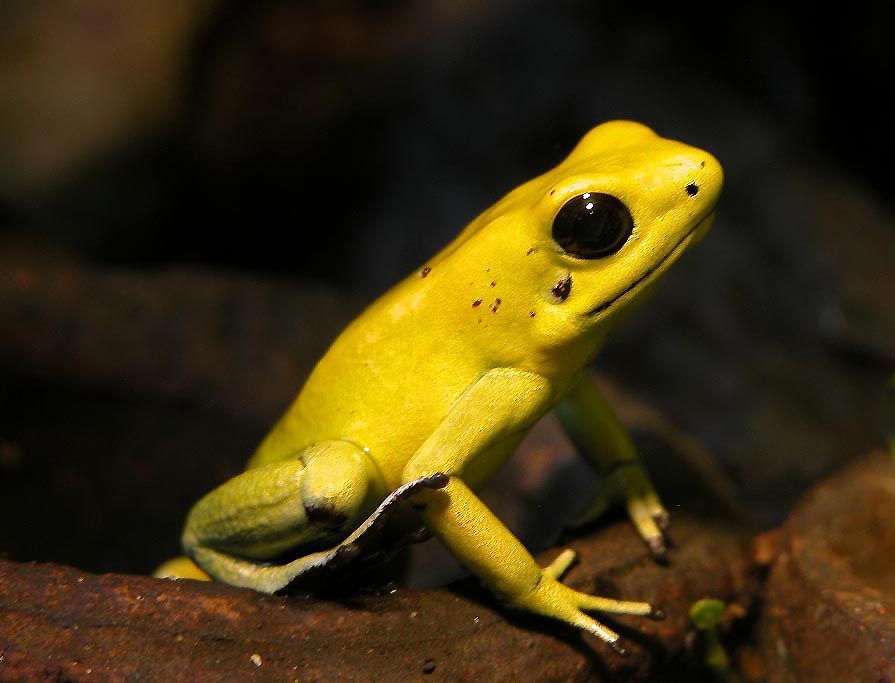
Golden Poison Frog (Phyllobates terribilis)
Introduction
On the forest floor of Colombia's Pacific lowlands, beneath a cathedral of dripping ferns and moss-covered roots, something moves that seems almost impossibly vivid. A frog no larger than a human thumb crosses a rain-soaked leaf, its skin blazing with a metallic golden-yellow that seems to generate its own light against the dim undergrowth. It moves without caution, without the instinctive furtiveness of most small forest animals. It does not hide. It does not need to.
The Golden Poison Frog — Phyllobates terribilis — is the most toxic vertebrate on Earth. A single adult carries enough batrachotoxin in its skin to kill ten adult humans, or, by some estimates, twenty thousand laboratory mice. Yet it wears its lethality openly, almost provocatively, broadcast through that extraordinary golden colour. To encounter one in the wild is to witness one of evolution's most elegant and extreme solutions to survival: not armour, not speed, not concealment, but pure, concentrated chemical warfare wrapped in radiant beauty.
Confined to a remarkably small range within the Chocó biodiversity hotspot — one of the most species-rich and least studied rainforest systems on the planet — P. terribilis occupies a role in its ecosystem that extends far beyond its diminutive size. It is a predator, a prey item for a tiny number of specialists, a symbol of evolutionary arms races, and an inadvertent pharmacological library whose secrets scientists are only beginning to decode. It is also, like so much of what makes the Chocó extraordinary, under threat.
This article examines the Golden Poison Frog with the depth its biology demands: its ecology, behaviour, chemistry, evolutionary history, and uncertain future. Few animals reward close scientific attention as richly as this small, incandescent creature on the forest floor of one of the world's most imperilled wilderness systems.
"The frog does not drink up the pond in which it lives."
— Native American Proverb
Scientific Classification
Kingdom: Animalia
Phylum: Chordata
Class: Amphibia
Order: Anura
Family: Dendrobatidae
Genus: Phyllobates
Species: Phyllobates terribilis (Myers, Daly & Málkin, 1978)
Common Names: Golden Poison Frog, Golden Poison Dart Frog, Golden Poison Arrow Frog
IUCN Status: Endangered (EN)
The genus Phyllobates contains only five described species, all native to South and Central America, and all capable of producing batrachotoxins — a group of steroidal alkaloids unique among vertebrates. However, P. terribilis stands apart from its congeners by several orders of magnitude in terms of toxin concentration and potency. When Myers, Daly, and Málkin formally described the species in 1978, they named it terribilis — Latin for "terrible" or "dreadful" — a designation that was not dramatic excess but sober scientific acknowledgement of what they had found.
Within the broader family Dendrobatidae, commonly called poison dart frogs or poison frogs, Phyllobates represents one of the oldest and most toxicologically derived lineages. Phylogenetic analyses place the family's origin in South America, with subsequent radiations northward into Central America. The five Phyllobates species — P. terribilis, P. bicolor, P. aurotaenia, P. vittatus, and P. lugubris — represent a gradient of batrachotoxin potency, with P. terribilis sitting at the extreme end of that gradient.
Physical Characteristics
The Golden Poison Frog is, in purely metric terms, unremarkable in size. Adults typically measure between 47 and 55 millimetres from snout to vent, with females being slightly larger than males on average — a pattern of modest female-biased sexual size dimorphism common across the dendrobatid family. Body mass generally falls between 1.5 and 3 grams. By any objective physical standard, this is a small amphibian. Nothing about its dimensions suggests the scale of threat it represents.
What P. terribilis lacks in size, it compensates for in visual impact. The species is most commonly encountered in its namesake golden-yellow morph — a uniform, metallic, almost luminescent colouration that covers the entire dorsal and ventral surface. In some populations, particularly around the Río Saija drainage, individuals display a pale mint-green or orange colouration instead. These colour variants are geographically consistent enough to represent distinct populations, though they are not currently recognised as separate subspecies. All morphs share the same fundamental aposematic function: they signal toxicity with maximum visual clarity.
The skin surface is smooth and moist, consistent with amphibian requirements for cutaneous respiration and osmoregulation. Unlike some frog species that use dermal tubercles or glandular swellings as physical defence structures, P. terribilis relies entirely on chemistry rather than morphology for protection. The granular glands embedded throughout the skin continuously sequester and concentrate batrachotoxin, making the surface of the living frog genuinely hazardous to handle without protection.
The eyes are large relative to the skull, dark, and positioned laterally to provide a wide field of view — a functional adaptation for detecting small moving prey items. The digits bear toe pads coated in mucus-secreting cells that generate adhesive capillary forces, allowing the frog to climb smooth surfaces, navigate vertical root systems, and maintain grip on wet vegetation. The limbs are robust for the body size, supporting the active, terrestrial foraging style that characterises this species.
Trait | Phyllobates terribilis | Dendrobates tinctorius | Oophaga pumilio |
|---|---|---|---|
Adult length | 47–55 mm | 35–50 mm | 17–24 mm |
Primary toxin | Batrachotoxin | Pumiliotoxin / Allopumiliotoxin | Pumiliotoxin |
Toxin source | Dietary (mites/beetles) | Dietary (arthropods) | Dietary (mites) |
IUCN Status | Endangered | Least Concern | Least Concern |
Range size | Very restricted (Chocó, Colombia) | Broad (Amazon basin, Guianas) | Central America, NW Colombia |
Colouration | Gold, orange, or mint-green | Highly variable morphs | Red with blue limbs (typical) |
Habitat & Geographic Distribution
The Golden Poison Frog occupies one of the most geographically restricted ranges of any well-known amphibian species. Its entire confirmed native distribution lies within the Chocó department of western Colombia, concentrated along the Pacific coastal lowlands between the Río San Juan in the north and the Río Patía drainage system in the south. The core of the species' range appears to centre on the Río Saija and surrounding river systems, at elevations generally below 200 metres above sea level, though occasional records exist from slightly higher forest margins.
The Chocó biogeographic region is internationally recognised as one of the world's most important biodiversity hotspots. Receiving annual rainfall that can exceed 8,000 millimetres in some localities — making it among the wettest inhabited regions on Earth — the Chocó sustains a lowland tropical rainforest of exceptional structural complexity. Canopy heights regularly exceed 30 metres, with multiple stratified understory layers creating a microhabitat mosaic of extraordinary diversity. The forest floor is perpetually moist, littered with decomposing leaf matter, fallen logs, and root tangles that create the precise microenvironments P. terribilis requires.
Within this broader forest landscape, P. terribilis is a habitat specialist. It is strongly associated with undisturbed primary rainforest with high ambient humidity, dense leaf litter accumulation, and access to small standing or slow-moving water bodies for reproduction. The species shows a clear preference for forest-interior microhabitats rather than edge zones, and is almost never encountered in degraded or secondary forest. This habitat specificity is ecologically significant: it means the species cannot simply shift into modified landscapes as deforestation advances.
The Chocó is not only extraordinarily biodiverse but also extraordinarily threatened. Rates of forest loss in the region have accelerated dramatically since the 1980s, driven by agricultural conversion, illegal coca cultivation, artisanal gold mining, and large-scale palm oil plantation development. The already restricted range of P. terribilis is being systematically fragmented and reduced, a factor that has contributed directly to its Endangered classification on the IUCN Red List.
Fun FactThe Chocó biogeographic region has an estimated 9,000 plant species, approximately 25% of which are found nowhere else on Earth — making it one of the most botanically unique forest systems on the planet, and the sole home of the Golden Poison Frog.
Behaviour & Social Structure
For a frog so often discussed in terms of its chemistry, Phyllobates terribilis displays a surprisingly rich and complex behavioural repertoire. Its social structure, territorial behaviour, and communication systems are shaped both by its ecological context and by the unusual freedom from predation that its toxicity grants. Unlike most small amphibians, which spend significant portions of their active period hiding or freezing in response to perceived threats, the Golden Poison Frog moves through its environment with a confident directness that reflects its near-immunity from predation.
Social organisation in P. terribilis is structured around territorial behaviour, particularly in males. Males actively defend core foraging and calling sites from rival males through a combination of acoustic signalling and physical confrontation. Territorial disputes typically begin with prolonged calling bouts, where males issue rapid series of high-pitched trilled calls from elevated calling positions — leaf surfaces, root buttresses, or low branches — to advertise presence and competitive condition. If vocal advertisement fails to deter a rival, escalation to physical wrestling is common, with males attempting to push competitors off calling sites or pin them briefly against the substrate.
Territory sizes are relatively small — consistent with the species' restricted home range requirements in dense rainforest — but defended with notable persistence. Studies of closely related Phyllobates species suggest that male territory quality correlates strongly with access to calling sites near suitable oviposition water bodies, meaning territorial success has direct reproductive consequences.
Female P. terribilis are also active and move through the territories of multiple males during the breeding season, suggesting female choice plays a role in mate selection. Females may assess male quality through call characteristics including call rate, duration, and frequency modulation. This aligns with patterns observed across the Dendrobatidae, where female choice has driven considerable diversification in male acoustic signals and, in some lineages, in body colouration.
The species is diurnal — active exclusively during daylight hours — and this temporal niche is deeply connected to its aposematic strategy. Warning colouration is only useful when potential predators can see it, and the high-light conditions of a rainforest day maximise the visibility of the golden coloration. At night, when visual predators are at a disadvantage and olfactory and ambush predators dominate, P. terribilis retreats to sheltered microhabitats within the leaf litter or beneath bark.
Intelligence in the conventional mammalian sense is difficult to assess in small amphibians, but P. terribilis demonstrates spatial learning and site fidelity consistent with a functionally capable cognitive map of its local territory. Individual frogs return repeatedly to the same calling sites, foraging patches, and retreat locations — behaviours that require the formation and retention of spatial memory.
Daily Life & Activity Cycle
The daily rhythm of the Golden Poison Frog is governed by a tight interplay between light availability, temperature, humidity, and the activity cycles of its arthropod prey. Activity begins shortly after dawn, when temperatures in the rainforest understorey begin their gradual rise and the first direct shafts of filtered light penetrate the canopy. Frogs emerge from their overnight retreats — sheltered positions within or beneath decomposing leaf litter, inside fallen logs, or under bark — and begin a period of thermoregulatory basking before active foraging commences.
Despite being ectothermic, P. terribilis actively manages its body temperature through behavioural thermoregulation. On the shaded forest floor, this primarily means selecting microhabitats that intercept the limited direct solar radiation available — a behaviour termed heliothermy. Optimal body temperatures for foraging and physiological function in dendrobatid frogs typically fall between 24 and 30 degrees Celsius, and P. terribilis tracks this thermal window through the day by shifting between sun-exposed and shaded positions.
Peak foraging activity occurs during mid-morning and again in late afternoon, periods that also coincide with maximum leaf-litter arthropod activity. During these windows, the frog moves actively through the forest floor, flicking its tongue at mites, ants, beetles, springtails, and small flies encountered during its patrol circuit. This is not passive sit-and-wait predation — it is active, searching predation, with the frog covering significant ground relative to its body size as it systematically works through leaf litter patches and root tangles.
During the hottest part of midday, activity often reduces, and frogs may retreat to humid microsites where evaporative water loss is minimised. Cutaneous water loss is a genuine physiological risk for small amphibians in tropical forest environments, even humid ones, and behavioural avoidance of desiccating conditions is a consistent component of daily routine.
Male calling behaviour is concentrated in the morning and late afternoon hours and intensifies markedly during the breeding season. Calls serve multiple simultaneous functions: advertising territory to rival males, attracting females, and potentially mediating interactions with predators by reinforcing the acoustic signature of an unpalatable species.
Diet & Survival Strategies
The Golden Poison Frog is an insectivore and myrmecophage — a specialist consumer of ants and other small invertebrates. Its diet is not merely a matter of sustenance; it is the direct biochemical source of its extraordinary toxicity. P. terribilis does not synthesise batrachotoxin endogenously. Instead, it acquires the chemical precursors to its toxins from specific arthropod prey items and bioaccumulates, modifies, and sequesters them in its skin glands at concentrations far exceeding those found in the original dietary sources.
The primary dietary items implicated in batrachotoxin acquisition include melyrid beetles of the genus Choresine — small, reddish-brown beetles found in tropical forest leaf litter — which themselves contain steroidal alkaloid precursors derived from their own dietary sources. Certain mite species are also strongly implicated. The chain runs: plant material or fungal sources → mites or beetles → frogs → sequestered skin toxins. This represents one of the most extraordinary examples of dietary toxin sequestration known in vertebrates.
Laboratory-reared P. terribilis fed on captive-bred fruit flies and other commercially produced invertebrates — which lack the necessary chemical precursors — are entirely non-toxic. This fact, elegantly simple in its implications, confirms that the batrachotoxin system is dependent on dietary inputs rather than intrinsic biosynthesis. It also has practical implications for captive management and for understanding the co-evolutionary dynamics between the frog, its prey, and the plant or microbial communities that ultimately produce the relevant steroidal precursors.
Beyond toxin acquisition, the foraging strategy of P. terribilis reflects the energetics of life in a resource-dense but heterogeneous environment. Small arthropods are abundant in tropical leaf litter but patchily distributed, and the active-search foraging mode of dendrobatid frogs is energetically well-suited to exploiting these patches. The frog's tongue — elastic, projectile, and mucus-coated — can capture prey items in milliseconds, and the species has been documented consuming dozens of individual small invertebrates per foraging bout.
Dietary breadth encompasses mites, ants, small beetles, springtails, fly larvae, small termites, and various other micro-invertebrates. Prey selection is primarily based on size — anything small enough to be swallowed is a potential prey item — but there is evidence that certain chemically defended ant species are preferentially consumed, consistent with the hypothesis that P. terribilis has evolved biochemical machinery specifically adapted to processing otherwise toxic arthropod prey.
Fun FactA single wild-caught Golden Poison Frog carries approximately 1,900 micrograms of batrachotoxins in its skin — enough to cause fatal cardiac arrest in multiple adult humans through skin contact alone, making it the most toxic naturally occurring non-microbial substance produced by any vertebrate animal.
Interaction with Other Animals
The ecological relationships of Phyllobates terribilis with other animals are defined, more than almost any other small vertebrate, by the asymmetry created by its toxicity. The vast majority of potential predators in its environment — snakes, birds, small mammals, lizards — cannot consume it without lethal or severely debilitating consequences. This creates a community-level effect: P. terribilis interacts with much of its animal community not through predation or competition but through a kind of enforced avoidance that ripples through multiple trophic levels.
The most widely discussed predatory interaction involving P. terribilis and its relatives involves the Erythrolamprus species — a group of South American colubrid snakes that have evolved a degree of physiological resistance to batrachotoxin. These snakes, sometimes called ground snakes or false coral snakes, are implicated as one of the few vertebrate predators capable of consuming dendrobatid frogs without fatal outcome. The resistance is not absolute — even Erythrolamprus individuals show neurological effects from batrachotoxin at high doses — but it represents an evolved counter-adaptation in the context of a chemical arms race between predator and prey.
The indigenous Emberá and Wounaan peoples of the Chocó have historically demonstrated the most culturally significant human interaction with the species, using the frog's batrachotoxins to poison blowgun darts — a practice from which the common name "poison dart frog" derives. The Emberá specifically used P. terribilis, rubbing blowgun darts across the living frog's back to transfer toxin. This human-frog relationship is unique in the natural world: a cultural tool use of an animal's chemical defences.
In terms of prey relationships, P. terribilis is an active and significant predator of micro-invertebrate communities. Its consumption of mites, ants, springtails, and small beetles places it firmly within the detritivore-invertebrate subsystem of the forest floor food web. As a consumer of organisms that themselves process decomposing organic matter, the Golden Poison Frog is indirectly connected to nutrient cycling dynamics in ways that are easy to overlook given its small size.
Competition with other sympatric dendrobatid species — including Epipedobates tricolor and other co-occurring poison frogs — is likely present but poorly studied in the specific context of P. terribilis populations. Resource partitioning through microhabitat specialisation, prey size selectivity, and temporal activity patterns probably reduces direct competition, though in degraded forest fragments where habitat quality declines uniformly, competitive exclusion dynamics may intensify.
The rain had been continuous for three days along the Río Saija when a field researcher crouched at the edge of a root system, watching a golden frog cross a broad fallen leaf with total indifference to her presence. She had been in the Chocó forest for two weeks and had seen numerous animals flee, hide, or freeze at her approach. This one simply walked, deliberate and direct, its metallic skin catching the thin light that filtered through the canopy three layers above.
Twenty centimetres away, a ground snake had paused — a slender, banded Erythrolamprus, its tongue tasting the air. The frog and the snake occupied the same patch of forest floor for nearly ninety seconds. The snake moved closer, retreated, circled. The frog did not deviate. Eventually the snake withdrew into the leaf litter, and the frog continued on its patrol circuit as if the encounter had simply not registered.
Later, reviewing field notes, she wrote: "The frog's confidence is not bravado. It is information. It knows, in whatever biochemical sense knowing operates at this level of life, that it is the most dangerous thing on this piece of ground. And it moves accordingly."
That observation — a predator hesitating before retreating from an animal one-fiftieth its mass — captures something essential about the evolutionary solution that Phyllobates terribilis represents: not the elimination of danger, but its radical chemical inversion.
Interaction with Environment
The relationship between Phyllobates terribilis and its physical environment is one of precise calibration. Every significant aspect of the species' biology — its physiology, its foraging success, its reproductive timing, its toxin acquisition — is tightly coupled to specific environmental parameters that characterise intact lowland Chocó rainforest. This tight coupling makes the species both a product of its environment and an indicator of its integrity.
Humidity is arguably the most critical abiotic factor governing the species' distribution and activity patterns. As an amphibian with permeable, non-waterproof skin, P. terribilis is susceptible to desiccation in any environment where relative humidity drops significantly below saturation. The Chocó rainforest maintains exceptionally high ambient humidity — regularly above 85 to 90 percent — that allows small-bodied frogs to remain active on exposed surfaces without critical water loss. This is part of why the species cannot persist in degraded or edge forest environments, where canopy opening reduces humidity and increases thermal variability.
The leaf litter layer of the forest floor is not merely the terrain through which P. terribilis moves — it is the functional core of its ecological world. The depth, moisture content, and invertebrate community of the leaf litter directly determine foraging success, toxin acquisition opportunities, and, importantly, the availability of retreating and oviposition microhabitats. Leaf litter is itself a product of canopy integrity; remove the canopy and you remove the leaf litter, and with it the substrate on which the frog's entire life cycle depends.
Rainfall seasonality in the Chocó, though less extreme than in more seasonal tropical systems, still produces temporal variation in standing water availability that drives the species' reproductive calendar. Breeding activity intensifies during wet season peaks, when ephemeral pool formation and the flooding of small stream margins creates the shallow, vegetated water bodies that the species requires for tadpole development.
As a consumer of mites and micro-invertebrates, P. terribilis participates in the regulation of forest floor arthropod communities. Given that mites are among the primary processors of decomposing leaf matter, a significant dendrobatid predator population exerts measurable top-down pressure on decomposition rates — an indirect but real contribution to nutrient cycling and soil dynamics in the forest floor ecosystem.
Reproduction & Parenting
Reproduction in Phyllobates terribilis follows a pattern broadly consistent with the dendrobatid family but with specific details that reflect the species' ecological context and social structure. The breeding season is loosely correlated with peak wet season conditions, though in the continuously wet Chocó environment, some degree of breeding activity may occur throughout the year, with intensity peaks rather than strict seasonal boundaries.
Courtship is initiated primarily by males, who use intensified calling from established territories to attract females during breeding periods. When a female enters a male's territory and remains in proximity without fleeing — itself a signal of receptivity — the male initiates a tactile component of courtship involving physical nudging and circling behaviour that appears to facilitate the female's assessment of male quality at close range. This multi-modal courtship system — acoustic, visual, and tactile — is consistent with selection for honest signalling in a species where male quality may be partially honest in ways that cannot be faked through call production alone.
Egg deposition occurs on the moist forest floor, typically on broad, low leaf surfaces or in sheltered ground depressions, rather than in water. Clutch sizes in P. terribilis are relatively small — typically three to six eggs per clutch — a characteristic of many dendrobatids that invest heavily in parental care rather than producing large numbers of eggs with low individual survival probability. Eggs are surrounded by a gelatinous matrix that maintains hydration and provides some mechanical protection.
Parental care is pronounced and primarily male-mediated, though female involvement has been documented. After egg deposition, the male attends the clutch, returning periodically to keep the eggs moist through cloacal water transport and to guard against potential invertebrate predation. This is a demanding investment for an animal with few energetic reserves, and it represents a significant adaptive trade-off between reproductive effort and adult condition maintenance.
When the eggs hatch — typically within ten to fourteen days under optimal conditions — the male transports the tadpoles on his back to a suitable water body. Tadpoles adhere to specialised mucus-secreting skin patches on the male's dorsum and are carried to ephemeral pools, stream margins, or water-filled bromeliads. The tadpoles are not passive cargo; they wriggle and reposition themselves during transport in ways that help maintain adhesion. Once deposited in water, the tadpoles are largely independent, though some parental monitoring of oviposition sites has been observed.
Tadpole development to metamorphosis takes approximately six to eight weeks depending on water temperature, food availability, and population density within the pool. Metamorphs — newly transformed froglets — are among the most vulnerable life stage for the species, as they have not yet accumulated sufficient dietary batrachotoxin to be fully protected by aposematism. Their colouration is already present at metamorphosis, suggesting that the warning signal is constitutively expressed regardless of toxin loading, potentially functioning as a developmental programme decoupled from toxin concentration.
Sexual maturity is typically reached within six to twelve months of metamorphosis. The lifespan of P. terribilis in the wild is estimated at four to six years, though captive individuals under managed conditions have been documented surviving significantly longer — occasionally exceeding ten years — in the absence of predation, disease, and environmental stressors.
Evolutionary Adaptations
The evolutionary history of Phyllobates terribilis represents one of the most remarkable case studies in vertebrate chemical defence. The batrachotoxin system — the molecular mechanism by which this frog achieves lethality — did not arise in a single evolutionary event but through a series of sequential adaptations: first, the capacity to consume prey containing chemical precursors without self-intoxication; second, the development of biochemical machinery to sequester and concentrate those compounds in skin glands; third, the evolution of aposematic colouration that broadcasts the resulting toxicity to potential predators; and fourth, at the community level, the co-evolution of predator species with varying degrees of toxin resistance.
The sequestration mechanism itself is physiologically extraordinary. Batrachotoxins are potent sodium channel-binding agents that lock voltage-gated sodium channels in a permanently open state, causing sustained membrane depolarisation, loss of nerve and muscle function, and cardiac arrest. The frogs themselves are immune to their own toxins through a specific mutation in the sodium channel protein — a single amino acid substitution at a critical binding site that prevents batrachotoxin from binding effectively while maintaining normal channel function. This molecular self-resistance predates or co-evolved with the capacity to accumulate and deploy the toxin, without which the sequestration system would be self-defeating.
The aposematic colouration is itself an evolved signal shaped by predator learning. Effective aposematism requires that predators be capable of learning to associate a signal with an aversive experience, and that they retain and transmit that association. In vertebrate predator communities, this learning is well-documented. The bright, uniform, highly saturated golden colouration of P. terribilis maximises signal detectability in forest light conditions and appears to have been selected specifically for contrast against the brown and green background of the forest floor.
The toe pads of dendrobatid frogs represent another adaptive system worth examining. The adhesive mechanism relies on arrays of hexagonally packed epithelial cells whose tips generate capillary adhesion through a thin film of mucus — a wet adhesion system that is both reversible and self-cleaning. This allows the frog to climb smooth wet surfaces with remarkable efficiency while retaining the ability to move quickly during foraging and courtship. The biomechanics of this system have attracted considerable attention from materials scientists interested in bio-inspired adhesives.
Active thermoregulatory behaviour in an ectotherm is itself an adaptation that optimises physiological performance in a thermally heterogeneous environment. The ability to track optimal temperature ranges by selecting appropriate microhabitats — rather than being thermally passive — allows P. terribilis to sustain the metabolic rates necessary for active foraging, rapid prey capture, and sustained calling across a full diurnal activity window.
Ecological Importance
The ecological importance of Phyllobates terribilis operates across multiple scales, from the micro-ecology of the forest floor to the macro-ecology of the Chocó biogeographic system. At the most immediate level, the species functions as an insectivore that regulates arthropod populations in the forest floor invertebrate community. The removal of a significant insectivore from any ecosystem creates measurable effects on prey population dynamics, and in the case of mite and ant-heavy communities, those effects cascade through decomposition rates, soil structure, and ultimately through plant community composition.
At a broader scale, P. terribilis participates in energy transfer between trophic levels. As a consumer of detritivorous invertebrates, it channels energy from decomposing organic matter into higher trophic levels. As a prey item for the few specialist predators capable of consuming it — notably certain snake species — it transfers energy and chemical compounds (including batrachotoxin precursors) upward in the food web. The chemical ecology of this transfer is not yet fully understood but represents a fascinating avenue of ecological research.
The species has also acquired enormous scientific and pharmacological importance that transcends its immediate ecological role. Batrachotoxins, because of their specific and potent interaction with voltage-gated sodium channels, have become invaluable tools in neuroscience research. The sodium channel is one of the most fundamental targets in neurological pharmacology, implicated in pain, cardiac rhythm, epilepsy, and anaesthesia. Batrachotoxin analogues and derivatives are actively studied as potential leads in drug development programmes targeting pain management and cardiac arrhythmia. The Golden Poison Frog is, in this sense, a living pharmaceutical library of extraordinary potential value.
Within the Chocó ecosystem, the presence of a healthy, self-sustaining dendrobatid population is an indicator of overall forest floor ecosystem integrity. These frogs require intact primary forest, diverse micro-invertebrate communities, permanent but shallow water bodies, and continuous high humidity — conditions that together reflect undisturbed, complex rainforest function. Monitoring P. terribilis population status is therefore a proxy for monitoring the health of the entire lowland Chocó forest ecosystem.
Threats & Conservation
The Golden Poison Frog faces a convergence of threats that, acting simultaneously on a species with a restricted range, small total population size, and narrow habitat tolerances, creates a genuine extinction risk. These threats are not hypothetical — they are ongoing, measurable, and in several cases accelerating.
Habitat destruction is the dominant threat. The Chocó has experienced some of the highest rates of deforestation in South America, driven by agricultural expansion (particularly African palm oil plantations), coca cultivation tied to the narcotics trade, artisanal and large-scale alluvial gold mining, and subsistence farming pressure from growing human populations along the Pacific coast. The Golden Poison Frog's absolute dependence on intact primary rainforest means that habitat loss is not a gradual pressure it can partially tolerate — forest clearance effectively removes the species from an area permanently.
Collection for the international exotic pet trade represents a secondary but non-trivial threat. The brilliant appearance of P. terribilis has made it highly sought after by collectors. While captive-bred specimens are non-toxic and increasingly available, wild collection continues in some areas, and even low-level extraction from a small wild population can have disproportionate demographic consequences.
Disease — specifically chytridiomycosis caused by the fungal pathogen Batrachochytrium dendrobatidis (Bd) — is an acute threat to amphibians globally and has driven population crashes across multiple dendrobatid species in Central and South America. While some evidence suggests that the chemical environment of P. terribilis skin may confer partial resistance to Bd through direct antimicrobial activity of skin compounds, this resistance is not absolute, and Chocó populations have not been systematically screened for disease status.
Climate change adds a longer-term but increasingly urgent dimension to existing threats. The Chocó's extraordinary rainfall and humidity profile is likely to shift under projected climate trajectories, potentially reducing the environmental conditions on which this hygrophilous species depends. Changes in rainfall seasonality could affect breeding timing, tadpole survival, and prey availability in ways that compound the impacts of direct habitat destruction.
IUCN Red List Analysis
Current IUCN Status
Phyllobates terribilis is listed as Endangered (EN) on the IUCN Red List of Threatened Species. The Endangered classification places the species in a category defined by a very high risk of extinction in the wild, based on documented criteria including significant decline in area of occupancy, the extremely small extent of occurrence, and ongoing habitat degradation within that range.
The EN classification is warranted by the combination of an inherently restricted range — the species' endemic distribution in the Chocó lowlands represents a naturally small area of occupancy — and the rapid, ongoing loss of habitat quality within that range. Under IUCN criterion B, the species' estimated extent of occurrence and area of occupancy fall within or near the threshold for Endangered status, particularly when qualified by the observed continuing decline in habitat quality and connectivity. The listing reflects the precautionary judgement that a species with such restricted distribution, high habitat specificity, and documented population pressures cannot be safely categorised at a lower threat level.
Population Trend
The population trend for Phyllobates terribilis is assessed as decreasing. Precise population estimates are not available — the species is insufficiently surveyed to produce robust numerical figures — but field assessments across its range in the Chocó consistently document declining detection rates correlated with advancing forest loss. Historical accounts from the late twentieth century described locally dense populations in intact forest along river systems; contemporary surveys in areas that have experienced significant deforestation report substantially reduced encounter rates.
The absence of a precise census figure should not be interpreted as an absence of concern. For a species with a restricted endemic range, even locally stable subpopulations are individually small and vulnerable to stochastic demographic events. The fragmentation of remaining habitat into increasingly isolated patches reduces genetic exchange between subpopulations and increases the extinction risk of individual fragments through demographic and genetic stochasticity.
Main Threats
Habitat destruction is the primary and most pervasive threat. The conversion of Chocó lowland forest to palm oil plantations, coca fields, and subsistence agriculture has reduced and fragmented the forest cover within the species' range at a rate that clearly exceeds the population's capacity for recolonisation of disturbed areas. Because P. terribilis cannot persist in secondary or degraded forest, each forest fragment lost represents a permanent and irreversible reduction in available habitat.
Mining — both artisanal alluvial gold mining and more organised commercial operations — causes direct forest clearance and, critically, contaminates waterways with mercury and sediment. The resulting degradation of small water bodies used for tadpole development represents a specific threat to the species' reproductive success that is distinct from simple habitat area reduction.
Wildlife trade continues to represent a non-negligible pressure, particularly in areas accessible to collectors. The international demand for dendrobatid frogs as exotic pets creates commercial incentives for wild collection even where captive breeding populations exist. For a species with a naturally restricted wild range, even modest wild extraction can affect local population viability.
Disease, specifically the chytrid fungus Batrachochytrium dendrobatidis, has caused catastrophic population declines across Central America and Andean South American amphibian communities. While the Chocó lowlands have not experienced the same magnitude of Bd-associated declines observed in highland systems, the pathogen is present in the region, and the vulnerability of P. terribilis populations to emergence events remains insufficiently studied.
Climate change threatens to alter the hydrological regime of the Chocó, potentially reducing the extreme rainfall and humidity levels that sustain both the forest and the frog. Increased frequency of drought events, altered seasonality, and temperature increases would all adversely affect a species physiologically calibrated for near-constant moisture and thermal stability.
Ecological Consequences
A significant further decline in Phyllobates terribilis populations would produce cascading ecological consequences within the forest floor communities it inhabits. As a significant consumer of mites, ants, and small beetles, the species contributes to top-down regulation of micro-invertebrate communities. Reduction of this predation pressure would allow prey invertebrate populations to expand, potentially altering the structure of decomposer communities and the rates at which leaf litter is processed. In forest ecosystems where nutrient cycling is tightly regulated, even modest shifts in decomposer community composition can have measurable effects on soil chemistry and plant nutrient availability.
The loss of P. terribilis from the few specialist predators that have co-evolved partial toxin resistance — Erythrolamprus snakes and potentially other species — would remove a selective pressure that has shaped those predator populations over evolutionary time. More broadly, the disappearance of a flagship species of the Chocó would reduce the capacity of conservation programmes to use the species as an umbrella or indicator species for monitoring the health of the broader forest ecosystem.
The pharmacological consequences of population decline are also significant. The batrachotoxin system of P. terribilis represents a unique biochemical resource with documented potential in neurological and cardiac drug development. Population decline and habitat loss reduce the wild genetic diversity and biochemical variability within the species that may be essential for future pharmaceutical applications. The extinction or near-extinction of the species would permanently close this pharmacological window.
Conservation Efforts
Conservation activities targeting Phyllobates terribilis and its Chocó habitat operate at multiple levels, though the overall conservation infrastructure in the region remains underdeveloped relative to the scale of the threats. The Colombian national park system includes several protected areas that overlap with or border the species' range, most notably Parque Nacional Natural Utría on the Pacific coast, which protects a section of Chocó lowland forest containing confirmed frog populations. However, enforcement capacity within these protected areas is limited, and illegal activity — mining, agriculture, and coca cultivation — occurs within formally protected boundaries.
Community-based conservation initiatives, often facilitated by NGOs working with indigenous Emberá and Wounaan communities, represent a promising approach that aligns conservation goals with the territorial rights and land management practices of communities with long-standing relationships with the forest and its fauna. These programmes recognise that sustainable conservation of Chocó biodiversity is inseparable from the economic and cultural security of its indigenous inhabitants.
Captive assurance colonies of P. terribilis are maintained in several zoological institutions and by specialist herpetological facilities, though these are more valuable as insurance against total wild extinction than as active reintroduction resources, given the logistical and ethical complexities of reintroducing captive-born amphibians into intact wild habitats. The non-toxicity of captive-bred individuals further complicates reintroduction planning, as individuals lacking batrachotoxin would be functionally different from wild conspecifics and potentially more vulnerable to predation.
International treaties, including CITES (the Convention on International Trade in Endangered Species of Wild Fauna and Flora), regulate the trade in P. terribilis. The species is listed under CITES Appendix II, which does not prohibit trade but requires export permits and oversight to ensure that commercial trade does not threaten wild populations. Enforcement of these provisions in the Chocó remains patchy.
Future Outlook
The future of Phyllobates terribilis in the wild depends almost entirely on whether the rate of deforestation in the Colombian Chocó can be reduced to a level compatible with the persistence of intact forest fragments large enough to support viable frog populations. Given current trajectories of land-use change in the region — driven by deeply structural economic pressures — this represents a genuinely uncertain prospect.
There are qualified reasons for cautious optimism. The Chocó's extraordinary biodiversity profile has attracted international conservation funding and scientific attention that is beginning to translate into on-the-ground protection measures. Colombia's post-conflict political situation, following the 2016 peace agreement, has created new opportunities for biodiversity conservation in formerly inaccessible areas, though it has simultaneously opened some previously isolated forest areas to new agricultural and mining pressure. The net effect on Chocó forest cover is not yet clear.
Without sustained, adequately funded conservation intervention that addresses both habitat protection and the socioeconomic drivers of deforestation, the Golden Poison Frog faces continued population decline and an increasing probability of extinction within its natural range within the present century. The species' extraordinary biological significance — scientifically, pharmacologically, ecologically, and culturally — makes this prospect one that should command urgent attention from both the Colombian government and the international conservation community.
Threat Factor | Current Severity | Trend | Primary Driver |
|---|---|---|---|
Deforestation | High | Worsening | Agriculture, mining, coca cultivation |
Wildlife trade | Moderate | Stable/declining with captive supply | Exotic pet demand |
Disease (Bd) | Uncertain | Unknown | Chytrid fungus spread |
Climate change | Low–moderate (currently) | Worsening long-term | Global emissions trajectory |
Mining pollution | Moderate | Worsening | Gold mining, mercury contamination |
Human Relationship
The relationship between Phyllobates terribilis and humans is ancient, intimate, and ethically complex. For the indigenous Emberá and Wounaan peoples of the Colombian Pacific lowlands, the Golden Poison Frog has been not merely a forest neighbour but an active technological resource. The Emberá practice of wiping blowgun darts across the backs of living frogs to transfer batrachotoxin — from which the common name "poison dart frog" derives, though in truth only the three Phyllobates species with sufficient toxin were genuinely used — is documented from early colonial-era accounts and continues in modified form in some communities today.
The process, as described by ethnographers and herpetologists who have documented it, requires care and specific traditional knowledge. The frog is restrained — historically using a stick or vine — and the wooden dart tip is drawn across the dorsal surface, where toxin-secreting glands are most concentrated. A single P. terribilis can reportedly charge between fifty and two hundred darts, and darts treated in this way retain potency for up to a year. The hunting application is practical: a dart carrying even a microgram quantity of batrachotoxin is sufficient to immobilise or kill small to medium-sized prey animals rapidly and silently.
In contemporary Colombia, P. terribilis has become a subject of scientific research, ecotourism interest, and conservation concern simultaneously. International herpetologists and toxicologists visit the Chocó specifically to study the species, generating economic activity that, when managed responsibly, can provide incentives for forest protection. Wildlife photography and birdwatching tourism to the Chocó — where the Golden Poison Frog is a flagship attraction — contributes to a growing ecotourism economy in a region that has historically had few legal economic alternatives to forest clearance.
The exotic pet trade has created a global community of dendrobatid enthusiasts who maintain captive colonies of P. terribilis and related species. While captive-bred individuals are non-toxic and represent no direct risk to keepers, the cultural cachet of the species — its legendary toxicity, its extraordinary appearance — sustains demand that, without careful regulation, could translate into harmful wild collection pressure. The herpetological hobbyist community has, however, also become an unexpected conservation asset, funding research, raising public awareness, and maintaining genetic material outside the species' natural range.
In broader cultural terms, P. terribilis has achieved a degree of popular recognition that far exceeds that of most small rainforest amphibians. It appears regularly in documentaries, natural history publications, and school curricula as an example of aposematism, chemical ecology, and the biodiversity of the tropical rainforest. This cultural visibility — the golden frog as icon — is itself a conservation resource. Animals that people know, recognise, and care about are demonstrably more likely to attract protective intervention than anonymous members of threatened taxa.
Fun FactThe Emberá name for Phyllobates terribilis loosely translates as "the frog that kills" — a designation that predates Western science's formal characterisation of its toxicology by centuries, reflecting generations of intimate and careful indigenous knowledge of the forest's most dangerous small resident.
Unique & Rare Facts
Self-resistance through mutation: P. terribilis possesses a specific amino acid substitution (asparagine to threonine) at position 1584 of its voltage-gated sodium channel protein. This single change prevents batrachotoxin from binding to the channel while preserving normal electrical function — an elegant example of a point mutation conferring complete resistance to a lethal compound.
Captive individuals are non-toxic: Laboratory-reared Golden Poison Frogs fed on fruit flies and similar prey are entirely free of batrachotoxin. Their striking colouration remains intact, but the aposematic signal is, in chemical terms, a bluff — evidence that skin colouration and toxin concentration are developmentally and physiologically decoupled.
The most toxic vertebrate on Earth: The LD50 of batrachotoxin in mice is approximately 2 micrograms per kilogram of body weight injected subcutaneously. A single wild P. terribilis carries approximately 1,900 micrograms of batrachotoxins — a quantity sufficient to kill an estimated 10 to 20 adult humans by skin exposure alone.
Batrachotoxin is also found in birds: Pitohui and Ifrita birds of New Guinea contain steroidal alkaloids including batrachotoxins in their feathers and skin — the only known avian examples of chemical defence. The source, as in P. terribilis, appears to be dietary: the birds consume melyrid beetles, the same beetle group implicated in frog toxin acquisition.
The genus name means "leaf climber": Phyllobates is derived from Greek roots meaning "one who climbs leaves" — a name that captures the arboreal agility of these frogs and their association with broad-leaved forest floor vegetation.
Tadpoles are also chemically defended: While the precise toxicology of P. terribilis tadpoles has not been fully characterised, related dendrobatid tadpoles have been shown to contain alkaloid compounds transferred from egg-associated secretions, suggesting that chemical defence begins earlier in the life cycle than previously assumed.
The species was formally described only in 1978: Despite its extraordinary toxicology and use by indigenous peoples for centuries, Phyllobates terribilis was not formally described by Western science until Charles Myers, John Daly, and Borys Málkin published their description in the Bulletin of the American Museum of Natural History — a reminder of how much undescribed biodiversity remained in the Chocó even in the late twentieth century.
Colour morphs are geographically structured: The three main colour morphs — classic yellow-gold, orange, and mint-green — are not randomly distributed but correspond to geographically distinct population clusters, suggesting that colour evolution has responded to local selective pressures or has drifted independently in isolated populations.
Batrachotoxin has no known antidote: Despite decades of research, there is no clinically effective antidote to batrachotoxin poisoning. Treatment is supportive — maintaining cardiac function and respiration — rather than curative. This distinguishes it from many other natural toxins for which specific antitoxin therapies exist.
The species inspired major neuroscience research: John Daly's decades-long investigation of alkaloids from dendrobatid frogs, which included extensive work on P. terribilis toxins, directly contributed to the discovery of epibatidine — a potent pain-blocking compound isolated from a related dendrobatid — and opened entire fields of sodium channel pharmacology.
Conclusion
There is something almost paradoxical about the Golden Poison Frog. It is simultaneously the most dangerous vertebrate on Earth — measured by the toxicological potency of its skin chemistry — and a fragile, range-restricted amphibian facing extinction from forces entirely indifferent to its lethal capabilities. Batrachotoxin does not protect against chainsaws. Chemical invincibility against biological predators offers no defence against the systematic conversion of a forest into a plantation.
Phyllobates terribilis is a product of deep evolutionary time, the result of millions of years of co-evolutionary pressure between predator and prey, between chemical challenge and molecular resistance, between signal and receiver. Its golden skin is not decoration — it is information encoded in light, a warning system that has been refined over geological epochs. Its toxin system is not merely a weapon — it is a biological archive of chemical reactions between organisms across multiple trophic levels, a record of ecological relationships written in molecular structure.
The loss of this species from the Chocó would be a loss on every register that matters: ecological, pharmaceutical, evolutionary, cultural. The forest floor community would shift in ways that ripple upward through trophic networks. A unique lineage of chemical adaptation would be erased. A pharmacological resource of unquantified potential would be closed. And the Emberá and Wounaan peoples, whose knowledge of this frog predates modern science by centuries, would lose a thread of living cultural connection to their forest homeland.
"What we are doing to the forests of the world is but a mirror reflection of what we are doing to ourselves and to one another."
— Mahatma Gandhi
The Golden Poison Frog walks across the wet leaves of the Chocó with the unhurried confidence of an animal that has, through chemistry and evolution, solved the problem of predation. The solution it found was extraordinary — elegant, specific, and irreplaceable. Ensuring that it continues to walk those leaves is not merely a conservation obligation. It is an act of respect for the complexity and depth of the living world that produced it, and a recognition that human civilisation, with all its pharmaceutical laboratories and ecological knowledge, has not yet found a way to replicate what a three-gram frog has been doing quietly for millions of years on a piece of wet forest floor in Colombia.
Sources & Attribution
Data and ongoing research referenced for this article come from the following authoritative sources — peer-reviewed publishers, official taxonomic registers, and global biodiversity programmes:
- IUCN Red List — Golden Poison Frog — official IUCN Red List assessment including population trend, threats, and conservation actions.
- Wikipedia — Golden Poison Frog — taxonomy, distribution, and an overview with onward citations to primary literature.
- GBIF — Golden Poison Frog — global occurrence and distribution records from the Global Biodiversity Information Facility.
- iNaturalist — Golden Poison Frog — observation records and field photographs contributed by naturalists worldwide.
- Encyclopedia of Life — Golden Poison Frog — multilingual species pages aggregating taxonomic and natural-history data.
- WWF — World Wildlife Fund — global wildlife conservation programmes and research summaries.
- Nature — research on Golden Poison Frog — peer-reviewed studies indexed by Nature on related ecology and behaviour.
- ITIS — Integrated Taxonomic Information System — federal-grade taxonomy and nomenclature.
Frequently Asked Questions
How toxic is the Golden Poison Frog compared to other animals?
The Golden Poison Frog is the most toxic vertebrate animal known to science. A single wild adult carries approximately 1,900 micrograms of batrachotoxins — enough to kill an estimated 10 to 20 adult humans through skin contact alone. For comparison, the venom of a black mamba snake, itself one of the world's most dangerous reptiles, would require direct injection of a much larger volume to achieve the same lethality. The toxicity of P. terribilis is not delivered through a bite or sting but through passive skin contact, making it dangerous to handle without protective gloves.
The only other vertebrates known to carry batrachotoxins in their tissues are certain New Guinea bird species — the Hooded Pitohui and Blue-capped Ifrita — which carry much smaller concentrations in their feathers and skin. The source in both cases is dietary, involving melyrid beetles that contain batrachotoxin precursors.
Are Golden Poison Frogs dangerous to touch?
Wild-caught Golden Poison Frogs should never be handled without adequate protection. The batrachotoxins in their skin can be absorbed through mucous membranes, small cuts, or abrasions on the handler's skin. Symptoms of batrachotoxin exposure include tingling, numbness, muscle weakness, cardiac arrhythmia, and, in sufficient doses, respiratory failure and death. The toxin does not penetrate intact, undamaged human skin effectively, but any compromise of the skin barrier creates a genuine hazard.
Captive-bred Golden Poison Frogs raised in controlled environments on non-toxic prey are entirely harmless — they carry no batrachotoxin. However, distinguishing wild-caught from captive-bred individuals without provenance documentation is not straightforward, and the safest approach is always to treat any living specimen with appropriate caution.
Why is the Golden Poison Frog so brightly coloured?
The brilliant golden-yellow (and in some populations, orange or mint-green) colouration of Phyllobates terribilis is an example of aposematism — warning colouration evolved to advertise toxicity to potential predators. Bright, highly contrasting colours that stand out
Image: Wikipedia/Wikimedia Commons — “Golden poison frog”
Comments
Post a Comment