
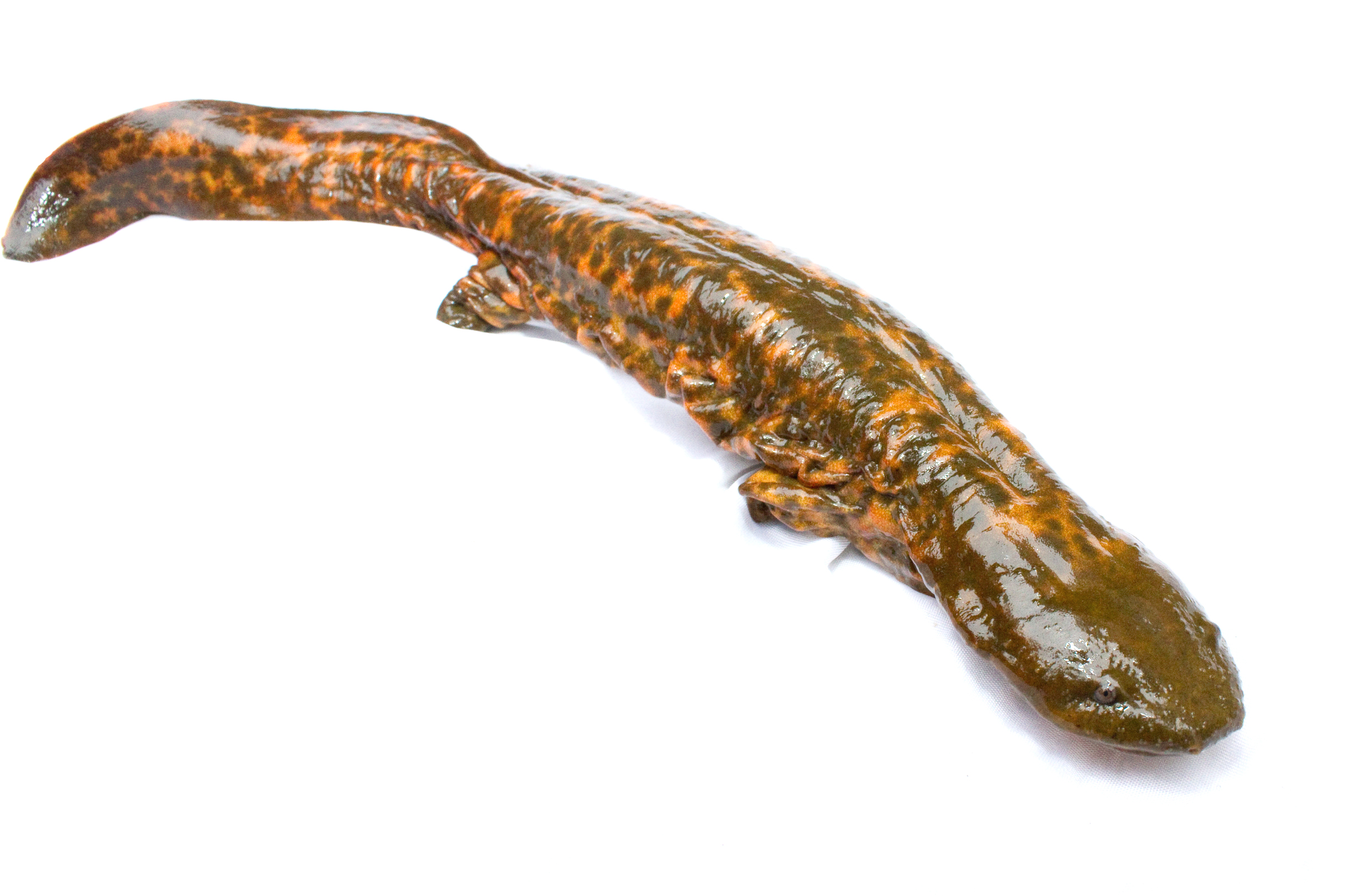
Hellbender (Cryptobranchus alleganiensis)
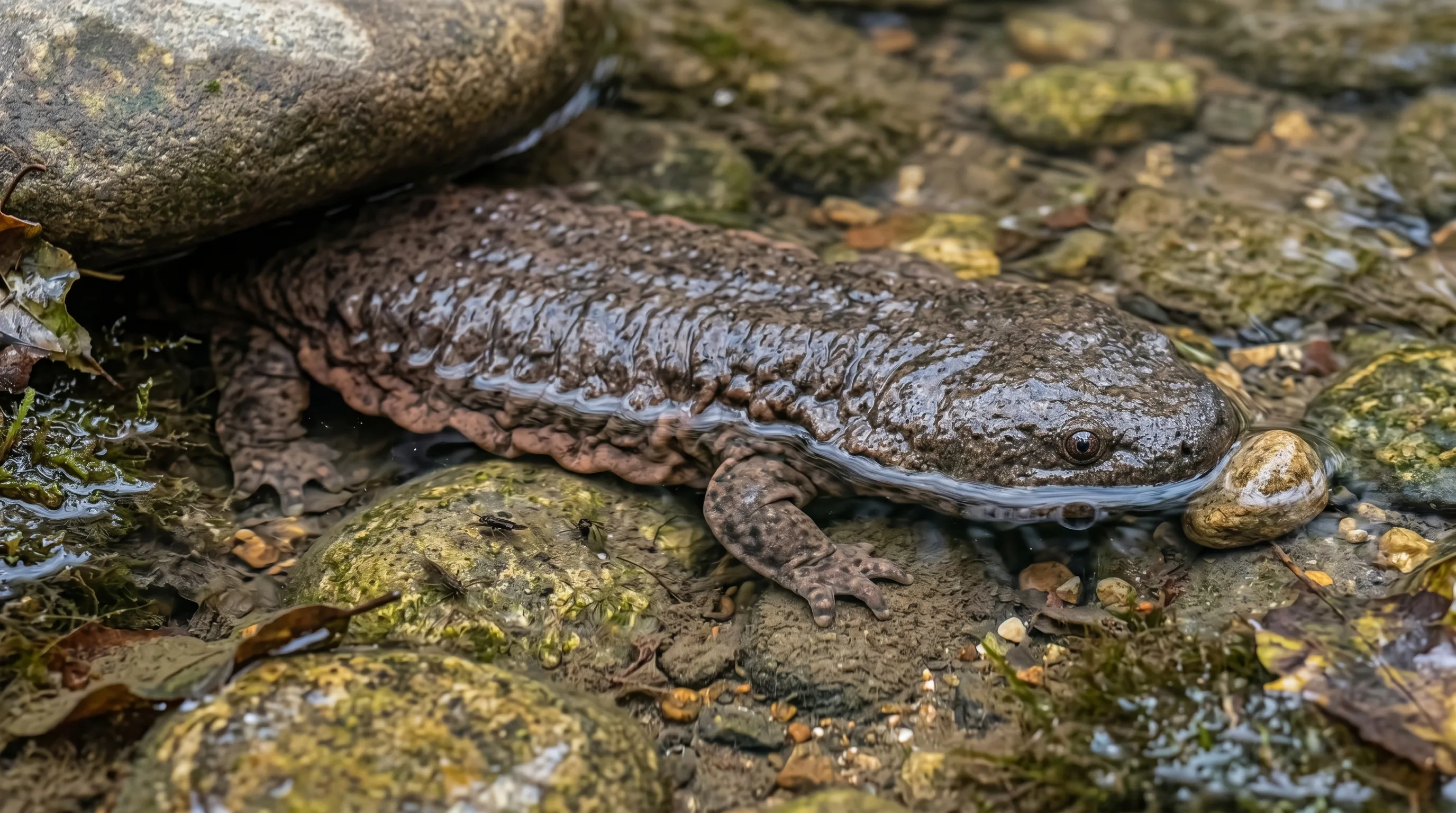
Hellbender (Cryptobranchus alleganiensis)
Introduction
There is a moment — rarely witnessed, almost always nocturnal — when a flat slab of sandstone on the bed of an Appalachian river shifts just slightly in the current. Beneath it, pressed against gravel and stone in water cold enough to numb a human hand, something ancient stirs. It is wide, flat, mottled like waterlogged bark, and fringed along its flanks with ruffled skin that moves in slow, hypnotic undulations. It is not a fish. It is not a snake. It is not any creature most people could name by sight. It is a hellbender — North America's largest salamander and one of the most biologically extraordinary vertebrates on the continent.
The hellbender, Cryptobranchus alleganiensis, has occupied clean, fast-flowing Appalachian streams for an estimated 65 million years, making it an evolutionary relic from a lineage that predates many of the landscapes it now inhabits. It shares its family — Cryptobranchidae — with the Chinese and Japanese giant salamanders, and the resemblance between these species is more than superficial. All three are permanately aquatic, gill-less as adults, and dependent on high oxygen levels in cold, clear water. But the hellbender is entirely North American, a creature forged by the specific geography, hydrology, and ecology of the eastern United States.
Despite its remarkable evolutionary heritage, the hellbender is poorly understood by the public, frequently misidentified, and — in many parts of its range — disappearing. Local names tell the story of humanity's uneasy relationship with this animal: snot otter, devil dog, mud devil, Allegheny alligator, grampus, and lasagna lizard all describe the same creature in the folklore of Appalachian river communities. It has been persecuted by anglers who believed it destroyed fish populations, collected for curiosity, and quietly erased from watersheds by sedimentation, agricultural runoff, disease, and degraded water quality.
Yet the hellbender is not merely a curiosity. It is an ecological indicator of the first order — a species whose presence or absence tells scientists whether an entire stream ecosystem is functioning correctly. Where hellbenders persist, the water runs clean, the crayfish populations thrive, and the biological complexity of the stream remains intact. Where they vanish, something fundamental has broken. Understanding this species means understanding what clean Appalachian water actually looks like — and what we stand to lose when it disappears.
"The health of an ecosystem is not measured by what thrives there in abundance, but by what can still survive there at all."
— E.O. Wilson, naturalist and conservation biologist
Scientific Classification
Kingdom: Animalia
Phylum: Chordata
Class: Amphibia
Order: Urodela (Caudata)
Family: Cryptobranchidae
Genus: Cryptobranchus
Species: Cryptobranchus alleganiensis (Daudin, 1803)
The family Cryptobranchidae — whose name derives from the Greek meaning "hidden gills" — contains only three living species: the hellbender, the Chinese giant salamander (Andrias davidianus), and the Japanese giant salamander (Andrias japonicus). These animals represent one of the oldest amphibian lineages in existence, with fossil evidence of cryptobranchid ancestors dating to the Cretaceous period. The family's divergence from other salamander lineages is estimated to have occurred over 150 million years ago, placing their origins in a geological era when North America, Asia, and Europe were still part of a single landmass.
Two subspecies of hellbender are recognised. The eastern hellbender (Cryptobranchus alleganiensis alleganiensis) occupies the majority of the species' range from southern New York through the Appalachians and into the Midwest. The Ozark hellbender (Cryptobranchus alleganiensis bishopi), restricted to the White River drainage in Missouri and Arkansas, is morphologically and genetically distinct enough that some researchers have advocated full species status for it. The Ozark subspecies bears irregular dark blotches across its dorsal surface — a reliable visual distinction from the more uniformly mottled eastern form — and is currently classified as Critically Endangered by the IUCN.
Physical Characteristics
The hellbender is, by any measure, an imposing animal in the context of North American amphibians. Adult specimens commonly reach 45 to 60 centimetres in total length, with exceptional individuals recorded at 74 to 76 centimetres — nearly 30 inches from snout to tail tip. Body mass ranges from roughly 1.5 to 2.5 kilograms in large adults. The species is the largest salamander in the Western Hemisphere, and globally is surpassed in size only by its Asian relatives, the Chinese and Japanese giant salamanders.
The body plan is strikingly adapted for life beneath fast-flowing water. The head is broad, flattened, and depressed, allowing the animal to press itself tightly against the substrate. The body is similarly compressed dorsoventrally, giving it a low hydrodynamic profile that resists displacement by current. Four short, powerful limbs project laterally from a robust trunk, each bearing four or five blunt digits that provide grip on rocky riverbeds. The tail is laterally compressed and keeled, generating lateral thrust during the infrequent bursts of active swimming the species undertakes.
Perhaps the most distinctive physical feature of the hellbender — and one that functions as its primary respiratory organ — is the bilateral fringe of loose, highly vascularised skin that runs along each side of the body from the base of the forelimbs to the hindquarters. These lateral skin folds are not decorative. They dramatically increase the animal's total surface area, and through a dense network of cutaneous blood vessels, they absorb dissolved oxygen directly from the surrounding water. Scientists estimate that between 90 and 95 percent of the hellbender's total gas exchange occurs across this skin surface, making the lungs — which are present but vestigial and poorly developed — largely supplementary structures used primarily for buoyancy regulation.
Colouration is cryptic and highly variable. Dorsal surfaces are typically brownish-grey to rusty brown or yellowish-brown, overlaid with irregular darker mottling or spotting that provides effective camouflage against leaf litter, gravel, and biofilm-covered rock. The ventral surface is paler, often cream or light grey. Juveniles tend to display more pronounced contrast in patterning, which softens with age. The eyes are small, positioned high on the flattened head, and lack eyelids — they are covered instead by a transparent fused spectacle of skin. Vision appears to be a secondary sense for this species; olfaction and lateral line mechanoreception are likely far more important in detecting prey, conspecifics, and environmental cues in turbid or low-light conditions.
Fun Fact The hellbender absorbs up to 95% of its oxygen directly through the skin folds running along its flanks — making it one of the most efficient cutaneous breathers among all living vertebrates.
Habitat & Geographic Distribution
The hellbender's geographic range is defined not by political boundaries but by a very specific and uncompromising set of hydrological requirements. The species is endemic to the eastern United States, occurring primarily within the Appalachian Mountain system and its associated drainage basins. Its range extends from southern New York and Pennsylvania southward through West Virginia, Virginia, North Carolina, Tennessee, Georgia, Alabama, Ohio, Kentucky, Indiana, Illinois, Missouri, Arkansas, and Mississippi. The Ozark hellbender occupies a smaller, disjunct range in the Ozark Plateau of southern Missouri and northern Arkansas.
Within this broad geographic footprint, the hellbender is highly selective in the habitats it occupies. It requires clean, cool, fast-flowing streams and rivers — what ecologists classify as first- to third-order and larger riverine systems with permanent, year-round flow. Water temperature is a critical limiting factor; hellbenders are most active and physiologically functional in water between 5°C and 20°C, and they struggle to survive extended periods above 24°C. The combination of high water temperature and low dissolved oxygen — two conditions that frequently accompany one another in degraded streams — is directly lethal.
Substrate is equally important. Hellbenders are obligate users of large flat rocks, shale slabs, and embedded boulders as shelter and nesting sites. These rock structures must be large enough to allow the animal to shelter entirely beneath them, with a low, stable cavity that resists displacement by high-flow events. The surrounding substrate — cobble, gravel, and sand — must remain relatively free of fine sediment, which both smothers the oxygen-permeable skin and buries the sheltering rocks. A suitable stream reach combines large shelter rocks, adequate water depth (typically 30 to 150 centimetres), vigorous current that continuously refreshes oxygen at the skin surface, and diverse macroinvertebrate communities — particularly crayfish populations — to support feeding.
Altitude plays a secondary but real role. Hellbender populations tend to be most robust in mid-elevation stream reaches — between roughly 150 and 900 metres above sea level — where water temperatures remain consistently cool and gradient provides sufficient current. Headwater streams at the highest elevations may be too cold and nutrient-poor to support sufficient prey density, while lowland reaches are often too warm, slow-moving, and sedimented. The ideal hellbender stream is the ecological equivalent of a high-gradient, clear-water riffle: constantly churning, rock-strewn, biologically rich, and cold.
Behaviour & Social Structure
Hellbenders are solitary animals. Outside of the brief breeding season, individual adults maintain exclusive territories centred on a single sheltering rock or a small cluster of suitable boulders, and they defend these sites with notable aggression. The rock beneath which a hellbender shelters is not merely a resting place — it is a food-procurement zone, a refuge from predation, a thermal refuge, and — for males — a reproductive site. Attachment to specific rock shelters can span years or even decades, and individuals displaced from their home rock will travel substantial distances to return to familiar substrate.
Territorial disputes between hellbenders are physical encounters. When a resident detects an intruder — likely through chemical signals dispersed in the water current — it responds with open-mouth gaping displays, lateral body positioning, and direct biting. Wounds to the head, limbs, and flanks are documented in wild-caught hellbenders, and some researchers have noted that bite wounds from conspecifics are among the more common injuries observed. Males are particularly aggressive around nest sites during the breeding season, and confrontations between competing males can result in significant tissue damage.
Social communication in hellbenders is mediated primarily by chemosensory and mechanosensory systems rather than visual or acoustic signals. The nasolabial groove system — prominent in many salamanders — allows detection of waterborne chemical compounds, facilitating the identification of conspecifics, sexual receptivity, and territorial status. The lateral line system, a sensory network inherited from aquatic ancestors, detects pressure waves and water movement, enabling the hellbender to sense the approach of prey, predators, or other hellbenders through the physical medium of the current itself.
Despite their solitary nature, hellbenders are not unintelligent in the manner often ascribed to amphibians. Field studies and captive observations have demonstrated that they exhibit site fidelity — the consistent return to known shelter locations — that requires spatial memory and landmark recognition in a three-dimensional underwater environment. Males actively modify and maintain nest cavities beneath rocks by clearing sediment and debris, suggesting purposeful manipulative behaviour. They respond differently to familiar versus unfamiliar chemical cues, indicating at minimum a capacity for individual or territorial recognition.
Daily Life & Activity Cycle
For most of the year, a hellbender's daily existence is anchored to the underside of a single rock. During daylight hours, the animal lies pressed against the substrate in motionless or near-motionless posture, flanks undulating in slow ripples that maximise the contact of skin folds with oxygenated current. This rocking motion is not behavioural restlessness — it is respiration. The lateral skin folds must remain in continuous contact with flowing water to maintain adequate gas exchange, and in still or stagnant conditions, a hellbender will actively position itself to expose maximum skin surface to the current.
Activity increases markedly at dusk and during the night hours. Hellbenders emerge from beneath shelter rocks to forage across the streambed, using olfactory cues to locate crayfish and other prey in the darkness. Movements during nightly foraging typically cover a few tens of metres — rarely more — as the animal navigates the familiar topography of its home range. In streams with abundant prey and high densities of suitable shelter rocks, individual home ranges may be quite compact; where resources are sparse or territorial competition intense, ranges may extend across longer stream reaches.
Seasonal behaviour is profoundly shaped by water temperature and the reproductive calendar. In late summer — typically August through September in most of the range — males become intensely active as breeding season approaches. They spend considerable time excavating and preparing nest cavities, expelling accumulated silt and organic debris from beneath their sheltering rocks. Females become mobile during this period as well, moving through the stream network in what appears to be a mate-assessment phase. Post-breeding, both sexes resume a largely sedentary pattern through the winter months, when metabolic rate drops substantially in response to cold water temperatures and the hellbender enters a state of reduced activity, though not true hibernation.
Winter hellbenders are not dormant in the strict sense. Even in near-freezing water, individuals will opportunistically feed if prey is available, and territorial defence continues. However, the metabolic savings achieved at low water temperatures allow the animal to persist for extended periods without food — an important survival mechanism in streams where prey availability can decline sharply in winter. The gradual warming of spring water triggers a renewed increase in foraging activity, coinciding with the emergence of crayfish and macroinvertebrates from their own winter refugia.
It was mid-September on the New River in West Virginia, and the water temperature had dropped to eleven degrees Celsius overnight. A field biologist wading the knee-deep riffle at first light saw nothing unusual — a streambed of grey sandstone slabs, pale gravel, and the occasional drift of yellow autumn leaves moving in the current. She crouched and slid her fingers beneath the lip of a large flat rock, its underside colonised by algae and the pale threads of aquatic fungi.
What she found beneath it took a moment to process: a male hellbender, easily 58 centimetres long, pressed flat against the bedrock in a nest chamber that had been carefully cleared of sediment. Around him, arranged in two long rosary-bead strands attached to the rock surface, were over two hundred pale, yellowish eggs, each about the size of a large pea. He lay over them with his body curved protectively inward, lateral skin folds undulating as the cold water moved around him.
He did not flee. He gape-threatened — mouth opened wide to reveal a salmon-pink interior — and pressed himself lower against the clutch. The biologist photographed the nest from a respectful distance and replaced the rock exactly as she had found it, noting the GPS coordinates and the condition of the eggs. The male, who would guard that nest alone for the next two months, resumed his vigil the moment she was gone.
This scene — private, cold, utterly prehistoric — repeats itself in suitable Appalachian streams every autumn. It has done so for millions of years. Whether it will continue to do so depends almost entirely on decisions being made in offices, on farms, and in policy chambers far removed from any cold river.
Diet & Survival Strategies
Crayfish are the cornerstone of the hellbender's diet. Across the majority of its range and throughout most of the year, crayfishes of several genera — primarily Cambarus, Orconectes, and Procambarus — constitute the overwhelming bulk of what hellbenders consume, often accounting for 75 to 90 percent of stomach contents in dietary studies. The relationship is not accidental: crayfish and hellbenders co-occur in precisely the same microhabitat — the rock-strewn, oxygen-rich streambed — and the hellbender is morphologically suited to exploit them. The flattened head, wide gape, and suction-feeding mechanism allow rapid engulfment of crayfish before the prey can execute an effective escape response.
Feeding technique is primarily ambush and opportunistic pursuit. A hellbender positioned beneath or alongside a shelter rock is effectively invisible to a crayfish moving across the substrate. When a crayfish enters the effective strike zone — typically within one to two body lengths — the hellbender lunges forward and engulfs the prey in a rapid inertial suction strike, drawing water and prey simultaneously into the large buccal cavity. The motion is faster than it appears in a sluggish-looking animal; high-speed video analysis of feeding strikes in related cryptobranchids suggests strike completion times measured in tens of milliseconds.
Beyond crayfish, hellbenders consume a secondary diet of small fish — including darters, sculpins, and juvenile minnows — earthworms, aquatic insect larvae (including hellgrammites, stonefly nymphs, and mayfly nymphs), small molluscs, and occasionally carrion. There are documented instances of hellbenders consuming each other's eggs and juveniles, a behaviour that has complicated captive breeding efforts and that has ecological implications for population density-dependent regulation. Some individuals have been observed consuming shed hellbender skin, which provides a protein supplement and may reduce chemical cues that attract predators.
The hellbender's strategy for surviving food scarcity is fundamentally metabolic rather than behavioural. Like all ectotherms, it modulates its energy consumption by adjusting body temperature — a passive process driven by water temperature rather than active thermoregulation. In cold winter streams, the metabolic rate drops substantially, extending the period over which existing energy reserves can support bodily maintenance. This metabolic flexibility, combined with the ability to absorb some dissolved organic compounds directly across the permeable skin surface, means that a hellbender can survive months without a substantial meal — a critical buffer against the seasonal fluctuations in prey availability that characterise Appalachian streams.
Feature | Eastern Hellbender | Ozark Hellbender | Chinese Giant Salamander |
|---|---|---|---|
Maximum length | ~76 cm | ~62 cm | ~180 cm |
Primary diet | Crayfish, small fish | Crayfish, small fish | Fish, frogs, crustaceans |
IUCN Status | Near Threatened | Critically Endangered | Critically Endangered |
Habitat | Appalachian rivers, Midwest | Ozark Plateau streams | Mountain streams, China |
Respiration | ~95% cutaneous | ~95% cutaneous | Primarily cutaneous |
Nest guardian | Male | Male | Male |
Interaction with Other Animals
The hellbender sits near the top of the invertebrate predator guild in the streams it inhabits, but it is by no means free from predation pressure itself. Large piscivorous fish represent the most consistent predatory threat to adult hellbenders. Largemouth bass (Micropterus salmoides), smallmouth bass (Micropterus dolomieu), and muskellunge (Esox masquinongy) are all capable of consuming juvenile and sub-adult hellbenders, and predation by these species likely exerts meaningful pressure on recruitment to adult size classes. River otters (Lontra canadensis) are documented hellbender predators — they are strong swimmers with the dexterity to extract prey from beneath rocks and are present throughout much of the hellbender's range.
Wading birds, particularly great blue herons (Ardea herodias), have been recorded consuming hellbenders in shallow stream margins. Raccoons (Procyon lotor), which forage extensively along stream edges, can access hellbenders in shallow water and are likely responsible for some predation, particularly during low-water periods when cover rock depth diminishes. Historically, North American river otters and snapping turtles were likely the most consistent large vertebrate predators of hellbenders before habitat fragmentation altered the composition of stream communities.
Competition is less visually dramatic than predation but ecologically significant. Hellbenders share their habitat with a diverse community of benthic species — darters, sculpins, crayfish, aquatic turtles, and other salamander species — many of which exploit similar microhabitats and food resources. The relationship with crayfish is particularly complex: crayfish are simultaneously the hellbender's primary prey and, in some contexts, potential competitors for shelter sites. Large crayfish, particularly the invasive rusty crayfish (Faxonius rusticus), have been implicated in habitat displacement of hellbenders in some streams, as they aggressively occupy the rock-cavity microhabitat that hellbenders require.
Introduced trout species — particularly brown trout (Salmo trutta) and rainbow trout (Oncorhynchus mykiss) stocked extensively in Appalachian streams for recreational fishing — have altered the ecological dynamics of hellbender habitat. These fish compete with hellbenders for crayfish and other macroinvertebrates and may increase predation pressure on juvenile hellbenders. The relationship between introduced salmonids and native benthic amphibians in Appalachian streams is an area of ongoing ecological research, and the net impact of stocked trout on hellbender populations remains contested among scientists.
Fun Fact Despite its fearsome local nicknames, the hellbender poses absolutely no danger to humans or to fish populations — it lacks the jaw strength to damage fishing tackle, and its diet consists almost entirely of crayfish, not game fish.
Interaction with Environment
The hellbender's relationship with its physical environment is one of profound mutual dependence. Clean, cold, well-oxygenated water is not merely a preference for this species — it is a physiological necessity. The cutaneous respiration system that makes the hellbender so remarkable as a biological specimen also makes it one of the most sensitive bioindicators of water quality in freshwater ecology. Because oxygen is absorbed directly through the skin, any factor that reduces dissolved oxygen concentration, increases turbidity, or deposits fine sediment on the skin surface will impair respiratory function and threaten survival.
Sedimentation is the hellbender's most insidious environmental adversary. Fine sediment suspended in the water column coats the permeable skin surface and physically blocks gas exchange. Sediment that settles to the streambed smothers the rock-substrate mosaic that hellbenders depend on, filling the cavities beneath shelter rocks with silt and eliminating both the microhabitat structure and the oxygen-rich environment that the animals require. Sediment-smothered egg nests — a frequent consequence of agricultural runoff events — are one of the primary mechanisms by which recruitment failure occurs in degraded streams.
Hellbenders also interact meaningfully with the biological community of their stream environment beyond simply consuming crayfish. Their presence beneath large flat rocks creates and maintains a microhabitat architecture that other species use. The cleared, sediment-free cavities that male hellbenders maintain beneath nest rocks provide sheltered niches for aquatic invertebrates, larval fish, and other amphibians. In this sense, the hellbender functions as a minor habitat engineer — its territorial behaviour and nest-maintenance activities have a positive secondary effect on local habitat quality for associated species.
The hellbender's sensitivity to temperature deserves specific attention in the context of climate change. As a species adapted to consistently cold water, it sits at the warm edge of its thermal tolerance in many southern and lowland portions of its range. Stream warming of even two to three degrees Celsius — well within projected climate scenarios for the Appalachian region over the next several decades — could push water temperatures in lower-elevation stream reaches above the hellbender's physiological tolerance threshold for extended periods during summer months. This thermal squeeze threatens to eliminate hellbender populations from the southern and low-elevation margins of the range while restricting surviving populations to ever-higher, cooler refugia in mountain headwaters.
Reproduction & Parenting
Reproduction in the hellbender is a carefully choreographed seasonal event triggered by declining water temperatures in late summer. In most of the species' range, breeding activity peaks between late August and mid-October, when water temperatures fall below approximately 16°C. Males begin preparing nest sites weeks before females become reproductively active, a pattern that suggests the timing of nest preparation is driven by temperature cues independent of social interaction with females.
Male hellbenders exhibit strong fidelity to specific nest rocks — large, flat boulders or shale slabs with a low, stable cavity beneath them. These sites are actively defended against competing males throughout the summer and autumn, and their quality appears to be a significant factor in female mate choice. Older, experienced males that have maintained high-quality nest sites across multiple breeding seasons likely enjoy greater reproductive success than younger males with inferior or newly established territories. Some males are described in the scientific literature as "sneaker males" — smaller individuals that intrude on established nest sites during spawning to deposit sperm on eggs fertilised by the territory-holding male, an alternative mating tactic that is well documented in other amphibians.
When a gravid female enters a male's territory, she does so with apparent assessment of the nest cavity. The male engages in pushing and positioning behaviour — placing himself between the female and the nest entrance, apparently guiding or following her into the chamber. Actual spawning involves the female depositing strings of pale yellowish eggs — 150 to 450 per clutch, each 5 to 7 millimetres in diameter — directly attached to the rock substrate or to organic material on the nest floor. The male fertilises the eggs externally by releasing sperm clouds directly over the clutch as the eggs are deposited — the only external fertilisation system among North American salamanders.
Following spawning, the female departs and the male assumes sole responsibility for the clutch. This paternal care is the defining feature of hellbender reproductive biology. The guarding male positions himself over or around the egg mass for the entire incubation period — typically 45 to 75 days, depending on water temperature — fanning the eggs with his body and tail to increase oxygenation, and actively removing dead or fungus-infected eggs to prevent the spread of infection through the clutch. Males do not feed during the guard period or feed only minimally, representing a substantial energetic investment in offspring survival.
Larvae hatch at approximately 3 centimetres in length and bear prominent external gills — structures that will be reabsorbed by the time the animal reaches sexual maturity at 5 to 7 years of age. Larval hellbenders remain near the nest site initially, living within the rock-rubble microhabitat of the streambed as they grow. Survival through the larval stage is variable and highly dependent on stream conditions; predation, sedimentation, and disease all take substantial tolls on cohorts in degraded habitats. Sexual maturity is reached at 5 to 7 years in most populations, and the potential lifespan — though poorly documented in wild animals — extends to at least 25 to 30 years, with some captive individuals recorded at 29 years.
Evolutionary Adaptations
The hellbender is often described as a "living fossil," and while this phrase carries the unfortunate implication of evolutionary stagnation, what it actually signifies is the extraordinary ecological stability of the cryptobranchid body plan. The physical blueprint of the hellbender has changed remarkably little from Miocene-era fossil forms, suggesting that the combination of morphological, physiological, and behavioural traits it expresses has proven extraordinarily successful at exploiting the specific niche of large, cold, rocky Appalachian streams. In evolutionary terms, if something works well enough for long enough, selection pressure for change diminishes — and the hellbender's basic design has worked for tens of millions of years.
The cutaneous respiration system is the most celebrated adaptation in this species' biology, but its ecological and evolutionary logic deserve deeper consideration. The transition from gill-based to skin-based respiration in adult cryptobranchids is not simply a developmental anomaly — it is an adaptation to a specific respiratory challenge. In a high-gradient, riffle-dominated stream, dissolved oxygen concentration is consistently high and rapidly refreshed by turbulence. Cutaneous respiration in this environment is highly efficient; the animal receives continuous oxygen delivery across a large surface area without the energetic cost of actively ventilating gills or lungs. The large lateral skin folds are the structural amplification of this system, evolved specifically to maximise the surface-area-to-volume ratio available for gas exchange.
The dorsoventrally flattened body profile is an adaptation with multiple simultaneous functions. It reduces hydrodynamic resistance in fast-flowing current, allowing the animal to remain stationary on the streambed without being displaced by flood pulses. It also reduces the animal's visual and physical profile from above, minimising exposure to aerial and piscivorous predators. The combination of cryptic colouration — browns, greys, and muted mottling that matches the substrate — with the flattened body creates an extraordinarily effective visual concealment system against any predator approaching from above.
The hellbender's skin produces a significant quantity of mucus, a characteristic that has earned it several of its more colourful folk names. This mucus serves multiple adaptive functions: it reduces friction in the water, reducing the metabolic cost of movement; it contains antimicrobial compounds that defend against waterborne pathogens; and it may play a role in chemical communication, encoding information about the individual's identity, reproductive status, or territorial ownership. Research on hellbender skin secretions has identified peptides with activity against bacteria and fungi, a finding with potential pharmaceutical relevance as antibiotic resistance becomes a global crisis.
Longevity itself represents an adaptive strategy. With a body mass of up to 2.5 kilograms and a fully aquatic lifestyle in cold, food-rich streams, the hellbender invests heavily in survival rather than rapid reproduction. The k-selected life history — slow to mature, long-lived, producing relatively few offspring per reproductive event — reflects an environment where adult survival is typically high and juvenile mortality is the primary demographic bottleneck. This strategy is successful under stable environmental conditions but renders populations extremely vulnerable to increases in adult mortality, since the slow reproductive pace cannot quickly compensate for losses of breeding adults.
Fun Fact Hellbender skin secretions contain natural antimicrobial peptides — bioactive compounds that researchers are studying as potential templates for new antibiotics in the fight against drug-resistant bacteria.
Ecological Importance
In the community ecology of Appalachian streams, the hellbender occupies a position that is simultaneously that of apex benthic predator and ecosystem indicator. As a top predator of crayfish and benthic macroinvertebrates, it exerts top-down regulatory pressure on prey populations that, left unchecked, could significantly alter the structure of stream communities. Crayfish are themselves powerful omnivores and habitat engineers in freshwater ecosystems — they consume aquatic macrophytes, algae, leaf litter, invertebrates, and small vertebrates, and their burrowing and foraging activities can substantially modify the physical structure of stream substrates. A predator of sufficient size and abundance to control crayfish populations provides an important stabilising function in the trophic cascade of stream food webs.
The bioindication role of the hellbender is perhaps even more practically significant in the context of conservation and environmental management. Because the species is so narrowly restricted in its physiological tolerance — requiring cold, clean, well-oxygenated, sediment-free water with abundant rock substrate — its presence provides confirmation that an entire suite of environmental conditions are being met simultaneously. A stream that supports a healthy hellbender population is, almost by definition, a stream with excellent water quality, intact riparian buffers, low sedimentation, and a functioning macroinvertebrate community. Conversely, the disappearance of hellbenders from a previously occupied stream segment is an early-warning signal that one or more of these conditions have been compromised, often before water quality violations become detectable through standard chemical monitoring protocols.
The hellbender also plays a role in nutrient cycling within stream ecosystems. By consuming crayfish and other prey and defecating within the water column and substrate, hellbenders process and redistribute organic material and nutrients across the streambed microhabitat. In streams with high hellbender densities, this contribution — though smaller in scale than that of high-biomass filter feeders or decomposers — represents a measurable input to benthic nutrient dynamics. The carcasses of dead hellbenders, which can weigh up to 2.5 kilograms, represent significant nutrient pulses to the streambed and are exploited by scavengers including crayfish, fish, and invertebrates, completing a nutrient cycle that began with the hellbender's own predatory activity.
Connectivity between hellbender populations — where it exists — has implications for genetic diversity and population resilience across broader watershed scales. Individual hellbenders are not strong long-distance migrants, but seasonal movement of juveniles and gravid females along stream networks facilitates gene flow between adjacent population segments, maintaining the genetic heterogeneity that underpins evolutionary adaptability and resistance to disease. The fragmentation of this connectivity by impoundments, culverts, and stream channel modification is therefore not merely a local habitat concern but a threat to the broader genetic architecture of the species across its range.
Threats & Conservation
The hellbender's decline across much of its historical range is one of the quieter conservation crises in North American wildlife biology. Unlike large charismatic megafauna whose population declines generate international headlines, the disappearance of a 60-centimetre salamander from beneath the rocks of Appalachian streams has unfolded largely out of public view. Yet the scale of that decline, documented through systematic survey data collected over decades, is severe enough to have triggered listing actions, emergency recovery measures, and coordinated multi-agency responses.
Sedimentation from agricultural and silvicultural practices — the direct delivery of fine soil particles to stream channels through eroding stream banks, bare crop fields, and logging roads — is the most widespread and persistent threat across the species' range. Sedimentation operates insidiously: it smothers egg nests, fills shelter cavities, reduces stream oxygen levels, and degrades the crayfish and macroinvertebrate communities on which hellbenders depend, all without producing the acute, visible water quality failures that trigger regulatory response. Streams that appear clear and clean to casual observation may be delivering chronic sedimentation loads that are slowly eliminating hellbender habitat.
Disease has emerged as a second major threat vector, particularly since the early 2000s. The chytrid fungus Batrachochytrium dendrobatidis (Bd), responsible for the global amphibian extinction crisis, has been detected in hellbender populations across the range. A second chytrid fungus, Batrachochytrium salamandrivorans (Bsal), which specifically targets salamanders and has caused catastrophic declines in European salamander populations, has not yet been confirmed in North American populations as of recent assessments but represents a severe prospective threat should it arrive via international wildlife trade. Hellbenders have also been found harbouring Pseudomonas and other bacterial infections that produce characteristic skin lesions and are associated with compromised immune function — conditions that appear to be exacerbated by elevated water temperatures and reduced water quality.
Historical persecution by anglers contributed to population declines in the 19th and early 20th centuries. Hellbenders were widely believed — incorrectly — to consume substantial quantities of game fish and to damage fishing tackle. Thousands were killed at fishing sites, and targeted destruction of hellbenders as "trash animals" was openly practised in parts of Appalachia well into the mid-20th century. While this direct killing has largely ceased as ecological literacy has improved, the genetic and demographic damage done to populations by decades of direct mortality is not easily reversed in a slow-reproducing species.
The IUCN currently lists the hellbender as Near Threatened, reflecting a species under significant and documented pressure that has not yet met the quantitative thresholds for Vulnerable status but is considered likely to do so if current trajectories continue.
IUCN Red List Analysis
Current IUCN Status
Cryptobranchus alleganiensis is classified as Near Threatened (NT) on the IUCN Red List of Threatened Species. This assessment, which reflects the status of the species across its full range, places it just below the threshold for Vulnerable status under the IUCN criteria — specifically, it does not currently meet the quantitative thresholds for Criteria A (population reduction), B (small range), C (small population), or D (very small or restricted population) at levels that would qualify it as Vulnerable. However, the Near Threatened designation explicitly acknowledges that the species is close to meeting those thresholds and is likely to qualify as threatened in the near future if the drivers of decline are not reversed.
It is critically important to note that the Near Threatened assessment for the full species obscures the far more precarious status of the Ozark hellbender (Cryptobranchus alleganiensis bishopi), which carries its own IUCN assessment as Critically Endangered (CR). The Ozark subspecies has undergone population declines estimated at greater than 80 percent over recent decades, and its restricted range — confined to a handful of stream reaches in Missouri and Arkansas — means that catastrophic events such as chemical spills or drought could eliminate entire population segments in a single event.
Population Trend
The population trend for Cryptobranchus alleganiensis is assessed as decreasing. Survey data compiled from multiple states across the species' range consistently document declining abundance and occupancy over periods of ten to twenty years. In some stream systems that supported moderate-to-high densities of hellbenders in the 1980s and 1990s, subsequent surveys have found dramatically reduced numbers or complete absence from formerly occupied sites. The pattern is not uniform across the range — some well-protected headwater stream populations in West Virginia, Virginia, and North Carolina appear stable or even locally recovering — but the broad trajectory is one of contraction and attrition.
Total population size is not precisely known, partly because the secretive, rock-sheltering habits of the species make complete population enumeration extremely difficult. Estimates from the mid-2000s suggested several tens of thousands of individuals persisting range-wide, with significant uncertainty. More recent assessments suggest the effective breeding population is substantially smaller than total census numbers would imply, because many surveyed populations show extreme age-class skewing — dominated by large, old adults with few juveniles or sub-adults present, indicating recruitment failure over extended periods. A population composed primarily of old adults without successful recruitment is demographically declining even when adult counts appear stable.
Main Threats
Sedimentation and agricultural runoff represent the most geographically widespread threats. Stream bank erosion, crop field runoff, livestock access to stream channels, and inadequate riparian buffers deliver fine sediment that degrades substrate quality, smothers egg nests, and reduces crayfish abundance. The spatial extent of agriculture-affected stream reaches across the hellbender's range means that this threat affects the majority of the population.
Disease — particularly infection with Batrachochytrium dendrobatidis and emerging bacterial pathogens — has been associated with acute population crashes in formerly stable sites. Chytridiomycosis compromises the skin's ability to regulate water and electrolyte balance, a particularly severe functional loss in a species that depends on skin for 95 percent of its gas exchange. The potential arrival of Bsal in North America represents an existential threat for which no effective field-scale intervention currently exists.
Impoundment and stream modification fragment populations and alter the temperature, flow, and substrate regimes on which hellbenders depend. Dams create warm-water reservoirs that serve as thermal barriers to movement, fragment genetic connectivity between populations, and replace swift rocky reaches with silted, warm impoundment zones. Stream channelisation and bank hardening eliminate the natural rock substrate architecture that hellbenders require for shelter and reproduction.
Water temperature increase driven by both riparian deforestation and climate change is pushing water temperatures above the hellbender's upper thermal tolerance in lower-elevation reaches during summer. Even periods of several days above critical temperatures can cause significant physiological stress, impair immune function, and increase disease susceptibility.
Illegal collection for the exotic pet trade persists as a low-level but non-trivial threat in some parts of the range. Though legal protections exist in all states where hellbenders occur, enforcement is difficult in remote stream settings, and the species commands significant prices in underground wildlife markets.
Ecological Consequences
The consequences of continued hellbender population decline extend well beyond the loss of a single iconic species. As a top benthic predator, the hellbender's functional removal from stream food webs would release crayfish populations from significant predatory regulation, potentially triggering trophic cascades in which unchecked crayfish overgraze aquatic macrophytes, alter substrate structure, and reduce the abundance of other macroinvertebrate species that serve as food for fish, waterfowl, and other stream-dependent wildlife.
The loss of the hellbender as a bioindicator species would also impoverish the toolkit available to environmental managers for assessing stream health. Chemical water quality monitoring captures only a subset of the ecologically relevant parameters that describe a stream's biological integrity. The hellbender's demanding environmental requirements make it a uniquely sensitive and reliable proxy for the overall biological quality of the stream ecosystem — its absence cannot be replaced by any single chemical measurement.
At a genetic level, population fragmentation and local extinction reduce the allelic diversity available to surviving populations, impairing their capacity to respond to new disease pressures, changing thermal regimes, and other novel environmental challenges. Each locally extinct population represents the permanent loss of locally adapted genetic variants — evolutionary raw material for the species' long-term persistence that cannot be recovered once lost.
Conservation Efforts
Conservation efforts for the hellbender span a continuum from habitat protection and restoration to captive breeding and head-starting programmes. The Missouri Department of Conservation, in partnership with the Saint Louis Zoo, pioneered hellbender head-starting — the captive rearing of larvae to a size class large enough to survive initial post-release mortality — as a response to the collapse of Ozark hellbender populations in the early 2000s. Similar programmes have since been developed at institutions including the Wildlife Conservation Society, the Smithsonian's National Zoo, the Tennessee Aquarium, Zoo Atlanta, and several university herpetology programmes. These programmes have produced thousands of head-started juveniles for release into managed stream reaches.
Riparian habitat restoration — the replanting of native vegetation along stream banks to reduce erosion, shade the stream to maintain cold temperatures, and filter agricultural runoff — is a central component of habitat-based recovery strategies. Organisations including The Nature Conservancy, the USDA Natural Resources Conservation Service, and multiple state natural resource agencies have invested in riparian buffer programs across Appalachian watersheds. Livestock exclusion fencing, bank stabilisation, and voluntary stream easements have all been deployed in priority hellbender watersheds.
Legal protections exist at the state level across most of the range — hellbenders are protected from taking, possession, and sale in virtually all states where they occur. The Ozark hellbender was listed as Endangered under the United States Endangered Species Act in 2011, providing the strongest federal legal protection available. The eastern hellbender has not been federally listed, but several petition efforts have been filed, and the legal status of the full species may change as population trend data accumulate.
Future Outlook
The long-term prognosis for the hellbender is cautiously uncertain. Head-starting and captive breeding programmes have demonstrated technical feasibility and have produced released cohorts that are surviving and growing in some stream systems — a meaningful proof of concept. However, the fundamental habitat limitations that caused population declines in the first place have not been reversed at landscape scales, and released individuals entering degraded stream environments face the same pressures as their wild counterparts. Captive programmes buy time and maintain demographic viability, but they cannot substitute for functional wild habitat.
Climate change represents the most intractable long-term threat. Unlike sedimentation or riparian degradation — which can be addressed through land management changes at individual watershed scales — increasing baseline air temperatures, more frequent and severe drought events, and altered precipitation patterns are driven by global atmospheric dynamics that no local intervention can reverse. The thermal refugia available to hellbenders in high-elevation headwater streams are finite and fragmented, and as lower-elevation populations are eliminated by thermal stress, the species' effective range will contract toward a smaller number of cooler montane stream networks.
The scenario most likely to ensure the hellbender's long-term persistence combines sustained investment in riparian habitat restoration and water quality management across priority watersheds, continued development of disease resistance tools (including Bsal surveillance and response protocols), ongoing head-starting programmes as demographic supplements for at-risk populations, and ambitious climate adaptation planning that identifies and protects thermal refugia before they are needed. None of these actions is simple or inexpensive — but the evolutionary and ecological heritage that the hellbender represents makes the effort profoundly worthwhile.
Human Relationship
The hellbender's relationship with human communities in the Appalachian region is a complex story layered with misunderstanding, folklore, ecological significance, and — increasingly — protective stewardship. For much of the 19th and 20th centuries, the hellbender was regarded by many rural Appalachian communities as a malevolent pest. Anglers who encountered the large, unfamiliar animals on their fishing lines — hellbenders occasionally take baited hooks intended for catfish — frequently killed them on the spot, convinced that the salamander was eating their trout and destroying fish populations. This belief was biologically unfounded: hellbenders feed almost exclusively on crayfish and have neither the speed, the hunting strategy, nor the habitat use pattern to significantly impact game fish populations.
The rich tradition of folk names for the hellbender speaks to the animal's powerful cultural impression on communities living along Appalachian rivers. "Snot otter" references the copious mucus the animal produces; "devil dog" and "mud devil" invoke a sense of menace and subterranean strangeness; "Allegheny alligator" is a geographical and morphological comparison; "grampus" is an old term of uncertain etymology applied to various large aquatic animals; "lasagna lizard" — reportedly used in parts of West Virginia — presumably references the ruffled skin folds. These names, while often affectionate in the mouths of those who use them, reflect a cultural discomfort with an animal that defies easy categorisation and occupies the dark, hidden spaces beneath the water.
The relationship has shifted meaningfully in recent decades, driven by increased ecological education and a growing awareness of the hellbender's bioindicator status and cultural uniqueness. Several states have adopted the hellbender as an unofficial symbol of stream health and regional ecological identity. Missouri, in particular, has developed an active hellbender conservation communication programme that positions the species as an icon of Ozark watershed health, generating public engagement and political support for stream protection measures. Fly-fishing communities in Appalachian states — ironically, given the historical antagonism between anglers and hellbenders — have emerged as some of the most committed advocates for hellbender conservation, recognising that the same cold, clean water that sustains hellbenders sustains the trout fisheries on which their recreation depends.
Tourism around hellbender viewing has developed in a small number of sites where populations are accessible and stable enough to support guided encounter programmes. These experiences, typically led by conservation biologists or trained naturalists, involve careful, non-invasive observation of animals under their shelter rocks — a methodology that, when properly conducted, causes no harm to the animals and generates both revenue for conservation programmes and powerful emotional connections between participants and the species. The experience of looking into the cold water and meeting the eyes of a 60-centimetre salamander that has been living beneath that same rock for two decades is not easily forgotten.
Unique & Rare Facts
The hellbender is the only salamander species native to North America capable of exceeding 60 centimetres in length, making it the continent's largest amphibian by a considerable margin.
Adult hellbenders retain lungs throughout their lives, but these organs function primarily as buoyancy-control devices — the animal can inflate or deflate them to adjust its position in the water column — rather than as primary respiratory structures.
Male hellbenders have been documented guarding clutches of eggs fertilised by multiple different males simultaneously, suggesting that the nest-site territory, not the sperm contribution, is the primary currency of male reproductive investment.
The hellbender's skin secretes a peptide compound called cryptobranchin that has demonstrated antimicrobial activity against multiple bacterial and fungal pathogens in laboratory assays — a potential pharmaceutical resource that has barely been investigated.
The largest hellbender ever reliably measured was 74 centimetres — nearly the length of a standard acoustic guitar — and is thought to have been well over 20 years old.
Hellbenders can regenerate lost limbs, though regeneration in adults is slower and less complete than in juvenile individuals, and significant scarring typically remains at the regeneration site.
The scientific name Cryptobranchus means "hidden gills" in Greek — a reference to the absence of external gills in adults, which was once used to distinguish the species from other salamanders before the cutaneous respiration mechanism was understood.
In some Appalachian stream communities, the presence of a large hellbender under a particular flat rock has been used by experienced anglers as an empirical indicator of stream health and good crayfish populations for decades — a form of folk ecological knowledge that is now supported by formal scientific evidence.
Hellbenders can live for 30 years or more in optimal conditions, meaning that the large adults visible to researchers today may have been born in the early 1990s or even the 1980s — long before the current generation of conservation efforts began.
The family Cryptobranchidae has fossil representatives from the Paleocene epoch, over 56 million years ago, making it one of the oldest vertebrate families with living representatives in North America.
Conclusion
There is something both humbling and urgent about standing in a cold Appalachian stream and knowing that beneath the rocks at your feet, something ancient persists — something that was old before the Blue Ridge Mountains reached their full height, that has survived ice ages and continental shifts and the extraordinary violence of the geological past, and that now faces a quieter but no less total threat in the form of warm water, muddy runoff, and fungal spores. The hellbender is not a dramatic animal. It does not migrate thousands of miles. It does not produce memorable calls. It does not chase prey across open landscapes in sequences that translate easily to television. It lives under a rock, breathes through its skin, and eats crayfish.
And yet there is something in the hellbender that demands respect, even reverence, from anyone who engages seriously with the ecology of fresh water in North America. It is one of the continent's most accurate mirrors for stream health — a biological instrument of extraordinary sensitivity that reflects the true condition of the watershed in ways that no chemical test can replicate. Its presence says: this water is clean enough, cold enough, oxygen-rich enough, rock-strewn enough, biologically intact enough. Its absence says something darker, and its silence should concern us all.
The trajectory of the hellbender's story is not yet determined. Recovery is biologically possible — the species is long-lived, the habitats are potentially restorable, the captive programmes are producing viable individuals, and the conservation science is advancing rapidly. What remains uncertain is whether the political will, the land management commitment, and the public awareness exist in sufficient quantity and at sufficient speed to intervene before the demographic decline passes a point of no return. The hellbender has survived 65 million years of environmental change. The question now is whether it can survive the next 50 years of human decision-making.
"We do not inherit the earth from our ancestors; we borrow it from our children."
— Antoine de Saint-Exupéry (attributed)
In the cold clarity of an undisturbed Appalachian stream, the hellbender waits — wrinkled, patient, and prehistoric. It does not know that it is an indicator species, a conservation symbol, or a subject of scientific urgency. It knows only the current against its skin, the chemical shadow of crayfish in the water, and the cold weight of the rock above it. That is enough. The question is whether it will be enough, for long enough, for us to do what needs to be done.
Sources & Attribution
Data and ongoing research referenced for this article come from the following authoritative sources — peer-reviewed publishers, official taxonomic registers, and global biodiversity programmes:
- IUCN Red List — Hellbender — official IUCN Red List assessment including population trend, threats, and conservation actions.
- Wikipedia — Hellbender — taxonomy, distribution, and an overview with onward citations to primary literature.
- GBIF — Hellbender — global occurrence and distribution records from the Global Biodiversity Information Facility.
- iNaturalist — Hellbender — observation records and field photographs contributed by naturalists worldwide.
- Encyclopedia of Life — Hellbender — multilingual species pages aggregating taxonomic and natural-history data.
- WWF — World Wildlife Fund — global wildlife conservation programmes and research summaries.
- Nature — research on Hellbender — peer-reviewed studies indexed by Nature on related ecology and behaviour.
- ITIS — Integrated Taxonomic Information System — federal-grade taxonomy and nomenclature.
Frequently Asked Questions
What is a hellbender salamander?
The hellbender (Cryptobranchus alleganiensis) is the largest salamander in North America, reaching up to 74 centimetres in length. It is a fully aquatic salamander native to clean, cold, fast-flowing streams and rivers of the eastern United States, particularly in the Appalachian Mountain region. Unlike most salamanders, adults lack external gills and instead absorb the majority of their oxygen directly through specialised, highly vascularised skin folds along their flanks.
Despite its unusual appearance and alarming common names — including "snot otter" and "devil dog" — the hellbender is completely harmless to humans. It feeds almost exclusively on crayfish and plays an important ecological role as a top benthic predator and sensitive bioindicator of stream health.
Where do hellbenders live?
Hellbenders are found exclusively in the eastern United States, with their range centred on the Appalachian Mountains. They occur in portions of New York, Pennsylvania, West Virginia, Virginia, North Carolina, Tennessee, Georgia, Alabama, Ohio, Kentucky, Indiana, Illinois, Missouri, Arkansas, and Mississippi. A distinct subspecies, the Ozark hellbender, is restricted to the White River drainage system in Missouri and Arkansas.
Within their geographic range, hellbenders require very specific habitat conditions: cold, clean, well-oxygenated streams and rivers with large flat rocks for shelter and nesting, gravel and cobble substrate, and abundant crayfish populations. They cannot survive in warm, slow-moving, or silted water.
What do hellbenders eat?
Crayfish comprise the vast majority — typically 75 to 90 percent — of the hellbender's diet. They also consume small fish (particularly darters and sculpins), aquatic insect larvae, worms, and occasionally carrion or smaller hellbenders. They are ambush predators, relying on camouflage and a rapid suction-strike mechanism to engulf prey that wanders within range beneath their shelter rocks.
Hellbenders do not eat game fish in any meaningful quantity, and the longstanding belief among some Appalachian anglers that they damage trout populations is scientifically unfounded. Their presence in a stream is, if anything, a positive indicator of the water quality required to support healthy trout fisheries.
Are hellbenders endangered?
The hellbender (Cryptobranchus alleganiensis) is currently listed as Near Threatened on the IUCN Red List, with a decreasing population trend across most of its range. While it has not yet met the quantitative thresholds for Vulnerable or Endangered status, populations have declined significantly due to sedimentation, water quality degradation, disease, and habitat modification.
The Ozark hellbender subspecies (C. a. bishopi) is classified as Critically Endangered by the IUCN and was listed as Endangered under the U.S. Endangered Species Act in 2011. Its populations have declined by an estimated 80 percent or more over recent decades. Multiple state wildlife agencies, zoos, and conservation organisations are actively engaged in captive breeding, head-starting, and habitat restoration programmes to prevent further decline.
How do hellbenders breathe?
Hellbenders breathe primarily through their skin — specifically through the highly vascularised lateral skin folds that run along both sides of their body from the base of the forelimbs to the tail. These folds dramatically increase the animal's total surface area and allow direct oxygen absorption from the surrounding water across the dense network of blood vessels immediately beneath the skin surface. Scientists estimate that approximately 90 to 95 percent of all gas exchange in adult hellbenders occurs through this cutaneous system.
Adult hellbenders do possess small lungs, but these are poorly developed and appear to function primarily for buoyancy regulation rather than as respiratory organs. To maximise cutaneous oxygen uptake, hellbenders position themselves in flowing water and often engage in slow lateral rocking or undulating movements that ensure continuous contact between the skin folds and fresh, oxygenated current.
How do hellbenders reproduce?
Hellbenders breed in late summer and early autumn, typically between August and October. Males prepare and defend nest cavities beneath large flat rocks, and females deposit 150 to 450 eggs in these sites, which are fertilised externally by the attending male — the only North American salamander to use external fertilisation. After spawning, the female departs and the male guards the egg clutch alone for 45 to 75 days until hatching, fanning the eggs with his body to maintain oxygen flow and removing dead eggs to prevent fungal infection.
Newly hatched larvae are approximately 3 centimetres long with prominent external gills, which are gradually reabsorbed as the animal grows. Hellbenders reach sexual maturity slowly, typically at 5 to 7 years of age, and can live for 25 to 30 or more years under optimal conditions.
Why are hellbenders called "snot otters" and other unusual names?
The hellbender's various folk names reflect the strong — and often negative — impression it made on Appalachian communities who encountered it in streams. "Snot otter" references the copious protective mucus the animal produces from glands throughout its skin. "Devil dog" and "mud devil" reflect a cultural association of the unusual, unfamiliar animal with something sinister or supernatural. "Allegheny alligator" is a size-based geographical comparison, and "grampus" is an archaic term applied to various large aquatic animals. "Lasagna lizard" — used in parts of West Virginia — is thought to reference the ruffled, layered appearance of the lateral skin folds.
These names, while often used affectionately today by people who appreciate the species, historically reflected widespread misunderstanding and contributed to the persecution of hellbenders by anglers and rural communities. Modern conservation efforts have worked to reframe the hellbender's public image as an icon of clean Appalachian water and ecological heritage.
How can people help protect hellbenders?
The most impactful actions for protecting hellbenders are those that improve and protect stream water quality and habitat. Supporting riparian buffer restoration — the maintenance of native vegetation along stream banks — reduces the sedimentation and runoff that degrade hellbender habitat. Advocating for and complying with agricultural best-management practices that reduce livestock access to stream banks and buffer crop fields from stream channels are effective landscape-scale interventions.
Individuals can also contribute by reporting hellbender sightings to state wildlife agencies or citizen science platforms such as iNaturalist, which provides population distribution data that helps prioritise conservation resources. Never attempt to capture, handle, or remove hellbenders from streams — they are legally protected in all states where they occur, and handling is stressful to the animals. Supporting organisations conducting hellbender research, head-starting, and captive breeding — including zoos, aquaria, and university programmes — provides resources for the technical conservation work that individual habitat protection cannot accomplish alone.
What is the lifespan of a hellbender?
Hellbenders are long-lived animals by amphibian standards. Wild individuals can survive for 25 to 30 years under good conditions, and some captive animals have been recorded at 29 years. Sexual maturity is reached slowly — typically at 5 to 7 years of age — reflecting the hellbender's k-selected life history strategy of slow development, low annual reproductive output, and investment in long adult survival.
This longevity is ecologically significant because it means that many of the large adult hellbenders observed in surveys today were born one to three decades ago, during conditions that may have been substantially better than those currently prevailing in their streams. The scarcity of young-of-year and juvenile hellbenders in many surveyed populations — a pattern called "recruitment failure" — means these old adults are not being replaced, and the apparent stability of adult numbers masks an ongoing population decline that will manifest as a dramatic crash when the current cohort of adults eventually dies.
Is the hellbender related to the giant salamanders of Asia?
Yes — the hellbender is the sole New World representative of the family Cryptobranchidae, which also contains the Chinese giant salamander (Andrias davidianus) and the Japanese giant salamander (Andrias japonicus). All three species share the defining features of the family: permanent aquatic lifestyle, cutaneous respiration in adults, external fertilisation, and paternal nest guarding. The family's origin dates back over 150 million years, when the continental landmasses that now separate these species were still joined or closely connected.
The Chinese giant salamander is the world's largest amphibian, reaching up to 1.8 metres in length — nearly three times the maximum size of the hellbender. Both Asian species are Critically Endangered due to overcollection for food markets, habitat destruction, and disease, making the entire family Cryptobranchidae one of the most conservation-urgent groups of amphibians in the world.
Image: Wikipedia/Wikimedia Commons — “Hellbender”
Comments
Post a Comment