
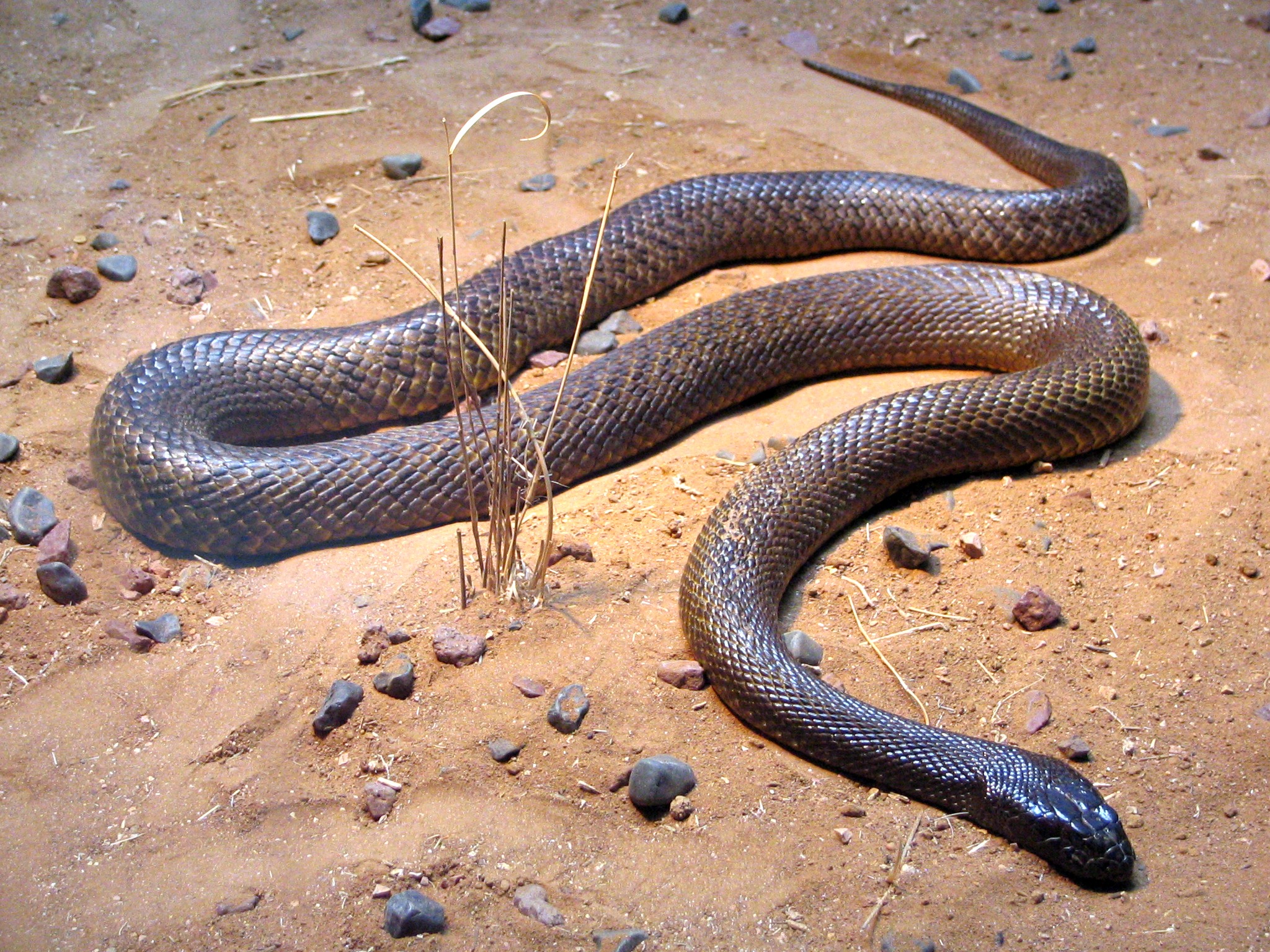
Inland Taipan (Oxyuranus microlepidotus)
Introduction
Somewhere in the cracked, sun-baked clay of south-western Queensland, where the soil contracts and splits under a merciless Australian sun, a slender, olive-brown form slides soundlessly between the fractured earth. It moves with measured precision, its dark-scaled head low to the ground, tongue flickering as it reads the chemical signatures left behind by the last rat to cross this parched plain. There is nothing theatrical about the moment. No rattling warning. No dramatic display. Just purpose, refinement, and a lethality so extreme it remains unmatched in the vertebrate world.
The inland taipan — known to science as Oxyuranus microlepidotus — holds a distinction that no other snake on Earth can claim: it produces the most toxic venom of any land snake ever measured. A single defensive bite can deliver enough neurotoxic and hemotoxic compounds to theoretically kill more than 100 adult humans. Yet remarkably, this animal is shy, elusive, and poorly understood by the general public. It inhabits one of Australia's most inhospitable interior landscapes, rarely crossing paths with human beings, and has never been documented causing a human fatality in the wild.
That paradox — supreme lethality paired with profound ecological restraint — is what makes the inland taipan one of the most scientifically compelling reptiles alive. It is not a monster. It is an apex specialist, shaped over millions of years of evolutionary pressure into a supremely efficient predator perfectly calibrated for life in the arid heartland of Australia. To understand this species is to understand how extreme environments forge extreme solutions.
"The snake which cannot cast its skin has to die. As well the minds which are prevented from changing their opinions; they cease to be a mind."
— Friedrich Nietzsche
This article explores the inland taipan in full — its biology, behaviour, ecological role, venom chemistry, reproductive strategy, and conservation standing — to build a complete portrait of an animal that is simultaneously the most dangerous land snake on the planet and one of the most misunderstood.
Scientific Classification
Kingdom: Animalia
Phylum: Chordata
Class: Reptilia
Order: Squamata
Family: Elapidae
Genus: Oxyuranus
Species: Oxyuranus microlepidotus (McCoy, 1879)
Common Names: Inland taipan, fierce snake, small-scaled snake, western taipan
The genus Oxyuranus contains three recognised species: the coastal taipan (O. scutellatus), the inland taipan (O. microlepidotus), and the central ranges taipan (O. temporalis), which was only formally described in 2007. All belong to the family Elapidae, the group that also includes cobras, mambas, kraits, and Australia's remarkable diversity of fixed-front-fanged snakes. The elapids are defined by their proteroglyphous dentition — short, fixed, hollow fangs at the front of the upper jaw through which venom is injected.
The species epithet microlepidotus derives from Greek roots meaning "small-scaled," a reference to the relatively small, keeled dorsal scales that distinguish this species from its coastal relative. The original scientific description was provided by Frederick McCoy in 1879 from museum specimens, though for nearly a century the species remained so poorly known that it was believed by many herpetologists to be extinct or a taxonomic phantom. It was not confirmed alive and in the field until 1972.
Physical Characteristics
The inland taipan is a powerfully built but elegantly proportioned snake, with adults typically reaching between 1.8 and 2.5 metres in total length, though exceptional individuals approaching 2.9 metres have been recorded. Body mass ranges from approximately 1 to 2 kilograms in well-fed adults, with females generally slightly larger than males — an inversion of the pattern seen in many sexually selected species and likely linked to the energetic demands of egg production.
The colouration of this species is one of its most ecologically significant characteristics, and it is not fixed. The inland taipan undergoes a seasonal colour change that is among the most dramatic documented in any snake. During the cooler winter months, the dorsal surface darkens substantially — shifting from a warm olive-brown or golden-tan to a rich, dark chocolate or near-black. This pigment shift is a thermal adaptation: darker colouration absorbs solar radiation more efficiently, allowing the snake to warm its body faster during short winter foraging windows. As summer temperatures rise, the colouration lightens progressively, reducing heat absorption and helping the animal avoid lethal overheating.
Individual scales possess a darker leading edge, creating a subtle reticulated or cross-hatched pattern that is more pronounced in winter coloration. The head is distinctly flattened, slightly coffin-shaped when viewed from above, and separated from the neck by a subtle narrowing. The eyes are medium-sized with round pupils — characteristic of diurnal and crepuscular hunters — and the iris is a deep reddish-brown. The belly is cream to pale yellow, often with orange flecking along the anterior portion.
The fang structure deserves particular attention. The inland taipan's fangs are relatively short for an elapid — typically 3.5 to 6 millimetres in length — but they are precisely engineered for delivering venom into warm-blooded prey at close range. The venom glands are large relative to head size, and the muscles surrounding them generate substantial pressure during a strike, ensuring deep, rapid venom injection even through dense fur.
Fun Fact The inland taipan's venom is approximately 50 times more toxic than that of the Indian cobra and around 10 times more toxic than the venom of the coastal taipan — its closest relative.
Trait | Inland Taipan | Coastal Taipan | Eastern Brown Snake |
|---|---|---|---|
Average adult length | 1.8–2.5 m | 2.0–3.0 m | 1.5–1.8 m |
Venom yield (average) | 44 mg dry weight | 120 mg dry weight | 5–10 mg dry weight |
LD50 (subcutaneous, mouse) | 0.025 mg/kg | 0.099 mg/kg | 0.053 mg/kg |
Primary venom action | Neurotoxic + hemotoxic | Neurotoxic | Procoagulant + neurotoxic |
Habitat | Arid interior plains | Coastal woodland/forest | Widespread, varied |
Temperament | Shy, reclusive | Aggressive when cornered | Highly alert, fast to flee |
Habitat & Geographic Distribution
The inland taipan occupies one of the most extreme environments on the Australian continent — the arid and semi-arid interior, specifically the floodplains, black soil plains, and gibber desert margins centred around the channel country of south-western Queensland, north-eastern South Australia, and the far north-west of New South Wales. Its range is essentially defined by the Georgina, Diamantina, and Cooper Creek drainage systems, areas where ancient ephemeral floodplains have deposited deep, cracking clay soils that crack dramatically during drought and become briefly inundated during rare flood events.
This is not a species with a broad, generalised range. The inland taipan is a strict habitat specialist, with the bulk of confirmed sightings concentrated in a surprisingly limited geographic area of perhaps 100,000 to 200,000 square kilometres. Within that range, the snake's actual utilised habitat is further restricted to specific microhabitats: the deep cracks in black cracking clay soils, rock crevices in gibber country, and the burrow systems of native rodents — particularly long-haired rats (Rattus villosissimus) and plague rats whose population explosions shape the taipan's entire existence.
Annual rainfall across this region averages between 100 and 250 millimetres, arriving unpredictably and largely in summer. Temperatures swing from below 0°C on winter nights to above 50°C on summer days at ground level. Vegetation is characterised by low chenopod shrubland, Mitchell grass plains, and sparse annual grasses that bloom briefly after rain. The apparent barrenness of this landscape is deceptive — it pulses with life during flood years and retreats to near-dormancy during extended dry periods, and the inland taipan has evolved to exploit both states.
The species does not migrate in the traditional sense, but it does undertake seasonal and opportunistic movements that follow the boom-and-bust cycles of its prey. When rat plagues sweep through the channel country — triggered by good rainfall and abundant grass seed — taipan activity and sightings increase substantially. During droughts, individuals may move deeper into rock formations or remain inactive in deep soil crevices for extended periods.
Behaviour & Social Structure
The inland taipan is a largely solitary animal, and interactions between individuals outside the breeding season are limited and generally non-aggressive. Unlike some elapid species that engage in combat dances or extended territorial disputes, taipans appear to have relatively fluid home ranges that may overlap without triggering conflict. The concept of defended territory in the rigid mammalian sense does not appear to apply — this is an animal of vast, sparsely populated plains where encounters between individuals are naturally rare.
Despite its fearsome venom reputation, the inland taipan is characteristically shy and non-confrontational. When encountered in the field, the typical response is rapid withdrawal — the snake using its remarkable speed and slender build to disappear into the nearest soil crack or rock crevice. Field researchers and herpetologists who have worked extensively with this species consistently report that unprovoked aggression is essentially absent. The "fierce snake" common name, which dates from early colonial natural history literature, is widely considered misleading — the ferocity refers to the potency of the venom, not the temperament of the animal.
When cornered and unable to retreat, the inland taipan adopts a distinctive defensive posture. It flattens and curves the neck and anterior body into a tight S-shape, raises the head slightly off the ground, and tracks the perceived threat with deliberate head movements. Striking in this context is a last resort, and even then the bite may be a dry strike or a glancing contact — the snake attempting to drive away the threat rather than subdue prey.
Communication in this species, as with most snakes, is primarily chemical. The Jacobson's organ — a chemosensory organ in the roof of the mouth stimulated by particles collected by the flickering tongue — provides a continuous stream of olfactory information about the environment. This allows the snake to track prey, detect the presence of other individuals (including potential mates), and navigate home ranges that may extend several kilometres across featureless plains.
Body language during social encounters is subtle but structured. Males during the breeding season may engage in slow, sinuous parallel movements that appear to assess relative size and fitness. There is no documented evidence of the ritualistic combat seen in some Oxyuranus relatives, though observations of mating-season behaviour in wild populations remain limited due to the animal's extreme elusiveness.
Daily Life & Activity Cycle
The inland taipan's daily and seasonal activity patterns are shaped almost entirely by thermal constraints and prey availability. In a habitat where ground temperatures can kill a reptile within minutes of exposure, precise thermoregulatory behaviour is not a luxury — it is survival arithmetic.
During the cooler months of late autumn and winter (roughly April to August), the taipan is primarily diurnal, emerging from overnight retreats in deep soil cracks or rock formations in the mid-morning hours to bask and warm its body to operational temperature. Foraging activity follows basking, typically concentrated in the late morning and early afternoon before temperatures begin to drop. By mid-afternoon, the snake typically retreats again, conserving energy during cold evenings.
As summer approaches (September to March), behaviour shifts dramatically. Ground temperatures in the channel country can reach 60 to 70°C on exposed soil surfaces — lethal to any reptile caught in the open. The inland taipan responds by switching to crepuscular and sometimes nocturnal activity, foraging at dawn and dusk when temperatures are moderated, and spending the searing midday hours deep in the insulating darkness of soil cracks or burrow systems. This behavioural flexibility is essential to survival in a landscape where the thermal window for safe surface activity can be as narrow as two hours per day in peak summer.
Movement patterns are largely dictated by prey distribution. The inland taipan is not a sit-and-wait ambush predator in the manner of many vipers — it is an active forager, using its chemosensory abilities to locate and pursue prey through the warren of cracks, tunnels, and burrow networks that characterise its habitat. A foraging taipan may cover several hundred metres in a day, methodically investigating each promising crevice. When a rat plague is active, hunting efficiency improves dramatically — prey is abundant and concentrated, allowing the snake to feed frequently and accumulate fat reserves.
Between feeding events, inland taipans may remain inactive for extended periods, particularly during drought years when prey becomes scarce. Captive individuals have been observed fasting voluntarily for months without apparent distress, drawing on fat reserves accumulated during periods of prey abundance. This metabolic flexibility mirrors adaptations seen in other arid-zone specialists worldwide.
Diet & Survival Strategies
The inland taipan is an obligate carnivore with a diet that, in natural populations, is almost exclusively composed of small to medium-sized mammals — specifically the native rodents that dominate the channel country ecosystem. The long-haired rat (Rattus villosissimus) is arguably the keystone prey species, its population cycles driving much of the taipan's ecological life history. During irruption events when long-haired rat populations explode across the floodplains — sometimes reaching densities of several hundred animals per hectare — taipan feeding rates increase substantially, and individuals can rapidly build large fat reserves.
Secondary prey species include the plains rat (Pseudomys australis), the house mouse (Mus musculus) during feral irruptions, and other small to medium native rodents. There is limited evidence of occasional consumption of small lizards, particularly by juvenile taipans that may face competition from adults for mammalian prey. Birds are not a typical dietary component, likely because the habitat lacks sufficient tree cover to make avian prey a reliable resource.
The hunting strategy of the inland taipan is a masterwork of evolutionary refinement. Rather than relying on constriction — a method that requires grappling with prey and risks injury from biting or scratching — the taipan uses its venom as a rapid immobilisation system. The strike is extraordinarily fast, and crucially, the snake delivers multiple bites in rapid sequence rather than a single bite-and-release. In controlled observations, individual taipans have been documented delivering up to eight separate bites in a single attack sequence, each injecting venom with high efficiency.
This multi-bite strategy makes biological sense. Small rodents, even when mortally envenomated, retain the capacity to bite and scratch for several seconds. A single-bite elapid that releases and waits for prey to die avoids injury but risks losing the prey if it escapes into a burrow. The taipan's multi-bite approach accelerates the onset of venom effects, dramatically shortening the period during which injured prey remains dangerous. The venom acts so rapidly on warm-blooded mammals that prey typically becomes immobilised within seconds of a full envenomation.
Fun Fact The inland taipan's venom contains paradoxin, a presynaptic neurotoxin that blocks the release of acetylcholine at neuromuscular junctions — causing rapid paralysis in warm-blooded prey within seconds of a full envenomation.
After prey has been immobilised, the taipan locates and swallows it head-first, using the elastic ligaments of its jaw to accommodate prey items considerably wider than its own head. Digestion is slow and energy-intensive, and during the process the snake typically remains inactive and concealed. The chemical complexity of the venom — which serves simultaneously as a predatory tool, a digestive accelerant, and a defensive deterrent — reflects the long evolutionary history of this predator-prey relationship.
Interaction with Other Animals
The inland taipan sits near the apex of the food web in its restricted ecosystem, and its interactions with other species form a complex web of predatory, competitive, and incidental relationships. Understanding these connections is essential to appreciating why this snake matters ecologically.
As a predator, the taipan's primary relationship is with the native rodent community. This is not a simple predator-prey binary but a genuinely dynamic co-evolutionary relationship. The boom-and-bust cycles of long-haired rats and plains rats directly control taipan population density, reproductive success, and even seasonal movement patterns. When rats crash — as they periodically do after drought or disease — taipan populations face nutritional stress, and reproduction may be suppressed or skipped entirely.
The taipan is itself not immune to predation, particularly as a juvenile. Young inland taipans, measuring only 40 to 65 centimetres at hatching, are vulnerable to a range of predators. Large monitor lizards (Varanus species), particularly the perentie (V. giganteus) and the Gould's monitor (V. gouldii), are capable of overpowering juvenile and sub-adult taipans. These varanids have some degree of venom resistance — or more precisely, they are able to tolerate limited envenomation due to physiological differences from placental mammals — and are known to consume elapid snakes as part of their diet.
Raptors represent another significant threat, particularly to surface-active taipans during daylight foraging. The wedge-tailed eagle (Aquila audax), the brown falcon (Falco berigora), and various harriers that patrol the open plains are capable of taking snakes of this size. The taipan's cryptic colouration and its preference for moving through cracks and low vegetation rather than crossing open ground is likely an anti-predator adaptation as much as a thermoregulatory one.
Competitive interactions with other snakes are inevitable given the taipan's habitat. The mulga snake (Pseudechis australis), king brown snake, and the eastern brown snake (Pseudonaja textilis) share portions of the inland taipan's range. These species compete for similar prey resources, particularly during periods of rodent scarcity. The taipan's superior venom potency is not necessarily an advantage in inter-snake competition — what matters more are foraging efficiency, thermal tolerance, and the ability to exploit microhabitats. Evidence suggests that different species partition the habitat somewhat, reducing direct competition.
Perhaps the most ecologically significant inter-species relationship — one rarely discussed — is the taipan's relationship with the invasive cane toad (Rhinella marina). Cane toads have spread across much of northern and central Australia, and while the inland taipan's core range remains largely cane-toad-free for now, range expansion of this toxic amphibian represents a serious potential threat. Many Australian snake species have suffered catastrophic population declines after contact with cane toads, whose bufadienolide toxins are lethal to snakes that attempt to eat them.
Interaction with Environment
The inland taipan's relationship with its physical environment is intimate and deeply reciprocal. This is an animal that does not merely inhabit a landscape — it is functionally embedded in it, shaped by every feature of the terrain and, in turn, shaping the dynamics of the ecosystems it occupies.
The cracking clay soils that define the taipan's core habitat are not merely a backdrop but an active ecological resource. These vertisols, formed from ancient alluvial deposits rich in montmorillonite clay, develop deep vertical cracks — sometimes exceeding a metre in depth and several centimetres in width — during dry periods as moisture evaporates. These cracks serve as the inland taipan's primary thermal refuges, foraging corridors, and hibernation sites. The stable temperatures within deep crevices buffer the snake against both extreme heat and cold, providing microhabitats where body temperature can be maintained within a viable range even when surface conditions are lethal.
The relationship between the taipan and the burrowing activities of native rodents is equally significant. Rat burrow networks serve as both hunting grounds and resting sites for taipans. A foraging snake literally enters the world of its prey, threading through tunnel systems that extend metres below the surface. This creates a uniquely intimate predator-prey interface, far more direct than the open-country hunting typical of many reptilian predators.
Rainfall events trigger cascading ecological changes that the taipan tracks and exploits. Significant rainfall stimulates grass growth, which drives rodent population explosions, which concentrates taipan activity and enables rapid body mass gain during these flush periods. The snake's seasonal colour change is directly tied to temperature cycles driven by seasonal patterns. Even the timing of reproduction is linked to environmental cues — specifically the availability of food resources that determine whether a female has sufficient fat reserves to produce a viable clutch.
In the autumn of 2019, a field team from the University of Adelaide tracked a radio-tagged female inland taipan across twelve kilometres of cracking clay plains over six weeks. They found her emerging each morning from the same cluster of soil fissures — a geologic scar perhaps three metres across and a metre deep — that served as her thermal anchor point for the season. She was darker than she had been in midsummer, her scales absorbing the low winter sun efficiently, and she was feeding well: the aftermath of a partial rat irruption had left the surrounding plains still rich with plains rats, whose scent trails she followed through the maze of surface cracks with extraordinary directional precision.
On one morning, the team observed her enter a burrow system and remain underground for eleven hours. When she emerged after dark — an unusual departure from her diurnal winter pattern — her body showed the characteristic mid-body bulge of a freshly swallowed rat. She thermoregulated briefly in the last warmth radiating from the soil surface, then retreated again into her crevice, vanishing so completely that the researchers, standing less than four metres away, could not locate the exact point of entry.
It was a reminder that this is an animal shaped by an environment that rewards invisibility above all else — not to hide from predators alone, but to exist in a landscape that itself demands near-perfect thermal economy.
Water acquisition in this arid landscape presents a significant physiological challenge. Unlike many desert animals that must drink regularly, the inland taipan meets most of its hydration requirements through the body fluids of its prey — a common adaptation among arid-zone predators. However, following rainfall events, individuals have been observed drinking from temporary pools and moisture-laden soil surfaces, supplementing metabolic water during favourable conditions.
Reproduction & Parenting
The inland taipan reproduces by laying eggs — it is oviparous, as are all members of the genus Oxyuranus. Mating typically occurs between late winter and early spring, from approximately July to September, coinciding with the period when both sexes become more active after the thermal constraints of mid-winter. Male taipans actively search for females during this period, tracking pheromone trails across the plains with methodical persistence.
Courtship involves prolonged parallel movement — the male moving alongside the female, making repeated contact with the dorsal surface of his chin along her body, apparently assessing her receptivity through chemical and tactile cues. If the female is receptive, copulation occurs while both animals remain aligned side by side, sometimes lasting for several hours. Females that are not receptive or have insufficient fat reserves to support reproduction will actively avoid and repel males.
Clutch sizes range from 6 to 20 eggs, with the average around 12 to 14 in well-fed females. Egg production is energetically expensive, and females with insufficient fat reserves — a condition common during drought years — may skip reproduction entirely or produce reduced clutches. This reproductive flexibility is an important population-level adaptation to the boom-and-bust resource cycles of the arid interior.
Eggs are deposited in deep soil crevices or abandoned animal burrows, microhabitats that provide both thermal stability and protection from predation. The incubation period lasts approximately 65 to 75 days, depending on ambient soil temperature, with warmer conditions accelerating development. The female does not remain with the eggs after deposition — there is no maternal guarding behaviour, and the eggs are entirely reliant on the passive thermal buffering of their underground chamber.
Hatchlings emerge measuring between 40 and 65 centimetres in total length and are fully independent and venomous from the moment they exit the egg. This is a critical point: there is no parental care, no learning from parents, no period of dependency. The hatchling inland taipan is a complete predator from day one, equipped with functional venom glands and the behavioural repertoire — however rudimentary — to begin hunting. Early prey items are likely small lizards and juvenile mice before the hatchlings grow large enough to tackle adult rodents.
Sexual maturity is reached at approximately 2 to 3 years of age. Maximum lifespan in wild populations is not precisely documented, but captive individuals have lived beyond 15 years, suggesting that wild longevity, absent predation and human disturbance, could approach or exceed this figure. Adults in captivity breed reliably when provided with appropriate temperature cycling and adequate food — a factor that has enabled ex-situ population records to supplement the extremely limited wild data.
Evolutionary Adaptations
The inland taipan represents a product of tens of millions of years of Australian reptile evolution, shaped by a continent that has grown progressively drier since the Miocene and that has always demanded extreme physiological and behavioural solutions from its fauna. Several of this snake's adaptations stand as among the most sophisticated in the reptile world.
The venom system is the most studied and most remarkable adaptation. Inland taipan venom is a biochemically complex cocktail containing multiple classes of toxins operating simultaneously on different physiological systems. The presynaptic neurotoxins — particularly paradaxin and related components — block the release of acetylcholine at neuromuscular junctions, producing rapid flaccid paralysis. The oxylepitoxin components deliver potent hemotoxic effects, causing coagulopathy by activating clotting cascades and leading to microclotting that consumes clotting factors and leaves blood unable to coagulate. Myotoxins cause skeletal muscle breakdown, and nephrotoxic components damage kidney tubules — together producing a multi-system failure in prey that is both rapid and irreversible without antivenom intervention.
The venom's extreme potency relative to the amount produced appears to be a direct response to prey physiology. Native Australian rodents, particularly the long-haired rat, are relatively large prey items for a snake of this size. Rapid immobilisation is essential to prevent prey from inflicting injury before the venom takes effect. The multi-bite delivery strategy amplifies this effect. The entire system — high potency, rapid action, multi-bite delivery — is a precisely tuned predatory toolkit designed for one ecosystem and one primary prey base.
The seasonal colour change discussed in the physical characteristics section is a thermoregulatory adaptation with no equivalent in any other Australian snake species. It is controlled by melanin redistribution within melanophore cells and is triggered by changes in ambient temperature and photoperiod. The physiological mechanism by which temperature signals activate this pigment redistribution is still an active area of herpetological research.
The species' tolerance for extended fasting is another key adaptation. Captive individuals have survived fasts exceeding 200 days without visible physiological decline. This metabolic suppression during food scarcity — achieved by reducing basal metabolic rate and catabolising fat reserves slowly and efficiently — mirrors adaptations seen in other extreme arid-zone specialists from entirely different taxonomic groups.
The small, keeled scales that give the species its scientific name are also functionally significant. Smaller scales reduce heat gain from direct contact with hot ground surfaces, and the keel provides micro-purchase on smooth clay surfaces. This seemingly minor anatomical feature reflects the precision with which evolution operates in extreme environments — even dermal scale structure is optimised for survival.
Ecological Importance
To frame the inland taipan purely as a venom record-holder or a curiosity of extreme adaptation is to miss its genuine ecological significance. This species is a functional component of a fragile and poorly studied arid ecosystem, and its role in maintaining that system's balance is more profound than its low profile suggests.
As a top predator of native rodents, the inland taipan participates directly in population regulation of prey species. During and after rat irruptions, taipans — along with other predators including raptors, dingoes, and feral cats — collectively reduce rat population density. This predation pressure prevents prey populations from consuming vegetation to the point of destabilisation, helps limit the spread of rodent-borne diseases, and contributes to the complex feedback loops that govern arid-zone ecosystem dynamics.
The taipan's role as a prey species for larger predators — monitor lizards and raptors — also places it within the mid-trophic structure of the ecosystem. Removing this species would affect not only the rodent populations it controls but also the predators that depend on it as a food source, creating ripple effects through multiple trophic levels.
There is also a less obvious but significant role as a disperser of biological material. As the taipan moves through burrow networks hunting prey, it inadvertently redistributes seeds, spores, and soil microorganisms carried in the digestive tracts and fur of the rodents it consumes. The carcasses and shed skins left in the ecosystem return nutrients to the soil. These contributions are modest in scale but non-trivial in an ecosystem where nutrient cycling is severely limited by aridity.
Perhaps most importantly, the inland taipan is an ecological indicator species — a sentinel for the health of the arid interior ecosystem. Its persistence requires intact native rodent populations, functioning cracking clay soil habitats, and minimal human disturbance. Declines in taipan population density would signal broader ecosystem degradation long before other, more easily monitored species showed visible impacts.
Fun Fact The inland taipan was essentially unknown to science for nearly a century after its original description — it was so rarely encountered that some herpetologists suspected the type specimens might have been mislabelled. It was not reliably rediscovered until the early 1970s.
Threats & Conservation
Despite the inland taipan's extraordinary adaptations for survival in extreme conditions, it faces a growing suite of threats — most of them anthropogenic — that are gradually eroding both the quality and extent of its habitat. The species' restricted range, high habitat specialisation, and dependence on boom-and-bust prey cycles make it inherently vulnerable to disturbance.
Land clearing for pastoral agriculture has historically removed significant areas of native vegetation across the channel country, disrupting the grassland and shrubland communities that support the rodent prey base. Overgrazing by cattle and sheep compacts the soil surface, alters the structure of cracking clay microhabitats, and reduces grass seed production — the primary food resource of long-haired rats and other native rodent species. When prey populations are suppressed by habitat degradation, taipan populations follow.
Feral animals represent a multifaceted threat. Feral cats and foxes prey on native rodents — the taipan's prey base — and compete with the snake for food resources. There is also direct predation of taipans by foxes, though the extent of this is poorly quantified. The potential advance of cane toads (Rhinella marina) into the species' core range represents perhaps the most acute future threat — one that could cause population crashes similar to those documented in varanid lizards and other snake species in regions where cane toads have already arrived.
Climate change overlays all other threats with a destabilising pressure. Increasing frequency of extreme drought events, shifts in the timing and intensity of rainfall, and rising baseline temperatures are already altering the ecological dynamics of the Australian interior. If rainfall patterns become significantly drier or more erratic, the periodic rodent irruptions that sustain taipan populations may become less frequent and less intense. Simultaneously, increasing temperatures are compressing the thermal windows available for safe surface activity, potentially reducing foraging time and reproductive success.
Illegal collection for the private reptile trade, though not a major documented pressure, cannot be dismissed. The inland taipan's combination of extreme rarity, scientific notoriety, and striking appearance makes it a target for collectors, and enforcement across its remote range is inherently difficult.
IUCN Red List Analysis
Current IUCN Status
The inland taipan (Oxyuranus microlepidotus) is currently assessed as Least Concern (LC) on the IUCN Red List of Threatened Species. This classification reflects the best available scientific assessment that the species does not currently meet the quantitative thresholds for more threatened categories — it is not experiencing a sufficiently rapid documented population decline, its range is not sufficiently fragmented, and its total population is not estimated to be below critical threshold levels.
It is important to understand what "Least Concern" does and does not mean in this context. The classification does not imply that the species is secure from all threats, nor that its population is robust and stable. It reflects the current state of knowledge — and crucially, that knowledge is limited. The inland taipan is among the least-studied venomous snakes in the world, a consequence of its extreme remoteness and low encounter rates. The IUCN assessment acknowledges significant data gaps, and the Least Concern classification carries implicit caveats about survey coverage and population monitoring.
Population Trend
The population trend for the inland taipan is currently assessed as unknown — a classification that reflects the genuine paucity of systematic population data rather than a confirmation of stability. There are no long-term population monitoring programmes that track inland taipan numbers across their range with sufficient consistency to detect trends. The species is encountered so infrequently, even by experienced herpetologists working in its core habitat, that generating reliable abundance estimates is methodologically challenging.
What is known from anecdotal field evidence and the analysis of habitat trends suggests that populations in areas of intensive pastoral land use may have declined, while populations in more remote, less-disturbed areas of the channel country likely retain densities comparable to historical levels. Total global population is unknown, with no scientifically defensible estimate published in peer-reviewed literature. The absence of data should not be interpreted as reassurance — it is a significant knowledge gap that conservation managers recognise needs addressing.
Main Threats
Habitat degradation through pastoral agriculture is the most pervasive documented threat. Continuous heavy grazing by cattle and sheep modifies cracking clay soil structure, reduces native grass cover, and suppresses the native rodent prey base. In areas of the channel country subject to intensive pastoral use for over a century, the ecological community that supports taipan populations has been fundamentally altered.
Prey base disruption mediated by a combination of feral predators (cats, foxes), feral herbivores (rabbits, goats), and drought cycles, reduces the frequency and intensity of the rodent irruptions that are essential to taipan reproduction and body condition. Chronic prey depression creates a landscape where the taipan can survive but cannot breed successfully or maintain viable density.
Climate change poses a long-term threat through multiple mechanisms: increased drought frequency and intensity, rising temperatures that restrict surface activity windows, and potential shifts in rainfall distribution that alter the hydrology of the channel country — the foundational process that drives rodent irruptions and hence taipan ecology.
Invasive cane toads have not yet established populations within the inland taipan's core range, but range modelling suggests that continued expansion southward and westward could bring toads into contact with taipan populations within decades. The outcome of such contact for a snake with no evolutionary history of exposure to bufadienolide toxins is likely to be severe, as documented for other elapid species.
Illegal collection for exotic animal markets remains a low-level but persistent concern. The inland taipan's global notoriety as the world's most venomous land snake makes it a highly sought-after specimen in some collector circles, and the remoteness of its habitat makes enforcement of protective legislation difficult.
Ecological Consequences
A significant decline in inland taipan populations would initiate a cascade of ecological consequences that would extend well beyond the loss of a single predator species. The most immediate effect would be reduced predation pressure on native rodent populations. Long-haired rat irruptions, already extreme in scale, could become more intense and prolonged without effective snake predation contributing to their regulation — leading to greater vegetation loss, increased competition with other herbivores, and larger rodent-driven disturbance events.
The loss of the taipan as a prey resource for larger predators — particularly monitor lizards and raptors — would reduce food availability at higher trophic levels, potentially affecting the viability of these populations in taipan-dependent areas. Monitor lizard populations are already under severe pressure across Australia from cane toad poisoning; removing another prey resource would compound this pressure.
More broadly, the inland taipan's absence would signal the collapse of the ecological integrity of the cracking clay ecosystem — an environment already under multiple anthropogenic pressures. The taipan is the top vertebrate predator in a specialised habitat community that includes few large animals. Its removal would represent a fundamental restructuring of that community, with consequences that are difficult to predict precisely but are unlikely to be ecologically neutral.
Conservation Efforts
Conservation of the inland taipan is primarily achieved through habitat protection rather than direct species management. Portions of the species' core range fall within protected areas, including the Diamantina National Park in south-western Queensland and the Innamincka Regional Reserve in South Australia, both of which encompass significant areas of cracking clay plains habitat. These protected areas provide the foundational landscape-level protection that the species requires.
Captive populations are maintained in several Australian reptile parks, zoos, and research institutions, including the Australian Reptile Park in New South Wales, which has historically bred inland taipans for antivenom production. These captive populations serve a dual purpose: they provide a safety net for the species independent of wild population fluctuations, and they generate the milked venom used to produce the polyvalent taipan antivenom that is essential for treating envenomation cases in both humans and livestock.
Research efforts have expanded over the past two decades, with molecular studies providing new insights into population genetics, phylogeography, and the biochemistry of the venom system. Radio-telemetry studies — though limited in scale — have generated the first systematic data on habitat use, movement patterns, and thermal ecology in wild populations. Herpetological survey programmes targeting the channel country have improved baseline knowledge of distribution, though coverage remains uneven.
At the policy level, the inland taipan receives protection under the Australian Environment Protection and Biodiversity Conservation Act 1999 (EPBC Act), which prohibits commercial exploitation and provides a legal framework for habitat protection across international borders. State-level wildlife legislation in Queensland, South Australia, and New South Wales provides complementary protections.
Future Outlook
The long-term outlook for the inland taipan is cautiously stable in the near term but genuinely uncertain over decadal timescales. The species retains significant populations in remote, less-disturbed areas of its core range, and the formal protection afforded to key areas provides a baseline level of security. In the absence of catastrophic new threats, populations in protected areas should persist.
The medium-term risks, however, are real. Climate trajectory modelling for central Australia consistently projects increased aridity, more frequent extreme heat events, and greater rainfall variability across the channel country by mid-century. If rodent irruption cycles are significantly disrupted by climate-driven ecological change, taipan reproductive success could decline over the same period. The potential arrival of cane toads in core habitat areas adds a threat with the potential for rapid, severe population impact.
Increased investment in systematic population monitoring, expanded research into the interaction between climate change and prey availability, and proactive management of the cane toad boundary would substantially improve the species' conservation prognosis. The inland taipan's extraordinary biological significance — as both a uniquely specialised predator and the primary source of venom for life-saving antivenom — makes these investments not merely ecologically justified but medically important as well.
Human Relationship
The relationship between the inland taipan and human beings is defined by two nearly contradictory realities: the snake is, by any objective venom toxicity measure, the most dangerous land snake on Earth — and yet there is no confirmed record of it ever killing a human being in the wild. This statistical anomaly tells a story not of a dangerous animal held in check, but of a shy, remote creature that goes to considerable lengths to avoid contact with the one species it cannot detect, predict, or understand.
Indigenous Australian peoples of the channel country — including the Wangkumara, Yandruwandha, and other groups whose country overlaps with the taipan's range — have long been aware of this snake. It features in oral traditions and ecological knowledge systems as a creature to be respected and avoided rather than hunted or utilised. The depth of traditional ecological knowledge about this species has rarely been formally documented, and this represents a significant gap in our understanding of the animal's historical ecology and behaviour.
The only documented human envenomations by inland taipans have occurred in captive or research settings, invariably involving experienced herpetologists or reptile keepers. The outcomes of these rare incidents have been uniformly severe — rapid onset of coagulopathy and neurotoxic symptoms, requiring immediate antivenom administration. All documented envenomation survivors received prompt medical treatment; the clinical progression in untrreated cases would likely be fatal within hours. The development and maintenance of polyvalent taipan antivenom — produced using venom milked from captive inland taipans — has been a direct medical benefit of maintaining captive populations.
Ecotourism centred on the inland taipan is essentially non-existent, a consequence of the species' extreme rarity in the field, the remoteness and inaccessibility of its habitat, and the practical impossibility of guaranteeing an encounter. Herpetology enthusiasts and snake researchers who make the journey to the channel country specifically searching for this species frequently depart without a sighting, even after days in appropriate habitat. This elusiveness, paradoxically, makes the inland taipan more compelling to those who study it — an animal that holds genuine secrets because it inhabits a world that human beings can visit only briefly and on its terms.
Media coverage of the inland taipan has historically emphasised venom potency statistics to the exclusion of virtually everything else about the animal's biology and ecology. This reductive framing — the snake as record-holder rather than organism — has contributed to a perception problem that works against the species. An animal understood only as a danger is an animal that few people feel motivated to protect. Shifting the public narrative toward the inland taipan's ecological role, evolutionary sophistication, and genuine rarity would represent a meaningful conservation gain.
Unique & Rare Facts
The inland taipan's average venom yield per bite is approximately 44 milligrams (dry weight), but exceptional milkings from large adults have produced over 110 milligrams — enough theoretically to kill over 200 adult humans based on murine LD50 extrapolations.
The species was formally described in 1879 by Frederick McCoy from museum specimens, then effectively vanished from scientific records. It was not confirmed living in the wild until January 1972, when a party led by herpetologist Frederick Simon captured a specimen in the channel country — nearly 100 years after the original description.
Venom potency varies seasonally in the inland taipan, with some studies suggesting higher neurotoxin concentrations in winter venom — possibly because winter prey strikes need to be more immediately effective given the shorter daily thermal windows available for digestion.
The inland taipan can change body colour in a matter of weeks as seasons transition, with the mechanism involving active redistribution of melanin granules within dermal chromatophores — a process distinct from the more rapid colour changes seen in cephalopods but functionally analogous in purpose.
Unlike many snake species that decline to feed in captivity for weeks or months after capture, inland taipans in research settings have been observed accepting food items within days of being brought in from the wild — an unusually rapid behavioural adjustment that researchers interpret as evidence of high cognitive flexibility relative to other elapids.
Despite its venom's lethality to mammals, the inland taipan's toxins are being actively researched for biomedical applications. Components of the venom complex show potential as anticoagulants, analgesics, and neurological research tools — a pattern common to many highly complex venoms.
The inland taipan appears to have a functional immune system capable of handling its own venom — autoresistance that is present in many elapids and is thought to arise from venom-binding proteins in the blood that neutralise accidental self-envenomation.
Hatchling inland taipans are born with venom chemistry essentially identical to that of adults — full potency from day one — unlike some other venomous snake species where venom composition shifts with ontogeny.
The species' chemosensory acuity is believed to be among the highest of any Australian elapid, enabling it to track prey trails across cracking clay plains where visual cues are essentially absent and acoustic cues minimal.
In captivity, female inland taipans have been observed selecting specific laying sites within enclosures with temperature and humidity profiles closely matching the deep soil crevices they use in the wild — demonstrating a retained instinctual specificity about microhabitat selection even when entirely removed from the natural environment.
"We need another and a wiser and perhaps a more mystical concept of animals. In a world older and more complete than ours they move finished and complete, gifted with extensions of the senses we have lost or never attained."
— Henry Beston, The Outermost House
Conclusion
The inland taipan is one of those rare biological entities that forces a recalibration of assumptions — about danger, about desert life, about what evolution is capable of producing when time and pressure are applied to a single lineage across a continent of extremes. It is not a monster lurking in the dust. It is a precision instrument, an ecological actor, and one of the most biochemically sophisticated organisms in the vertebrate world.
Its venom — so often reduced to a single frightening statistic — is in reality a multi-layered chemical system that took millions of years to assemble, that is calibrated to a specific prey base in a specific ecosystem, and that has, indirectly, saved human lives through the antivenom produced from it. Its seasonal colour change is a thermoregulatory solution as elegant as any in the natural world. Its behavioural restraint — the conspicuous absence of aggression toward humans despite possessing tools for catastrophic harm — speaks to an animal that is precisely adapted to its niche and uninterested in anything outside it.
The channel country that sustains this species is itself one of Australia's most remarkable and overlooked landscapes — a place where floods transform desert into grassland overnight, where rat populations can number in the hundreds of millions and crash to near nothing in a single season, where the oldest sedimentary records of ancient inland seas lie exposed in the cracking clay. The inland taipan is woven into this landscape at every scale, from the microbial communities of its burrow refuges to the regional predator-prey cycles that govern its reproduction.
Understanding and protecting the inland taipan is not only a matter of preserving a spectacular species. It is a commitment to understanding the full complexity of Australia's interior ecosystem — a system that we have degraded, that we imperfectly comprehend, and that we are only beginning to appreciate in ecological terms. This snake, sliding quietly through cracks in ancient clay beneath a sky that sees almost no rain and almost no humans, has been here for millions of years. Whether it persists for millions more depends substantially on choices that are being made right now.
Sources & Attribution
Data and ongoing research referenced for this article come from the following authoritative sources — peer-reviewed publishers, official taxonomic registers, and global biodiversity programmes:
- IUCN Red List — Inland Taipan — official IUCN Red List assessment including population trend, threats, and conservation actions.
- Wikipedia — Inland Taipan — taxonomy, distribution, and an overview with onward citations to primary literature.
- GBIF — Inland Taipan — global occurrence and distribution records from the Global Biodiversity Information Facility.
- iNaturalist — Inland Taipan — observation records and field photographs contributed by naturalists worldwide.
- Encyclopedia of Life — Inland Taipan — multilingual species pages aggregating taxonomic and natural-history data.
- WWF — World Wildlife Fund — global wildlife conservation programmes and research summaries.
- Nature — research on Inland Taipan — peer-reviewed studies indexed by Nature on related ecology and behaviour.
- ITIS — Integrated Taxonomic Information System — federal-grade taxonomy and nomenclature.
Frequently Asked Questions
What makes the inland taipan the most venomous land snake in the world?
The inland taipan's venom holds the record for the lowest LD50 (the dose required to kill 50% of a test population) of any land snake when tested in laboratory mice. Its subcutaneous LD50 is approximately 0.025 mg/kg — roughly 50 times more toxic than the Indian cobra's venom and 10 times more toxic than the coastal taipan's. This extraordinary potency results from a highly complex venom containing multiple classes of neurotoxins, hemotoxins, and myotoxins that act simultaneously on different physiological systems.
Importantly, venom toxicity is measured under controlled laboratory conditions using small rodents. The relevance to human envenomation risk is somewhat different — the inland taipan is shy, reclusive, and essentially never encountered in the wild by humans. The biological purpose of such extreme venom potency is predatory efficiency against warm-blooded mammalian prey, not defence against humans.
Has anyone ever been killed by an inland taipan?
There is no confirmed record of a fatal human envenomation by an inland taipan in the wild. All documented bites have occurred in captive or research settings involving herpetologists and reptile handlers, and all survivors received prompt antivenom treatment. The absence of wild fatalities reflects the species' extreme remoteness, low encounter rate, and inherently non-aggressive temperament rather than any limitation of venom lethality.
Medical literature documents several serious envenomation cases from captive specimens, consistently describing rapid onset of coagulopathy, neurotoxic symptoms, myolysis, and renal stress — all of which are potentially fatal without appropriate antivenom and intensive medical support. The clinical recommendation for any suspected inland taipan bite is immediate hospitalisation and antivenom administration.
Where does the inland taipan live in Australia?
The inland taipan is restricted to the arid interior of Australia, primarily the channel country of south-western Queensland, north-eastern South Australia, and the far north-west of New South Wales. Its core range centres on the floodplains associated with the Georgina, Diamantina, and Cooper Creek drainage systems — areas characterised by deep cracking clay soils, sparse vegetation, and extreme temperature fluctuations.
This is one of Australia's most remote and least-visited regions, which accounts partly for the species' low public profile despite its scientific notoriety. The terrain is accessible only by four-wheel-drive vehicle along unsealed station tracks, and even experienced field herpetologists may spend days in appropriate habitat without a confirmed sighting.
What does the inland taipan eat?
The inland taipan feeds almost exclusively on small to medium-sized mammals, with native rodents forming the bulk of the diet. The long-haired rat (Rattus villosissimus) is the primary prey species, supplemented by plains rats (Pseudomys australis), house mice during feral irruptions, and other available small mammals. Juveniles may consume small lizards before growing to a size capable of handling rodents efficiently.
The species is an active forager, using its sophisticated chemosensory system to track prey through burrow networks and soil cracks. It delivers multiple rapid bites in succession to accelerate venom uptake and minimise injury risk from struggling prey — a behavioural strategy precisely matched to its fast-acting, high-potency venom chemistry.
Is the inland taipan endangered?
The inland taipan is currently classified as Least Concern on the IUCN Red List, meaning it does not currently meet the criteria for threatened status. However, this classification reflects significant data gaps rather than confirmed population stability. The species' restricted range, habitat specialisation, and dependence on boom-and-bust prey cycles make it inherently vulnerable to habitat degradation, climate change, and the potential spread of cane toads into its core range.
The species is legally protected under Australia's EPBC Act and comparable state legislation, and portions of its range fall within national parks and regional reserves. Conservation researchers have highlighted the need for improved population monitoring to ensure that declines — if they are occurring — are detected before becoming critical.
How does the inland taipan's venom compare to the coastal taipan's venom?
Both the inland taipan and the coastal taipan (Oxyuranus scutellatus) produce highly dangerous venoms, but they differ significantly in composition, potency, and volume. The inland taipan's venom is approximately 10 times more toxic per unit mass than the coastal taipan's, based on murine LD50 measurements. However, the coastal taipan produces significantly larger venom yields per milking — often exceeding 100 mg dry weight compared to the inland taipan's average of around 44 mg.
The coastal taipan's venom is predominantly neurotoxic, causing rapid flaccid paralysis. The inland taipan's venom is more biochemically complex, combining strong neurotoxic, hemotoxic, and myotoxic components — a multi-system assault that may reflect adaptation to prey species with different physiological profiles. Both species require the same polyvalent taipan antivenom for effective clinical treatment.
How does the inland taipan change colour seasonally?
The inland taipan undergoes a gradual seasonal colour change driven by melanin redistribution in dermal pigment cells (melanophores). In cooler months, the dorsal colouration darkens substantially — shifting from warm olive-brown to deep chocolate or near-black — in order to absorb solar radiation more efficiently during limited-duration basking periods. As summer temperatures rise, the colouration lightens progressively, reducing heat absorption and helping the snake avoid overheating.
This thermal adaptation has no equivalent in any other Australian snake and represents one of the most refined thermoregulatory strategies documented in reptiles. The process takes days to weeks rather than being an instantaneous change, and is triggered by a combination of ambient temperature cues and photoperiod shifts.
How many eggs does an inland taipan lay?
Clutch sizes typically range from 6 to 20 eggs, with an average around 12 to 14 for well-nourished females. Egg production is energetically demanding, and females with insufficient fat reserves — particularly during drought years when prey is scarce — may skip reproduction entirely or produce reduced clutches. This reproductive flexibility is an important population-level adaptation to the unpredictable resource cycles of the Australian arid interior.
Eggs are deposited in deep soil crevices or animal burrows and incubate for approximately 65 to 75 days. Hatchlings are fully independent and venomous from the moment they emerge, with no parental care provided after egg deposition.
Can inland taipan venom be used in medicine?
Research into the biomedical applications of inland taipan venom components is ongoing and promising. The venom's complex biochemistry — particularly its anticoagulant and neurotoxic fractions — is being investigated for potential applications in treating blood clotting disorders, developing analgesic compounds, and as research tools for studying neuromuscular physiology. This pattern of medical utility emerging from venom chemistry is well-established across multiple snake and invertebrate species.
More immediately, inland taipan venom is the source material used in the production of polyvalent taipan antivenom, which treats both inland and coastal taipan envenomations and is a life-saving pharmaceutical product maintained in Australian hospital stocks.
How long does an inland taipan live?
Precise longevity data for wild inland taipans is not available due to the extreme difficulty of long-term individual tracking in this species. Captive individuals have been documented living beyond 15 years, and some reports suggest ages approaching 20 years under good husbandry conditions. Wild longevity is likely somewhat lower, given the combined effects
Image: Wikipedia/Wikimedia Commons — “Inland taipan”
Comments
Post a Comment