
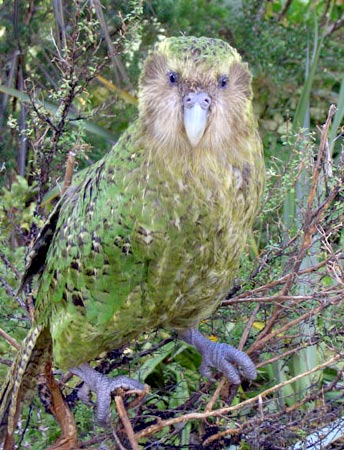
Kakapo (Strigops habroptilus)
Introduction
On the darkened forest floor of Whenua Hou — Codfish Island, a wind-scraped sanctuary adrift in the cold waters off Stewart Island's northern coast — something extraordinary stirs in the undergrowth. A large, rotund shape moves with surprising deliberateness through the ferns, its moss-green plumage practically indistinguishable from the damp vegetation. It stops, raises its disc-shaped facial feathers — functional like a satellite dish, gathering sound in the darkness — and emits a low, exploratory grunt. This is a kakapo: the world's heaviest parrot, the only flightless parrot on Earth, and by almost every ecological measure, one of the most extraordinary birds our planet has ever produced.
The kakapo (Strigops habroptilus) did not evolve alongside mammalian predators. New Zealand's extraordinary geological isolation — separated from Gondwana over 80 million years ago — meant that for most of its evolutionary history, the islands harboured no land mammals at all. In this predator-naïve world, flightlessness was not a liability. It was an elegant energy-saving solution. The kakapo grew large, developed a hyperefficient fat-storage metabolism, adopted a slow reproductive strategy suited to a long life, and became so thoroughly interwoven with the podocarp forest ecosystem that the relationship between this bird and the rimu tree (Dacrydium cupressinum) stands as one of the most precise examples of co-evolutionary dependency in the Southern Hemisphere.
Then humans arrived. First the Polynesian ancestors of the Māori, approximately 700 years ago, bringing with them the Pacific rat (Rattus exulans, kiore) and a voracious appetite for giant, slow-moving, sweet-smelling birds. Then European settlers, who cleared forests at industrial pace and released stoats, Norway rats, and feral cats into a landscape whose fauna had not evolved a single defensive response to mammalian predation. Within a geological blink, the kakapo — a species that had survived ice ages, volcanic upheaval, and millions of years of competitive ecological pressure — was on the edge of annihilation.
Today, the entire global population of kakapo numbers approximately 247 known individuals. Every single bird has a name. Every individual carries a radio transmitter, a genomic profile, and a conservation dossier. The species' survival exists entirely within the boundaries of three small, intensively managed, predator-free island reserves — managed at extraordinary cost and technical precision by New Zealand's Department of Conservation and the Kakapo Recovery Programme. This article analyses not merely what the kakapo is, but what it does ecologically, why it stands at such severe risk, how each pressure cascades through its biology and its broader ecosystem, and what conservation engineering can realistically achieve for a species whose survival now depends entirely on sustained, expert human intervention.
"In the end, we will conserve only what we love, we will love only what we understand, and we will understand only what we are taught."
— Baba Dioum, African conservationist, IUCN General Assembly, 1968
Population Dynamics
To understand kakapo population dynamics, one must first understand what kind of species this is from a demographic standpoint. The kakapo is a quintessential K-strategist: it lives extraordinarily long (confirmed individuals have exceeded 60 years, with theoretical maximum lifespans estimated at 90 years or more), invests heavily in the survival of a small number of offspring rather than producing large clutch sizes, and reaches sexual maturity late — females typically begin breeding between 9 and 11 years of age. Under normal ecological conditions, this strategy works. Long-lived individuals maintain population stability across years of low recruitment. But when extrinsic mortality rates rise sharply — as they do when introduced mammalian predators arrive — a species built on low-output reproduction cannot compensate fast enough. The death rate outstrips the birth rate by a margin the species' reproductive machinery cannot close.
This dynamic explains the kakapo's near-extinction trajectory with terrifying precision. Before human contact, kakapo existed across both main islands of New Zealand in enormous abundance, inhabiting forests from sea level to subalpine shrublands. Māori hunting reduced populations significantly over the first centuries following Polynesian arrival, but the true collapse came with European colonisation. By the early 20th century, mainland populations had effectively disappeared. By the 1970s, the species was feared extinct. In 1977, a small population was discovered on Stewart Island, providing a lifeline — but stoat predation was already thinning that population at a rate incompatible with long-term survival.
The formal Kakapo Recovery Programme, initiated in 1989 under the Department of Conservation, began the painstaking process of capturing and translocating every known kakapo to predator-free offshore islands. From an estimated 51 individuals in 1995, the population has grown — slowly, unevenly, but unmistakably — to approximately 247 individuals by 2023. This growth is not smooth. It is punctuated by breeding booms in mast years and constrained by years in which no breeding occurs at all.
| Year | Estimated Population | Key Event |
|---|---|---|
| 1977 | Unknown (few hundred?) | Stewart Island population discovered |
| 1990 | ~40–50 | Species classified near-extinct; emergency translocation begins |
| 1995 | 51 | First formal census; all individuals transferred to island sanctuaries |
| 2002 | 86 | First measurable recovery impact visible |
| 2009 | 124 | Significant mast breeding year |
| 2016 | 154 | Steady managed increase continues |
| 2019 | 213 | Record breeding season; over 60 chicks fledged |
| 2022 | 252 | Exceptional mast year; highest population on record |
| 2023 | ~247 | Post-breeding mortality adjustments; population holding near record |
The mechanism driving population fluctuations is critically important to understand. Kakapo breeding is almost entirely conditional on mast fruiting events — specifically the mass production of rimu fruit. Rimu masting occurs every two to five years and is thermally cued, dependent on warm, dry summer conditions the preceding season. When rimu masts, females gain the caloric surplus needed to develop eggs. In non-mast years, breeding rarely occurs, and even if attempted, chick survival rates are low due to insufficient food. This means the population can only meaningfully grow during a narrow, climatically determined window every few years.
Juvenile survival has been dramatically improved through management intervention. Without human oversight, nest predation by rats and stoats during mast years — when stoat populations irrupt explosively on the increased food supply — would destroy most clutches and many chicks. With nest monitoring, predator suppression, artificial incubation, and hand-rearing programmes, chick survival rates have risen from near-zero under natural conditions to approximately 60–70% under managed conditions. This management-dependent survival improvement is central to why any population recovery has occurred at all.
Fun Fact A male kakapo's booming call — produced from inflated thoracic air sacs within a sculpted ground bowl — can carry up to five kilometres through dense forest. On still, cold nights, the sound fills entire valley systems, a primordial advertisement broadcast across the Southern Ocean air.
Habitat Stability & Ecological Pressure
The kakapo's current habitat is not its natural habitat. It is a conservation habitat — a series of carefully managed island substitutes for an ecological niche that has been functionally destroyed across the New Zealand mainland. Understanding this distinction is essential to understanding the species' vulnerability, because it means any assessment of habitat stability must account not just for the ecological quality of the islands, but for the permanence and resilience of the predator management systems that make those islands survivable at all.
The three primary kakapo management islands — Whenua Hou (Codfish Island, 1,396 ha), Anchor Island (1,117 ha) in Fiordland's Doubtful Sound, and Chalky Island (~100 ha), also in Fiordland — collectively represent a tiny fragment of the species' former range. All three support podocarp-broadleaf forest of varying composition, and all three have been subject to predator eradication programmes. The islands were not uniformly pristine before conservation intervention: introduced deer and other herbivores had degraded vegetation structure on some islands prior to eradication, reducing the density of preferred food plants and nesting cover.
The ecological pressure most acutely shaping kakapo habitat stability is the mast-fruiting cycle of rimu. This is not merely a food source — it is a reproductive trigger hardwired into the kakapo's endocrine system over millions of years of co-evolution. Rimu trees produce prolific fruit roughly every two to five years, driven by a summer temperature threshold that promotes synchronised flowering across large areas of forest. When this threshold is not met — or when climate variability disrupts the timing — breeding essentially ceases. The dependency is absolute: kakapo populations cannot sustain positive growth without periodic rimu mast events, and the intervals between mast years represent years of demographic stasis.
Beyond rimu, kakapo consume a remarkably wide range of native plants — leaves, stems, roots, pollen, bark, and the fruit of kahikatea (Dacrycarpus dacrydioides), mataī (Prumnopitys taxifolia), mountain beech (Fuscospora cliffortioides), and numerous ferns and sedges. This dietary breadth provides resilience in non-mast years but cannot compensate for the absence of the caloric bonanza that rimu fruit provides. Supplemental feeding programmes — discussed in the conservation engineering section — partially offset this limitation, but they introduce their own dependencies and risks.
Island carrying capacity represents an underappreciated habitat constraint. Current estimates suggest the three primary islands can support somewhere between 400 and 600 kakapo in total, depending on vegetation regeneration and supplemental feeding capacity. As the population approaches that ceiling, habitat pressure will intensify: competition for nesting sites, territory, and food could begin to suppress fitness and reproductive output. Identifying and preparing additional predator-free islands is therefore not merely a contingency measure — it is a foreseeable ecological necessity.
Ecological Role (Keystone Analysis)
The kakapo's ecological role cannot be assessed in its current form — a relic population confined to three small islands — without also considering what that role was, and what it once meant for the New Zealand ecosystem at scale. In its historical abundance, across both main islands, the kakapo was a major force in forest ecology. Populations likely numbered in the hundreds of thousands or more. An animal of that mass, consuming that volume of forest plant material — fruits, seeds, leaves, bark, pollen — and moving across wide areas of forest every night would have generated significant ecological effects: shaping vegetation structure through browsing pressure, dispersing seeds across the forest floor, and creating nutrient redistribution through dung deposition.
The seed dispersal function is particularly important. Kakapo consume the fleshy, nutrient-rich arils of rimu and other podocarp seeds, passing viable seeds intact through their digestive systems and depositing them across the forest floor at distances often far from the parent tree. For slow-colonising, large-seeded podocarp species whose seeds lack aerodynamic properties for wind dispersal, this kind of frugivore-mediated dispersal may have been critical to post-disturbance forest regeneration across the islands for millennia. If the kakapo disappears entirely, and no functional equivalent exists to fill this role, the long-term regeneration patterns of rimu and allied species could be altered — though the precise magnitude of this effect is difficult to quantify at the current tiny population scale.
What happens if the kakapo disappears? Beyond the direct loss of its dispersal function, the consequences radiate outward through New Zealand's already fragmented forest ecosystem. The loss would be principally a loss of ecological history — the severing of a co-evolutionary relationship built across 80 million years of island development. The kakapo is not currently a keystone species in the strict ecological definition, because its population is too small to exert measurable ecosystem-level effects. But it was one. The ghost of that former ecological importance is written in the mast-fruiting trigger: rimu has evolved a precisely timed, temperature-cued mass-fruiting strategy that appears specifically adapted to trigger frugivore behaviour. Remove the frugivore permanently, and that co-evolved signalling system becomes ecologically orphaned.
The kakapo also occupies an important position in the evolutionary narrative of Gondwanan biogeography. As a member of the strigopidae — the most ancient surviving parrot lineage, endemic to New Zealand — it represents an irreplaceable data point in understanding parrot evolution, avian cognition, and the adaptive radiation of birds in predator-free environments. Its extinction would not merely be an ecological loss; it would be an irrecoverable severing of a phylogenetic branch with no surviving equivalents.
It is late summer on Anchor Island, deep in Fiordland. The forest is dripping with moisture, the air dense with the smell of wet bark and fungus. At the base of a moss-covered rimu, a female kakapo — known to the Recovery Programme as Hana-Pounamu — works methodically through a cluster of fallen arils, her beak breaking the waxy seed casings with quiet efficiency. She weighs 2.4 kilograms tonight, having gained 300 grams over the previous three weeks of feeding. The recovery team's scale, set at her feeding station upslope, recorded this gain faithfully.
Hana-Pounamu has bred before. In 2019, she raised two chicks in a hollow beneath a fallen rimu trunk. Tonight, the managers watching her telemetry data on a screen in a field hut three kilometres away note with quiet satisfaction that her weight gain trajectory matches the threshold below which females have historically failed to produce viable eggs. If this summer's rimu crop sustains, she may breed again. The decision is not hers alone — she will need a male, and the males are currently silent. The booming season has not yet begun.
Somewhere in the darkness above, a large moth descends toward the rimu arils. Hana-Pounamu ignores it. She is focused entirely on the work of accumulating the energy stores that will, in a few months, determine whether the population grows by two, or by none. In the mathematics of kakapo conservation, the choices made by this single bird tonight carry a weight entirely disproportionate to her size.
Human-Wildlife Conflict
In the conventional framing of human-wildlife conflict — livestock depredation, crop raiding, vehicle strikes — the kakapo does not register as a significant case study. The kakapo does not raid farms. It does not threaten human livelihoods in any direct, ongoing sense. But to conclude that human-kakapo conflict is therefore a minor issue would be deeply misleading. The human-kakapo conflict is total, historical, and ongoing — it is simply expressed through a different mechanism: the wholesale destruction of the ecological conditions this species requires to exist.
The first wave of conflict came with Māori settlement. Kakapo were hunted extensively for food — their high fat content made them extraordinarily valuable caloric resources in a landscape where large terrestrial protein was otherwise scarce. They were also hunted for feathers, used in cloaks of significant cultural importance. Māori also kept kakapo as pets, which introduced a level of selective capture pressure on top of direct predation. The introduction of kiore (Pacific rat, Rattus exulans) compounded the damage: this small but highly effective egg predator rapidly colonised coastal and lowland forests, establishing a permanent background mortality pressure on ground-nesting birds before any European contact occurred.
European colonisation accelerated the collapse. Large-scale forest clearing for agriculture removed millions of hectares of kakapo habitat within a century. Norway rats (Rattus norvegicus) arrived in port towns and spread inland. Domestic cats gone feral established populations across the main islands with devastating efficiency. But the decisive blow was the deliberate introduction of stoats (Mustela erminea) as a biocontrol agent for introduced rabbits, beginning in the 1880s. Stoats proved to be catastrophic predators for ground-nesting birds. Kakapo, with their strong, distinctive musty-sweet odour — an evolutionary signal developed in a world without mammalian noses — became easy targets. A scent that had perhaps once attracted mates now provided a tracking signature readable by every mustelid in the forest.
Today, the ongoing human-wildlife conflict around kakapo takes subtler forms. The predator control operations necessary to maintain predator-free islands require the use of broad-spectrum rodenticides — particularly 1080 (sodium fluoroacetate) and brodifacoum — which generate significant public controversy in New Zealand. These operations are essential for kakapo survival but affect non-target species and generate legitimate ethical debates about conservation methodology. The financial conflict is also real: island predator management is expensive, absorbing conservation funding that could theoretically support other threatened species. Every dollar spent maintaining stoat-free islands for kakapo is a dollar not spent on other elements of New Zealand's extraordinary biodiversity crisis.
Climate Change Vulnerability
The relationship between kakapo breeding and climate is mediated almost entirely through rimu masting, and this dependency makes the species acutely sensitive to any shift in the temperature and rainfall patterns that trigger this botanical event. Rimu mass-fruiting is initiated by a suite of environmental cues, with warm, dry summer conditions — particularly elevated temperatures in the preceding December through February — being the most consistently identified driver. Under climate change projections for southern New Zealand, mean summer temperatures are expected to rise by 1.5–3°C over the coming century, with increased variability in rainfall patterns.
On the surface, warmer summers might appear beneficial: more frequent threshold-crossing events could trigger more regular rimu masting, potentially increasing the frequency of kakapo breeding seasons. Some ecological models tentatively support this, suggesting that mast intervals could shorten from an average of three to five years toward two to three years under moderate warming scenarios. If realised, this would represent a meaningful increase in the species' reproductive output. However, the picture is considerably more complicated when broader climate effects are considered.
More frequent and intense warm years simultaneously drive stoat population irruptions. Stoat numbers are tightly coupled to beech mast events — which are also thermally triggered — and to some extent to rimu masting. A warmer climate producing more frequent masting events would also produce more frequent and intense stoat population explosions, dramatically increasing predation pressure on kakapo eggs and chicks. The very climate signal that opens a breeding window for kakapo simultaneously generates the predator surge that historically closed that window through nest destruction. Conservation managers would need to intensify predator control operations in exactly the years when breeding is occurring — at precisely the moment when the logistical and financial demands on the programme peak.
Sea-level rise poses a direct threat to Whenua Hou (Codfish Island), which sits at relatively low elevation. Storm surge events — projected to increase in frequency and intensity under mid-to-high warming scenarios — could inundate portions of the island, damaging nesting habitat and potentially washing out nests during critical breeding periods. The island's small size limits the availability of higher-elevation refuge habitat. Additionally, increased cyclonic activity in the Tasman Sea region could cause direct physical damage to island forest structure, reducing the density of mature rimu trees that underpin the entire breeding ecology.
The kakapo's capacity for behavioural adaptation to climate change is severely limited by its extreme life-history specialisation. Unlike generalist species with flexible diets and rapid reproductive rates, the kakapo cannot easily shift its breeding phenology, expand its dietary range to compensate for altered fruit availability, or colonise new habitat in response to changing conditions. It is already confined to managed islands. There is no range to shift into. Its evolutionary programming is locked into a rhythm defined by rimu masting, and that rhythm is being disrupted by a climate system changing faster than any evolutionary adaptation can track.
Fun Fact The kakapo is believed to be one of the longest-lived birds on Earth. Sirocco, the species' official conservation ambassador, was hatched in 1997 and is still thriving — and scientists believe kakapo may routinely live into their 80s or beyond under managed conditions, making each individual an irreplaceable demographic asset.
Genetic Diversity Concerns
The genetic situation facing the kakapo population is among the most challenging in avian conservation, and its implications for long-term species viability reach far beyond the simple arithmetic of population size. The current population is descended from an extremely narrow founder group — primarily the Stewart Island (Whenua Hou) population, which itself had been severely reduced by predation before the recovery programme captured and translocated individuals to island sanctuaries. Genetic analysis of the current population reveals very low heterozygosity compared to outbred bird populations, reflecting the cumulative effect of multiple severe bottlenecks over the last several centuries.
A critically important piece of genetic history complicates the picture further. Until 1997, the two remnant kakapo populations — those from Fiordland on the South Island mainland, and those from Stewart Island — represented genetically distinct lineages that had been separated for thousands of years. The Fiordland population was eventually reduced to a single individual: a male named Richard Henry, the last surviving representative of the Fiordland genetic lineage. Richard Henry was introduced to Codfish Island and bred with Stewart Island females, introducing Fiordland alleles back into the recovering population. His descendants carry genetic material that would otherwise have been lost entirely to extinction. Richard Henry died in 2010, making his genetic legacy — held by his surviving offspring and grandoffspring — genuinely irreplaceable.
The practical consequences of low genetic diversity in the kakapo manifest across multiple biological systems. Immune function is of particular concern: reduced major histocompatibility complex (MHC) diversity limits the range of pathogens a population can recognise and mount defences against. Aspergillosis — a respiratory fungal infection caused by Aspergillus species — is a significant cause of mortality in the kakapo population, and there is emerging evidence that susceptibility to aspergillosis has a genetic component, with some individuals showing markedly higher vulnerability than others. As the founding genotypes that confer susceptibility become proportionally more common through drift and constrained breeding, the population's collective resistance could erode.
Reproductive performance is also affected by inbreeding depression. Fertility rates, embryo viability, and chick developmental robustness are all negatively correlated with inbreeding coefficients in birds. Recovery Programme managers actively use genomic data to make pairing recommendations — directing mating choices to maximise genetic diversity and minimise relatedness between breeding pairs. This genetic management is sophisticated and necessary, but it operates within increasingly tight constraints as the pedigree network becomes more interconnected with each passing generation.
Emerging technologies offer potential future pathways. Ancient DNA extracted from museum specimens of kakapo collected in the 19th and early 20th centuries could theoretically identify extinct alleles — genetic variants present in the historical population that have since been lost. Synthetic biology approaches, while still experimental, may eventually permit the reintroduction of such variants into the living population. The Recovery Programme's comprehensive genomic database — covering every living individual — provides the foundational data infrastructure these future interventions would require. But these approaches remain distant prospects. In the near term, genetic management through pedigree-guided pairing remains the primary tool available.
Conservation Engineering Solutions
The Kakapo Recovery Programme represents one of the most intensive, technically sophisticated, and scientifically advanced single-species conservation operations in the world. It is also the only reason the species exists in its current numbers. Understanding what conservation engineering has achieved — and where its limits lie — is essential to any honest assessment of the kakapo's future.
The foundational engineering solution is predator exclusion through island management. The three primary kakapo islands have been cleared of all introduced mammalian predators through a combination of aerial brodifacoum drops and intensive trapping networks. Maintaining predator-free status requires constant vigilance: any reinvasion of rats or stoats — by swimming, drifting debris, or accidental introduction via supply boats — could be catastrophic in a breeding season. Biosecurity protocols for island access are correspondingly strict. All visitors undergo thorough equipment inspection, and supply vessels are treated as potential invasion vectors. The programme has maintained effectively predator-free conditions on its primary islands for over two decades, a remarkable logistical achievement.
Nest monitoring technology has transformed breeding season outcomes. Each nest is equipped with cameras and weight sensors that relay real-time data to field teams. Egg temperature, adult attendance patterns, embryo development timelines, and chick weight gain are tracked continuously. Eggs identified as at risk — from incubation irregularities, nest abandonment, or developmental problems — can be removed for artificial incubation in field facilities and returned to the nest once stabilised. Chicks that are underweight, sick, or orphaned are hand-raised by trained veterinary staff using carefully managed feeding protocols designed to avoid behavioural imprinting. These interventions have collectively shifted the demographic calculus of kakapo breeding from deeply negative to marginally positive.
Supplemental feeding is deployed with careful calibration. During mast years, when rimu fruit is abundant, supplemental feeding serves primarily to boost female body condition above the minimum threshold for egg production. During non-mast years, supplemental feeding maintains population health but does not typically trigger breeding. The programme uses a range of native and supplemental food sources — ground pellets formulated to match the nutritional profile of rimu fruit, supplemented with sweet potato, apple, and native leaves — delivered to individual feeding stations fitted with automated scales. Every bird's weight is recorded at each feeding visit, generating a continuous body condition dataset of extraordinary resolution.
Genomic technology underpins the genetic management system. The entire genome of every living kakapo has been sequenced, creating what may be the most complete whole-genome population database for any wild vertebrate species. This dataset is used to assess relatedness, identify inbreeding risks, inform pairing recommendations, and track the genetic representation of key lineages — particularly the Richard Henry descendants — across generations. The genetic data also informs health assessments: individual aspergillosis susceptibility, reproductive hormone profiles, and immune function markers can all be cross-referenced with genomic data to identify at-risk individuals for targeted veterinary intervention.
Acoustic monitoring technology is playing an increasingly important role. Male kakapo produce two distinct vocalisations during the breeding season: a deep, resonant "boom" that carries several kilometres through forest, and a higher-pitched "ching" used in close-range male-male competition. Automated acoustic monitoring arrays deployed across the islands can detect and locate booming males in real time, providing behavioural data without requiring physical disturbance. Machine-learning algorithms trained on the distinctive vocal signatures of individual males can identify specific birds from recording data alone, allowing the programme to monitor male breeding behaviour at a resolution and temporal coverage that human field observation alone could not achieve.
| Trait | Kakapo | Kea | Kākā |
|---|---|---|---|
| Scientific Name | Strigops habroptilus | Nestor notabilis | Nestor meridionalis |
| Average Weight | 2–4 kg | 0.9–1 kg | 0.4–0.55 kg |
| Flight Capability | Flightless | Strong flier | Strong flier |
| Activity Pattern | Nocturnal | Diurnal | Crepuscular / nocturnal |
| IUCN Status | Critically Endangered | Endangered | Endangered |
| Known Population | ~247 (2023) | ~3,000–7,000 | ~10,000–20,000 |
| Mating System | Lek (polygynous) | Polygynous | Monogamous |
| Lifespan (max) | 60–90+ years | 20–50 years | 20–35 years |
| Breeding Frequency | Every 2–5 years (mast-dependent) | Annual | Annual |
Ecosystem Interdependence
The kakapo's ecological existence is threaded through a web of interdependencies that extends far beyond its immediate relationship with rimu fruit. To understand the species purely as a parrot that eats forest plants is to miss the full complexity of its position within the New Zealand forest ecosystem — and to underestimate the ecological consequences that would follow its permanent loss.
The relationship between kakapo and the podocarp tree community is the most structurally important. Rimu, kahikatea, mataī, and totara — New Zealand's ancient conifer assemblage, a living legacy of Gondwanan flora — all produce fleshy, animal-dispersed seed structures. These trees evolved this reproductive strategy in a world populated by large-bodied frugivores: kakapo, moa, and other birds that could process, transport, and deposit seeds across distances meaningful for forest regeneration. Moa are extinct. Kakapo are nearly so. The loss of these dispersal vectors represents a profound disruption to the regeneration ecology of podocarp forests — a slow-motion process whose full consequences will only become apparent over centuries, as recruitment rates for these long-lived trees quietly decline without adequate dispersal of their seeds.
Kakapo's position as a large-bodied herbivore — exceptional for a bird — also connects it to nutrient cycling in island forest ecosystems. Their dung deposits return processed organic material to the forest floor at specific locations associated with feeding activity, concentrating nutrients around preferred rimu and podocarp patches. The historic abundance of kakapo on the New Zealand mainland would have created measurable nutrient redistribution effects across forest soil systems, similar in broad principle to the dung-mediated nutrient cycling performed by large mammalian herbivores in other ecosystems. On managed islands today, the small population creates only negligible ecosystem-level nutrient effects — but the ecological logic of the connection remains.
The lek mating system creates a further ecological footprint. Male kakapo excavate shallow depressions — "booming bowls" — in prominent elevated positions: ridgelines, hillsides, areas with clear acoustic projection. These bowls are maintained over years and even decades, as males return to traditional lek sites across their long lifespans. The physical modification of soil and ground cover at these sites creates small-scale disturbance patches that alter local vegetation dynamics, creating micro-habitats with slightly different light penetration, moisture retention, and invertebrate communities compared to undisturbed forest floor. In a historically dense kakapo population, the cumulative effect of thousands of these lek sites across the landscape would have represented a distributed, low-intensity disturbance regime with real consequences for forest structure.
The kakapo's relationship to the insect community of the forest is less well documented but ecologically significant. Kakapo are not exclusively frugivorous — they consume substantial quantities of invertebrates opportunistically, particularly during chick-rearing when protein demand increases. Their impact on populations of large forest invertebrates — beetles, weta, caterpillars — and the energy they extract from these sources ties them into the forest invertebrate food web in ways that remain incompletely quantified. The New Zealand forest invertebrate community, already severely disrupted by introduced predators and habitat loss, co-evolved in a context that included this large, slow-moving insectivore moving through the undergrowth on its nightly foraging routes.
Fun Fact Kakapo are the only parrot species in the world to use a lek mating system, where males congregate at communal display sites and compete purely through acoustic performance — no nuptial feeding, no nest-building displays, no pair bonds. After mating, the female raises her chicks entirely alone, with no paternal contribution whatsoever.
Future Extinction Risk Modelling
Population Viability Analysis (PVA) for the kakapo presents a picture that is simultaneously more optimistic than it was thirty years ago and more fragile than the raw population numbers might suggest. The fundamental challenge in modelling kakapo extinction risk is the extreme management dependency of the population: current survival rates and reproductive outputs are products of an intensive, expensive, continuously operated conservation intervention, not of any self-sustaining ecological recovery. Remove the management, and the trajectory reverses sharply.
Under current management conditions, the most widely cited modelling work projects a continued slow population increase, potentially reaching 400–600 individuals by the 2040s–2050s, constrained by the carrying capacity of available island habitat. This trajectory assumes no catastrophic stochastic events — disease outbreaks, major predator reinvasions, severe cyclones, or conservation funding collapse. Under this optimistic managed scenario, extinction probability over a 100-year horizon is estimated to be relatively low — perhaps 5–15%, depending on model assumptions. But this optimistic framing conceals the depth of the species' dependency: that extinction probability rises to over 50% within decades if management is withdrawn.
Stochastic threats represent the most acute near-term extinction risks. Avian disease is the scenario that most concerns programme managers. A novel pathogen introduced to one of the managed islands — particularly a highly transmissible respiratory or systemic disease — could propagate rapidly through a closely managed, high-density population in which individuals regularly interact with humans and with each other. The genetic homogeneity of the population amplifies this risk: if the population has limited MHC diversity to recognise a new pathogen, immune responses may be uniformly inadequate, driving high case fatality rates across the population simultaneously. The 2019 outbreak of Pseudomonas aeruginosa chick infections — a bacterial pathogen that killed several chicks in that year's record breeding season — provided a sobering reminder of how quickly disease can erode a breeding year's gains.
Climate modelling introduces significant uncertainty into longer-term projections. Scenarios in which warming increases rimu masting frequency produce more optimistic population trajectories, with more frequent breeding seasons accelerating population growth. Scenarios in which climate change disrupts island hydrology, increases storm damage to forest canopy, or triggers novel disease dynamics produce markedly less optimistic outcomes. The range of plausible climate trajectories generates a correspondingly wide uncertainty band around any 50-year population projection — a fundamental epistemic constraint that honest extinction risk communication must acknowledge.
The long-term viability question ultimately centres on whether kakapo can ever be managed at a population size large enough to be genuinely self-sustaining without intensive human intervention. The consensus among population geneticists and conservation biologists is that a minimum viable population (MVP) for long-term viability — accounting for genetic diversity maintenance, demographic stochasticity buffering, and environmental variance — likely requires several thousand individuals, not the hundreds that current island capacity supports. Reaching that threshold requires either the development of additional island sanctuaries or, ultimately, the restoration of predator-free mainland habitat at a scale sufficient to support wild, unmanaged kakapo populations. The latter is the stated ambition of New Zealand's Predator Free 2050 initiative, but achieving it represents an ecological engineering challenge of extraordinary complexity and cost.
Conservation Policy & Governance
The governance framework surrounding kakapo conservation is unusually well-developed by international standards, reflecting both the depth of New Zealand's commitment to its endemic biodiversity and the cultural significance of the species to Māori, for whom the kakapo carries deep connections to the natural world and ancestral identity. Nevertheless, the governance architecture faces persistent structural challenges — particularly in funding stability, interagency coordination, and the long-term political sustainability of the extraordinary resource commitment the species demands.
The legal foundation is provided primarily by the New Zealand Wildlife Act 1953, which affords the kakapo absolute protection as a fully protected species. This makes any killing, capturing, disturbing, or taking of kakapo — without explicit Departmental permit — a criminal offence. The Act has been supplemented by subsequent conservation legislation, including the Conservation Act 1987, which established the Department of Conservation (DoC) as the primary conservation management authority and clarified the Crown's obligations to protected species. At the international level, the kakapo is listed on CITES Appendix I, prohibiting all commercial international trade and requiring the highest level of import/export justification for any cross-border movement — including for zoo programmes or research collaborations.
The Kakapo Recovery Programme operates as a formal partnership between DoC and Ngāi Tahu — the principal South Island iwi, who hold statutory rights of kaitiakitanga (guardianship, stewardship) over taonga species including the kakapo. This partnership is not merely symbolic. Ngāi Tahu representatives sit on the programme's governance and advisory structures, and traditional ecological knowledge held by Ngāi Tahu informs aspects of species management and island stewardship. The Māori cultural framing of conservation as kaitiakitanga — active guardianship and responsibility across generations — provides an ethical architecture that complements the scientific management approach and strengthens political support for the programme's continuation.
Funding represents the most persistent governance vulnerability. The Kakapo Recovery Programme costs approximately NZD $1.5–2.5 million per year in direct operational expenditure, with additional costs associated with research partnerships, veterinary services, and capital investment in infrastructure. This funding flows primarily through DoC's annual budget allocation, which is subject to government spending priorities and political cycles. The programme has supplemented government funding through public donations — the kakapo's profile as a globally beloved conservation icon makes it unusually effective at generating public philanthropic support — and through international research partnerships with universities and conservation organisations. But the dependency on an annual government budget line for the survival of an entire species represents a structural fragility that no amount of public goodwill entirely resolves.
The Predator Free 2050 (PF2050) programme represents the most ambitious conservation policy development relevant to the kakapo's long-term future. Announced in 2016 as a national government commitment, PF2050 aims to eradicate stoats, rats, and possums from the entire New Zealand mainland by 2050. If achieved — and the technical and logistical barriers are formidable — this would theoretically open vast areas of the New Zealand mainland to kakapo reintroduction, transforming the species' management from intensive island rescue to broad-landscape wild recovery. The practical challenges of achieving this target are immense, and the 2050 timeline is widely regarded within the conservation science community as highly ambitious. Nevertheless, the policy signal is historically significant: it represents a national-level commitment to the ecological vision that makes kakapo long-term recovery conceivable.
IUCN Red List Analysis
Current IUCN Status
The kakapo (Strigops habroptilus) is classified as Critically Endangered (CR) on the IUCN Red List — the highest risk category short of Extinct in the Wild. This classification is assigned under criteria B1ab(iii,v) and C2a(ii), reflecting the species' extremely restricted geographic range, ongoing habitat quality decline in the broader New Zealand landscape, and a total population size well below 250 mature individuals. The Critically Endangered designation is not merely a formal label: it represents a quantitative assessment that without continued intervention, the probability of extinction over the coming decades is high.
The CR classification is scientifically appropriate and, if anything, understates the degree of management dependency that characterises the species' current survival. A truly wild, self-sustaining kakapo population — one capable of maintaining positive population growth without intensive human management — does not currently exist. The population that justifies the "not yet extinct" classification is a product of one of the world's most resource-intensive conservation programmes. Were that programme to be suspended, the trajectory toward functional extinction would likely resume within years, not decades. The CR status should be understood in this context: it reflects managed survival, not recovered ecological resilience.
Population Trend
The IUCN records the kakapo population trend as increasing, a designation that reflects the real and measurable growth from fewer than 51 individuals in 1995 to approximately 247 individuals by 2023. This is a genuine conservation achievement — nearly a fivefold increase over less than three decades, accomplished through extraordinary sustained effort. However, the rate of increase must be contextualised. The population grows primarily in mast years and stagnates or marginally declines in non-mast years due to background natural mortality. The mean annual growth rate, averaged across mast and non-mast years, is modest: perhaps 5–8% per year under current management conditions.
Historical population estimates are deeply uncertain. Pre-European contact populations likely numbered in the hundreds of thousands, distributed across both main islands and Stewart Island. By the time formal scientific attention focused on the species in the mid-20th century, the population had collapsed to a level at which routine field observation was becoming impossible. The discovery of the Stewart Island population in 1977 was not the discovery of a healthy remnant — it was the discovery of a declining population already under severe stoat predation pressure, which itself would have collapsed without intervention within a decade or two.
Main Threats
Introduced mammalian predators remain the primary existential threat. Stoats (Mustela erminea), rats (Rattus rattus and R. norvegicus), and feral cats are capable of killing adult kakapo and destroying eggs and chicks. Their exclusion from managed islands requires continuous, costly intervention. Any failure of biosecurity protocols — a stoat swimming to an island, a rat surviving an eradication operation — creates a threat that can rapidly escalate if not detected and eliminated immediately.
Low reproductive rate combined with mast-year dependency creates fundamental demographic fragility. Unlike species that can increase reproductive output in response to population pressure, the kakapo cannot accelerate breeding beyond what the ecological trigger of rimu masting permits. Years of zero breeding produce no demographic recovery, and background mortality continues regardless of whether breeding occurs. This produces an asymmetric demographic equation that is structurally difficult to resolve without manipulating either the breeding trigger (supplemental feeding) or the mortality rate (predator exclusion).
Disease poses a growing threat as population density on managed islands increases. Aspergillosis is the most significant current disease concern, but the narrow genetic base of the population makes it vulnerable to novel pathogens to which it has no prior immune experience. The management context — multiple birds sharing feeding stations, human handling during health checks and breeding interventions — creates pathogen transmission opportunities that would not exist in a wild, dispersed population.
Climate change, as discussed at length above, threatens the regularity and predictability of the rimu masting trigger, while simultaneously increasing the intensity of predator irruption events during mast years and exposing island habitats to increased storm and sea-level risks.
Genetic erosion continues with each passing generation, as the population's already low heterozygosity is further constrained by the small effective population size and the limited opportunity for outbreeding in such a small, genealogically interconnected group.
Ecological Consequences
The ecological consequences of continued kakapo population decline — or worst-case, extinction — would be felt most acutely in the forest regeneration ecology of podocarp-dominated systems. The permanent loss of this large-bodied frugivore would remove one of the few remaining dispersal vectors for large-seeded podocarp trees, whose long-term recruitment rates in post-disturbance landscapes depend on animal dispersal. Over generational timescales of forest regeneration (decades to centuries), reduced podocarp recruitment would gradually alter forest composition, reducing the dominance of rimu, kahikatea, and mataī and potentially shifting forest ecosystems toward assemblages dominated by species with wind-dispersed or otherwise independent seed dispersal mechanisms.
The loss would also represent the permanent severing of the co-evolutionary relationship between kakapo and rimu — a relationship that has shaped the reproductive strategy of both species for millions of years. The rimu's synchronised masting strategy, calibrated to the foraging behaviour and metabolic requirements of a large frugivore, would persist as an ecological anachronism — a signalling system without a receiver. Whether rimu would evolve toward different fruiting strategies over evolutionary time is an unanswerable question, but the immediate consequence of losing the kakapo would be a measurable reduction in the functional dispersal ecology of one of New Zealand's most ecologically and culturally significant tree species.
Conservation Efforts
The Kakapo Recovery Programme, now in its fourth decade of intensive operation, represents the central pillar of conservation effort. Operational components include predator-free island management, supplemental feeding, telemetry monitoring, nest camera surveillance, egg and chick intervention, genomic management, disease monitoring, and acoustic monitoring. Every living kakapo is a known, named, monitored individual — a level of individual-level conservation management unprecedented for any wild vertebrate population.
International conservation partnerships have contributed genetic research, disease investigation, and technological development to the programme. Massey University and the University of Otago have been particularly active research partners, contributing work on aspergillosis genetics, reproductive physiology, and population modelling. BirdLife International coordinates the species' global assessment and advocates for its conservation in international forums. A dedicated public communications and fundraising infrastructure — anchored by Sirocco, the species' official conservation ambassador, whose social media presence has generated extraordinary public awareness — has made the kakapo one of the world's most recognised conservation species and a significant generator of philanthropic conservation funding.
The Predator Free 2050 initiative, at the national policy level, represents the most significant long-term conservation intervention for the species. Success in this programme would transform the kakapo's conservation prognosis from "managed survival on small islands" to "potential mainland wild recovery" — a transformation in conservation ambition that would represent one of the most significant ecological restoration achievements in history.
Future Outlook
The honest assessment of the kakapo's future outlook is: cautiously improving under current management, but genuinely precarious in the absence of it. The species is no longer in free fall. The population has grown steadily for three decades. The science underpinning management decisions is better than it has ever been. The community of expertise, technology, and institutional commitment surrounding the Recovery Programme has reached a level of sophistication that meaningfully reduces the probability of catastrophic management failure.
But the kakapo remains an engineered survivor — a species whose persistence depends on the continued willingness and capacity of human institutions to maintain extraordinary effort on its behalf. The 247 individuals currently alive represent a population far below any plausible threshold of genuine self-sustaining viability. The path from 247 to 2,000 — a number that begins to approach the lower bound of what geneticists consider a minimally viable long-term population — passes through decades of continued intensive management, the development of additional island habitat, and potentially the transformation of mainland New Zealand into a landscape capable of supporting wild kakapo populations. That path is plausible. It is not guaranteed.
Conclusion
The kakapo is not merely a threatened species. It is an ecological argument — a living demonstration of what the New Zealand forest ecosystem was built to do and what it has been prevented from doing by the cascading consequences of human colonisation. Every booming male on Anchor Island, every newly fledged chick weighed at a nest camera on Whenua Hou, every breeding decision guided by a genomic database in a Wellington server room, represents a counterargument to the trajectory of extinction that the species has been on for the last seven centuries.
What the kakapo teaches conservation science is not comfortable. It teaches that some species, once pushed past certain ecological thresholds, require essentially permanent, intensive, expensive human support to survive at all. It teaches that evolutionary specialisation — the very quality that made the kakapo such a remarkable product of 80 million years of island evolution — can become a liability when the environment changes faster than adaptation can respond. It teaches that population numbers, while necessary, are insufficient metrics of conservation success: 247 individuals managed by a team of world-class scientists on predator-free islands is not the same as 247 individuals living freely in a self-sustaining ecosystem.
But the kakapo also teaches something more hopeful. It teaches that skilled, dedicated, sustained conservation intervention can genuinely alter the trajectory of a species' fate. The difference between 51 individuals in 1995 and 247 in 2023 is not luck. It is science, institutional commitment, cultural partnership, public engagement, and the extraordinary work of conservationists who have dedicated careers to a single species. The kakapo is alive today because people decided it should be, and acted accordingly. Whether that will ultimately prove sufficient — whether the species will one day walk unmanaged through a mainland New Zealand forest again — depends on whether that decision continues to be made, with the same intensity and the same resources, for generations to come. The forest has waited 80 million years for this bird. It can wait a little longer. The question is whether we can.
Sources & Attribution
Data and ongoing research referenced for this article come from the following authoritative sources — peer-reviewed publishers, official taxonomic registers, and global biodiversity programmes:
- IUCN Red List — Kakapo — official IUCN Red List assessment including population trend, threats, and conservation actions.
- Wikipedia — Kakapo — taxonomy, distribution, and an overview with onward citations to primary literature.
- GBIF — Kakapo — global occurrence and distribution records from the Global Biodiversity Information Facility.
- iNaturalist — Kakapo — observation records and field photographs contributed by naturalists worldwide.
- Encyclopedia of Life — Kakapo — multilingual species pages aggregating taxonomic and natural-history data.
- WWF — World Wildlife Fund — global wildlife conservation programmes and research summaries.
- Nature — research on Kakapo — peer-reviewed studies indexed by Nature on related ecology and behaviour.
- ITIS — Integrated Taxonomic Information System — federal-grade taxonomy and nomenclature.
Frequently Asked Questions
What is the current conservation status of the kakapo?
The kakapo (Strigops habroptilus) is classified as Critically Endangered (CR) on the IUCN Red List, which is the highest risk category for a species that has not yet gone extinct. As of 2023, the entire global population consists of approximately 247 known individuals, all living on three predator-free managed islands off the coast of New Zealand. The Critically Endangered classification reflects the species' extremely small population size, restricted range, and near-complete dependence on intensive human management for survival.
Why can't kakapo fly?
The kakapo evolved in New Zealand over tens of millions of years in the complete absence of land mammals. Without ground-based predators, the energetic cost of maintaining powerful flight muscles was not offset by any survival benefit, and natural selection favoured the more energy-efficient strategy of terrestrial locomotion. Over evolutionary time, the kakapo's pectoral muscles atrophied, its keel bone reduced, and its body mass increased to levels incompatible with sustained flight. Its wings are still present and functional for balance and short parachuting descents from trees, but powered flight is anatomically impossible.
This evolutionary history is precisely why introduced mammalian predators were so catastrophic for the species. A kakapo's response to perceived threat is to freeze and rely on its cryptic green-brown plumage for camouflage — an effective strategy against aerial predators who hunt by sight, but fatally inadequate against stoats and cats hunting by scent and touch through dense undergrowth.
How often do kakapo breed?
Kakapo breeding is triggered almost exclusively by mast fruiting events — specifically the mass production of rimu fruit, which occurs every two to five years depending on summer temperature conditions. In non-mast years, breeding essentially does not occur. In mast years, females who achieve sufficient body weight may produce clutches of one to four eggs. Because females bear all parental responsibility — males contribute nothing beyond sperm — breeding success depends entirely on female condition and the availability of food throughout the chick-rearing period.
This highly irregular breeding frequency, combined with the species' late sexual maturity (females begin breeding at 9–11 years) and relatively small clutch sizes, makes population growth intrinsically slow — even under optimal conditions. Conservation managers use supplemental feeding to boost female body condition and, in some cases, help trigger breeding in borderline mast years.
What do kakapo eat?
Kakapo are herbivores with a broad native plant diet. They consume the fruits, seeds, pollen, leaves, stems, bark, and roots of a wide range of New Zealand native plants, with rimu fruit arils being the most calorically important food source during mast years. Other significant food plants include kahikatea, mataī, tōtara, mountain beech seeds, various ferns, mosses, and herbaceous species. Kakapo also consume invertebrates opportunistically — beetles, weta, and larvae — particularly during chick-rearing when protein requirements are elevated. Their feeding technique involves chewing plant material to extract moisture and nutrients, often leaving behind distinctive fibrous pellets of compressed plant fibre called "chews" that can be used to identify kakapo feeding activity.
How is the Kakapo Recovery Programme managed?
The Kakapo Recovery Programme is managed jointly by New Zealand's Department of Conservation (DoC) and Ngāi Tahu — the principal South Island Māori iwi who hold cultural guardianship (kaitiakitanga) over the species. The programme maintains intensive management of all known individuals across three primary predator-free island sanctuaries: Whenua Hou (Codfish Island), Anchor Island, and Chalky Island. Every individual bird is named, genetically profiled, fitted with a radio transmitter, and monitored continuously through a network of automated scales, nest cameras, acoustic sensors, and field telemetry. Breeding pairings are guided by genomic analysis to maximise genetic diversity, and veterinary intervention is available for sick or injured birds.
How does climate change affect kakapo?
Climate change affects kakapo primarily through its impact on the rimu masting trigger. Rimu trees produce mass fruit crops in response to warm, dry summer conditions — a temperature cue that drives synchronised flowering across large forest areas. Changes in temperature and rainfall patterns driven by climate change may alter the frequency and predictability of these masting events, with potentially complex effects on kakapo breeding opportunities. Warmer summers could increase masting frequency, potentially enabling more frequent breeding seasons — but simultaneously trigger more intense stoat population irruptions that threaten eggs and chicks.
Sea-level rise and increased storm intensity also threaten the low-lying island habitats on which the kakapo depends, particularly Whenua Hou (Codfish Island). Unlike most threatened species, kakapo have no capacity to shift their range in response to changing conditions — they are already confined to managed islands with no natural dispersal ability to new habitats.
Why are kakapo so genetically vulnerable?
The kakapo population has experienced multiple severe genetic bottlenecks over the past several centuries — beginning with the collapse driven by Māori hunting and introduced rats, and culminating in the near-extinction event of the 20th century. The current population descends primarily from fewer than 50–60 founding individuals from Stewart Island, with a partial genetic contribution from Richard Henry, the last surviving Fiordland male, who contributed unique genetic lineage variants before his death in 2010. This extremely narrow genetic base has produced very low heterozygosity across the population.
The practical consequences include elevated susceptibility to diseases like aspergillosis, reduced fertility, and limited evolutionary adaptability. The Recovery Programme actively manages genetics through pedigree-guided pairing decisions designed to maximise the retention of rare alleles and minimise inbreeding — but these measures can only slow genetic erosion, not reverse it, within the current population size.
Could kakapo ever be reintroduced to the New Zealand mainland?
Mainland reintroduction is the long-term conservation ambition, but it requires the elimination or sustained suppression of introduced mammalian predators — stoats, rats, and cats — across sufficiently large mainland areas to support a self-sustaining kakapo population. New Zealand's national Predator Free 2050 programme is committed to achieving exactly this, through a combination of intensive trapping, landscape-scale toxin operations, and emerging genetic biocontrol technologies targeting invasive predator species. If PF2050 succeeds, large-scale mainland kakapo reintroduction becomes biologically feasible for the first time in over a century.
Several mainland fenced sanctuaries — predator-exclusion fences enclosing hundreds of hectares of native bush — have demonstrated the concept at small scale, and kakapo have been trialled in some mainland fenced environments. Full open-landscape mainland recovery remains a generational project, but the scientific and policy foundations for eventually achieving it are being actively built.
How long do kakapo live?
Kakapo are among the longest-lived birds on Earth. Confirmed lifespans in the managed population include individuals well over 60 years old, and theoretical maximum lifespans based on the species' metabolic rate, growth rate, and physiological characteristics suggest 90 years or more is achievable. Sirocco, hatched in 1997 and now the species' official conservation ambassador, is approaching 30 years old and is considered a young adult. This extraordinary longevity is both an asset and a complication for conservation: each individual represents decades of potential future reproductive output, making the survival of every bird critically important, but longevity also means the population turns over very slowly and generational progress on genetic diversity management is inherently gradual.
What makes the kakapo's mating system unique among parrots?
The kakapo is the only parrot in the world to use a lek mating system. During breeding seasons, males congregate at traditional elevated display sites — ridgelines and hilltops with good acoustic projection — where each male excavates a series of shallow depressions called booming bowls. From these bowls, males produce deep, resonant booming calls at night, inflating specialised thoracic air sacs to generate low-frequency sound waves that can travel up to five kilometres through forest. Males also produce high-pitched "chinging" calls used in direct male-male competition at the lek. Females travel independently to the lek, assess males over multiple visits, and choose a mate purely on the basis of acoustic quality — no pair bond is formed, no nesting assistance is provided, and the male plays no role in egg incubation or chick rearing.
This system places all reproductive investment and risk on females, which is part of why female body condition — directly linked to food availability — is the single most critical determinant of whether breeding succeeds in any given mast year. Conservation managers focus supplemental feeding efforts particularly on females for this reason.
Image: Wikipedia/Wikimedia Commons — “Kākāpō”
Comments
Post a Comment