
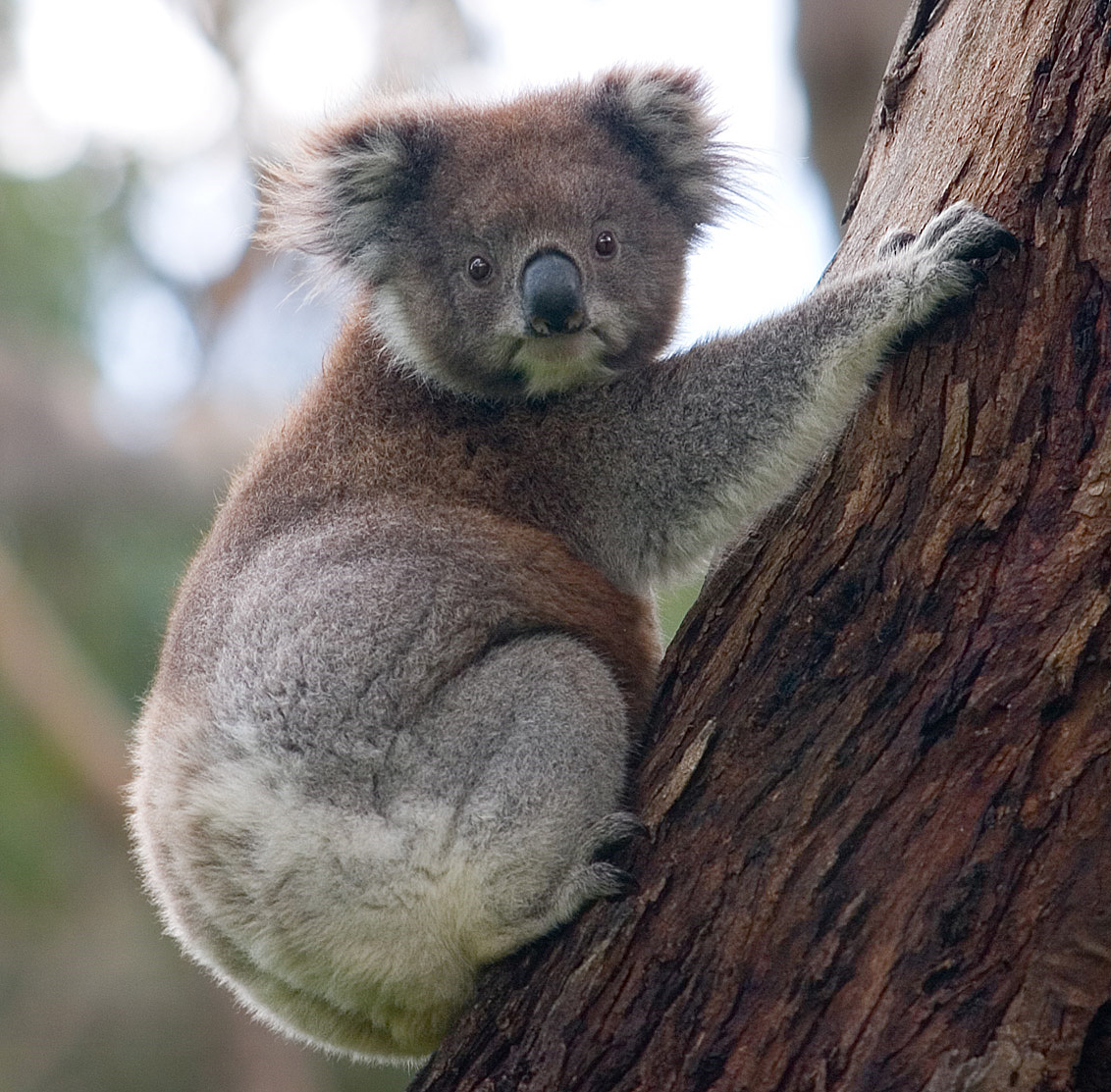
Koala (Phascolarctos cinereus)
Introduction
In the grey-green stillness of a eucalyptus forest in eastern Australia, a small grey form sits wedged in the fork of a narrow branch, barely distinguishable from the pale bark around it. It does not move for hours. Its wide, amber-flecked eyes half-close as the morning sun climbs, and the only sign of life is the slow, deliberate movement of its jaw as it masticates a fresh spray of eucalyptus leaves. This is the koala — an animal that has perfected the art of doing almost nothing, and in doing so, has become one of the most ecologically precise and physiologically extraordinary mammals on Earth.
The koala (Phascolarctos cinereus) is not a bear, despite the long-standing popular misconception. It is a marsupial, a member of the same ancient lineage that produced kangaroos, wombats, and possums. Its closest living relative is the wombat, with which it shares a robust, compact body plan and a backward-opening pouch — though the koala has adapted that body plan for an entirely arboreal existence in one of the most chemically hostile food environments any large mammal has attempted to exploit: the eucalyptus canopy.
Few animals occupy such a narrow ecological niche with such absolute commitment. The koala eats almost nothing but eucalyptus leaves — a food source so toxic, so calorie-poor, and so structurally demanding to digest that virtually no other comparably sized mammal has managed to sustain itself on it. Understanding why the koala can do this, and what it costs the animal to do so, reveals one of the most remarkable evolutionary stories in mammalian biology.
This is not a story of abundance and ease. It is a story of physiological precision, ecological specialisation, and a slow-burning survival strategy that has endured for millions of years — and is now being tested as never before by habitat loss, disease, and a rapidly changing climate.
"The koala is not a simple, slow creature living a simple life. It is an extraordinarily calibrated organism, tuned by millions of years of evolution to exploit an environment that would poison anything less precisely built."
— Dr. Bill Ellis, University of Queensland Koala Ecologist
Scientific Classification
Kingdom: Animalia
Phylum: Chordata
Class: Mammalia
Order: Diprotodontia
Family: Phascolarctidae
Genus: Phascolarctos
Species: Phascolarctos cinereus
The family Phascolarctidae is ancient and, today, contains only a single living species — the koala itself. The genus name Phascolarctos derives from the Greek phaskolos (pouch) and arktos (bear), reflecting the early European settlers' tendency to compare the animal to a bear. The species epithet cinereus is Latin for "ash-grey," a direct reference to the animal's muted pelage.
Three subspecies are recognised, though their boundaries remain a matter of ongoing scientific discussion. Phascolarctos cinereus cinereus occupies New South Wales and Victoria; Phascolarctos cinereus victor is associated with the larger, more heavily furred Victorian populations; and Phascolarctos cinereus adustus represents the smaller, more sparsely furred Queensland populations. These regional variations reflect genuine morphological and physiological differences shaped by climate and food plant chemistry across a wide geographic range.
Physical Characteristics
The koala presents a body plan that appears deceptively simple at first glance — compact, rounded, and somewhat plush — but which conceals a suite of highly specific anatomical adaptations. Adult koalas typically weigh between 4 and 15 kilograms, with males considerably larger than females. This sexual size dimorphism is pronounced: a large Victorian male may weigh up to 15 kg, while a small Queensland female may weigh as little as 4 kg. Body length ranges from approximately 60 to 85 centimetres.
The fur is dense and woolly, particularly on the back, where it functions as a natural raincoat — the structure of the dorsal fur allows rain to be channelled away from the body rather than soaked in, a critical adaptation for an animal that cannot retreat to a burrow. Fur colour ranges from pale silver-grey in northern populations to a richer, darker grey-brown in southern animals, with a cream to white chest and inner limb colouration. The distinctive large, rounded nose is equipped with an acute olfactory system, capable of detecting subtle chemical differences between eucalyptus species and even individual trees.
The koala's limbs are built for arboreal life. Both forelimbs and hindlimbs are powerfully muscled, with the forelimbs particularly strong for grasping and climbing. Each forepaw carries two opposable thumbs — a rare anatomical feature — which, combined with three clawed digits, gives the animal an extraordinarily secure grip on even smooth, vertical eucalyptus trunks. The hindpaws feature one fused digit (a syndactyl toe) used for grooming, and large curved claws on the remaining toes for gripping bark.
The skull is robustly built with a pronounced sagittal crest in males, providing attachment surface for the powerful jaw muscles needed to process tough, fibrous eucalyptus leaves. The teeth include sharp incisors for clipping foliage and specialised molars with high, shearing ridges for grinding plant tissue. A diastema — a gap between the incisors and cheek teeth — allows the tongue to manipulate leaves effectively before they reach the molars.
Fun FactThe koala has one of the smallest brain-to-body-size ratios of any mammal — its brain accounts for less than 0.2% of its body weight, and the skull cavity is partially filled with cerebrospinal fluid rather than neural tissue. This is thought to be an evolutionary response to the extreme energy constraints of a eucalyptus diet.
Perhaps the most unusual physical trait of the koala is its fingerprints. Koala fingerprint patterns are so remarkably similar to human fingerprints — with comparable ridge patterns, whorl configurations, and loop structures — that they have been mistaken for human prints at crime scenes. This is one of only a handful of known cases of fingerprint convergent evolution in mammals, likely arising from shared ecological pressures related to gripping and manipulating surfaces.
Habitat & Geographic Distribution
The koala is endemic to Australia, and its distribution is tightly constrained by the availability of suitable eucalyptus woodland and forest. Historically, koalas ranged across much of eastern and south-eastern Australia, from north Queensland through New South Wales, Victoria, and into South Australia. There is no naturally occurring koala population in Western Australia or the Northern Territory, as the eucalyptus forests of those regions do not provide the specific species composition and chemical profile that koalas require.
Within their range, koalas are selective at a very fine scale. They do not occupy all eucalyptus forest uniformly. Instead, they show strong preferences for particular eucalyptus species and for specific stands of those species within a broader landscape. The preferred tree species vary significantly by region. In Queensland, trees such as Eucalyptus tereticornis, E. camaldulensis, and E. microcorys are primary food trees. In Victoria and New South Wales, species including E. viminalis, E. ovata, and E. radiata feature prominently. Even within a preferred species, individual trees vary in their chemical composition, and koalas are acutely sensitive to these differences.
Topography, soil type, and climate influence which eucalyptus species grow where, and therefore directly shape koala habitat quality. Koalas tend to occupy habitat in coastal and sub-coastal regions rather than true arid inland zones, and they are most often found at elevations from sea level up to around 1,000 metres. They are absent from the true interior deserts and from Tasmania, where suitable eucalyptus woodland of the required composition is lacking.
The geographic range today is substantially contracted compared to historical distribution. Urbanisation along the east coast has eliminated or fragmented vast tracts of formerly continuous habitat, creating isolated population pockets that are increasingly disconnected from one another. Some island populations — such as those on Kangaroo Island in South Australia and French Island in Victoria — were established through deliberate translocations in the twentieth century and now represent genetically significant populations.
Population Region | Climate | Body Size | Fur Density | Key Food Trees |
|---|---|---|---|---|
Queensland (north) | Subtropical, warm | Smaller (4–8 kg) | Sparse, short | E. tereticornis, E. camaldulensis |
New South Wales | Temperate–subtropical | Medium (6–12 kg) | Moderate | E. viminalis, E. punctata |
Victoria | Cool temperate | Larger (8–15 kg) | Dense, thick | E. viminalis, E. ovata, E. radiata |
South Australia | Mediterranean-type | Large (8–14 kg) | Dense | E. viminalis, E. leucoxylon |
Behaviour & Social Structure
The koala's social world is less conspicuous than that of many mammals, but it is far from absent. Koalas are broadly described as semi-solitary, meaning they do not form cohesive social groups in the way that primates or wolves do, but they do occupy overlapping home ranges and engage in complex social interactions, particularly around mating season.
Each koala occupies a home range — a defined area of bushland that contains the food trees, resting sites, and social access it needs. Home ranges vary considerably in size, from as little as 1 hectare in high-quality habitat to over 100 hectares in marginal environments where food trees are widely dispersed. Males typically maintain larger ranges than females, and dominant males' ranges overlap with those of multiple females.
Dominance among male koalas is established and maintained through a combination of body size, vocalisation, and scent marking. Males possess a large sternal scent gland — a dark, sometimes wet-looking patch in the centre of the chest — which they rub vigorously against tree trunks, leaving chemical signals that communicate identity, size, and reproductive status to other koalas. The intensity of scent marking increases dramatically during the breeding season. Larger, older males tend to be reproductively dominant, but subordinate males can and do mate opportunistically when dominant males are occupied or absent.
The koala's most dramatic social behaviour is vocalisation. The bellowing call of a male koala is startlingly loud and structurally complex for an animal of its size. The call is produced during both inhalation and exhalation — a biological rarity enabled by a specialised sound-producing organ known as the velar vocal fold, which sits outside the larynx. These bellows carry across hundreds of metres of dense bushland and serve simultaneously to attract females and warn rival males. Females produce softer calls and screams, which function in both social and distress contexts.
Beyond vocalisation and scent, koalas communicate through posture, facial expression, and physical contact. Mother-joey interactions involve extensive tactile communication — the young animal spends its first months clinging to its mother, then riding on her back, and the physical bond between the pair is reinforced continuously by grooming, cuddling, and the mother's vocalised contact calls. Adult koalas, by contrast, rarely make physical contact outside of mating or mother-offspring relationships.
Daily Life & Activity Cycle
The koala's daily schedule is dictated almost entirely by energy economics. Eucalyptus leaves are nutritionally poor — low in protein, low in accessible carbohydrates, high in indigestible fibre, and laced with toxic compounds that the liver must work hard to detoxify. To survive on such a diet, the koala has evolved a metabolic strategy of radical energy conservation. It sleeps, or rests in a state of minimal metabolic activity, for up to 18 to 22 hours in every 24-hour period.
This is not laziness. It is precision engineering. By keeping movement to a minimum and spending the vast majority of each day motionless in the fork of a tree, the koala reduces the caloric demand on its body to the point where the sparse energy derived from its toxic, fibrous food source is sufficient for survival. The periods of activity — typically 2 to 4 hours per day — are concentrated primarily in the evening and night hours, when temperatures are lower and the energetic cost of movement is reduced.
During active periods, a koala may move between trees, descend to the ground to travel to a distant food tree or water source, engage in social behaviours such as scent marking or vocalising, and feed. Feeding itself is a prolonged, deliberate process — the animal selects specific leaf positions on a branch, clips them with its incisors, and chews with a slow, grinding motion. Koalas are highly selective feeders even within a preferred tree, choosing younger leaves, certain leaf positions, and specific branches, apparently guided by olfactory assessment of leaf chemistry.
Tree selection for resting also reflects ecological reasoning. During hot weather, koalas preferentially rest in the lower, cooler sections of tree canopies and spread their limbs to maximise heat dissipation. During cold weather, they curl tightly into a compact ball in higher, sunnier positions, minimising the body surface area exposed to cold air. This thermoregulatory tree use has been documented in scientific studies and represents a sophisticated, behaviourally flexible response to temperature stress.
At 3:30 in the afternoon on a January day in south-east Queensland, the temperature in the shade reads 38 degrees Celsius. In the fork of a large Eucalyptus camaldulensis tree along a dry creek bed, a female koala named by local researchers as KQ-14 has pressed her entire ventral surface against the cool, pale bark of the lower trunk. Her limbs are splayed wide, her chin resting on the bark, her eyes barely open. She has barely moved in six hours.
A field researcher from the University of Queensland, monitoring her via VHF radio collar, notes the behaviour in a field log: "Trunk hugging — heat stress response. Ambient temp 38.4°C. Core body temp estimated stable." The bark against her chest is measurably cooler than the surrounding air — research has shown that large eucalyptus trunks can be up to 9 degrees cooler than ambient temperature during heat events, effectively functioning as a natural radiator.
By 6 p.m., as the sun drops behind the ridge and the temperature slides toward 28 degrees, KQ-14 stirs. She pulls herself upright, sniffs the air with deliberate, methodical inhalations, and climbs slowly toward the outer canopy. She reaches a spray of fresh leaves, clips several with her incisors, and begins to chew — her first meal in nearly nine hours. The research team records the moment. It is, to them, a familiar scene. But in the precision of its timing, the economy of its energy, and the quiet intelligence embedded in every choice the animal makes, it remains remarkable.
Diet & Survival Strategies
The koala's diet is one of the most extraordinary dietary specialisations in the mammalian world. It feeds almost exclusively on the leaves of eucalyptus trees — a plant genus that has evolved an array of chemical defences specifically to deter herbivory. These defences include phenolic compounds, terpenes, and formylated phloroglucinol compounds (FPCs), the last of which are toxic to most animals even at low concentrations. Despite this, the koala has evolved a multi-layered detoxification and dietary selection system that allows it to consume kilogram quantities of these leaves daily.
The first line of defence against eucalyptus toxins is chemical selectivity. Koalas assess individual leaves — and entire trees — using olfactory evaluation before committing to feeding. Research using cafeteria-style food choice experiments has demonstrated that koalas can reliably distinguish between leaves of different chemical compositions and will consistently prefer leaves with lower FPC concentrations even when visual presentation is identical. This chemical literacy is guided by specific olfactory receptor proteins that are sensitive to the compounds in question.
Once a leaf is consumed, the koala's liver produces a suite of detoxification enzymes — particularly cytochrome P450 enzymes — that chemically neutralise phenolic and terpenoid compounds, converting them into water-soluble metabolites that are excreted in urine. The capacity of these enzymes is not unlimited: koalas can only process a certain quantity of toxins per day, which is one reason why they eat so slowly, so selectively, and consume so little food relative to their body weight compared to other herbivores of similar size.
The caecum — an enlarged pouch at the junction of the small and large intestine — plays a critical role in extracting maximum nutrition from fibrous leaf material. The koala's caecum is proportionally one of the longest of any mammal, reaching over 2 metres in length in adult animals. It houses a diverse microbial community that ferments plant fibre, breaking down cellulose into volatile fatty acids that can be absorbed and used as energy. The composition of this gut microbiome is so important that mothers transmit it to their joeys through a specialised behaviour known as pap feeding, in which the mother produces a soft, semi-liquid form of faecal material that the joey consumes directly from the cloaca — effectively seeding the young animal's gut with the bacterial communities it will need to process eucalyptus leaves.
In terms of caloric intake, a koala consumes roughly 200 to 500 grams of leaves per day — equivalent to approximately 2 to 5 percent of body weight. This is far less, on a weight-adjusted basis, than most comparable herbivores consume, and the energetic yield from those leaves is modest. The result is that the koala exists on a permanent energy budget that leaves very little surplus. It cannot sustain prolonged energetic expenditure — prolonged running, extended social activity, or aggressive territorial conflicts would rapidly exceed what the diet can support.
Fun FactKoalas rarely need to drink water — their name is believed to derive from an Aboriginal word meaning "no water" or "no drink." They obtain the majority of their moisture from the leaves they eat. However, during extreme heat events and droughts, koalas have been increasingly observed descending to the ground to drink from water sources, behaviour that was once considered unusual.
Interaction with Other Animals
In the eucalyptus woodland ecosystem, the koala operates within a web of ecological relationships that extends well beyond its diet of leaves. While it is not a predator and not a prey animal of particularly high significance to most of Australia's current apex predators, its interactions with other species are complex and ecologically meaningful.
The primary natural predators of koalas today are large pythons — particularly the carpet python (Morelia spilota) — powerful birds of prey such as wedge-tailed eagles (Aquila audax), and dingoes (Canis lupus dingo) when koalas descend to the ground. Juvenile koalas are significantly more vulnerable than adults, being small enough for a wide range of predators to attempt. Spotted-tailed quolls (Dasyurus maculatus), powerful enough to tackle young koalas in the canopy, represent another predation risk. The koala's strategy against predation relies primarily on its cryptic stillness — remaining motionless and pressed against grey-barked eucalyptus trunks provides effective visual camouflage against aerial and terrestrial predators. When threatened, koalas can move with surprising speed, but sustained flight is not a viable long-term strategy given their limited energy reserves.
Competition for food trees and resting sites occurs between koalas themselves, with dominant males actively excluding subordinates from preferred areas. Interspecific competition for specific eucalyptus species can occur with common ringtail possums (Pseudocheirus peregrinus) and common brushtail possums (Trichosurus vulpecula), though the dietary overlap is not complete, as these species show different preferences for leaf age, species composition, and canopy position.
Symbiotic and commensal relationships are less dramatic but ecologically significant. Koala faeces deposited at the base of trees contribute nitrogen and organic matter to the soil, supporting plant growth. The koalas' arboreal movements through the canopy can facilitate seed dispersal of certain plant species, and the specific tree species koalas prefer for resting and feeding are also critical habitat trees for a large number of other forest-dependent species, including birds, arboreal marsupials, and invertebrates. The structural complexity that old, large eucalyptus trees provide to an ecosystem — in part maintained by the selective feeding pressure that koalas and other arboreal herbivores place on tree growth — creates habitat niches that support broad biodiversity.
Chlamydia infection, caused by the bacteria Chlamydia pecorum, has become a significant factor in koala population dynamics. While this is a disease rather than a predator-prey relationship, it functions ecologically in a way that partially parallels the role of disease in limiting populations. The infection causes ocular and urogenital disease, reducing reproductive success and survival rates. Interestingly, the prevalence of chlamydia varies considerably between populations, suggesting that local ecological conditions — including population density, habitat stress, and nutritional quality — influence disease transmission dynamics.
Interaction with Environment
The relationship between the koala and its eucalyptus forest environment is one of mutual dependency, calibrated over millions of years. Koalas do not simply inhabit eucalyptus forest — they are shaped by it, and they in turn shape it, in ways that ripple through the entire ecosystem.
Eucalyptus trees are themselves remarkable ecological engineers. They produce allelopathic chemicals that suppress understorey competition, dominate the canopy architecture of large swaths of eastern Australia, and provide food, shelter, and nesting sites for hundreds of species. The koala's selective herbivory on these trees exerts measurable effects on tree growth, leaf chemistry, and canopy structure. When koalas feed heavily on particular tree individuals, those trees respond with altered leaf chemistry in subsequent seasons — increasing the concentration of chemical deterrents in new growth — which in turn influences where koalas feed the following season. This predator-plant arms race at the molecular level is a key driver of the fine-scale habitat selectivity that characterises koala behaviour.
Koalas also interact indirectly with fire regimes, which are a defining ecological force in Australian eucalyptus landscapes. Eucalyptus forests are fire-adapted, and periodic fire is essential for regeneration of certain species, clearing of dense understorey, and nutrient cycling. Koalas do not directly influence fire — they are victims of it and survivors of it — but their habitat preferences tend to align with mature, fire-affected forests where old-growth eucalyptus trees have persisted through multiple burn cycles and carry the chemical and structural qualities that koalas require. Post-fire recovery periods can significantly impact local koala populations, displacing animals into suboptimal habitat until food tree recovery progresses.
Water plays a complex role in the koala's environmental relationship. Although koalas derive most of their hydration from leaves, their reliance on specific food tree species means they are ecologically dependent on soil moisture conditions that support those trees. Changes in rainfall patterns — whether through drought intensification or altered seasonal precipitation — can alter the distribution, leaf chemistry, and nutritional quality of preferred eucalyptus species, triggering cascading effects on koala condition, distribution, and reproduction.
The koala's arboreal lifestyle also means that ground-level habitat changes — roads, fences, cleared farmland — function as barriers that fragment populations and prevent the inter-patch movement that maintains genetic diversity. Even where food trees remain, a koala population isolated on a habitat island by surrounding cleared land is effectively separated from the broader metapopulation and vulnerable to local extinction through disease outbreaks, drought events, or demographic stochasticity.
Reproduction & Parenting
Reproduction in koalas is slow and investment-heavy — a life-history strategy that prioritises the survival of each offspring over producing large numbers of young. Koalas are marsupials, and like all marsupials, their reproductive biology is fundamentally different from that of placental mammals. The gestation period is extraordinarily short — only 35 days — producing an embryonic joey that is tiny beyond imagination: approximately 19 millimetres long and weighing less than half a gram at birth.
This hairless, underdeveloped creature crawls from the birth canal to the mother's pouch entirely unaided, guided by chemosensory cues and its own muscular front limbs, in a journey that lasts only a few minutes but represents one of the most precarious moments in any mammal's early life. Once inside the pouch, it attaches to a nipple, which swells inside its mouth to create a secure physical attachment. Here the joey remains for the next six to seven months, growing in total darkness and complete physiological dependency, nourished by milk whose composition changes dynamically as the joey develops — shifting from early, carbohydrate-rich milk to later, fat-protein-rich milk as the joey's metabolic needs change.
At around six months, the joey's eyes open and it begins to peer out of the pouch. By seven months, it begins to emerge partially, and it is at this stage — between approximately six and twelve months of age — that pap feeding occurs. The mother produces pap, a specialised form of soft faecal matter from the hindgut, which the joey consumes. This inoculates the young animal's developing gut with the microbial community it will need to ferment eucalyptus leaves, making pap feeding one of the most ecologically critical moments in the koala's development.
By twelve months, the joey is fully out of the pouch and rides on its mother's back — clinging to her fur, nestling against her flanks, and continuing to nurse. Complete weaning typically occurs at around 12 months of age, after which the young koala becomes increasingly independent. Females reach sexual maturity at around 2 to 3 years of age; males typically do not reproduce successfully until 3 to 4 years, when they are large enough to compete socially.
Breeding is seasonal, with most births occurring between October and May in the Australian spring and summer. A female can theoretically produce one joey per year, but in practice, many females in stressed or nutritionally marginal populations reproduce every second year. The mating system is broadly polygynous — dominant males mate with multiple females — though female koalas are not entirely passive in mate selection and have been documented actively approaching preferred males and resisting mating attempts by less preferred individuals.
Fun FactA newborn koala joey is so small that 50 of them would fit in a single teaspoon. Despite this near-embryonic state at birth, the joey possesses fully developed forelimbs and olfactory organs — the only anatomical tools it needs to complete its journey to the pouch.
Evolutionary Adaptations
The koala represents a deeply specialised evolutionary outcome from the broader marsupial lineage. The fossil record indicates that the family Phascolarctidae was far more diverse in the Oligocene and Miocene epochs — between 25 and 5 million years ago — with multiple genera and species occupying a variety of ecological niches. The progressive aridification of Australia during the late Miocene and Pliocene, and the consequent expansion of eucalyptus-dominated vegetation across the continent, appears to have driven successive specialisation among phascolarctids toward the eucalyptus-dependent niche that the modern koala now occupies exclusively.
The detoxification apparatus of the koala liver is perhaps the most extraordinary single adaptation in the species. The array of cytochrome P450 enzymes expressed in koala liver tissue represents a dramatically expanded enzyme repertoire compared to other mammals, including a large number of gene copies specific to detoxifying terpene and phenolic compounds. Genomic analysis has revealed that the koala possesses one of the largest gene families for olfactory receptors of any marsupial — a direct adaptation for chemical assessment of leaf quality — and an expanded repertoire of digestive enzyme genes suited to the breakdown of complex plant cell wall components.
The gut anatomy itself is a major adaptive specialisation. The elongated caecum — extending over 2 metres in adults — provides residence time for fermentation that shorter-gutted herbivores cannot achieve. The microbial community within the caecum is not static; it shifts in composition in response to dietary changes, meaning the koala's digestive system is to some extent dynamically calibrated to the specific chemical profile of the leaves being consumed. This microbiome plasticity provides a buffer against the chemical variability between seasons and between different food tree individuals.
Physical adaptations for arboreal life include the double-opposable-thumb arrangement of the forepaws, the powerful musculature of the limbs relative to body weight, and cartilaginous padding on the base of the spine — a cushioning structure that allows koalas to sit for prolonged periods in tree forks without pain or tissue damage. The strongly curved claws of the hindpaws provide grip on bark, while the syndactyl second and third toes serve as a precision grooming comb — an adaptation shared with other diprotodont marsupials.
The koala's reduced brain size, remarkable as it seems, is itself an adaptive response to energetic constraint. Neural tissue is among the most metabolically expensive tissue in the mammalian body. By reducing the volume of the brain and filling unused cranial space with cerebrospinal fluid, the koala conserves energy that would otherwise be demanded by a larger brain. What cognitive capacity remains is precisely tuned to the tasks that matter most: olfactory discrimination of leaf chemistry, spatial memory of food tree locations within the home range, and the social assessment of conspecifics during mating season.
Ecological Importance
The koala's ecological importance extends well beyond its own population. As a large arboreal herbivore with strong food tree selectivity, the koala functions as a shaping force on the structure and composition of the eucalyptus woodland ecosystems it inhabits. The selective feeding pressure it applies to specific tree individuals and species influences those trees' growth, chemical investment, and structural development over time, creating heterogeneity in canopy architecture that supports other species.
Koala faeces deposited regularly at the base of favoured trees contribute to nutrient cycling — adding nitrogen and organic matter to soil at specific locations, which influences the understorey plant community. These nutrient hotspots can be identified by characteristic plant growth patterns and represent a subtle but measurable contribution to forest floor ecology.
The old-growth eucalyptus trees that koalas preferentially inhabit are among the most structurally complex habitat features in Australian forest ecosystems. They provide hollows for nesting birds and bats, peeling bark for insect habitat, and structural perches for raptors. By existing as a flagship species whose conservation requires the protection of large, mature eucalyptus trees, the koala functions as an umbrella species — its protection inherently preserves the habitat requirements of hundreds of other species that depend on the same trees.
As an iconic, charismatic megafauna, the koala also carries enormous conservation signalling value. Protecting koala habitat is, in practice, protecting broad swaths of eastern Australian eucalyptus forest — one of the biologically richest temperate forest types in the southern hemisphere. The conservation case for the koala is therefore simultaneously a conservation case for an entire biome and the thousands of species that inhabit it.
Threats & Conservation
The threats facing koala populations are severe, multiple, and in many respects accelerating. Habitat destruction represents the single largest driver of population decline. Since European settlement of Australia began in the late eighteenth century, an estimated 80 percent of the koala's original habitat has been cleared for agriculture, urban development, and infrastructure. This process continues today, with ongoing land clearing in Queensland — where some of the densest remaining koala populations are found — representing a critical ongoing pressure.
Disease, particularly chlamydiosis caused by Chlamydia pecorum, has reached epidemic proportions in some populations. The infection causes conjunctivitis leading to blindness, urogenital disease reducing fertility, and in severe cases, death. Prevalence rates of 50 percent or higher have been recorded in some wild populations, and the disease is a leading cause of decline in Queensland and New South Wales populations.
Vehicle strike kills thousands of koalas annually across their range. As roads fragment koala habitat and force ground-level movement between habitat patches, the probability of road encounters increases dramatically. Dogs — both domestic and feral — kill significant numbers of koalas each year, particularly in peri-urban areas where koala habitat abuts residential development.
Climate change represents an escalating existential threat. Increasing frequency and intensity of heat events are physiologically dangerous for koalas, which have limited capacity to thermoregulate under extreme heat. The catastrophic Black Summer bushfires of 2019 to 2020 burned through an estimated 24 percent of koala habitat in New South Wales alone, killing an estimated 10,000 koalas and reducing the population by a potentially devastating proportion. Climate change is also altering the nutritional quality of eucalyptus leaves — elevated atmospheric CO2 reduces the protein content and increases the tannin concentration of eucalyptus foliage, further stressing animals already operating on a minimal nutritional margin.
The IUCN listed the koala as Endangered in February 2022, a formal recognition of the cumulative severity of these threats. This listing and its implications are explored in depth in the following section.
IUCN Red List Analysis
Current IUCN Status
The koala (Phascolarctos cinereus) is currently classified as Endangered on the IUCN Red List, a status formally updated in 2022. Within Australia, the species was listed as Endangered under the Commonwealth Environment Protection and Biodiversity Conservation Act 1999 (EPBC Act) for the populations of Queensland, New South Wales, and the Australian Capital Territory in 2022, updated from the previous "Vulnerable" listing. The Victorian and South Australian populations retain a separate listing status at the state level, reflecting their currently more stable demographic trajectories.
The Endangered classification is scientifically justified by evidence of population decline exceeding 50 percent over a three-generation period (approximately 15 to 20 years), continuing habitat loss, disease burden, climate-related mortality, and the severity of the 2019–2020 bushfire season, which inflicted a population shock of potentially historic proportions. The IUCN classification places the koala in a category defined by a very high risk of extinction in the wild.
Population Trend
The koala population trend is classified as decreasing. Precise population estimates are difficult to obtain due to the cryptic, semi-nocturnal, and canopy-dwelling nature of the species, but the best current scientific estimates suggest a total wild population of approximately 100,000 to 300,000 individuals, down from estimated historical populations in the millions before European settlement.
Decline rates vary dramatically by region. Queensland populations have declined by an estimated 50 percent over the past 20 years, driven primarily by habitat clearing and disease. New South Wales populations have experienced similarly severe declines, with the 2019–2020 bushfires inflicting acute, landscape-scale mortality on top of existing chronic pressures. Victorian and South Australian populations are relatively more stable, in part because habitat clearing rates are lower and disease prevalence is less severe in those cooler, less densely populated regions. However, even southern populations face increasing pressure from climate-driven heat events and habitat fragmentation.
Main Threats
Habitat destruction and fragmentation remain the primary long-term driver of koala population decline. Land clearing in Queensland and New South Wales removes food trees directly and eliminates the connectivity between habitat patches that koala populations need for dispersal, gene flow, and demographic rescue of declining local populations. Even where clearing has slowed, urban expansion continues to replace native woodland with roads, buildings, and domestic gardens that are hostile to koalas.
Chlamydiosis is the dominant disease threat. Caused by Chlamydia pecorum, the disease causes ocular and urogenital pathology that reduces survival and reproductive success. Treatment of wild koalas is possible in some circumstances, but the scale of infection across wild populations makes population-level treatment impractical. Vaccine development is progressing, with an experimental koala chlamydia vaccine showing promise in trials, but widespread deployment remains a future aspiration rather than a current reality.
Climate change threatens koalas through multiple pathways: increased frequency and intensity of extreme heat events cause direct thermal stress and mortality; altered rainfall patterns affect food tree distribution and leaf nutritional quality; and the increased frequency and severity of bushfires creates acute, landscape-scale population shocks. The compound effect of climate-driven stress on animals already weakened by nutritional poverty and disease is potentially synergistic — stressed animals show greater disease susceptibility, reducing population resilience precisely when resilience is most needed.
Vehicle strike and domestic dog attacks kill thousands of koalas annually in peri-urban areas. These causes of mortality are concentrated in areas where koala habitat and human settlement co-occur — precisely the areas where koala populations are already under the greatest pressure from habitat loss and disease.
Ecological Consequences
The continued decline of koala populations would have cascading consequences for the eucalyptus woodland ecosystems they inhabit. As a selective herbivore with a measurable influence on tree chemistry and canopy architecture, the loss of koalas from an ecosystem removes a shaping ecological force. Tree individuals and species that are currently subjected to koala browsing pressure would grow differently in the absence of that pressure, potentially altering the structural complexity of the canopy in ways that affect the many other species dependent on it.
The loss of koalas as an umbrella species would reduce the political and economic justification for protecting large areas of mature eucalyptus forest. Without the conservation flagship role played by the koala, the regulatory protection of old-growth forest stands would be more difficult to advocate for and easier to remove. The biodiversity consequences would extend to hundreds of species of birds, bats, reptiles, insects, and plants that rely on the habitat features preserved by koala conservation efforts.
Local extinction of koala populations would also break the ecological feedback loop between the koala and its food trees — the cycle of selective feeding, tree chemical response, and koala behavioural adaptation that has shaped both the koala and the eucalyptus community over millions of years. Once that evolutionary relationship is severed in a landscape, it cannot easily be restored.
Conservation Efforts
A range of conservation measures are currently directed at koala population protection and recovery. At the legislative level, the 2022 Endangered listing under Australia's EPBC Act strengthens the legal basis for habitat protection and triggers recovery planning obligations for the federal government. State-level legislation in Queensland, New South Wales, and Victoria provides additional habitat protection mechanisms, including koala habitat mapping and buffer zones around known populations.
Wildlife hospitals and rehabilitation networks — including the Australia Zoo Wildlife Hospital, Currumbin Wildlife Hospital, and numerous smaller facilities — treat thousands of injured and diseased koalas annually. These facilities provide medical care, chlamydia treatment, and rehabilitation, releasing recovered animals back to suitable habitat wherever possible. While individual-level care is not a population-level solution, it maintains viable animals in recovering populations and generates scientific data on disease prevalence, injury causes, and treatment efficacy.
Research into chlamydia vaccines represents one of the most promising near-term conservation tools. Trials conducted by researchers at the University of the Sunshine Coast have demonstrated that a recombinant protein vaccine can reduce chlamydial infection in wild koalas and improve reproductive outcomes in vaccinated females. Scaling this intervention to meaningful population coverage remains a significant logistical challenge but is scientifically achievable.
Habitat restoration and wildlife corridor creation are receiving increasing investment through federal and state government programs and through non-governmental organisations including the WWF-Australia and the Koala Foundation. Tree planting programs focused on preferred food tree species are underway across multiple regions, and wildlife crossing structures — including rope bridges, underpasses, and traffic management interventions near known road mortality hotspots — have been installed in several areas with measurable reductions in road mortality.
Future Outlook
The future of the koala depends on the speed and scale at which the multiple threat drivers can be addressed. The species has demonstrated biological resilience — historical records show that koala populations can recover reasonably rapidly when habitat pressure is reduced and disease prevalence is low — but the current combination of threats creates a multi-front crisis that exceeds what natural demographic recovery alone can address.
If land clearing in Queensland and New South Wales is substantially curtailed, if a deployable chlamydia vaccine reaches widespread use, and if climate change mitigation reduces the frequency of catastrophic fire and extreme heat events, then the koala's prognosis improves substantially. All three of these conditions remain uncertain. Climate trajectories suggest that even under optimistic mitigation scenarios, heat event frequency will increase in eastern Australia over the coming decades. Political will to halt land clearing has historically been inconsistent in Queensland. And vaccine deployment timelines depend on regulatory, logistical, and financial factors that have not yet been fully resolved.
The most realistic near-term outlook is one of continued population decline in northern populations, with possible stabilisation in cooler southern regions. Without transformative intervention at scale, the risk of local extinction across significant portions of the range — particularly in Queensland — is real and growing. The koala's long-term survival is possible, but it is not guaranteed, and the window for effective intervention is narrowing.
Human Relationship
Few animals carry as much cultural and symbolic weight for a nation as the koala does for Australia. It is simultaneously one of the country's most recognisable international symbols, one of its most economically significant wildlife tourism assets, and one of its most contentious conservation flashpoints. The complexity of the human-koala relationship reflects the broader tensions in Australian society between development, land use, and environmental responsibility.
For Indigenous Australian peoples, koalas held significant cultural meaning across many language groups and are prominent in numerous Dreaming stories and oral traditions. The Gamilaraay people of northern New South Wales have deep cultural connections to the koala, and Aboriginal knowledge of koala ecology, behaviour, and habitat preferences — accumulated over tens of thousands of years — is increasingly being recognised as a valuable complement to Western scientific research in conservation planning.
The arrival of European settlers brought catastrophic consequences for koalas. The early twentieth century saw mass commercial hunting for koala fur — an industry of staggering scale. In 1919 alone, more than a million koala skins were exported from Australia. By the 1920s, koala populations had been reduced to near-extinction across much of their range, and public outcry eventually led to legal protection in all states by 1937. The speed with which populations recovered in some regions following protection — particularly in Victoria, where they rebounded from near-extinction to the point of locally overgrazing their food trees on some islands — demonstrated both the resilience of the species and the importance of habitat quality and legal protection.
Wildlife tourism built around koala encounters generates significant revenue for Australian tourism operations, zoos, and sanctuaries. The experience of holding or interacting with a koala is among the most sought-after wildlife tourism activities in the world, and the debate over whether direct human-koala interaction is appropriate continues among welfare scientists, tourism operators, and conservation practitioners. Most Australian states now prohibit the holding of koalas by tourists, while several Queensland establishments maintain permits for supervised koala holding — a practice that generates revenue directed partly to koala conservation programs but raises ongoing welfare concerns about stress effects on the animals.
Human-wildlife conflict with koalas is real if less acute than for many large mammals. In peri-urban areas, koalas entering domestic gardens are frequently attacked by dogs, struck by vehicles, or become entrapped in fencing. Community education programs aimed at dog-proofing properties, planting koala food trees, and reporting injured or sick animals have expanded significantly in recent years, reflecting a growing civic engagement with local koala conservation.
Unique & Rare Facts
Koala fingerprints are so similar to human fingerprints in their ridge patterns that forensic scientists have documented cases where they were initially indistinguishable from human prints at crime scenes — making the koala one of only three mammals known to possess true fingerprints (along with humans and other primates).
The koala's specialised sound-producing organ — the velar vocal fold — is unique among land mammals. Located outside the larynx, it allows koalas to produce the extraordinarily loud bellowing call during both inhalation and exhalation, generating sound well below what the larynx alone could produce and transmitting information about body size with high acoustic accuracy.
Koala genome sequencing, completed in 2018, revealed that the koala possesses one of the largest genomes of any marsupial — approximately 3.4 billion base pairs — including a dramatically expanded family of olfactory receptor genes and cytochrome P450 detoxification genes that directly reflect the evolutionary pressures of living on a eucalyptus diet.
The koala's caecum, at over 2 metres in length, is one of the longest relative to body size of any mammal. The microbial community within it includes several bacterial species that appear to be unique to koalas, found nowhere else in the animal kingdom.
During the catastrophic 2019–2020 Australian bushfire season, video footage of koalas approaching firefighters and members of the public to drink water from bottles sparked global media attention and contributed directly to increased political pressure for the 2022 Endangered listing.
Koalas can live for 13 to 18 years in the wild, with females generally living longer than males. The oldest reliably recorded wild koala was a female in Queensland who lived to approximately 23 years of age — an exceptional lifespan for an animal living on such a physiologically demanding diet.
Koalas have been observed engaging in what researchers describe as "tree-hugging" — pressing their ventral surfaces against cool tree trunks during heat events — a behaviour that was only scientifically documented and analysed in 2014, despite koalas having been studied for decades. Thermal imaging confirmed that large eucalyptus trunks can be up to 9 degrees Celsius cooler than ambient air temperature, functioning as a significant passive thermoregulation resource.
The koala's milk composition changes across at least five distinct developmental stages, with the protein, fat, carbohydrate, and water balance shifting dramatically to match the joey's changing metabolic needs. This dynamic lactational programming is among the most sophisticated documented in marsupial biology.
Conclusion
The koala is not an accident of evolution. It is the outcome of millions of years of precise calibration — a mammal refined by geological time to exploit a toxic, energy-poor food source with such physiological precision that it has succeeded where no other comparably sized animal has tried. Its reduced brain, its extraordinary liver, its metre-long caecum, its olfactory acuity, its ability to detect molecular differences in leaves before consuming them — none of these are quirks. They are architectural solutions to one of the most demanding ecological problems ever attempted by a warm-blooded vertebrate.
And yet, for all its evolutionary sophistication, the koala is fragile in exactly the ways that matter most in the twenty-first century. It cannot outrun habitat loss. It cannot adapt quickly enough to resist a bacterial disease for which its immune system carries no historical defence. It cannot thermoregulate through heat events of the intensity that climate change is delivering with increasing frequency to eastern Australia. It is specialised precisely enough to be extraordinary, and specialised precisely enough to be vulnerable.
The story of the koala is, in the end, a story about what we value. The animal itself has made its choice — millions of years ago, in the changing forests of a drying continent, some ancestral phascolarctid committed to the eucalyptus canopy and never looked back. That commitment produced an animal of breathtaking precision and, in any honest accounting, a kind of quiet beauty. Whether the ecosystems that support it endure, whether the forests that give it meaning are protected, and whether the political will to prevent its continued decline can be sustained — those are human choices, not evolutionary ones.
"We do not inherit the Earth from our ancestors; we borrow it from our children."
— Antoine de Saint-Exupéry (attributed)
What happens to the koala in the coming decades will reflect, with unusual clarity, what kind of stewardship this generation of Australians — and the international community that has made the koala a symbol of its own relationship with the natural world — chooses to exercise. The biology is extraordinary. The need is urgent. And the choice remains open.
Sources & Attribution
Data and ongoing research referenced for this article come from the following authoritative sources — peer-reviewed publishers, official taxonomic registers, and global biodiversity programmes:
- IUCN Red List — Koala — official IUCN Red List assessment including population trend, threats, and conservation actions.
- Wikipedia — Koala — taxonomy, distribution, and an overview with onward citations to primary literature.
- GBIF — Koala — global occurrence and distribution records from the Global Biodiversity Information Facility.
- iNaturalist — Koala — observation records and field photographs contributed by naturalists worldwide.
- Encyclopedia of Life — Koala — multilingual species pages aggregating taxonomic and natural-history data.
- WWF — World Wildlife Fund — global wildlife conservation programmes and research summaries.
- Nature — research on Koala — peer-reviewed studies indexed by Nature on related ecology and behaviour.
- ITIS — Integrated Taxonomic Information System — federal-grade taxonomy and nomenclature.
Frequently Asked Questions
Are koalas bears?
No. Despite being commonly called "koala bears," koalas are not bears at all. They are marsupials — members of the order Diprotodontia — and their closest living relative is the wombat. Bears are placental mammals of the order Carnivora, making them about as distantly related to koalas as any two mammals can be. The "bear" misnomer was attached by early European settlers who found the animal's rounded, furry appearance reminiscent of a bear cub.
Why do koalas sleep so much?
Koalas sleep or rest for up to 18 to 22 hours per day as a direct physiological response to their eucalyptus leaf diet. Eucalyptus leaves are low in nutrition, high in indigestible fibre, and laced with toxic compounds that the koala's liver must work continuously to detoxify. The energetic return from this food source is so modest that the koala must minimise all unnecessary energy expenditure to maintain a positive caloric balance. Extended rest is the mechanism by which the koala reconciles its energy income with its metabolic needs.
What do koalas eat besides eucalyptus?
Koalas eat almost exclusively eucalyptus leaves and rarely supplement their diet with other plant material. On very rare occasions, koalas have been observed consuming leaves of non-eucalyptus species such as wattles (Acacia species) or box trees (Lophostemon species), but these incidents are exceptional. The koala's entire digestive and detoxification biology is calibrated to eucalyptus chemistry specifically, making meaningful dietary diversification physiologically impractical.
How endangered is the koala?
The koala is currently listed as Endangered on the IUCN Red List, a classification updated in 2022 that reflects a high risk of extinction in the wild. In Australia, the populations in Queensland, New South Wales, and the Australian Capital Territory are listed as Endangered under federal law. Estimates suggest the total wild population may be between 100,000 and 300,000 individuals, substantially reduced from historical numbers. Populations in Queensland and New South Wales have declined by an estimated 50 percent or more over the past two decades.
Do koalas drink water?
Koalas obtain most of their water from the eucalyptus leaves they consume, and under normal conditions they rarely need to drink free-standing water. Their name is widely believed to derive from an Aboriginal word meaning "no water" or "no drink." However, during severe heat events and droughts, koalas have increasingly been observed descending to the ground to drink from streams, puddles, or water offered by humans. This behaviour has become more common as climate change intensifies heat events across eastern Australia.
How do koalas communicate?
Koalas communicate through several channels simultaneously. Male koalas produce a remarkably loud bellowing call — audible for hundreds of metres — using a specialised sound organ outside the larynx called the velar vocal fold. This call communicates identity and body size and is used both to attract females and warn rival males. Koalas also communicate through scent marking, using a large sternal gland to deposit chemical signals on tree trunks. Physical postures and vocalisations are used in close-range interactions, particularly between mothers and their joeys.
How long does a koala joey stay in its mother's pouch?
A koala joey remains inside the mother's pouch for approximately six to seven months after birth. During this time it grows from a tiny, hairless embryo of less than half a gram to a fully furred, recognisable koala. After emerging from the pouch, it continues to be carried on the mother's back and to nurse until approximately 12 months of age, when weaning is complete. The process of pap feeding — in which the joey consumes soft faecal material from the mother to acquire the gut microbiome needed to digest eucalyptus — occurs during the transition from pouch to back riding.
What is chlamydia in koalas and how does it affect them?
Chlamydiosis in koalas is caused by the bacterium Chlamydia pecorum — a different strain from the human sexually transmitted infection but belonging to the same bacterial genus. The disease causes severe ocular infection (leading to blindness), urinary tract and reproductive tract disease (causing infertility and severe pain), and is a leading cause of death and reproductive failure in wild koala populations. Prevalence rates of 50 percent or more have been recorded in some Queensland and New South Wales populations. An experimental vaccine is in development and has shown encouraging results in field trials.
How do koalas survive on toxic eucalyptus leaves?
Koalas survive on eucalyptus leaves through a combination of behavioural selectivity, liver detoxification, and gut fermentation. They use their highly developed olfactory system to select leaves with lower concentrations of toxic compounds before eating. Once consumed, the liver processes toxins using an array of cytochrome P450 enzymes, converting harmful phenolic and terpenoid compounds into water-soluble metabolites that are excreted in urine. The elongated caecum, over 2 metres long, houses specialised bacteria that ferment fibrous plant material, extracting volatile fatty acids for energy — a process that allows the koala to derive nutrition from a food source that would be poisonous to most other mammals.
What happened to koalas during the 2019–2020 Australian bushfires?
The Black Summer bushfires of 2019 to 2020 were catastrophic for koala populations. An estimated 24 percent of koala habitat in New South Wales was burned, and population modelling suggested that approximately 10,000 koalas may have died directly or indirectly as a result of the fires — through burning, smoke inhalation, starvation following food tree destruction, and heat stress. The fires significantly contributed to the decision to uplist the koala's conservation status to Endangered in 2022. Recovery in fire-affected areas is ongoing but slow, as food trees require years to regrow to the structural quality that koalas require.
Can koalas be kept as pets?
Koalas cannot legally be kept as pets anywhere in Australia or in most countries internationally. They are protected under Australian federal and state law, and the complexity of their dietary and social needs makes private captive care of koalas impossible without specialised facilities. Even in licensed wildlife facilities, keeping koalas in good health requires access to fresh eucalyptus leaves of specific species, daily in large quantities — a logistical challenge that most private holders could not meet. Koalas that are found injured or ill must be taken to licensed wildlife carers or wildlife hospitals rather than kept privately.
Image: Wikipedia/Wikimedia Commons — “Koala”
Comments
Post a Comment