
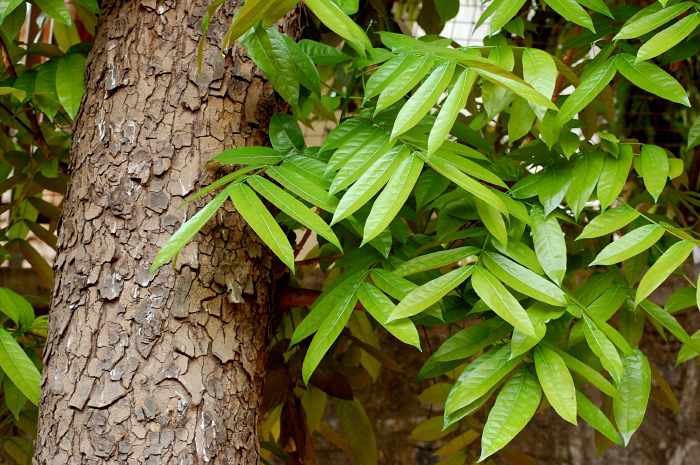
Mahogany (Swietenia macrophylla)
Introduction
Somewhere deep in the lowland rainforests of the Amazon Basin, where the canopy rises like a cathedral vault sixty metres above the forest floor, a single tree can be located by the sheer architecture of its presence. Its trunk, flanged at the base with dramatic buttress roots, ascends in a clean, towering column of reddish-grey bark before exploding into a vast crown that intercepts sunlight across hundreds of square metres. Beneath it, the shade is permanent, the forest floor cool, the silence broken only by the distant percussion of a woodpecker and the papery flutter of winged seeds spiralling down through shafts of filtered light. This is Swietenia macrophylla — big-leaf mahogany — one of the most ecologically significant, commercially coveted, and biologically remarkable trees in the Western Hemisphere.
Mahogany occupies a peculiar double existence in our world. In the humid forests of Central America, Mexico, Bolivia, Peru, and Brazil, it is an ecosystem architect — a keystone canopy species that shapes microclimate, stores enormous volumes of carbon, and sustains entire communities of wildlife. In human civilisation, it has been carved into thrones, fashioned into concert grand pianos, framed the cabins of eighteenth-century warships, and graced the boardrooms of colonial empires. Few trees on Earth have attracted such consistent, relentless desire from humanity across so many centuries.
This duality — ecological grandeur versus commercial obsession — defines the story of Swietenia macrophylla. It is a story of forest ecology, evolutionary ingenuity, and a species pressed hard against the limits of its own survival. Understanding mahogany means understanding how tropical forests function, how trees engineer their own environments, and how fragile the balance truly is between a living forest and an empty, logged hillside.
"The trees are our lungs, our libraries, our elders. To fell one ancient mahogany is to erase a century of ecological memory that the forest cannot quickly rewrite."
— Paraphrased from the ecological writings of Gary Paul Nabhan, ethnobotanist
Scientific Classification
- Kingdom: Plantae
- Division: Tracheophyta (vascular plants)
- Class: Magnoliopsida (dicotyledons)
- Order: Sapindales
- Family: Meliaceae (the mahogany family)
- Genus: Swietenia Jacq.
- Species: Swietenia macrophylla King
- Common Names: Big-leaf mahogany, Honduras mahogany, Brazilian mahogany, broad-leaved mahogany
- Authority: First formally described by Sir George King in 1886
- CITES Status: Appendix II (since 2003)
- IUCN Red List Status: Vulnerable (VU)
The genus Swietenia contains three recognised species: S. macrophylla (big-leaf mahogany), S. mahagoni (West Indian mahogany), and S. humilis (Pacific Coast mahogany). Of these, S. macrophylla is by far the most commercially harvested and geographically widespread. The family Meliaceae — commonly called the mahogany family — includes over 500 species distributed across tropical and subtropical regions, among them teak relatives, Spanish cedar (Cedrela odorata), and the pantropical neem tree (Azadirachta indica).
The species name macrophylla derives from Greek: makros (large) and phyllon (leaf), a direct reference to the tree's large compound leaves — each composed of multiple leaflets — that distinguish it from its relatives. The genus name Swietenia honours Gerard van Swieten, an eighteenth-century Dutch-Austrian botanist and physician who served as court physician to Empress Maria Theresa of Austria.
Physical Characteristics
Size, Form, and Trunk Architecture
Big-leaf mahogany is among the largest broadleaved trees in the Neotropics. Mature specimens typically reach 30 to 40 metres in height, though forest giants recorded in Bolivia and the Brazilian Amazon have exceeded 60 metres — taller than a fifteen-storey building. Trunk diameters at breast height routinely measure 1.5 to 2 metres; exceptional individuals approach 3.5 metres. Crown spread on open-grown trees extends outward 20 to 35 metres in all directions, forming a dense, rounded to spreading canopy that dominates the forest skyline.
One of the tree's most visually striking features is its buttress root system. Broad, plank-like flanges radiate outward from the base of the trunk for distances of 3 to 6 metres, some rising over 2 metres in height before merging with the main stem. These dramatic root buttresses are not merely aesthetic — they function as mechanical anchors in the shallow, frequently waterlogged soils of lowland tropical forests, distributing the mechanical stress of the enormous canopy across a wider soil base.
Bark, Wood, and Leaves
The outer bark of Swietenia macrophylla is grey-brown to reddish-brown, scaly in texture, and develops deep longitudinal fissures with age. Young trees present smoother, paler bark that progressively thickens and furrows as the tree matures. When cut, the inner bark exudes a faint bitter resin with mild astringent properties. The wood itself — the source of mahogany's legendary commercial reputation — is moderately dense, straight-grained, and varies in colour from pale golden-pink in freshly cut specimens to a rich, warm reddish-brown after exposure, oxidation, and ageing. Its Janka hardness rating of approximately 800 lbf (3,560 N) gives it excellent workability combined with genuine durability.
The leaves of S. macrophylla are pinnately compound — each leaf bearing 4 to 6 pairs of leaflets arranged along a central rachis, with the leaflet pairs often slightly asymmetric at the base. Individual leaflets are ovate to lance-shaped, reaching 6 to 14 centimetres in length, with glossy dark-green upper surfaces and paler undersides. Total leaf length, including the rachis, can reach 40 centimetres — hence the epithet macrophylla. In seasonal environments, the tree exhibits a brief deciduous phase, shedding its leaves during the dry season before rapidly producing new foliage as moisture returns.
Flowers, Fruits, and Seeds
The flowers of big-leaf mahogany are small, cream to pale yellow, and borne in large axillary panicles (branched flower clusters) that can extend 15 to 30 centimetres. Individually inconspicuous, the flowers are bisexual and produce a light, sweet fragrance that attracts small bees and other insects. Flowering typically occurs during the late dry season or early wet season transition, when the tree is partially leafless and the flowers are most visible to pollinators.
The fruit is a large, woody capsule — a "seed pod" the size of an avocado, roughly 10 to 20 centimetres long and 5 to 10 centimetres wide. As it matures, the capsule hardens, turns deep brown, and opens from the base into five valves. Inside are packed 35 to 71 winged seeds arranged around a central woody axis. Each seed is attached to a papery, translucent wing 6 to 10 centimetres long, allowing wind dispersal across considerable distances from the parent tree. This dispersal mechanism is one of the most elegant engineering solutions in Neotropical forest ecology.
Fun FactA single mahogany fruit capsule can contain up to 71 winged seeds. When the capsule opens, the seeds spiral down from canopy height like organic helicopters — a mechanism so efficient that seeds can travel over 100 metres from the parent tree in a steady breeze.
Habitat & Distribution
Geographic Range
The natural range of Swietenia macrophylla is the most extensive of any species in its genus, spanning roughly 6.7 million square kilometres across two continents. Its native distribution extends from the Yucatán Peninsula in southern Mexico southward through Central America — including Belize, Guatemala, Honduras, Nicaragua, Costa Rica, and Panama — and continues into South America across Colombia, Venezuela, Ecuador, Peru, Bolivia, and Brazil's Amazon Basin and Atlantic Forest transition zones.
Within this vast range, mahogany is not uniformly distributed. It occurs naturally in low-density populations scattered through mixed tropical and subtropical moist broadleaved forests. Population density typically ranges from 0.1 to 0.5 trees per hectare in undisturbed forest — a genuinely sparse distribution that reflects both the species' specific ecological requirements and its long history of selective harvesting.
Ecosystem Type and Climate Preferences
Big-leaf mahogany is fundamentally a lowland and submontane tropical species, occurring most commonly between sea level and 1,500 metres elevation. It thrives in humid to seasonally dry tropical forests, showing a preference for well-drained but moisture-retentive soils derived from limestone, alluvium, or nutrient-rich clay substrates. Annual rainfall in its primary habitats ranges from 1,200 to 3,500 millimetres, typically with a pronounced dry season of one to five months.
Mahogany shows a notable affinity for forest disturbance zones — areas where canopy gaps created by tree falls, flooding, or hurricane damage allow sunlight to penetrate to the forest floor. Young mahogany seedlings require high light levels to establish successfully, making them "gap-dependent" species in forest ecology terminology. This ecological characteristic has profound implications for both the tree's natural regeneration and its vulnerability to over-harvesting.
| Characteristic | Swietenia macrophylla (Big-leaf) | Swietenia mahagoni (West Indian) | Swietenia humilis (Pacific Coast) |
|---|---|---|---|
| Natural Range | Mexico to Amazon Basin | Caribbean islands, S. Florida | Pacific coast Mexico to Costa Rica |
| Max Height | 60+ metres | 25–30 metres | 20–25 metres |
| Leaf Leaflets | 8–12 leaflets per leaf | 4–8 leaflets per leaf | 4–6 leaflets per leaf |
| IUCN Status | Vulnerable (VU) | Endangered (EN) | Vulnerable (VU) |
| Primary Timber Use | Major international trade | Historically dominant; now rare | Local use only |
| Seed Wing Length | 6–10 cm | 4–6 cm | 3–5 cm |
Growth Systems & Physiology
Photosynthetic Strategy and Crown Architecture
The photosynthetic strategy of Swietenia macrophylla is intimately linked to its position within the tropical forest canopy hierarchy. Adult mahogany trees are fully emergent — their crowns rise above the main forest canopy layer, accessing direct, unfiltered sunlight for the majority of the day. This positioning allows the tree to operate with maximum photosynthetic efficiency, with leaf area index values in mature crowns reaching 3.5 to 5.5 — meaning that for every square metre of ground beneath the crown, there are 3.5 to 5.5 square metres of leaf surface actively intercepting light.
Young mahogany seedlings, by contrast, must initially function as shade-tolerant understory plants, a physiological feat that requires a fundamentally different photosynthetic apparatus. Seedling leaves express elevated concentrations of chlorophyll b relative to chlorophyll a — a biochemical ratio that improves light-harvesting efficiency under the diffuse, blue-shifted light of the forest interior. As a seedling grows taller and begins to intercept more direct light, the leaf chemistry shifts progressively toward higher chlorophyll a concentrations and greater carboxylation capacity in the Calvin cycle.
This physiological plasticity — the ability to switch photosynthetic strategies across different light environments — is one of the most sophisticated adaptations in mahogany's biology. It explains why the species can persist as a slow-growing seedling for years in deep shade, then rapidly accelerate its growth rate the moment a canopy gap opens above it. Growth rates in high-light conditions can reach 1.5 to 2 metres of height per year in young trees, one of the faster growth rates among major tropical timber species.
Water Transport and Hydraulic Architecture
The hydraulic system of a mature mahogany tree is a feat of biological engineering operating under extraordinary pressure. Water must be transported from roots extending metres deep in the soil to leaves positioned 30, 40, or even 60 metres above ground — against gravity and through a complex network of xylem vessels. In S. macrophylla, xylem vessels are relatively wide (mean vessel diameter 100–180 micrometres) compared with many temperate tree species, enabling high rates of water flux through the stem but also making the hydraulic system susceptible to cavitation — the formation of air bubbles that block water transport — during drought conditions.
To manage this risk, mahogany employs a dual hydraulic safety strategy. First, the leaf stomata — the microscopic pores through which water vapour exits and carbon dioxide enters — are highly responsive to changes in vapour pressure deficit. On hot, dry days, stomata close progressively as atmospheric demand rises, reducing transpiration and protecting xylem pressure from dropping to dangerous levels. Second, the tree maintains a population of smaller, more cavitation-resistant xylem vessels alongside its larger, high-flux conduits, ensuring a baseline level of water transport even during hydraulic stress.
During the dry season, partially deciduous populations of mahogany in seasonally dry forests achieve drought tolerance through a third mechanism: leaf shedding. By dropping some or all of its leaf area, the tree dramatically reduces its total transpiration demand, allowing it to survive months of soil water deficit without lethal hydraulic failure. This brief deciduous phase is followed by a flush of new leaf growth timed precisely to the arrival of the wet season, driven by both moisture availability and photoperiodic cues.
Nutrient Absorption and Root Dynamics
The root system of big-leaf mahogany operates across two distinct spatial zones. The buttress roots and large lateral roots spread horizontally through the upper 40 centimetres of soil — the zone richest in organic matter and microbial activity — forming a wide, shallow mat that intercepts rainfall-dissolved nutrients, stabilises the soil surface, and competes with neighbouring plants for phosphorus and potassium. At the same time, deeper sinker roots descend vertically from the lateral roots, exploring subsoil layers for water and mineral nutrients including calcium, magnesium, and micronutrients that may be scarce near the surface.
Like many tropical tree species, mahogany forms associations with arbuscular mycorrhizal fungi (AMF) — networks of fungal hyphae that colonise the root cortex and extend the tree's effective absorptive surface area by orders of magnitude. These fungal partnerships are not passive — they represent an active physiological investment by the tree, which allocates 10–20% of its photosynthate (fixed carbon) to feed the fungal partner in exchange for enhanced mineral nutrient delivery, particularly phosphorus in phosphorus-poor tropical soils. Research in Amazonian Brazil has demonstrated that AMF colonisation significantly improves mahogany seedling establishment success in logged and degraded forest soils where mycorrhizal networks have been disrupted.
Growth Rings, Increment, and Longevity
In seasonally dry portions of its range, S. macrophylla forms annual growth rings — alternating bands of early-season (wet season) wood with wider vessels and late-season (dry season) wood with denser fibre tissue. Dendrochronological analysis of these rings has enabled scientists to reconstruct individual tree ages and forest growth histories with considerable precision. Studies in Bolivia and Peru have revealed that some old-growth mahogany trees are 350 to 500 years old, their ring sequences encoding centuries of rainfall variability, hurricane disturbance events, and forest succession dynamics.
Average annual diameter increment in undisturbed forest ranges from 3 to 8 millimetres per year in mature trees — a pace that means achieving a commercially valuable trunk diameter of 80 centimetres requires at minimum 50 to 100 years of uninterrupted growth. In plantation settings with intensive management, faster diameter increments of 1 to 2 centimetres per year are achievable, though plantation-grown mahogany rarely develops the same structural complexity, figure, or density as forest-grown timber.
Fun FactDendrochronological studies in Bolivia have identified Swietenia macrophylla trees exceeding 500 years of age. Some of these ancient individuals began growing before the first European contact with the Americas — making them living archives of five centuries of Neotropical climate history.
Evolutionary Adaptation
Chemical Defence and Secondary Metabolites
The evolutionary history of mahogany is inseparable from the evolutionary arms race between the tree and its most consequential biological enemy: the mahogany shoot borer, Hypsipyla grandella (Lepidoptera: Pyralidae). This moth's larvae bore into the apical meristems — the growing tips — of young mahogany plants, killing the lead shoot and causing the characteristic forking and multi-stemmed growth habit that renders timber commercially worthless. The relationship between S. macrophylla and H. grandella has been described as one of the most damaging insect-tree interactions in tropical forestry.
In response to this persistent evolutionary pressure, mahogany has developed an arsenal of limonoid terpenoid compounds in its bark, leaves, and wood — a class of secondary metabolites that serve as both feeding deterrents and larval toxins. The most studied of these are swietenine and mexicanolide-type limonoids, compounds with documented insecticidal, antifeedant, and growth-inhibiting properties against lepidopteran larvae. Older, chemically mature mahogany trees express significantly higher concentrations of these compounds than juveniles, which partially explains why H. grandella damage is most severe in young plantations and decreases — though never disappears — in older forest trees.
Light-Environment Plasticity and Gap Exploitation
Perhaps the most elegant evolutionary adaptation in S. macrophylla is its capacity to exploit forest disturbance while simultaneously surviving periods of suppression in shade. The tree's seeds are among the lightest and most wind-dispersed of any canopy emergent in its range — an adaptation calibrated to maximum dispersal across a landscape characterised by irregular, unpredictable gap creation. When a seed lands in a sunlit clearing, its rapid germination (within 7–14 days under moist conditions) and high initial growth rate maximise the use of a temporary light window before neighbouring vegetation closes the gap.
The bark chemistry of established mahogany trees has also evolved in response to fire. In the seasonal forests of Bolivia and the Brazilian Cerrado transition zones, ground fires are a recurring ecological force. The thick, deeply furrowed outer bark of adult mahoganies insulates the living cambium from fire heat, and the high moisture content of the inner bark further buffers against thermal damage. This fire tolerance is not an incidental feature — it is a property refined over thousands of years of co-evolution with fire regimes that periodically clear competing vegetation from the forest floor and create the open, light-rich conditions that favour mahogany regeneration.
Root Architecture and Slope Stability
On steep terrain along the eastern Andean foothills and throughout Central America's rugged topography, mahogany's buttress root system represents an evolutionary solution to biomechanical instability. The buttresses act as guy-wires, resisting the overturning moment generated by the enormous canopy in high-wind events — particularly the hurricane winds that frequently strike the species' Caribbean and Gulf Coast populations. Studies of hurricane damage in Belize and Honduras have confirmed that mahogany trees with well-developed buttresses show significantly lower rates of uprooting than neighbouring species without this adaptation.
Ecological Interaction
Pollination Networks and Floral Ecology
The pollination biology of Swietenia macrophylla is more complex and ecologically interdependent than the tree's small, seemingly unremarkable flowers suggest. The flowers produce both nectar and pollen rewards, attracting a diverse community of small bees — primarily stingless bees of the tribe Meliponini (genera Melipona, Trigona, Tetragonisca) — along with halictid bees, syrphid flies, and occasionally small moths active during twilight hours. The stingless bees are considered the most effective pollinators due to their flower-visiting frequency, body size relative to the floral architecture, and the high pollen loads they transport.
Cross-pollination between individual trees is functionally important for genetic diversity maintenance in mahogany populations, which are naturally sparse — trees often standing hundreds of metres apart. Research using microsatellite genetic markers has demonstrated that effective pollination occurs across distances of at least 500 to 1,500 metres in continuous forest, mediated primarily by the foraging ranges of stingless bee colonies. In fragmented forest landscapes, where individual mahogany trees stand isolated in agricultural matrices, pollination success drops significantly as bee populations decline and inter-tree distances increase, with direct consequences for seed set and genetic diversity.
The timing of mahogany flowering — concentrated during the late dry to early wet season transition — coincides with a period of reduced flower availability in surrounding forest. This temporal positioning means that mahogany trees function as critical nectar and pollen resources for forest bee communities at a time of relative floral scarcity, creating a reciprocal dependency: the bees need the tree to survive the dry season lean period, and the tree needs the bees for reproductive success.
Seed Dispersal and Recruitment Dynamics
The winged seeds of S. macrophylla are exclusively wind-dispersed — a dispersal syndrome called anemochory — making the tree dependent on suitable wind conditions during the fruiting season for successful seed spread. The fruit capsules open during the dry season when deciduous leaf loss, reduced canopy density, and consistent trade winds combine to maximise the distance seeds travel. The wing attachment causes seeds to autorotate as they fall — a samara-like aerodynamic rotation that slows descent rate and allows horizontal wind transport.
Seed dispersal distances are constrained by the physics of autorotation and wind speed. In calm conditions, most seeds fall within 50 to 80 metres of the parent tree. In moderate winds of 5 to 10 metres per second — common during the dry season transition — seeds can travel 100 to 200 metres. Occasionally, seeds from emergent trees positioned above the canopy are caught by stronger upper-level winds and transported distances exceeding 400 metres. This dispersal range creates a characteristic "seed shadow" — a radial gradient of declining seed density from the parent tree — that directly determines the spatial pattern of mahogany seedling recruitment across the forest landscape.
Once seeds reach the ground, germination success is tightly controlled by light availability, soil moisture, and the presence of a suitable seed-bed microsite. Seeds that land in deep shade beneath closed canopy rarely survive long enough to germinate successfully, as they lack the carbohydrate reserves to sustain elongating radicles under energy-deficit conditions. Seeds landing in canopy gaps or forest edges — where photosynthetically active radiation exceeds 20–30% of full sunlight — achieve germination rates of 60–85% under adequate moisture conditions. This light-dependency is the ecological mechanism behind mahogany's reputation as a gap-dependent species, a characteristic with profound implications for forest management and restoration.
In the dry season of 1994, a research team from the Instituto Boliviano de Investigación Forestal established monitoring plots across a selectively logged forest concession in the Beni department of Bolivia. The loggers had extracted the largest mahogany trees eighteen months earlier, leaving behind a landscape of broken stumps, skid trails, and secondary regrowth. The researchers expected to find the typical degraded, species-poor forest that follows selective logging. Instead, they found something remarkable.
Around every stump and along every skid trail — wherever canopy had been opened and soil disturbed — clusters of mahogany seedlings stood 30 to 80 centimetres tall, their compound leaves bright green against the brown leaf litter. The very act of logging had created the light gaps that mahogany seedlings required to establish. Seeds from the few remaining adult trees had rained down into these clearings during the previous dry season, and the mineral soil exposed by skid-trail construction had provided ideal germination microsites.
The irony was stark and scientifically instructive: the forest was attempting to recover using the very reproductive mechanism — gap-dependency — that also made mahogany vulnerable in the first place. Without careful management to protect these seedlings through their slow journey to reproductive maturity, the temporary flush of regeneration would not translate into a future adult population. The researchers spent the next decade tracking the fate of those seedlings. By 2004, fewer than 3% had survived to reach two metres in height — most suppressed by competing vegetation, attacked by Hypsipyla grandella, or trampled by cattle that grazed the forest margins.
That decade of observation became foundational data in Bolivian mahogany management policy, informing silvicultural guidelines that required logging operators to protect and monitor seedling cohorts as a condition of their harvesting licences. The forest, it turned out, could begin to heal — but only if given the precise conditions its most demanding tree required.
Soil Interactions and Nutrient Cycling
Mahogany's interactions with soil biota extend beyond mycorrhizal associations. The leaf litter of S. macrophylla has a moderate lignin-to-nitrogen ratio relative to many tropical hardwood species, resulting in decomposition rates that — while slower than pioneer species — are faster than many old-growth canopy trees. As the litter breaks down, it releases calcium, potassium, and phosphorus into the soil surface, cycling nutrients that would otherwise remain locked in above-ground biomass. In forests where mahogany represents a significant component of the canopy, this litter chemistry contributes measurably to the nutrient status of the upper soil horizon.
Role in Ecosystem
As an emergent canopy species in Neotropical forests, Swietenia macrophylla fulfils multiple foundational ecosystem engineering roles simultaneously. Its most quantifiable contribution is carbon storage: a mature mahogany tree with a trunk diameter of 100 centimetres and a height of 45 metres stores an estimated 20 to 35 tonnes of carbon in its above-ground biomass — woody trunk, branches, and bark — with additional carbon stored in the root system below ground. In forest stands with intact mahogany populations, these trees contribute disproportionately to total stand-level carbon storage relative to their stem density, because their large individual biomass offsets their naturally sparse occurrence.
The mahogany canopy functions as a microclimate regulator across a surface area of hundreds of square metres beneath each tree. The dense crown intercepts rainfall — reducing the erosive impact of tropical downpours on the forest floor — while transpiring water vapour at rates of 200 to 400 litres per day on peak growing-season days, contributing to local atmospheric humidity and the generation of convective moisture that feeds the regional precipitation cycle. In Amazonia, large emergent trees like mahogany are integral components of the "biotic pump" hypothesis — the proposed mechanism by which forests generate their own rainfall through evapotranspiration-driven atmospheric circulation.
Structurally, the mahogany's massive trunk and large branches create habitat features — cavities, crevices, rough bark surfaces, hollow sections in ancient trees — that support a remarkable diversity of epiphytic plants, fungi, lichens, bryophytes, and invertebrate communities. A single old-growth mahogany tree may host dozens of species of orchids, bromeliads, and ferns in its canopy, contributing substantially to the overall plant biodiversity of the forest stand.
Interaction with Wildlife
The ecological relationships between mahogany and the wildlife communities of Neotropical forests are extensive and mutually influential. Among mammals, large fruit-eating bats — particularly species in the genera Artibeus and Carollia — are occasionally observed foraging near mahogany canopies during fruiting season, though the woody, non-fleshy capsules offer no direct food reward. More importantly, the deep cavities in old-growth mahogany trunks provide roost sites for bat colonies, including several species of Phyllostomid bats that function as critical pollinators and seed dispersers for hundreds of other forest plant species.
Spider monkeys (Ateles spp.) and howler monkeys (Alouatta spp.) use mahogany crowns as resting platforms and travel routes through the canopy, their weight and movement causing branch tip disturbance that occasionally dislodges immature fruit capsules — a form of inadvertent pre-dispersal selection that has no clear ecological function for the tree but reflects the structural importance of large canopy trees as primate habitat. Harpy eagles (Harpia harpyja), apex avian predators of Neotropical forests, preferentially nest in the crowns of large emergent trees including mahogany, using the sturdy upper branches as nest platforms elevated above the primary canopy.
Among birds, woodpeckers — particularly lineated woodpeckers (Dryocopus lineatus) and pale-billed woodpeckers (Campephilus guatemalensis) — excavate foraging cavities in mahogany bark, seeking wood-boring beetle larvae that colonise the inner bark and sapwood. These cavities, once abandoned by their excavators, become nest sites for numerous secondary cavity-nesting birds including trogons, toucans, and various parrots. The cascade of cavity provision from a single large mahogany tree — woodpecker creates cavity, cavity hosts parrot colony, parrot colony disperses seeds of canopy figs — illustrates the tree's role as a structural keystone for biodiversity well beyond its own species.
Leaf-cutter ants (Atta and Acromyrmex spp.) harvest mahogany leaves as substrate for their underground fungal gardens, creating visible trunk "highways" of foragers that travel from nest to canopy and back. While this browsing pressure is rarely fatal to healthy adult trees, it can significantly damage young saplings. In turn, the chemical volatiles released by mechanically damaged mahogany leaves may serve as chemical signals that attract parasitoid wasps — natural enemies of lepidopteran herbivores — an example of herbivore-induced plant volatile (HIPV) signalling documented in the broader Meliaceae family.
Reproduction & Life Cycle
Flowering Phenology and Pollination
Swietenia macrophylla typically reaches reproductive maturity at 20 to 30 years of age in forest conditions — later in shaded understory positions, earlier in open-grown plantation settings where light resources are not limiting. Trees in the Central American and Mexican portions of the range generally flower from March to June, timed to the late dry season. South American populations show somewhat more variable phenology, with flowering occurring from July to October in more equatorial locations. Reproductive output is not consistent across years — mahogany exhibits mast fruiting behaviour, with periods of high seed production in some years separated by years of minimal fruiting, a pattern correlated with rainfall variability and seasonal temperature extremes.
Seed Development and Dispersal
Following successful pollination, fruit development takes approximately six months, with capsules reaching full size by mid-season and achieving physiological maturity — maximum seed viability and wing attachment strength — by the following dry season. The timing of capsule opening is sensitive to atmospheric humidity: dry air accelerates the dehiscence of the woody valves, while wet conditions delay opening. This moisture-sensitivity is an adaptive timing mechanism ensuring that seeds are released during dry, windy conditions optimal for anemochorous dispersal rather than during rain events when heavy, wet air suppresses seed flight.
Germination and Early Development
Mahogany seeds have relatively short viability under natural conditions — they lose germinability within 3 to 6 months under ambient tropical temperatures and humidity. Germination under optimal conditions (moist soil, high light, temperatures of 25–30°C) initiates within one to two weeks of seed fall. The radicle emerges first, rapidly anchoring the seed to the soil surface, followed by the cotyledons which remain underground as storage organs while the epicotyl develops the first photosynthetic leaves above ground. This hypogeal germination pattern reduces the risk of cotyledon predation by seed-eating insects and mammals.
Seedling growth in the first year is modest under closed-canopy conditions — 10 to 30 centimetres of height gain — but accelerates dramatically when high-light conditions are available. Under full plantation lighting, first-year seedlings can reach 80 to 120 centimetres. Throughout the juvenile phase, the primary mortality threats are Hypsipyla grandella shoot borer attack, browsing by deer and peccaries, competition from faster-growing pioneer species, and drought. Trees that survive these gauntlets grow progressively more chemically defended and structurally robust, eventually achieving a size at which most threats are substantially reduced.
Environmental Importance
The environmental significance of intact mahogany populations extends far beyond the ecological services provided by individual trees. In the intact forests of the Amazon Basin, the Guatemalan Petén, and the Belize Maya Forest — where mahogany populations remain most dense — the trees function as anchors for broader forest integrity. Their deep root systems penetrate soil horizons that many other species cannot access, drawing groundwater upward during dry seasons and maintaining forest floor moisture levels that prevent the forest edge from desiccating and becoming vulnerable to fire.
In watershed contexts, mahogany-dominated forest stands significantly reduce surface runoff during intense rainfall events. The buttress root systems and extensive lateral root mats create a rough soil surface that slows water movement, increases infiltration into groundwater aquifers, and reduces sediment loading in rivers — a service of enormous economic value to downstream agricultural communities and municipal water systems that depend on Neotropical river basins for water supply.
The species also plays an underappreciated role in tropical soil formation processes. As root systems penetrate and fracture rock substrates, they accelerate mechanical weathering and contribute to the slow development of deep, structure-rich soils. Fallen mahogany logs in various stages of decay provide colonisation substrate for a succession of fungi, bacteria, invertebrates, and seedlings — including mahogany's own seeds — that collectively drive forest floor nutrient cycling and decomposition dynamics.
Fun FactA mature mahogany tree can transpire 200 to 400 litres of water into the atmosphere on a single hot day — the equivalent of filling two to four full bathtubs. Across a forest of millions of trees, this collective transpiration generates the atmospheric moisture that drives the Amazon's self-sustaining rainfall cycle.
Human Relationship
Cultural and Historical Significance
No other timber species in the Americas has generated the degree of cultural, economic, and historical consequence as mahogany. The story begins with the Spanish colonial encounter with Central American forests in the sixteenth century, when Spanish shipwrights discovered that the dense, stable wood of the mahoganies resisted rot, split cleanly with saws, and could be shaped into large, smooth panels without the warping and splitting that plagued European oak and pine. Spanish galleons, and later British Royal Navy warships of the seventeenth and eighteenth centuries, incorporated mahogany into hull planking, interior fittings, and furniture — making the tree an inadvertent participant in the naval arms races that shaped world history.
The Georgian and Victorian furniture-making traditions of Britain elevated mahogany to an almost symbolic status as the wood of wealth and authority. Thomas Chippendale, George Hepplewhite, and Thomas Sheraton — the defining furniture designers of eighteenth-century England — all worked predominantly in mahogany. The material's wide, stable boards, rich colour, and ability to take fine carving detail made it ideal for the elaborate case furniture, chairs, and writing desks of the period. Much of this mahogany came originally from the Caribbean island species S. mahagoni, but as those forests were exhausted by the mid-nineteenth century, the trade shifted to the larger and more abundant S. macrophylla from mainland Central America and South America.
Medicinal and Ethnobotanical Uses
Indigenous communities across mahogany's range have long knowledge systems that utilise the tree well beyond its timber. Bark decoctions from S. macrophylla are used in traditional medicine across Mexico, Guatemala, and the Amazonian lowlands to treat fevers, intestinal parasites, and skin conditions. The limonoid compounds responsible for these therapeutic effects — including swietenolide and various mexicanolide derivatives — have been subject to significant pharmacological investigation in the twenty-first century, with studies demonstrating cytotoxic activity against certain cancer cell lines, antiparasitic effects against Leishmania and Plasmodium species, and anti-inflammatory properties in animal models.
Seeds of mahogany are used in traditional medicine in parts of Bolivia and Peru as treatments for hypertension and diabetes, and the seed oil has been explored as a potential cosmetic and pharmaceutical ingredient. In Malaysia and Indonesia, where S. macrophylla has been introduced as a plantation timber species, local knowledge systems have adapted uses of the tree from its neotropical indigenous context, blending traditional Malay botanical knowledge with imported ethnobotanical information — an unusual cross-continental knowledge transfer facilitated by the global timber trade.
Economic Importance and Timber Trade
Commercially, big-leaf mahogany remains one of the most economically valuable tropical timber species in international trade. Its combination of aesthetic properties — warm reddish-brown colour that deepens with age and finishing, fine interlocked grain that produces distinctive "figure" patterns under quartersawn cutting, natural oils that resist moisture penetration — with functional characteristics including moderate density, excellent dimensional stability, and good working properties with both hand and machine tools, makes it the preferred material for high-end furniture, musical instrument construction, boat interiors, architectural woodwork, and decorative veneers.
Piano manufacturers including Steinway and Bösendorfer have historically used mahogany for piano case construction. Luthiers making classical and flamenco guitars prize mahogany for neck and back construction. Custom boat builders in the United States, Europe, and Asia continue to demand mahogany for its combination of stability and aesthetic quality. This persistent commercial demand, concentrated among wealthy buyers in North America, Europe, and increasingly East Asia, drives the economic incentive for continued logging in source countries even where legal protections formally prohibit it.
Threats & Conservation
IUCN and CITES Status
Swietenia macrophylla is assessed as Vulnerable (VU) on the IUCN Red List (criteria A2cd), reflecting population reductions exceeding 30% over three generations — approximately 90–135 years — attributable to commercial timber harvesting and habitat loss. The listing acknowledges ongoing population decline in key range countries and the inadequacy of existing legal protections in preventing continued exploitation. More significantly, in 2003, S. macrophylla became the first tropical timber tree to be listed on CITES Appendix II — a listing requiring that all commercial exports be accompanied by documentation confirming that harvesting was non-detrimental to wild populations and legally obtained in the source country.
Primary Threats
The most immediate threat to mahogany is selective logging — the targeted extraction of large, commercially valuable individuals from otherwise intact or semi-intact forest. Because mahogany is so economically valuable, loggers will penetrate deep into otherwise pristine forest to extract single trees, constructing road networks in the process that open the forest to subsequent agricultural colonisation, illegal hunting, and broader deforestation. This "high-grading" effect removes the largest and oldest reproductive individuals from populations, leaving behind an increasingly young, small, and reproductively immature population unable to sustain natural regeneration rates.
Illegal logging remains a persistent problem across the species' range despite CITES listing and national legislation in Brazil, Peru, Bolivia, and Mexico that formally prohibits commercial harvest from natural forests. Enforcement capacity in remote forest areas is limited, corruption allows fraudulent "legal" documentation to be attached to illegally harvested timber, and demand from international markets continues to provide economic justification for poaching. A 2019 analysis of CITES trade data estimated that illegal mahogany trade constituted 35–60% of all international commercial transactions, with the United States remaining the world's largest import market.
Habitat loss through deforestation for agriculture — particularly cattle ranching and soy cultivation in the Amazon Arc of Deforestation — destroys mahogany habitat entirely, converting diverse forest landscapes to monoculture systems in which mahogany cannot persist. Climate change poses a compounding threat: projected increases in dry season length and intensity across Amazonia may push seasonal drought stress beyond the tolerance thresholds of mahogany seedlings, reducing natural regeneration in the southern and eastern parts of the range where drought conditions are already near the species' ecological limits.
Conservation Efforts and Forest Management
Conservation responses to mahogany's decline operate at multiple scales. At the international level, the CITES Appendix II listing has imposed documentation requirements that, while imperfectly enforced, have reduced the ease of illegal trade and drawn greater governmental attention to mahogany harvesting in source countries. In Bolivia, one of the few countries with active certified mahogany production, the Forest Stewardship Council (FSC) certification system has been applied to selected logging concessions, requiring management plans that include minimum diameter cutting limits, seed tree retention, post-harvest monitoring, and seedling protection measures.
Community-based forest management programmes in Guatemala's Maya Biosphere Reserve — notably the community forestry concessions in the Petén — have demonstrated that local communities with legal rights over forest resources have stronger economic incentives to maintain long-term forest integrity than external commercial operators. Mahogany harvesting under community management in the Petén has been certified under FSC standards and produced economically viable timber volumes while maintaining forest cover and biodiversity indicators above those of both formally protected and unmanaged forest areas.
| Conservation Measure | Effectiveness | Limitations | Example Region |
|---|---|---|---|
| CITES Appendix II Listing | Moderate — reduces legal trade volume | Illegal trade persists; weak enforcement in range states | International |
| National Logging Bans | Partial — protects legal operations | Illegal logging continues in remote areas | Brazil, Mexico |
| Community Forestry Concessions | High — local stewardship effective | Requires legal tenure security and market access | Guatemala Petén |
| FSC-Certified Harvesting | Moderate — ensures best-practice logging | Not available across majority of range | Bolivia |
| Protected Area Networks | High within parks — low outside | Insufficient area coverage; illegal extraction inside parks | Peru, Brazil |
Unique & Rare Facts
- Ancient carbon archive: Dendrochronological analysis of mahogany tree rings in Belize and Bolivia has revealed growth-ring signatures corresponding to the Medieval Warm Period (900–1300 CE) and the Little Ice Age (1400–1850 CE), making old-growth mahogany trunks living climate records spanning hundreds of years of Neotropical weather history.
- Self-thinning canopy: In dense young mahogany stands, the species engages in natural self-thinning, where shaded lower branches are autonomously shed and their woody tissue resorbed, concentrating resources into canopy growth — a resource allocation strategy that improves hydraulic efficiency and reduces wind resistance.
- Seed wing geometry: The autorotation frequency of a falling mahogany seed — approximately 3 to 5 rotations per second — falls within the same aerodynamic range as engineered helicopter rotor systems, a coincidence that has made mahogany seeds subjects of interest in biomimetic engineering research on micro-aerial vehicles.
- Limonoid pharmacology: Compounds extracted from mahogany bark have shown in vitro cytotoxic activity against human lung, colon, and breast cancer cell lines at concentrations comparable to established chemotherapy agents — findings that remain in early-stage research but represent a pharmacological direction of significant interest.
- Cross-continental cultivation: Big-leaf mahogany has been successfully introduced and is commercially cultivated across Southeast Asia — particularly Fiji, Indonesia, Malaysia, and the Philippines — where it was introduced as a plantation species in the mid-twentieth century and now constitutes a significant portion of the region's timber production, raising complex questions about the ethics and ecology of species translocation.
- Fire-adapted regeneration: In Bolivia's seasonally dry Chiquitano forests, mahogany seedling emergence is significantly higher in the year following moderate ground fires than in unburned areas — fire appears to sterilise competing seed banks, expose mineral soil microsites, and temporarily eliminate Hypsipyla grandella pupae, giving post-fire mahogany cohorts a rare competitive window.
- Largest seed capsule variation: Within a single S. macrophylla population, fruit capsule size varies by a factor of three — smaller capsules produce fewer but relatively heavier seeds, while larger capsules produce more seeds with proportionally larger wings. This variation reflects individual genetic variation in the trade-off between seed number and seed quality.
- Naval engineering legacy: The HMS Victory — Admiral Nelson's flagship at the Battle of Trafalgar in 1805 — was constructed using Caribbean mahogany (S. mahagoni) for interior fittings and cabin furniture, making the vessel a material embodiment of the seventeenth-to-nineteenth-century mahogany trade at its historical peak.
Sources & Attribution
Data and ongoing research referenced for this article come from the following authoritative sources — peer-reviewed publishers, official taxonomic registers, and global biodiversity programmes:
- IUCN Red List — Mahogany — official IUCN Red List assessment including population trend, threats, and conservation actions.
- Wikipedia — Mahogany — taxonomy, distribution, and an overview with onward citations to primary literature.
- GBIF — Mahogany — global occurrence and distribution records from the Global Biodiversity Information Facility.
- iNaturalist — Mahogany — observation records and field photographs contributed by naturalists worldwide.
- Encyclopedia of Life — Mahogany — multilingual species pages aggregating taxonomic and natural-history data.
- Kew — Plants of the World Online — taxonomy, distribution, and conservation data from Kew Gardens.
- Nature — research on Mahogany — peer-reviewed studies indexed by Nature on related ecology and behaviour.
- ITIS — Integrated Taxonomic Information System — federal-grade taxonomy and nomenclature.
Frequently Asked Questions
What is big-leaf mahogany and why is it called that?
Big-leaf mahogany (Swietenia macrophylla) is a large tropical hardwood tree native to Central and South America, belonging to the family Meliaceae. The common name "big-leaf" refers to its large pinnately compound leaves, which can reach 40 centimetres in total length with individual leaflets up to 14 centimetres — significantly larger than those of its close relatives S. mahagoni and S. humilis. Among the three mahogany species, Swietenia macrophylla is by far the most commercially important and geographically widespread.
Where does mahogany naturally grow?
Mahogany grows natively across a vast range in the Neotropics, from the Yucatán Peninsula of southern Mexico through all of Central America and into South America, including Colombia, Venezuela, Ecuador, Peru, Bolivia, and Brazil. It occurs primarily in lowland and submontane tropical moist forests, typically in areas with annual rainfall between 1,200 and 3,500 millimetres and a distinct dry season. Population density within this range is naturally sparse — typically fewer than one tree per hectare — due to both ecological requirements and centuries of selective harvesting.
Why is mahogany so valuable as timber?
Mahogany timber is prized for a combination of properties that are rarely found together in a single species. It has a rich, warm reddish-brown colour that deepens attractively with age and finishing. The wood is moderately dense, dimensionally stable, and shows excellent resistance to warping, swelling, and decay. Its relatively straight, often interlocked grain produces distinctive figure patterns when quartersawn, and it works cleanly with both hand tools and machinery, allowing fine carving and joinery. These qualities made it the preferred material for high-end furniture, musical instruments, boat construction, and architectural woodwork across four centuries of craft and industrial production.
Is mahogany endangered?
Swietenia macrophylla is assessed as Vulnerable (VU) on the IUCN Red List, reflecting a population reduction exceeding 30% over the past 90–135 years due to commercial logging and habitat loss. It is also listed on CITES Appendix II, which regulates — though does not ban — international trade in mahogany timber. While not yet at immediate risk of global extinction, populations in many parts of the range have been severely depleted, and the species faces ongoing threats from illegal logging, deforestation, and climate change. The related West Indian mahogany (S. mahagoni) is classified as Endangered.
How fast does a mahogany tree grow?
Growth rate varies significantly by light availability and growing conditions. In plantation settings with high light and managed soil conditions, mahogany can achieve diameter increments of 1 to 2 centimetres per year, making it relatively fast-growing for a tropical hardwood. In natural forest conditions with competition for light, diameter increment slows to 3 to 8 millimetres per year in mature trees. Achieving a commercially viable trunk diameter of 80 centimetres in natural forest typically requires 50 to 100 years, which illustrates why sustainable harvesting is so difficult — the cycle from seedling to harvestable tree spans a human lifetime.
What animals depend on mahogany?
Mahogany trees support a wide array of wildlife. Stingless bees (Melipona and Trigona species) are the primary pollinators of mahogany flowers. Bats roost in cavities in old-growth mahogany trunks. Woodpeckers — including lineated and pale-billed woodpeckers — excavate foraging cavities in the bark. Harpy eagles nest in mahogany crowns, and spider monkeys and howler monkeys use the canopy as resting and travel routes. Additionally, dozens of species of epiphytic orchids, bromeliads, and ferns colonise mature mahogany branches, creating habitat for insects, frogs, and other small animals.
What is the mahogany shoot borer and why does it matter?
The mahogany shoot borer (Hypsipyla grandella) is a moth whose larvae bore into the growing tips of young mahogany plants, killing the lead shoot and causing forking, bushy growth that renders timber commercially worthless. It is considered the primary biological obstacle to mahogany plantation forestry throughout Central and South America, and has prevented the establishment of commercial mahogany monocultures across the species' native range for over a century. In response, mahogany has evolved limonoid chemical deterrents in its bark and foliage, though these provide only partial protection in juvenile trees.
Can mahogany be grown sustainably?
Sustainable mahogany production is possible but demanding. It requires long planning horizons (50–100-year harvesting cycles), minimum diameter cutting limits that protect younger trees, retention of seed trees, protection of regenerating seedlings from herbivory and competition, and effective monitoring and enforcement systems. Certified sustainable mahogany from Bolivia under Forest Stewardship Council (FSC) standards represents the most credible current example of verified sustainable production. Community forestry concessions in Guatemala's Maya Biosphere Reserve have also demonstrated that local communities can manage mahogany sustainably when given secure legal tenure and market access for certified timber.
What is CITES Appendix II and how does it affect mahogany trade?
CITES (Convention on International Trade in Endangered Species of Wild Fauna and Flora) Appendix II lists species for which trade must be controlled to avoid utilisation incompatible with their survival. Since 2003, all commercial international trade in Swietenia macrophylla timber requires documentation confirming legal origin in the source country and a scientific "non-detriment finding" from the exporting country's CITES authority. This system has increased the administrative burden of mahogany trade, reduced some fraudulent shipments, and raised awareness of mahogany's conservation status among importing countries. However, illegal trade circumventing these requirements persists, and enforcement capacity remains uneven across range states.
How does mahogany contribute to climate change mitigation?
Mahogany contributes to climate change mitigation primarily through carbon sequestration. A single mature tree stores 20 to 35 tonnes of carbon in its above-ground biomass, and old-growth forest stands with intact mahogany populations represent significant carbon stocks that, if logged or converted to agriculture, would release that stored carbon as CO₂ into the atmosphere. Beyond individual tree biomass, mahogany-containing forests contribute to regional climate regulation through evapotranspiration — the process by which forest trees pump water vapour into the atmosphere, sustaining rainfall patterns and moderating temperatures across the Amazon and Central American forest regions.
Is the mahogany sold in furniture stores today genuinely wild-harvested?
The origin of mahogany in commercial markets is often difficult to trace with certainty. Legally certified mahogany — bearing FSC or CITES documentation — originates from certified managed forest operations, primarily in Bolivia, or from plantation-grown sources in Southeast Asia (Fiji, Indonesia, and Malaysia). However, substantial volumes of uncertified or fraudulently documented mahogany still enter the international market from Brazil and Peru, where logging in natural forests is formally prohibited. Consumers seeking genuine sustainability assurance should look for FSC-certified products and supply chain transparency from retailers.
How does mahogany compare to teak and other premium hardwoods?
Mahogany and teak (Tectona grandis, also in the order Sapindales) are frequently compared as the two most prestigious tropical hardwoods in international trade. Teak is significantly harder and denser, making it more suitable for outdoor furniture and decking exposed to weathering. Mahogany is lighter, easier to work, and produces superior figure and finish for indoor furniture, musical instruments, and cabinetry. In terms of conservation status, both species have been heavily over-harvested — teak has been largely replaced by plantation sources, while mahogany supply increasingly relies on certified forest operations and plantation material. Price for certified old-growth mahogany routinely exceeds USD 3,000 per cubic metre, reflecting both scarcity and demand.
Conclusion
To stand at the base of an ancient mahogany in the Bolivian Chiquitano forest, looking up along a trunk six metres in circumference into a canopy fifty metres overhead, is to encounter something that defies the ordinary categories we use to describe trees. This is not merely a source of fine timber, though it is that with an extraordinary beauty. It is a carbon vault that has been storing atmospheric carbon since before the Pilgrims landed in Massachusetts. It is a factory of atmospheric moisture, a nest platform for apex predators, a pharmacy of undiscovered compounds, a library of five centuries of rainfall data written in wood. It is, in the most literal sense, an ecosystem engineer — an organism whose existence reshapes the environment around it in ways that support hundreds of other species and sustain the very rainfall patterns that allow it to grow.
The central ecological lesson that mahogany teaches is one of temporal mismatch. The tree operates on a century-scale timeline. Its commercial exploitation operates on a decade-scale timeline driven by quarterly economic returns. This mismatch is not merely a conservation problem — it is a civilisational failure to account for the true value of biological systems that cannot be rebuilt within a human planning horizon. A logged mahogany forest will not regenerate a new cohort of commercial-sized trees for 50 to 100 years at minimum; an ancient tree of 500 years is simply gone.
Yet the story of Swietenia macrophylla is not, ultimately, one of inevitable loss. The community forestry concessions in Guatemala's Petén have demonstrated that forests managed on the tree's own terms — with appropriate harvesting cycles, seedling protection, and local stewardship — can produce genuine economic value while maintaining biodiversity, carbon storage, and ecological function. That model, applied widely and supported by international demand for certified, traceable timber, represents the most credible path toward a future in which mahogany remains both a living ecological force and a legitimate material in human hands.
The winged seeds of mahogany fall each dry season — spiralling down from the canopy on papery wings, autorotating at three revolutions per second through shafts of tropical light. Most will land in shade and perish. A few will find a gap, a patch of mineral soil, enough light. Of those, fewer still will survive the shoot borer, the drought, the competition, the cattle, and the chainsaw to stand, centuries hence, as emergent giants above a future forest. That improbable survival — encoded in the genetics of every seed, refined across millions of years of evolution, maintained against extraordinary odds — is the defining story of this remarkable tree.
Image: Wikipedia/Wikimedia Commons — “Swietenia macrophylla”
Comments
Post a Comment