

Milos Viper (Macrovipera schweizeri)
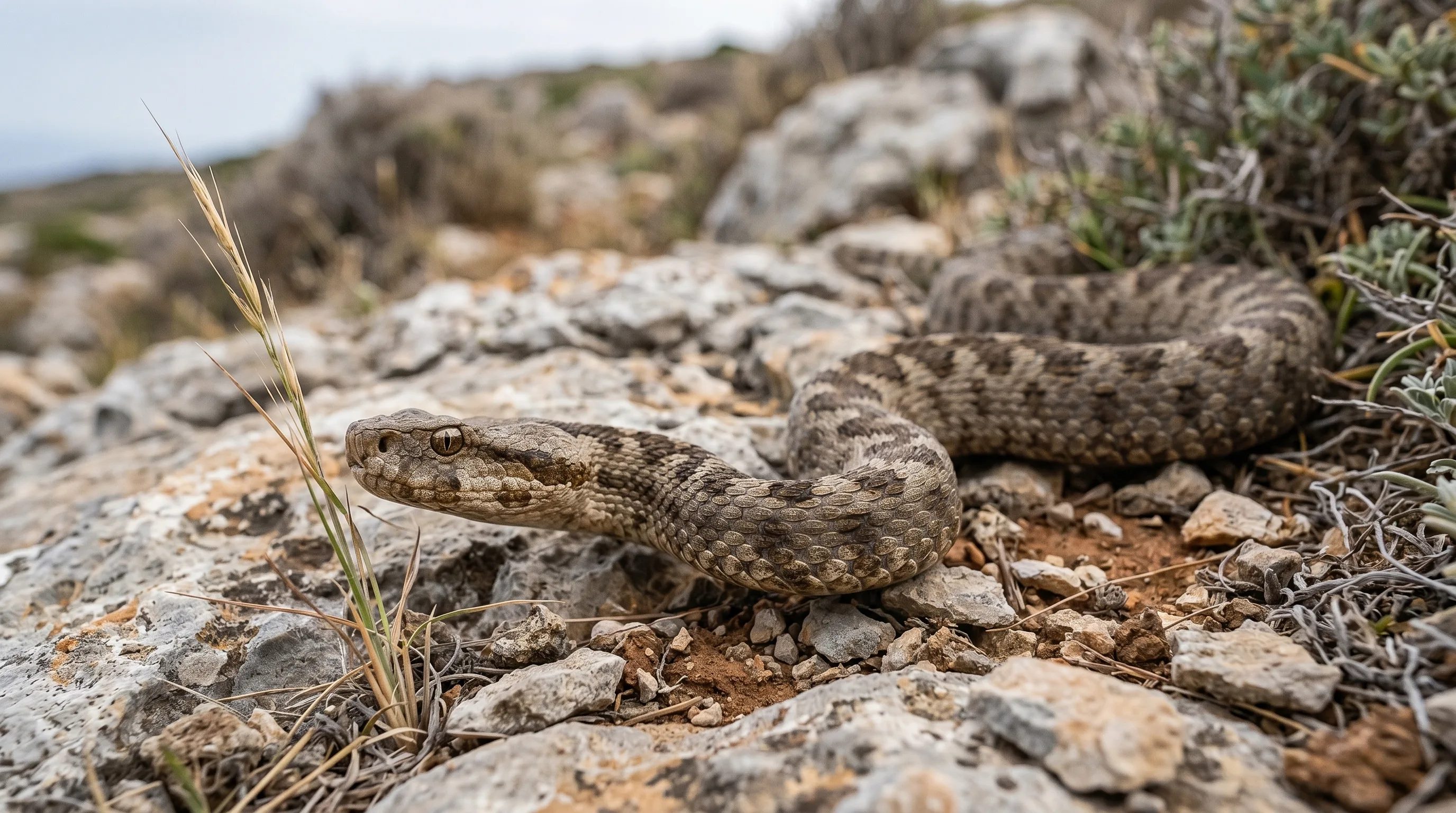
Milos Viper (Macrovipera schweizeri)
Introduction
At the edge of the Aegean Sea, where volcanic rock meets sparse Mediterranean scrub and the salt-laden wind carries the scent of thyme across broken hillsides, a subtle movement betrays something ancient. A heavy-bodied snake, its scales the colour of bleached granite overlaid with dark irregular blotches, draws its coils tighter against the warm stone. Its broad, triangular head lifts almost imperceptibly. The forked tongue — black, slender, flickering — samples the morning air in short, precise bursts, reading a chemical landscape invisible to human senses. It is neither hunting nor fleeing. It is simply existing, precisely as it has on these small volcanic islands for tens of thousands of years. This is the Milos Viper.
Macrovipera schweizeri is one of the rarest and most ecologically isolated snakes in Europe. Confined to a scattering of islands in the Cyclades archipelago of Greece, this critically endangered viper occupies a total land area smaller than many European cities. It shares its genus with the Levant Viper of the Middle East and North Africa, a relationship that hints at a deep and dramatic geological past — a time when the Aegean basin was a very different landscape, when land bridges existed where only open water now stretches between continents and islands.
The Milos Viper is, in scientific terms, an island relict. Stranded by rising sea levels at the end of the last glacial period, the population was separated from its continental relatives and left to evolve in conditions of extreme isolation. The result is a snake that is simultaneously a product of ancient continental lineage and a wholly unique island-adapted predator, shaped by the particular pressures of small-island ecology: limited prey, limited space, and intensifying human encroachment on every hectare it calls home.
Understanding this species demands more than cataloguing its physical traits. It requires an examination of its ecological role as an apex predator on isolated island systems, its complex relationship with a volcanic landscape that has drawn human industry for centuries, and the deeply precarious state of its survival. The Milos Viper is not simply a snake on an island. It is a living measure of how far island biodiversity can be pushed before it breaks.
"The love for all living creatures is the most noble attribute of man."
— Charles Darwin
Scientific Classification
The Milos Viper was formally described by the Austrian herpetologist Franz Werner in 1935, based on specimens collected from the island of Milos. Initially classified within the broadly defined genus Vipera, the species was later reassigned to Macrovipera — a genus of large, blunt-nosed vipers that bridges the herpetological worlds of southern Europe, the Middle East, and North Africa. The specific epithet schweizeri honours the Swiss herpetologist Hans Schweizer, who contributed significantly to the study of Greek reptiles in the early twentieth century.
Kingdom: Animalia
Phylum: Chordata
Class: Reptilia
Order: Squamata
Suborder: Serpentes
Family: Viperidae
Subfamily: Viperinae
Genus: Macrovipera
Species: Macrovipera schweizeri (Werner, 1935)
Common names: Milos Viper, Cyclades Blunt-nosed Viper, Milos Blunt-nosed Viper
Within the genus Macrovipera, the closest relative is the Levant Viper (Macrovipera lebetina), a widespread and polytypic species ranging from Cyprus through Turkey, the Caucasus, and into Central Asia. The Moorish Viper (Macrovipera mauritanica) of North Africa represents a further branch of this genus. Macrovipera schweizeri is the only member of this genus found in Europe, making it a biogeographically exceptional species among European herpetofauna.
Physical Characteristics
The Milos Viper is a robustly built snake. Adults typically measure between 65 and 90 centimetres in total body length, though individuals approaching 100 centimetres have been recorded. The body is heavy relative to its length — noticeably more massive than most European vipers of comparable size — giving the snake an air of solidity and deliberateness. This stocky build is consistent with its genus: Macrovipera vipers are among the largest in the Viperidae family across the Old World, and even the relatively small island form of M. schweizeri carries this characteristic heft.
The head is broad, triangular, and distinctly set apart from the neck — a hallmark of viperid morphology. The snout is noticeably blunt and somewhat rounded, a feature reflected in the common name "blunt-nosed viper." The eyes are medium to large, with vertically elliptical pupils, well adapted to rapidly changing light conditions — useful for a species whose activity shifts between daylight and twilight hours depending on the season. The pupil constricts tightly under intense midday light and dilates broadly in low-light conditions, extending the animal's effective hunting window.
The dorsal ground colour is highly variable across individuals and even between populations on different islands. Base tones range from pale grey and brownish-grey to yellowish-grey, sandy beige, or occasionally reddish-brown. Overlying this ground colour is a series of dark brown to near-black blotches or a continuous zigzag stripe running the length of the spine — a pattern that, when the snake lies motionless against the fragmented volcanic rocks and dry scrub of its habitat, renders it effectively invisible. The flanks typically carry smaller, alternating dark spots. The belly is pale — grey-white or cream — sometimes flecked or spotted with grey-brown pigmentation.
All dorsal scales are strongly keeled, giving the snake a slightly rough, textured appearance and contributing to the muted, non-reflective quality of its surface — a further aid to camouflage. The scales around the lips (supralabials and infralabials) are pale, sometimes with subtle patterning. The tail is relatively short and tapers to a blunt tip.
Sexual dimorphism exists, as it does in most vipers. Females tend to be larger and more heavily built than males — a common pattern in viviparous snakes where female body size directly influences reproductive output. Males may display more vivid or contrasting dorsal patterns, though this varies. Juveniles are often more distinctly patterned than adults, with sharper colour contrasts that may fade as the snake matures.
As members of the subfamily Viperinae — the true vipers — Macrovipera schweizeri does not possess the loreal heat-sensing pit organs characteristic of the Crotalinae (pit vipers). Instead, the Milos Viper relies on its forked tongue in conjunction with the Jacobson's organ in the roof of the mouth to perform sophisticated chemosensory analysis of its environment, detecting the chemical signatures of prey, predators, mates, and conspecifics. Vision and ground vibration detection through the lower jaw further complement this sensory system.
The fang apparatus is solenoglyphous — deeply hollow, hinged fangs capable of folding flat against the roof of the mouth when not in use and swinging forward to nearly 90 degrees during a strike. This system allows the delivery of venom deep into prey tissue with exceptional precision and efficiency.
Habitat & Geographic Distribution
The entire known range of the Milos Viper spans a handful of small islands in the southwestern Cyclades, a group of Aegean islands situated roughly midway between the Greek mainland and Crete. The species is confirmed from Milos (the largest island in its range, approximately 160 square kilometres), Kimolos (about 36 square kilometres), and the uninhabited islet of Polyaigos (approximately 18 square kilometres). Reports from additional small islets in the vicinity have been recorded, and the species may persist on Antimilos. The total land area encompassed by this range represents one of the most restricted geographic distributions of any European reptile.
These islands are of volcanic origin, a characteristic that profoundly shapes their geology, soil chemistry, and vegetation structure — and consequently the microhabitats available to the viper. Milos in particular is geologically active, composed primarily of volcanic rock including rhyolite, trachyte, and pumice, with extensive deposits of industrial minerals including bentonite, perlite, kaolin, and barite. This mineral wealth has driven industrial mining operations on Milos for over a century, with consequences for the viper that are examined in detail in later sections.
The Milos Viper inhabits a mosaic of Mediterranean scrubland environments. The primary vegetation type across its range is phrygana — a characteristically Aegean formation of low, drought-adapted, often spiny shrubs and aromatic herbs, including species of Sarcopoterium, Cistus, Pistacia, and various Euphorbia. Taller maquis shrubland, comprising species such as lentisk (Pistacia lentiscus) and tree heather (Erica arborea), provides additional cover in more sheltered valley systems and north-facing slopes.
Rocky outcrops, stone walls, and rubble piles are essential microhabitat features. The viper uses the gaps, crevices, and sheltered undersides of rocks extensively — for thermoregulation, as ambush sites, and as refugia from both heat and predation. Old agricultural terraces, abandoned vineyard walls, and the margins of active cultivation also support populations, particularly where stone structures remain intact. At higher elevations, the habitat becomes more open and sparse, and the viper's presence appears to decrease accordingly.
The climate across the range is Mediterranean, characterised by hot, dry summers and mild, wetter winters. Summer temperatures on Milos regularly exceed 35°C, and rocky surfaces exposed to direct sunlight can reach far higher surface temperatures. The viper's capacity to shift its activity patterns in response to these thermal extremes is a critical behavioural adaptation, discussed further in the section on daily life and activity cycles.
Fun Fact The entire global range of the Milos Viper fits within an area smaller than the city of Athens. It is one of the geographically smallest ranges of any viper species on Earth.
Behaviour & Social Structure
The Milos Viper is fundamentally a solitary animal. Outside of the mating season and communal hibernation sites, individuals maintain largely independent existences across their home ranges, with minimal social interaction. This pattern is consistent across most viper species worldwide, reflecting the energy economics of an ambush predator in a resource-limited environment: cooperation offers little advantage when prey is found by individual chemosensory tracking and captured through solitary ambush.
Home range size in the Milos Viper has not been rigorously quantified through long-term radio-telemetry studies in the way that better-resourced species have been. However, based on field observation data and comparable island viper studies, individual home ranges are likely to be relatively modest — probably a few hectares in productive habitat, potentially smaller in areas of high prey density. Males likely expand their ranging behaviour during the spring mating season, actively searching for receptive females across larger areas than they occupy during other periods.
Territorial behaviour in the strict sense — active defence of a fixed area against conspecifics — has not been formally demonstrated in this species, though intersexual and intrasexual encounters during breeding season may involve ritualistic combat or agonistic displays. Male combat in vipers typically takes the form of body-wrestling bouts, where two males intertwine their anterior bodies and attempt to force the opponent's head to the ground without resorting to biting. Whether such behaviour occurs in M. schweizeri is plausible given its occurrence across the Viperidae, though direct field documentation is limited by the rarity of encounters.
Communication in the Milos Viper is primarily chemical. The forked tongue is the primary instrument of environmental reading — collecting airborne and substrate-borne volatile molecules and delivering them to the Jacobson's organ, where they are identified and interpreted. This chemosensory system is highly sophisticated, capable of distinguishing between individual conspecifics, detecting the pheromone trails of females, identifying the passage of prey animals across substrate, and recognising the chemical signatures of predators. Vipers can follow trails left hours or even days earlier by prey or by potential mates.
Visual communication plays a lesser but still significant role. Defensive postures — body flattening to appear larger, head raised and drawn back in an S-curve ready to strike, the distinctive hissing produced by forced exhalation — are all visually prominent signals directed at potential threats. The Milos Viper, like most vipers, is not inherently aggressive toward large animals it cannot consume. It will typically remain motionless when approached, relying on its camouflage, and will attempt to withdraw when detected. Only when escape is impossible, or when direct contact is made, does a defensive strike become likely.
Intelligence in snakes is often underestimated, partly because their cognitive architecture is so different from the mammalian brain structures humans use as reference points. Yet vipers demonstrate clear learning capacities, individual recognition capabilities, and complex chemosensory mapping of their environments. Long-term field studies of related viper species have shown that individuals return to the same hibernacula year after year, navigate back to preferred ambush sites, and adjust their behaviour in response to past encounter outcomes. There is no reason to assume M. schweizeri differs significantly from its relatives in this respect.
Daily Life & Activity Cycle
The Milos Viper's daily and seasonal activity patterns are governed primarily by temperature. As an ectotherm, it cannot generate its own body heat and must manage its thermal state entirely through behaviour — selecting microhabitats that allow it to absorb or dissipate heat as needed. This thermal dependence creates a predictable structure to its day, though one that shifts considerably across the year.
In spring, following emergence from winter brumation, the viper is typically most active during the warmest hours of the day. Basking is a priority in the early season — individuals lie exposed on flat rock surfaces or in open patches of low vegetation, orienting their bodies broadside to the sun to maximise heat absorption. Body temperature must reach sufficient levels for all physiological processes — digestion, immune function, sensory acuity, reproductive activity — to operate efficiently. At this time of year, the air temperature is moderate and even full sun exposure carries no risk of overheating.
As summer advances and ambient temperatures climb, the activity window shifts dramatically. Midday surface temperatures on exposed volcanic rock can approach lethal limits for a snake resting in the open. The viper responds by becoming increasingly crepuscular and nocturnal — emerging from rock crevices and shaded retreats at dusk, remaining active through the cooler night hours, and retiring before the heat builds the following morning. This behavioural thermoregulation allows the snake to remain active and functional even through the most intense Mediterranean summer, exploiting the temperature gradient between day and night.
Autumn brings a reversal of the summer pattern, with the snake once again active during daylight hours as temperatures moderate. This period is also when females are carrying late-stage embryos or have recently given birth, and both pre-birth thermoregulation by gravid females and post-birth recovery require maximised basking access. Juveniles from the year's births begin their independent existence during this period, navigating a world of chemical signals and thermal gradients for the first time.
Winter brumation typically begins in November or December, when falling temperatures make active metabolism energetically unsustainable. The Milos Viper retreats to underground refugia — deep rock crevices, spaces beneath large boulders, abandoned rodent burrows — where temperatures remain stable and above freezing. Communal hibernation sites, where multiple individuals share a single retreat, have been documented in many viper species and are likely in M. schweizeri, particularly where suitable refugia are limited by rocky terrain structure. Brumation continues through February or March, with emergence timing varying according to local conditions in a given year.
In the grey light before sunrise on the island of Milos, a herpetologist conducting a population survey picks her way carefully along a collapsed stone wall at the edge of an old vineyard terrace. The island is quiet at this hour — only the distant sound of the sea and the occasional call of a stone curlew disturb the silence. She has been working this site for three seasons, mapping the movement of individually identified vipers using photographic pattern recognition, and today she finds what she has been tracking.
Wedged perfectly into a gap between two large basalt slabs, its body forming a loose series of curves that exactly mirror the irregular surfaces around it, a female Milos Viper rests in the first pale warmth of a spring morning. This individual — identified by a distinctive break in her dorsal blotch pattern near mid-body — was first documented here two years ago. She has returned to the same overwintering site, re-emerged onto the same basking rock, and apparently used the same stretch of abandoned terrace wall as a core home range for at least two consecutive seasons.
The researcher does not approach. She records the GPS position, estimates the snake's length at approximately 82 centimetres, photographs the head pattern for identification confirmation, and retreats to a safe distance. For the next forty minutes she watches the viper absorb the strengthening sun, her body posture gradually relaxing from the tight coils of a resting animal into the broader, flattened spread of a thermoregulating one. Then, without any apparent trigger the researcher can identify, the viper flows smoothly off the rock and disappears between the stones. In fifteen minutes of searching, she cannot find where it has gone.
It is a reminder that even the rarest snakes in Europe can be invisible when they choose to be — and that protecting species this poorly understood demands not just legislation, but the patient accumulation of field data that only long-term researchers committed to difficult and unrewarding fieldwork can provide.
Diet & Survival Strategies
The Milos Viper is a predatory generalist in the broadest sense — opportunistic enough to consume a range of prey types — but one whose diet in practice is shaped profoundly by the limited prey availability of island ecosystems. On the small volcanic islands of the Cyclades, the diversity and abundance of potential prey are fundamentally lower than on mainland Greece or across continental habitats. The viper has adapted to make efficient use of whatever is available.
Small mammals represent the most energetically significant prey category for adult vipers. Rodents — house mice (Mus musculus), black rats (Rattus rattus), and potentially roof rat populations on the larger islands — provide the high-calorie, low-effort prey that allows a large-bodied viper to sustain itself between infrequent meals. The island populations of these rodents are themselves partly the consequence of millennia of human habitation and agriculture, meaning the Milos Viper's diet has almost certainly been partially restructured by historical human land use on these islands.
Birds also form a significant prey category, particularly during seasonal migration periods when the Cyclades islands serve as stepping stones for small passerines crossing the Aegean. Ground-nesting birds and their eggs and chicks are available during the breeding season. The viper's ability to remain motionless for extended periods — days, if necessary — allows it to exploit nest sites with great efficiency, waiting until prey comes within strike range rather than pursuing it actively.
Lizards, particularly species of the genus Podarcis (wall lizards), which are abundant and active across rocky island habitat, likely represent an important prey source for juvenile vipers and possibly for smaller adult individuals. Juveniles, with their relatively small gape size, are constrained to smaller prey items, and lacertid lizards are among the most consistently available prey in rocky Mediterranean island environments.
The Milos Viper employs a classical viperid predatory strategy: ambush. It identifies a high-probability prey pathway — a rock ledge used as a lizard basking run, a rodent run between stone wall gaps, the approach to a water source — and positions itself in concealment nearby. The combination of exceptional camouflage and motionless patience makes it effectively undetectable. When prey enters strike range, the attack is explosive — a strike delivering venom into the prey, followed by a deliberate release. The viper then tracks the fleeing or dying animal through chemosensory trailing, following the exact path of the struck individual, and consumes it once it has died.
Venom in the Milos Viper, consistent with other Macrovipera species, is primarily hemotoxic and cytotoxic — it disrupts blood clotting, damages blood vessel walls, and causes tissue necrosis at the bite site. These effects are rapid and effective at immobilising prey. For the viper, venom is a metabolic investment: its production consumes significant energy, and the strategic release of a calibrated dose into each prey item is a precisely evolved behaviour rather than a reflexive action.
Feeding frequency in vipers is remarkably low compared to endothermic predators. A large meal can sustain a viper's metabolic needs for weeks or even months. This metabolic efficiency is not simply a physiological trait — it is a survival strategy. In an island environment where prey availability can fluctuate dramatically between seasons and years, the capacity to endure long periods of food scarcity without significant physiological deterioration is an adaptation of fundamental importance.
Fun Fact A Milos Viper can survive for several months without eating a single meal, drawing on stored fat reserves while its slow ectothermic metabolism continues to function at minimum cost — a superpower for survival in the lean seasons of island life.
Interaction with Other Animals
On small Mediterranean islands, ecological networks are compressed. The number of species is lower, trophic levels are fewer, and the relationships between species — predator to prey, competitor to competitor, symbiont to host — carry proportionally greater weight for each participant. The Milos Viper exists within this simplified but dynamically intense ecological web, occupying a position near the top of the island food chain.
As a predator, the viper exerts downward pressure on rodent and lizard populations. This regulation has cascading effects: controlling rodent numbers reduces grazing pressure on plant seedlings and seeds; controlling lizard numbers indirectly modulates the insect communities that lizards in turn suppress. Even on an island system, the viper's predatory impact resonates through multiple trophic levels.
The viper's own predators are fewer, but significant. Large birds of prey — particularly the short-toed snake eagle (Circaetus gallicus), which is a specialist snake predator with striking anatomical adaptations including thick, scale-armoured tarsi — represent a genuine threat. Other raptors including buzzards and harriers may opportunistically take vipers, particularly juveniles. Among mammals, feral cats present a serious and growing threat: domestic cats that have gone feral on the islands are effective snake predators, and their impact on viper populations — particularly neonates and small juveniles — may be considerable. Feral and domestic dogs can also cause mortality.
Interspecific competition for prey exists primarily between the Milos Viper and other predatory species sharing its habitat. The European hedgehog (Erinaceus europaeus or closely related species), where present on the islands, competes for rodent prey and is itself partially resistant to viper venom — an evolutionary arms race documented across viper-hedgehog interactions in Europe. Barn owls and other nocturnal raptors compete for the same rodent prey base, particularly in agricultural margin habitats where grain storage attracts mice and rats.
The relationship between the Milos Viper and its lizard prey communities is particularly layered. The wall lizard populations of the Cyclades are themselves island species — several distinct, island-endemic forms exist across the archipelago — and the viper represents one of their primary predators. The lizards have not evolved the chemical predator-recognition responses that mainland lizards show to snake odour as reliably as in locations with long-established snake populations, a pattern sometimes observed in island herpetology that suggests ongoing coevolutionary dynamics.
The Milos Viper's relationship with invertebrates is indirect but significant. By suppressing rodent populations, it reduces rodent-driven seed predation and soil disturbance, influencing plant recruitment patterns. By occasionally consuming ground-nesting birds, it participates in the regulation of bird community structure in its habitat. Every predatory interaction the viper engages in cascades through the island ecosystem in ways that are difficult to quantify but ecologically real.
Trait | Milos Viper (Macrovipera schweizeri) | Levant Viper (Macrovipera lebetina) |
|---|---|---|
Range | Cyclades islands, Greece only | Cyprus, Turkey, Caucasus, Central Asia |
Adult length | 65–100 cm | 80–150 cm |
Habitat | Rocky island scrubland, phrygana | Diverse: rocky hills, forest edges, semi-arid |
IUCN Status | Critically Endangered (CR) | Least Concern (LC) |
Population trend | Decreasing | Stable/variable by region |
Primary threats | Mining, persecution, habitat loss | Persecution, some habitat loss |
Reproductive mode | Viviparous | Viviparous |
Interaction with Environment
The volcanic islands of the southwestern Cyclades are geologically young and ecologically dynamic systems, shaped by millions of years of tectonic activity, Pleistocene glacial cycles, and millennia of human land use. The Milos Viper did not simply adapt to this environment — it is a product of it, its morphology, physiology, and behaviour all bearing the imprints of the particular selection pressures that island volcanic landscapes impose.
The viper's relationship with the physical substrate is intimate and functional. Rock crevices regulate body temperature, providing thermal buffering against both midday heat extremes and cold winter temperatures. The irregular surface texture of volcanic rock — its gaps, overhangs, and angular faces — creates an infrastructure of shelter opportunities that the viper navigates daily. The elimination of this structure through mining, quarrying, or construction does not simply displace the viper: it removes the thermal architecture on which its survival depends.
Soil disturbance is another critical axis of environmental interaction. The shallow, rocky soils of the Cyclades support a particular structure of vegetation — low, open, multi-species scrub — that the viper uses for cover during movement, concealment during ambush, and shade during thermal stress periods. Heavy mechanised disturbance, such as that associated with large-scale mineral extraction, does not merely remove vegetation; it alters drainage patterns, destroys soil seed banks, and creates rock and spoil landscapes that may take decades or centuries to re-vegetate to any functional state.
Water is scarce on the Cyclades in summer, and the viper's interaction with available water sources reflects this scarcity. Fresh water, where it appears at springs, cisterns, or seasonal stream channels, concentrates prey — particularly birds and small mammals coming to drink — and the viper's positioning relative to water availability likely influences its microhabitat selection during dry summer months. The viper itself may also access water through the bodies of its prey or through dew collection, a behaviour documented in some desert-adapted snake populations that may be relevant given the summer aridity of the Cyclades.
The viper's presence and activity patterns influence vegetation composition indirectly through the trophic cascade effects described in the previous section. The regulation of rodent populations by vipers reduces seed predation and the disturbance of soil structure by burrowing, which can shift plant community composition over time. On isolated island systems, where no large grazing mammals are present to provide compensatory regulation, the viper's ecological contribution to shaping plant community dynamics is likely more significant than it would be on mainland systems with more complex predator guilds.
Reproduction & Parenting
Reproduction in the Milos Viper follows the viviparous pattern characteristic of its genus — females carry developing embryos internally and give birth to live young. This strategy, common across the Viperidae, offers significant advantages in environments where soil temperatures are too unpredictable or extreme for reliable egg incubation. By retaining eggs internally, the female can use her own body — and her behavioural thermoregulation — to maintain optimal developmental temperatures throughout gestation, regardless of substrate temperature variability.
The mating season occurs in spring, typically from late March through May, coinciding with emergence from winter brumation and the return of adequate thermal conditions for active behaviour. Males actively search for females during this period, extending their ranging behaviour and following the pheromone trails that receptive females deposit through skin secretions detectable by chemosensory analysis. When a male locates a female, courtship involves extended physical contact — the male aligning his body alongside the female's, performing wave-like body contractions, and flickering the tongue rapidly across her skin and cloaca. Copulation may last for several hours.
Competition between males for access to females may involve ritualistic combat, as documented in many other viper species. Two males encountering each other during the breeding season engage in wrestling bouts — intertwining the anterior third of their bodies and pressing each other toward the ground. These bouts, which can last for extended periods, establish dominance without lethal injury, the loser eventually withdrawing. The winner proceeds with courtship if a female is present.
Gestation lasts approximately three to four months, with the precise duration dependent on ambient temperatures experienced by the female during the period. Gravid females spend considerably more time basking during gestation than non-gravid individuals — a critically important behavioural adaptation that elevates embryonic developmental temperatures and accelerates development. This extended basking requirement also increases the gravid female's exposure to predation risk, a reproductive cost that is compensated by the faster development times that elevated temperatures produce.
Births occur in late summer to early autumn — typically between August and October. Litter sizes in the Milos Viper are typically reported in the range of four to twelve neonates, though data on this island population are limited compared to better-studied viper species. Neonates measure approximately 18 to 25 centimetres at birth and are born fully functional — equipped with venom, retractable fangs, chemosensory capabilities, and the instinctive behavioural repertoire of an ambush predator. There is no parental care following birth. The female provides no further investment after delivery; the neonates must immediately begin independent lives.
Juvenile survival rates are low, as they are in most viper species. Neonates face predation from raptors, feral cats, and other predators; they must locate sufficient prey to survive their first winter; and they must navigate the social and territorial dynamics of an already-occupied landscape without any guidance. Sexual maturity is typically reached at three to four years of age. Maximum longevity in the wild is not well established for this species, but closely related vipers can live fifteen to twenty or more years under favourable conditions.
Evolutionary Adaptations
The Milos Viper's existence as an island relict is itself an evolutionary story of remarkable depth. The colonisation of the Cyclades by an ancestral Macrovipera population almost certainly occurred during the Pleistocene glacial maxima, when lower sea levels exposed land connections or near-connections between the Greek mainland, the Cyclades, and Crete, creating dispersal corridors for terrestrial fauna that no longer exist. As sea levels rose at the end of the last glacial period — approximately 11,000 to 8,000 years ago — populations were progressively isolated on rising island remnants, cut off from the genetic exchange of continental populations.
This isolation has driven the divergence of M. schweizeri from its continental relatives in ways that are still being investigated. Molecular phylogenetic studies have confirmed the genetic distinctiveness of the island population and support its recognition as a full species rather than a subspecies of M. lebetina, the former classification. The degree of molecular divergence suggests isolation of sufficient duration to have produced substantial genetic differentiation, with the island population accumulating its own suite of mutations, genetic drift effects, and locally adapted alleles.
Island populations of large-bodied species frequently show size reduction relative to mainland relatives — the classic "island dwarfism" pattern — as a consequence of reduced resource availability. The Milos Viper, while smaller on average than the Levant Viper, does not show extreme dwarfism, suggesting that prey availability on its home islands, though limited relative to mainland habitats, has been sufficient to sustain a reasonably large body size across evolutionary time. Alternatively, the viviparous reproductive strategy — where larger females produce more offspring — may have maintained selection pressure for larger body size in females.
The camouflage system of the Milos Viper represents a particularly refined adaptation. The specific colour palette — grey, brown, and black tones in a fragmented blotched pattern — matches with extraordinary precision the visual texture of the volcanic rock surfaces and fragmented scrub habitat of the Cyclades. This is almost certainly not coincidence: visual predation by raptors has exerted consistent selection pressure on the island population, favouring individuals whose coloration most effectively breaks up their outline against the background. This population-level colour matching to local substrate is a classic example of adaptive cryptic coloration shaped by predator pressure over evolutionary time.
The solenoglyphous fang system — hollow, hinged, needle-sharp fangs capable of delivering venom into deep tissue — represents one of the most sophisticated predatory adaptations in the snake world. In the Viperinae, this system evolved to allow the deployment of chemical rather than mechanical prey immobilisation, enabling a relatively slow-moving, heavy-bodied predator to subdue prey quickly and safely. The ability to strike, envenomate, and release prey eliminates the risk of injury from prey struggling in the snake's grip — a critical advantage when prey like rodents can inflict significant biting wounds.
The forked tongue combined with the Jacobson's organ system provides a form of chemical stereopsis — the ability to detect spatial gradients in chemical concentration by comparing signals received by the two tongue tips simultaneously. This allows the snake to follow a chemical trail with precision equivalent to the tracking abilities of a scent hound, pursuing prey through complex terrain where visual tracking is impossible. For an ambush predator that frequently strikes prey in darkness or in dense vegetation, this trailing ability is the difference between a successful meal and a lost one.
Ecological Importance
On mainland ecosystems with complex predator guilds, the loss of any single species rarely produces catastrophic trophic collapse — other predators compensate, the system adjusts. On small island systems, this redundancy does not exist. The Milos Viper is the primary native terrestrial predator of small vertebrates on its home islands, occupying an ecological role that has no substitute if the species declines toward functional extinction.
The most direct and measurable ecological function of the Milos Viper is the regulation of rodent populations. Mice and rats, in the absence of effective predator pressure, can increase rapidly to population densities that damage vegetation, destroy agricultural stores, and disrupt the seed ecology of native plant communities. The viper's suppression of rodent numbers represents a free ecological service — natural pest control — that operates continuously and without human intervention across the scrubland, agricultural margins, and rocky terrain of its range.
The regulation of lizard populations is a secondary but ecologically significant function. Lizards on Mediterranean islands are often the dominant insectivore guild, and their population density directly influences the structure of invertebrate communities. Through its predation on lizards, the Milos Viper indirectly shapes invertebrate diversity and abundance, which in turn affects pollination dynamics, decomposition rates, and plant community composition. This multi-step trophic effect — predator to lizard to insect to plant — illustrates how deeply embedded the viper is in the functional ecology of its island system, despite its relatively low population density.
The Milos Viper also contributes to nutrient cycling. When it consumes a prey animal, it processes organic material and eventually returns nutrients to the environment through excretion and, eventually, through its own death and decomposition. In the compressed food webs of island systems, this contribution to nutrient cycling carries proportionally greater weight than it would in more diverse mainland ecosystems.
Perhaps most importantly from a conservation biology perspective, the Milos Viper represents an irreplaceable unit of evolutionary distinctiveness — a lineage shaped by millions of years of independent evolution, carrying genetic information that exists nowhere else on Earth. The extinction of this species would represent not simply the loss of a predator from an island food web, but the permanent elimination of a unique evolutionary trajectory and all the biological information it contains.
Threats & Conservation
The Milos Viper faces an unusually concentrated suite of threats, all operating simultaneously on a population confined to a tiny and shrinking habitat area. Understanding these threats requires an appreciation of the specific economic and social conditions on the islands it inhabits — conditions that set this species apart from most other endangered European reptiles.
Industrial mining is the defining threat on Milos. The island is among the most intensively mined locations in Greece, supporting large-scale extraction of bentonite, perlite, kaolin, and barite — minerals with major international industrial markets. Mining operations have directly destroyed significant areas of the rocky scrubland habitat that the viper depends on, and the associated infrastructure — access roads, processing facilities, spoil heaps — fragments the remaining habitat into increasingly isolated patches. Habitat fragmentation reduces gene flow between local subpopulations, increases inbreeding risk, and prevents recolonisation of recovered areas by individuals from adjacent populations.
Direct persecution — the deliberate killing of vipers by humans who fear them — remains a significant source of mortality. Despite legal protection, the combination of fear, cultural antipathy toward snakes, and the practical concerns of workers in mining, agricultural, and construction contexts means that encountered vipers are frequently killed. This mortality falls disproportionately on adult individuals — the reproductively active segment of the population — and its population-level impact is correspondingly severe.
Tourism development on Milos — a popular destination for Aegean tourism — drives coastal and peri-coastal habitat modification. The construction of holiday accommodation, road improvements, and recreational infrastructure removes habitat and increases human activity in areas previously little disturbed. Feral and free-roaming cats, sustained by tourist-associated food waste, add predatory pressure on viper juveniles and small adults. Road mortality from vehicle traffic is an additional source of direct mortality that has not been systematically quantified for this species but is well-documented as a significant factor for island-endemic reptiles elsewhere.
Climate change adds a longer-term dimension to these pressures. The Mediterranean basin is one of the world's most climate-change-vulnerable regions, with projections indicating significant increases in summer temperature, reduction in precipitation, and greater frequency of extreme drought events. For an island-confined species already at the ecological margins of its thermal tolerance during peak summer, further warming increases the energetic costs of thermoregulation and reduces the productive activity windows available for feeding, reproduction, and growth.
IUCN Red List Analysis
Current IUCN Status
The Milos Viper is classified as Critically Endangered (CR) on the IUCN Red List of Threatened Species — the highest category of threat short of extinction in the wild. This classification reflects the species' extremely restricted range, small and declining population, and the severity and ongoing nature of the threats it faces. The criteria underpinning the CR designation include the species' tiny extent of occurrence (confined to a few small islands with a combined land area of approximately 200 square kilometres, of which only a fraction represents usable habitat), the continuing decline in habitat quality and area, and the inferred small number of mature individuals remaining in the wild.
Critically Endangered is not simply a description of rarity — it is a scientific designation with specific numerical thresholds and criteria defined by the IUCN Species Survival Commission. For Macrovipera schweizeri, the combination of an extremely restricted and fragmented range, a declining habitat trajectory, and persecution-driven direct mortality collectively satisfy the quantitative criteria for CR classification. The species represents one of the most range-restricted vipers in the world.
Population Trend
The population trend for the Milos Viper is assessed as decreasing. Precise population estimates are difficult to produce for a secretive, cryptically coloured, low-density reptile on rugged volcanic terrain, and no comprehensive population census using mark-recapture or systematic transect methodologies has been published for the species as a whole. Estimates from field surveys suggest that the total population of mature individuals may number in the low hundreds to perhaps two thousand individuals, though these figures carry considerable uncertainty.
Historical baseline data are insufficient to quantify precisely the magnitude of decline over recent decades, but the trajectory of habitat loss — particularly through mining on Milos — has been consistently negative across the twentieth and early twenty-first centuries. The Milos mining industry expanded significantly during the post-World War II period, and the extent of habitat destroyed or degraded since the species was first described in 1935 is substantial. Persecution mortality, while difficult to quantify, has been consistently reported by field researchers over the same period. The cumulative impact on a species with a small range and slow reproductive rate is severe and ongoing.
Main Threats
Habitat destruction through mining is the primary threat. Milos has one of the highest densities of active quarrying and mineral extraction operations per unit area of any island in the Mediterranean. The bentonite and perlite deposits extend across large areas of the island's interior and coastal margins, directly overlapping with prime viper habitat. Extraction permanently removes rocky scrubland habitat, eliminates the crevice infrastructure that the viper requires for thermoregulation and shelter, and creates heavily disturbed landscapes that take decades or centuries to recover ecologically.
Direct persecution remains a significant and ongoing source of mortality. The cultural and psychological relationship between Mediterranean island communities and venomous snakes has historically been characterised by fear and automatic lethal response to encounters. Mining workers, farmers, and tourists encountering vipers frequently kill them, and despite legal protections, enforcement in remote and rugged terrain is essentially impossible. Given the species' small total population, each individual killed represents a measurable impact on population viability.
Tourism development and associated infrastructure drives coastal habitat loss and increases the density of feral cats and dogs — both effective predators of vipers. Road construction improves access to previously remote areas, increasing the frequency of encounters that lead to persecution and creating new road mortality risks. Coastal construction eliminates some of the most thermally productive basking habitat.
Introduced and feral predators — particularly cats — prey on juvenile vipers and potentially on smaller adults. Feral cat populations on Mediterranean islands have driven significant declines in ground-nesting bird and small reptile populations across the Aegean, and their impact on the already-stressed Milos Viper population adds mortality pressure that the species' slow reproduction cannot easily absorb.
Collection for the pet trade has been documented as an additional threat. Despite CITES Appendix II listing and national legal protection, wild-caught specimens occasionally appear in European reptile trade networks. The removal of wild individuals from such a small and declining population carries disproportionate conservation consequences.
Climate change threatens to progressively reduce habitat quality and extent through increased aridity, higher summer temperature extremes, and more frequent drought events. The impacts on prey populations — particularly small rodents, which are sensitive to vegetation change — may further constrain the viper's food resources.
Ecological Consequences
The further decline or extinction of the Milos Viper would produce consequences that extend well beyond the loss of a single species. As the apex terrestrial predator on its island system, the viper's absence would release rodent populations from their primary native predatory control. Unchecked rodent population growth would increase seed predation, damage agricultural crops, alter soil structure through intensive burrowing, and shift plant community composition in ways that affect the entire scrubland ecosystem.
The disruption of lizard population regulation — the secondary predatory function of the viper — would alter insect community structure through the trophic cascade effects discussed earlier, with potential consequences for pollination services and invertebrate diversity. These are not hypothetical concerns: trophic cascade effects following the removal of island apex predators have been documented on islands worldwide, including Mediterranean islands, and the pattern is consistent and predictable.
From a genetic and evolutionary perspective, the extinction of Macrovipera schweizeri would represent a loss of evolutionary distinctiveness with no parallel or compensation. The unique genomic information encoded in this island lineage — the accumulated product of tens of thousands of years of independent evolution — would be permanently erased. For a genus whose broader conservation status is variable across its range, the loss of the European representative would also reduce the conservation options available for the genus as a whole if other species come under greater pressure in the future.
Conservation Efforts
The Milos Viper benefits from a suite of legal protections at national and international levels. Under Greek national legislation, all native snake species are legally protected, making the killing, capture, disturbance, or trade of vipers illegal. The species is listed on Annex IV of the EU Habitats Directive (92/43/EEC), which requires member states to establish strict protection for the species and its habitat, prohibit deliberate capture or killing, and implement surveillance of its conservation status. This EU-level protection obligates the Greek state to monitor the population and report on its status to the European Commission.
The species is listed on Appendix II of CITES, regulating international trade and requiring documentation and permitting for any legal movement of specimens across borders. Parts of the Milos Viper's range overlap with Natura 2000 protected areas — the EU's network of important habitats — which theoretically requires the assessment and mitigation of threats from industrial and development activities within and adjacent to designated sites.
Academic and NGO research efforts have produced population surveys, habitat mapping, and behavioural studies that form the scientific foundation for conservation planning. Greek herpetological societies and university research groups have conducted fieldwork on the species, and several European herpetological publications have documented its ecology and status. Public awareness programs on Milos — targeting local communities, tourists, and mining industry workers — have been developed to reduce persecution mortality.
Captive maintenance of the species exists in a small number of zoological institutions and specialised herpetological collections across Europe, providing a potential insurance population. However, coordinated captive breeding programs specifically designed to support wild population recovery have not been implemented at the scale required to meaningfully supplement wild populations.
Future Outlook
The future of the Milos Viper is uncertain and the prognosis, without significant changes in the management of the islands it inhabits, is cautious at best. The legal protections already in place are necessary but not sufficient: they address the legality of persecution and habitat destruction but have not succeeded in stopping either. Mining continues on Milos under environmental permits that do not adequately account for the cumulative impact on critically endangered species. Enforcement of anti-persecution laws in remote terrain is a practical impossibility without dedicated ranger presence that does not currently exist.
The most significant conservation intervention that could meaningfully improve the Milos Viper's prospects would be the implementation and enforcement of habitat protection zones within which new mining concessions are prohibited and existing operations are required to rehabilitate disturbed areas. The establishment of coordinated population monitoring programs — using modern tools such as environmental DNA sampling, camera trapping, and systematic visual surveys — would provide the baseline data necessary to detect population trends and evaluate the effectiveness of conservation measures.
Climate change will impose increasing ecological stress regardless of what local conservation measures are implemented. The species' restriction to a small island cluster with no capacity for range expansion makes climate adaptation through dispersal impossible. Long-term survival will depend on the resilience of the island ecosystems themselves — their capacity to maintain functional prey populations and tolerable thermal conditions as the Mediterranean warms. The outlook is challenging, and without committed, multi-stakeholder conservation action, the Milos Viper faces a genuine risk of extinction within the coming decades.
Fun Fact The Milos Viper is the only member of the genus Macrovipera found anywhere in Europe — all its closest relatives live in the Middle East, the Caucasus, or North Africa, making it a genuine biogeographic outlier on the European reptile map.
Human Relationship
The relationship between the people of Milos and the viper that bears the island's name is one of the most complex human-wildlife dynamics in the Greek Aegean — a tangle of fear, economic interest, cultural history, and, increasingly, conservation awareness. It is a relationship defined as much by misunderstanding as by direct conflict, and it will play a decisive role in whether the species survives the coming century.
For the farmers and shepherds who have worked the rocky terraces of Milos for generations, the viper has represented danger — a venomous snake whose bite can cause serious harm and, in the absence of prompt medical treatment, potentially death. This practical fear has historically translated into a simple response: kill on sight. The viper was seen not as a component of the island's ecology but as a hazard to be eliminated, and this attitude was reinforced by the absence of any cultural or religious tradition on the Cyclades that elevated snakes to a symbolically protected status, as occurred in some mainland Greek traditions.
The mining industry — which has been the economic backbone of Milos since the late nineteenth century — has had a particularly complicated relationship with the viper. Mining workers encounter snakes regularly in the rocky terrain where operations take place, and the kill-on-sight response has been common. More broadly, the economic interests of the mining industry have historically been prioritised over habitat protection concerns, with expansion of extraction areas into viper habitat proceeding with minimal regulatory friction until EU membership imposed the Habitats Directive framework.
Tourism has created a counterweight to these destructive dynamics, though not without its own complications. Milos has become one of the most visited islands in the Cyclades, drawing visitors who come for its extraordinary geology, extraordinary beaches (including the famous Sarakiniko volcanic landscape), and crystal-clear Aegean waters. Among these visitors are growing numbers of wildlife tourists — birdwatchers, reptile enthusiasts, and nature photographers — who represent a constituency with active interest in the viper's survival and a willingness to exert economic and social pressure for its protection.
The Milos Viper has also attracted scientific interest that has brought researchers from across Europe and beyond to the island, contributing to local economies and creating professional relationships between conservationists and island communities. This scientific attention has gradually raised the profile of the species in public consciousness, both locally and internationally, providing a foundation for the kind of community-level conservation engagement that offers the most promising pathway to long-term protection.
Unique & Rare Facts
The Milos Viper is the only member of the genus Macrovipera in Europe, with all other species in the genus distributed across the Middle East, Caucasus, and North Africa.
Its specific epithet, schweizeri, honours Swiss herpetologist Hans Schweizer — one of the relatively few snake species named after a national rather than a celebrated naturalist.
The species was formally described in 1935, yet more than 90 years later, basic demographic parameters such as total population size, survival rates, and home range dimensions remain poorly quantified — a reflection of how difficult it is to study a rare, cryptic reptile on rugged volcanic terrain.
Individuals of this species have been documented returning to the same hibernaculum and the same core basking sites in successive years, demonstrating strong site fidelity and long-term spatial memory in what is often assumed to be a cognitively simple animal.
The venom of the Milos Viper, like that of its relatives in the Macrovipera genus, contains complex mixtures of metalloproteinases, phospholipase A2 enzymes, and serine proteinases capable of disrupting blood coagulation and causing significant local tissue necrosis — the anticoagulant components are of interest to biomedical researchers studying thrombosis treatments.
Despite its Critically Endangered status, the Milos Viper has never been the subject of a coordinated, multi-year captive breeding program specifically designed to support wild population recovery — a conservation gap that distinguishes it from many other CR-listed reptiles.
The species is viviparous — giving birth to live young — an unusual reproductive mode in the context of Mediterranean island reptiles, where lizards (the dominant reptile group) are predominantly oviparous.
Molecular phylogenetic analyses suggest that the ancestral population reached the Cyclades from the east — from the Anatolian landmass — rather than from mainland Greece, indicating that the dispersal route exploited during the Pleistocene land connections ran through what is now western Turkey, not through the Greek mainland.
The island of Polyaigos — one of the three main islands in the species' range — is entirely uninhabited by humans and is managed as an unofficial wildlife refuge, potentially supporting one of the least disturbed viper subpopulations in the entire species range.
"We do not inherit the Earth from our ancestors; we borrow it from our children."
— Antoine de Saint-Exupéry (attributed)
Conclusion
The Milos Viper is a snake that asks hard questions of us. Not through its venom — though that capacity for harm is real — but through its very existence: specifically, through the question of whether we can tolerate the persistence of a species that requires us to constrain our economic and social behaviour in its interest. The islands it inhabits are also islands that humans want to mine, develop, farm, and populate. The viper's needs are incompatible with these ambitions at full scale. Something has to give.
What makes the Milos Viper's story worth telling — worth telling at length, with ecological rigour and documentary attention — is that it is not simply a story about one snake on a few Greek islands. It is a condensed, clarified version of the story playing out across the entirety of Mediterranean biodiversity: the collision between ancient, irreplaceable natural heritage and the economic pressures of small island communities navigating modernity. If the tools of modern conservation — EU directive compliance, species protection law, Natura 2000 designations, public education, scientific research — cannot protect a single snake on a few hundred square kilometres of European territory, their broader promise for biodiversity conservation deserves serious examination.
The Milos Viper has survived glacial periods, sea-level changes, millennia of human habitation, and decades of industrial extraction. It has endured through sheer evolutionary refinement — its camouflage, its patience, its metabolic efficiency, its capacity to extract a living from limited and unpredictable resources. These are adaptations built over immense time spans by the inexorable pressure of natural selection. They are not, however, adaptations for the speed and scale of habitat destruction that the twenty-first century has brought to bear on the Cyclades.
The viper does not know that it is Critically Endangered. It does not know that it is the subject of IUCN assessments, conservation directives, or this article. It knows only the warmth of the volcanic rock on a spring morning, the chemical signature of a mouse crossing the rubble wall three metres away, the slow biological imperative of survival. Our responsibility — if we choose to accept it — is to ensure that the landscape in which those imperatives can still be fulfilled continues to exist.
Sources & Attribution
Data and ongoing research referenced for this article come from the following authoritative sources — peer-reviewed publishers, official taxonomic registers, and global biodiversity programmes:
- IUCN Red List — Milos Viper — official IUCN Red List assessment including population trend, threats, and conservation actions.
- Wikipedia — Milos Viper — taxonomy, distribution, and an overview with onward citations to primary literature.
- GBIF — Milos Viper — global occurrence and distribution records from the Global Biodiversity Information Facility.
- iNaturalist — Milos Viper — observation records and field photographs contributed by naturalists worldwide.
- Encyclopedia of Life — Milos Viper — multilingual species pages aggregating taxonomic and natural-history data.
- WWF — World Wildlife Fund — global wildlife conservation programmes and research summaries.
- Nature — research on Milos Viper — peer-reviewed studies indexed by Nature on related ecology and behaviour.
- ITIS — Integrated Taxonomic Information System — federal-grade taxonomy and nomenclature.
Frequently Asked Questions
What is the Milos Viper and where does it live?
The Milos Viper (Macrovipera schweizeri) is a Critically Endangered species of venomous snake endemic to a small group of islands in the southwestern Cyclades archipelago of Greece, primarily Milos, Kimolos, and the uninhabited islet of Polyaigos. It is the only member of its genus found in Europe and one of the rarest snakes on the continent.
The species inhabits rocky Mediterranean scrubland, stone walls, abandoned agricultural terraces, and phrygana — the characteristically Aegean low scrub vegetation dominated by aromatic and spiny herbs. It is closely tied to volcanic rock substrates that provide the crevice shelter and basking surfaces essential to its thermoregulation.
Is the Milos Viper dangerous to humans?
The Milos Viper is venomous and its bite has the potential to cause serious medical consequences, including significant local tissue damage, disruption of blood coagulation, and systemic effects requiring medical attention. The venom composition, consistent with other Macrovipera species, includes components that are haemotoxic and cytotoxic in nature.
However, the Milos Viper is not an aggressive species. In the vast majority of encounters, it will remain motionless (relying on camouflage) or attempt to withdraw. Bites to humans typically occur when the snake is accidentally stepped on, handled, or deliberately interfered with. Respecting the snake's space and leaving it undisturbed essentially eliminates the risk of a bite. Antivenom for Macrovipera venom is available at major Greek medical facilities.
Why is the Milos Viper Critically Endangered?
The species is Critically Endangered primarily due to the combination of its extremely restricted geographic range — confined to a few small islands — and multiple ongoing threats that are progressively reducing both the size and quality of its habitat. Industrial mining on Milos has destroyed substantial areas of rocky scrubland habitat, while direct persecution (deliberate killing by humans who fear the snake) continues despite legal protection. Tourism development, introduced feral predators, and collection for the pet trade add additional pressure.
The species' slow reproductive rate — relatively small litter sizes, slow maturation, and long inter-reproductive intervals — means it cannot rapidly compensate for elevated mortality. On a small island with a limited total population, even modest increases in adult mortality can tip the population into decline.
What does the Milos Viper eat?
The Milos Viper is an opportunistic predator whose diet consists primarily of small rodents (mice and rats), small birds and their eggs or chicks, and lizards — particularly wall lizards of the genus Podarcis, which are abundant in rocky island habitat. Juvenile vipers rely more heavily on lizards and small invertebrates due to their smaller gape size, shifting to larger prey as they grow.
The viper uses an ambush predatory strategy: locating a high-probability prey pathway, remaining motionless in concealment for extended periods, striking explosively when prey enters range, delivering venom, releasing the prey, and tracking it chemosensorially to where it has died before consuming it whole.
How does the Milos Viper reproduce?
The Milos Viper is viviparous — females carry developing embryos internally and give birth to live young rather than laying eggs. Mating occurs in spring following emergence from winter brumation, with males actively searching for receptive females using chemosensory trailing of pheromone deposits. After a gestation period of approximately three to four months, females give birth in late summer or early autumn, typically producing between four and twelve neonates.
Neonates are fully independent from birth — equipped with functional venom, fangs, and sensory capabilities — and receive no parental care. Sexual maturity is reached at approximately three to four years of age.
How long do Milos Vipers live?
Precise longevity data for wild Milos Vipers are not well established, partly because long-term individual monitoring studies on this species are limited. Based on data from closely related viper species, a lifespan of 15 to 20 years is plausible under favourable conditions. Captive individuals of related Macrovipera species have lived beyond 20 years.
In the wild, survival beyond early juvenile stages is challenging: predation by raptors and feral cats, direct persecution, road mortality, and habitat-related mortality all reduce average lifespans below the potential maximum. Adult females in good body condition likely survive longer on average than males due to reduced exposure risk outside of the mating season.
What conservation measures protect the Milos Viper?
The Milos Viper is protected under multiple legal instruments. At the national level, Greek law prohibits the killing, capture, or disturbance of all native snake species. At the European level, the species is listed on Annex IV of the EU Habitats Directive, requiring strict protection and population monitoring by Greece as an EU member state. Internationally, it is listed on Appendix II of CITES, regulating international trade.
Parts of its range overlap with Natura 2000 designated areas, which impose additional obligations on habitat management and development planning. However, practical enforcement of these protections in remote and rugged terrain remains a significant challenge, and the gap between legal protection on paper and effective conservation outcomes on the ground is a persistent concern highlighted by herpetological researchers working on the species.
Can the Milos Viper be found in zoos or captive collections?
Small numbers of Milos Vipers are maintained in zoological institutions and specialised herpetological collections across Europe. Captive maintenance provides an opportunity to study the species' biology, behaviour, and reproductive physiology under controlled conditions, and captive populations serve as a potential insurance against wild extinction.
However, no coordinated European Endangered Species Programme (EEP) or equivalent systematic captive breeding program specifically designed to support wild population recovery currently exists for this species. This represents a gap in the conservation strategy compared to other Critically Endangered European reptiles, where captive breeding programs have been more formally developed.
How can visitors to Milos help protect the Milos Viper?
Visitors to Milos can contribute to the conservation of the Milos Viper in several meaningful ways. The most important is to not kill or disturb any snakes encountered during a visit — the viper will not attack unless physically threatened, and simply observing and moving away is the safest response for both human and snake. Reporting sightings (with photographs if safely possible) to local herpetological organisations or citizen science platforms provides valuable occurrence data for researchers.
Supporting local conservation organisations financially, choosing accommodation and tour operators who actively promote wildlife-friendly practices, and raising awareness of the species among fellow travellers all contribute to the social and economic case for protecting the viper's habitat. Tourism economies that value wildlife generate the political and economic incentives for conservation that can compete with the industrial interests that currently threaten the species.
How is the Milos Viper different from other European vipers?
The Milos Viper differs from the more familiar European vipers — such as the common European adder (Vipera berus) or the nose-horned viper (Vipera ammodytes) — in several important respects. It belongs to a different genus (Macrovipera rather than Vipera), is generally more heavily built, and has a distinctively blunt, rounded snout. Its closest relatives are not in Europe but in the Middle East and North Africa, reflecting its biogeographic origins as an island relict of a once-wider Eastern Mediterranean distribution.
Ecologically, the Milos Viper occupies an island system without the dense predator guilds of mainland Europe, making it the dominant terrestrial predator in its ecosystem — a role that most European Vipera species do not occupy. Its Critically Endangered conservation status also sets it sharply apart from most other European vipers, the majority of which are listed as Least Concern or Near Threatened.
Image: Wikipedia/Wikimedia Commons — “Macrovipera lebetinus schweizeri”
Comments
Post a Comment