

Purple Frog (Nasikabatrachus sahyadrensis)
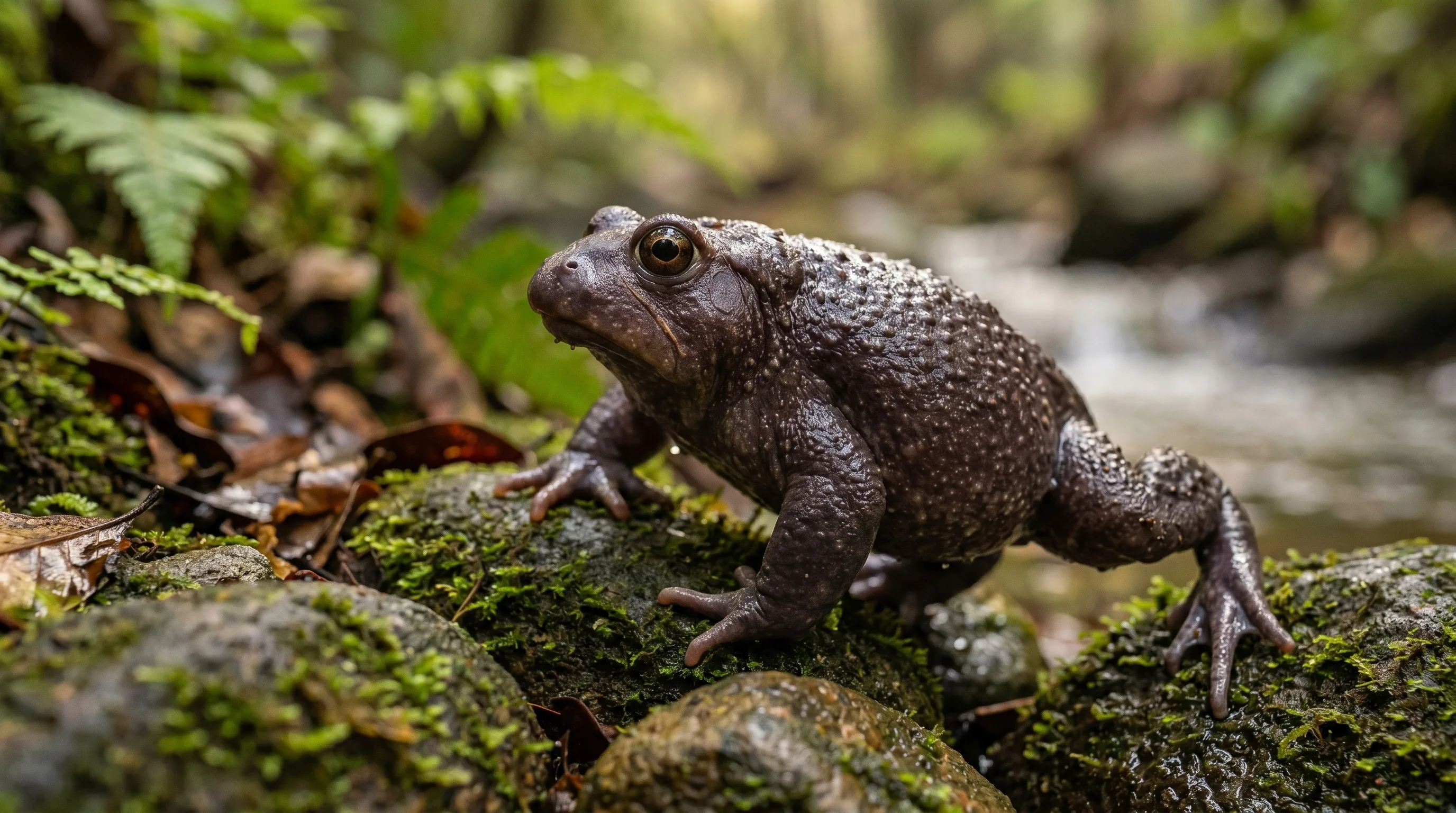
Purple Frog (Nasikabatrachus sahyadrensis)
Introduction
The Western Ghats of peninsular India are among the oldest and most biologically singular mountain ranges on Earth. Rising steeply from the coastal plains and stretching across nearly 1,600 kilometres through the states of Kerala, Tamil Nadu, Karnataka, Goa, Maharashtra, and Gujarat, this ancient spine of rock and forest holds ecological secrets accumulated over hundreds of millions of years. In the saturated soil beneath its moist deciduous forests and coffee-draped hillsides, something extraordinary waits in almost complete silence for eleven months of the year — a creature whose existence was not formally known to science until 2003, yet whose lineage reaches back to a time when dinosaurs walked the supercontinent of Gondwana.
When the first heavy monsoon rains break across the Western Ghats each June, the forest floor undergoes a transformation. The soil softens, rivulets carve fresh paths through leaf litter, and the air fills with the percussion of frogs calling from every pool and stream. Most of those voices belong to familiar species — tree frogs, pond frogs, shrub frogs — but among them, from puddles and shallow streams near the base of forested slopes, comes a sound unlike any other: a short, nasal, repetitive chirping that emanates from a round, dark, barely surfaced head just above the waterline. The animal producing that call has just completed a subterranean journey of nearly a year. It is the Purple Frog.
Formally described in the journal Nature in October 2003 by herpetologists S.D. Biju and Franky Bossuyt, Nasikabatrachus sahyadrensis is one of the most scientifically remarkable amphibians ever discovered. It belongs to a monotypic family — Nasikabatrachidae — meaning it is the sole species within its entire family. Its nearest living relatives are the Sooglossidae frogs of the Seychelles islands in the Indian Ocean, a lineage from which it diverged approximately 130 million years ago. The frog is not merely unusual; it is a living fossil, a biological time capsule, a remnant of a world that no longer exists in the form it once took.
Dark purple-grey, bloated in shape, and equipped with a strikingly pig-like pointed snout, the Purple Frog looks less like a frog and more like something pulled from the pages of a natural history fantasy. Yet it is entirely real. It spends the vast majority of its life between 1.5 and 3.7 metres below the surface of the earth, feeding on subterranean termites and other invertebrates, breathing through the soil moisture, and existing in a biological twilight that science is only beginning to understand. It emerges from its underground life for just two to three weeks each year, drawn upward by monsoon rainfall for the singular purpose of reproduction, then descends again as if it never existed.
Understanding the Purple Frog means confronting questions about deep evolutionary time, about how life persists through catastrophic planetary change, and about how profoundly we can misread the biodiversity that surrounds us. A species of this antiquity and singularity surviving into the twenty-first century, yet facing the growing pressures of habitat destruction and climate disruption, is a story of both wonder and urgency.
"The variety of life on Earth, its biological diversity, is commonly referred to as biodiversity. The number of species of plants, animals, and microorganisms, the enormous diversity of genes in these species, the different ecosystems on the planet — all are part of a biologically diverse Earth."
— David Takacs, The Idea of Biodiversity
Scientific Classification
Kingdom: Animalia
Phylum: Chordata
Class: Amphibia
Order: Anura
Family: Nasikabatrachidae
Genus: Nasikabatrachus
Species: Nasikabatrachus sahyadrensis Biju & Bossuyt, 2003
Common Names: Purple Frog, Indian Purple Frog, Pig-nose Frog, Pignose Frog
IUCN Status: Endangered (EN)
The genus name Nasikabatrachus derives from the Sanskrit word nasika (nose) and the Greek batrachus (frog), a direct reference to the species' most visually distinctive feature — its small, rounded body paired with a disproportionately pointed, pig-like snout. The species epithet sahyadrensis is derived from the Sanskrit name for the Western Ghats mountain range, Sahyadri, acknowledging the frog's exclusive geographic range. The family Nasikabatrachidae was erected specifically for this taxon upon its formal description, recognising that no existing family of frogs could accommodate its unique morphological and molecular profile.
Within the broader tree of frog evolution, Nasikabatrachus sahyadrensis occupies a position in the ancient clade Sooglossoidea, alongside the Sooglossidae of the Seychelles. Together, these two families represent a lineage that diverged from all other living frogs during the Jurassic or Early Cretaceous period, making them among the phylogenetically deepest branches within the Order Anura. A second species within the genus, Nasikabatrachus bhupathi, was described from the Eastern Ghats in 2017, though the two species remain morphologically and geographically distinct.
Physical Characteristics
The Purple Frog's physical appearance is startling to anyone encountering it for the first time. There is little in the popular imagination of what a frog should look like that prepares a person for this animal. Where most frogs are slender, long-limbed, and built for leaping, the Purple Frog is compact, spherical, and built for burrowing. It has the silhouette of a small, overfilled balloon — a body so rounded and thick that it seems almost structurally impossible for an amphibian.
Adult females are substantially larger than males, reaching body lengths of 70 to 90 millimetres and weights of up to 165 grams. Males are considerably smaller, typically measuring 45 to 55 millimetres in length and weighing between 13 and 20 grams. This pronounced sexual size dimorphism is among the most extreme recorded in any frog species worldwide and has direct implications for the species' unusual reproductive strategy.
The coloration that gives the Purple Frog its common name is not a vivid grape-purple but rather a deep, dark purple-grey to brownish-slate, often with a slight sheen when freshly emerged from moist soil. The underside is typically paler, with irregular pale patches. The skin itself is smooth and relatively thick compared to many other anurans, which likely provides some protection against desiccation during underground existence. Freshly excavated individuals often appear nearly black until moisture reveals the underlying purple-grey hues.
The snout — the feature around which much of the animal's popular attention has focused — is uniquely formed. It is narrow, somewhat flattened, and pointed, projecting forward beyond the lower jaw like the tip of a garden trowel. This morphology reflects adaptation to fossorial life, where the head must be used as a wedge to push through compacted soil. The eyes are remarkably small relative to body size, positioned laterally and slightly dorsally, consistent with an animal that spends almost no time relying on vision. The pupil is round. Ear structure (the tympanum) is either absent or not externally visible, yet the frog remains sensitive to low-frequency vibrations transmitted through the soil.
The limbs are short and powerful. The hindlimbs, while not built for impressive leaping, possess thick, muscular shanks and hardened, spade-like metatarsal tubercles — bony projections on the underside of the hind feet that function as digging tools. The forelimbs are similarly robust. The fingers and toes are short and slightly webbed, with no adhesive toe pads, consistent with the underground lifestyle. Movement on the surface is awkward and ungainly — the Purple Frog walks rather than hops, and does so with what appears to be considerable effort, contributing to the impression of an animal wholly unsuited to the terrestrial world it briefly inhabits each year.
Fun FactFemale Purple Frogs are up to seven times heavier than males — among the most extreme sexual size differences of any frog species on Earth. A female can weigh up to 165 grams while the male she clasps during breeding may weigh as little as 14 grams.
Habitat & Geographic Distribution
The Purple Frog's known range is confined almost entirely to the Western Ghats mountain range in southern India, with the vast majority of confirmed observations concentrated in the Cardamom Hills, Anamalai Hills, and Agasthyamalai Hills in the states of Kerala and Tamil Nadu. This is not simply a frog of the Western Ghats generally — it is a frog of specific microhabitats within that landscape, largely dictated by the qualities of soil, forest cover, and proximity to hill streams.
The species has been recorded at elevations ranging from approximately 200 metres to over 1,400 metres above sea level, though it appears most consistently found between 400 and 1,000 metres. Its vertical distribution reflects the gradient of temperature, moisture, and soil composition across the Western Ghats, where warmer, lower slopes transition through moist deciduous forest into semi-evergreen and evergreen communities at higher elevations. The soil profile at occupied sites is typically deep, moist, loamy, and rich in organic material — conditions that facilitate digging and support the dense termite colonies on which the frog feeds.
Within occupied areas, Purple Frogs are associated with relatively undisturbed native forest, particularly where Myristica swamps, moist deciduous woodland, and riparian gallery forest are present. They have, however, also been recorded in areas with some degree of human modification, including the margins of cardamom, coffee, and pepper plantations, provided that sufficient soil integrity and vegetation cover remain. This tolerance of moderately disturbed habitats is important from a conservation perspective but should not be read as resilience — the quality of habitat in such modified areas is substantially reduced, and populations in plantation margins are likely stressed.
The distribution of the Purple Frog is also partially constrained by the need for suitable breeding habitat. Adults require shallow, fast-flowing rocky hill streams for reproduction, and the distribution of such streams within the Western Ghats landscape influences where breeding populations can be established. The tadpoles, with their highly specialised oral suckers, are dependent on well-oxygenated, clean running water with rocky substrates — habitat that is acutely vulnerable to siltation, pollution, and flow alteration.
A second species, Nasikabatrachus bhupathi, was described from the Eastern Ghats of Andhra Pradesh in 2017, extending the genus' range beyond the Western Ghats for the first time. However, the two species are separated by considerable distance, morphologically distinct, and likely have separate evolutionary histories following vicariant events. The Western Ghats remains the primary stronghold for the Purple Frog specifically.
Behaviour & Social Structure
The Purple Frog does not have a social structure in any conventional sense. It is, by every observable measure, a profoundly solitary animal. For approximately ten to eleven months of the year, each individual exists in complete isolation, tunnelled into the earth at depths that effectively sever any meaningful interaction with conspecifics. There are no territorial displays, no group foraging, no hierarchical networks, no extended family associations. The Purple Frog is a biological hermit, and the subterranean world it occupies is one that science has barely begun to observe directly.
What can be inferred about underground behaviour comes largely from the biology of the animal's anatomy, soil analysis at occupied sites, and observations made during the brief annual breeding emergence. Underground, the Purple Frog likely maintains more or less fixed burrow systems, using the same tunnels over multiple seasons — though whether it excavates continuously or largely remains stationary for extended periods is not definitively established. Radio-tracking experiments and mark-recapture studies have been attempted with limited success, partly because the frog's underground life makes conventional telemetry difficult.
During the monsoon breeding season, some approximation of social organisation temporarily emerges. Males are typically the first to surface, arriving at stream sites and shallow pools before females and beginning to call from the water's edge or from partially submerged positions. The calling behaviour is relatively simple — a rapid, nasal "chuck-chuck-chuck" or chirping repetition delivered at regular intervals. Males do not appear to defend territories aggressively, and multiple males have been observed calling in proximity at favoured sites, suggesting a loose lek-like aggregation rather than classical territorial exclusivity.
Female arrival at breeding sites triggers amplexus — the mating embrace in which the male clasps the female. Given the extreme size differential between sexes, amplexus in this species takes an unusual form. The much smaller male cannot achieve the standard inguinal or axillary embrace of most frogs; instead, he attaches himself to the female's back through a combination of grip and the secretion of adhesive skin substances. This functional attachment is sometimes described as "glued" amplexus, and it allows the pair to move together into the water for egg deposition.
Communication in the Purple Frog is primarily acoustic during the breeding season. The male's call is distinct and carries through the monsoon-saturated air. There is some evidence that chemical communication — through skin secretions — may play a role in mate recognition and attraction, particularly given that visual cues are likely minimal in this species. The skin secretions of many fossorial frogs contain bioactive compounds, and the Purple Frog's skin is no exception: various peptides and bioactive molecules have been isolated from it, though their role in communication versus predator defence is still being studied.
Daily Life & Activity Cycle
To understand the daily life of the Purple Frog, one must first accept that "daily" is almost a meaningless frame for most of its existence. The rhythms that govern this animal are not circadian but annual. The dominant cycle is the year itself — specifically the transition between the dry season and the monsoon — and everything the Purple Frog does biologically is organised around that single, overriding event.
For the ten to eleven months of the year when the frog remains underground, its life is characterised by slow, purposeful movement through soil tunnels. The animal is nocturnal even underground, likely more active in the hours following sunset when temperature differentials between surface and subsurface soil layers shift slightly. Using its hardened hind foot tubercles to loosen earth and its powerful hindlimbs to kick loose soil backward, it moves forward through the soil in pursuit of food — primarily termite colonies — and maintains its position within a moisture gradient that prevents fatal desiccation.
The soil in the Western Ghats is not uniform, and the Purple Frog's underground activity is likely constrained by seasonal soil moisture levels. During the dry season, the upper soil layers become increasingly desiccated, and the frog must descend to greater depths to access adequate moisture. Some individuals have been excavated at depths exceeding 3.7 metres during dry months. As the pre-monsoon rains begin to penetrate the soil in late May and June, increasing moisture percolates downward, and the frog begins its slow ascent toward the surface — a journey that may take days to complete.
The surface period of the Purple Frog lasts no more than two to three weeks in most recorded cases, often shorter. During this window, all feeding, all communication, all reproduction, and all surface movement must occur. The frog does not eat on the surface — or at least no surface feeding has been documented — suggesting that all nutritional requirements are met underground. Time on the surface is devoted almost entirely to breeding, and once mating and egg deposition are complete, both males and females return underground.
The timing of emergence is tightly correlated with rainfall. At most sites, Purple Frogs appear within days of the first significant monsoon rainfall of the season, typically in the first or second week of June at lower elevations, and slightly later at higher elevations. The precision of this timing suggests that the frog is responding to moisture percolation through the soil rather than to surface conditions directly — the underground signal triggering emergence is the arrival of saturated soil at a certain depth.
It is the fifth of June, and the first real monsoon storm of the season has swept in from the Arabian Sea overnight, laying a heavy curtain of rain across the Cardamom Hills. By morning, every rivulet is running amber with dissolved soil, and the air carries that specific mineral scent of long-parched earth finally receiving water. The forest drips and the frogs call — dozens of species, all speaking at once in the flooded patches between the trees.
At the edge of a small hill stream, where water no deeper than an ankle rushes over rounded granite boulders, a different kind of sound begins to emerge. It is not the liquid trill of a tree frog or the resonant boom of a bullfrog. It is a rapid, repetitive chirp — almost mechanical — delivered from just below the surface of a shallow pool. A round, dark shape is barely visible beneath the current. The Purple Frog has arrived.
The animal is not graceful on the surface. It moves slowly, almost clumsily, toward the calling males already at the water's edge. A female — enormous compared to the males clustered nearby — eases forward into the shallows. Within minutes, a male has attached himself to her back. The pair drifts slowly downstream together, depositing strings of eggs that sink between the rocks and are immediately swept into the current's eddies.
By the time the rain eases the following afternoon, the female has returned to the forest floor and begun to burrow. By sunset, she will be three feet underground again. The forest surface shows no sign she was ever here. The monsoon continues its work. Somewhere below the mud, the frog sleeps.
Diet & Survival Strategies
The Purple Frog is a highly specialised predator of subterranean invertebrates, and its dietary specialisation is as extreme as any found among the world's anurans. Its primary prey are termites — specifically the workers and soldiers of subterranean termite colonies that construct extensive tunnel networks through the soil of the Western Ghats. The frog is thought to exploit these termite galleries directly, following termite tunnel networks through the soil to locate dense aggregations of prey and then feeding by rapidly deploying its specialised tongue.
The tongue of Nasikabatrachus sahyadrensis is a critical anatomical tool. Unlike the long, protrusible tongues of pursuit predators, the Purple Frog's tongue is short, narrow, and highly muscular — adapted for rapid, precise insertion into narrow soil gaps and termite galleries rather than for long-range prey capture. The tongue is deployed with hydraulic speed and coats the prey with sticky mucus before retracting. Feeding sequences likely consist of hundreds of small, rapid captures in sequence as the frog works through a termite aggregation.
Beyond termites, the Purple Frog is known to consume ants, small worms, and other soft-bodied soil invertebrates. Analysis of stomach contents from excavated individuals and from collected specimens has confirmed the dominance of termites in the diet, with ants as a secondary component. The frog shows virtually no interest in surface prey, and no feeding on larger invertebrates or vertebrates has been documented. This dietary narrowness is both a specialisation and a vulnerability — a species that depends on specific prey types can be severely impacted if those prey populations are disrupted by pesticide application or habitat change.
The survival strategy of the Purple Frog is fundamentally one of energetic efficiency. By remaining underground and pursuing slow-moving, energy-dense prey like termite aggregations, the frog minimises its exposure to surface predators, reduces water loss through evaporation, and avoids the metabolic demands of thermoregulation in an unpredictable surface climate. This is a conservative life-history strategy — not one built around speed, agility, or opportunistic feeding, but one built around persistence, efficiency, and stability.
During periods of prey scarcity underground — likely during the height of the dry season when termite activity may slow — the frog is thought to reduce its own metabolic activity significantly, entering a state of reduced activity or aestivation. Aestivation in amphibians is a well-documented response to heat and desiccation, and while direct evidence for aestivation in N. sahyadrensis is limited, the physiology of the species is consistent with this strategy. The combination of slow metabolism, deep soil moisture, and reduced activity allows the animal to survive eleven months underground with minimal net energy expenditure.
Feature | Purple Frog (N. sahyadrensis) | Common Spadefoot Toad (Spea multiplicata) |
|---|---|---|
Family | Nasikabatrachidae | Scaphiopodidae |
Distribution | Western Ghats, India | North America (arid regions) |
Fossorial depth | Up to 3.7 m below surface | Typically 0.3–1.0 m |
Surface period | 2–3 weeks per year | 1–5 days per breeding event |
Primary diet | Termites, ants (underground) | Invertebrates (surface, opportunistic) |
Tadpole adaptation | Oral sucker disc for fast-flowing streams | Rapid development in ephemeral pools |
Evolutionary origin | Gondwanan (Cretaceous lineage) | Laurasian lineage |
IUCN Status | Endangered (EN) | Least Concern (LC) |
Interaction with Other Animals
The Purple Frog's interactions with other animal species are shaped fundamentally by its fossorial lifestyle. Underground, interaction with other vertebrates is minimal — the soil environment is primarily the domain of invertebrates, and the frog occupies a predator position relative to the invertebrates it consumes. Nevertheless, the frog is not without its own predators, and the brief annual surface period creates windows of vulnerability that have likely shaped both its behaviour and its timing.
During the monsoon breeding season, when Purple Frogs are on or near the surface, they are exposed to a range of potential predators. Snakes are probably the most significant vertebrate threat at the surface. The species has been observed near habitat used by the common Indian krait (Bungarus caeruleus), rat snakes (Ptyas mucosa), and various other colubrid and elapid snakes common to the Western Ghats. The relative inactivity and surface awkwardness of the Purple Frog makes it theoretically vulnerable, though its heavy body and possibly distasteful skin secretions may reduce predation risk.
The skin of Nasikabatrachus sahyadrensis has been found to contain a variety of bioactive peptides, some of which have demonstrated antimicrobial and antifungal properties in laboratory assays. Whether these compounds deter predators directly through taste or toxicity is not yet confirmed, but the presence of such compounds in the skin is consistent with a chemical defence function observed across many anuran lineages. The frog does not appear to produce vivid warning coloration — its dark purple-grey colouration more likely serves as cryptic camouflage against damp soil surfaces than as a predator warning signal.
Underground, the Purple Frog shares the soil column with various other fossorial species. In the Western Ghats, this includes caecilians — limbless, worm-like amphibians that are themselves accomplished burrowers. The interactions between caecilians and Purple Frogs in shared soil habitat are unstudied but potentially competitive for space, tunnels, or prey. Several species of caecilians in the Western Ghats are similarly dependent on termites and soil invertebrates, creating at least theoretical dietary overlap.
The relationship between the Purple Frog and the termite colonies it exploits is the most ecologically significant interaction in the animal's daily existence. The frog is not merely an opportunistic termite predator — its tunnelling activity and selective foraging likely influence the spatial distribution and activity patterns of termite colonies over time. Whether this constitutes a meaningful top-down regulatory relationship or simply opportunistic predation within an extremely dense prey base requires further study.
During tadpole development, the larvae share their stream microhabitats with other aquatic invertebrates and possibly with the larvae of other amphibian species. The tadpoles' specialised sucking mouthparts allow them to occupy hydraulic niches — the surfaces of exposed rocks in fast-flowing water — that are not heavily exploited by other tadpole species, potentially reducing direct competition for food resources. Algae and biofilms scraped from rock surfaces appear to constitute the primary tadpole diet.
Interaction with Environment
Few animals are as intimately and literally entangled with their environment as the Purple Frog. This species does not merely inhabit its environment — it lives within it, moves through it, and is physiologically dependent on its specific properties in ways that most surface-dwelling animals are not. The soil of the Western Ghats is not background scenery for the Purple Frog; it is the medium through which the animal moves, feeds, breathes, regulates its temperature, and maintains hydration. Any change to soil quality, chemistry, structure, or hydrology affects the frog directly and immediately.
The Western Ghats soil system in which Purple Frogs live is itself a complex ecological entity. The deep, loamy soils of the moist deciduous forest zones contain vast networks of mycorrhizal fungi, bacterial communities, and invertebrate populations — including the termites that the frog depends on — that are all interconnected through organic matter decomposition and nutrient cycling processes. The frog's movement through this matrix, its consumption of termites, and its own excretion within the soil contribute to that nutrient cycling in ways that have not been quantified but are ecologically plausible.
The Purple Frog's dependence on undisturbed soil structure makes it acutely sensitive to any land-use changes that alter soil compaction, chemistry, or moisture dynamics. Agricultural conversion — particularly the replacement of native forest with coffee, cardamom, rubber, or rice cultivation — changes the physical structure of the soil, reduces organic content, alters drainage patterns, and introduces pesticides that can decimate the invertebrate communities on which the frog feeds. Ploughing destroys burrow systems entirely. Even relatively low-intensity interventions like regular foot traffic and cattle grazing compact the soil surface and impede the frog's ability to burrow.
The frog's reproductive ecology is equally tightly bound to specific environmental conditions. Breeding requires fast-flowing rocky hill streams with clean, well-oxygenated water. The tadpoles' substrate-feeding strategy and sucking mouthparts work only on clean rock surfaces — siltation from agricultural runoff or construction activity covers these surfaces with fine sediment, eliminating the biofilm food source and rendering the habitat unsuitable. The cascade from upstream land-use change to downstream tadpole failure can be rapid and severe.
Seasonally, the Purple Frog's entire biological calendar is governed by the monsoon cycle. The timing of emergence, breeding, egg-hatching, tadpole development, and metamorphosis are all locked to the reliability and intensity of the monsoon rains. Research across the Western Ghats has documented changing monsoon patterns in recent decades — including more intense but shorter rainfall events, longer dry interludes within the monsoon period, and shifts in the monsoon's onset date — all of which potentially disrupt the frog's carefully timed emergence and reproductive cycle.
Fun FactPurple Frog tadpoles possess a unique oral disc — a circular sucking structure around their mouth — that allows them to cling to the surfaces of boulders in fast-moving hill streams. This adaptation is convergent with the oral discs seen in torrent frogs of Southeast Asia, despite the two groups being separated by over 100 million years of evolution.
Reproduction & Parenting
Reproduction in Nasikabatrachus sahyadrensis is a compressed, intense, and entirely monsoon-dependent event. The frog invests eleven months of underground existence into building toward a reproductive window that may last no more than ten to fourteen days. Every aspect of that window — the timing of emergence, the mechanics of amplexus, the site selection for egg deposition, the structure of the tadpoles — is adapted with extraordinary precision to the specific ecological conditions of the Western Ghats monsoon season.
Males are the first to emerge. They surface several days before females and immediately move toward water — typically shallow, fast-flowing rocky streams or seasonal rain-fed pools with inflow from rocky surfaces. Once positioned at or near the water's edge, males begin calling. The Purple Frog's advertisement call is structurally simple — a short, rapid, nasal chirp repeated at roughly two-second intervals — but it is remarkably effective over short distances and carries a distinctive quality that makes it identifiable even amid the cacophony of Western Ghats monsoon amphibian choruses.
When females emerge and approach breeding sites, males detect their presence through a combination of acoustic and possibly chemical signals. The size difference between the sexes creates a distinctive mating challenge. The male Purple Frog cannot achieve standard amplexus because he cannot wrap his forelimbs around the vastly larger female's torso with any functional grip. Instead, the male uses a form of adhesive amplexus: he positions himself on the female's dorsal surface and maintains attachment through what appears to be a sticky skin secretion produced around the chest region. This arrangement allows the male to remain positioned for the extended period necessary to fertilise the eggs as they are deposited.
Egg deposition occurs in the water. The female moves into the stream or pool while the male remains adhered to her back, and eggs are released directly into the flowing water. The eggs are small, dark, and relatively numerous. They are not guarded by either parent — once deposited, the eggs are left entirely to their fate in the current. Fertilisation is external and immediate. The eggs and early embryos must develop quickly before the stream's hydraulics carry them to unsuitable environments.
Hatching produces tadpoles with a morphology that is entirely unique to this lineage. The oral disc — the circular sucker surrounding the tadpole's mouth — allows the larvae to clamp onto the wet surfaces of exposed boulders in midstream, where the current is fastest and no other frog tadpole typically survives. This niche occupation reduces competition with other tadpole species and places the larvae in environments where their specific food source — epilithic algae and biofilm — is most abundant. The tadpoles remain in fast-flowing stream habitats through their development, transitioning through several distinctive morphological stages before metamorphosis.
Metamorphosis produces small froglets of approximately 7–10 mm body length — tiny relative to the adult. These froglets must immediately begin foraging and, crucially, must locate suitable soil for burrowing before the end of the monsoon season. The soil must be moist enough to permit entry but of sufficient structural integrity to support tunnel construction. How juvenile Purple Frogs locate appropriate burrow sites, and how long they remain at shallow depths before descending to adult depths, are questions that remain largely unanswered in the scientific literature. Parental investment effectively ends at egg deposition; the froglets are entirely autonomous from the moment they metamorphose.
Evolutionary Adaptations
The Purple Frog's evolutionary history is among the most dramatic in the entire class Amphibia. To understand its adaptations, one must first understand the geological context within which its lineage developed. Approximately 130 million years ago, the Indian subcontinent was still part of the ancient supercontinent of Gondwana, connected to what would become Africa, Madagascar, Antarctica, and the Seychelles microcontinent. The ancestral population of what would become the Nasikabatrachidae-Sooglossidae clade was already present on this landmass.
As India rifted northward across the Tethys Sea between 130 and 65 million years ago, its amphibian fauna was carried with it — isolated on a moving island continent. Over tens of millions of years of geographic isolation, the Indian lineage evolved independently, diverging from its Seychelles relatives (which remained on the Seychelles microcontinent after its separation from India around 65 million years ago) and developing the extraordinary suite of fossorial adaptations seen in Nasikabatrachus sahyadrensis today. The fact that both families still exist means that at least two lineages survived the isolation, the extinction events of the Cretaceous-Paleogene boundary, and the subsequent dramatic ecological transformations of both landmasses.
The fossorial adaptations of the Purple Frog are extensive and deeply integrated across multiple organ systems. The skeleton reflects the demands of burrowing: the skull is dense and robust, capable of acting as a ram for soil penetration; the vertebral column is stout; the hindlimb bones are thick and heavily muscled. The hind feet carry the hardened metatarsal tubercles — effectively natural digging spades — that give the frog its primary excavation tool. Burrowing is performed backward, with the hindlimbs doing the primary work of loosening and kicking soil while the snout acts as a forward wedge during forward progress.
The skin physiology of the Purple Frog is adapted for extended subterranean existence. Amphibian skin is generally permeable to water, which is both an asset (allowing cutaneous respiration and water uptake from moist soil) and a liability (making the animal vulnerable to desiccation in dry conditions). The Purple Frog's skin appears to have enhanced water uptake capacity relative to surface-dwelling frogs, maximising the animal's ability to hydrate from soil moisture. It also likely has enhanced cutaneous gas exchange capacity — the ability to absorb oxygen and release carbon dioxide through the skin — which supplements pulmonary respiration in the oxygen-limited underground environment.
The tongue's specialisation for narrow-gap feeding in termite galleries represents an adaptation that evolved in concert with the termite-dependent diet. Many fossorial frogs worldwide have convergently evolved narrow, specialised tongues for accessing termite and ant prey within their galleries. The Purple Frog's version of this adaptation is consistent with this broader pattern but evolved entirely independently from similar adaptations in unrelated fossorial frog lineages across Africa, South America, and Southeast Asia — a powerful example of convergent evolution driven by ecological pressures.
The species' extreme sexual size dimorphism — with females far larger than males — and the adhesive amplexus this necessitates represent reproductive adaptations to the compressed breeding season. A female carrying a large clutch of eggs requires significant body mass; a male spending most of his energy on calling and mate competition benefits from small body size and reduced energy demands. The adhesive mechanism that maintains amplexus despite the size differential is a derived adaptation not seen in most frog families and likely evolved relatively recently in geological terms as the size dimorphism intensified.
Ecological Importance
The ecological role of the Purple Frog within the Western Ghats system operates primarily through two pathways: its function as a predator of subterranean termites and ants, and its role as a component of the breeding amphibian community in Western Ghats hill streams. Both of these roles, while not individually dominant in the way that apex predators or ecosystem engineers can be, contribute to the maintenance of ecological balance at the scale of the soil community and aquatic food web.
Termites are among the most ecologically significant invertebrates in tropical forest systems. They are primary decomposers — processing enormous quantities of dead wood, leaf litter, and organic matter and returning nutrients to the soil in plant-accessible forms. They also physically restructure soil through their gallery construction, creating aeration pathways and influencing water infiltration rates. Termite colonies in the Western Ghats can reach immense sizes, and predators that regulate termite populations — including birds, mammals, and specialised fossorial reptiles and amphibians — contribute to preventing any single termite species from dominating the soil invertebrate community.
The Purple Frog's sustained, year-round subterranean predation of termites places it in a regulatory position that most surface-active termite predators do not occupy. Surface predators such as pangolins, mongoose, and various insectivorous birds access termite mounds seasonally or through surface forage; the Purple Frog accesses termite galleries directly and continuously, from within the soil layer where termite populations are densest. This may provide a form of regulatory pressure that is qualitatively different from surface predation.
In the aquatic ecosystem, the Purple Frog's tadpoles contribute to the algal community dynamics of rocky hill streams. As consumers of epilithic biofilm on boulder surfaces, they influence the rate of algal accumulation on rock surfaces and contribute to the nutrient cycling of the stream ecosystem. Their specialised niche in fast-flowing water means they occupy a portion of the stream habitat's primary productivity that is not heavily utilised by other amphibian larvae — a distinct functional role in the stream food web.
The Purple Frog also serves as an important indicator species for the health of the Western Ghats ecosystem. Its strict dependence on intact soil systems, undisturbed native vegetation cover, and clean hill streams means that its presence or absence from a given area reflects the quality of multiple ecological parameters simultaneously. Loss of Purple Frogs from a site is a reliable indicator of broader ecosystem degradation, making the species a valuable focal point for conservation monitoring programs across the Western Ghats.
Fun FactThe Purple Frog was not known to science until 2003, despite being described from a region that has been inhabited and studied by humans for centuries. Its discovery was possible only because researchers specifically searched wet soil near hill streams during the first days of the monsoon — the brief annual window during which the frog is surface-active.
Threats & Conservation
The Purple Frog faces a convergence of threats that are both immediate and structural. The structural threats — habitat loss, agricultural expansion, and climate disruption — operate at landscape scales and are driven by economic pressures that are not easily redirected. The immediate threats — direct mortality through collection, accidental killing during agricultural operations, and degradation of breeding streams — compound the structural pressures and affect individuals and local populations directly.
Habitat loss is the overriding threat. The Western Ghats is one of the world's biodiversity hotspots — a designation that reflects both its extraordinary species richness and the extent to which that richness is under pressure. Large tracts of native forest have been converted to agriculture over the past century, and the conversion continues. Coffee, cardamom, rubber, and banana plantations now cover significant portions of what was formerly Purple Frog habitat in Kerala and Tamil Nadu. Even where plantation agriculture uses relatively benign practices, the loss of native forest canopy, undisturbed soil structure, and intact riparian corridors disrupts the ecological matrix that the species requires.
Pesticide use in agricultural areas within and adjacent to Purple Frog habitat poses a specific threat to the species' dietary base. Organophosphate and pyrethroid insecticides applied to plantation crops penetrate the soil column and can dramatically reduce subterranean invertebrate populations, including the termite colonies that constitute the frog's primary food source. Pesticide exposure may also directly affect the frog physiologically, given that amphibian skin is highly permeable to chemical compounds in the soil.
The species is also collected for local trade and food use in some parts of its range. Though not targeted at the commercial scale that affects some other amphibian species, even low-level collection during the brief monsoon emergence period — when all adults in a local area are simultaneously at the surface — can have disproportionate population effects. A single collection event at a breeding site during the peak of the monsoon season can remove most of the reproductively active adults from that site in a single night.
Climate change poses longer-term risks through shifts in monsoon timing and intensity. The species' reproductive cycle is synchronised with precision to the monsoon's onset; any advance or delay in the monsoon's arrival can create mismatches between adult emergence timing, peak stream conditions for tadpole survival, and the length of the tadpole development window before flows become too low to support the fast-water habitat the larvae require. The IUCN has recognised the Purple Frog as Endangered, reflecting the cumulative severity of these threats against a species with a naturally restricted range and limited dispersal capacity.
IUCN Red List Analysis
Current IUCN Status
The Purple Frog (Nasikabatrachus sahyadrensis) is listed as Endangered (EN) on the IUCN Red List of Threatened Species. This classification was assessed under criteria reflecting a significant reduction in population size and an ongoing contraction of the species' area of occupancy, extent of occurrence, and habitat quality across its already restricted range. The Endangered designation places the species in the second-highest threat category on the IUCN scale, indicating a very high risk of extinction in the wild if the causal factors determining its decline continue to operate.
The EN classification was warranted based on the combined evidence of severe and ongoing habitat loss within the Western Ghats, the species' highly restricted endemic range, its specialised habitat requirements, and its low reproductive rate relative to the intensity of pressure it faces. The species qualifies under IUCN criterion B (restricted geographic range with continuing decline) and criterion C (small and declining population size), though precise population estimates remain difficult to obtain due to the subterranean lifestyle of the animal.
Population Trend
The population trend for the Purple Frog is assessed as decreasing. No reliable global population estimate exists for this species, a direct consequence of its fossorial lifestyle, which makes standard census methods — such as point counts, transect surveys, or visual encounter surveys — largely ineffective. Population estimates have been attempted at specific breeding sites by counting calling males or amplexing pairs during the peak monsoon emergence, and these site-specific data suggest that breeding populations at individual sites number in the dozens to low hundreds of adults.
Comparative site assessments conducted over multiple years at key localities in Kerala suggest that the number of adults detected per site-visit has declined at several historically productive locations, particularly where adjacent land use has intensified. Sites that recorded active Purple Frog breeding populations in the early 2000s have been lost in some cases to agricultural conversion or development. The genetic evidence, where available, suggests fragmentation of populations across the landscape, with reduced gene flow between isolated groups occupying remnant forest patches.
The historical range of the species almost certainly extended more continuously across the Western Ghats than the current distribution suggests. Deforestation over the past two centuries has progressively fragmented this range, isolating populations in forest remnants of varying size. Current population trend estimates are based primarily on habitat trend data — and the trajectory of Western Ghats forest cover is clearly downward — rather than on direct long-term population monitoring, which has not been conducted systematically for this species.
Main Threats
Habitat destruction and agricultural conversion represent the most significant driver of Purple Frog population decline. The conversion of native Western Ghats forest to coffee, cardamom, rubber, and banana cultivation eliminates the undisturbed soil habitat on which the species depends, destroys burrow systems, removes the forest canopy that maintains soil moisture, and disrupts the hydrological dynamics of hill streams used for breeding. Large-scale deforestation continues in some parts of the Western Ghats despite legal protections, driven by economic pressure and inadequate enforcement.
Pesticide and agrochemical contamination of the soil environment affects termite populations — the frog's primary prey — and may directly harm the frog through dermal absorption. Organochlorine, organophosphate, and pyrethroid compounds are widely used in plantation agriculture within the Western Ghats and are known to persist in soil for extended periods. Their impact on subterranean invertebrate communities in Purple Frog habitat has not been systematically studied, but the toxicological pathway is well-established in other amphibian systems.
Stream degradation through siltation, channelisation, flow diversion for irrigation, and increased sediment loads from upslope agriculture eliminates the rocky, fast-flowing stream habitat required for tadpole development. Even partial siltation of breeding streams can render them unsuitable for the oral-disc feeding behaviour of the tadpoles, preventing successful reproduction at an affected site. Invasive riparian plants that alter streambank structure and shade the rock surfaces used by tadpoles may compound this impact.
Direct collection for food and local trade removes adults from the population during the uniquely concentrated breeding aggregations. The risk is disproportionate because all reproductive adults at a site are simultaneously surface-active within the same narrow temporal window — making collection at this time catastrophically efficient. Even localised collection pressure during the two-week emergence period can eliminate breeding cohorts entirely from small, isolated populations.
Climate change threatens the species through altered monsoon dynamics, including changes to onset timing, rainfall intensity, dry spell frequency during the monsoon, and long-term shifts in the temperature and moisture gradient of the soil column. These changes have the potential to desynchronise the breeding cycle, shorten the available window for tadpole development, and alter the depth distribution of soil moisture in ways that affect the frog's underground physiology.
Ecological Consequences
A significant decline or regional extirpation of the Purple Frog from Western Ghats ecosystems would trigger cascading ecological effects across both the soil and aquatic systems the species inhabits. At the soil level, the removal of sustained subterranean predation pressure on termite communities could allow certain termite species to expand their colonies and activity range, potentially altering decomposition rates, soil structure, and nutrient cycling dynamics in affected areas. While termite populations are regulated by multiple predator guilds, the loss of a specialised in-soil predator represents a qualitatively distinct reduction in regulatory pressure that may not be compensated by surface-active predators.
In Western Ghats hill streams, the loss of Purple Frog tadpoles from boulder-surface communities would remove a consumer from the fast-water algal biofilm niche. This niche is not heavily occupied by other anuran larvae, and its loss could lead to localised algal accumulation on rock surfaces, altering the light environment and competitive dynamics of the stream epilithic community. The disruption of nutrient cycling in these streams, where the frog's larval stage represents a mechanism for translating stream primary productivity into biomass eventually exported to the terrestrial ecosystem through metamorphosis, could have subtle but real consequences for stream ecosystem function.
More broadly, the loss of a Gondwanan relict lineage from the Western Ghats would represent an irreversible reduction in the phylogenetic diversity of the regional amphibian fauna — a loss of evolutionary information accumulated over 130 million years that cannot be recovered through the conservation of any other species. From a biodiversity value perspective, the extinction of Nasikabatrachus sahyadrensis would be disproportionately significant relative to the loss of a more recently diverged species.
Conservation Efforts
The Purple Frog benefits to some extent from the broader network of protected areas across the Western Ghats, including the Agasthyamalai Biosphere Reserve, the Periyar Tiger Reserve, the Anamalai Tiger Reserve, the Nilgiri Biosphere Reserve, and numerous wildlife sanctuaries. These protected areas provide large blocks of intact native forest with undisturbed soil systems, and Purple Frogs have been documented breeding within or adjacent to several of them. However, the species' range extends well beyond these protected areas, and significant portions of its occupied habitat fall in unprotected private land under cultivation.
The Wildlife Protection Act of India (1972, as amended) provides legal protection for the Purple Frog under Schedule I, which affords the highest level of protection available under Indian wildlife law — prohibiting hunting, collection, trade, and commercial exploitation. This protection is meaningful but enforcement in remote forested areas during the brief monsoon window is challenging.
Research programmes centred on the Western Ghats, particularly through institutions including the Zoological Survey of India, Kerala Forest Research Institute, and various university herpetology departments, have contributed significantly to the scientific knowledge base for the species since its discovery in 2003. Ongoing research is addressing questions about population structure, genetic diversity, habitat requirements, and the physiological mechanisms of the underground lifestyle. This scientific foundation is essential for evidence-based conservation management.
Community engagement programmes in Kerala and Tamil Nadu have worked with local plantation workers and farmers to raise awareness of the species and to discourage collection during the breeding season. Some landscape-level initiatives promoting shade-grown coffee and cardamom cultivation — practices that maintain more of the native soil structure and forest understorey compared to open-sun cultivation — may incidentally benefit Purple Frog populations in plantation-margin habitats. International recognition of the Western Ghats as a UNESCO World Heritage Site has raised the global profile of the region's biodiversity and created additional political support for its conservation.
Future Outlook
The future of the Purple Frog in the wild is uncertain and contingent on factors that extend well beyond the management of any single species. The trajectory of land use across the Western Ghats over the coming decades, the effectiveness of enforcement of existing forest protection laws, the response of the regional monsoon to global climate change, and the willingness of state and national governments to prioritise biodiversity alongside agricultural and development interests will collectively determine whether this ancient lineage persists into the twenty-second century.
On a cautiously optimistic reading, the Purple Frog has several characteristics that give it some resilience. Its tolerance of moderately modified habitats — demonstrated by records from plantation margins — suggests that the species can persist in landscapes that are not entirely undisturbed. Its underground lifestyle shields it from many surface-level disturbances that devastate more exposed amphibian species. The existing protected area network in the Western Ghats, though imperfect, provides substantial blocks of secure habitat, and with improved corridor connectivity between protected areas, fragmented populations might be reconnected to allow gene flow and demographic rescue.
On the pessimistic side, the two-to-three week surface window creates a concentrated vulnerability that is difficult to protect against. Climate-related disruptions to the monsoon cycle pose risks that no amount of habitat management can fully mitigate. And the species' extreme endemism — its dependence on a specific and geographically limited mountain range — means that it cannot retreat to new areas as conditions deteriorate. Long-term survival will require a combination of habitat protection at scale, stream quality maintenance, research-guided management, and meaningful integration of biodiversity considerations into agricultural and development policy across the Western Ghats region.
Human Relationship
The relationship between humans and the Purple Frog is a curious and asymmetric one. For the communities that have lived in the Western Ghats for generations — including the Kani, Muthuvan, Kadar, and other indigenous peoples, as well as the settler agricultural communities that have cultivated the hills for centuries — the frog has been part of the local landscape in a low-profile way. Its annual emergence during the monsoon has been observed and known in folk culture long before its formal scientific description. In some local traditions, the appearance of the Purple Frog — known in Malayalam as "Bhootayakkunna thavalavu" or the ghost frog in some dialect interpretations — was associated with specific seasonal markers and monsoon predictions.
The scientific discovery of the species in 2003 transformed its cultural and intellectual status dramatically. Published in Nature — one of the world's most prestigious scientific journals — the formal description of Nasikabatrachus sahyadrensis generated global media coverage and sparked a wave of scientific interest in the Western Ghats as a repository of cryptic, undiscovered biodiversity. The frog was portrayed as a living relic of Gondwana, a survivor from the age of dinosaurs, and the coverage brought international attention to the conservation value of the Western Ghats at a critical time for environmental policy in India.
From a tourism and ecotourism perspective, the Purple Frog has become a significant draw for wildlife enthusiasts and herpetologists visiting the Western Ghats. Organised monsoon wildlife tours in Kerala and Tamil Nadu frequently include Purple Frog sightings as a major attraction. This ecotourism interest has economic value that can, if well-managed, create local incentives for habitat protection. However, poorly managed ecotourism — involving disturbance at breeding sites, trampling of breeding habitat, or flash photography at sensitive locations — can itself become a source of stress to an already pressured population.
The species has been used as a flagship for broader conservation campaigns focused on the Western Ghats. Its remarkable story — ancient lineage, hidden lifestyle, brief annual appearance, extraordinary adaptations — makes it a compelling subject for conservation storytelling. NGOs and government agencies have incorporated the Purple Frog into educational materials aimed at school children and local communities, building awareness of the ecological significance of the Western Ghats beyond its more conventionally charismatic species like tigers and elephants.
The collection of Purple Frogs for consumption is recorded in parts of Kerala and Tamil Nadu, where monsoon-emerging frogs are sometimes harvested opportunistically during agricultural work or specifically sought during the breeding season. This practice poses a real population threat at the local level, and education campaigns targeting farming communities about the species' protected status and ecological importance are a component of current conservation outreach. The challenge is navigating these conversations in communities where subsistence harvesting of wildlife has a long cultural history and where legal prohibitions may be perceived as external impositions on traditional practices.
Unique & Rare Facts
A living Gondwanan relic: The Purple Frog's lineage diverged from its closest living relatives — the Sooglossidae frogs of the Seychelles — approximately 130 million years ago, when the Indian subcontinent was still part of Gondwana. This makes Nasikabatrachus sahyadrensis one of the phylogenetically oldest lineages among all living frogs.
Described only in 2003: Despite inhabiting a region continuously occupied by humans, the Purple Frog was formally described by science only in October 2003. Its underground lifestyle meant that for centuries it remained invisible to naturalists who focused their observations on surface-active wildlife.
A monotypic family: The Purple Frog is the only species in the family Nasikabatrachidae. For most of the fifteen years following its description, it was also the only known species in its genus — making it one of the most phylogenetically isolated vertebrates on Earth.
Extreme sexual size dimorphism: Females can be up to seven times heavier than males, with body lengths 60–70% greater. This is among the most extreme size differences between the sexes recorded in any anuran species globally.
Adhesive amplexus: Male Purple Frogs cannot embrace the enormously larger female in standard amplexus position. They instead adhere to the female's dorsal surface through a sticky skin secretion — a reproductive mechanism unique to this family.
Suctorial tadpoles in torrential water: The tadpoles of the Purple Frog possess specialised oral sucking discs that allow them to attach to bare rock surfaces in fast-flowing hill streams, occupying a hydraulic niche where no other frog tadpole can survive.
The deepest-burrowing frog in India: Purple Frogs have been excavated from depths of up to 3.7 metres below the soil surface during the dry season — substantially deeper than any other frog species recorded in India and among the deepest burrowing records for any anuran globally.
Bioactive skin compounds: The skin of the Purple Frog has yielded several novel antimicrobial peptides in laboratory analysis, some of which show activity against human fungal pathogens. Research into these compounds is ongoing and has pharmaceutical implications.
Call from beneath the water surface: Unusually among frogs, the Purple Frog often calls while partially or fully submerged, with just the snout at the water surface. This semi-aquatic calling position is rare among anurans and reflects the species' functional preference for water even during its brief terrestrial period.
Named in Sanskrit: Both the genus name (Nasikabatrachus = nose frog) and the species epithet (sahyadrensis = of the Sahyadri, the Sanskrit name for the Western Ghats) reflect linguistic connections to the cultural landscape of the Indian subcontinent rather than the Latinised European naming conventions common in older taxonomy.
"We have not even to risk the adventure alone, for the heroes of all time have gone before us. The labyrinth is fully known. We have only to follow the thread of the hero path, and where we had thought to find an abomination, we shall find a god. And where we had thought to slay another, we shall slay ourselves. Where we had thought to travel outward, we shall come to the center of our own existence."
— Joseph Campbell (adapted as reflection on the subterranean life of hidden species)
Conclusion
The Purple Frog is, in the truest sense, a species out of time — a biological survivor from a world that has been utterly transformed. It carries in its genome a record of evolutionary history stretching back to Gondwana, to a time when the landmass that would become India was still adrift across a Mesozoic ocean, carrying its cargo of ancient life toward the collision with Asia. That this lineage survived the isolation of continental drift, the extinction pulse of the Cretaceous-Paleogene boundary, and sixty-five million years of Indian Cenozoic ecological change is one of the more extraordinary facts in natural history. That it was discovered only in 2003 is a reminder of how incompletely we understand the planet we inhabit.
What the Purple Frog teaches us is not reducible to a single lesson. It teaches humility — that a highly specialised, ecologically important, evolutionarily ancient species could exist beneath the feet of one of the world's most densely populated nations for the entirety of recorded scientific history and remain unknown. It teaches ecological interconnection — that the termites beneath the forest soil, the fast-flowing streams over the granite boulders, the monsoon rains arriving on schedule each June, and the dark, round animal burrowing upward through the earth are all part of a single functioning system in which the loss of any component diminishes the whole. And it teaches urgency — because the system is under pressure from forces that are not slowing down.
The Western Ghats biodiversity hotspot is among the most imperilled ecosystems on Earth, and the Purple Frog is among the more vulnerable inhabitants of that imperilled landscape. Its Endangered status on the IUCN Red List is not a bureaucratic designation; it is a scientific assessment of a real and worsening situation. The species' narrow range, specialised requirements, brief surface exposure, and dependence on intact soil and stream systems leave it with little margin for error as its habitat continues to fragment and degrade.
Yet the Purple Frog also represents something to sustain hope. It survived the collision of continents. It survived the mass extinction that ended the Cretaceous. It evolved one of the most extraordinary reproductive and ecological lifestyles in the vertebrate world. It waited in the dark of the Western Ghats soil for 130 million years before a researcher with a headlamp and a monsoon-soaked notebook found it. If given the habitat and the space, it may yet surprise us again.
Sources & Attribution
Data and ongoing research referenced for this article come from the following authoritative sources — peer-reviewed publishers, official taxonomic registers, and global biodiversity programmes:
- IUCN Red List — Purple Frog — official IUCN Red List assessment including population trend, threats, and conservation actions.
- Wikipedia — Purple Frog — taxonomy, distribution, and an overview with onward citations to primary literature.
- GBIF — Purple Frog — global occurrence and distribution records from the Global Biodiversity Information Facility.
- iNaturalist — Purple Frog — observation records and field photographs contributed by naturalists worldwide.
- Encyclopedia of Life — Purple Frog — multilingual species pages aggregating taxonomic and natural-history data.
- WWF — World Wildlife Fund — global wildlife conservation programmes and research summaries.
- Nature — research on Purple Frog — peer-reviewed studies indexed by Nature on related ecology and behaviour.
- ITIS — Integrated Taxonomic Information System — federal-grade taxonomy and nomenclature.
Frequently Asked Questions
What is the Purple Frog and why is it scientifically significant?
The Purple Frog (Nasikabatrachus sahyadrensis) is a highly unusual anuran species endemic to the Western Ghats of India, formally described by science in 2003. It belongs to a monotypic family — Nasikabatrachidae — meaning it is the only species within its family, and its nearest living relatives are the Sooglossidae frogs of the Seychelles, from which it diverged approximately 130 million years ago. Its scientific significance lies in its status as one of the phylogenetically oldest frog lineages on Earth, its extraordinary fossorial lifestyle, and the fact that it represents a direct biological link to the ancient supercontinent of Gondwana.
Where is the Purple Frog found?
The Purple Frog is endemic to the Western Ghats mountain range in southern India, with confirmed populations concentrated in the Cardamom Hills, Anamalai Hills, and Agasthyamalai Hills across the states of Kerala and Tamil Nadu. It occupies elevations ranging from approximately 200 to over 1,400 metres above sea level. The species requires undisturbed, deep loamy forest soils for its subterranean lifestyle and clean, rocky hill streams for breeding. A closely related but distinct second species, Nasikabatrachus bhupathi, was described from the Eastern Ghats in 2017.
Why does the Purple Frog spend most of its life underground?
The Purple Frog's fossorial lifestyle is an ancient evolutionary strategy that provides multiple survival advantages: protection from surface predators, access to a reliable food source in the form of subterranean termite colonies, stable moisture and temperature conditions, and insulation from the unpredictability of surface weather. The frog has evolved a suite of anatomical and physiological adaptations — hardened digging tubercles on its hind feet, a wedge-shaped snout, permeable skin for subterranean gas exchange and hydration — that make underground existence not merely possible but optimal for this lineage. It surfaces only for the 2–3 weeks each year when monsoon rains create suitable conditions for breeding.
What does the Purple Frog eat?
The Purple Frog feeds primarily on subterranean termites and ants, hunting entirely underground within termite and ant gallery networks in the soil. It uses a short, highly muscular and sticky tongue adapted for rapid, precise capture of prey in narrow soil spaces. This dietary specialisation on subterranean social insects is shared with other unrelated fossorial frogs across the world — a compelling case of convergent evolution. The frog does not appear to feed during its brief surface period, indicating that all nutritional requirements are met underground during the eleven months of subterranean life.
How does the Purple Frog reproduce?
Reproduction is entirely tied to the monsoon season. Males emerge first and call from shallow water near rocky hill streams; females arrive shortly after. Due to extreme size dimorphism — females are far larger than males — standard amplexus is not possible. Instead, the smaller male adheres to the female's back using sticky skin secretions, a mechanism described as adhesive amplexus. Eggs are deposited directly into the stream water, where they hatch into tadpoles equipped with specialised oral sucking discs that allow them to cling to boulder surfaces in fast-flowing water. After metamorphosis, the small froglets immediately begin burrowing into the soil, and the adult breeding pair returns underground.
Is the Purple Frog dangerous to humans?
The Purple Frog poses no danger to humans. It is not venomous, does not bite defensively in any significant way, and its skin secretions — while containing bioactive peptides of pharmaceutical interest — are not toxic to humans through normal contact. The species is slow-moving, non-aggressive, and spends nearly its entire life out of human reach underground. From a public health perspective, it is entirely harmless. From a conservation perspective, it is humans who represent the significant threat to the frog rather than the reverse.
What is the IUCN conservation status of the Purple Frog?
The Purple Frog is listed as Endangered (EN) on the IUCN Red List of Threatened Species, reflecting its restricted range, specialised habitat requirements, decreasing population trend, and the ongoing pressures of habitat loss and degradation across the Western Ghats. The species is protected under Schedule I of India's Wildlife Protection Act, 1972, which provides the highest level of legal protection available under Indian wildlife law. Despite this protection, enforcement challenges and landscape-level habitat transformation continue to pose serious threats to the species' long-term survival.
How was the Purple Frog discovered?
The Purple Frog was formally described in a landmark 2003 paper in Nature by herpetologists S.D. Biju and Franky Bossuyt. Biju, working in the Western Ghats, encountered an unusual frog during the monsoon season and recognised that it did not conform to any known species or family. Subsequent morphological and molecular analysis confirmed that it represented not only a new species but an entirely new family of frogs — Nasikabatrachidae — the first new frog family described in over 130 years at the time. The discovery was described by the scientific community as one of the most significant vertebrate discoveries of the early twenty-first century.
How long do Purple Frogs live?
The lifespan of the Purple Frog in the wild has not been precisely determined, as long-term individual tracking of this species is logistically difficult given its underground lifestyle. Based on analogy with other fossorial amphibians of comparable body size and life-history strategies — characterised by low metabolic rates, low reproductive investment per season, and reduced predation exposure through underground living — the Purple Frog is likely moderately long-lived relative to surface-active frog species of similar size. Estimates of 10–15 years or more in the wild have been proposed, but direct evidence from field studies remains limited.
Can the Purple Frog be kept in captivity?
Captive management of the Purple Frog presents significant challenges because of its specialised habitat requirements — particularly its need for deep, specific soil substrate, stable soil moisture, and a diet of live subterranean termites and ants. No substantial ex-situ captive breeding programme for the species has been established to date, and the species is not held in general zoo collections. Research institutions conducting studies on the species have maintained individuals temporarily, but long-term captive husbandry protocols for Nasikabatrachus sahyadrensis have not been developed to the standard required for a conservation breeding programme.
How does the Purple Frog survive underground for so long?
The Purple Frog's extended underground survival is supported by several interconnected physiological mechanisms. It absorbs water and oxygen directly through its permeable skin from the moist soil — a process known as cutaneous respiration and hydration — reducing its dependence on surface conditions for these basic metabolic needs. Its slow metabolic rate during the non-breeding period minimises energy consumption. Its diet of termites — dense, energy-rich, and continuously available underground — provides sufficient nutrition. During the driest months, the frog may further reduce metabolic activity in a state resembling aestivation, descending to greater depths to find adequate soil moisture and effectively waiting for conditions to improve.
Image: Wikipedia/Wikimedia Commons — “Purple frog”
Comments
Post a Comment