

Surinam Toad (Pipa pipa)
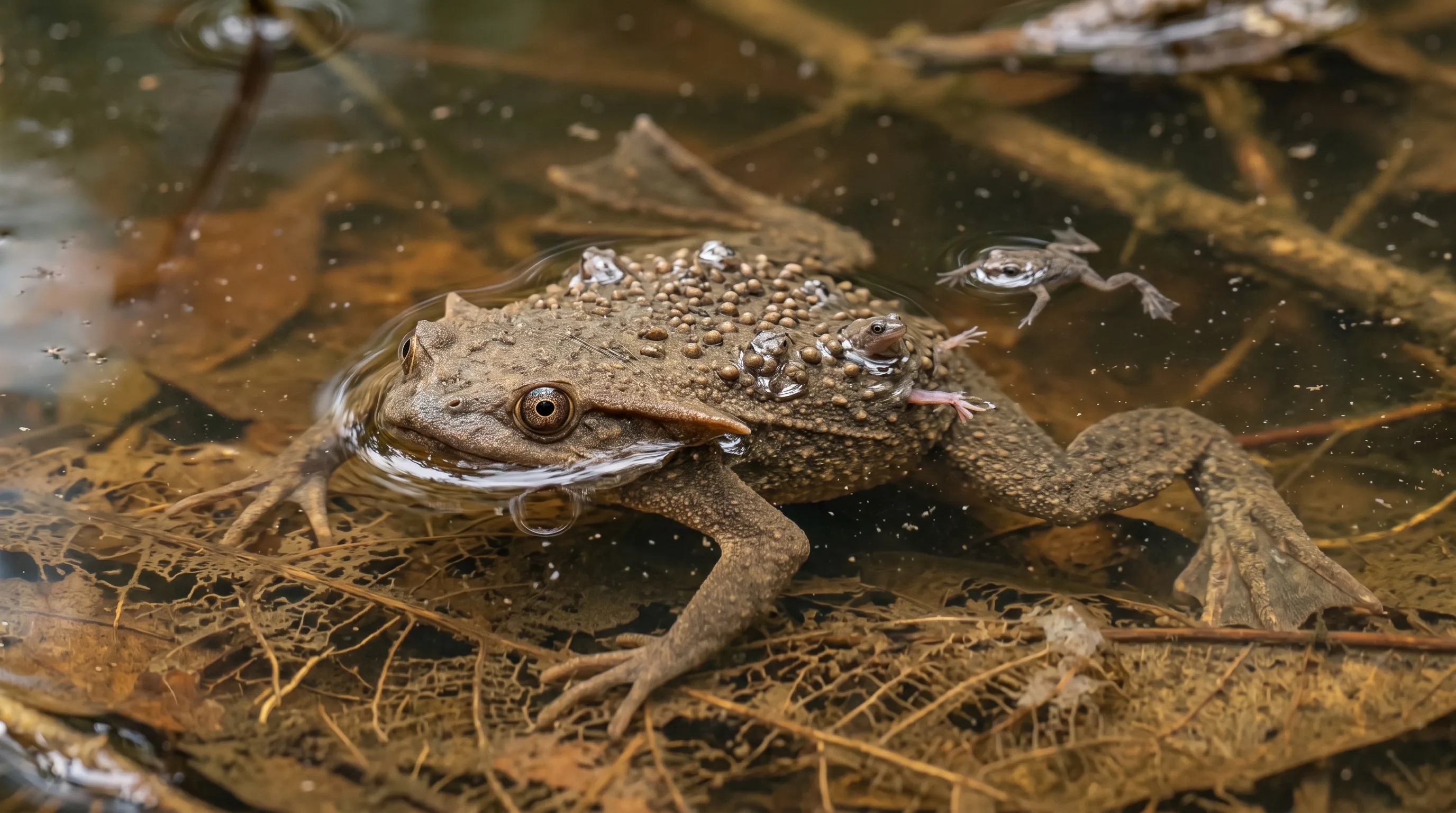
Surinam Toad (Pipa pipa)
Introduction
Beneath the murky surface of a flooded Amazonian forest pool, almost invisible against a carpet of decaying leaves, something moves. The motion is barely perceptible — a slight adjustment of a flat, mottled body, a twitch of star-tipped fingers probing the sediment. Then stillness again. If you did not know where to look, you would pass right over it. The Surinam Toad does not want to be found, and for millions of years, that strategy has worked with extraordinary precision.
Pipa pipa is an animal that seems almost impossible — a frog with no tongue, no eyelids, eyes that point skyward from a head as flat as a river stone, and fingertips adorned with elaborate star-shaped sensory organs that would not look out of place in a deep-sea creature. But nothing about this species is accidental. Every flattened millimetre, every sensory specialisation, every behavioural quirk has been sculpted by roughly 200 million years of aquatic life, making the Surinam Toad one of the most anatomically extreme and ecologically fascinating amphibians on the planet.
What earns Pipa pipa a permanent place in scientific literature and wildlife documentaries alike is its reproduction — a process so alien, so viscerally arresting, that even veteran herpetologists describe watching it with a mix of awe and disbelief. Fertilised eggs are pressed into the soft skin of the female's back, where they become individually encapsulated in spongy dermal pockets. Over the following weeks, fully formed froglets — bypassing the free-swimming tadpole stage entirely — erupt from their mother's skin in a scene of biological drama that has no parallel in vertebrate reproduction.
Yet for all its spectacle, the Surinam Toad remains comparatively understudied. It inhabits some of the most remote, turbid waterways of the Amazon and Orinoco basins, lying motionless on riverbeds for hours, filtering sensory information from water currents and vibrations. Understanding this animal means understanding the slow, dark, pressure-filled world it has mastered — a world that operates on entirely different rules from the one we see above the waterline.
"The frog does not drink up the pond in which it lives."
— Sioux Proverb
This article is an in-depth examination of Pipa pipa across every dimension of its biology — its anatomy, ecology, behaviour, evolutionary history, and conservation status. It is also an attempt to convey what makes this animal not merely strange, but deeply significant: a living demonstration of how life finds forms we could not have predicted, and how the most unremarkable-looking creatures sometimes harbour the most extraordinary secrets.
Scientific Classification
Kingdom: Animalia
Phylum: Chordata
Class: Amphibia
Order: Anura
Family: Pipidae
Genus: Pipa
Species: Pipa pipa (Linnaeus, 1758)
The family Pipidae — commonly called the tongueless frogs or clawed frogs — is one of the most ancient surviving anuran lineages, with fossil evidence pushing its origins back to the Jurassic period. The family includes other notable species such as the African clawed frog (Xenopus laevis) and the Dwarf Surinam Toad (Pipa parva). Within the genus Pipa, which is restricted entirely to South America and Trinidad, Pipa pipa is the largest and most widely recognised species. Eight species are currently recognised within the genus, but Pipa pipa stands apart in terms of size, ecological range, and the dramatic completeness of its dorsal brooding adaptation.
Linnaeus formally described the species in 1758 in Systema Naturae, though European naturalists had encountered and illustrated it well before formal taxonomic description. The toad's extraordinary appearance generated considerable confusion among early naturalists, some of whom refused to believe that the animals emerging from a female's back were her offspring and not parasites. The common name "Surinam Toad" reflects the historical European association of the species with the colony of Suriname, through which many specimens entered Europe via the Dutch colonial trade routes in the seventeenth and eighteenth centuries.
Physical Characteristics
The Surinam Toad is, in the most literal sense, a profoundly flat animal. Its body is dorsoventrally compressed to a remarkable degree — pressed down as though something heavy has been set upon it and never lifted away. An adult female can reach 17 to 20 centimetres in total length, while males are somewhat smaller, typically ranging from 10 to 14 centimetres. Females are consistently larger, a pattern common in amphibians and particularly relevant given that females carry the reproductive burden on their backs. Body mass typically falls between 100 and 170 grams in adult females, though well-fed individuals in productive aquatic environments may exceed this range.
The head is triangular when viewed from above, narrowing to a near-point at the snout. The eyes are tiny, lidless, and positioned on the very top of the skull, oriented upward rather than forward or sideward. This upward gaze is not incidental — it allows the animal to monitor the water column above while lying pressed against the substrate below, a posture it maintains for extended periods. The absence of eyelids is consistent across the Pipidae family and reflects the secondary reduction of structures no longer needed in a fully aquatic lifestyle. Vision in this species is functional but is clearly not the primary sensory modality; the eyes detect movement and light changes but are not adapted for sharp focal precision.
The skin is uniformly dark — typically grey-brown, olive-brown, or near-black on the dorsal surface, with scattered small tubercles that break up the body's outline and add textural complexity. The ventral surface is paler, often cream or dirty white, sometimes with darker mottling. This dorsal colouration is a near-perfect simulation of decomposing leaf material and waterlogged organic debris — the exact substrate on which the animal rests. Small, wart-like protuberances pepper the skin, each contributing to the camouflaged, leaf-litter texture.
The forelimbs are slender and unwebbed, adapted not for swimming but for manipulation and sensory exploration. At the tip of each front finger sits one of the species' most extraordinary structures: a small, star-shaped organ composed of four fleshy, petal-like projections. These Eimer's organs, also found in some moles and other subterranean or aquatic predators, are densely packed with mechanoreceptors capable of detecting minute pressure changes, chemical gradients, and the tiniest movements of prey animals through water. They function as exquisitely sensitive detection devices, allowing the toad to locate prey in total darkness or zero-visibility turbid water.
The hindlimbs are powerful and extensively webbed, providing the primary propulsion for swimming. When the animal swims, it tucks its forelimbs against the body and drives forward with strong kicks, but it is not a graceful swimmer — it moves in short, deliberate bursts rather than sustained elegant strokes. Most of its time is spent motionless, not swimming at all. The body width and flat profile reduce drag when the animal lies on the substrate, but the shape also limits agility in open water. Pipa pipa is built for the bottom, not the midwater column.
Fun FactThe Surinam Toad has no tongue at all — not a reduced or vestigial tongue, but a complete anatomical absence. It has evolved an entirely different method of food capture: powerful suction feeding combined with its sensitive star-tipped fingers to funnel prey directly into the buccal cavity.
Habitat & Geographic Distribution
Pipa pipa inhabits the tropical lowlands of northern South America across a broad geographic range that spans the Amazon and Orinoco river basins, the Guianas, Trinidad, and parts of coastal Colombia, Venezuela, Ecuador, Peru, Bolivia, and Brazil. The species does not occur at high altitudes — it is a lowland animal, tightly associated with warm, slow-moving, or still water bodies below approximately 500 metres elevation. Within this range, populations are distributed patchily, concentrated where habitat conditions meet the animal's specific ecological requirements.
The preferred habitat is shallow, heavily vegetated, slow-moving or stagnant freshwater — flooded forest floors, swampy backwaters, still river margins, oxbow lakes, and seasonal pools formed during the Amazonian flood cycle. The toad shows a strong preference for turbid water with high levels of suspended organic material. Clear, fast-moving streams are largely avoided. This preference for murky conditions reflects multiple ecological pressures: turbid water provides cover from aerial and aquatic predators, supports the detritus-based invertebrate communities on which Pipa pipa feeds, and suits the animal's sensory system, which relies primarily on mechanoreception rather than vision.
The Amazon's annual flood pulse is ecologically critical for this species. When seasonal rains cause rivers to overflow their banks and flood vast areas of forest, Pipa pipa follows this expanding water into newly inundated woodland. The flooded forest — the so-called várzea and igapó habitats — provides an abundance of cover, food, and reproductive opportunity. As waters recede in the dry season, individuals may retreat to permanent water bodies or burrow into moist sediment. The toad's tolerance for low oxygen levels in stagnant water gives it access to habitats unavailable to less physiologically flexible species.
Feature | Surinam Toad (Pipa pipa) | African Clawed Frog (Xenopus laevis) |
|---|---|---|
Family | Pipidae | Pipidae |
Distribution | South America, Trinidad | Sub-Saharan Africa |
Body length | Up to 20 cm | Up to 12 cm |
Tongue | Absent | Absent |
Brooding method | Eggs embedded in dorsal skin | External egg-laying in water |
Habitat type | Turbid tropical floodplains | Lakes, ponds, rivers in savanna/forest |
IUCN Status | Least Concern | Least Concern |
The species also occurs on the island of Trinidad, representing a natural range extension likely facilitated during periods of lower sea levels when Trinidad was connected to the South American mainland. This island population represents an important peripheral distribution with some degree of isolation from mainland gene flow. The toad is not found on other Caribbean islands — the distributional limits appear to be set by both dispersal capacity and habitat availability. Trinidad's interior swamps and forested watercourses provide conditions closely matching the Amazon lowland habitats where the species thrives.
Behaviour & Social Structure
Pipa pipa is not a social animal in any meaningful hierarchical or cooperative sense. It does not form stable groups, establish long-term pair bonds, or engage in the complex territorial negotiations seen in many vertebrates. Outside of the brief but intense interactions of the breeding season, individuals lead largely solitary existences, sharing habitat with conspecifics without active coordination or meaningful social structure.
That said, the species is not entirely asocial. Where food resources and suitable microhabitat concentrate, multiple individuals may occupy the same stretch of watercourse with minimal overt conflict. Aggression between adults appears rare under natural conditions, possibly because the ambush-based foraging strategy does not require defended exclusive territories in the way that active pursuit predators might require. An individual Surinam Toad needs a patch of suitable substrate and reliable prey passage — not an exclusive hunting range.
Communication in Pipa pipa occurs predominantly through the acoustic channel, though the mechanism differs fundamentally from the vocal sac calls of most frogs. Males produce a sharp, metallic clicking sound underwater, generated not by passing air over a larynx but by a rapid snapping mechanism involving the hyoid apparatus and associated cartilages. This underwater clicking serves as an advertisement call during breeding aggregations, allowing males to signal their position and readiness to females. The clicks are short, high-frequency, and carry well through water — a medium far more efficient than air for sound transmission, and one that suits an animal that almost never leaves it.
The lateral line system — a row of mechanoreceptive organs distributed along the body that is typically associated with fish — is retained in adult Pipa pipa, a highly unusual feature in adult frogs. Most amphibians lose their lateral lines during metamorphosis, but fully aquatic pipid frogs retain this system throughout life. This allows the Surinam Toad to detect water displacement caused by moving prey, approaching predators, or the movements of potential mates in the complete absence of visual information. The lateral line effectively extends the toad's sensory field into the surrounding water column, creating a kind of distributed hydrodynamic awareness around the body.
Territorial behaviour, where it occurs, appears most pronounced during the breeding season. Males seeking reproductive access to females will engage in competition involving underwater clicking contests and, occasionally, physical displacement. However, documented observations of sustained territorial aggression are limited, and the social dynamics of breeding aggregations in wild populations remain incompletely described.
Daily Life & Activity Cycle
The Surinam Toad's daily rhythm is one of extraordinary patience. The species is primarily nocturnal, becoming most active after dark when the risk of aerial predation diminishes and prey animals — many of which are themselves nocturnal — begin to move. During daylight hours, individuals typically rest in a position of almost complete immobility on the bottom of their water body, pressed flat against the substrate with forelimbs loosely outstretched and hindlimbs folded. In this pose, against a background of leaf litter and decaying organic matter, the animal is genuinely very difficult to see even at close range.
This extended daytime quiescence serves multiple functions simultaneously. It conserves energy — an important consideration for a carnivore whose prey encounters may be sporadic in the low-productivity dark water of the Amazon floodplain. It minimises exposure to visually hunting predators such as herons, kingfishers, and large wading birds that operate primarily during daylight. And it positions the animal on the substrate where its mechanoreceptive sensory systems are most effective, allowing it to monitor ground-level prey activity even while apparently inactive.
At night, the toad begins a slow, deliberate patrol of its home area. Movement is characteristically unhurried — the animal shuffles along the substrate, pausing frequently, using its star-tipped fingers to probe crevices and soft sediment for invertebrates. When fish or larger aquatic prey are detected passing through the water column, the toad switches modes, rising slightly from the substrate and using the rapid gape-and-suction technique to capture prey at close range. The suction generated by the rapid opening of the large, wide mouth creates a pressure differential capable of drawing small fish or large invertebrates directly into the buccal cavity in a fraction of a second.
Seasonal activity patterns in Pipa pipa are strongly influenced by rainfall and water levels. During the Amazonian wet season, when flood waters expand habitat availability and prey abundance surges, individuals may be more actively foraging and socially interactive — this is also the period most associated with reproductive activity. During the dry season, when water retreats and food becomes more concentrated and potentially more competitive, individuals may reduce activity or undertake short overland movements between water bodies, though such movements must be extremely limited given the species' essentially obligate aquatic lifestyle.
It is three in the morning on a river tributary in the eastern Amazon. A researcher from the Instituto Nacional de Pesquisas da Amazônia wades slowly through knee-deep water, headlamp pointed at the sediment below. The water is almost black — visibility does not extend beyond the reach of the beam — and the forest around her is alive with the calls of insects and the distant boom of an unanswered male Smoky Jungle Frog.
She has been looking for Pipa pipa for forty minutes and has found nothing. Then, as she repositions her foot, the sediment a metre away shifts. What she had taken for a compressed clot of leaves and mud rotates slightly — and two small, upward-facing eyes catch the lamplight. The toad holds its position for another two seconds, apparently calculating, then executes a single powerful kick and disappears into the darkness beyond the beam.
In that moment — the eye-catch, the calculation, the unhurried exit — she sees the animal's operating system clearly: the entire life strategy built on remaining invisible and undetected, on trusting stillness over speed, on committing to concealment until concealment is no longer possible. It is an approach to survival refined over geological time, and it works with quiet, reliable efficiency in the dark water of the Amazon night.
The researcher marks the GPS point, notes the microhabitat — shallow still margin, dense leaf litter substrate, adjacent to a fallen palm — and wades on. The Surinam Toad has already resettled somewhere behind her, pressing itself flat again, becoming a dead leaf once more, waiting for the world to pass it by.
Diet & Survival Strategies
The Surinam Toad is an opportunistic carnivore whose diet reflects the diversity of aquatic prey available in Amazonian freshwater systems. Small fish are a significant dietary component, particularly juveniles and smaller species that venture within striking distance of the toad's substrate position. Aquatic invertebrates form the bulk of the diet in most populations and across most life stages — these include insect larvae (chironomid midges, mayflies, caddisflies), aquatic worms, small crustaceans, and occasionally molluscs. The toad is also known to consume smaller amphibians, including conspecific juveniles in some circumstances, indicating a degree of dietary opportunism that extends to cannibalism when prey alternatives are limited.
The absence of a tongue means that the capture and processing of prey requires a completely different mechanical approach than in typical frogs. Most frogs use a protrusible, sticky tongue to capture prey at a distance — a fast, precise ballistic strike. Pipa pipa has abandoned this method entirely. Instead, it relies on a combination of stealth-approach ambush, powerful gape-and-suction feeding, and the use of its star-tipped forelimbs to manipulate and guide prey into the mouth. When a prey item is detected by the lateral line system or the fingertip mechanoreceptors, the toad positions itself precisely relative to the target, then opens its enormous mouth suddenly. The rapid gape creates a powerful suction current that draws water — and any prey within range — into the buccal cavity. The mouth then clamps shut, water is expelled through the nares, and the prey is swallowed whole.
For larger or more mobile prey, the forelimbs play a more active role. The toad will use its fingers to push, herd, or even stuff prey items into the mouth, working with a surprisingly dexterous manipulation for an animal that appears so anatomically simple. This hand-assisted feeding has been observed in captive individuals and almost certainly occurs in the wild, particularly when dealing with active fish that resist the initial suction attempt. The process lacks the elegance of a chameleon's tongue strike or the speed of a snake's strike, but it is functionally effective and operates without requiring the toad to move far from its camouflaged substrate position.
The species' survival strategy under food scarcity involves metabolic flexibility. Like many amphibians, Pipa pipa can dramatically reduce its metabolic rate during periods of food shortage or environmental stress, reducing energy expenditure to minimal maintenance levels. This metabolic depression allows individuals to survive weeks or potentially months without significant food intake — a critical adaptation in the seasonally variable Amazon ecosystem where prey availability fluctuates substantially between the wet and dry seasons. The flat body shape also minimises metabolic demand relative to body volume compared with a more rounded amphibian body form.
Interaction with Other Animals
As a mid-level aquatic predator, Pipa pipa occupies a position in the food web where it faces significant predation pressure from above while simultaneously exerting considerable predatory pressure on smaller animals below. Its predators include large wading birds — particularly herons and egrets — which patrol the shallow margins where the toad is most active. Large aquatic predators such as caimans, anacondas, and larger fish species such as the piranha (Serrasalmidae) and the enormous arapaima (Arapaima gigas) would encounter and consume Pipa pipa when opportunity arises. Large semi-aquatic mammals such as the giant otter (Pteronura brasiliensis) and the marsh deer (Blastocerus dichotomus), both of which share much of the toad's range, may occasionally take the species, though it is unlikely to be a significant prey item for large mammals.
The toad's camouflage represents its primary defence against most of these predators. An animal that successfully maintains the appearance of a dead leaf on a dark riverbed is simply not visually registered by most predators. The upward-facing eyes allow the toad to monitor the water surface above — the direction from which aerial predators and surface-oriented aquatic hunters approach — while remaining effectively invisible from above. When concealment fails and a predator approach is detected, the toad's first response is typically to remain motionless for as long as possible, betting on the predator's inability to confirm a stationary target as prey. Flight, when it occurs, is a rapid single kick into deeper water or denser substrate debris.
The toad's skin secretions may offer some chemical deterrence. While Pipa pipa is not as dramatically toxic as dendrobatid poison frogs, the skin produces mucus with antimicrobial properties that may deter some invertebrate ectoparasites and may be mildly unpalatable to some predators. This is not a well-documented aspect of the species' defence system, and the primary protection remains camouflage and stillness rather than active chemical defence.
Pipa pipa's interactions with fish communities are complex. It consumes small fish, but it also competes with fish for invertebrate prey. In turbid Amazonian waters, the toad's mechanoreceptive sensory advantage over visually hunting fish is significant — in low-visibility water, the toad may actually be a more efficient predator of bottom-dwelling invertebrates than fish that rely heavily on sight. Conversely, fish that also use lateral line detection or electroreception — such as weakly electric fish of the order Gymnotiformes, which are abundant in Amazonian waters — compete on more equal sensory terms with the toad. The relationship between Pipa pipa and the diverse Amazonian fish fauna is thus a complex competitive mosaic rather than a simple predator-prey binary.
There is limited documented evidence of symbiotic relationships involving Pipa pipa specifically, though the species doubtlessly participates in broader ecological relationships — serving as host to various helminth parasites, being preyed upon by parasitoid organisms, and potentially facilitating the transport of invertebrate eggs and microorganisms adhered to its skin during overland movements between water bodies.
Interaction with Environment
The Surinam Toad's relationship with its physical environment is one of intimate dependence. It does not modify its habitat in the dramatic ways that large mammals or ecosystem engineers do — it does not dam water courses, uproot vegetation, or significantly alter substrate. Rather, it is a participant in the complex flow of energy and matter that characterises Amazonian freshwater systems, and its role is best understood as a mediating link in that flow.
The species' dependence on turbid, organic-rich water means that its distribution tracks the availability of the flooded forest environment. The várzea and igapó floodplain forests of the Amazon are among the most productive freshwater ecosystems on Earth, generating enormous quantities of leaf litter, woody debris, and dissolved organic matter that support the invertebrate communities on which Pipa pipa feeds. When this organic input is disrupted — by deforestation of riparian forest, for example — the invertebrate base collapses and the toad loses not just cover but food. The species is therefore functionally dependent on the integrity of Amazonian riparian and floodplain forest in a very direct ecological sense.
The toad's activity on the riverbed — shuffling through sediment, probing substrate with its fingers, and disturbing leaf litter — contributes in a minor but real way to bioturbation processes. By turning over substrate material, Pipa pipa participates in the redistribution of organic matter and the oxygenation of surface sediment layers. This is not a specialised ecological function in the way that certain invertebrates are recognised bioturbators, but it is a contribution to the physical dynamics of the benthic environment.
Water quality is both a condition and a constraint for Pipa pipa. The species' preference for turbid, organic-rich water means it can tolerate relatively low dissolved oxygen concentrations and elevated levels of suspended particles — conditions that stress many other aquatic vertebrates. This tolerance gives it access to degraded or nutrient-loaded water bodies that other species avoid, meaning it can persist in somewhat modified habitats. However, this tolerance has limits. Heavy metal contamination, pesticide runoff, and extreme eutrophication — the kinds of water quality degradation associated with intensive agriculture and mining — exceed the toad's physiological tolerance range and result in mortality or displacement.
Fun FactThe Surinam Toad retains a functional lateral line system as an adult — a sensory apparatus usually found only in fish and larval amphibians. This makes it one of the very few adult frogs capable of detecting the tiny pressure waves generated by a small fish moving through water several centimetres away.
Reproduction & Parenting
Of all the biological phenomena associated with Pipa pipa, nothing rivals the drama and biological significance of its reproductive strategy. The species practices a form of dorsal brooding that stands as one of the most extraordinary reproductive adaptations in the entire vertebrate world — not merely unusual, but fundamentally reengineering the relationship between mother, offspring, and developmental environment.
Breeding in Pipa pipa is typically triggered by the onset of the wet season — specifically by rising water levels, flooding events, and the sudden abundance of prey and shelter that accompanies the Amazonian flood pulse. In captivity, simulating a "rain chamber" or a sudden influx of cooler water reliably triggers reproductive behaviour, confirming that hydrological cues are primary reproductive stimuli. Males advertise their presence and motivation through the rapid underwater clicking described earlier, and females assess these signals before approaching receptive males.
The amplexus — the mating embrace — in Pipa pipa is inguinal (involving the male grasping the female around the waist from behind) as in most anurans, but what follows is completely unlike standard frog reproduction. Rather than the pair simply releasing eggs and sperm into open water, the amplexed pair performs a remarkable aquatic gymnastic display. The coupled pair rises from the substrate, loops upside down in the water column through a complete somersault, and returns to the right-way-up position on the substrate. During the inverted phase of each loop, the female releases a small number of eggs — typically two to ten — which fall onto her exposed back. The male simultaneously releases sperm, fertilising the eggs. The eggs adhere to the dorsal skin and, over the following hours, the female's skin begins to grow over them.
This looping behaviour is repeated many times over a mating session lasting several hours, with eggs laid in small batches during successive somersaults until the female's back carries between 50 and 170 eggs in total, distributed across her entire dorsal surface. Once the eggs are all in place, the female's skin has swollen and grown to encase each egg individually in a small, honeycomb-like cell of skin. Over the following days, the skin continues to develop, forming a spongy, pitted surface that conceals the developing embryos entirely.
Development proceeds entirely within these skin chambers. There is no free-swimming tadpole phase. The embryos develop through the full amphibian developmental sequence — egg, neurula, tailbud embryo, and tadpole — but the tadpole stage occurs entirely within the sealed maternal skin pocket, and the individual never swims freely in this form. After approximately 12 to 20 weeks — the exact duration varies with water temperature and other environmental conditions — the skin pockets rupture and fully metamorphosed froglets emerge. These miniature toads are anatomically complete at emergence, typically 1 to 2 centimetres in length, and immediately independent. The female's skin, now pitted and scarred from the resorption of the brooding chambers, gradually heals and regenerates over subsequent weeks.
This system of direct development within maternal skin represents an extraordinary convergence of parental protection and developmental economy. By eliminating the vulnerable free-swimming larval phase, Pipa pipa bypasses one of the highest-mortality periods in amphibian life history. Tadpoles are prey for an enormous range of aquatic predators — fish, invertebrates, other amphibians — and mortality rates at the larval stage can be extremely high. By completing development on the mother's back, the embryos are physically protected, thermoregulated by their host, and supplied with sufficient nutrients by the egg yolk to complete metamorphosis without feeding. The cost — born entirely by the female — is the physiological investment of maintaining the brooding structures, the energetic burden of carrying developing offspring through the active period of adult life, and the temporary compromise of the female's own camouflage and hydrodynamic efficiency.
Evolutionary Adaptations
Pipa pipa belongs to one of the oldest surviving anuran lineages. The Pipidae diverged from other frog groups extremely early in anuran evolutionary history — fossil pipids are known from the Early Cretaceous of Africa and South America, predating the separation of Gondwana, and some analyses place the earliest pipid ancestors in the Jurassic. This antiquity means that the suite of adaptations seen in Pipa pipa today has been refined over an extraordinary timescale, and many features that appear bizarre in the context of modern frogs are in fact ancient specialisations that predate the evolution of the "standard" frog body plan that most people recognise.
The complete loss of the tongue is a shared derived character (synapomorphy) of the Pipidae. Most frogs evolved a highly mobile, sticky, protrusible tongue as their primary prey-capture mechanism — an innovation that allowed them to exploit small, fast-moving terrestrial or semi-terrestrial prey with great efficiency. The ancestors of the Pipidae, however, committed early to a fully aquatic lifestyle in which suction feeding proved more effective than a tongue for capturing aquatic prey in three-dimensional water. The tongue was accordingly reduced and ultimately eliminated, replaced by the gape-and-suction mechanism. This is a fine example of evolutionary loss — the removal of a complex structure because a simpler alternative system performs better in the relevant ecological context.
The star-shaped finger organs are a convergent adaptation for mechanoreceptive prey detection in low-visibility aquatic environments. Similar sensory structures evolved independently in the star-nosed mole (Condylura cristata), an unrelated mammal that also operates by touch in dark, confined environments. The convergent evolution of this unusual organ design in two phylogenetically distant taxa encountering similar ecological challenges — locating prey by touch in the absence of visual input — is a striking demonstration of how natural selection repeatedly discovers similar solutions to similar problems.
The retention of the lateral line system in adults, as noted earlier, is a paedomorphic adaptation — the preservation into adulthood of a feature normally associated with the larval (aquatic) phase of amphibian life history. By suppressing the metamorphic loss of the lateral line, the Pipidae retain a sensory capability that enhances their performance in the aquatic environment, at the cost of eliminating a developmental stage that most other frogs pass through. This retention is physiologically possible because adult Pipidae never leave the water — there is no terrestrial phase during which the lateral line would be irrelevant or obstructive.
The dorsal brooding adaptation is likely the culmination of a gradual evolutionary process in which increasingly sheltered oviposition sites were favoured by natural selection. Ancestral pipids may have deposited eggs on the substrate or on vegetation in water; intermediate stages might have involved eggs adhering to the female's body briefly. Over time, the female's skin developed the specialised responsiveness to embryo attachment that now generates the elaborate dermal brooding chambers. This trajectory from external egg-laying through progressively more integrated maternal brooding to direct development within maternal skin mirrors evolutionary trends seen in other amphibians and vertebrates — it represents a convergent move toward internal or semi-internal development driven by the selective advantage of reducing larval mortality.
The extreme body flattening is a hydrodynamic and postural adaptation for life on the river bottom. A flatter body has a lower profile against the substrate, reducing turbulent interference from water currents passing over the animal while it rests. It also increases the surface area-to-height ratio of the animal, making the camouflage match between the toad's dorsal surface and the substrate below it more functionally effective — a rounded body produces tell-tale shadows; a flat body does not.
Ecological Importance
Despite its cryptic lifestyle and relatively modest body size, Pipa pipa plays a genuine and measurable role in the ecology of Amazonian freshwater systems. As a mid-trophic predator, it occupies a position linking the invertebrate and small-fish communities below it in the food web to the larger vertebrate predators above it. The removal or significant decline of such mid-trophic species typically produces trophic cascades — disruptions in predator-prey balance that propagate both upward and downward through the food web.
The species' consumption of aquatic invertebrates — particularly insect larvae — represents a significant energy transfer from the benthic invertebrate community to the vertebrate predator guild. Many of the insects whose larvae the toad consumes are ecologically important in their own right: chironomid midge larvae, for example, are critical processors of organic matter in riverbed sediments, and their populations influence the decomposition of organic material and the cycling of nutrients in freshwater systems. By regulating invertebrate population densities, Pipa pipa participates indirectly in the biochemical cycling processes that maintain water quality and aquatic productivity.
The species also contributes to the prey base of larger predators. As noted, herons, caimans, large fish, and potentially otters consume Pipa pipa. The toad thus serves as a conduit transferring energy from the aquatic invertebrate and small-fish community to top predators. In this capacity, it functions as what ecologists sometimes call a "link species" — a connector in the food web whose presence maintains the energy supply chains on which larger animals depend. The direct development brooding strategy, while dramatically reducing larval mortality for the species' own offspring, means that the post-emergence froglets that successfully exit their mother's back enter the food web at a relatively large and independently mobile body size, rapidly contributing to the prey base available to larger predators.
Additionally, the Surinam Toad's behaviour of disturbing bottom sediment, redistributing leaf litter, and consuming detritivorous invertebrates makes it a minor but real participant in benthic ecosystem dynamics. In high-density aggregations — which can occur in productive floodplain habitats during the wet season — the collective bioturbation activity of multiple individuals may be locally significant.
Threats & Conservation
Pipa pipa faces a suite of threats broadly consistent with those affecting most Amazonian freshwater wildlife, though the species' specific ecological requirements create particular vulnerabilities. The loss and degradation of Amazonian floodplain forest represents the most significant long-term threat to the species. The riparian and inundation forests that produce the turbid, organic-rich water bodies the toad depends upon are being cleared at accelerating rates across much of the Amazon basin, primarily for cattle ranching and soybean agriculture. When these forests are removed, the hydrology of associated water bodies changes fundamentally — flows become more variable, temperatures rise, organic matter inputs decline, and turbidity may paradoxically shift from productive organic turbidity to sediment-laden erosional turbidity that smothers benthic communities.
Water quality degradation from agricultural runoff and mining is a growing concern. Gold mining, which is widespread in Suriname, Guyana, French Guiana, and parts of Brazilian and Venezuelan Amazonia, releases mercury and other heavy metals into river systems. Mercury accumulates in aquatic food chains and is toxic to amphibians at relatively low concentrations. Pesticide and herbicide runoff from agricultural areas — particularly in the agricultural frontier zones of southern and eastern Amazonia — represents a more diffuse but persistent chemical threat to amphibian populations throughout the region.
The Surinam Toad is collected for the international pet trade, though at levels that do not currently appear to threaten wild populations significantly. The species is relatively well established in amphibian hobbyist communities, and captive breeding reduces the pressure on wild populations to some extent. Collection pressure is less critical than habitat loss as a conservation concern but bears monitoring.
Climate change poses emerging threats through alteration of the Amazonian flood pulse — the seasonal hydrological cycle that drives the toad's reproduction and habitat access. Changes in rainfall patterns, increased drought frequency, and altered flood timing all potentially disrupt the reproductive triggers and habitat availability on which Pipa pipa depends. The IUCN currently assesses the species as Least Concern, reflecting its wide distribution and presumed population stability, but this assessment does not imply immunity to the accelerating ecological pressures affecting Amazonian freshwater systems.
IUCN Red List Analysis
Current IUCN Status
Pipa pipa is listed as Least Concern (LC) on the IUCN Red List of Threatened Species. This classification indicates that the species does not currently meet the quantitative criteria for any of the threatened categories (Vulnerable, Endangered, or Critically Endangered) based on available data regarding population size, population decline rate, or restricted range. The Least Concern designation is not a finding that the species faces no threats — rather, it reflects that the species' current population size and distribution are sufficient to buffer it against imminent extinction risk under the IUCN quantitative thresholds.
The Least Concern assessment for Pipa pipa is supported by several factors: the species has a large and largely continuous distribution across the Amazon and Orinoco basins; it is not believed to be experiencing a population decline of sufficient magnitude or rate to qualify for threatened status; and it maintains populations in multiple countries across its range, reducing the risk of range-wide population collapse from any single regional threat event. However, the quality of monitoring data for this species across much of its range is limited, and the assessment is conducted against a background of acknowledged data uncertainty — particularly regarding population trends in areas undergoing rapid deforestation.
Population Trend
The IUCN assessment identifies the population trend for Pipa pipa as stable, though this assessment must be understood in the context of the limited systematic monitoring data available for freshwater amphibians in Amazonia generally. There are no continent-wide systematic surveys of Pipa pipa population sizes or density trends, and the "stable" designation reflects the absence of evidence of significant decline rather than positive evidence of stable or increasing populations.
Globally, amphibian populations have declined catastrophically over the past fifty years, with approximately one-third of amphibian species now threatened with extinction — a rate of biodiversity loss without precedent in the vertebrate world. The Surinam Toad has not experienced the dramatic range contractions and population crashes that have affected many other amphibian species, particularly those associated with montane or humid tropical forest habitats targeted by the chytrid fungus Batrachochytrium dendrobatidis. Its resistance to the worst documented drivers of global amphibian decline — chytrid infection, elevation-associated climate vulnerability, restricted endemic ranges — contributes to its current stability relative to many amphibian peers.
Main Threats
Deforestation and floodplain degradation represent the primary long-term threats. The conversion of Amazonian floodplain forest and riparian vegetation to agriculture eliminates the habitat on which the toad's entire ecology depends. The Amazon biome is currently losing forest at rates that, while somewhat reduced from peak deforestation years of the early 2000s, remain ecologically significant. Brazilian deforestation in Amazônia Legal has fluctuated between 7,000 and 11,000 square kilometres annually in recent years, with parallel losses occurring in Bolivia, Peru, Colombia, and Venezuela.
Mercury contamination from artisanal and small-scale gold mining (ASGM) is particularly acute in Suriname, Guyana, and French Guiana — countries within the core of Pipa pipa's range. Mercury, used to amalgamate gold, enters river systems during the mining process and bioaccumulates through the food chain. Amphibians, which absorb contaminants through their highly permeable skin, are particularly vulnerable to mercury toxicity. Studies from ASGM-affected rivers in the Guiana Shield have documented elevated mercury concentrations in fish communities; corresponding data for amphibians are scarce but the mechanistic pathway for amphibian exposure is well established.
Pesticide and herbicide contamination from expanding agricultural frontiers introduces endocrine-disrupting compounds and direct toxins into river systems across much of the toad's southern range. Glyphosate, the world's most widely used herbicide, has documented sub-lethal effects on amphibian development and immune function at concentrations recorded in agricultural runoff. Atrazine and other herbicides have demonstrated endocrine-disrupting effects in amphibians at environmentally relevant concentrations. The expanding Brazilian agricultural frontier in the Cerrado-Amazon transition zone brings intensive pesticide use into catchments that flow into core Pipa pipa habitat.
Climate change alters the Amazon's hydrological cycle, with modelling studies projecting increased drought frequency and severity, altered precipitation seasonality, and potential "dieback" of eastern Amazon forest to savanna-type vegetation under high-emissions scenarios. For a species whose reproduction, feeding, and habitat access are intimately tied to the Amazon's seasonal flood pulse, disruption of this hydrological regime represents a structural ecological threat rather than a simple temperature or precipitation change.
Ecological Consequences
If Pipa pipa populations were to decline significantly, the ecological consequences would operate across multiple trophic levels in Amazonian freshwater systems. The removal of a significant mid-trophic predator from benthic aquatic communities typically results in population increases in prey species — in this case, aquatic invertebrates and small fish. Invertebrate population increases can accelerate organic matter processing rates, alter nutrient cycling dynamics, and change the competitive balance between invertebrate species. Chironomid midge larvae, for example, can reach very high densities when top-down population regulation is reduced, with consequences for sediment oxygen dynamics and decomposition rates in river beds.
Upward in the food chain, a reduction in Pipa pipa availability would reduce the prey supply for predators that regularly consume the species — particularly wading birds, semi-aquatic reptiles, and large fish. While these predators have diverse diets and Pipa pipa is unlikely to be the sole prey item for any of them, its reduction would contribute to a broader impoverishment of the Amazonian freshwater food web, reducing the overall energetic throughput of mid-trophic pathways.
The broader context of global amphibian decline must also be considered. Amphibians as a class are among the most ecologically important vertebrates in tropical ecosystems, serving simultaneously as predators of invertebrates and prey for higher vertebrates, as nutrient conduits between aquatic and terrestrial systems, and as sensitive indicators of ecosystem health. The decline of any additional amphibian species adds to the cumulative erosion of amphibian ecological function — a function already significantly compromised by the global chytrid epidemic and widespread habitat loss.
Conservation Efforts
Pipa pipa is included within the broad protective umbrella of several major protected areas that encompass portions of the Amazon and Guiana Shield — including the Tumucumaque National Park in Brazil (the world's largest tropical forest protected area), the Central Amazon Conservation Complex (a UNESCO World Heritage Site), and various national parks and nature reserves in Suriname, Guyana, and Venezuela. These protected areas provide legally designated refugia where the major threats of deforestation and mining are theoretically excluded, though enforcement capacity varies considerably.
At the national level, Brazil's revised Forest Code (2012) theoretically requires landowners in the Amazon to maintain 80% of their land in native vegetation — a provision that, if consistently enforced, would protect substantial Pipa pipa habitat. Suriname maintains relatively high forest cover nationally, and both Suriname and Guyana have committed to forest conservation through international carbon market mechanisms including REDD+ (Reducing Emissions from Deforestation and Forest Degradation) programmes.
The species is included in CITES Appendix II, which does not ban trade but requires that export permits confirm that trade is not detrimental to wild populations. This provides a regulatory mechanism for managing the pet trade, though enforcement of CITES provisions in source countries varies. Captive breeding of Pipa pipa is well established in zoological institutions and among specialist amphibian hobbyists, and these captive populations serve both as an insurance population and as a source of legally traded individuals for the pet market.
Research attention to pipid frogs from the scientific community has historically been concentrated on Xenopus laevis, which became a model organism for developmental biology in the twentieth century. Pipa pipa has attracted far less research investment. Expanding the scientific knowledge base for Pipa pipa — particularly regarding population ecology, breeding biology in wild conditions, and physiological tolerance limits — would strengthen the data underpinning future conservation assessments.
Future Outlook
The short-to-medium-term outlook for Pipa pipa is cautiously positive, given its currently stable population assessment, wide distribution, and relatively limited vulnerability to the chytrid fungal disease that has devastated other amphibian populations. The species' tolerance for degraded water quality and turbid conditions provides some buffer against habitat modification, and its occurrence within multiple large protected areas provides geographic refugia against the worst deforestation pressures.
However, the long-term outlook is more uncertain. The trajectory of Amazon deforestation, driven by global commodity markets and domestic agricultural policy, remains difficult to predict and is subject to significant political variability. The intensification of gold mining in the Guiana Shield, from which Suriname, Guyana, and French Guiana derive significant economic activity, brings increasing mercury contamination to rivers that represent core Pipa pipa habitat. And the emerging effects of climate-driven hydrological change could, over decades, restructure the floodplain ecosystem in ways that significantly reduce the habitat quality and availability for a species so closely dependent on a specific hydrological regime.
A precautionary assessment would recommend maintaining monitoring intensity for Pipa pipa populations within both protected and unprotected portions of its range, particularly in areas experiencing rapid habitat change. The species does not require emergency conservation intervention at present, but it warrants sustained attention as an ecological indicator of Amazonian floodplain freshwater health — an environment under increasing and multidirectional pressure from human activity.
Human Relationship
The history of human interaction with Pipa pipa is a story that begins not in its Amazonian homeland but in Europe. When Dutch colonists in Suriname encountered the species in the seventeenth century and sent specimens back to natural history collections in Amsterdam and Leiden, the animals caused immediate and lasting sensation. Maria Sibylla Merian, the pioneering German naturalist who spent years in Suriname and produced detailed engravings of its wildlife in her landmark 1705 work Metamorphosis Insectorum Surinamensium, was among the earliest Europeans to document and illustrate the Surinam Toad. Her depiction of the female with offspring emerging from her back was initially greeted with scepticism — it appeared so improbable that some contemporaries suggested the young were external parasites rather than offspring. It required repeated observation and ultimately careful experimental work before the dorsal brooding interpretation was accepted by the European scientific community.
Among indigenous communities in Suriname, Guyana, and Amazonian Brazil, the Surinam Toad occupies a position in traditional ecological knowledge that varies by cultural context. In some communities, the toad is associated with the wet season and rain, given its conspicuous appearance and reproductive activity at the onset of flooding. Its name in various indigenous languages often reflects its appearance — references to flatness, leaf-likeness, or the pitted skin of a brooding female are common naming themes. The toad is not generally a significant food species for human populations, likely because its aquatic habitat makes it difficult to collect in quantity and because more accessible and nutritionally rewarding protein sources are available in the same ecosystems.
In the context of modern wildlife tourism and ecotourism, Pipa pipa does not command the same attention as charismatic megafauna — it is not an animal that appears on safari itineraries or wildlife lodge promotional materials. However, for specialist wildlife observers, herpetologists, and biology enthusiasts, the Surinam Toad is a priority sighting. Its extraordinary appearance and reproductive biology make it an exceptional subject for underwater photography and scientific documentation. Some ecotourism operations in Suriname and Guyana include nocturnal aquatic surveys in which guides help visitors locate the species in its natural habitat — an experience that consistently generates profound responses from participants unfamiliar with the breadth of Amazonian biodiversity.
The pet trade maintains a sustained demand for Pipa pipa among specialist amphibian keepers globally. The species is kept successfully in aquaria — it requires warm, filtered water, hiding spaces, and regular live or frozen food — and its remarkable reproductive behaviour can be induced in captivity, making it a particularly rewarding species for experienced herpetological hobbyists. The captive-keeping community has contributed meaningfully to knowledge of the species' husbandry requirements, reproductive biology, and development times, complementing the relatively limited body of wild-population research.
Fun FactIn the seventeenth century, European naturalists who first received illustrations and preserved specimens of Pipa pipa were so disbelieving of the dorsal brooding behaviour that several published formal arguments suggesting the young emerging from the female's back were external parasites. Only repeated live observations eventually resolved the debate — in favour of what seemed, at first, biologically impossible.
Unique & Rare Facts
Complete direct development: Pipa pipa is one of only a handful of frog species globally that practice complete direct development — embryos bypass the free-swimming tadpole stage entirely, developing from egg to metamorphosed froglet within the mother's skin, without ever passing through an independently aquatic larval phase.
No tongue, no teeth: The Surinam Toad lacks both a tongue and teeth — structures present in the vast majority of vertebrates. Its prey capture relies entirely on suction pressure and manual manipulation by the forelimbs, a functional system evolved as a total replacement for the tongue-and-teeth apparatus.
Lateral line retention in adults: Unlike virtually all other adult frogs, Pipa pipa retains a functional lateral line mechanosensory system — the sensory apparatus typically associated with fish — throughout its adult life, allowing it to detect water pressure waves from moving prey without visual input.
Upward-facing eyes without eyelids: The eyes are positioned on the top of the skull, pointing directly upward, and lack eyelids entirely. The combination of eye orientation and the absence of protective covering is a specialised adaptation for monitoring the water column above while lying on the substrate below.
Underwater clicking with no vocal sac: Male Surinam Toads produce advertisement calls underwater by rapidly snapping cartilaginous elements of the hyoid apparatus — a mechanism entirely different from the air-driven vocal sac calls of most frogs, and one specifically adapted for sound transmission through water rather than air.
Somersaulting mating ritual: During egg deposition, the amplexed mating pair performs repeated upside-down somersaults in the water column. Each loop allows a small batch of eggs to fall onto the female's upturned back, where they are fertilised before the pair rights itself again. The complete mating event may involve dozens of such loops over several hours.
Simultaneous respiratory modes: Like other pipid frogs, Pipa pipa can supplement branchial oxygen uptake through the skin (cutaneous respiration), allowing it to remain submerged for extended periods without surfacing. This ability is critical for surviving in the low-oxygen microhabitats the species favours.
Ancient lineage: The Pipidae family, to which Pipa pipa belongs, is one of the oldest surviving frog families, with fossil representatives dating to the Early Cretaceous period (approximately 130 million years ago). The basic pipid body plan has remained remarkably conservative over this extraordinary timescale.
Convergent evolution with star-nosed mole: The star-shaped sensory organs on the Surinam Toad's fingers are a structural analogy to the star-shaped sensory appendages of the star-nosed mole (Condylura cristata) — an unrelated North American mammal that similarly evolved elaborate tactile sensory organs for prey detection in low-visibility environments.
Skin regeneration after brooding: After the froglets emerge from the dorsal skin chambers, the female's back — which has been substantially restructured to form the brooding chambers — undergoes regeneration. The skin heals and reforms, eventually recovering a smooth-textured surface that is once again capable of supporting a future brooding cycle.
Conclusion
There is something philosophically instructive about the Surinam Toad. It asks you to sit with discomfort — the physical discomfort of watching froglets rupture from maternal skin, the conceptual discomfort of an animal that violates so many expectations about what a frog should be. No tongue. No eyelids. No tadpoles in open water. An animal that looks like a discarded leaf, moves with the urgency of a stone, and carries its entire reproductive future embedded in its own back. Everything about Pipa pipa challenges the assumption that the forms of life we are familiar with represent the range of what is possible.
What the Surinam Toad represents, biologically, is a complete and fully functional solution to the problem of survival in tropical freshwater ecosystems — arrived at by a lineage so ancient that it predates the separation of the continents on which its relatives would eventually evolve. The flat body, the upward eyes, the sensory fingers, the suction feeding, the dorsal brooding — these are not bizarre aberrations but precise answers to the specific ecological questions posed by life on a dark, turbid, predator-rich river bottom in one of the most biologically complex environments on Earth.
"The beauty of the living world I was trying to save has always filled me with a deep sense of wonder, and no matter how dark things seem to be or actually are, I raise my eyes to the hills from whence cometh my help."
— Rachel Carson
The Amazon and its hydrological universe are not abstract conservation talking points. They are the operational environment of thousands of species whose ecological functions are invisible to most human eyes but are fundamental to the planetary systems that sustain all life. The Surinam Toad is one small but irreplaceable participant in that system — a mid-trophic connector, an invertebrate regulator, a prey species for higher predators, and a biological archive encoding 130 million years of evolutionary problem-solving in its flat, mottled body.
The fact that Pipa pipa is currently assessed as Least Concern should not produce complacency. It should produce curiosity. The Amazon is changing at unprecedented speed, and the animals living within it — even those currently considered stable — are being asked to adapt to conditions that have no geological precedent within the timescale of their evolutionary history. How well Pipa pipa and its relatives navigate the coming decades of habitat loss, chemical contamination, and hydrological disruption will say something important not just about the resilience of this single species, but about the tolerance limits of tropical freshwater ecosystems as a whole.
In the end, the Surinam Toad earns its authority not through spectacle or charisma but through biological seriousness — through the weight of deep evolutionary time compressed into a flat, dark, still body on a river bottom somewhere in the Amazon night. That is enough. That is, perhaps, more than enough.
Sources & Attribution
Data and ongoing research referenced for this article come from the following authoritative sources — peer-reviewed publishers, official taxonomic registers, and global biodiversity programmes:
- IUCN Red List — Surinam Toad — official IUCN Red List assessment including population trend, threats, and conservation actions.
- Wikipedia — Surinam Toad — taxonomy, distribution, and an overview with onward citations to primary literature.
- GBIF — Surinam Toad — global occurrence and distribution records from the Global Biodiversity Information Facility.
- iNaturalist — Surinam Toad — observation records and field photographs contributed by naturalists worldwide.
- Encyclopedia of Life — Surinam Toad — multilingual species pages aggregating taxonomic and natural-history data.
- WWF — World Wildlife Fund — global wildlife conservation programmes and research summaries.
- Nature — research on Surinam Toad — peer-reviewed studies indexed by Nature on related ecology and behaviour.
- ITIS — Integrated Taxonomic Information System — federal-grade taxonomy and nomenclature.
Frequently Asked Questions
What is the Surinam Toad and where does it live?
The Surinam Toad (Pipa pipa) is a fully aquatic frog belonging to the family Pipidae, found across the Amazon and Orinoco river basins of South America, including Suriname, Guyana, French Guiana, Brazil, Venezuela, Colombia, Ecuador, Peru, Bolivia, and the island of Trinidad. It inhabits shallow, turbid, slow-moving or still freshwater environments — flooded forests, swampy margins, oxbow lakes, and seasonal pools — and never voluntarily leaves the water.
It is most easily recognised by its extraordinarily flat, leaf-like body, upward-facing eyes, and the star-tipped fingers of its forelimbs. Despite its humble appearance, it is considered one of the most biologically remarkable amphibians in the world, primarily due to its unique method of reproduction in which offspring develop within the mother's skin.
How does the Surinam Toad reproduce?
Surinam Toad reproduction is among the most extraordinary processes in vertebrate biology. During mating, the amplexed pair performs repeated underwater somersaults during which eggs are deposited on the female's back and fertilised by the male. The female's skin then grows over the eggs, forming individual dermal pockets in which each embryo develops. There is no free-swimming tadpole phase — development proceeds entirely within the maternal skin chambers until fully formed froglets emerge directly from the mother's back after approximately 12 to 20 weeks.
This system of complete direct development within maternal skin is unique among frogs and represents one of the most extreme forms of parental investment in amphibians. Broods typically range from 50 to 170 offspring, and the female's skin regenerates after the froglets emerge.
What does the Surinam Toad eat?
Pipa pipa is a carnivore that feeds primarily on small fish, aquatic insect larvae, worms, small crustaceans, and other aquatic invertebrates. Because it has no tongue, it captures prey using a powerful gape-and-suction method — rapidly opening its wide mouth to create a pressure differential that draws prey into the buccal cavity. Its star-tipped forefinger organs are used to detect and manipulate prey in dark or turbid water, and the fingers may also guide larger prey items into the mouth.
The species is an opportunistic predator and will consume whatever aquatic prey is available within range, including smaller amphibians. In captivity it readily accepts frozen bloodworms, small live fish, and other aquatic invertebrates.
Is the Surinam Toad dangerous to humans?
The Surinam Toad poses no meaningful danger to humans. It has no venom, no significant bite force (and indeed no teeth), and its skin secretions do not contain toxic compounds capable of causing harm to a healthy adult human through normal handling. Like all amphibians, it should be handled with care — primarily because human skin products (soaps, lotions, sunscreens) and salt in sweat can be harmful to amphibian skin, potentially causing stress or injury to the animal rather than to the handler.
Individuals who handle Pipa pipa should wash their hands before contact and avoid excessive or prolonged handling. The species is not aggressive and will attempt to escape rather than defend itself when threatened.
Does the Surinam Toad have a tongue?
No. Pipa pipa is entirely tongueless — it is not that the tongue is vestigial or reduced, but that it is completely absent, both anatomically and functionally. This is a shared characteristic of the family Pipidae and represents an ancient evolutionary commitment to a fully aquatic lifestyle in which suction feeding proved more effective than tongue-based prey capture. The Surinam Toad compensates for the absence of a tongue through its highly developed suction feeding mechanism and its star-shaped mechanoreceptive finger organs, which together allow it to locate and capture aquatic prey with considerable efficiency.
Can the Surinam Toad leave the water?
Pipa pipa is essentially obligately aquatic — it does not leave water voluntarily and is not adapted for terrestrial locomotion. Its body form (extremely flat, large webbed hindlimbs, small forelimbs) is optimised for life on the substrate in water rather than for movement on land. While it may theoretically tolerate brief periods out of water in humid conditions, and may make short overland movements between water bodies during wet season flooding events, this is not a species capable of sustained terrestrial activity in the way that many other amphibians can move across land.
This obligate aquatic lifestyle means that the quality and connectivity of its freshwater habitats are critical conservation considerations — the species cannot simply move overland to avoid a degraded water body in the way that many terrestrial amphibians can disperse across landscapes.
What is the IUCN conservation status of the Surinam Toad?
Pipa pipa is classified as Least Concern on the IUCN Red List, meaning it does not currently meet the quantitative thresholds for any threatened category. The species has a wide distribution, is not believed to be experiencing rapid population decline, and maintains populations across multiple countries and protected areas throughout its range.
However, Least Concern does not mean threat-free. The species faces ongoing pressure from Amazonian deforestation, mercury contamination from artisanal gold mining in the Guiana Shield, agricultural chemical runoff, and the emerging effects of climate-driven hydrological change. Monitoring of population trends in heavily impacted portions of its range remains a conservation priority.
How does the Surinam Toad detect prey without good eyesight?
Pipa pipa compensates for limited vision through two remarkable sensory systems. First, the star-shaped organs at the tips of its forelimbs — Eimer's organs — are densely packed with mechanoreceptors that detect minute pressure changes, vibrations, and chemical gradients in the water, effectively allowing the toad to "feel" the presence of nearby prey through the water itself. Second, adult Surinam Toads retain a functional lateral line system — the same pressure-wave detection system used by fish — distributed along the body, allowing detection of water movements caused by approaching animals at greater distances.
Together, these systems allow the Surinam Toad to locate, track, and ambush prey in complete darkness and zero-visibility turbid water — conditions under which visually hunting predators would be effectively blind.
How long does it take for froglets to emerge from the Surinam Toad's back?
Development within the maternal skin pockets takes approximately 12 to 20 weeks, depending primarily on water temperature and other environmental conditions. Warmer water accelerates development; cooler water slows it. At the end of this period, the fully metamorphosed froglets — typically 1 to 2 centimetres in length — rupture their individual skin chambers and emerge as independently functional, miniature versions of the adult. They receive no parental care after emergence and begin feeding independently almost immediately.
The complete sequence from egg deposition to emergence of froglets makes Pipa pipa one of the few amphibian species in which the offspring never pass through a free-swimming tadpole stage in open water — a strategy that dramatically reduces larval mortality at the cost of significant maternal investment during the brooding period.
How long does the Surinam Toad live?
Precise lifespan data for wild populations of Pipa pipa are not well documented, partly because the species' cryptic aquatic lifestyle makes mark-recapture studies logistically challenging. Captive individuals have been maintained for over eight years in zoological collections and by specialist keepers, suggesting a lifespan in the range of 8 to 12 years under ideal conditions. Wild lifespan is likely somewhat shorter on average due to predation, environmental variability, and disease, though the species' highly effective camouflage and cryptic lifestyle probably reduce predation mortality relative to more visible amphibians.
Is the Surinam Toad the only species in the genus Pipa?
No. The genus Pipa currently contains eight recognised species, all restricted to South America and Trinidad. These include Pipa arrabali, Pipa aspera, Pipa carvalhoi, Pipa myersi, Pipa parva (the Dwarf Surinam Toad), Pipa snethlageae, and Pipa pipa itself, which is the largest and most widely distributed member of the genus. All Pipa species share the characteristic features of the family Pipidae — no tongue, dorsally positioned eyes, fully aquatic lifestyle — but they vary in size, precise habitat preference, and the degree of development of the dorsal brooding adaptation.
Pipa pipa's nearest relatives outside the genus include other pipid frogs such as Xenopus (African clawed frogs) and Hymenochirus (dwarf clawed frogs) from Africa, reflecting the ancient Gondwanan origin of the family before the separation of Africa and South America approximately 100 million years ago.
Image: Wikipedia/Wikimedia Commons — “Common Surinam toad”
Comments
Post a Comment