

Tasmanian Devil (Sarcophilus harrisii)
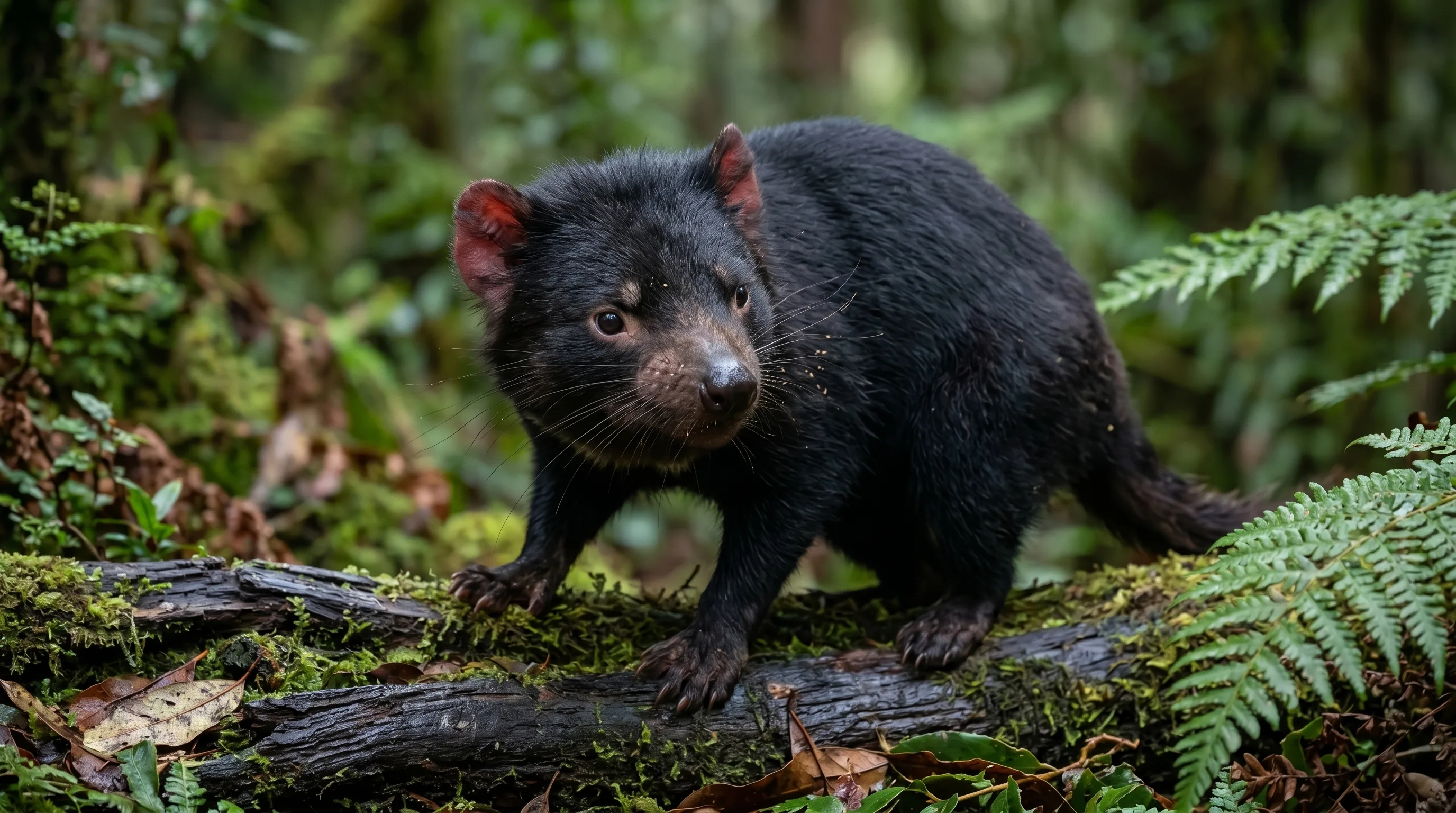
Tasmanian Devil (Sarcophilus harrisii)
Introduction
Before dawn settles over the eucalyptus forests of northwestern Tasmania, a sound rises from the undergrowth that stops most listeners cold. It begins as a low, guttural growl — vibrating through chest cavities, reverberating off sandstone outcrops — then climbs into something between a shriek and a bark, raw and jagged, entirely unlike any sound a small mammal should be capable of producing. The source is not a predator in the conventional sense. It is not a large cat or an apex carnivore towering over its landscape. It is an animal roughly the size of a stocky house cat, black-furred, white-chested, and possessed of one of the most powerful bites, relative to body size, in the entire mammalian world. It is Sarcophilus harrisii, the Tasmanian Devil — the world's largest surviving carnivorous marsupial, and one of the most ecologically significant animals on the planet.
The Tasmanian Devil carries an unfortunate name burdened with theatrical connotations. Early European settlers, arriving on an island already ancient with evolutionary history, heard the night sounds of this creature and mapped their own fears onto it. The name stuck. But beneath the mythology of the devil lies an animal of extraordinary biological sophistication — a scavenger-predator whose role in the Tasmanian ecosystem rivals that of hyenas on the African savanna, whose immune system is currently locked in one of the most dramatic evolutionary battles ever documented in a living mammal, and whose social behaviour is far more structured and communicative than the chaos of a feeding frenzy might suggest.
Tasmania — the island state hanging south of mainland Australia like a geographical afterthought — is the last refuge of this species. The Tasmanian Devil once ranged across the Australian continent, sharing landscapes with now-extinct megafauna, competing with the iconic thylacine, and shaping ecosystems from the red centre to the tropical north. It was pushed back to Tasmania approximately 3,000 years ago, likely following the introduction of dingoes to the mainland. That island became its fortress. Today, that fortress is under siege — not from dogs or habitat loss alone, but from a contagious facial cancer so unusual in its biology that it has rewritten scientific understanding of communicable disease.
This article explores the full ecological and biological reality of the Tasmanian Devil: its anatomy, behaviour, social life, reproduction, evolutionary history, and the conservation crisis that has defined its modern existence. It is an animal worth understanding deeply — not because it is dramatic or bizarre, though it is certainly both — but because what happens to it shapes the ecological future of an entire island.
"The devil is not a symbol of chaos. It is a symbol of what ecosystems lose when their cleaners disappear."
— Dr. Menna Jones, wildlife ecologist, University of Tasmania
Scientific Classification
Kingdom: Animalia
Phylum: Chordata
Class: Mammalia
Order: Dasyuromorphia
Family: Dasyuridae
Genus: Sarcophilus
Species: Sarcophilus harrisii (Boitard, 1841)
Common Name: Tasmanian Devil
Conservation Status: Endangered (IUCN Red List, 2008 — reassessed 2020)
The genus name Sarcophilus derives from the Greek, translating roughly as "flesh-lover" — a direct reference to the animal's dietary habits. The species epithet harrisii honours George P. Harris, the surveyor-general of Van Diemen's Land (now Tasmania), who provided one of the first formal scientific descriptions of the species in 1807. The Tasmanian Devil is the sole living member of its genus, though fossil evidence suggests ancestral forms once occupied a far broader geographic range across the Australian continent.
Within the order Dasyuromorphia, Tasmanian Devils are most closely related to the quolls (genus Dasyurus), and more distantly to the now-extinct thylacine (Thylacinus cynocephalus). The dasyurids as a group represent a fascinatingly diverse radiation of marsupial carnivores, ranging from the tiny planigale — one of the world's smallest mammals — to the Tasmanian Devil itself. Within this family, the devil occupies the ecological niche of a powerful, generalist flesh-eater capable of consuming prey and carrion with equal efficiency.
Physical Characteristics
The Tasmanian Devil is compact, muscular, and built for the specific task of producing and sustaining extraordinary bite force over its relatively short lifespan. Adult males typically weigh between 8 and 14 kilograms, with an average body length of around 65 centimetres, excluding the tail. Females are noticeably smaller, generally weighing between 4 and 8 kilograms. Both sexes share the same basic morphology: a broad, heavy head disproportionately large relative to the body, thick-set shoulders, shorter hindquarters, and a moderately long tail that serves as a critical fat storage organ, swelling visibly when an animal is in good nutritional condition and thinning noticeably during periods of food scarcity or illness.
The fur is coarse and predominantly black, providing effective camouflage in low-light conditions and the dark understory of Tasmanian forests. Most individuals display a distinctive white crescent-shaped marking across the chest, and many have additional white patches above the rump and along the flanks. These markings are individually unique, functioning much like fingerprints — a fact that has proven invaluable to researchers attempting to identify individuals during population monitoring. The skin around the face and ears is notably sparse in fur, and these exposed areas flush a vivid pink or red when the animal is agitated, a visible sign of heightened blood flow driven by physiological arousal — effectively a natural emotional indicator visible from a distance.
The skull structure of the Tasmanian Devil is its most remarkable anatomical feature. The head is disproportionately wide and heavily reinforced with bone, supporting masseter and temporalis muscles of exceptional mass. Bite force measurements have recorded pressures in excess of 553 Newtons, proportionally one of the highest bite forces documented among living mammals. This allows the Tasmanian Devil to crush bones that would defeat most other similarly-sized carnivores — a critical ecological adaptation that enables it to consume carcasses entirely, including femur bones, vertebrae, and even the teeth of prey animals. The dentition includes large canines for gripping and holding, and broad, heavily ridged molars specifically shaped for bone-cracking.
The sensory apparatus of Sarcophilus harrisii is adapted for a largely nocturnal lifestyle. The eyes are capable of detecting movement with good efficiency in low light conditions, though colour vision is thought to be limited compared to diurnal mammals. The sense of smell, however, is exceptional — documented to detect carrion from distances exceeding one kilometre under favourable wind conditions. The vibrissae (whiskers) are long and sensitive, assisting the animal in navigating dense vegetation in darkness. Hearing is acute, particularly in the higher frequency ranges, enabling the detection of both prey movement and the vocalisations of competing conspecifics.
Fun Fact A Tasmanian Devil's bite force relative to body size exceeds that of a saltwater crocodile. It can crush through bone, teeth, and even the metal tags placed on animal ears by researchers.
Habitat & Geographic Distribution
The geographic range of the Tasmanian Devil is today confined entirely to the island of Tasmania, the southernmost state of Australia, situated approximately 240 kilometres south of the Australian mainland across the Bass Strait. Tasmania covers approximately 68,000 square kilometres — a landscape of extraordinary ecological diversity, encompassing alpine heathlands, temperate rainforest, dry sclerophyll eucalyptus forest, coastal scrubland, and agricultural grasslands. The Tasmanian Devil occupies virtually all of these habitat types, demonstrating a remarkable ecological flexibility that distinguishes it from more habitat-specialist species.
Within Tasmania, devil populations are distributed across the island, though densities vary considerably with habitat quality and the progression of Devil Facial Tumour Disease (DFTD). Historically, the highest densities occurred in the drier, more open forests and coastal areas of eastern Tasmania, where prey resources and denning sites were most abundant. The wetter forests of the southwest, though ecologically rich, support lower devil densities due to reduced prey availability and more challenging navigational terrain. Agricultural and pastoral lands along Tasmania's midlands are regularly used by devils, which exploit the relatively abundant rabbit and wallaby populations that have established themselves in modified landscapes.
The preferred habitat characteristics of the Tasmanian Devil reflect its functional requirements as a scavenger-predator. Dense vegetation provides daytime shelter in dens — typically located in hollow logs, rock crevices, dense scrub, or burrows excavated by other species and appropriated by the devil. Open areas adjacent to cover provide foraging grounds where carcasses are most reliably located, and where small prey species such as wallabies, possums, and rodents are most easily detected and pursued. Water is not a limiting factor for the species across most of its range, as Tasmania's climate provides relatively consistent rainfall distribution.
Historically, fossil and sub-fossil evidence confirms that Tasmanian Devils inhabited the entire Australian continent. Remains have been found in cave deposits across South Australia, Western Australia, New South Wales, and Queensland, dated to periods spanning hundreds of thousands of years. The disappearance of devils from mainland Australia approximately 3,000 years ago correlates closely with the human-mediated introduction of the dingo (Canis lupus dingo) to the continent. The dingo never reached Tasmania, which remained geographically isolated after rising sea levels following the last glacial maximum severed the land bridge connecting the island to mainland Australia approximately 10,000 years ago. This isolation became the devil's salvation — and its vulnerability.
Behaviour & Social Structure
For decades, the Tasmanian Devil was characterised in popular literature as a solitary, aggressive, and socially simple animal — one that interacted with conspecifics primarily through competition at carcass feeding sites. More recent ecological research, particularly the long-term population studies conducted by researchers at the University of Tasmania and the Save the Tasmanian Devil Program, has revealed a social organisation considerably more sophisticated than this caricature suggests.
Tasmanian Devils are fundamentally asocial in their day-to-day ranging behaviour. Adults maintain large home ranges — typically between 4 and 20 square kilometres for males, somewhat smaller for females — and move through these ranges largely alone. Home ranges overlap extensively between individuals, meaning that the Tasmanian Devil does not defend exclusive territories in the manner of strictly territorial carnivores. Instead, a system of shared spatial use and temporal partitioning governs access to resources across the landscape. The same denning sites and foraging routes may be used by multiple individuals, generally at different times, coordinated through an elaborate system of scent communication.
Scent marking is the primary channel of long-distance communication between individuals. Tasmanian Devils possess anal scent glands that produce a musty, pungent secretion, and they deposit this secretion on prominent landscape features — fallen logs, rocks, vegetation — across their ranges. These scent marks convey information about the marking individual's identity, sex, reproductive condition, and likely dominance status. A devil encountering a fresh scent mark from an unfamiliar individual may pause extensively to investigate it, extracting a detailed chemical biography of an animal it has not seen.
The most dramatic social encounters occur at shared feeding sites — a carcass large enough to attract multiple devils simultaneously. These encounters are characterised by an extraordinary vocal repertoire, including deep growls, sharp barks, high-pitched shrieks, and the infamous screaming vocalisations that gave the species its common name. These sounds are not purely aggressive. Research has shown that they encode information about the caller's body size, physical condition, and motivational state. A devil producing a sustained, low-frequency growl is communicating something different from one emitting a rapid series of high-pitched barks — and conspecifics respond accordingly, adjusting their approach distances and postures based on the acoustic information received.
Dominance hierarchies exist at feeding aggregations, and larger, heavier individuals — typically adult males during the non-breeding season — generally access carcasses preferentially. However, the hierarchy is not rigidly linear. A smaller female in breeding condition may successfully displace a larger male through sustained vocalisation and postural display, particularly if she has dependent young and her metabolic demands are correspondingly elevated. The social dynamics of a devil feeding aggregation are, in this sense, a constantly renegotiated social contract — one enforced through sound, smell, and body language rather than primarily through physical combat, though genuine biting does occur and facial wounds from conspecific bites are extremely common among adults.
The intelligence of the Tasmanian Devil is often underestimated. Research in captive settings and field studies has demonstrated problem-solving ability, spatial memory for resource locations, and the capacity to recognise individual conspecifics by scent alone. Studies have also indicated that the social transmission of information — including the transmission of disease resistance traits — may occur through the devil's social network, which is denser and more interconnected than previously recognised.
Daily Life & Activity Cycle
The Tasmanian Devil is principally nocturnal, with peak activity periods occurring between dusk and approximately two to three hours before dawn. During daylight hours, individuals retreat to dens — a preference for sheltered, dark, thermally buffered resting sites that protects them from predation risk (primarily from wedge-tailed eagles and large raptors, which pose a threat particularly to younger animals) and from the thermoregulatory demands of Tasmania's climate, which ranges from cool and temperate to cold and alpine depending on location and season.
A typical adult devil may travel between 10 and 25 kilometres in a single night of foraging activity, following established routes through its home range with considerable spatial consistency. These routes are not random wandering — they reflect accumulated spatial knowledge about where carcasses are most likely to be found, where prey species concentrate, and where water and shelter resources are located. Males during the breeding season (February to March) substantially expand their nightly movements, sometimes travelling 30 kilometres or more as they search for receptive females.
Denning behaviour is complex and individually variable. Tasmanian Devils do not construct burrows themselves with any regularity, instead appropriating existing cavities. A single individual may maintain and use between four and eight den sites within its home range, rotating between them based on disturbance, weather conditions, and resource proximity. Females with dependent young show far greater den fidelity, particularly once joeys are large enough to be left in the den while the mother forages — a behavioural shift that occurs at approximately four to five months of age. At this stage, the female makes strategic decisions about den choice based on thermal insulation, predation risk, and proximity to reliable food sources.
During winter months, Tasmanian Devils show reduced activity levels compared to summer and autumn, a response to lower prey availability and the energetic cost of thermoregulation in cold conditions. However, unlike many marsupials in temperate environments, devils do not enter torpor or hibernation. The fat reserves stored in the tail buffer them through periods of food scarcity, allowing an individual with a well-developed tail to sustain several days without successful foraging before physiological stress becomes significant.
Fun Fact A Tasmanian Devil can eat up to 40% of its own body weight in a single feeding session — roughly equivalent to an average human consuming 30 kilograms of food in one meal.
Diet & Survival Strategies
The dietary profile of the Tasmanian Devil is one of the most ecologically important aspects of its biology. Sarcophilus harrisii is a dietary generalist, functioning simultaneously as an apex scavenger and an active predator of small to medium-sized prey. The balance between these two feeding strategies varies with individual body size, seasonal prey availability, and local population dynamics — but in most contexts, scavenging constitutes the majority of caloric intake, with active predation providing a critical supplement, particularly for smaller individuals and during periods when carcasses are scarce.
The prey range is exceptionally broad. Wombats, wallabies, pademelons, possums, rabbits, bandicoots, reptiles, birds, fish, insects, and invertebrates all appear in dietary analyses based on scat and gut-content studies. Carrion from sheep, cattle, and other livestock is consumed wherever available, making agricultural landscapes a supplementary feeding resource. The dietary flexibility of the Tasmanian Devil allows it to persist across a remarkable range of habitat types and conditions — a trait that has historically buffered populations against environmental fluctuations.
The bone-crushing jaw mechanics described in the Physical Characteristics section are directly relevant to dietary strategy. By consuming carcasses entirely — flesh, organs, bone, and hide — the Tasmanian Devil extracts maximum caloric value from each food resource while simultaneously performing a sanitation function of extraordinary ecological importance. A carcass that would take weeks to decompose naturally can be reduced to near-nothing by a group of feeding devils within hours. This speed and thoroughness of carcass consumption dramatically reduces the persistence of disease vectors associated with decomposing animal matter in the environment.
Active predation by Tasmanian Devils involves stalking approaches at relatively slow speeds, exploiting their keen olfaction to locate prey in dense cover, followed by a rapid burst of pursuit. Maximum sprint speeds of approximately 25 kilometres per hour are documented, with the devil capable of sustaining moderate pursuit speeds for considerably longer distances than might be expected from its compact body form. Prey capture involves a powerful bite to the back of the skull or spine — targeting the nervous system directly, a killing strategy that maximises efficiency and minimises injury risk to the predator.
Competition for food resources at carcass sites is managed through the vocalisation and dominance dynamics described in the Behaviour section, but individual feeding strategies also vary. Larger males, capable of displacing competitors through size and vocalisation alone, can feed at the centre of large carcasses where flesh and organ content is most concentrated. Smaller individuals — younger males, subadult females — develop behavioural strategies of peripheral feeding, rapid consumption of portions they can detach and carry away, or temporal avoidance, returning to carcass sites after larger individuals have departed.
The wallaby had been dead perhaps six hours when the first devil arrived — a large male, his tail thick with fat reserves accumulated through a productive autumn, his white chest marking bright in the beam of the researcher's red-filtered torch. He approached the carcass cautiously, circling twice at a distance of several metres, testing the air with deep, deliberate inhalations before committing to the first bite.
Within twenty minutes, three more devils had arrived — drawn from distances of at least two kilometres by the scent plume carried downwind through the forest. The subsequent forty minutes were a masterclass in controlled social chaos. The large male held the hindquarters, growling with a frequency that kept the two younger males at the margins. A female arrived, emitting a staccato bark that caused the male to shift sideways — her reproductive condition apparent to every devil in the clearing before she had even reached the carcass.
By 3 a.m., the wallaby was gone. Not reduced, not partially consumed — gone. Bones included. The clearing was clean in a way that no other scavenger assemblage in Tasmania could have achieved. The devils dispersed individually, moving silently back into the eucalyptus darkness, their bellies distended, their ecological function completed without fanfare. The forest was, once again, a place without carrion, without the vectors that decomposition carries, without the slow accumulation of biological waste that accumulates wherever the devil is absent.
Field researcher Dr. Sarah Peck, who had documented this aggregation as part of a population monitoring study in the Cradle Mountain region, later noted in her field journal that the entire event — from arrival of the first individual to departure of the last — had taken less time than a typical restaurant meal. "They are," she wrote, "the most efficient biological sanitation system I have ever observed."
Interaction with Other Animals
The ecological position of the Tasmanian Devil within the Tasmanian fauna is best understood as a multi-layered network of interactions — competitive, predatory, scavenging, and indirectly structuring — rather than a simple linear food web relationship. No other species in Tasmania interacts with such a broad cross-section of the island's animal community.
As a predator, the Tasmanian Devil interacts directly with a wide range of prey species. Wallabies (including Bennett's wallaby, Macropus rufogriseus, and the pademelon, Thylogale billardierii) represent some of the largest prey taken by adult males. Common brushtail possums (Trichosurus vulpecula), common ringtail possums, wombats (particularly young and subadults), eastern barred bandicoots, and European rabbits are all regularly taken. The devil's predation impact on these populations is real but generally not the primary population-regulating force — it is the scavenging function that constitutes its primary ecological significance.
The relationship between the Tasmanian Devil and other scavengers — most notably the wedge-tailed eagle (Aquila audax fleayi), the Tasmanian masked owl (Tyto novaehollandiae castanops), and quolls — is characterised by both competition and facilitation. At carcasses, devils dominate through sheer physical presence and vocalisation, frequently displacing birds and smaller carnivores. However, the same thorough carcass consumption that outcompetes other scavengers also performs a function that benefits the broader ecosystem — including other wildlife — by reducing disease pressure.
The spotted-tailed quoll (Dasyurus maculatus), Tasmania's second-largest carnivore, has a complex relationship with the Tasmanian Devil. Quolls compete with devils for carcasses and small prey, and there is documented evidence of devils killing quolls on occasion. However, research also suggests that the presence of healthy devil populations may actually benefit quoll populations indirectly, by reducing fox populations (on the Tasmanian mainland, devils and foxes occupy competing niches, and devil persecution may partly explain why fox establishment in Tasmania has been far slower than feared).
The relationship between Tasmanian Devils and introduced species is a critical dimension of their ecological reality. European foxes (Vulpes vulpes), though never firmly established in Tasmania in large numbers, have been detected in small numbers, and modelling studies suggest that a healthy devil population acts as a biological barrier to fox establishment by competing for food resources and potentially engaging in direct interference competition. Feral cats (Felis catus) similarly show suppressed activity in areas with high devil densities — a trophic cascade effect that has significant implications for ground-nesting birds and small mammals.
Interaction with Environment
The Tasmanian Devil's relationship with its physical environment is one of deep ecological integration. As a primarily terrestrial species with wide-ranging nocturnal movements, the devil interacts with virtually every stratum of the Tasmanian landscape — from coastal scrublands to subalpine heathlands — and its presence or absence shapes the ecological structure of each environment it inhabits.
The scavenging function is the most environmentally significant interaction. Tasmania's relatively high densities of medium-sized herbivores — wallabies, wombats, possums — combined with periodic mortality events from disease, drought, starvation, and road trauma, produce a steady supply of carrion across the landscape. In the absence of large mammalian scavengers capable of consuming entire carcasses, this organic material would decompose slowly, creating persistent disease reservoirs and attracting fly populations that damage livestock and wildlife alike. The Tasmanian Devil's capacity to consume carcasses completely — bones, hide, and internal organs — effectively sanitises the environment, reducing pathogen loads and limiting the transmission chains of diseases such as toxoplasmosis and various bacterial infections that persist in decomposing tissue.
Soil interactions are a secondary but genuine environmental contribution. The excavation and use of burrow systems — even when originally constructed by wombats and subsequently appropriated by devils — creates soil aeration and turnover that benefits fungal networks, invertebrate communities, and plant root systems. Scat deposition across wide ranging areas contributes to nutrient cycling, particularly the dispersal of phosphorus and nitrogen from protein-rich prey consumption back into soil systems in areas where decomposition might otherwise be slow.
The devil's role as a nocturnal seed disperser has been less studied but is increasingly recognised as potentially significant. Berry-producing plants are occasionally consumed when other food sources are scarce, and seed passage through the gut — combined with wide-ranging nocturnal movements — may contribute to the dispersal of certain plant species across the landscape. This represents an indirect link between the devil's presence and plant community structure that merits further ecological investigation.
Climate adaptation presents a growing challenge. Tasmania's climate is warming at a measurable rate, with increasing frequency of extreme weather events and altered rainfall patterns. For the Tasmanian Devil, the primary climate risks relate to prey availability — warmer, drier conditions may reduce wallaby and wombat populations through vegetation changes, increasing competitive pressure on devil populations already stressed by DFTD. Thermal stress in summer, particularly in eastern Tasmania, may also alter denning patterns and activity cycles.
Reproduction & Parenting
The reproductive biology of the Tasmanian Devil is a masterpiece of marsupial evolutionary strategy — fast, prolific, and governed by a degree of physiological drama that few mammalian reproductive systems can match. Breeding occurs once annually, with mating concentrated in March. The competition for reproductive access among males is intense, involving extended vocalisations, prolonged wrestling bouts, and sustained pursuit of females — behaviours that are energetically costly and frequently result in facial and body wounds from biting.
Female Tasmanian Devils are polyestrous, capable of cycling again if initial mating does not result in successful implantation. They are also capable of mating with multiple males during the breeding season, and litter paternity studies have confirmed that multiple paternity within a single litter does occur, suggesting that both male competition and female mate choice play roles in determining reproductive outcomes. Females sometimes have to actively evade males to avoid over-harassment — a behavioural dynamic that has been documented in both wild and captive populations.
Gestation is extraordinarily brief — approximately 21 days — a characteristic feature of marsupial reproduction. At birth, the young — called joeys — are developmentally equivalent to embryos by placental mammal standards. A newborn Tasmanian Devil weighs approximately 0.18 grams and measures roughly 10 millimetres in length. Yet these tiny, translucent creatures possess well-developed forelimbs and a functional olfactory system, which they use to navigate the short but critical journey from the birth canal to the mother's backward-opening pouch entirely unaided. This journey is completed in less than 60 seconds and represents one of the most demanding neonatal challenges in mammalian biology.
The female Tasmanian Devil has four nipples in her pouch. This creates an immediate and severe selective bottleneck: litters of 20 to 30 joeys are regularly born, but only four can survive, and only those that reach a nipple and attach successfully will do so. The nipple swells after attachment, physically locking the joey in place — a mechanism that prevents detachment during the mother's vigorous nocturnal movements. Those joeys that fail to reach a nipple in time die within minutes. The evolutionary pressure this exerts on neonatal vigour and developmental speed is extraordinary, producing joeys that are, despite their seemingly helpless appearance, highly competitive biological competitors from the first moments of their lives.
Joeys remain attached to the nipple and developing in the pouch for approximately 100 days. By the end of this period, they have developed fur, opened their eyes, and grown to a size that fills the pouch considerably. From around 4 to 5 months of age, they begin to be left in dens while the mother forages, returning to nurse. Weaning occurs at approximately 8 to 9 months of age, with young devils becoming independent at around 12 months. Juveniles remain in proximity to the maternal home range for variable periods before establishing their own ranges, typically dispersing by their second year.
Sexual maturity is reached at approximately two years of age. Given that wild Tasmanian Devils rarely survive beyond 5 to 6 years — and many individuals in DFTD-affected populations die at 2 to 3 years — the window of successful reproduction is extremely narrow, placing enormous selective pressure on early reproductive success.
Reproductive Trait | Tasmanian Devil | Spotted-Tailed Quoll | Common Wombat |
|---|---|---|---|
Gestation period | ~21 days | ~21 days | ~30 days |
Litter size (born) | 20–30 | 6–18 | 1 |
Nipples available | 4 | 6 | 2 |
Pouch exit age | ~100 days | ~65 days | ~150 days |
Weaning age | ~8–9 months | ~5 months | ~12 months |
Age at sexual maturity | ~2 years | ~1 year | ~2 years |
Evolutionary Adaptations
The evolutionary history of the Tasmanian Devil has produced a suite of anatomical, physiological, and behavioural adaptations that collectively represent one of the most ecologically specialised carnivore designs in the marsupial world. Each adaptation reflects specific selection pressures operating across millions of years of evolution in a landscape characterised by periodic resource scarcity, intense intraspecific competition, and complex predator-prey dynamics.
The jaw and cranial architecture already described is the most obviously dramatic adaptation, but its evolutionary logic deserves further consideration. The capacity to crush bone is not merely a feeding convenience — it is an energy-extraction strategy that grants the devil access to caloric and mineral resources unavailable to other similarly-sized carnivores. Bone marrow is extraordinarily nutrient-dense, rich in lipids, minerals, and energy. An animal capable of accessing bone marrow that other scavengers cannot reach effectively occupies an unchallenged ecological niche — the final-stage processor of carcasses that have already been stripped by other consumers.
The backward-opening pouch of the female is a frequently overlooked but critically important adaptation. Unlike kangaroos and wallabies, whose pouches open anteriorly (facing forward), the Tasmanian Devil's pouch opens posteriorly. This orientation means that as the female walks, runs, and moves through vegetation, the opening of the pouch faces away from branches and debris that could otherwise dislodge or injure developing young. For an active, wide-ranging carnivore that traverses rough terrain nightly, this anatomical orientation is a direct adaptive response to the mechanical risks of the mother's lifestyle.
The fat storage capacity of the tail represents a physiological adaptation to a boom-bust food environment. Periods of high prey and carcass availability allow rapid fat deposition in the tail, which provides a metabolic buffer during lean periods — effectively decoupling short-term energy intake from short-term energy expenditure in a way that stabilises survival through seasonal fluctuations. The tail's fat content is visually assessable, and researchers use tail thickness as a reliable body condition index in the field.
Perhaps the most remarkable evolutionary story currently playing out involves the Tasmanian Devil's immune response to Devil Facial Tumour Disease. DFTD is a contagious cancer — transmitted through biting — that has caused catastrophic population declines since its discovery in 1996. Initial concern was that the devil's notably low genetic diversity (a consequence of island isolation) would prevent any immune-mediated response to the disease. However, research published from 2016 onwards has documented the emergence of evolved immune resistance in wild populations — an extraordinarily rapid evolutionary response occurring over just 4 to 6 generations, detectable in specific genomic regions associated with immune function and cancer recognition. This represents one of the fastest documented cases of evolution in response to disease pressure in a vertebrate species.
The species' broad dietary tolerance — its willingness to consume decomposed, frozen, or otherwise challenging food material that most carnivores would reject — is itself an adaptation. A robust gastrointestinal microbiome, documented in recent studies as unusually diverse and capable of processing a wide range of organic substrates, underpins this dietary flexibility and provides resistance to the pathogenic bacteria associated with carrion consumption.
Ecological Importance
The ecological importance of the Tasmanian Devil extends far beyond its role as a single species in a food web. It functions as a keystone scavenger — an animal whose removal from the ecosystem triggers cascading effects that alter the structure and function of the entire biological community. The evidence for this keystone status comes both from ecological modelling and from the documented changes observed in Tasmanian ecosystems as DFTD has reduced devil populations in affected areas.
The primary keystone function is carcass removal. In areas where devil populations have been severely reduced by DFTD, researchers have documented significant increases in carcass persistence time — the length of time dead animals remain on the landscape before full decomposition. This increase in carcass persistence has measurable downstream effects: elevated fly populations, increased soil bacterial load around decomposition sites, altered activity patterns of other scavengers forced to process what the devil no longer does, and increased pathogen transmission risk to other wildlife and domestic animals grazing nearby.
The trophic cascade effect of devil presence on mesopredator populations — particularly feral cats and foxes — is ecologically significant on a landscape scale. In areas with healthy devil populations, mesopredator activity is suppressed through a combination of direct interference competition at food resources and the behavioural modification that occurs when smaller predators detect the presence of a dominant scavenger-predator. This suppression effect benefits small marsupials, ground-nesting birds, and reptiles — species that are highly vulnerable to cat and fox predation and that have experienced severe declines across mainland Australia in the absence of apex predator regulation.
Population modelling published in the journal Science in 2012 demonstrated that the restoration of Tasmanian Devil populations to historical densities in areas where they have been reduced by DFTD could produce measurable reductions in feral cat density within five to ten years — with corresponding benefits for the 100-plus small mammal, reptile, and bird species that cats prey upon. This makes the Tasmanian Devil a potential instrument of broad biodiversity restoration, not merely a species of intrinsic conservation concern.
Fun Fact When Tasmanian Devil populations collapse due to DFTD, feral cat populations in the same areas can increase by up to 60% within five years — illustrating just how powerful the devil's ecological role as a mesopredator suppressor truly is.
Threats & Conservation
The Tasmanian Devil faces a constellation of threats that operate simultaneously and interact in complex ways. The most acute and biologically extraordinary threat is Devil Facial Tumour Disease — a transmissible cancer that has no parallel in terms of scale and mechanism in any other wild mammal population currently under observation. DFTD was first documented in 1996 in northeastern Tasmania and has since spread across approximately 80% of the island. The disease is transmitted through biting — a ubiquitous behaviour in a species that bites conspecifics regularly during feeding aggregations, mating, and territorial encounters. The cancer cells themselves are transferred directly between individuals, establishing as allograft tumours that evade the host's immune system by downregulating immune recognition signals on their surface. Mortality from DFTD is essentially 100% in affected individuals, with death typically occurring within 3 to 6 months of first visible tumour development.
Population modelling from the early 2000s suggested that DFTD alone could drive the Tasmanian Devil to extinction within 20 to 30 years if uncontrolled. While that trajectory has not fully materialised — partly due to the documented emergence of evolved resistance in some populations, and partly due to intensive conservation intervention — the disease remains active across the majority of the island and continues to drive population declines in many areas.
Vehicle strikes represent the second major mortality source. Tasmania's road network traverses prime devil habitat, and devils' nocturnal wide-ranging movements result in frequent road crossings. Road mortality is particularly concentrated along highway corridors through agricultural areas, where carcasses of livestock and native wildlife on road margins attract foraging devils. Estimates suggest that road mortality kills thousands of individuals annually across Tasmania, a significant proportion of the total population.
Habitat modification from agriculture, urban expansion, and forestry operations reduces the quality and connectivity of devil habitat, fragments populations, and increases edge exposure — a combination that elevates both road mortality risk and the transmission rate of DFTD by concentrating animals at remaining resource patches. Secondary poisoning from agricultural rodenticide use has been documented as a localised mortality source, and snaring and incidental trapping in equipment set for other species occasionally kills devils.
Historically, deliberate persecution by farmers who believed — incorrectly, in most contexts — that devils were significant predators of healthy livestock drove population reductions that contributed to the species' modern vulnerability. While this persecution is now illegal and far less common, the cultural legacy of viewing the devil as a pest species still influences some stakeholder attitudes in agricultural communities.
IUCN Red List Analysis
Current IUCN Status
The Tasmanian Devil (Sarcophilus harrisii) is classified as Endangered on the IUCN Red List of Threatened Species, a status first assigned in 2008 following the catastrophic population decline caused by Devil Facial Tumour Disease. This classification was maintained in the most recent comprehensive reassessment. Under the IUCN criteria, the Endangered category is applied when a species faces a very high risk of extinction in the wild, assessed against quantitative thresholds including population size reduction, geographic range contraction, and small absolute population size meeting specified criteria for decline rate and cause.
The Endangered listing of Sarcophilus harrisii reflects a documented population decline of more than 60% over the 10 years following DFTD's first recorded spread, meeting the IUCN Criterion A2 threshold for Endangered status (population reduction greater than 50% over 10 years where the causes of reduction may not have ceased). The confined geographic range — entirely within a single island state — further compounds the extinction risk assessment, as a single disease event or climate catastrophe could affect the entire species range simultaneously.
Population Trend
The population trend of the Tasmanian Devil is described as decreasing at the overall species level, though the trajectory varies significantly between geographic regions and between disease-affected and disease-free populations. Before the emergence of DFTD, population estimates for the Tasmanian Devil ranged from approximately 150,000 to 200,000 individuals island-wide. By the mid-2010s, repeated population surveys using camera trapping, spotlighting, and mark-recapture methods indicated a total wild population reduced to an estimated 10,000 to 25,000 mature individuals — a decline of approximately 80% from pre-disease estimates in the most affected areas.
The population trajectory is not uniform. In DFTD-affected northeastern Tasmania, some populations have been reduced by 90% or more. In western and northwestern regions where DFTD arrived later, devil densities remain higher, though infection is advancing. In isolated pockets where evolved resistance has been documented — particularly in the Cradle Mountain and West Coast populations — local population trajectories show a degree of stabilisation that has generated cautious optimism among conservation scientists. The insurance population established on the mainland (discussed in Conservation Efforts) adds a further dimension to the overall population status assessment.
Main Threats
Devil Facial Tumour Disease remains the primary existential threat. DFTD is now known to include two distinct strains — the original DFT1, first documented in 1996, and DFT2, first recorded in 2014 in the D'Entrecasteaux Channel area of southern Tasmania. DFT2 is genetically distinct from DFT1, arising from a different cell lineage (Schwann cells in males, versus female peripheral nervous system cells in DFT1), demonstrating that the Tasmanian Devil is capable of generating multiple independent contagious cancer lineages — a biological phenomenon with no parallel in the vertebrate world. The coexistence of two distinct contagious cancers in a single wild population dramatically complicates both disease management and the evolutionary resistance responses developing in wild populations.
Vehicle collision acts synergistically with DFTD by removing individuals before they can reach reproductive age, reducing the rate at which evolved resistance genes can spread through the population. When road mortality disproportionately kills young dispersing individuals — the animals most likely to carry novel immune variants — it actively retards the evolutionary recovery process.
Habitat fragmentation elevates DFTD transmission by concentrating surviving individuals at remaining resource patches, increasing the encounter rate between infected and susceptible animals. Fragmentation also reduces the effective population size, compounding the genetic diversity constraints that made DFTD's initial spread so devastating.
Climate change operates as a background threat, altering prey availability, changing vegetation structure, and potentially extending the geographic range of disease vectors. Warmer summers may increase thermal stress for dens in eastern Tasmania, disrupting the denning behaviour of females with dependent young.
Ecological Consequences
The ecological consequences of continued Tasmanian Devil population decline are documented and severe. As described in the Ecological Importance section, devil decline has already produced measurable increases in mesopredator populations — particularly feral cats — in areas where DFTD has severely reduced devil densities. If the species were to decline to functional extinction across significant portions of Tasmania, the resulting release of feral cats and the potential future establishment of foxes could accelerate the extinction trajectories of numerous small marsupials, reptiles, and ground-nesting birds already under predation pressure.
The loss of the devil's sanitation function — its carcass-processing role — would generate landscape-level increases in disease vectors, fly populations, and the persistence of livestock and wildlife diseases associated with decomposing animal material. The ecological vacuum left by a functionally extinct devil population would, over time, restructure the entire Tasmanian faunal community in ways that are unlikely to be reversed without active and sustained human intervention. Tasmania would lose its only mammalian apex scavenger, a functional role that took millions of years of evolution to produce and that cannot be replicated by any other currently living species within the ecosystem.
Conservation Efforts
The Save the Tasmanian Devil Program (STDP), jointly managed by the Tasmanian Government and the Australian Government's Department of Climate Change, Energy, the Environment and Water, coordinates the primary conservation response. The programme operates across three strategic pillars: disease research, wild population management, and the maintenance of an insurance population.
The insurance population programme has established a genetically managed, disease-free population of Tasmanian Devils on the Australian mainland — the first time the species has existed on the continent in approximately 3,000 years. Managed across multiple zoos, wildlife parks, and a fenced sanctuary on Maria Island (an island off Tasmania's east coast where an established insurance population was released in 2012), this programme currently maintains several thousand individuals as a genetic reserve. The Maria Island population has successfully bred and expanded without any DFTD infection for over a decade, demonstrating the viability of island-based insurance populations as a conservation strategy.
Research into DFTD vaccine development has made significant progress. Studies at the University of Tasmania and the Menzies Institute have demonstrated that immunisation against DFTD antigens can produce measurable immune responses in devils, and field vaccination trials have been conducted in wild populations with encouraging early results. Simultaneously, the discovery of evolving genetic resistance in wild populations has prompted research into genomically-informed conservation management — identifying and protecting individuals carrying resistance-associated alleles, and potentially using selective captive breeding to accelerate the spread of resistance traits through managed populations.
International partnerships, including collaboration with research institutions in the United States and Europe with expertise in cancer biology and immunology, have accelerated understanding of DFTD's mechanisms and potential vulnerabilities. The devil's resistance evolution story has attracted global scientific attention, generating research funding that would not otherwise be available for a species of restricted geographic range.
Future Outlook
The future outlook for the Tasmanian Devil is neither straightforwardly hopeful nor irreversibly catastrophic — it is, more accurately, contingent. The emergence of evolved resistance in wild populations represents the most genuinely optimistic development in the species' conservation story, suggesting that evolutionary biology may ultimately provide a solution that human intervention alone cannot. However, the rate of resistance evolution must outpace the rate of population decline driven by DFTD, road mortality, and habitat loss — a race whose outcome remains uncertain.
If vaccination programmes prove effective at field scale and resistance traits continue to spread through wild populations, the long-term persistence of the Tasmanian Devil in Tasmania is plausible. The insurance population on the mainland and Maria Island provides a safety net against catastrophic scenarios. The possibility of rewilding mainland Australia with Tasmanian Devils has been actively discussed and partially implemented, with a trial release of 26 individuals into a large fenced sanctuary in New South Wales in 2020 — a project that produced the first mainland devil births in approximately 3,000 years.
Without continued and well-funded conservation intervention, the species faces a high probability of functional extinction across most of eastern Tasmania within the next two decades. With sustained effort, scientific innovation, and the extraordinary evolutionary resilience the devil itself is demonstrating, a future in which this species persists and recovers is achievable — though it requires a level of institutional commitment and public support that cannot be taken for granted.
Human Relationship
The relationship between Tasmanian Devils and the Aboriginal Tasmanians who co-existed with the species for tens of thousands of years before European contact was one of cultural familiarity and, in some communities, spiritual significance. Cave art and middens suggest that devils were hunted as a food source by Aboriginal peoples, and their bones appear in archaeological deposits at multiple Tasmanian sites. The cultural significance of the devil in Aboriginal Tasmanian cosmology is less well-documented than for many mainland species, partly because the genocide of Aboriginal Tasmanians by European settlers in the nineteenth century resulted in catastrophic knowledge loss. Contemporary Aboriginal Tasmanians maintain cultural connections to the devil as a totemic animal of their country.
European settlers from the early nineteenth century onwards adopted a markedly different attitude — one shaped by the night-time vocalisations, the feeding-aggregation drama, and the occasional livestock mortality that, though rarely caused by healthy adults attacking living animals, was attributed to the devil in the cultural imagination. Persecution was systematic and government-sponsored for much of the nineteenth and early twentieth centuries, with bounties paid for devil ears and scalps in a programme that significantly reduced populations in settled agricultural areas. This persecution was not reversed until 1941, when the Tasmanian Devil received legal protection under state wildlife legislation — making it one of the earlier protected carnivorous species in Australian wildlife law.
The modern cultural relationship between Tasmanians and the Tasmanian Devil is one of genuine pride and conservation concern. The animal is the emblem of the Tasmanian Parks and Wildlife Service, appears on the state's coat of arms, and has become the primary wildlife tourism drawcard for the island. Wildlife sanctuaries such as Cradle Mountain, Bonorong Wildlife Sanctuary, and Devils@Cradle attract substantial numbers of domestic and international visitors specifically to observe Tasmanian Devils — generating economic flows that directly fund conservation programmes. The Warner Bros. cartoon character Taz, based on a comically simplified version of the devil's spinning, frenzied feeding behaviour, has paradoxically increased global name recognition for the species, creating a sympathetic international audience for conservation campaigns that might otherwise have struggled to achieve broad public engagement.
Human-wildlife conflict continues in agricultural contexts, though the nature of the conflict has shifted. Modern genetic studies have confirmed that healthy adult Tasmanian Devils rarely kill healthy adult livestock — the historical reputation as a significant lamb predator was largely exaggerated. Devils do scavenge livestock carcasses and occasionally kill weakened or newborn animals, but their overall impact on livestock enterprises is minor and substantially outweighed by the ecological services they provide. Changing this perception among farming communities remains an ongoing challenge for conservation communicators in Tasmania.
Unique & Rare Facts
The world's only known population bearing two simultaneous transmissible cancers: Both DFT1 and DFT2 are currently circulating in Tasmanian Devil populations — the only known case of a wild animal species simultaneously hosting two independent strains of contagious cancer. This makes Sarcophilus harrisii the most intensively studied living model for contagious cancer biology in the world.
They glow under ultraviolet light: Recent research published in 2021 documented that Tasmanian Devils exhibit biofluorescence under UV light, with their white chest patches fluorescing a vivid blue-white. The biological function of this fluorescence is unknown, but it joins a growing list of mammals discovered to exhibit this property.
They can climb trees: Young Tasmanian Devils are accomplished climbers, using their forelimbs and semi-flexible ankles to ascend trees — a capacity that diminishes with increasing body weight as adults. Subadults in the wild have been documented climbing trees up to 4 metres height, possibly as a predator avoidance strategy.
Their white chest markings are individually unique: The shape, size, and distribution of white markings on each devil's chest and rump are individually distinct, allowing researchers to identify individual animals from camera trap photographs without the need for physical capture and tagging.
They can sustain speeds for considerable distances: While not built for high-speed pursuit, Tasmanian Devils can maintain a loping canter of approximately 12–15 kilometres per hour for several kilometres — an endurance capacity that compensates for their relatively modest sprint speed when pursuing exhausted prey.
They once coexisted with the thylacine: Fossil evidence confirms that Tasmanian Devils shared the landscape with the thylacine (Thylacinus cynocephalus) for thousands of years, with the two species likely partitioning resources through a combination of size-based prey differentiation and temporal activity separation. The thylacine's extinction in 1936 removed the only other large carnivorous marsupial from the planet.
Their scat contains complete bone fragments: The digestive system of the Tasmanian Devil is capable of processing bone material that passes through largely intact as recognisable fragments, making devil scat an excellent field tool for determining what the animal has been eating — and providing forensic evidence in cases of livestock mortality investigation.
Evolved resistance is genomically visible within six generations: The evolutionary response to DFTD observed in wild devil populations is detectable as significant allele frequency changes in seven genomic regions associated with immune function — an astonishingly rapid evolutionary response that has been described by geneticists as "evolution in real time."
Females can delay implantation: There is evidence that female Tasmanian Devils possess limited capacity to delay blastocyst implantation following fertilisation, allowing them to time birth to coincide with optimal environmental conditions — a reproductive flexibility shared with other marsupials but only recently confirmed in this species.
"Evolution is not something that happened. It is something that is happening, right now, in the forests of Tasmania, in the tumour cells and the immune genes of an animal fighting for its life."
— Dr. Andrew Storfer, Washington State University, on Tasmanian Devil resistance research
Conclusion
The Tasmanian Devil is, by any measure, one of the most extraordinary animals alive on Earth today. It is the largest carnivorous marsupial surviving in the world, the only mammal currently known to host two independent strains of contagious cancer simultaneously, and one of a handful of wild species in which rapid evolutionary adaptation to disease pressure has been directly observed in real time. Its ecological function — as apex scavenger, mesopredator suppressor, and carcass processor — quietly sustains the biological health of an entire island ecosystem. Without it, Tasmania is a fundamentally different and diminished place.
The story of the Tasmanian Devil in the twenty-first century is simultaneously a story of crisis and of resilience. The crisis is genuine and ongoing — DFTD has already reduced the species to a fraction of its former abundance, and the threats have not ceased. But the resilience is equally real. In the genomic machinery of wild devils in the Cradle Mountain forests and the West Coast ranges, evolutionary change is accumulating — immune pathways being rewired, cancer recognition mechanisms being refined, generation by generation, against a disease that should, by conventional immunological logic, be unbeatable. That it is not unbeatable is a testament to the depth of evolutionary time encoded in this species, and to the tenacity of life in pressing back against extinction.
Conservation of the Tasmanian Devil is not a niche concern for island ecologists. It is a test case for how humanity responds when a species — ecologically essential, evolutionary remarkable, and culturally significant — faces extinction from a cause for which no simple solution exists. The answer requires science, sustained funding, international collaboration, community engagement, and a willingness to think across long timescales. The devil, in its way, has been thinking across long timescales for millions of years. It deserves no less from us.
Sources & Attribution
Data and ongoing research referenced for this article come from the following authoritative sources — peer-reviewed publishers, official taxonomic registers, and global biodiversity programmes:
- IUCN Red List — Tasmanian Devil — official IUCN Red List assessment including population trend, threats, and conservation actions.
- Wikipedia — Tasmanian Devil — taxonomy, distribution, and an overview with onward citations to primary literature.
- GBIF — Tasmanian Devil — global occurrence and distribution records from the Global Biodiversity Information Facility.
- iNaturalist — Tasmanian Devil — observation records and field photographs contributed by naturalists worldwide.
- Encyclopedia of Life — Tasmanian Devil — multilingual species pages aggregating taxonomic and natural-history data.
- WWF — World Wildlife Fund — global wildlife conservation programmes and research summaries.
- Nature — research on Tasmanian Devil — peer-reviewed studies indexed by Nature on related ecology and behaviour.
- ITIS — Integrated Taxonomic Information System — federal-grade taxonomy and nomenclature.
Frequently Asked Questions
What does a Tasmanian Devil eat?
The Tasmanian Devil is a generalist carnivore that feeds primarily as a scavenger of carrion, consuming the carcasses of wallabies, wombats, possums, sheep, and virtually any other dead animal it encounters. It also actively hunts smaller prey including rabbits, bandicoots, small reptiles, birds, and invertebrates. The devil's most remarkable dietary trait is its capacity to consume prey entirely — flesh, bone, hide, and organs — thanks to its extraordinarily powerful jaws and bone-crushing dentition. A single devil can consume up to 40% of its own body weight in one feeding session.
Is the Tasmanian Devil dangerous to humans?
Tasmanian Devils are not considered dangerous to healthy adult humans under normal circumstances. They are not predators of humans and their default response to human approach is avoidance. However, a cornered or injured devil will defend itself vigorously, and the bite force of even a small adult is sufficient to cause serious wounds — so handling wild individuals without proper training and protective equipment is strongly inadvisable. In managed wildlife encounters at sanctuaries, well-habituated devils can be observed safely at close range. The primary safety consideration for humans interacting with wild devils is disease transmission risk through bites, which is extremely unlikely in the absence of deliberate handling.
Why is the Tasmanian Devil endangered?
The Tasmanian Devil is classified as Endangered on the IUCN Red List primarily because of Devil Facial Tumour Disease (DFTD), a contagious cancer transmitted through biting that has caused population declines of 60 to 90% across affected areas of Tasmania since its discovery in 1996. Road vehicle strikes represent the second major mortality source. Habitat modification, historical persecution, and the species' naturally limited geographic range — confined entirely to the island of Tasmania — compound the vulnerability. Conservation programmes including vaccination research, captive insurance populations, and the monitoring of evolving genetic resistance are working to stabilise and reverse the decline.
How does Devil Facial Tumour Disease spread?
Devil Facial Tumour Disease (DFTD) is one of only a handful of known transmissible cancers in the animal kingdom. It spreads through direct biting contact between individual devils — a common behaviour during feeding aggregations, mating, and territorial encounters. When an infected devil bites another individual, living cancer cells from the tumour are transferred directly into the wound, where they establish as genetically identical allograft tumours in the new host. Unlike most cancers, DFTD cells are not rejected by the host's immune system because they downregulate the major histocompatibility complex (MHC) molecules that would normally trigger immune recognition. The disease progresses to large, debilitating facial tumours within weeks to months of infection, causing death through starvation, organ failure, or secondary infection, typically within 3 to 6 months of visible tumour development.
How long do Tasmanian Devils live?
In the wild, Tasmanian Devils typically live between 5 and 6 years, with some individuals reaching 7 to 8 years under favourable conditions. In populations heavily affected by DFTD, average lifespan has been dramatically reduced, with many individuals dying at 2 to 3 years of age — before or just at the point of reaching sexual maturity. In captivity, where DFTD is absent and food is reliably provided, devils have been recorded living to 7 to 8 years. The relatively short natural lifespan of the species means that the DFTD-driven reduction in average age at death has severe consequences for population reproductive rates.
Do Tasmanian Devils live alone or in groups?
Tasmanian Devils are fundamentally solitary in their day-to-day ranging and denning behaviour. Adults maintain large individual home ranges that overlap with those of multiple conspecifics but are not jointly occupied — each animal moves and shelters primarily alone. However, the species is not asocial in the broader sense. Individuals regularly meet at shared carcasses, where complex social interactions involving vocalisation, posturing, and dominance negotiation take place. Scent communication across shared home ranges maintains a form of indirect social awareness between individuals that know each other's identity through chemical signals. The social structure is best described as a tolerant, resource-based aggregation system rather than a cooperative group or a rigidly territorial solitary system.
What is being done to save the Tasmanian Devil?
Conservation of the Tasmanian Devil is coordinated through the Save the Tasmanian Devil Program (STDP), jointly managed by the Tasmanian and Australian federal governments, in collaboration with universities, zoos, and international research partners. Key strategies include the maintenance of a disease-free insurance population across mainland Australian zoos, wildlife parks, and the Maria Island sanctuary in eastern Tasmania; ongoing field vaccination trials using candidate DFTD vaccines; genomic monitoring of resistance evolution in wild populations; road-kill mitigation measures in high-mortality highway corridors; and a mainland rewilding trial in a large fenced sanctuary in New South Wales where 26 devils were released in 2020. Research institutions in Australia, the United States, and Europe are actively investigating DFTD vaccine development, immunotherapy approaches, and the genetics of evolved resistance.
Can Tasmanian Devils be kept as pets?
Tasmanian Devils cannot legally be kept as pets anywhere in Australia or internationally. They are protected under Tasmanian and Commonwealth wildlife legislation, and their export from Australia is prohibited except under specific scientific or conservation permits. Beyond the legal prohibitions, Tasmanian Devils are behaviourally and physiologically unsuited to domestic settings — they require large territories, highly specific dietary nutrition, and socialisation with conspecifics to maintain normal behaviour and health. Even licensed wildlife carers who raise orphaned joeys are required to return healed animals to wild populations or transfer them to appropriately licensed facilities.
Where can you see Tasmanian Devils in the wild?
Wild Tasmanian Devils can be encountered across most of Tasmania, with the best chances of wild sightings occurring in the northwest of the island, where DFTD has arrived more recently and populations remain higher. Recommended areas include the Cradle Mountain-Lake St Clair National Park, the West Coast region, and various national parks and state forests across the island. Night driving on rural roads — while a mortality risk for the animals — increases sighting opportunities, as devils are most active between dusk and early morning. Sanctuaries including Cradle Mountain's wildlife viewing area, Bonorong Wildlife Sanctuary near Hobart, and Devils@Cradle provide reliable, ethically managed viewing opportunities and directly fund conservation work.
Are Tasmanian Devils related to dogs or wolverines?
Despite superficial similarities in build, behaviour, and ecological role, Tasmanian Devils are not related to dogs, wolverines, or any placental mammal carnivore. They are marsupials — members of the order Dasyuromorphia and the family Dasyuridae — most closely related to quolls within Tasmania and more distantly to all Australian marsupials. Their resemblance to wolverines (family Mustelidae) is a striking example of convergent evolution: two unrelated lineages independently evolving similar body forms, dietary strategies, and scavenging behaviours in response to similar ecological pressures. The devil's shared ancestry with kangaroos, wombats, and koalas is more recent than its shared ancestry with placental carnivores, though this relatedness is far more distant than within the dog family or weasel family.
How many Tasmanian Devils are left in the wild?
Current estimates suggest that between 10,000 and 25,000 mature Tasmanian Devils remain in the wild across Tasmania — a dramatic reduction from pre-DFTD estimates of 150,000 to 200,000 individuals. Population densities vary considerably across the island: areas of eastern Tasmania that have experienced DFTD for the longest period have the lowest densities, while northwestern and western regions maintain higher numbers. The insurance population on the Australian mainland and Maria Island adds several thousand additional individuals to the global captive and managed population. Precise population estimation is challenging due to the species' nocturnal behaviour, wide-ranging movements, and the logistical difficulties of surveying Tasmania's rugged terrain consistently.
Image: Wikipedia/Wikimedia Commons — “Tasmanian devil”
Comments
Post a Comment