

Tomato Frog (Dyscophus antongilii)
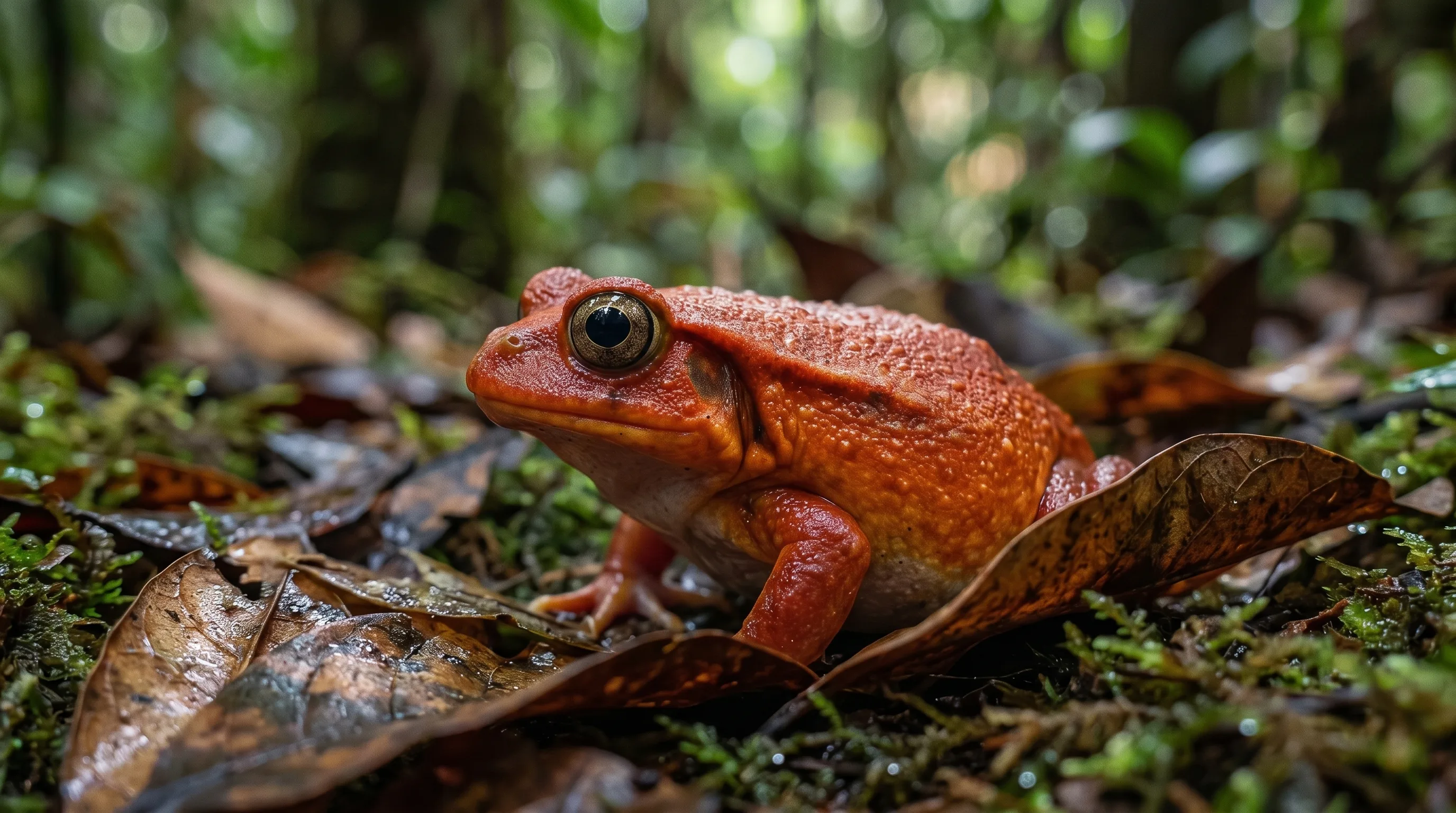
Tomato Frog (Dyscophus antongilii)
Introduction
The forest floor of northeastern Madagascar holds its breath as the first heavy rains of the wet season soak into dry, compacted soil. Somewhere beneath the leaf litter, something stirs. A broad, round body pushes upward through the earth, shaking loose clods of dirt from a skin that glows like a ripe tomato in the dim, rain-slicked light. The animal pauses at the surface, taking in the changed world above with slow, golden eyes — a female Tomato Frog, one of the most visually arresting amphibians on the planet, and one of the most ecologically significant creatures native to the island of Madagascar.
Dyscophus antongilii is a species that commands attention without moving a muscle. Its coloration — a saturated, signal-red that ranges from deep orange-scarlet to the rich crimson of arterial blood — is not beauty for beauty's sake. It is a message written in evolutionary ink, broadcast clearly to any predator willing to read it: approach at your peril. This is aposematic biology at its most theatrical, a frog that has weaponised colour itself as its primary survival strategy.
Endemic to the Bay of Antongil region in northeastern Madagascar, the Tomato Frog occupies a remarkably restricted range for a species of such striking character. Its world is defined by the lowland tropical forests, disturbed wetlands, agricultural margins, and garden ponds of one of the most biodiverse — and most threatened — islands on Earth. Madagascar has been called the "eighth continent" for the extraordinary proportion of its wildlife found nowhere else, and the Tomato Frog is a perfect emblem of that biological isolation: shaped by millions of years of island evolution, it exists in a form and function unlike almost any other amphibian alive.
Yet despite its dramatic appearance and ecological importance, Dyscophus antongilii remains relatively understudied. It sits at the intersection of multiple conservation crises: illegal collection for the global pet trade, the catastrophic deforestation of Madagascar, and the creeping effects of climate disruption on the amphibian world. Understanding this frog — its behaviour, its ecology, its biology, and its fragility — is not merely a scientific exercise. It is a window into the broader story of amphibian survival in a rapidly changing world, and into the fate of Madagascar's living heritage itself.
"The fate of amphibians is a mirror held up to the world — if we cannot protect the most sensitive organisms on Earth, we have failed to understand what protection really means."
— Dr. Robin Moore, Conservation Biologist, Amphibian Survival Alliance
Scientific Classification
The Tomato Frog belongs to a narrow-mouthed frog lineage with deep evolutionary roots in the Gondwanan supercontinent. Its placement within the family Microhylidae reflects a long and complex biogeographic history, with Madagascar serving as the crucible for remarkable frog diversification. The genus Dyscophus contains only three recognised species — D. antongilii, D. guineti, and D. insularis — and all are restricted to Madagascar, making them strict endemics of an already intensely endemic island fauna.
Kingdom: Animalia
Phylum: Chordata
Class: Amphibia
Order: Anura
Family: Microhylidae
Subfamily: Dyscophinae
Genus: Dyscophus
Species: Dyscophus antongilii (Grandidier, 1877)
The species was formally described in 1877 by the French naturalist Alfred Grandidier, one of the foremost 19th-century authorities on Malagasy natural history. Its species epithet, antongilii, is a direct reference to the Bay of Antongil — Baie d'Antongil — the northeastern bay around which the species' range is concentrated. Microhylidae, the broader family to which it belongs, is one of the largest frog families in the world, containing over 700 species across tropical regions globally, though the Dyscophinae subfamily is exclusively Malagasy.
Physical Characteristics
Few amphibians on Earth achieve quite the visual impact of a fully grown female Tomato Frog. Her body is rounded to the point of near-spherical, heavy with fat reserves and robust muscle beneath a skin that burns with colour. Adult females — the larger sex by a significant margin — typically measure between 8.5 and 10.5 centimetres in snout-to-vent length and can weigh up to 200 grams. Males are considerably smaller, averaging just 4 to 6.5 centimetres in length and weighing a fraction of the female's mass. This extreme sexual size dimorphism, where the female may be nearly twice the body length of her male counterpart, is one of the most pronounced in any microhylid species.
The colour difference between the sexes is equally striking. Females wear the full tomato-red livery that gives the species its name — a warm, saturated orange-red that becomes progressively deeper and more vivid with age and body condition. Beneath the throat and along the flanks, this coloration may lighten to pale yellow or cream, providing a visual contrast that amplifies the warning signal. Males are markedly less dramatic in pigmentation: they tend toward a brownish-orange or pale terracotta tone, often with a yellowish ventral surface and occasional dark flecking along the dorsum. Juvenile frogs begin life with a more subdued brownish colouration and only develop their adult pigmentation as they mature over several months.
The skin itself is smooth to slightly granular, and unlike many amphibians, the Tomato Frog does not possess parotoid glands or externally visible toxin-secreting structures. Instead, it possesses subcutaneous glands distributed across the dorsal skin surface that, when the animal is stressed or seized, produce a thick, white, sticky mucus of remarkable consistency. This substance resembles rubber cement or white latex in its adhesive qualities and is the animal's primary chemical defence.
The head is broad and flat, typical of the microhylid body plan, with a relatively small mouth positioned at the very front — a configuration suited to an invertebrate diet rather than large prey. The eyes are large and forward-facing, with horizontal pupils and golden-bronze irises that catch and reflect light with an almost metallic sheen. This eye configuration provides reasonable binocular vision for a sit-and-wait predator. The forelimbs are short and muscular, and the hindlimbs are powerful but not particularly elongated — the Tomato Frog is not built for distance jumping. Its toe pads are minimally developed, reinforcing its fundamentally terrestrial lifestyle. The inner metatarsal tubercle — a spade-like projection on the hind foot — is well-developed, serving as a digging tool for the burrowing behaviour that defines so much of this species' daily existence.
Fun FactFemale Tomato Frogs can be nearly twice the body length of males — one of the most extreme examples of sexual size dimorphism found in any microhylid frog species.
Habitat & Geographic Distribution
The Tomato Frog is one of the most geographically restricted amphibians in the world. Its natural range is confined almost entirely to the northeastern coast of Madagascar, centred on the Bay of Antongil — a large, ecologically rich bay roughly 50 kilometres wide — and the town of Maroantsetra, which sits at its southern apex. Beyond this core area, verified populations extend a modest distance along the northeastern coastal lowlands, but the species does not occur in the central highlands, the southern arid zones, or the western dry forests. Its entire wild range may fit within an area of a few thousand square kilometres, making it one of the smallest distributions of any vertebrate of comparable size in the world.
Within this compressed range, Dyscophus antongilii is a lowland specialist. It occupies habitats below approximately 200 metres in elevation, favouring areas where the dense forest canopy meets standing or slow-moving water: forest margins, secondary vegetation, degraded scrub, agricultural borders, village gardens, rice paddy edges, and occasionally the grounds of buildings. This apparent tolerance for disturbed habitat is both a strength and a complication for conservation — it means the species can survive in landscapes that have been modified by human activity, but it also means that the full extent of its ecological requirements in primary forest is poorly understood.
The climate of the Bay of Antongil region is one of the wettest in Madagascar, receiving annual rainfall exceeding 2,000 millimetres in many areas and subject to the powerful cyclonic systems that periodically batter the northeastern coast. This rainfall drives the seasonal rhythms that dictate the Tomato Frog's reproductive cycle, feeding activity, and burrowing behaviour. During the wet season, typically running from October through April, the landscape transforms: temporary pools fill, drainage ditches overflow, and low-lying ground becomes saturated. These are the conditions under which the Tomato Frog emerges from its subterranean retreats, begins active feeding, and ultimately reproduces. During the drier months from May through September, activity drops sharply, and many individuals retreat underground in a state of reduced metabolic activity.
The forests surrounding the Bay of Antongil include portions of the Masoala Peninsula — home to the Masoala National Park, one of Madagascar's largest protected areas — as well as the Makira Natural Park to the south. These protected areas represent the most intact remaining forest in the region and almost certainly contain some of the healthiest remaining Tomato Frog populations, though systematic survey data across the entire range remain incomplete.
Behaviour & Social Structure
The Tomato Frog is a fundamentally solitary animal. Unlike many amphibians that aggregate at breeding sites or share hibernation spaces, Dyscophus antongilii adults spend the majority of their non-breeding lives alone, each individual occupying a home range within which it hunts, shelters, and moves according to seasonal imperatives. There is no evidence of complex social hierarchy, cooperative behaviour, or long-term pair bonding in this species. The social world of the Tomato Frog is largely one of brief, functional encounters — competition for calling sites, brief amplexus during breeding, and the occasional territorial dispute between males.
Communication is primarily acoustic. During the breeding season, males produce advertisement calls from positions at or near the water's edge — a distinctive, short, nasal or quacking sound often described as resembling the call of a duck or the croak of a wooden toy. These calls are produced at night, when the darkness provides cover from visual predators and sound travels more effectively through the still, humid air. Call structure carries information about the caller's identity, location, and potentially his size and condition, allowing females to make mate-selection decisions based on auditory cues alone. The calling chorus at a productive breeding site — a flooded ditch, a rain-filled depression at the forest edge — can involve multiple males in loose competition, with each individual attempting to maximise his signal's reach.
Males are broadly territorial in the context of calling sites, and some degree of acoustic competition and positional displacement occurs between rivals during peak breeding nights. However, overt physical combat appears rare; the resolution of male-male competition in this species is primarily through vocal persistence rather than physical confrontation. Females, once they have evaluated the available males, select a mate and approach him, initiating the amplexus that precedes egg-laying.
Outside the breeding season, Tomato Frogs show little interest in conspecifics. Each individual occupies a roughly defined area, moving between daytime retreat sites — typically beneath soil, leaf litter, rotting wood, or dense vegetation — and nocturnal foraging zones. These movements are rarely dramatic; the Tomato Frog is not a wide-ranging animal. Its energy budget is optimised around efficient ambush predation rather than active pursuit, and its daily movements reflect this economy of effort.
Intelligence in amphibians is a contested concept, but Tomato Frogs display several behaviours that suggest meaningful environmental learning. Individuals reliably return to favoured retreat sites, suggesting spatial memory. Their defensive response to perceived threats — inflating the body, releasing mucus, remaining motionless — is calibrated and context-dependent rather than automatic. There is also evidence that habituation occurs: frogs in human-modified habitats, such as gardens near Maroantsetra, show reduced flight responses to human proximity compared to forest-dwelling individuals, suggesting that experience shapes their behavioural threshold for threat response.
Daily Life & Activity Cycle
The daily existence of Dyscophus antongilii is divided into two distinct phases: a long period of concealment and physiological conservation during daylight hours, and a shorter, intensely active period after dark when feeding, movement, and social behaviour all occur. This strictly nocturnal pattern is almost universal among Tomato Frogs, with the transition between states tightly linked to light levels rather than temperature alone.
As dusk settles over the northeastern Malagasy lowlands and the last direct light fades from the canopy, the Tomato Frog begins to emerge. The process is gradual — an eye appearing at the edge of a leaf litter pile, the rounded dome of a head pushing into view, a full body slowly extricating itself from a daytime burrow. The frog pauses at the surface, adjusting its body temperature through brief contact with the warmer ground radiating the day's stored heat. Ectothermic physiology means that the ambient temperature at this transitional moment matters: on cool nights, activity is more subdued; on warm, humid nights following afternoon rains, frogs may emerge quickly and move with unusual purposefulness.
Foraging takes the form of a classic amphibian sit-and-wait strategy. The frog selects a position in the leaf litter, at the edge of a patch of vegetation, or along the margin of standing water and adopts a posture of absolute stillness. It may wait in this position for minutes or hours, relying on its cryptic body position — which compensates somewhat for the otherwise vivid dorsal coloration — and processing the sensory information flowing in from its large eyes and tympanic membranes. When prey moves within striking range, the frog launches a rapid lunge, extending its sticky tongue in a fraction of a second to capture the target.
During the dry season, the Tomato Frog's activity cycle compresses dramatically. As rainfall diminishes and the soil dries, frogs increasingly spend extended periods underground, sometimes remaining buried for weeks at a time. This behaviour — a form of aestivation rather than true hibernation — conserves water and energy during periods of environmental stress. The metabolic rate drops, and the frog enters a waiting state, relying on fat reserves accumulated during the more productive wet season months. The onset of the rains acts as a powerful biological trigger, stimulating emergence, feeding, and ultimately breeding.
At the edge of a flooded rice paddy near Maroantsetra, on a moonless night in November, a researcher sweeping the vegetation with a headlamp pauses. There, motionless on a partially submerged clump of grass, sits a female Tomato Frog the size of a small fist. Her skin glows in the torchlight with an almost unreal intensity — a warm red-orange that seems to generate its own light in the darkness. She does not flee. She does not inflate. She simply watches, golden eyes unblinking, weighing the threat calculus with whatever portion of a frog's nervous system handles such calculations.
From across the paddy, perhaps eight metres away, a male calls. The sound is short, repetitive, oddly mechanical — almost like a rubber duck being squeezed. The female's tympanic membranes vibrate almost imperceptibly. She turns, a deliberate quarter-rotation of her entire body rather than just her head, and orients toward the sound. She has been above ground for less than forty minutes. Already, the biological imperatives of the wet season are asserting themselves.
The researcher notes the time, the coordinates, and the frog's body position, then dims the lamp and backs away. On nights like this, across the flooded margins of the Bay of Antongil's lowlands, dozens of these encounters are playing out simultaneously — a species at the peak of its annual reproductive effort, painting itself across the landscape in shades of red that the darkness cannot fully conceal.
Diet & Survival Strategies
Dyscophus antongilii is a generalist insectivore that supplements its diet with other small invertebrates, making its precise feeding ecology a function of local prey availability within its restricted range. Primary prey items include beetles, ants, termites, small moths, crickets, and various soil-dwelling invertebrates. Given the frog's broad, rounded body and small gape relative to its overall mass, it targets prey of modest size — items that can be captured with a single tongue strike and swallowed with minimal struggle. There is no evidence that adult Tomato Frogs regularly consume vertebrates, though very large females may occasionally take small lizards or other frogs if encountered at close range.
The hunting method is unambiguous in its conservatism: the Tomato Frog does not chase prey. It positions itself at a favourable interception point — a spot where invertebrate traffic is predictable, such as the edge of a termite trail, the margins of a light source attracting moths, or the boundary between open ground and leaf litter — and waits. The large eyes track movement with sensitivity, and the moment prey enters the strike zone, the attack is executed with explosive speed. The tongue, which is attached at the front of the lower jaw and flips forward when the mouth opens, is coated with mucus that adheres instantly to the prey's body. The entire strike-and-retraction sequence takes milliseconds, and prey is typically disabled and positioned in the mouth before it can mount any escape response.
During periods of prey abundance in the wet season, Tomato Frogs feed heavily and accumulate significant fat reserves in their bodies and tails. This energy banking is essential for surviving the dry season aestivation period, during which no feeding occurs. The efficiency of this energy management strategy is remarkable: a frog that spent weeks underground motionless can emerge in the early wet season visibly thinner but functionally intact, ready to resume activity within days of surface emergence.
Competition for food resources with other species in the same habitat is moderate. The Tomato Frog shares its range with numerous other frog species, several species of chameleon, small skinks, and various insectivorous birds. However, because the Tomato Frog is strictly nocturnal and the majority of its competitors are diurnal, temporal partitioning reduces direct resource competition substantially. Among nocturnal species, prey size and microhabitat preferences further divide the available food resource space, reducing overt competition for specific prey items.
Feature | Tomato Frog (D. antongilii) | False Tomato Frog (D. guineti) |
|---|---|---|
Female body length | 8.5–10.5 cm | 7.5–9.0 cm |
Coloration (female) | Deep tomato-red to scarlet | Lighter orange to reddish-orange |
Range | Bay of Antongil region (NE Madagascar) | Broader distribution across E Madagascar |
Elevation range | Primarily below 200 m | Up to ~800 m |
CITES listing | Appendix I | Appendix II |
Habitat preference | Lowland forest margins, disturbed areas | Humid forest, gardens, secondary vegetation |
Interaction with Other Animals
The ecological relationships of Dyscophus antongilii are defined largely by two roles: as a predator of small invertebrates and as a potential prey item for larger animals equipped to tolerate or overcome its chemical defences. Understanding these interactions requires moving beyond simple predator-prey binaries to appreciate how the Tomato Frog's remarkable defensive chemistry reshapes the nature of every encounter.
The species' aposematic coloration represents a long-term evolutionary contract with local predators. Over generations, predators that learned to avoid bright red or orange prey — either through instinct or experience — survived better than those that did not, creating selective pressure for the colour signal to be maintained and intensified. Today, many of the Tomato Frog's potential predators in northeastern Madagascar — including some snake species, large skinks, and certain birds — likely possess at least partial aversion to the species' coloration, though this has not been fully quantified through field experimentation. Naive predators, including introduced species and domestic animals, may make the mistake of attempting to eat a Tomato Frog and encounter the mucus defence for the first time.
The white sticky mucus secreted when the frog is handled or threatened is the species' active chemical defence system. This substance is not merely unpleasant in texture — it contains a complex mixture of proteins and peptides that irritate mucosal membranes, can trigger allergic responses in mammals (including humans), and may interfere with a predator's sensory apparatus in ways that make handling the frog deeply unpleasant. Snakes attempting to swallow a Tomato Frog may find their jaws and throat coated with the adhesive substance, creating sufficient discomfort to provoke release. This is a particularly effective defence against ophidian predators, which typically immobilise prey by constriction or envenomation before swallowing — the Tomato Frog's chemistry disrupts this process at the critical moment of ingestion.
Predators that do successfully consume Tomato Frogs include several snake species found in the northeastern Malagasy lowlands — particularly members of the genus Liophidium and Leioheterodon — which may have evolved some tolerance for the mucus compounds. Larger chameleons, which hunt by stealth and rarely encounter frogs large enough to be worth targeting, are occasional predators of juvenile frogs. Herons and egrets foraging at water margins may also take frogs, particularly smaller males at breeding sites.
In terms of competitive interactions, the Tomato Frog coexists with numerous other frog species in the Bay of Antongil region, including various reed frogs (Heterixalus spp.), mantellid frogs (Mantella spp. and relatives), and burrowing species within the same microhabitat. Resource partitioning through time, body size, and prey preference limits direct competition, allowing considerable species co-occurrence. The Tomato Frog does not appear to engage in aggressive exclusion of other frog species from its foraging zones.
Interaction with Environment
The Tomato Frog's relationship with its physical environment is mediated through burrowing, water dependence, and a tolerance — at least partial — for habitat modification. As a terrestrial amphibian with aquatic reproduction, Dyscophus antongilii exists at the interface of soil and water ecosystems, and its ecological impact ripples across both.
Burrowing is the frog's primary method of thermoregulation, moisture conservation, and predator avoidance during daylight hours. Using the metatarsal tubercles on its hind feet, the frog excavates backward into soft soil, leaf litter, or loose substrate, disappearing from the surface in a matter of seconds. This burrowing activity has a small but real effect on soil structure: the repeated creation and abandonment of shallow burrows loosens compacted surface layers, facilitates water infiltration, and creates microhabitats used by invertebrates, fungi, and plant roots. While a single frog's burrowing impact is negligible, a healthy population across a landscape creates a diffuse but persistent ecological signal in the soil ecosystem.
The species' dependence on standing or slow-moving water for reproduction means that the quality and availability of aquatic habitats within its range are critical limiting factors. Tomato Frogs appear to use a wide range of water bodies for breeding — natural ponds, temporary rain pools, flooded rice paddies, drainage ditches, and garden water features — suggesting considerable plasticity in this requirement. However, water quality matters: heavily polluted or chemically contaminated water bodies inhibit successful tadpole development. Agricultural runoff, pesticide application, and untreated sewage from the growing town of Maroantsetra all represent potential threats to the water quality of breeding sites within the species' core range.
The Tomato Frog's permeable skin makes it extraordinarily sensitive to changes in soil moisture, temperature, and chemical composition — a sensitivity that is simultaneously a vulnerability and a monitoring advantage. As a bioindicator species, the presence or absence of Tomato Frogs from a given location provides a real-time signal about the health of that environment. Declines in local populations often precede broader ecosystem degradation, making the species an early warning system for environmental change.
Within the food web, the frog's consumption of insects — particularly ants, termites, and beetles — provides a degree of invertebrate population regulation at the local scale. In garden and agricultural contexts near Maroantsetra, Tomato Frogs may function as informal pest controllers, reducing the abundance of agricultural pest species without chemical intervention. This represents a genuine ecosystem service provided by the species within human-modified landscapes.
Fun FactThe Tomato Frog's sticky white defensive mucus acts like biological superglue — it can bind the lips and nostrils of a predatory snake during an attempted attack, causing the snake to abandon its meal and spend considerable time cleaning the substance away.
Reproduction & Parenting
Reproduction in Dyscophus antongilii is tightly seasonal, governed by the arrival of the northeastern monsoon rains that transform the lowland landscape each October and November. This synchronisation between rainfall and breeding activity is not coincidental — it reflects a deep evolutionary alignment between the species' life history and the hydrological patterns of its habitat. The rains create and replenish the standing water bodies that tadpoles require, while the associated temperature increase accelerates both embryonic development and larval growth. Breeding at the start of the wet season maximises the time available for tadpole development before conditions potentially deteriorate.
Males are the first to respond to the rains' arrival, emerging from aestivation burrows and making their way to suitable water bodies — ponds, flooded ditches, rice paddies, temporary pools — where they take up calling positions at or just within the water's edge. The advertisement call is a short, loud, low-pitched sound produced by the inflation of the vocal sac beneath the throat. Males call persistently through the night, sometimes continuing into the pre-dawn hours, and calling activity intensifies on warm, humid nights following heavy rainfall. The acoustic chorus at a productive breeding site can include dozens of males in loose aggregation, each competing for the attention of approaching females.
Females, drawn by the calls, approach the water and make mate-selection decisions based on the quality and consistency of male vocalisations. Upon selecting a male, the female allows axillary amplexus — the male grasps her behind the forelimbs — and the pair moves into the water. Egg laying occurs at the water surface: the female releases a large clutch of small, black-and-white eggs in a thin, buoyant film that spreads across the water's surface rather than sinking. Clutch sizes in Dyscophus antongilii are substantial, typically ranging from 1,000 to over 15,000 eggs per clutch, though average clutch sizes closer to 1,000–3,000 are more commonly reported in captive and field observations. The production of large numbers of small eggs is a classic r-selection reproductive strategy: invest minimally in each individual offspring and compensate through sheer numbers.
Parental care is essentially absent in this species. Once the eggs are laid and fertilised, both male and female separate and resume independent lives. The eggs develop at the water surface, where the thin film position maximises oxygen availability — a critical factor for small, non-operculate embryos. Hatching occurs within 36 to 48 hours under warm conditions, producing tiny, free-swimming tadpoles that are structurally unusual among anurans.
Tomato Frog tadpoles are surface-feeders — they swim in an inverted position near the water surface, using their dorsally positioned mouths to filter suspended microorganisms, algae, and organic particles from the surface film. This feeding ecology is specialised and differs substantially from the benthic scraping behaviour of many other anuran tadpoles. The tadpoles are dark in coloration and cluster in groups near the surface in calm water, avoiding strong currents and wave action. Development from hatching to metamorphosis is relatively rapid under favourable conditions — typically 45 to 60 days — producing tiny froglets approximately 1 to 1.5 centimetres in length. These juveniles are immediately terrestrial, dispersing into the surrounding vegetation and beginning to feed on small invertebrates within days of completing metamorphosis. Sexual maturity is reached at approximately 12 to 24 months of age, depending on food availability and environmental conditions.
Evolutionary Adaptations
The evolutionary history of Dyscophus antongilii has been shaped by the peculiar selective pressures of island life on Madagascar — prolonged isolation, a distinctive predator community, and the ecological context of a highly seasonal, rainfall-driven environment. The adaptations that have emerged from this history are both elegant and effective.
The most immediately apparent adaptation is aposematic coloration: the use of bright, warning coloration to signal unpalatability or danger to potential predators. In the Tomato Frog, this system operates in conjunction with the chemical mucus defence to create a two-layer deterrent. The colour provides a visual warning that experienced predators recognise and avoid, preventing the attack; the mucus provides a physical and chemical deterrent for those predators that do not recognise the warning or choose to ignore it. This defence system is convergently shared with many other unrelated amphibians globally — poison dart frogs, fire salamanders, and fire-bellied toads all employ similar strategies — illustrating the powerful evolutionary pressure that drives aposematism as a survival solution in small, palatable-bodied animals.
The mucus itself represents a sophisticated biochemical adaptation. It is produced in subcutaneous granular glands distributed across the dorsal skin and is released in response to mechanical stimulation — primarily being grasped or bitten. The mucus contains a mixture of proteins, some of which have been shown to be highly immunogenic — capable of triggering immune responses in mammalian predators. In humans, repeated handling of Tomato Frogs can cause sensitisation and, in individuals who subsequently have repeated contact, can lead to Type I hypersensitivity reactions — essentially an allergic response of increasing severity with each exposure. This immunogenic property suggests that the mucus proteins have evolved specifically to be biologically active in vertebrate immune systems, not merely physically adhesive.
The rounded, inflatable body form is also adaptive. When threatened, the Tomato Frog inflates its body by pulling air into specialised lymphatic spaces and holding its breath, dramatically increasing its apparent volume. This inflation serves two purposes: it makes the frog more difficult to swallow for a snake-predator (widening gape requirements), and it simultaneously increases the surface area of skin from which mucus can be secreted, amplifying the chemical deterrent.
Burrowing capability — facilitated by the well-developed metatarsal spade — represents a critical adaptation for surviving the pronounced dry season of northeastern Madagascar. The ability to retreat underground and dramatically lower metabolic rate during months of low prey availability and environmental desiccation stress is a fundamental survival mechanism. Amphibians cannot regulate body temperature internally, so thermal refuge in deep soil also provides protection against surface temperature extremes.
The production of enormous egg clutches laid in floating surface films is an aquatic adaptation that maximises oxygenation of the developing embryos and positions them within the productive surface layer of the water column, where algal food resources are concentrated for the emerging tadpoles. This reproductive system trades parental investment for numerical hedge — the evolutionary mathematics of high mortality, high fecundity.
Ecological Importance
The ecological role of the Tomato Frog within the lowland ecosystems of northeastern Madagascar is significant despite the species' small body size and restricted range. As a mid-level consumer in the food web, Dyscophus antongilii performs several ecological functions that contribute to the stability and productivity of its habitat.
Invertebrate population regulation is the most direct and quantifiable contribution. By consuming substantial quantities of ants, termites, beetles, and other small invertebrates, a healthy Tomato Frog population exerts real downward pressure on invertebrate abundance within its territory. In agricultural contexts — the paddy margins, garden edges, and plantation perimeters where Tomato Frogs are common near Maroantsetra — this translates into meaningful natural pest suppression. Ants and termites, the bread-and-butter prey of this species, include agricultural pests capable of damaging crops and structures; their regulation by frogs reduces the need for chemical intervention.
The Tomato Frog also functions as a prey item that transfers energy and nutrients from the invertebrate trophic level upward to snakes, birds, and other predators. Its role in the diet of endemic snake species in the Bay of Antongil region makes it a dietary bridge species — one whose abundance directly influences the condition and reproductive success of predator populations. A collapse in Tomato Frog numbers would reduce food availability for these predators, potentially triggering cascading adjustments in predator behaviour, territory size, and ultimately population dynamics.
As a bioindicator, the Tomato Frog's permeable skin and aquatic larval stage make it exquisitely sensitive to environmental pollutants, climate shifts, and habitat quality changes. The presence of a thriving Tomato Frog population is an indicator of healthy soil ecology, clean water, adequate leaf litter and ground cover, and a functioning invertebrate community. Conversely, declines in Tomato Frog abundance can serve as early indicators of subtle environmental degradation that might not yet be visible through other monitoring methods. This bioindicator value has tangible practical utility for conservation monitoring programs in the Bay of Antongil area.
Finally, the Tomato Frog contributes to nutrient cycling through its feeding and waste production, and through the mass mortality of tadpoles that inevitably accompanies each breeding season. Failed tadpole cohorts — those that do not complete metamorphosis due to pond drying, predation, or disease — return substantial quantities of organic matter and nutrients to aquatic and terrestrial systems, subsidising microbial communities and invertebrate populations that form the base of the food web.
Threats & Conservation
The challenges facing Dyscophus antongilii are numerous, interconnected, and symptomatic of the broader conservation crisis unfolding across Madagascar. This island has lost an estimated 90% or more of its original forest cover since human arrival roughly 2,000 years ago, and deforestation continues at a rate that makes Madagascar one of the most urgent conservation priorities on Earth. For a species as range-restricted as the Tomato Frog, habitat loss at the landscape scale does not merely reduce available living space — it fragments and isolates populations, reduces genetic exchange, eliminates the microhabitat features on which the species depends, and removes the forest buffers that moderate local hydrology.
The primary driver of habitat destruction in the Bay of Antongil region is slash-and-burn agriculture — locally known as tavy — through which forest is cleared, burned, and converted to rice paddies or subsistence cropland. This practice is driven by poverty and population pressure rather than malice, and addressing it requires socioeconomic interventions as much as conservation regulation. Timber extraction, both for local construction and illegal export of high-value hardwoods, further degrades remaining forest patches. The compounding effect of these pressures means that even within the Tomato Frog's restricted range, habitat quality is declining and the area of suitable primary habitat is shrinking.
Collection for the international pet trade was a significant historical threat. The Tomato Frog's dramatic appearance made it highly desirable in the exotic amphibian market, and collection pressure in the 1970s and 1980s was sufficient to contribute meaningfully to population decline. The species was listed on CITES Appendix I in 1975, prohibiting commercial international trade, which substantially reduced legal collection pressure. However, illegal collection has not been eliminated entirely, and the species remains visible in the international exotic pet trade, suggesting ongoing illegal harvest.
Climate change presents an emerging and potentially severe threat. Shifts in rainfall timing and intensity in northeastern Madagascar have the potential to disrupt the precise seasonal cues that trigger breeding, alter the availability and quality of breeding water bodies, and increase the frequency and intensity of cyclonic events that physically destroy habitat. Amphibians globally are among the most climate-vulnerable vertebrate groups, and the Tomato Frog's narrow geographic range limits its ability to track shifting climate envelopes through dispersal.
Disease, particularly the chytrid fungus Batrachochytrium dendrobatidis (Bd), represents a background threat that has decimated amphibian populations worldwide. The status of Bd within Madagascar remains incompletely surveyed, but its presence has been documented on the island. Whether the Tomato Frog is susceptible to chytridiomycosis at ecologically significant levels is not fully established, but the species' permeable, moist skin makes it potentially vulnerable.
IUCN Red List Analysis
Current IUCN Status
Dyscophus antongilii is currently assessed as Vulnerable (VU) on the IUCN Red List of Threatened Species. The Vulnerable category indicates that the species faces a high risk of extinction in the wild if the circumstances that constitute the threat factors continue to operate. The classification reflects the combination of the species' extremely restricted geographic range — qualifying it under IUCN criteria relating to limited extent of occurrence and area of occupancy — and the ongoing, documented decline in habitat quality within that range due to deforestation, agricultural conversion, and habitat degradation. The Vulnerable listing is applied under IUCN criteria B (restricted range with documented habitat decline) and recognises that, while the species is not yet facing imminent extinction, the trajectory of threats is unfavourable and continued inaction could elevate the species to a higher threat category in future assessments.
Population Trend
The population trend for Dyscophus antongilii is assessed as decreasing. Precise population size estimates for wild Tomato Frogs are difficult to establish given the species' nocturnal habits, burrowing behaviour, and the limited research effort directed at systematic population surveys across its range. However, inference from habitat trends provides a reliable proxy: as suitable habitat within the Bay of Antongil region continues to decline in both area and quality, the carrying capacity of the landscape for the species inevitably decreases, and population abundance follows. Anecdotal reports from local communities and herpetologists working in the region suggest that Tomato Frogs are less frequently encountered in areas where they were commonly reported in historical accounts, though formal time-series abundance data are not available for systematic comparison.
The species' restriction to a small geographic area means that even localised population declines can be disproportionately significant at the species level. A decline of 30–50% in a widely distributed species might be absorbed without threatening overall viability; the same proportional decline in a species with a total range covering a few thousand square kilometres creates a qualitatively different conservation risk.
Main Threats
Habitat destruction is the primary and most pervasive threat. The slash-and-burn agricultural system dominant in the Bay of Antongil hinterland converts forest to temporary cropland that rapidly becomes degraded scrubland of low ecological value. Logging and charcoal production remove both the forest structure and the leaf litter microhabitats that the Tomato Frog depends on for daytime retreat and foraging. While the species shows some tolerance for disturbed habitats — surviving in gardens, paddy margins, and secondary vegetation — heavily degraded landscapes with little remaining soil moisture, organic matter, or invertebrate diversity are inhospitable regardless of this tolerance.
Illegal collection for the pet trade continues to exert pressure despite CITES Appendix I protection. The species' striking appearance commands high prices in the international exotic animal market, creating financial incentive for illegal collection that enforcement capacity in rural Madagascar is poorly equipped to counter. Captive breeding of Tomato Frogs is established in various collections worldwide, but this has not fully replaced wild collection demand, and the distinction between captive-bred and wild-caught animals is difficult to verify reliably.
Pollution of breeding water bodies through agricultural runoff, pesticide application, and domestic waste presents a chemical threat to both adult frogs — through skin absorption — and to tadpoles, which are highly sensitive to water quality changes. Invasive species, particularly introduced fish in water bodies historically fish-free, can eliminate tadpole populations. Climate disruption to seasonal rainfall patterns may decouple breeding synchrony from optimal environmental conditions, reducing reproductive success.
Ecological Consequences
A significant decline or local extinction of Dyscophus antongilii within the Bay of Antongil region would initiate cascading ecological consequences. The invertebrate populations currently regulated in part by Tomato Frog predation would experience release from that pressure, potentially increasing agricultural pest burdens in farming communities adjacent to the species' range. Snake species that include Tomato Frogs in their diet would face a reduction in food resource availability, with implications for predator condition, territory size, and reproduction. The nutrient cycling contributions made by Tomato Frog populations — through tadpole organic matter return and adult waste deposition — would also diminish.
More broadly, the loss of the Tomato Frog as a bioindicator species would remove a sensitive monitoring proxy for ecosystem health in the region. Conservation programs relying on Tomato Frog presence-absence data as an indicator of habitat quality would lose a key assessment tool. The species also represents an irreplaceable component of Madagascar's unique biodiversity: its evolutionary distinctiveness, its restricted endemic status, and its membership in a monotypic subfamily make it a genuinely irreplaceable element of global biodiversity. Its loss would be permanent.
Conservation Efforts
The most significant existing conservation protection for Dyscophus antongilii is its listing under CITES Appendix I since 1975, which prohibits commercial international trade and has substantially reduced the legal supply of wild-caught animals to the global pet market. This trade restriction remains one of the most effective conservation tools available and is credited with reducing collection pressure from what were unsustainable levels in the pre-listing era.
Within Madagascar, the Masoala National Park — one of Madagascar's largest protected areas at approximately 2,300 square kilometres — encompasses portions of the Tomato Frog's core range on the Masoala Peninsula and provides some degree of habitat protection. The Makira Natural Park to the south provides additional protected forest in the broader region. However, protected area management in Madagascar faces severe resource constraints, and enforcement of both habitat protection and wildlife collection regulations within these parks is inconsistent.
International NGOs including the Wildlife Conservation Society (WCS), Madagascar Biodiversity Partnership, and the Amphibian Survival Alliance have supported survey work, community engagement, and capacity building in the Bay of Antongil region. Captive breeding programs in zoos and herpetological collections across Europe and North America maintain ex-situ populations that serve as insurance against catastrophic wild population collapse and generate animals for educational programs. Community-based conservation initiatives near Maroantsetra, linking forest conservation to ecotourism revenue, represent a promising model for aligning local economic incentives with species and habitat protection.
Future Outlook
The long-term survival of Dyscophus antongilii hinges on the resolution of two interconnected problems: forest protection in northeastern Madagascar and the elimination of illegal trade. Neither challenge is simple. The socioeconomic drivers of deforestation in Madagascar — poverty, limited alternative livelihoods, population growth, and governance constraints — are structural issues that conservation organisations cannot solve in isolation. Progress will require sustained investment in community-based natural resource management, alternative livelihood programs, and strengthened law enforcement capacity.
The species' tolerance for some degree of habitat disturbance is a genuine source of cautious optimism: unlike species requiring pristine primary forest, the Tomato Frog can persist in modified landscapes, including gardens and paddy margins, that will remain even as forest cover continues to decline. This means the species is not necessarily doomed by the current trajectory of land use change, but that persistence in these modified habitats alone, without sufficient primary forest, may leave populations genetically impoverished and ecologically diminished over the long term. The trajectory is uncertain but not irreversible — with sustained conservation investment, the Tomato Frog has the biological capacity to recover, provided sufficient habitat and the cessation of significant illegal collection.
Fun FactDyscophus antongilii was listed on CITES Appendix I in 1975 — making it one of the earliest amphibian species to receive the highest level of international trade protection, a recognition of its vulnerability to over-collection decades before the global amphibian crisis was widely recognised.
Human Relationship
The relationship between Dyscophus antongilii and human communities in northeastern Madagascar is multi-layered, encompassing practical coexistence, cultural meaning, economic exploitation, and emerging conservation partnerships. In the Maroantsetra region, where the species is most abundant and most frequently encountered, local knowledge of the Tomato Frog is widespread. Many community members can identify the species by its distinctive coloration and are aware of its defensive mucus — a practical knowledge born of encounters in gardens and around dwellings.
Local oral traditions in Madagascar's northeastern communities do not appear to attribute specific spiritual significance to the Tomato Frog in the documented ethnographic literature, unlike some other iconic Malagasy wildlife such as the aye-aye or certain chameleon species. However, as with many vividly coloured and behaviourally distinctive animals, it occupies a recognised place in local ecological knowledge. The fady system — the complex of traditional taboos governing many aspects of Malagasy life — may confer incidental protection to the species in some localities, though this has not been systematically documented for D. antongilii specifically.
The international pet trade is the most economically significant dimension of the human-Tomato Frog relationship, and also the most problematic. Before the CITES Appendix I listing in 1975, significant numbers of wild-caught Tomato Frogs were exported annually to European and North American markets. The species became a fixture in exotic pet collections and zoological displays worldwide, and that global visibility — paradoxically — contributed to its conservation profile, as zoos and conservation organisations took interest in its wild status. Today, captive-bred Tomato Frogs are regularly produced by specialist breeders in Europe and North America, and these animals supply much of the legitimate market demand. Captive individuals can live 6 to 10 years under good husbandry conditions, considerably longer than estimated wild lifespans.
Ecotourism represents a growing positive dimension of the human-Tomato Frog relationship. The Bay of Antongil region, including the Masoala National Park, attracts wildlife tourists drawn by Madagascar's extraordinary biodiversity. While charismatic mammals like lemurs typically headline ecotourism experiences, herpetological tourists specifically seeking Tomato Frogs and other endemic amphibians represent a niche but significant economic category. The revenue generated by wildlife tourism in the region creates financial arguments for forest conservation that resonate with local communities and government authorities alike.
Unique & Rare Facts
The white defensive mucus of the Tomato Frog can cause genuine allergic reactions in humans — handlers who are repeatedly exposed to the proteins it contains may develop increasingly severe immune responses, including anaphylactic sensitisation with enough contact over time.
Unlike most frogs that require relatively pristine aquatic habitats for breeding, Tomato Frogs have been recorded successfully breeding in garden water features, decorative ponds, and roadside drainage ditches within the town of Maroantsetra — an unusual degree of flexibility for an IUCN Vulnerable species.
The tadpoles of D. antongilii are upside-down filter feeders — they swim inverted at the water surface and use their dorsally positioned mouths to filter suspended microorganisms and algae from the surface film, a feeding strategy found in relatively few frog species globally.
Sexual size dimorphism in this species is so extreme that males and females were initially described as potentially different species by some early naturalists unfamiliar with the degree of size variation between sexes.
The species was formally described by Alfred Grandidier in 1877 — the same prolific French naturalist who described dozens of other Malagasy species and produced the landmark multi-volume encyclopedia of Malagasy natural history.
Despite their vivid warning coloration, Tomato Frogs are not technically poisonous in the same pharmacological sense as poison dart frogs. They do not sequester dietary toxins or synthesise powerful neurotoxins — their primary chemical defence is the mechanical and immunogenic properties of their mucus rather than toxic alkaloids.
The inflated defensive posture of a threatened Tomato Frog can increase its apparent body volume by a measurable percentage, making it physically harder for a snake predator to engulf and reducing the likelihood of a successful swallow.
Tomato Frogs are capable of producing a second clutch within the same wet season if conditions remain favourable, though this appears less common than single annual breeding events and may depend on the individual female's nutritional reserves.
Subfossil remains of Dyscophus and closely related genera have been recovered from Holocene archaeological sites in Madagascar, indicating that human populations have been aware of — and coexisting with — these frogs for at least two millennia.
The genus name Dyscophus derives from Greek roots meaning "difficult to see" or "hard to observe" — a somewhat ironic designation for a species that, when encountered, is almost impossible to overlook.
Conclusion
The Tomato Frog exists at a crossroads — a creature of extraordinary visual power and ecological specificity, compressed into one of the smallest geographic ranges of any similarly sized vertebrate on Earth, surrounded by a landscape in rapid transformation. It has survived for millions of years on an island that has been both its evolutionary cradle and its defining constraint. It has withstood the pressure of intensive international collection and the degradation of its forest home. And it persists — in gardens, in paddy margins, in the last remnant forest patches around the Bay of Antongil — burning with its implausible tomato-red fire in the darkness of northeastern Madagascar's nights.
What the Tomato Frog represents, beyond its own extraordinary biology, is a test of humanity's commitment to the principle that life is worth protecting for its own sake. It does not offer a dramatic conservation narrative of the kind that mobilises mass public attention — it is not a charismatic megafauna, not a cultural icon with global brand recognition, not a species whose extinction would be immediately visible to the broader world. It is a small, round frog, living in a corner of an island that most people will never visit, eating beetles in the dark. And that, precisely, is the point.
The survival of Dyscophus antongilii depends on the same things that the survival of hundreds of other less-celebrated species depends upon: the protection of the habitats they evolved in, the elimination of exploitative trade, and the creation of economic circumstances in which the communities living alongside wild nature have genuine reasons to protect rather than destroy it. These are achievable goals. The Tomato Frog's tolerance for modified habitats, its capacity for explosive reproduction under favourable conditions, and its history of surviving even serious collection pressure before CITES protection suggest a species that retains biological resilience. What it needs now is the space and the stability in which to exercise that resilience.
In every drop of rain that falls on the Bay of Antongil and replenishes a breeding pool, in every night that sees a female Tomato Frog position herself at the water's edge and listen for a male's call across the humid darkness — there is continuation. There is the long thread of evolutionary time, unbroken through continental drift and mass extinction and human transformation of the landscape, still intact, still pulling forward. The Tomato Frog has endured. The question that falls to the present generation is whether it will be permitted to continue.
"In the end we will conserve only what we love; we will love only what we understand; and we will understand only what we are taught."
— Baba Dioum, Senegalese conservationist
Sources & Attribution
Data and ongoing research referenced for this article come from the following authoritative sources — peer-reviewed publishers, official taxonomic registers, and global biodiversity programmes:
- IUCN Red List — Tomato Frog — official IUCN Red List assessment including population trend, threats, and conservation actions.
- Wikipedia — Tomato Frog — taxonomy, distribution, and an overview with onward citations to primary literature.
- GBIF — Tomato Frog — global occurrence and distribution records from the Global Biodiversity Information Facility.
- iNaturalist — Tomato Frog — observation records and field photographs contributed by naturalists worldwide.
- Encyclopedia of Life — Tomato Frog — multilingual species pages aggregating taxonomic and natural-history data.
- WWF — World Wildlife Fund — global wildlife conservation programmes and research summaries.
- Nature — research on Tomato Frog — peer-reviewed studies indexed by Nature on related ecology and behaviour.
- ITIS — Integrated Taxonomic Information System — federal-grade taxonomy and nomenclature.
Frequently Asked Questions
What does the Tomato Frog eat?
The Tomato Frog (Dyscophus antongilii) is a generalist insectivore, feeding primarily on beetles, ants, termites, crickets, moths, and various small soil invertebrates. It hunts using a sit-and-wait ambush strategy, remaining motionless until prey moves within striking range and then launching a rapid tongue strike to capture the target.
In captive settings, Tomato Frogs are typically fed crickets, dubia roaches, earthworms, and other commercially available feeder insects, dusted with calcium and vitamin supplements. Their diet in the wild closely mirrors this, with the addition of whatever invertebrate species are abundant in the seasonally variable habitats of northeastern Madagascar. Very large females may occasionally consume small vertebrates if encountered, though this appears opportunistic rather than a regular dietary component.
Is the Tomato Frog poisonous?
The Tomato Frog is not poisonous in the same sense as poison dart frogs, which synthesise or sequester potent neurotoxic alkaloids. It does not possess pharmacologically powerful toxins that would cause serious harm to a human if the frog were touched or consumed. However, it is emphatically not harmless — when threatened or handled, it secretes a thick, white, sticky mucus from subcutaneous glands distributed across its dorsal skin surface.
This mucus contains complex proteins that are highly immunogenic — capable of triggering immune responses in mammals. In humans, the mucus can irritate mucosal membranes and eyes, and repeated exposure can cause sensitisation leading to allergic reactions of increasing severity. People who handle Tomato Frogs regularly without proper precautions risk developing hypersensitivity responses. For this reason, handling should be minimised and hands should always be washed thoroughly after any contact.
Where does the Tomato Frog live?
The Tomato Frog is endemic to northeastern Madagascar, with its range centred on the Bay of Antongil (Baie d'Antongil) and the surrounding lowland areas near the town of Maroantsetra. It is one of the most geographically restricted amphibians in the world, with a total range covering only a few thousand square kilometres at most. It is not found in any other country or region.
Within this range, Tomato Frogs occupy lowland habitats below approximately 200 metres in elevation, including forest margins, secondary vegetation, agricultural edges, rice paddy borders, and village gardens. The species shows a degree of tolerance for human-modified habitats, making it somewhat more resilient to landscape change than strictly forest-dependent species.
How big does a Tomato Frog get?
Adult female Tomato Frogs are significantly larger than males. Females typically reach 8.5 to 10.5 centimetres in snout-to-vent length and can weigh up to 200 grams, making them one of the larger microhylid species. Males are considerably smaller, averaging just 4 to 6.5 centimetres in length and weighing a fraction of the female's mass. This extreme sexual size dimorphism — with females potentially twice the body length of males — is one of the most pronounced in any frog family.
Why is the Tomato Frog red?
The bright red-to-orange coloration of the Tomato Frog — particularly vivid in adult females — is an example of aposematic coloration: a warning signal directed at potential predators. The colour communicates that the animal is unpalatable or dangerous in some way, and predators that have learned to associate bright warning colours with unpleasant experiences will avoid the frog entirely. In the case of the Tomato Frog, the chemical deterrent backing up the colour signal is its sticky, immunogenic white mucus, which makes capture deeply unpleasant for predators.
Males are considerably less vivid in coloration, appearing in shades of orange-brown or pale terracotta. The reason for this sex-based colour difference is not fully understood, but it may relate to different predation pressure between sexes or to the fact that males spend more time calling at water margins where some degree of concealment may be advantageous.
What is the IUCN conservation status of the Tomato Frog?
Dyscophus antongilii is assessed as Vulnerable (VU) on the IUCN Red List of Threatened Species. This classification reflects the species' extremely restricted geographic range, ongoing habitat loss within that range due to deforestation and agricultural conversion, and the historical and ongoing pressure from illegal collection for the international pet trade. The population trend is assessed as decreasing.
The species has been listed under CITES Appendix I since 1975, providing the highest level of international trade protection and substantially reducing legal commercial collection. However, illegal trade continues at some level, and the underlying habitat loss driving population decline has not been halted.
How does the Tomato Frog reproduce?
Tomato Frogs reproduce seasonally, with breeding triggered by the onset of the northeastern monsoon rains, typically between October and December. Males emerge first and make their way to standing water bodies — ponds, flooded ditches, rice paddies, temporary pools — where they call from the water's edge to attract females. The call is a short, low-pitched, somewhat nasal sound produced by inflation of the vocal sac.
After mate selection and axillary amplexus (the male grasping the female behind her forelimbs), the female releases a large clutch of small eggs in a thin film on the water surface. Clutch sizes can range from around 1,000 to over 15,000 eggs, though moderate clutch sizes are more typical. Eggs hatch within 36 to 48 hours under warm conditions. Tadpoles are surface-feeders that filter microorganisms from the water surface film, and metamorphosis into froglets occurs within approximately 45 to 60 days.
Can Tomato Frogs be kept as pets?
Captive-bred Tomato Frogs are legally maintained as pets in many countries, and they are regularly produced by specialist amphibian breeders, particularly in Europe and North America. They are considered moderately challenging but achievable subjects for experienced amphibian keepers, requiring appropriately sized terrariums with high humidity, a temperature range of approximately 20–26°C, clean fresh water for soaking, and a diet of live invertebrate prey.
Wild-caught Tomato Frogs cannot be legally traded internationally under CITES Appendix I restrictions. Any legally acquired Tomato Frog in a country requiring import permits must be captive-bred and accompanied by documentation confirming its origin. Prospective keepers should verify the legal status of the species in their jurisdiction and source animals only from reputable captive breeders. The defensive mucus requires that handling be kept to a minimum and proper hygiene observed to avoid allergic sensitisation.
How long do Tomato Frogs live?
The lifespan of Dyscophus antongilii in the wild is not precisely established, as long-term individual monitoring studies have not been published for this species. Based on related species and captive records, wild Tomato Frogs are estimated to live several years — possibly 5 to 8 years under favourable conditions — subject to predation, disease, and environmental variables. In well-managed captive collections with controlled temperature, humidity, and nutrition, individuals have been reported to live 6 to 10 years, with some specimens surviving beyond a decade.
How does the Tomato Frog defend itself?
The Tomato Frog employs a multi-stage defensive response to threat. The first line of defence is its aposematic coloration — the vivid tomato-red of adult females serves as a visual warning that experienced predators recognise and respect, potentially preventing attack before physical contact occurs. If the colour warning fails and a predator makes physical contact, the frog secretes its thick white mucus from dorsal skin glands. This substance is highly adhesive — it sticks to the predator's mouthparts, eyes, and nasal passages — and contains immunogenic proteins that create an unpleasant immune response in mammalian predators and interfere with a snake's ability to swallow prey.
The frog also inflates its body when threatened, increasing its apparent size and making it more difficult to swallow. In combination, these defences — colour warning, chemical deterrent, and physical inflation — create a multi-modal protective system that is effective against a broad range of predators.
Image: Wikipedia/Wikimedia Commons — “Dyscophus antongilii”
Comments
Post a Comment