

Vaquita (Phocoena sinus)
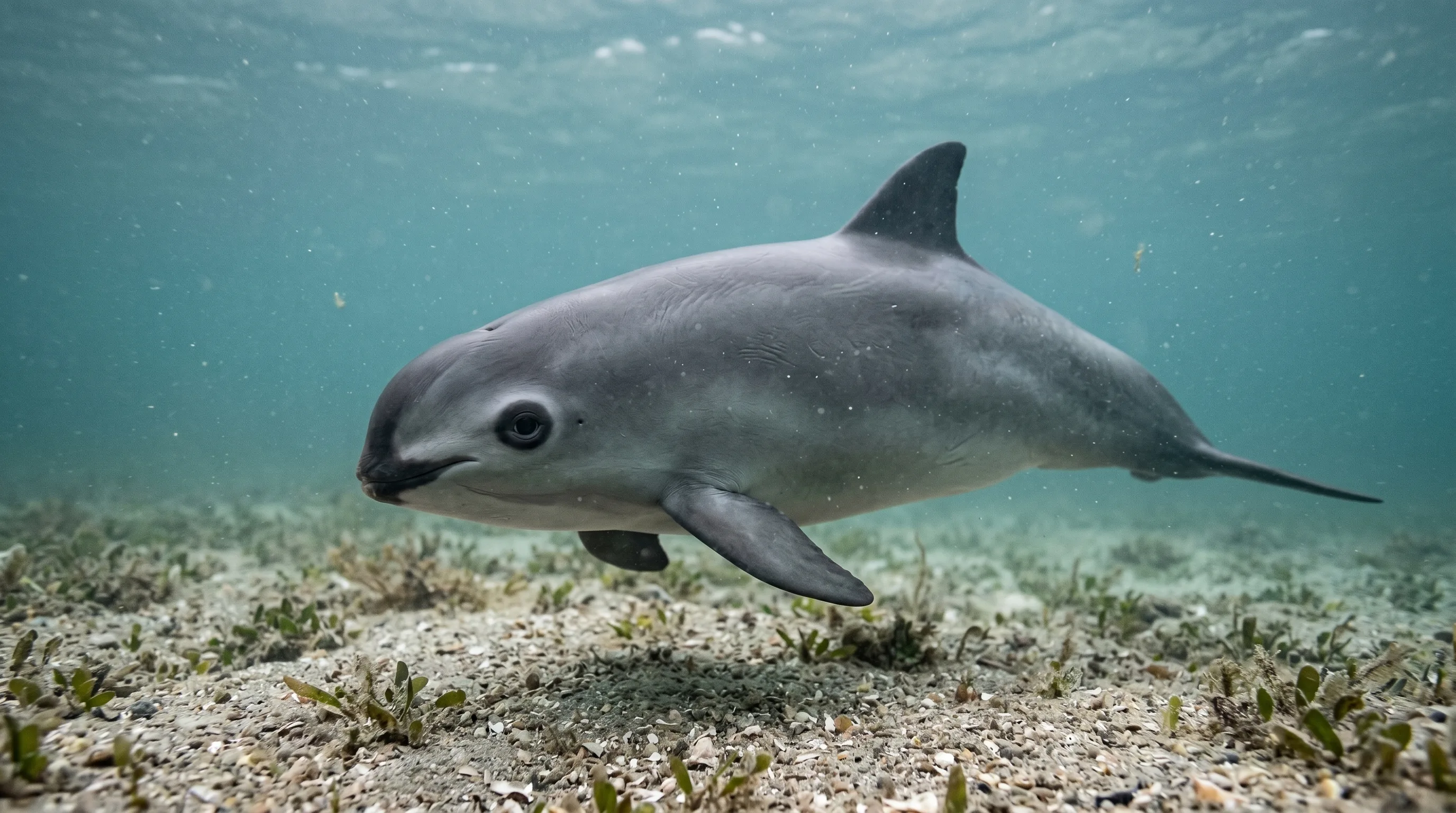
Vaquita (Phocoena sinus)
Introduction
The northern Gulf of California in the early morning carries a particular stillness that feels almost sacred. The water is warm, turbid with sediment, and laced with the remnant chemistry of the Colorado River's ancient outflow. Pelicans drift overhead. A shrimp trawler idles on the horizon. And somewhere beneath the green-grey surface — perhaps within a few square kilometres of the Mexican fishing village of San Felipe — a small, pale cetacean moves through the column of shallow water, using echolocation to locate a croaker fish in the murk.
This is the vaquita. "Little cow" in Spanish — a name that suggests something sturdy, familiar, even common. Nothing could be further from the truth. The vaquita is the world's most endangered marine mammal, and quite possibly the most endangered mammal of any kind on Earth. With a population estimated at fewer than ten individuals and a range smaller than almost any other cetacean on record, it exists at the very edge of biological viability, balanced on a knife's edge between survival and permanent extinction.
What makes the vaquita's plight so striking — beyond the sheer scarcity of its numbers — is the speed of its collapse. Within a single human lifetime, a species of small porpoise, never particularly abundant but once numbering in the hundreds, has been reduced to a ghost population. It wasn't hunted for its meat or oil. It wasn't targeted with deliberate malice. It was simply caught, again and again, in the nets meant for other animals, until barely enough individuals remained to sustain the population's genetic future.
This article is an attempt to understand the vaquita on its own terms — as a biological entity shaped by millions of years of evolution, as an ecological component of a unique marine system, and as a creature whose disappearance would represent not merely a statistic but the permanent silencing of an entire evolutionary lineage. To know the vaquita is to understand something profound about the relationship between human enterprise and the natural world.
"The question is whether any civilisation can wage relentless war on life without destroying itself, and without losing the right to be called civilised."
— Rachel Carson, Silent Spring
Scientific Classification
Kingdom: Animalia
Phylum: Chordata
Class: Mammalia
Order: Artiodactyla (encompassing Cetacea)
Suborder: Odontoceti (toothed whales)
Family: Phocoenidae (true porpoises)
Genus: Phocoena
Species: Phocoena sinus Norris & McFarland, 1958
The vaquita was formally described as a species in 1958 by Kenneth S. Norris and William N. McFarland, based on three skulls collected from the northern Gulf of California. Its species epithet, sinus, is Latin for "gulf" or "bay," a direct reference to its exclusive home range. Within the family Phocoenidae — which contains six living species of true porpoise — the vaquita occupies a somewhat isolated phylogenetic position, most closely related to the Burmeister's porpoise (Phocoena spinipinnis) of South America, a biogeographic puzzle that suggests ancestral dispersal from South American waters northward into the Gulf of California, likely during Pleistocene-era sea level and current changes.
The family Phocoenidae diverged from other odontocetes (toothed whales) approximately 15 million years ago during the Miocene epoch. Porpoises are distinguished from dolphins primarily by their spade-shaped teeth (rather than conical), their blunt, beak-less rostrums, and their generally smaller, more compact bodies. The vaquita represents the extreme end of the family's size reduction, being the smallest of all living cetaceans.
Physical Characteristics
The vaquita is, by every metric of measurement, a small animal. Adult females reach lengths of approximately 140 to 150 centimetres and weigh between 43 and 55 kilograms. Males are notably smaller — a reversed sexual dimorphism unusual among cetaceans — measuring roughly 130 to 140 centimetres and weighing 30 to 45 kilograms. This makes the vaquita not only the smallest porpoise but the smallest cetacean species alive today, smaller even than its relatives the harbour porpoise and Dall's porpoise.
The body form is compact and robust — a hydrodynamic shape suited to the shallow, energetic water of the upper Gulf. The head is rounded without a pronounced beak, the flippers are proportionally large and swept back, and the dorsal fin is distinctively tall and triangular for a porpoise of this size. The taller dorsal fin may be an adaptation to the warmer water temperatures of the Gulf of California, functioning as a thermoregulatory surface to shed heat — a trait observed across cetacean species living in warm, shallow coastal environments.
The vaquita's colouration is among its most distinctive features. The dorsal surface is medium to dark grey, transitioning on the flanks to a lighter grey, and fading to a pale grey-white on the underside. Around the eyes are striking dark grey to black patches, and the lips carry bold dark markings that together give the animal a striking "panda-like" facial appearance. These periorbital and perilabial patches are unique to the vaquita within the Phocoenidae family and serve as its most reliable field identification marker.
Trait | Vaquita (Phocoena sinus) | Harbour Porpoise (Phocoena phocoena) | Dall's Porpoise (Phocoenoides dalli) |
|---|---|---|---|
Adult length (female) | 140–150 cm | 155–165 cm | 180–210 cm |
Adult weight (female) | 43–55 kg | 61–77 kg | 130–220 kg |
Dorsal fin shape | Tall, triangular | Low, triangular | Small, falcate |
Distinctive markings | Dark eye and lip patches | Dark lips only | Bold black-and-white pattern |
Geographic range | Upper Gulf of California only | North Atlantic & North Pacific | North Pacific Ocean |
IUCN Status | Critically Endangered | Least Concern | Least Concern |
The skin of the vaquita is smooth, with no external hair. Like all cetaceans, it maintains its body temperature through a layer of subcutaneous blubber, which in the vaquita is relatively thin compared to cold-water species — again reflecting the warm environment it inhabits. The teeth, like those of all phocoenids, are spade-shaped rather than conical, a specialisation for gripping slippery fish and squid rather than tearing prey.
Internally, the vaquita possesses the echolocation apparatus common to all odontocetes: a melon — the fatty, rounded structure in the forehead — that focuses high-frequency sound pulses produced in the nasal passages, and a lower jaw modified to conduct returning sound vibrations to the inner ear. The vaquita produces clicks in the ultrasonic range, at frequencies significantly higher than those of most dolphins, an acoustic trait shared across porpoise species that likely reduces interference from environmental noise.
Fun Fact The vaquita is the world's smallest cetacean — smaller than any dolphin, whale, or other porpoise. An adult female weighs roughly the same as a large domestic dog.
Habitat & Geographic Distribution
No cetacean species on Earth has a more restricted range than the vaquita. Its entire world — its historical range, its foraging grounds, its breeding habitat, its universe — occupies a narrow band of warm, shallow water in the extreme northern tip of the Gulf of California, bounded roughly by the area between the Colorado River delta to the north, the Mexican coast to the west, and the Baja California peninsula to the west. This range has been estimated at approximately 2,235 square kilometres, a figure that dwarfs in its smallness the ranges of virtually every other marine mammal.
The habitat preferences of the vaquita are tightly constrained. The species consistently occupies water depths shallower than 50 metres, with most sightings and acoustic detections concentrated in the 11 to 50 metre depth range. The species shows a strong preference for turbid water — water clouded by suspended sediment — which in the upper Gulf results from tidal mixing, wind action, and the historical outflow of the Colorado River. This turbidity, counterintuitively, is an asset: it concentrates the species of small fish that the vaquita relies upon, and it may offer some degree of concealment from predators.
The preference for shallow, murky coastal water defines not only where the vaquita lives but what threatens it. This same shallow zone is the zone worked most intensively by the small-scale fishing fleets of San Felipe and El Golfo de Santa Clara. The overlap between vaquita habitat and fishing effort is almost total, a geographic coincidence that has proven catastrophic.
The ecological context of the upper Gulf of California is significant. This region is a UNESCO Biosphere Reserve — the Upper Gulf of California and Colorado River Delta Biosphere Reserve — recognised for its exceptional marine biodiversity. The area receives upwelling from the deep central Gulf, which drives remarkable productivity. Fish abundance here historically supported both indigenous Cucapá fishing communities and the rich food web that includes the vaquita, its prey species, and its predators. The reduction of the Colorado River's flow, following construction of Hoover Dam and Glen Canyon Dam in the twentieth century, has significantly altered the sediment dynamics and salinity gradients of the upper Gulf, modifying the exact habitat conditions that shaped vaquita evolution and ecology.
Behaviour & Social Structure
The vaquita is among the most elusive cetaceans ever studied. Its shyness around vessels has made direct behavioural observation extraordinarily difficult, and much of what is known about its social behaviour comes from a relatively small number of aerial survey sightings, acoustic monitoring, and the rare up-close observations made by researchers in the late twentieth and early twenty-first centuries before population collapse rendered individual encounters vanishingly rare.
What is known paints a picture of a largely solitary or loosely social animal. Groups observed in historical surveys were almost invariably small — typically one to three individuals, occasionally four or five. There is no evidence of the large, complex social groups seen in dolphins, nor of the matrilineal family structures that characterise sperm whales and orcas. The vaquita appears to be a relatively asocial cetacean, a pattern consistent with other porpoise species, which in general live less gregarious lives than dolphins.
Communication in the vaquita is almost certainly dominated by echolocation. Like all porpoises, the vaquita uses high-frequency ultrasonic clicks — its biosonar — to navigate, locate prey, and potentially communicate with conspecifics. Researchers from the CIRVA (International Committee for the Recovery of the Vaquita) deployed acoustic monitoring buoys in vaquita habitat beginning in the early 2000s, and these have provided crucial data about the species' presence and distribution even as direct sightings became impossible. The acoustic signals of the vaquita are among the highest frequency produced by any cetacean, with peak energy at around 130 kHz.
The species is described consistently in the literature as shy, timid, and easily disturbed by vessel noise. Unlike harbour porpoises — which will occasionally bow-ride in front of slow vessels — vaquitas actively avoid approaching boats, typically diving and moving away at the sound of an engine. This avoidance behaviour almost certainly has adaptive roots: in a shallow, confined habitat with intense fishing activity, wariness of large, motorised objects may have been a selection pressure over generations. That same wariness, paradoxically, has made conservation efforts extraordinarily difficult — the attempted VaquitaCPR project in 2017 struggled enormously simply to locate and approach individuals.
Territorial behaviour in the vaquita has not been formally documented, likely because the low population density and limited opportunities for study have made direct observation of inter-individual interactions nearly impossible. However, given the restricted range and the relatively small home ranges inferred from resighting data, it seems likely that individual vaquitas occupy loosely defined areas within the upper Gulf.
Daily Life & Activity Cycle
The daily existence of a vaquita is structured around the rhythms of the Gulf of California's tidal dynamics and the behaviour of its prey. The upper Gulf experiences among the highest tidal amplitudes in North American coastal waters — tidal ranges of up to seven metres have been recorded near the Colorado River delta — and these powerful tidal currents drive the concentration and dispersal of the small fish and squid that form the vaquita's diet. A foraging vaquita is, in essence, surfing the tide, exploiting the predictable aggregations of prey that tidal mixing creates.
The vaquita appears to be active across both day and night, as is consistent with an echolocating predator whose sensory system is largely independent of light. Acoustic monitoring data suggests continuous activity throughout the diel cycle, though there may be peaks of activity at dawn and dusk — a crepuscular pattern observed in many shallow-water marine predators that mirrors the movement patterns of prey species responding to light changes. The animal surfaces to breathe every 60 to 90 seconds on average, with dive durations rarely exceeding two or three minutes, consistent with shallow-water foraging in a species that does not rely on deep dives to find food.
Movement within the upper Gulf follows the seasonal redistribution of prey. Studies based on historical sighting surveys and acoustic data suggest that vaquitas may concentrate more heavily in the deeper, central parts of their range during summer months when water temperatures are highest at the surface — the upper Gulf can reach 32°C in summer — and shift toward shallower nearshore zones in the cooler winter months when water temperatures drop to 14–16°C. This seasonal movement is modest by marine mammal standards, well within the confines of the Biosphere Reserve, and cannot be classified as migration in any meaningful sense.
The animal's small body size means metabolic demands are relatively high per unit of body mass compared to larger cetaceans. A vaquita must consume a significant proportion of its body weight in prey each day — estimates suggest approximately 5 to 10 percent of body mass daily — meaning that a productive day's hunting requires sustained, efficient foraging rather than the periodic gorging that characterises large whales.
Diet & Survival Strategies
The vaquita is a generalist predator of small, demersal (bottom-associated) and mesopelagic fish and invertebrates. Stomach content analyses from stranded animals and bycatch specimens collected over the decades of study have revealed a diet dominated by roughly a dozen species of fish, with smaller contributions from squid and crustaceans. Among the fish, the most commonly reported prey include chano (Micropterus salmoides-group relatives), grunts (family Haemulidae), croakers and corvinas (family Sciaenidae), lizardfish (family Synodontidae), and various small mullets.
What unites most of these prey species is their association with shallow, soft-sediment environments — the same turbid, murky habitat that the vaquita calls home. The vaquita's echolocation is particularly well-suited to this environment. High-frequency clicks provide exceptional spatial resolution over short distances, allowing the animal to detect and track small, fast-moving fish in water where visual hunting would be nearly impossible. The spade-shaped teeth, while less impressive than the conical teeth of dolphins, are effective at gripping the slippery, streamlined bodies of fish and preventing their escape once caught.
Prey capture in porpoises has been observed to involve rapid acceleration and precise head turns — a style of hunting that demands high manoeuvrability. The vaquita's relatively large flippers and flexible body facilitate tight turning in the shallow water over the Gulf's sandy and muddy substrate. The animal likely herds individual fish into corners formed by bathymetric features — ridges of sand, shell beds, slight gradients — before striking. There is no evidence of cooperative hunting; the vaquita appears to be a solitary forager.
Competition for prey with other predators — notably cormorants, pelicans, sea lions, and the larger fish-eating birds of the upper Gulf — is probably diffuse rather than direct. The vaquita exploits a niche — nocturnal and crepuscular hunting in turbid, shallow water using ultrasonic echolocation — that is not precisely replicated by any other predator in the system. This niche specificity has both protected the species from direct competitive exclusion and made it vulnerable to disruption: any change in the abundance or distribution of its prey, whether from altered water flows, increased sedimentation from agricultural runoff, or the effects of intensive fishing on the fish communities of the upper Gulf, directly threatens the vaquita's food supply.
Fun Fact The vaquita's echolocation clicks operate at frequencies around 130 kHz — far beyond the range of human hearing (maximum ~20 kHz) and higher than almost any other cetacean. This extreme frequency provides extraordinary precision at short range in murky water.
Interaction with Other Animals
The vaquita exists at the intersection of a complex food web that, despite the upper Gulf's relatively limited geographic scope, encompasses dozens of species and ecological guilds. Understanding the vaquita's interactions with other animals — as predator, potential prey, and ecological neighbour — is fundamental to understanding its role in the system.
As a predator, the vaquita exerts pressure on populations of small fish and squid in the northern Gulf. At historical population sizes — perhaps 500 to 600 individuals in the 1990s — the total consumption pressure from vaquitas was meaningful at the local level, though likely modest compared to the enormous fishing pressure exerted by human fleets. At the current near-extinct population level, the vaquita has effectively ceased to function as a predator in any ecologically meaningful sense.
The vaquita's own predators are not well documented, but potential threats from above include large sharks — particularly the bull shark (Carcharhinus leucas), which is known to enter the shallow, turbid waters of the upper Gulf — and the orca (Orcinus orca), which occasionally ventures into the Gulf of California. Large shark species such as the great white (Carcharodon carcharias) also occur in the broader Gulf ecosystem. The vaquita's elusive, shy behaviour and preference for very shallow water may be partly an anti-predator strategy, as shallow water limits the approach angles available to large, deep-bodied sharks.
The most significant and tragic interspecific interaction involving the vaquita is its relationship with the totoaba (Totoaba macdonaldi). The totoaba is a large, critically endangered fish endemic to the Gulf of California, whose swim bladder is smuggled to Chinese black markets where it fetches prices of tens of thousands of dollars per kilogram — earning it the grim nickname "aquatic cocaine." Poachers use large-mesh gillnets to target totoaba, and these same nets prove lethal to vaquitas, which become entangled and drown. The totoaba-vaquita connection represents one of the most perverse ecological tragedies in modern conservation history: the illegal hunting of one critically endangered species directly drives the extinction of another.
The California sea lion (Zalophus californianus) and various seabird species compete with the vaquita for some of the same prey resources in the upper Gulf, but this competition is believed to be a secondary concern compared to the direct threat of entanglement. The vaquita also shares its habitat with the endemic Gulf of California harbour porpoise — a common misconception, as the vaquita is the only small cetacean resident in the extreme northern Gulf. However, bottlenose dolphins (Tursiops truncatus) and common dolphins (Delphinus delphis) do occur in the broader Gulf, and there may be some indirect competition through the prey fish they target.
It is June in the upper Gulf of California. The water temperature has climbed to 28°C, and the tidal current running southward through the biosphere reserve carries a freight of suspended sediment that turns the sea the colour of milky jade. A vaquita female — one of the last of her kind — moves through this opaque world with quiet efficiency. She emits a rapid series of echolocation clicks, each one a tiny ultrasonic pulse that bounces off the sandy bottom five metres below, off the school of grunts moving thirty degrees to her left, and off the geometric mass of a half-submerged gillnet drifting in the current forty metres ahead.
She turns. It is not a dramatic or violent evasion — simply a subtle banking of her large flippers, a redirection of momentum. She has encountered nets before. She has learned, in the way that individual animals learn through experience, to deviate from paths that carry the acoustic signature of monofilament mesh. But the nets are everywhere now, and the gulf of open water between them grows narrower with each season.
She finds the grunts. She accelerates in a burst that churns the silt beneath her, snaps once, twice, and then rises to the surface with a breath so brief and quiet that the pelican overhead does not stir. She descends again. The water is warm, productive, and old — this gulf, this precise corner of the world, shaped her ancestors over millennia. She has no knowledge of her own rarity. She simply lives, in the only world she has ever known.
Somewhere in the same stretch of water, an acoustic monitoring buoy — a cylinder of instruments anchored to the bottom by scientists who have dedicated careers to this species — records the faint signature of her passage. It is the most reliable evidence of her existence: a pattern of clicks in a sea of silence.
Interaction with Environment
The relationship between the vaquita and its physical environment is one of deep specificity. The animal's entire biological existence is calibrated to the ecological conditions of the extreme northern Gulf of California — conditions that are themselves the product of a delicate interaction between ocean chemistry, tidal physics, river hydrology, and desert climate. Any disruption to these conditions ripples directly through the vaquita's biology.
The turbidity of the northern Gulf is not merely an incidental feature of the landscape; it is a defining ecological force. Suspended sediments create a light-attenuated environment that favours the bottom-feeding and midwater fish species that form the vaquita's prey base. Turbidity also concentrates organic matter and nutrients that support the lower trophic levels — phytoplankton, zooplankton, benthic invertebrates — upon which the vaquita's prey depends. An echolocating predator is uniquely equipped to exploit this opaque environment, and the vaquita's acoustic system can be understood as an evolutionary response to the specific sensory challenge of hunting in turbid water.
The Colorado River's diminished outflow has profoundly altered this system. Prior to the twentieth century's dam construction, the Colorado carried enormous volumes of freshwater and sediment into the upper Gulf, creating a zone of brackish, sediment-rich water that drove exceptional productivity. The near-total cessation of the river's flow — it now rarely reaches the sea — has reduced sediment input, increased salinity in the northern basin, and likely altered the distribution and abundance of prey fish species. While the full ecological consequences of this change for the vaquita specifically are difficult to disentangle from the more immediate threat of gillnet mortality, the long-term degradation of the vaquita's habitat is an undeniable background stressor.
Agricultural runoff — the upper Gulf receives drainage from the intensive irrigated agriculture of the Mexicali Valley and the Imperial Valley of California — adds pesticides, fertilisers, and other contaminants to the northern Gulf. Studies of marine mammals in similarly stressed coastal environments have documented bioaccumulation of persistent organic pollutants in blubber and liver tissue, impairment of immune function, and reproductive disruption. While tissue analysis data for the vaquita is limited by the extreme rarity of samples, the species almost certainly carries contaminant loads that compound the stress of population decline.
Reproduction & Parenting
The reproductive biology of the vaquita imposes hard constraints on the speed at which the population can recover — even in theory, even if all gillnet mortality were eliminated tomorrow. Understanding these constraints is essential for any realistic assessment of the species' prospects.
Female vaquitas reach sexual maturity at approximately three to six years of age. Gestation lasts roughly ten to eleven months. Females produce a single calf and are believed to have a calving interval of approximately two years — meaning that under optimal conditions, a single female produces roughly one calf every two years after reaching maturity. This low reproductive rate is characteristic of the Phocoenidae family and reflects the K-selection strategy common among cetaceans: few offspring, high parental investment, high survival rate per individual rather than high fecundity.
Calving in the vaquita appears to peak in late winter and spring — particularly in the months of February through April — based on the size classes and developmental stages of young animals encountered in historical surveys. Neonates are estimated to measure approximately 70 to 78 centimetres at birth, and are weaned at some point in the first year of life, though the exact duration of nursing is unknown. The mother-calf bond in porpoises is strong during the nursing period; calves remain closely associated with their mothers during this time, learning prey capture techniques and potentially navigation of the habitat.
The small population currently surviving carries significant implications for genetic diversity and reproductive success. With fewer than ten individuals remaining, the vaquita population is almost certainly experiencing the early signs of inbreeding depression — the accumulation of deleterious recessive alleles that occurs when closely related individuals mate — and potentially Allee effects, where the low density of the population makes it difficult for males and females to locate one another and reproduce successfully. The combination of a low natural reproductive rate with these small-population biological hazards creates an extremely steep challenge for recovery, even under the most optimistic conservation scenarios.
Curiously, genetic analyses conducted on samples from vaquita individuals — collected from museum specimens, bycatch carcasses, and opportunistic samples — have revealed that the species carries surprisingly moderate levels of genetic diversity relative to its small census size. This finding, published by researchers in 2022 and 2023, suggests that the historical vaquita population, while always small compared to most cetaceans, maintained enough genetic variation to potentially support recovery if the mortality source can be eliminated. This finding has been interpreted cautiously but as a tentative cause for guarded optimism among geneticists working on the species.
Evolutionary Adaptations
The vaquita represents the product of millions of years of evolutionary refinement in a highly specific ecological context. Its adaptations — physical, physiological, and behavioural — reflect the demands of life as a small predator in a warm, shallow, turbid sea at the boundary between desert and ocean.
The tall, proportionally large dorsal fin is among the most conspicuous and ecologically significant of the vaquita's anatomical specialisations. In cetaceans, dorsal fin size has been linked to thermoregulation — the fin's extensive blood vessel network allows heat exchange with the surrounding water. In the warm Gulf of California, where summer sea surface temperatures far exceed those of typical porpoise habitats in temperate oceans, a large dorsal fin functions as a radiator, allowing the animal to offload metabolic heat into the environment. This is the opposite of the problem faced by Arctic cetaceans, which must conserve heat, and it explains why the vaquita's dorsal fin is taller and broader than that of its temperate-water relative, the harbour porpoise.
The echolocation system of the vaquita is adapted specifically to its foraging environment. The unusually high frequency of its biosonar clicks — peaking around 130 kHz — provides extremely short-range but high-resolution imaging of the local environment. In turbid water where visual range may be limited to centimetres, the ability to build a detailed acoustic picture of nearby prey is not merely useful — it is existentially necessary. The vaquita's melon is relatively well developed, suggesting a sophisticated sound-focusing ability refined over evolutionary time for precision hunting in low-visibility conditions.
The vaquita's body size — its smallness — is itself an adaptation. Small body size in marine mammals is generally associated with warm water environments, where insulation requirements are reduced and heat loss can be managed through the skin and fins rather than through thick blubber. The vaquita's thin blubber layer is consistent with life in water that never approaches freezing, and its reduced mass lowers absolute metabolic costs, allowing survival on the relatively modest prey resources of the upper Gulf's near-shore zone.
Behaviourally, the extreme shyness of the vaquita toward human-associated stimuli — boat engines, vessel wakes, human voices — may represent a form of cultural learning or individual conditioning rather than a purely innate evolved response, given that human fishing in the upper Gulf has intensified primarily over the last century. Whatever its origin, this wariness has proven both adaptive (reducing direct encounters with fishing gear when nets are actively worked) and maladaptive (making conservation interventions, including the VaquitaCPR capture program, extremely difficult to execute).
Ecological Importance
The vaquita occupies a modest but real ecological role in the upper Gulf of California food web. As a meso-predator — feeding on small fish and invertebrates while remaining vulnerable to larger sharks and orcas — the vaquita participates in the trophic transfer of energy from lower food web levels to higher ones, and its consumption pressure on prey fish species helps regulate their populations in the local ecosystem.
The keystone importance of the vaquita is, however, arguably less about its direct trophic impact than about what its presence signals about the health of the broader ecosystem. A healthy upper Gulf of California — with adequate freshwater input from the Colorado River, well-managed fisheries, controlled illegal fishing, and minimal contaminant runoff — is a healthy vaquita. Conversely, the conditions that have driven the vaquita toward extinction — uncontrolled gillnet fishing, illegal totoaba poaching, reduced freshwater flows, pollution from agricultural drainage — represent a comprehensive degradation of the upper Gulf ecosystem as a whole.
In this sense, the vaquita functions as an umbrella species: the conditions required for its survival would benefit the entire ecological community of the northern Gulf, including commercially and culturally important fish species, seabirds, sea lions, and the coastal human communities that depend on healthy fisheries. Conservation of the vaquita, framed correctly, is not conservation of a single obscure porpoise. It is conservation of an entire ecosystem.
The potential extinction of the vaquita would also represent a catastrophic and irreversible loss of evolutionary heritage. The species is the sole member of its ecotype — a warm-water porpoise perfectly adapted to shallow, turbid desert seas — and its disappearance would eliminate a unique evolutionary trajectory accumulated over millions of years. No amount of future conservation effort could recreate what would be lost.
Fun Fact The vaquita has one of the smallest geographic ranges of any marine mammal on Earth — its entire known habitat covers roughly 2,235 km², less than the area of the English county of Dorset.
Threats & Conservation
The vaquita's catastrophic population decline is, at its core, a story of a single overwhelming threat compounded by a cascade of secondary stressors. That primary threat is entanglement in gillnets — both legal fishing gear set for shrimp and fish species, and the illegal large-mesh nets deployed by poachers targeting the totoaba. Death by gillnet entanglement is a mundane, suffocating end: the animal becomes wrapped in monofilament mesh, cannot surface to breathe, and drowns within minutes. It is not selective. It kills the old and the young, the pregnant and the juveniles, with complete indifference.
The totoaba poaching crisis accelerated the vaquita's decline at a critical moment. By the mid-2010s, when vaquita numbers had already been reduced to the low hundreds, the explosion of totoaba poaching — driven by soaring prices for swim bladders on Chinese luxury markets — introduced an additional surge of gillnet effort directly within vaquita habitat. The response of the vaquita population to this added pressure was visible and immediate: the rate of decline approximately doubled compared to pre-poaching-crisis levels. From an estimated 97 individuals in 2014, the population plummeted to roughly 30 by 2016, and to an estimated 12 to 15 by 2017.
Conservation responses have been significant in scale if insufficient in effect. The Mexican government banned gillnet fishing within vaquita habitat in 2015 and reinforced the ban with additional measures in subsequent years, including a permanent gillnet ban throughout the biosphere reserve's core zone. Enforcement has been the fundamental problem — the fishing communities of San Felipe and El Golfo de Santa Clara are economically dependent on exactly the kind of fishing that threatens the vaquita, and the incentives offered by totoaba poaching networks are enormous compared to the income from legal fishing.
The IUCN's detailed threat assessment places the vaquita firmly within the category of species facing imminent extinction without sustained, effective intervention. Conservation programmes — including the VaquitaCPR project, acoustic monitoring networks, and collaborative governmental efforts — are described in detail in Section 14.
IUCN Red List Analysis
Current IUCN Status
The vaquita is listed as Critically Endangered (CR) on the IUCN Red List — specifically, it qualifies under criterion A4bde, reflecting a population reduction exceeding 80 percent over three generations, as well as criterion C2a(ii), reflecting a total population size of fewer than 250 mature individuals and continuing decline. More fundamentally, the vaquita occupies a de facto status that many biologists and conservation scientists consider equivalent to functionally extinct: a population of fewer than ten individuals, confined to a single location, with a reproductive rate insufficient to recover even under optimal conditions unless mortality is entirely eliminated immediately.
The species has been assessed as Critically Endangered by the IUCN since 1996, and each subsequent reassessment has intensified the severity of the prognosis. The most recent formal IUCN assessment, conducted in 2017 and periodically reviewed since, reflects a population trajectory that has offered no signs of reversal. Every quantitative population viability analysis conducted on the species has concluded that survival is possible only if gillnet mortality is brought to zero and maintained there over a period of years to allow natural reproduction to gradually increase population size.
Population Trend
The population trend of the vaquita is unambiguously decreasing, and the decline has been steep, rapid, and almost uninterrupted since the first systematic estimates were made in the mid-1990s. The first comprehensive population estimate, published by Vidal in 1993, suggested approximately 570 animals. A 1997 survey revised this to approximately 567. By 2008, the population had declined to an estimated 245 individuals — a reduction of more than 50 percent in roughly a decade. By 2012 the estimate stood at approximately 200, and the rate of decline accelerated dramatically thereafter.
Year | Estimated Population | Primary Data Source |
|---|---|---|
1993–1997 | ~567 | Visual survey (Vidal 1993; Barlow et al. 1997) |
2008 | ~245 | Systematic visual survey |
2012 | ~200 | Visual and acoustic survey |
2015 | ~97 | CIRVA acoustic monitoring |
2016 | ~30 | CIRVA acoustic monitoring |
2017 | ~12–15 | Passive acoustic monitoring (PAM) |
2018–2019 | 6–22 | PAM + visual survey |
2021–2023 | <10 (estimated) | PAM + opportunistic sightings |
By the time of the most recent acoustic monitoring surveys in 2021 through 2023, evidence suggested that fewer than ten individuals — and possibly as few as six — survived. Acoustic detections continued to be made in the core habitat area south of San Felipe, indicating that some individuals persisted, but the frequency and geographic distribution of these signals contracted further compared to previous years. Positively, genetic analyses published in 2022 demonstrated that the surviving individuals retained greater genetic diversity than their numbers might suggest, offering a narrow scientific basis for cautious hope.
Main Threats
Bycatch in gillnets remains the primary driver of vaquita mortality. Both legal fishing operations targeting shrimp, corvina, curvina, and other commercially valuable species, and illegal totoaba-targeting operations, deploy gillnets within vaquita habitat. A single gillnet set overnight in prime vaquita habitat carries a non-trivial probability of entangling and drowning a vaquita. At current population densities, any bycatch mortality is potentially catastrophic — the loss of even one or two reproductive females per year may exceed the population's replacement rate.
Illegal totoaba poaching represents the most acute and acute pressure on the species. Totoaba swim bladders sell on the Chinese black market for anywhere between $20,000 and $80,000 USD per kilogram, making them among the most valuable wildlife contraband by weight in the world. Organised crime networks — some with connections to drug trafficking organisations — coordinate the poaching operations, provide capital for gear and boats, and manage the smuggling routes. The economic power behind totoaba poaching vastly outstrips the resources available to enforcement agencies, creating a chronic enforcement deficit within the biosphere reserve.
Habitat degradation exerts a longer-term, lower-intensity pressure. The near-complete cessation of the Colorado River's flow into the northern Gulf has altered sediment dynamics, salinity gradients, and primary productivity in ways that are difficult to quantify but probably reduce the quality of vaquita habitat. The region also receives contaminated agricultural drainage from the Mexicali and Imperial Valley irrigation systems, introducing persistent organic pollutants, heavy metals, and nutrient loads that affect water quality and potentially the health of prey fish communities.
Climate change represents an emerging threat. Rising sea surface temperatures in the Gulf of California — a statistically documented trend — may push prey fish distributions, affect productivity cycles, and intensify hypoxic events (dead zones of low oxygen) in the shallow northern Gulf during summer months. The narrow geographic range of the vaquita means it cannot track prey into cooler water as temperatures rise.
Small population effects — inbreeding, demographic stochasticity, Allee effects — are now directly relevant at current population sizes, adding biological fragility to the already desperate situation created by external threats.
Ecological Consequences
The extinction of the vaquita would represent the first cetacean extinction caused directly and exclusively by human fishing activity in the modern era. While other cetacean species — the baiji (Lipotes vexillifer) of the Yangtze River, declared functionally extinct in 2006 — have been lost or nearly lost through combinations of pollution, shipping, and overfishing, the vaquita's case would be the cleanest and most damning demonstration of the capacity of localised fisheries bycatch to erase an entire species.
Within the upper Gulf ecosystem, the loss of the vaquita would remove a predator from the food web, potentially allowing modest increases in the small fish species it consumes. However, the ecological impact of this change is likely to be minor — at current population densities, vaquita predation pressure is already negligible. The more significant ecological consequence would be systemic: the conditions that have allowed the vaquita to reach the brink of extinction are the same conditions — uncontrolled illegal fishing, insufficient enforcement, habitat degradation — that are damaging the broader fisheries of the northern Gulf. The loss of the vaquita would signal the failure of the entire ecosystem management framework for this region, with consequences for the many commercially important species that share its habitat.
There is also an irreversible loss of evolutionary heritage. The Phocoenidae family would lose its only warm-water, tropical-desert adapted member, eliminating a lineage that evolved specific acoustic, thermoregulatory, and foraging adaptations unavailable in any other living cetacean. This kind of evolutionary loss is different in kind from the death of individual animals — it is the permanent closure of a biological possibility that took millions of years to create.
Conservation Efforts
Conservation efforts for the vaquita have been substantial in intent and highly visible in the global media, if ultimately insufficient in outcome. The International Committee for the Recovery of the Vaquita (CIRVA), established in 1997, has coordinated the scientific monitoring and policy recommendations that form the backbone of the conservation programme. CIRVA's biennial reports, drawing on data from passive acoustic monitoring networks, visual surveys, and population modelling, have provided the most reliable assessments of population status available.
The Mexican federal government declared a two-year emergency gillnet ban in vaquita habitat in 2015, backed by a compensation scheme for affected fishermen. This was converted to a permanent gillnet ban in 2017 following further population declines. The enforcement of this ban has been carried out primarily by the Mexican Navy, which has maintained a patrol presence within the Biosphere Reserve's core zone. Sea Shepherd Conservation Society has cooperated with the Mexican government through its Operation Milagro programme, deploying vessels to assist with net removal within the vaquita refuge area — reportedly removing hundreds of gillnets from the protected zone since 2015.
The VaquitaCPR (Care, Protection, and Recovery) project of 2017 was an attempt to capture surviving vaquitas and hold them in a protected sea pen within the Gulf of California, shielded from gillnet mortality, while the habitat was cleared of illegal fishing gear. The project — which brought together the world's leading marine mammal veterinarians, trainers, and conservation biologists — was ultimately abandoned after a female vaquita died following capture and handling. The decision was a wrenching one, made by scientists who concluded that the stress of capture posed unacceptable risks to an animal present in fewer than twenty individuals. The failure of VaquitaCPR definitively closed the captive-breeding option and refocused conservation efforts entirely on in situ protection of the wild population.
International conservation pressure has been applied through CITES (the Convention on International Trade in Endangered Species), under which both the vaquita and the totoaba are listed on Appendix I — the highest level of protection. The illegal totoaba trade has been targeted through actions by CITES, Interpol, and law enforcement agencies in Mexico, the United States, and China. The upper Gulf of California and Colorado River Delta Biosphere Reserve is a UNESCO-recognised protected area, providing an additional layer of international recognition and obligation for the Mexican government.
Future Outlook
The future of the vaquita is the most distressing prognosis in contemporary conservation biology. At fewer than ten individuals — some estimates suggest the true number may be six or fewer — the species has crossed the threshold at which extinction becomes statistically probable on a short timescale under most modelled scenarios. Even if every gillnet in the northern Gulf were removed tonight, the surviving animals would need to find one another, mate successfully, produce viable calves, and repeat this process over two to three generations to establish even a minimally viable population — a process requiring ten to twenty years of consistent reproduction with zero mortality from human sources and zero reproductive failure.
The genetic data is, paradoxically, a sliver of encouragement. The 2022 genomic study suggested that the vaquita's genetic diversity, while lower than historical levels, is sufficient to support a recovering population without immediate catastrophic inbreeding effects. This finding suggests that the species has not yet crossed an irreversible genetic collapse threshold, provided that immigration of diverse genotypes — impossible in a species with no other population to draw from — is not required. Recovery, while improbable under any realistic scenario, is not biologically impossible.
The realistic outlook requires acknowledging several uncomfortable truths simultaneously: that the primary threat — illegal totoaba poaching and the organised crime networks that drive it — has not been dismantled; that enforcement of the gillnet ban within the Biosphere Reserve remains inconsistent; that the economic incentives driving illegal fishing vastly outweigh the incentives available for compliance; and that the reproductive biology of the species severely limits the rate at which even a successful conservation response could rebuild the population. Most population biologists who have modelled vaquita dynamics conclude that extinction within the next decade is more probable than recovery, and many use the word "inevitable" in private correspondence even as they continue the work of conservation in public.
The most constructive framing of the vaquita's future is perhaps this: the question is not whether the species can be saved by heroic conservation action alone, but whether the systemic conditions — effective fisheries enforcement, sustainable livelihoods for fishing communities, international enforcement against wildlife trafficking — can be changed rapidly and completely enough to give the last few individuals a chance to do what evolution designed them to do: survive, reproduce, and persist.
"We do not inherit the Earth from our ancestors; we borrow it from our children."
— Antoine de Saint-Exupéry (widely attributed)
Human Relationship
The relationship between the vaquita and human communities in the northern Gulf of California is layered with complexity that resists simple moral framing. The small-scale fishing communities of San Felipe and El Golfo de Santa Clara have worked the upper Gulf for generations, and the vaquita has inhabited the same waters throughout that history, largely invisible to the fishermen who shared its world. For most of that time, the relationship between the fishing communities and the vaquita was not hostile — it was simply coexistent, mediated by the incidental tragedy of bycatch rather than any deliberate targeting of the animal.
The first formal scientific awareness of the vaquita came in 1958, when Norris and McFarland described it from skulls. Over the following decades, Mexican and international researchers gradually built a picture of the species' range, ecology, and population status, and it became clear that the vaquita was rarer than almost any other marine mammal on Earth. The early conservation literature treated the vaquita's plight as a solvable problem — a matter of reducing bycatch through technological modifications to fishing gear, notably the introduction of "vaquita-safe" trawl designs and the promotion of alternative fishing gear. These interventions achieved modest successes in reducing incidental takes from legal fishing operations, but the simultaneous expansion of totoaba poaching overwhelmed any gains made.
The economic relationship between fishing communities and conservation efforts has been contentious. Compensation schemes offered to fishermen in exchange for ceasing gillnet fishing have been criticised as insufficient, poorly administered, and corrosive of community trust in the conservation process. Some fishermen have accepted payments while continuing to fish illegally; others have genuinely abandoned gillnet fishing and resent being associated with the poaching activities that continue. The situation has created deep internal divisions within fishing communities, complicated by the presence of organised crime networks that use intimidation and financial pressure to maintain access to totoaba poaching operations.
The vaquita has become a significant symbol in global conservation culture — its image appears on conservation posters, its story is taught in marine biology courses worldwide, and it has been the subject of numerous documentary films, journalistic investigations, and scientific publications that have brought international attention to the northern Gulf. This cultural visibility has generated both financial and political support for conservation efforts, though it has also at times created unrealistic expectations about the prospects for recovery and generated tensions with local communities who feel that international pressure is applied without sufficient regard for their economic realities.
Tourism related to the vaquita is a curious and mostly frustrated enterprise. The shy, elusive nature of the animal, combined with its current scarcity, means that tourist encounters are essentially impossible. Some ecotourism operators in San Felipe have historically offered vaquita-watching tours, but these were always low-probability experiences even when the population numbered in the hundreds. Conservation tourism in the northern Gulf is now focused on the broader ecosystem — birdwatching, sea kayaking in the Colorado River delta, observation of totoaba and other marine species — rather than on vaquita sightings specifically.
Unique & Rare Facts
The vaquita holds the distinction of being the world's smallest cetacean, with adults weighing less than most domestic dog breeds.
The species was formally described only in 1958 — one of the last large marine mammals to be scientifically named — despite living in waters actively fished for centuries.
A 2022 genomic analysis found that the vaquita's genome showed lower levels of harmful recessive mutations (inbreeding load) than expected, suggesting the species had historically existed at small population sizes and purged deleterious alleles over time — a finding with significant implications for recovery prospects.
The vaquita produces echolocation clicks at frequencies of approximately 130 kHz, among the highest recorded for any cetacean, and detectable with specialised passive acoustic monitoring equipment deployed on the Gulf floor.
Unlike most porpoises, the vaquita never bow-rides in front of vessels and actively avoids boat approach — a behavioural trait so consistent that its absence from boat bows was historically used as a field identification character distinguishing it from other small cetaceans.
The totoaba, whose poaching is the proximate driver of vaquita extinction, is itself listed as Critically Endangered on the IUCN Red List — making the vaquita's plight a case of one critically endangered species pushing another toward extinction through illegal human activity.
The vaquita's restricted range has never extended beyond the northern Gulf — it is the only cetacean species endemic to Mexico and to the Gulf of California specifically.
During the VaquitaCPR project in 2017, researchers managed to observe vaquitas more closely than ever before, documenting behaviour — including vocalisation patterns, movement gaits, and social spacing — that had never been recorded. This documentation continues to provide valuable data even after the project's suspension.
The periorbital (around the eyes) and perilabial (around the lips) dark patches that give the vaquita its distinctive "panda face" appearance are unique within the porpoise family — no other Phocoenidae species carries comparable facial markings.
Historical Cucapá indigenous communities of the Colorado River delta may have been aware of the vaquita for centuries, though no specific documentation of pre-colonial human-vaquita interaction has been recovered.
Conclusion
The vaquita's story is one of the hardest stories in modern natural history to tell, because it does not resolve. It does not end with a population recovered, a species saved, a lesson learned and applied in time. It is a story still in progress, carrying the weight of near-certainty about its conclusion. A small, shy porpoise, perfectly adapted to a corner of the world no larger than a mid-sized city, is disappearing not because the world failed to notice, not because the science was insufficient, not because the conservation intent was absent — but because the social, economic, and governance failures that allowed its decline proved harder to reverse than the biological resilience of the species was able to withstand.
What remains, in the warm turbid water of the northern Gulf of California, are the last echoes of an evolutionary lineage that spent millions of years finding its niche in one of the most productive and biologically extraordinary seas on the Pacific coast of the Americas. The acoustic monitoring buoys still record clicks in the darkness below the surface. The Mexican Navy patrols still move through the fishing grounds. The researchers still analyse their data and publish their findings and argue for stronger enforcement and alternative livelihoods. The vaquita still swims, somewhere in that green water, emitting its ultrasonic pulses into a world that has made its continuation terrifyingly difficult.
The vaquita is not simply a conservation problem to be solved or failed to solve. It is a mirror. In its reflection, we see the consequences of ecological myopia, of the capacity to lose something irreplaceable through the accumulation of ordinary economic choices made in ordinary waters by ordinary human beings. If that reflection prompts any change in the way we manage fisheries, regulate wildlife trade, and value the non-human lives that share the planet with us, then the vaquita — even in its disappearance — will have contributed something enduring to the world it leaves behind.
Sources & Attribution
Data and ongoing research referenced for this article come from the following authoritative sources — peer-reviewed publishers, official taxonomic registers, and global biodiversity programmes:
- IUCN Red List — Vaquita — official IUCN Red List assessment including population trend, threats, and conservation actions.
- Wikipedia — Vaquita — taxonomy, distribution, and an overview with onward citations to primary literature.
- GBIF — Vaquita — global occurrence and distribution records from the Global Biodiversity Information Facility.
- iNaturalist — Vaquita — observation records and field photographs contributed by naturalists worldwide.
- Encyclopedia of Life — Vaquita — multilingual species pages aggregating taxonomic and natural-history data.
- WWF — World Wildlife Fund — global wildlife conservation programmes and research summaries.
- Nature — research on Vaquita — peer-reviewed studies indexed by Nature on related ecology and behaviour.
- ITIS — Integrated Taxonomic Information System — federal-grade taxonomy and nomenclature.
Frequently Asked Questions
What is the vaquita and why is it so endangered?
The vaquita (Phocoena sinus) is a small porpoise endemic to the northern Gulf of California, Mexico. It is the world's most endangered marine mammal and almost certainly the most endangered mammal of any kind, with estimates suggesting fewer than ten individuals survive. The species became critically endangered primarily through entanglement and drowning in gillnets — both legal fishing gear and the illegal large-mesh nets used by poachers targeting the critically endangered totoaba fish, whose swim bladder commands extraordinary prices on Chinese black markets.
How many vaquitas are left in the world?
Estimates based on passive acoustic monitoring and opportunistic visual surveys conducted between 2021 and 2023 suggest that fewer than ten vaquitas survive, with some researchers cautioning the true number may be as low as six. The population has declined from an estimated 567 individuals in the mid-1990s to its current near-extinct state in under thirty years — one of the most rapid documented declines of any mammal species in the modern era.
It is important to note that precise counts are extremely difficult to obtain, given the vaquita's extreme elusiveness and the opacity of its habitat. Acoustic monitoring provides the most reliable evidence of the species' continued presence, but cannot reliably produce absolute population counts.
Where does the vaquita live?
The vaquita lives exclusively in the extreme northern tip of the Gulf of California (also called the Sea of Cortez) in Mexico. Its range covers approximately 2,235 square kilometres of shallow, warm, turbid water near the Colorado River delta, within the Upper Gulf of California and Colorado River Delta Biosphere Reserve. It is the only cetacean species endemic to Mexico and to the Gulf of California specifically. No vaquitas exist in captivity.
What does the vaquita eat?
The vaquita is a generalist predator of small, demersal (bottom-associated) fish and invertebrates. Its diet, reconstructed from stomach content analyses of stranded and bycaught animals, includes species of croakers, corvinas, grunts, lizardfish, and mullets, along with squid and small crustaceans. The species hunts using high-frequency echolocation, which allows it to locate prey in the turbid, low-visibility water of the northern Gulf even in complete darkness.
Why is the totoaba connected to the vaquita's extinction?
The totoaba (Totoaba macdonaldi) is a large, critically endangered fish endemic to the Gulf of California. Its swim bladder is smuggled to China where it is used in traditional medicine and traded as a luxury item, fetching prices of $20,000 to $80,000 USD per kilogram — earning it the title "aquatic cocaine." Organised criminal networks fund illegal fishing operations using large-mesh gillnets specifically designed to catch totoaba. These same nets, deployed in vaquita habitat, are lethal to vaquitas, which become entangled and drown. The totoaba poaching crisis of the 2010s caused the vaquita's decline to accelerate dramatically.
Both the vaquita and the totoaba are listed on CITES Appendix I, the highest international trade protection level, and both are classified as Critically Endangered by the IUCN.
Has any vaquita ever been kept in captivity?
No vaquita has been successfully maintained in captivity. The VaquitaCPR project in October 2017 attempted to capture surviving vaquitas and house them in a protected sea pen within the Gulf of California to shield them from gillnet mortality. The project was abandoned after a female vaquita died following capture and handling, with veterinarians concluding that the stress of capture posed unacceptable risks to the remaining population. The failure of VaquitaCPR definitively closed the captive breeding option for the species.
Is it too late to save the vaquita?
The scientific consensus is that the vaquita's survival is possible but increasingly unlikely under realistic conditions. A 2022 genomic study found surprisingly preserved genetic diversity among surviving individuals, suggesting the species could support recovery if mortality from gillnet entanglement were completely eliminated and sustained at zero over a decade or more. This finding provides a narrow scientific basis for continued conservation effort.
The practical barriers remain enormous: illegal totoaba poaching operations have not been dismantled, enforcement of the gillnet ban within the Biosphere Reserve is inconsistent, and the reproductive rate of the vaquita is too low to compensate for even minimal ongoing mortality. Most population models indicate that extinction within the current decade is more probable than recovery, though extinction has not yet been declared.
What does the vaquita look like?
The vaquita is a small, compact porpoise measuring roughly 130 to 150 centimetres in length (females are slightly larger than males) and weighing between 30 and 55 kilograms. It has a rounded head without a beak, large flippers, and a proportionally tall triangular dorsal fin. Its colouration is grey on the back, lighter on the flanks, and pale grey-white on the underside. The most distinctive feature is the dark grey to black patches around its eyes and lips — a "panda-like" facial pattern unique among porpoises.
How does the vaquita reproduce?
Female vaquitas reach sexual maturity at approximately three to six years of age. After a gestation period of roughly ten to eleven months, females give birth to a single calf, typically in late winter or early spring. The calving interval is approximately two years, meaning that a female produces at most one calf every two years under ideal conditions. This low reproductive rate — common across the porpoise family — means that recovering the vaquita population, even if all human threats were eliminated, would require many years of consistent, successful reproduction.
What conservation efforts are being made for the vaquita?
Conservation efforts include Mexico's permanent gillnet ban in the Upper Gulf Biosphere Reserve core zone, enforced by Mexican Navy patrols and Sea Shepherd Conservation Society vessels under Operation Milagro. A network of passive acoustic monitoring buoys tracks surviving vaquitas continuously. CITES Appendix I listings protect both the vaquita and totoaba from international trade. Financial compensation schemes have been offered to fishing communities to incentivise compliance with the ban, and international conservation organisations including WWF, IUCN, and the International Committee for the Recovery of the Vaquita (CIRVA) coordinate ongoing monitoring and policy advocacy.
Despite these efforts, enforcement against organised totoaba poaching networks within the reserve has remained insufficient to halt the vaquita's decline.
What would happen to the Gulf of California ecosystem if the vaquita goes extinct?
The direct ecological impact of vaquita extinction on the upper Gulf food web would be modest at current population levels, where the species exerts negligible predation pressure. The deeper consequences would be systemic and symbolic: the extinction of the vaquita would signal the comprehensive failure of ecosystem management in the northern Gulf, reflecting conditions — uncontrolled illegal fishing, inadequate enforcement, habitat degradation — that also harm the many commercially and ecologically important species sharing the region. The vaquita functions as an umbrella species whose protection would benefit the entire northern Gulf ecosystem, and its loss would represent an irreversible destruction of millions of years of evolutionary heritage.
How was the vaquita discovered by science?
The vaquita was formally described as a species in 1958 by American biologists Kenneth S. Norris and William N. McFarland, based on three skulls found on the beaches of the northern Gulf of California. Its name, meaning "little cow" in Spanish, reflects the informal knowledge of the species among local fishermen, who had almost certainly encountered the animal for generations before its formal scientific documentation. This makes the vaquita one of the last large marine mammals to be formally named — a species that lived alongside humans for centuries before Western science recognised its existence.
Image: Wikipedia/Wikimedia Commons — “Vaquita”
Comments
Post a Comment