

In the heart of Africa's vast savannah, under the searing midday sun, a herd of African elephants (Loxodonta africana) approaches an inviting mud pool. As the matriarch leads, a young calf hesitates, unsure of the slippery terrain. But soon, with an encouraging nudge, it joins the others in a joyous, ear-flapping descent into the cool embrace of the muddy oasis. This enchanting ritual, known as wallowing, is a spectacle of nature's choreography, driven by needs that go far beyond mere play.
These gentle giants, revered and endangered, reveal profound truths about survival through their seemingly playful antics. As our understanding deepens, the significance of wallowing unfolds like an intricate tapestry woven with threads of thermoregulation, skin care, and social bonding. Im
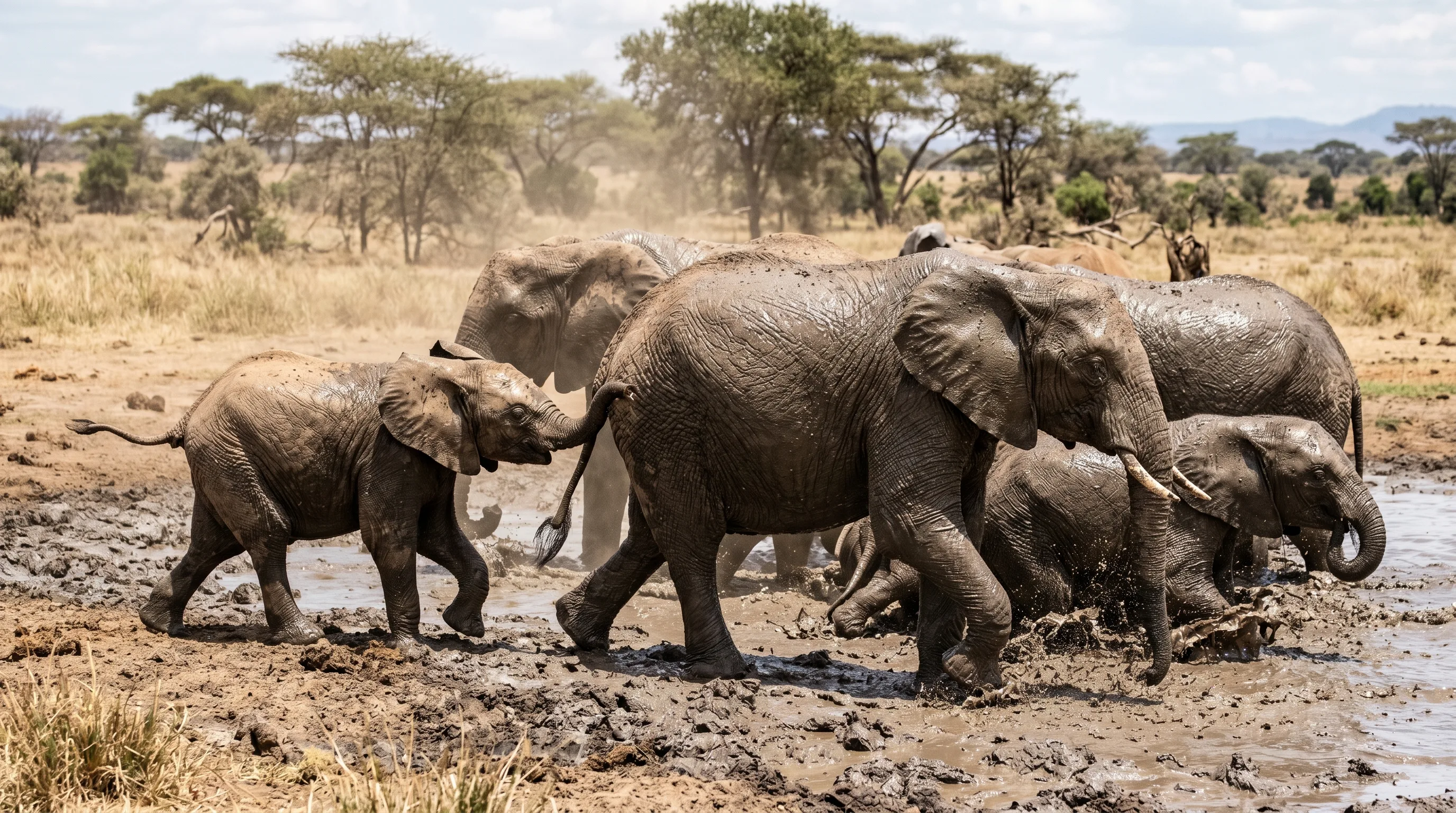
In the heart of Africa's vast savannah, under the searing midday sun, a herd of African elephants (Loxodonta africana) a
agine the sensation of mud as it cools their sun-baked skin and serves as a protective barrier against relentless insects. This is not mere indulgence; it is a lifeline in an unforgiving ecosystem.
In this article, we journey into the world of elephant behavior, unveiling the multifaceted reasons behind this captivating activity. From the plains of Amboseli to the dense forests of Sumatra, each wallowing session tells a unique story of adaptation and resilience. As we explore these gentle giants' lives, we also confront their precarious reality, where habitat loss and poaching cast a long shadow over their future.
Join us as we delve deeper into the science of elephant wallowing, a behavior that speaks to their intelligence and the complex ecosystems they inhabit. Discover how this seemingly simple act is a testament to the intricate balance of nature—a balance that we, as stewards of the Earth, must strive to protect.
```
Sources & Attribution
Data and ongoing research referenced for this article come from the following authoritative sources — peer-reviewed publishers, official taxonomic registers, and global biodiversity programmes:
- IUCN Red List — why elephants do wallowing — official IUCN Red List assessment including population trend, threats, and conservation actions.
- Wikipedia — why elephants do wallowing — taxonomy, distribution, and an overview with onward citations to primary literature.
- GBIF — why elephants do wallowing — global occurrence and distribution records from the Global Biodiversity Information Facility.
- iNaturalist — why elephants do wallowing — observation records and field photographs contributed by naturalists worldwide.
- Encyclopedia of Life — why elephants do wallowing — multilingual species pages aggregating taxonomic and natural-history data.
- UN Convention on Biological Diversity — international biodiversity policy and programme reporting.
- Nature — research on why elephants do wallowing — peer-reviewed studies indexed by Nature on related ecology and behaviour.
- ITIS — Integrated Taxonomic Information System — federal-grade taxonomy and nomenclature.
Image: Wikipedia/Wikimedia Commons — “Wildlife”
Comments
Post a Comment